Skip to content
View in the app

A better way to browse. Learn more.

Thailand News and Discussion Forum | ASEANNOW

A full-screen app on your home screen with push notifications, badges and more.

To install this app on iOS and iPadOS
  1. Tap the Share icon in Safari
  2. Scroll the menu and tap Add to Home Screen.
  3. Tap Add in the top-right corner.
To install this app on Android
  1. Tap the 3-dot menu (⋮) in the top-right corner of the browser.
  2. Tap Add to Home screen or Install app.
  3. Confirm by tapping Install.

Become a member

Become a member

World News

Fresh news brought to you daily from around the world. Hot news, breaking stories as they happen.
The first public ticket sale for the 2026 FIFA World Cup shows the cost of attending the final reaching as high as $10,990 (£8,333), making it one of the most expensive standard tickets ever offered for a football match.

Get today's headlines by email

The tournament will be staged across the United States, Canada and Mexico. During the initial bid to host the event, organisers said the most expensive ticket for the final would cost up to $1,550 (£1,174).
Prices have risen sharply since then. When tickets were first released to official supporters’ club members in December, the highest-priced seat was listed at $8,680 (£6,581). The latest open sale pushed prices even higher.

Record prices for the final
For comparison, the most expensive ticket for the 2022 World Cup final in Qatar cost the equivalent of $1,604 (£1,214).
FIFA has not published its full ticket pricing structure for the 2026 tournament. The organisation is also using a form of dynamic pricing, meaning costs change during different sales phases based on demand.

Prices climb across ticket categories
Observed prices suggest significant increases since December’s ticket release.
The top “category one” final ticket rose to $10,990. Category two seats climbed nearly 33%, from $5,575 (£4,227) to $7,380 (£5,596). Category three tickets increased by more than 38%, rising from $4,185 (£3,173) to $5,785 (£4,386).

Supporters entering the latest sales window were not told in advance which matches would be available or the price ranges involved.
Demand also drove higher prices for key fixtures, particularly matches featuring major teams or knockout games.

A small number of lower-cost tickets were announced earlier, including some priced at $60 (£45). However, those were limited and difficult to secure.

Queue errors and limited availability
Fans attempting to buy tickets during the open sale reported technical problems and long waits.
Users who logged into the ticket platform early were mistakenly placed in a queue intended for “PMA tickets”, which are reserved for supporters of play-off winners. Those affected were later forced to rejoin the correct queue from the back.

After entering the proper line, some supporters waited more than six hours before gaining access to the sales page.
Once inside, availability was limited. Of the 72 group-stage matches, tickets were listed for 35 games. However, there were none initially available for England or Scotland matches or for knockout rounds.
Among the top-seeded teams, only one match involving the Netherlands appeared on sale.

Displayed prices for group-stage games ranged from $140 (£106) to $2,985 (£2,261), with an average of about $358 (£271). One of the most expensive was the tournament opener between Mexico and South Africa, priced at $2,985 with only a small portion of the 87,000 seats available.
Corporate hospitality options were also offered. One package for England’s match against Panama cost $124,800 (£94,444) for a private suite with 24 tickets, food and drinks.

Resale market pushes prices higher
FIFA’s official resale platform reopened the day after the ticket sale, and some listings quickly reached far higher prices.
One ticket for the final was offered for $82,780 (£62,646), while the cheapest available for that match was listed at $27,000 (£20,400). These figures represent asking prices rather than confirmed sales.

Other matches also showed steep markups. A $60 ticket for England’s opening game against Croatia was listed for $1,499 (£1,133), while another with a face value of $445 (£336) was offered for $6,000 (£4,533).
The resale system allows ticket holders to set their own price. FIFA charges both the buyer and seller a 15% fee.

Fan groups say the lack of price transparency and technical issues have made the process difficult to navigate.
Supporters’ representatives warn the total cost of attending several matches could reach many thousands of pounds once travel and accommodation are included, putting the tournament out of reach for many fans.

Join the discussion?

Already a member?


Adapted by ASEAN Now. Source 3 April 2026
webfact
webfact
Donald Trump said a U.S. strike destroyed Iran’s largest bridge and warned further attacks could follow if no settlement ends the war with Tehran.

Get today's headlines by email

The U.S. president posted video on Truth Social showing the collapse of part of the newly completed B1 suspension bridge linking Tehran with Karaj. The structure, about 136 metres high and built at a cost of roughly $400 million, split after the central span was hit twice.

Bridge destroyed in strike
Footage showed a section of the bridge falling onto the roadway below as black smoke rose from the site. Later images revealed a wide gap in the middle of the structure, previously one of Iran’s major infrastructure projects.
Iranian state media reported eight people were killed and 95 injured in the attack. It was unclear whether civilians were using the bridge when it was struck, though images suggested at least one truck was on the span at the time.
Trump wrote online that “the biggest bridge in Iran comes tumbling down, never to be used again,” adding that “much more” would follow if a deal was not reached.

Escalation in widening conflict
The strike came a day after Trump threatened further attacks during a televised address from the White House. He said the war launched by the United States and Israel against Iran on 28 February was close to achieving its objectives.
In the same speech, he warned that U.S. forces could target Iran’s power plants. Trump said the United States could strike every electricity generating facility “very hard and probably simultaneously,” potentially cutting power to large parts of the country.
The bridge attack was one of several confirmed strikes inside Iran this week. Independent verification remains difficult because Iranian authorities have shut down internet access during the conflict.
Video circulated earlier in the week showing a major strike on a missile facility in Isfahan. Footage captured from a nearby car showed large explosions and secondary blasts at the site. The authenticity of the video was later confirmed.

Nuclear concerns and retaliation threats
Isfahan is believed to be linked to Iran’s nuclear programme. Analysts say the country may have moved some of its stockpile of uranium enriched to 60 percent to facilities in the area.
Such material could potentially be refined further to weapons-grade levels if the technical capability remained available.
In Washington, there has been speculation that the U.S. considered an airborne operation to seize the radioactive material from underground storage. Trump later dismissed those reports, saying the material was buried so deep that he did not consider it a priority.
The war began when the United States and Israel launched coordinated strikes on 28 February that killed Iran’s supreme leader, Ali Khamenei, along with several associates. The attack came as negotiations over a potential nuclear agreement were still under discussion.

Iran said one of its medical facilities, the Pasteur Institute in Tehran, was hit during strikes on Thursday. Israel said earlier attacks targeted a headquarters used by Iran’s Revolutionary Guard to finance armed groups across the Middle East.
Iranian military spokesperson Ebrahim Zolfaqari said Tehran would carry out “broader and more destructive” attacks in response and vowed the war would continue until its enemies faced “permanent regret and surrender”.

Global concern as casualties rise
Iran has sustained heavy losses during the conflict. More than 15,000 bombing raids have been reported since the fighting began.
Rough estimates from the International Federation of Red Cross and Red Crescent Societies indicate at least 1,900 people have been killed in Iran and around 20,000 injured.
The fighting has also unsettled global markets. Oil prices rose roughly 7 percent to about $108 a barrel amid fears the conflict could disrupt energy supplies.
António Guterres, secretary-general of the United Nations, warned the world was “on the edge of a wider war” and urged all sides to halt the fighting.

Join the discussion?

Already a member?


Adapted by ASEAN Now. Source 3 April 2026
webfact
webfact
Mitch McConnell joined Democratic lawmakers in support of continued U.S. membership in North Atlantic Treaty Organization after Donald Trump said he is considering withdrawing from the military alliance.

Get today's headlines by email

In a joint statement released Wednesday with Chris Coons, McConnell said NATO has long played a central role in protecting American security.

McConnell and Democrats defend alliance
“NATO is the most successful military alliance in history,” McConnell said, adding that the organization has supported U.S. security for more than seven decades.The United States is among the 12 founding members of the alliance, which was created in 1949 to provide collective defense among Western nations.

Trump questions value of NATO
Trump renewed criticism of the alliance in an interview with the British newspaper The Telegraph published Wednesday. He said a potential U.S. withdrawal from NATO was “beyond reconsideration.”
“I was never swayed by NATO,” Trump said in the interview. He described the alliance as a “paper tiger” and argued that Vladimir Putin, Russia’s president, holds the same view.

Trump has frequently criticised NATO members for what he says is insufficient support for U.S. military actions, including recent operations against Iran.In a post on the social platform Truth Social last month, Trump said NATO countries refused to join U.S. efforts to confront Iran’s nuclear ambitions. He accused allies of failing to back Washington during the campaign.

“They didn’t want to join the fight to stop a Nuclear Powered Iran,” Trump wrote, adding that the conflict had been won militarily with little risk to other countries.

Lawmakers warn against weakening NATO
McConnell and Coons argued that disagreements between allies are not unusual and should not undermine the alliance.Both senators serve on the Senate Appropriations Subcommittee on Defense, with McConnell as chair and Coons as ranking member. In their statement, they said U.S. security benefits from a united NATO and urged member states to preserve cooperation.

“Alliance disputes are as old as the alliance itself,” they said. “Americans are safer when NATO is strong and united.”

Separately, Mark Warner also voiced support for the alliance. Warner, vice chair of the United States Senate Select Committee on Intelligence, said NATO has remained central to U.S. national security for more than 70 years.He said the alliance deters conflict in Europe, strengthens U.S. influence globally and ensures the country does not face crises alone.

Warner rejected Trump’s criticism, saying NATO has proved its value repeatedly since its creation.
“It is not a ‘paper tiger’,” Warner said, calling Trump’s suggestion that the United States might leave the alliance “reckless” and warning that such a move would benefit Washington’s rivals.

Join the discussion?

Already a member?


Adapted by ASEAN Now. Source 3 April 2026
webfact
webfact
Lawyers at the U.S. Justice Department say President Donald Trump does not have to hand over his presidential records to the National Archives and Records Administration, rejecting a law that has governed presidential documents for nearly five decades.

Get today's headlines by email

In a legal opinion issued by the Justice Department’s Office of Legal Counsel, Assistant Attorney General T. Elliot Gaiser said the Presidential Records Act is unconstitutional. The 1978 law requires presidential documents to become public property and to be transferred to the archives after a president leaves office.

DOJ challenges Watergate-era records law
The 52-page opinion argues that the statute exceeds Congress’s authority. It says the law lacks a clear legislative purpose and improperly interferes with the executive branch.
According to the opinion, Congress cannot claim authority to preserve presidential records simply to maintain historical archives. It also argues that lawmakers cannot compel the president to surrender such documents because doing so intrudes on executive independence.

Potential shift in how records are handled
If adopted by the Trump administration, the legal interpretation could overturn long-standing practice governing presidential materials.

The Presidential Records Act was introduced following the Watergate scandal and transferred ownership of presidential records from private control to the public. Since the presidency of Ronald Reagan, every administration has followed the law, which places the archives agency in charge of official records once a president leaves office.

Those records include emails, phone logs and other documents produced by the president and White House staff while carrying out official duties. Under current rules, former presidents have up to 12 years to transfer all presidential records to the National Archives. The Justice Department’s opinion states that Congress overstepped by attempting to control presidential papers in this way. It says lawmakers cannot “expropriate” the president’s documents, arguing that such authority would undermine the constitutional separation of powers.

Background of earlier records dispute
The opinion comes a day after Trump revealed an early preview of plans for his presidential library. The decision could also affect future public access to presidential documents. During the period after Trump’s first presidency, authorities accused him of violating the Presidential Records Act by storing boxes of government documents at his Mar-a-Lago residence.

Trump was later indicted over allegations that he kept classified materials and obstructed efforts to retrieve them. The case was dismissed after U.S. District Judge Aileen Cannon raised concerns about the appointment of special counsel Jack Smith. With roughly three years remaining in Trump’s second presidential term, the Justice Department opinion states the president “need not further comply” with the statute governing the transfer of presidential records.

The Office of Legal Counsel provides legal advice for the executive branch. Any attempt to formally implement the position could face legal challenges in court.

Author’s background draws scrutiny
The opinion was written by Gaiser, who previously worked for Trump’s 2020 election campaign. In that role he supported legal challenges to the vote results.
During his confirmation process, Gaiser declined to say whether Trump won the election. Instead, he said Joe Biden had been certified as the winner and sworn in as president in January 2021.

Responding to questions from lawmakers, Gaiser also cited attorney-client confidentiality when asked whether he discussed election-related legal strategies with lawyer John Eastman.

Join the discussion?

Already a member?


Adapted by ASEAN Now. Source 3 April 2026
webfact
webfact
The United Kingdom and more than 40 partner nations are considering sanctions and other diplomatic steps aimed at pushing Iran to reopen the Strait of Hormuz, a key global shipping route.

Get today's headlines by email

Speaking after a virtual summit on Thursday, British Foreign Secretary Yvette Cooper said participants agreed to explore coordinated economic pressure if the strait remains blocked. The meeting marked the opening phase of an effort to build an international coalition capable of restoring security along the Gulf waterway.

Coalition talks focus on diplomatic pressure
Cooper said Iran had effectively seized control of the shipping lane and was using it to pressure the global economy.

“Iran’s closure of the Strait of Hormuz is a direct threat to global prosperity,” she said. She added that participating countries demanded the “immediate and unconditional reopening” of the route and urged respect for international maritime law and freedom of navigation.

The United States did not take part in the discussions.

Sanctions and UN pressure under review
Cooper said the talks focused on diplomatic and economic measures rather than military action. Governments involved are considering increased pressure through the United Nations as well as the possibility of new sanctions if Iran keeps the strait closed.

Participants also discussed working with the International Maritime Organization to help stranded vessels resume movement once conditions allow.

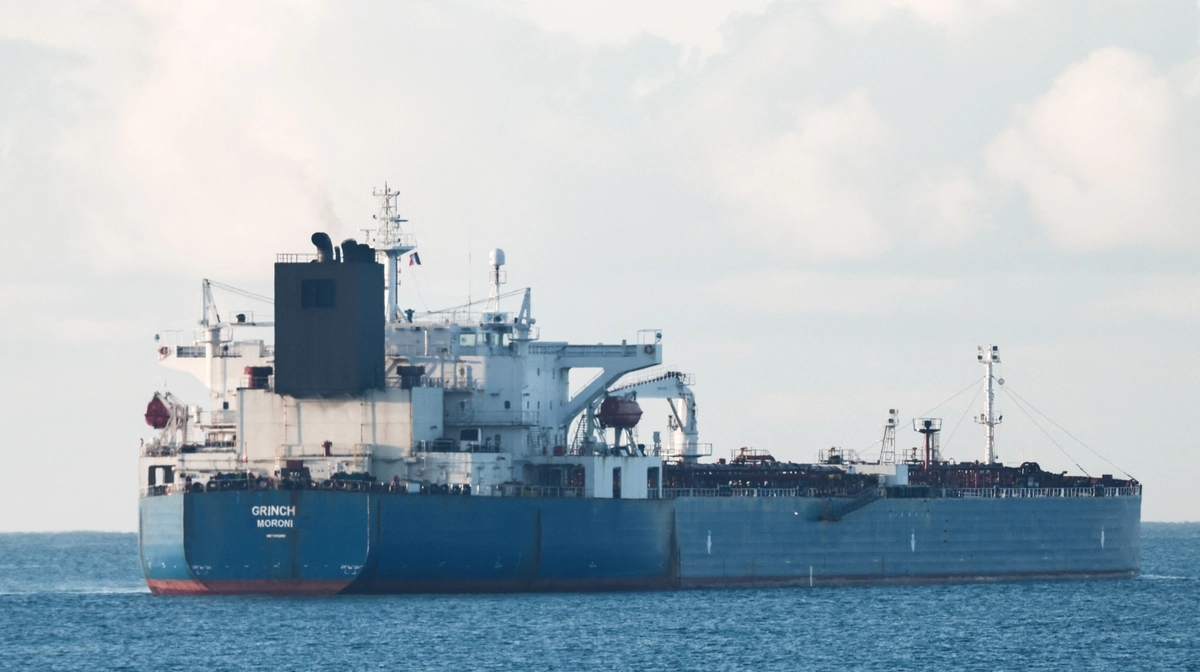
The strait, located between Iran and Oman, serves as one of the world’s most important energy transit routes. Around 20% of global oil and gas shipments pass through the narrow channel linking the Persian Gulf to the Arabian Sea.

Iran has targeted several ships in recent weeks in response to military action against it by the United States and Israel. The attacks have disrupted energy exports and contributed to a sharp rise in fuel prices worldwide.

Trump urges allies to act
US President Donald Trump said on Wednesday that other nations should take responsibility for reopening the route. He criticised allies for failing to act earlier.

“Allies should have done it,” Trump said, urging them to move into the waterway and secure it themselves.

Washington has repeatedly accused partners of doing too little to protect shipping lanes or support US military operations. The comments highlight divisions over how far allies should go to confront Iran while avoiding escalation in the broader conflict.

Cooper said Britain’s decisions would reflect national interests rather than the priorities of other countries.

France warns against military option
French President Emmanuel Macron said military intervention was unlikely to reopen the strait.

Speaking during a visit to South Korea, Macron said the route could only reopen through negotiations with Iran. He stressed that a ceasefire and renewed talks would be necessary to restore maritime traffic.

London has not published a full list of countries attending the summit. Governments previously backing a joint statement condemning Iranian attacks on commercial shipping were expected to join, including France, Germany, Japan, Australia and several Gulf states.

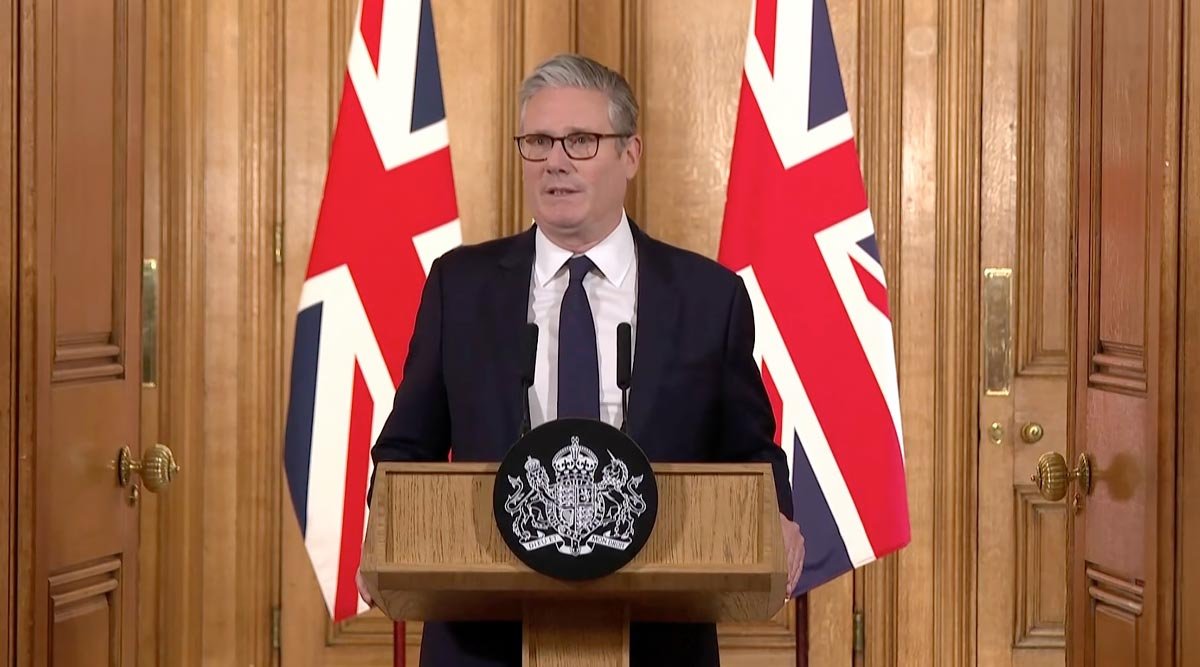
British Prime Minister Keir Starmer said on Wednesday that the UK was exploring every diplomatic channel available to restore access to the waterway. He added that military planners would assess options for securing the route once fighting subsides.

The disruption has already driven energy prices sharply higher. Brent crude, the global benchmark for oil, has risen from about $73 per barrel to more than $100 in recent weeks.


Join the discussion?

Already a member?


Adapted by ASEAN Now. Source 3 April 2026
webfact
webfact
Nigel Farage said Reform UK would keep the UK’s state pension “triple lock” while offsetting the cost through large reductions in welfare spending.

Get today's headlines by email

The triple lock, introduced in 2011, guarantees that the state pension rises each year by whichever is highest among inflation, wage growth or 2.5%. The policy has become a central issue in Britain’s fiscal debate as the population ages.

Reform UK commits to keeping pension guarantee
Speaking at a news conference on Thursday, Farage said the party had debated whether to abandon the system but decided to maintain it if elected. He described the decision as driven largely by plans to deliver what he called the largest cuts to welfare spending in the country’s history.

He said details of those reductions would be announced later.

The cost of maintaining the triple lock is expected to climb significantly, with projections suggesting it could add £15.5bn a year to public spending by 2030.

Welfare cuts planned to cover cost
The policy announcement was presented by Reform UK’s Treasury spokesman Robert Jenrick, who joined the party earlier this year after leaving the Conservative Party (UK).

Jenrick said protecting pensioners remained a priority, while acknowledging the financial scale of the commitment.

He said the party had already identified about £40bn in potential savings, though detailed costings were not provided. According to Jenrick, upcoming welfare changes would include reductions affecting people who had recently arrived in the country or entered illegally.

He argued the savings would more than cover the additional spending required to keep the pension guarantee.

Reform UK also says it has reduced spending in the English local authorities it controls, though the extent of those savings has been disputed.

Debate over sustainability of the triple lock
The triple lock was created under the 2010 coalition government led by former prime minister David Cameron. Successive governments have retained the policy despite concerns about rising long-term costs.

The measure remains popular with older voters, who traditionally turn out in higher numbers during elections. Critics argue the guarantee increasingly benefits pensioners relative to younger working taxpayers.

Economists and policy groups have warned that pension commitments are placing growing pressure on public finances.

The free-market think tank Institute of Economic Affairs said Reform UK’s decision showed that major parties were unwilling to confront the cost of pension promises. Editorial director Kristian Niemietz described the triple lock as one of the most expensive policies in Britain’s public spending framework.

The Centre for Policy Studies also questioned whether the party’s plans represented meaningful fiscal reform. Its head of economic and fiscal policy, Daniel Herring, said rising spending on pensions, healthcare and welfare was becoming unsustainable.

Political consensus remains strong
Despite criticism, the policy retains broad political support.

The Conservative Party (UK) has ruled out removing the triple lock, while both the Labour Party (UK) and the Liberal Democrats (UK) also back keeping it in place.

Before the 2024 general election, the Green Party of England and Wales proposed replacing the triple lock with a “double lock”, under which pensions would rise in line with either inflation or wages.

The state pension will increase by 4.7% from 6 April this year, reflecting recent growth in average earnings.


Join the discussion?

Already a member?


Adapted by ASEAN Now. Source 3 April 2026
webfact
webfact
French President Emmanuel Macron criticised the handling of public messaging around the Iran war, saying the conflict demands consistency rather than shifting statements.

Get today's headlines by email

Speaking to reporters during a state visit to South Korea, Macron appeared to target remarks by US President Donald Trump, whose administration has issued differing signals on the course of the conflict.

Macron questions US messaging on Iran war
“This is not a show,” Macron said, stressing that the stakes involve war, peace and human lives. He added that serious diplomacy requires avoiding daily reversals in public statements and suggested leaders should sometimes remain silent to allow tensions to ease.

The conflict involving the US, Israel and Iran has entered its second month. France and several European governments have supported parts of the US effort in the region but have resisted deeper military involvement.

Washington has sent mixed signals about the war’s trajectory. At various points the Trump administration has suggested a ceasefire could be near, claimed the conflict had already been won, or indicated that operations would continue.

Nato remarks and alliance concerns
Macron also criticised comments by Trump about reconsidering US membership in North Atlantic Treaty Organization.

He said alliances depend on trust and reliability rather than public speculation about commitments. Casting doubt on participation weakens the organisation’s value, he argued.

According to Macron, partners demonstrate commitment by standing together during crises rather than debating whether obligations will be honoured.

“I feel like there is too much chatter,” he said, describing the debate around the alliance as unfocused.

Macron also stressed that France had not taken part in the US-Israeli military campaign against Iran. The operation, he said, was planned and launched by Washington and its allies without broader international coordination.

“They decided on it themselves,” Macron said, adding that it was therefore not France’s operation.

Questions over Iran nuclear claims
The French president also referred to US air strikes against Iran in mid-2025, which Trump said had destroyed Iranian nuclear facilities.

However, after the war began in early 2026, the US president described the conflict as the “last best chance” to halt Iran’s nuclear weapons programme.

Macron said those statements appeared contradictory. He noted that Washington had previously claimed the facilities were fully eliminated.

He argued that lasting control of Iran’s nuclear programme would require international monitoring rather than limited military strikes. Knowledge, personnel and hidden infrastructure could remain even after attacks on known sites, he said.

Short-term military action alone would not permanently resolve the issue, Macron added.

Tensions with Trump and Strait of Hormuz crisis
Relations between the two leaders have grown increasingly strained. Trump recently mocked Macron at a private lunch, imitating a French accent and making remarks about Macron’s wife, Brigitte Macron.

The US president also referenced a widely circulated 2025 video showing Macron being pushed in the face by his wife.

Macron dismissed the comments as lacking dignity and said they did not merit a response. Political figures across France, including critics of Macron, condemned the remarks.

Meanwhile, Iran has responded to the conflict by closing the Strait of Hormuz, a strategic shipping route that carries a large share of global energy supplies.

Trump has suggested that countries affected by the disruption should resolve the problem themselves.

Macron rejected the idea of launching a military operation to reopen the waterway. He said such a mission would be dangerous and slow, exposing vessels to threats from Iran’s Islamic Revolutionary Guard Corps, which he said possesses ballistic missiles and other coastal defence systems.

Join the discussion?

Already a member?


Adapted by ASEAN Now. Source 3 April 2026
webfact
webfact
US Defense Secretary Pete Hegseth has ordered Army Chief of Staff Randy George to retire with immediate effect, according to US officials, triggering a sudden leadership change inside the Pentagon.

Get today's headlines by email

Chief Pentagon spokesman Sean Parnell confirmed the decision in a public statement, saying George would step down immediately as the 41st chief of staff of the US Army and thanking him for decades of military service.

Sudden removal of Army chief
Senior Army leaders learned of the decision at the same time as the wider Defense Department when it was publicly announced, according to a US official. The abrupt move caught many in the Pentagon by surprise.

George was informed of the decision during a phone call from Hegseth while he was attending a meeting, a second official said. He later spoke with his staff in person about the development, and officials described the reaction among his team as subdued.

Move follows Trump Iran speech
The leadership change came one day after Donald Trump addressed the nation about the ongoing conflict with Iran. In the speech, the president indicated the United States would intensify military strikes, reversing earlier suggestions that the war could end within weeks.

As Army chief, George played a key role in planning and advising on military operations, including the deployment of forces and the provision of air and missile defence capabilities to US forces.

He also served as a principal adviser on those capabilities to the chairman of the Joint Chiefs of Staff, Dan Caine, as well as to Hegseth.

Officials said the timing of the decision raised concerns inside the Pentagon because the Army is heavily involved in operations linked to the conflict.

One US official described the decision as appearing poorly considered given the operational demands currently facing the military.

Wider shake-up in Army leadership
Hegseth also removed two other senior Army officers the same day. They include the Army’s chief of chaplains, William Green Jr., and David Hodne, who led the Army’s Transformation and Training Command.

The defence secretary has previously dismissed several senior officers during his time in office, signalling a broader shift in military leadership.

George, an infantry officer commissioned from United States Military Academy at West Point in 1988, had served as Army chief of staff since September 2023. Earlier in his career he commanded I Corps at Joint Base Lewis-McChord and later served as senior military assistant to former defence secretary Lloyd Austin.

Although the role of senior military assistant is generally viewed as non-political, George’s close working relationship with Austin was viewed negatively by some figures around Hegseth.

Possible successor emerges
Attention has now turned to Army Vice Chief of Staff Chris LaNeve, who is expected to serve as acting chief following George’s departure.

LaNeve previously commanded the US Army’s Eighth Army in South Korea and earlier led the 82nd Airborne Division. He later served as a special assistant within US Army Forces Command before moving to Korea.

He gained public attention shortly after Trump’s inauguration when he addressed the president by video from South Korea during the Commander in Chief’s Ball, congratulating him on returning to office.

Trump praised LaNeve during the exchange, commenting positively on his leadership style.


Join the discussion?

Already a member?


Adapted by ASEAN Now. Source 3 April 2026
webfact
webfact
Donald Trump has privately discussed dismissing Attorney General Pam Bondi and potentially replacing her with Environmental Protection Agency administrator Lee Zeldin, according to several people familiar with the discussions.

Get today's headlines by email

Sources say the president has voiced frustration over criticism from supporters about the administration’s handling of records connected to convicted sex offender Jeffrey Epstein. Bondi also faces a deposition later this month before lawmakers investigating matters tied to Epstein.

Trump weighs possible leadership change
Those familiar with the conversations say Trump has asked advisers about possible replacements and complained that Bondi has not pursued investigations against political opponents as aggressively as he expected.

However, sources say no final decision has been made on Bondi’s future.

Despite the private discussions, Trump publicly backed the attorney general. In a statement, he said Bondi was “a wonderful person” who is performing well in the role.

Bondi remains active in administration
Bondi appeared alongside Trump on Wednesday, travelling in the presidential motorcade during his visit to the Supreme Court for arguments concerning birthright citizenship. She also attended remarks the president delivered later that evening on the conflict involving Iran.

The Justice Department referred questions to the White House statement. A person familiar with the matter said Trump and Bondi have spoken several times in recent days and described the exchanges as routine discussions about government business.

The idea of replacing Bondi with Zeldin was first raised earlier in the year. According to sources, the possibility surfaced in January but faded as attention on the Epstein investigation declined.

Some senior Justice Department officials had believed the issue had largely moved out of the spotlight after months of controversy surrounding files related to the case.

Epstein files controversy resurfaces
Concerns resurfaced this week after reports circulated within the White House that Trump had again discussed replacing Bondi. While Zeldin has been mentioned frequently, people familiar with the matter say he is not necessarily the only candidate under consideration.

Bondi has faced scrutiny over comments she made in early 2025 regarding documents tied to Epstein. In a television interview, she said a client list connected to the investigation was on her desk for review.

The Justice Department later said no such list existed. Bondi subsequently clarified that she had been referring broadly to investigative material, including flight logs and other documents, rather than a single list of names.

Allies defend Bondi inside White House
Bondi maintains support from several senior figures in the administration, including White House chief of staff Susie Wiles. Sources say Wiles has previously intervened when Trump expressed doubts about the attorney general’s performance.

In comments reported earlier by Vanity Fair, Wiles acknowledged Bondi had mishandled aspects of the Epstein-related issue but still backed her.

The discussion comes after Trump removed another senior cabinet official earlier in his second term, dismissing Homeland Security Secretary Kristi Noem.

Bondi was not Trump’s first choice for the position. The president initially nominated former Florida congressman Matt Gaetz, but he withdrew from consideration after failing to secure enough support from Republican senators.

Bondi was confirmed as attorney general in 2025 by a 54–46 Senate vote, largely along party lines. During confirmation hearings, she pledged that the Justice Department would not target individuals for political reasons.

Join the discussion?

Already a member?


Adapted by ASEAN Now. Source 2 April 2026
webfact
webfact
King Charles III will address a joint meeting of the U.S. Congress on April 28 during an official state visit to the United States, congressional leaders announced.

Get today's headlines by email

In a joint statement on Tuesday, senior lawmakers said the speech will mark the upcoming 250th anniversary of American independence and highlight the long-standing partnership between the United States and the United Kingdom.

The invitation was issued by Mike Johnson, John Thune, Chuck Schumer and Hakeem Jeffries.

Lawmakers said the address will reflect on the historical ties between the two nations while offering a platform for the monarch to outline his view of the future relationship.

Historic address planned during state visit
The statement noted that the United States will celebrate the 250th anniversary of its independence this year and said the country’s founding ideals were influenced in part by British political traditions.

Leaders said the speech would provide an opportunity to reaffirm the alliance between the two countries and underline cooperation at a time of global uncertainty.

Visit scheduled for late April
Donald Trump said the state visit will take place from April 27 to April 30.

The trip comes as Washington and London manage tensions within the transatlantic alliance, particularly over the conflict involving Iran. The dispute has highlighted divisions within North Atlantic Treaty Organization about whether member states should take part in the ongoing U.S.-Israeli military campaign.

Britain, a longstanding NATO member, has resisted calls to join the conflict.

Starmer rejects pressure to enter Iran conflict
Keir Starmer, the British prime minister, said the United Kingdom remains committed to NATO but will not alter its stance on the war.

Speaking to reporters on Wednesday, Starmer said his government would continue to act based on British national interests. He said London faced pressure to take part in the conflict but insisted the United Kingdom would not change its position.

The remarks came as Trump said he was considering withdrawing the United States from NATO, a move that would represent a major shift in the Western security alliance.

Legal limits on NATO withdrawal
U.S. lawmakers moved in 2023 to restrict a president’s ability to leave the alliance unilaterally.

Under legislation passed by Congress, any decision to withdraw from NATO must either receive approval from two-thirds of the Senate or be authorised through a separate act of Congress.

The measure was designed to ensure continued legislative oversight over major shifts in U.S. foreign policy and the country’s role in the alliance.

King Charles’s address will place the British monarch before Congress at a moment of political and security tensions across the transatlantic partnership, even as both governments emphasise the historic ties linking the two countries.

Join the discussion?

Already a member?


Adapted by ASEAN Now. Source 2 April 2026

webfact
webfact
Authorities in Utah say new forensic testing has formally resolved a 51-year-old murder investigation, identifying a teenage girl as a victim of serial killer Ted Bundy.

Get today's headlines by email

Officials from the Utah County Sheriff's Office announced that modern DNA analysis confirmed Bundy’s involvement in the killing of 17-year-old Laura Ann Aime. The teenager vanished after leaving a Halloween party in 1974.

DNA evidence closes decades-old case
Her body was discovered roughly a month later by hikers in American Fork Canyon. At the time, investigators were unable to definitively link the killing to Bundy, leaving the case open for decades.

The sheriff’s office said new testing confirmed “irrefutably” that DNA recovered from the victim matched Bundy, bringing a definitive conclusion to the investigation.

Confession without details
Bundy admitted to killing Aime before his execution in 1989, but investigators said he never provided details explaining exactly what happened. Because of that lack of information, authorities chose to keep the investigation active until forensic proof could confirm his role.

During a news conference, Mike Smith said the case had now reached a final resolution.

“This case is now officially closed,” Smith told reporters, according to The Salt Lake Tribune.

Smith added that if Bundy were still alive, prosecutors would seek the death penalty for the crime.

Bundy’s killing spree
Bundy is regarded as one of the most notorious serial killers in United States history. Investigators say he murdered at least 30 women between February 1974 and February 1978, though authorities believe the true number of victims may be higher.

His crimes spanned multiple states, beginning in the Pacific Northwest and later extending to Colorado, Utah and Florida.
At the time Laura Ann Aime disappeared, Bundy was living in Salt Lake City and studying law at the University of Utah.

Bundy often approached women in public places, using charm or feigned injuries to gain sympathy. Investigators say he then lured victims to isolated locations where he attacked and killed them.


Arrests, escapes and capture
Authorities first arrested Bundy in 1975 for kidnapping. He received a 15-year prison sentence but escaped custody in 1977 by jumping from a prison library window.

He was captured again within days but later escaped a second time, allowing him to continue his killing spree. Bundy was finally arrested again in 1978.

In a statement released by the sheriff’s office, officials described Laura Ann Aime as an outgoing teenager who loved outdoor activities. She enjoyed horseback riding, hunting and spending time with her siblings.

Investigators said confirming the DNA link provides long-awaited certainty in a case that remained unresolved for more than half a century.


Join the discussion?

Already a member?


Adapted by ASEAN Now. Source 2 April 2026
webfact
webfact
UK Chancellor Rachel Reeves says she is “angry” that Donald Trump decided to launch military action against Iran, warning the conflict risks damaging the economy and increasing pressure on households.

Get today's headlines by email

Speaking on BBC Radio 2, Reeves said the war lacked a clear exit strategy and could bring significant economic consequences.

She said the conflict was already affecting the global economy and could result in higher inflation, weaker economic growth and reduced tax revenues.

Reeves also stressed that the UK government had chosen not to enter the war.

Reeves attacks decision to go to war
The comments mark a sharper criticism of Trump than those made by Prime Minister Keir Starmer earlier in the day. Starmer said he would not change his stance on the conflict despite pressure from Washington.

Relations between the UK and the US have become strained since Britain refused to allow American forces to use UK bases for the first wave of strikes on Iran.

Starmer later approved their use for defensive operations against Iranian missile attacks, but tensions between the two governments have continued.
Economic concerns and energy pressure
Reeves said the government was monitoring the economic effects of the conflict and working to stabilise energy supplies.

She said officials were trying to secure oil and gas deliveries to the UK to maintain supply and help reduce price pressures.
Rising energy costs have already intensified the cost-of-living debate in Britain.

Opposition parties have urged the government to set out stronger measures to protect households from higher bills.

The Conservatives and Reform UK have called for value-added tax to be removed from household energy bills and want a planned increase in fuel duty to be scrapped.

The Liberal Democrats have also opposed the fuel duty rise. The Green Party of England and Wales say ministers should commit billions of pounds to support energy bills when the price cap is recalculated in July.

Plaid Cymru has asked the government to clarify what assistance would be offered if bills rise further, while the Scottish National Party argues Scotland should control its own energy policy.

Fuel duty is scheduled to increase in September as a temporary 5p reduction introduced after the Russian invasion of Ukraine is phased out.

Government talks and wider geopolitical impact
Reeves and Environment Secretary Emma Reynolds also met supermarket executives to discuss ways to keep food prices stable and strengthen supply chains.

Helen Dickinson, chief executive of the British Retail Consortium, described the meeting as constructive and said supermarkets were working to keep food affordable while maintaining supply resilience.

Earlier, Starmer said the conflict had strengthened the case for closer economic cooperation between the UK and the European Union.

He argued that global instability made stronger partnerships with European allies increasingly important.

Opposition Conservatives criticised the government’s economic strategy. Shadow chancellor Mel Stride said tax increases and climate policies were pushing up costs for households.

Reform UK’s treasury spokesman Robert Jenrick accused Starmer of using the conflict to justify deeper economic integration with the EU.

Meanwhile, Heledd Fychan of Plaid Cymru welcomed the prime minister’s comments on closer European cooperation.

Diplomatic efforts are continuing to address the conflict’s wider impact. Foreign Secretary Yvette Cooper will host an online meeting of 35 countries, including European and Gulf states, to discuss reopening the Strait of Hormuz.

Iran has effectively blocked the key shipping route, disrupting one of the world’s busiest oil channels and pushing global energy prices higher.

Join the discussion?

Already a member?


Adapted by ASEAN Now. Source 2 April 2026
webfact
webfact
Prime Minister Keir Starmer says the UK will pursue closer economic and security cooperation with the European Union as the war involving Iran raises economic risks and geopolitical tensions.

Get today's headlines by email

Speaking at a news conference, Starmer said the government plans to push for expanded collaboration with European partners at a UK-EU summit expected later this year. He said global instability made stronger ties with allies on the continent increasingly important.

The move comes as relations with the United States have come under pressure following Britain’s decision not to deepen its involvement in the conflict.

Starmer signals stronger EU partnership
Starmer said Britain’s long-term national interests require closer cooperation with Europe on areas including defence, energy and economic policy. He also repeated criticism that Brexit damaged the UK economy, arguing there were major opportunities in rebuilding ties with the bloc.

However, he maintained that Labour’s pledge still stands: the UK will not rejoin the EU single market, the customs union, or restore freedom of movement.

Energy costs and economic pressure
The conflict has raised concerns about rising energy prices in Britain. Iran has effectively blocked the Strait of Hormuz, one of the world’s most important oil shipping routes, pushing up global oil and gas prices.

Officials warn sustained increases could raise household energy bills when the UK’s price cap is reviewed in July.

Opposition parties are pressing the government to take immediate steps to shield households from higher costs. The Conservative Party (UK) and Reform UK are calling for the removal of VAT on domestic energy bills and the cancellation of a planned fuel duty increase scheduled for September.

The Liberal Democrats (UK) also oppose the duty rise, while the Green Party of England and Wales want billions in subsidies for household energy costs starting in July.

Meanwhile, Plaid Cymru has urged the government to outline emergency support plans, and the Scottish National Party argues Scotland should gain control over energy policy.

Starmer said the government was monitoring developments and noted recent measures aimed at easing living costs, including changes to energy levies and increases to the national living wage.

He said further support would depend partly on how long the conflict continues and how quickly the Strait of Hormuz can reopen.

The Organisation for Economic Co‑operation and Development has warned that among major economies, Britain could face the largest slowdown in growth as a result of the war.

Tensions with Washington
The crisis has also strained relations with Donald Trump, who has criticised Britain after it declined to allow US forces to launch initial strikes on Iran from UK bases.

London later permitted those bases to be used for defensive operations against Iranian missile attacks.

Trump recently told the Daily Telegraph he was considering withdrawing from the NATO alliance after European countries did not join the US campaign.

Starmer rejected suggestions Britain was choosing between Washington and Europe. He said the UK remained committed to NATO while also strengthening partnerships across the continent.

“This is not our war,” he said, adding the government would continue making decisions based on Britain’s national interests.

Separately, Chancellor Rachel Reeves criticised the US decision to launch military action in the Middle East, saying the conflict had caused significant economic strain.

Foreign Secretary David Lammy is hosting a virtual meeting of 35 countries, including European and Gulf states, to discuss efforts to secure and reopen the Strait of Hormuz once fighting ends.


Join the discussion?

Already a member?


Adapted by ASEAN Now. Source 2 April 2026
webfact
webfact
Global oil prices rose sharply in volatile trading after US President Donald Trump warned that the United States could launch further attacks on Iran within weeks.

Get today's headlines by email

US West Texas Intermediate crude for May delivery rose 4.1% to $104.21 per barrel late Wednesday. Brent crude, the international benchmark, climbed 5% to $106.42 per barrel for June contracts.

The gains came as Trump signalled that military pressure on Tehran could intensify despite ongoing diplomatic contacts. Markets had been hoping for signs of de-escalation in the conflict.

Oil jumps on renewed war warnings
Speaking during a national address, Trump blamed rising energy prices on what he described as Iranian attacks on commercial oil tankers and neighbouring countries. He said the United States would strike Iran “extremely hard” in the coming weeks.

“We are going to finish the job, and we’re going to finish it very fast,” Trump said, adding that discussions with Tehran were continuing and a diplomatic outcome remained possible.

Investors brace for prolonged uncertainty
Market analysts say the comments reinforced fears that the conflict could continue and disrupt energy supplies.
George Efstathopoulos, a portfolio manager at Fidelity International, said investors had been waiting for a clear signal on whether Washington would move toward ending the war or escalate military action.

Instead, Trump’s remarks suggested the conflict may enter a new phase of uncertainty.

Efstathopoulos told CNBC that investors had been preparing for a “binary outcome” from the speech. One possibility was a signal that the United States planned to wind down the conflict, while the other was a sign of continued escalation.

The latest comments pointed to the latter, he said, which could increase risk-off sentiment across global markets while traders wait for clearer developments.

Hormuz disruption fuels energy crisis
Energy markets have also been shaken by the halt in tanker traffic through the Strait of Hormuz, a critical shipping route that normally carries roughly one-fifth of global oil and gas supplies.

Traffic through the waterway has effectively stopped since the US-Israel war against Iran began on February 28, pushing energy prices higher and raising fears of a major supply shock.

Political risk analyst Giles Alston of Oxford Analytica said there is little sign tanker movements will resume soon.

He said Washington now appears to be leaving countries that rely on the route to manage the situation themselves rather than guaranteeing safe passage.

Conflicting claims over ceasefire talks
Earlier on Wednesday, Trump briefly raised hopes for progress toward a ceasefire when he posted on Truth Social that Iran had asked the United States for a truce.

He said such a request would only be considered if the Strait of Hormuz was reopened and allowed shipping to move freely.

That message briefly pushed oil prices lower amid speculation that tanker traffic could resume.

Iran quickly rejected the claim, calling Trump’s statements “absurd” and insisting the waterway remains firmly under the control of the Iranian Revolutionary Guard Corps navy.

Since the conflict began, both sides have issued conflicting statements about negotiations and possible peace talks.

Trump has alternated between suggesting that a deal may be close and warning that Washington could escalate the conflict by deploying additional troops to the region.

Earlier this week, Brent crude had briefly fallen below $100 per barrel after Trump said US military operations against Iran might end within “two or three weeks,” even without a formal agreement.

Join the discussion?

Already a member?


Adapted by ASEAN Now. Source 2 April 2026
webfact
webfact
The Supreme Court of the United States appeared doubtful about President Donald Trump’s attempt to restrict birthright citizenship during oral arguments over a key immigration policy.

Get today's headlines by email

A majority of the justices signalled concern about the administration’s claim that children born in the United States to undocumented migrants or some temporary visitors should no longer receive automatic citizenship.

The case centres on an executive order issued by Trump that aims to narrow the interpretation of the Constitution’s citizenship clause. The administration says the change would help curb illegal immigration.

Opponents argue the order conflicts with more than a century of legal precedent and threatens a central principle of US immigration law.

Trump attended the hearing in Washington, an unusual move by a sitting president that highlighted the political stakes surrounding the case.

Debate over the 14th Amendment
The arguments focused on the wording of the Fourteenth Amendment to the United States Constitution, which grants citizenship to anyone born or naturalised in the country and “subject to the jurisdiction” of US law.

US Solicitor General John Sauer argued the clause had been interpreted too broadly in the past. He said the provision should apply only to limited categories such as the children of foreign diplomats.

Sauer told the court that parents living in the country illegally retain allegiance to their home nations and therefore fall outside full US jurisdiction.

Chief Justice John Roberts questioned whether the president had the authority to deny citizenship to such a large group of people.

He said he struggled to see how the administration could justify excluding so many children from automatic citizenship under the current legal framework.

Several justices suggested the government’s interpretation could fundamentally alter long-standing views of citizenship in the United States.

Precedent and historical practice
Justice Elena Kagan said the amendment reflected a tradition rooted in English common law that broadly recognised citizenship based on birthplace.

She argued the constitutional provision adopted that approach without imposing the restrictions now proposed by the administration.

During the hearing, lawyers and justices repeatedly referred to United States v. Wong Kim Ark, an 1898 Supreme Court ruling that upheld birthright citizenship for a child born in the US to Chinese immigrant parents.

Civil liberties lawyer Cecillia Wang, representing the challengers, cited the decision as decisive precedent. Justice Brett Kavanaugh suggested that if the court accepted that interpretation of the case, the ruling could be relatively brief.

Legal analysts say the justices may avoid a sweeping constitutional ruling. Instead, they could focus on a federal law passed in 1952 that codified birthright citizenship in statute.

Immigration law specialist Stephen Yale-Loehr said courts generally prefer narrower decisions that sidestep constitutional questions when possible.

Decision expected later this year
The court is expected to issue a decision in June.
The case represents the first major immigration dispute decided fully on its merits since Trump began his second term in office.

A ruling against the administration would mark another setback following a recent decision by the court that struck down Trump’s global tariff policy.

If the president prevails, the outcome would support a long-standing conservative effort to reinterpret birthright citizenship and could reshape US immigration policy.

Trump defended his stance after the hearing, repeating criticism of birthright citizenship on social media and arguing the policy was originally intended to grant citizenship to the children of formerly enslaved people following the Civil War.

Critics have accused the president of attempting to pressure the court by attending the proceedings in person.

Join the discussion?

Already a member?


Adapted by ASEAN Now. Source 2 April 2026
webfact
webfact
A magnitude 7.4 earthquake struck waters off eastern Indonesia early Thursday, killing one person and briefly raising fears of a tsunami before authorities lifted the warning.

Get today's headlines by email

The quake hit at a depth of 35km in the Molucca Sea between the islands of Sulawesi and Maluku, according to the United States Geological Survey.

Strong offshore quake strikes eastern Indonesia
In the city of Manado, one person died when a building collapsed, local rescue officials said. The victim was trapped beneath debris after the structure fell during the shaking.

George Leo Mercy Randang, a local search and rescue official, said the tremor was strongly felt across the area. One other person suffered a leg injury in the incident.

Tsunami warning issued and later withdrawn
Shortly after the earthquake, the Pacific Tsunami Warning Center issued a warning that hazardous tsunami waves could strike coastlines within about 1,000km of the epicentre.

The advisory covered parts of Indonesia as well as nearby countries including the Philippines and Malaysia.

Indonesia’s meteorological agency, Badan Meteorologi, Klimatologi, dan Geofisika, reported that small waves followed the quake.

Within 30 minutes, waves measuring up to 75cm were recorded in North Minahasa, while 20cm waves were detected in Bitung, both in northern Sulawesi. Another 30cm wave was observed in North Maluku province.

Roughly two hours later, the Pacific Tsunami Warning Center said the danger had passed and cancelled the alert.

Authorities had earlier warned that waves of up to one metre were possible in parts of Indonesia, while smaller fluctuations in sea levels could reach coastal areas across the wider region.

Residents flee as shaking lasts over a minute
Witnesses said the tremor caused panic as people rushed outdoors.

Budi Nurgianto, a resident of Ternate, said he was inside his home when the shaking began.

He said he first heard the sound of walls rattling before realising an earthquake had struck. When he went outside, many neighbours had already gathered in the streets in alarm.

According to residents, the shaking continued for more than a minute, prompting some people to leave their homes immediately. Some rushed outside without finishing everyday activities such as bathing.

In Manado, a city of roughly 450,000 people, the tremor woke many residents. An AFP journalist in the area said people quickly gathered outdoors while students at a nearby school ran outside for safety.

Despite the strong shaking, he said he did not see widespread structural damage.

Aftershocks follow regional earthquake
Indonesia’s disaster monitoring agency reported 11 aftershocks following the main quake. The largest measured magnitude 5.5, officials said.

The Japan Meteorological Agency said slight sea-level changes could occur along Japan’s Pacific coast from Hokkaido to Okinawa, but it did not issue a tsunami alert.
Authorities in the Philippines and Malaysia also reported no tsunami warnings.

Indonesia frequently experiences earthquakes due to its position along the Ring of Fire, a zone of intense seismic activity where several tectonic plates meet.

One of the deadliest disasters in the region occurred in 2004, when a magnitude 9.1 earthquake off Aceh triggered a massive tsunami that killed more than 170,000 people in Indonesia.

Join the discussion?

Already a member?


Adapted by ASEAN Now. Source 2 April 2026
webfact
webfact
NASA launched the Artemis II mission on Wednesday evening from Kennedy Space Center, sending astronauts toward the moon for the first time in nearly 54 years.

Get today's headlines by email

The rocket successfully lifted off from Florida’s Space Coast and placed the crew aboard the Orion spacecraft into Earth orbit. The capsule will circle the planet until a planned engine burn on Thursday that will push it onto a trajectory toward the moon, beginning the next stage of the roughly 240,000-mile journey.

Historic Return Beyond Earth Orbit
Inside the spacecraft, the astronauts immediately started checking onboard systems following the climb to orbit, which reached speeds of about 17,500 miles per hour. Mission controllers in Houston later confirmed that Orion’s four solar arrays had deployed correctly, ensuring a steady power supply during the mission.

The flight marks the first time humans have travelled beyond low Earth orbit since Apollo 17 in December 1972.

Crew Set for Record-Breaking Journey
Commander Reid Wiseman said before launch that the mission had been long anticipated.

“The nation, and the world, has been waiting a long time to do this again,” he told reporters at Kennedy Space Center.

The crew includes three Americans and one Canadian: Wiseman, Christina Koch, Victor Glover, and Jeremy Hansen of the Canadian Space Agency.

Their ten-day flight will loop around the moon but will not attempt a landing. The mission still carries several milestones. Koch will become the first woman to travel into cislunar space, the region between Earth’s orbit and the moon, while Glover will be the first person of colour to do so. Hansen will be the first non-American astronaut to reach the same region.

During the journey the astronauts are expected to travel farther from Earth than any humans before them. At its most distant point, Orion could reach roughly 253,000 miles from Earth—surpassing the record of 248,655 miles set during the troubled Apollo 13 mission in 1970.

Mission Tests Future Moon Plans
NASA officials view Artemis II as a key step toward returning humans to the lunar surface later this decade.

During the flyby, the crew will photograph areas near the moon’s south pole from an altitude between 4,000 and 6,000 miles. Those regions are being studied as potential landing zones and sites for a future lunar base.

The mission also serves as a major systems test. Astronauts will evaluate life-support equipment, spacecraft controls, and other hardware required for later flights, including Artemis IV, a planned mission intended to place astronauts on the moon again.

The astronauts will spend the entire journey inside Orion’s compact living space, roughly the size of a small camper van. Medical teams will track the crew’s health throughout the mission, examining the effects of radiation and microgravity.
Wiseman acknowledged that the confined conditions could prove challenging during the trip.

“By day six, seven, eight or nine we might feel like we need space,” he said, adding that the crew had trained closely together to manage such situations.

Crowds Gather for Launch
The launch drew huge crowds along Florida’s Space Coast. Beaches and causeways near Cape Canaveral and Cocoa Beach filled with spectators eager to watch the rocket lift off.

Local officials estimated that up to 400,000 people gathered to witness the launch, filling hotels and public viewing areas.
For NASA, the mission signals the revival of human exploration beyond Earth orbit and lays groundwork for future lunar operations. Agency administrator Jared Isaacman recently outlined plans for a permanent presence on the moon, including a proposed $20 billion lunar base by the end of the decade.

“What we learn from these missions will help enable America’s return to the lunar surface,” Isaacman said earlier this year.


Join the discussion?

Already a member?


Adapted by ASEAN Now. Source 2 April 2026

webfact
webfact
President Donald Trump plans to attend oral arguments at the Supreme Court of the United States on Wednesday as justices consider his administration’s attempt to end birthright citizenship.

Get today's headlines by email

The White House schedule lists Trump at the court at 10 a.m., when arguments are set to begin. If he appears as planned, it would mark the first time a sitting US president has attended Supreme Court arguments in person.

Trump expected at Supreme Court hearing
Trump suggested earlier Tuesday that he was considering the visit. The case before the court challenges an executive order he signed shortly after returning to office that aims to restrict automatic citizenship for some children born in the United States.

Key test of immigration policy
The case, known as Trump v. Barbara, centres on Trump’s order targeting birthright citizenship. The directive seeks to prevent children born in the US to undocumented immigrants or people staying in the country temporarily from automatically becoming American citizens.

The order forms part of Trump’s broader effort to reshape US immigration policy. However, the measure has not taken effect because it faces numerous legal challenges in lower courts.

Legal opponents argue the order violates the Citizenship Clause of the Fourteenth Amendment to the United States Constitution. The amendment states that anyone born or naturalised in the United States and subject to its jurisdiction is a citizen.

For more than a century, courts and legal scholars have widely interpreted that clause as granting citizenship to nearly all people born on US soil, regardless of their parents’ immigration status.

Administration disputes constitutional interpretation
Officials in the Trump administration say that interpretation is incorrect. They argue the amendment was originally intended to grant citizenship to formerly enslaved people and their descendants following the Civil War.

Under that view, they contend, the clause was not meant to apply to children born to immigrants who are in the country unlawfully or on temporary visas.

The Supreme Court’s decision could determine whether the administration can proceed with the policy change or whether the long-standing understanding of birthright citizenship remains in place.

A rare presidential appearance
Trump has previously suggested he might attend Supreme Court hearings involving his administration’s policies.

Last year, he said he felt he had “an obligation” to appear when the court reviewed the legality of his global tariff measures. He ultimately stayed away, saying on his social media platform that he did not want to distract from the case.

If he attends Wednesday’s hearing, it would underline the significance of the birthright citizenship case for his administration.

Join the discussion?

Already a member?


Adapted by ASEAN Now. Source 1 April 2026
webfact
webfact
Tiger Woods says he will step away from golf to seek treatment and focus on his health following his arrest after a car crash in Florida.

Get today's headlines by email

The 50-year-old golfer was detained on Friday after authorities said he clipped a truck and rolled his vehicle. Police charged him with driving under the influence, property damage and refusing to submit to a lawful test.

In a message posted on X, Woods acknowledged the seriousness of the situation. He said he plans to take time away from competition to prioritise his well-being and work toward long-term recovery.

Woods announces break to focus on health
Woods added he intends to return in a stronger position both personally and professionally. He also asked for privacy for himself and his family.

Before the crash, the 15-time major champion had not ruled out playing in next month’s The Masters. He has not competed in a major tournament since missing the cut at The Open Championship in July 2024.

Police report details behaviour after crash
Woods entered a written plea of not guilty through his lawyers on Tuesday. The filing followed the release of a police report outlining officers’ observations after the incident.

According to the report, two hydrocodone pills were found in his pocket. Hydrocodone is an opioid medication used to treat severe pain.

Officers wrote that Woods appeared “lethargic and slow” and was sweating heavily. They also reported that his pupils were “extremely dilated”.

Authorities said he declined to take a lawful test at the scene.

PGA Tour backs Woods
The PGA Tour issued a statement after Woods’ announcement, describing him as one of the sport’s most influential figures.

The organisation said Woods’ influence extends beyond his achievements on the course and stressed that the main priority is his health and well-being. It added that he continues to have the tour’s full support as he seeks treatment.

PGA Tour chief executive Brian Rolapp also expressed support for Woods and his family. Rolapp said Woods has had a major impact on the game and that he respects the decision to focus on recovery.

Long history of injuries and incidents
The latest crash follows a series of personal and physical setbacks in recent years.

In 2009, Woods struck a fire hydrant, a tree and hedges outside his home, an incident that triggered public revelations about extramarital affairs and led to the collapse of his marriage and several endorsement deals.

In 2017, he received a year of probation after pleading guilty to reckless driving. Police found him asleep at the wheel near his Florida home, and a toxicology report later showed several legal medications in his system along with marijuana’s active ingredient.

Woods also survived a major car crash in 2021 that left him with serious injuries. Since then he has undergone multiple surgeries and has competed only occasionally.

Last week he appeared in the TGL indoor golf league, marking his first competitive appearance in more than a year following further back surgery and an Achilles injury.


Join the discussion?

Already a member?


Adapted by ASEAN Now. Source 1 April 2026
webfact
webfact
President Donald Trump says the war involving the United States and Iran may conclude within two to three weeks, regardless of whether a diplomatic agreement is reached.

Get today's headlines by email

Speaking as the White House announced he will deliver a national address on Wednesday evening, Trump said the campaign aims to eliminate Iran’s remaining military and nuclear capabilities.

He said the conflict could wrap up “within maybe two weeks,” possibly slightly longer, depending on the progress of military operations. The president added that U.S. forces intend to dismantle Iran’s capacity to develop nuclear weapons before ending the campaign.

Trump sets short timeline for conflict
Trump also signalled that negotiations with Tehran remain possible but suggested they were not essential to ending the war.

He warned that if talks fail, the United States could escalate attacks on key infrastructure targets, including bridges.

“If they come to the table, that will be good,” he said. “But whether we have a deal or not, it’s irrelevant.”

Israel vows to continue offensive
Israeli Prime Minister Benjamin Netanyahu said Israel would continue its military campaign against Iran, declaring the operation far from over.

In a televised statement, Netanyahu said Israel would press ahead with efforts to defeat what he called Iran’s “terror regime.”

He argued the war had already reshaped the regional balance of power, claiming Israel had strengthened its position in the Middle East despite the continuing conflict.

His remarks came shortly after Iranian President Masoud Pezeshkian indicated that Iran was willing to end hostilities.

Pezeshkian said Tehran had the determination to conclude the conflict but was seeking guarantees that similar attacks would not occur again in the future.

The statements highlight a continuing divide between the opposing sides as fighting continues.

Iran-linked strikes hit Gulf region
The conflict expanded further across the Gulf on Wednesday following several attacks attributed to Iran or its allied groups.

Authorities in Kuwait reported a drone strike on a fuel tank at Kuwait International Airport, which triggered a large fire.

The state news agency said there were no immediate reports of injuries, while emergency crews worked to contain the blaze.

The report suggested the attack may have been carried out by Iran-backed militias operating from Iraq with support from Tehran.

Elsewhere in the Gulf, officials in Bahrain said firefighters were responding to a blaze at a business facility following what they described as an Iranian attack.

A tanker was also targeted off the coast of Qatar, according to authorities.

Inside Iran, state broadcaster Islamic Republic of Iran Broadcasting reported explosions and strikes across northern, eastern and central areas of Tehran.

Rubio questions NATO role
U.S. Secretary of State Marco Rubio said Washington may reconsider its relationship with North Atlantic Treaty Organization once the conflict with Iran ends.

In an interview with Fox News host Sean Hannity, Rubio said the war had raised questions about the alliance’s value for the United States.

He noted that he had long supported NATO during his time in the Senate, particularly because U.S. forces rely on bases in Europe to project military power globally.

However, Rubio suggested that if allies restrict U.S. access to those bases during conflicts, the alliance could become a burden rather than a strategic asset.

He said the United States was not asking NATO members to participate directly in air strikes against Iran but expected them to allow the use of their facilities.

“If their answer is no,” Rubio said, “then you have to ask why we are in NATO.”

His remarks follow earlier criticism from Trump, who accused some allies of failing to support the U.S. war effort and told them to secure their own oil supplies rather than relying on American protection of the Strait of Hormuz.


Join the discussion?

Already a member?


Adapted by ASEAN Now. Source 1 April 2026
webfact
webfact
The United Kingdom will pay France £16.2 million to maintain patrols along the northern French coast for two months while negotiations continue over a renewed agreement aimed at stopping small boats crossing the English Channel.

Get today's headlines by email

The extension follows the expiry of a three-year deal signed in 2023 under which the UK paid France £476 million to fund patrols targeting migrant smuggling networks.

Officials said discussions on a replacement arrangement will continue during the two-month period. Britain is pushing for France to deploy additional enforcement officers and strengthen efforts to prevent boats leaving the coast.

Temporary extension to patrol agreement
Sources in the British government said Home Secretary Shabana Mahmood was seeking stronger commitments from Paris, with one official saying she was negotiating firmly to secure better value from the arrangement.

Under the current framework, nearly 700 French officers patrol beaches using drones and off-road vehicles to stop migrants boarding small boats.

The UK government says these operations have prevented around 42,000 attempted crossings.

Political criticism in Britain
Opposition politicians criticised the extension and questioned whether the payments were effective.

Shadow home secretary Chris Philp said the agreement amounted to paying France for what he called “continued failure”. He argued Britain should withhold funding unless France significantly increases the number of boats it stops and agrees to intercept vessels at sea.

Meanwhile, Liberal Democrat immigration spokesman Will Forster warned that weakening international cooperation would not resolve problems within the UK asylum system. He said the long-term solution would involve a large-scale returns agreement with France to discourage dangerous crossings and undermine smuggling gangs.

Leaders of the opposition Conservative and Reform UK parties also linked the issue to Britain’s membership of the European Convention on Human Rights.

Kemi Badenoch and Nigel Farage both argue that leaving the convention would give the government greater freedom to tackle illegal migration.

Reform UK Treasury spokesman Robert Jenrick described the payments to France as ineffective, saying Britain should focus on detaining and deporting migrants who arrive illegally.

Concerns and rising crossings
French authorities have reportedly expressed concern that some British proposals could increase risks for asylum seekers attempting the crossing.

The number of migrants reaching the UK by small boat has risen in recent years. In 2025, 41,472 people arrived through Channel crossings, placing pressure on the government to reduce the figures.

The Home Office says the temporary extension will ensure French patrol operations continue while negotiations continue.

Mahmood said cooperation with France had already stopped tens of thousands of attempted journeys and pledged to maintain enforcement efforts.

Parallel migration scheme
Separately, the Labour government signed a “one-in-one-out” migration arrangement with France in August 2025.

Under the scheme, the UK can return certain migrants who arrive by small boat to France, while accepting an equivalent number of people from France who have not attempted to cross the Channel.

By February this year, 305 migrants had been returned to France and 367 had entered the UK through the programme.

Negotiators are also discussing whether a new agreement should include performance-based funding tied to the proportion of boats intercepted by French authorities.

Join the discussion?

Already a member?


Adapted by ASEAN Now. Source 1 April 2026
webfact
webfact
The UK will send additional troops and air defence systems to the Middle East, raising the number of British personnel involved in protecting Gulf states and Cyprus to roughly 1,000.

Get today's headlines by email

Defence Secretary John Healey announced the move during visits to Saudi Arabia, Qatar and Bahrain. The deployments will include extra air defence teams and equipment in Saudi Arabia, Bahrain and Kuwait, while British Typhoon fighter jets stationed in Qatar will remain there longer than planned.

UK boosts regional military presence
Healey told regional partners that Britain would help safeguard their airspace, describing UK military support as a key element of Gulf defence.

The decision comes as tensions in the region escalate during a conflict involving Iran, which British officials say has expanded its attacks.

Focus on defensive operations
Prime Minister Keir Starmer has stressed that the UK will not take part in offensive operations in the war.

Speaking earlier in the week, Starmer said Britain would defend its interests and allies but would not be drawn directly into the conflict. He also ruled out deploying UK ground forces inside Iran.

The government describes its role as strictly defensive, aimed at protecting regional partners and maintaining stability.

Among the new measures is the deployment of the Sky Sabre air defence missile system to Saudi Arabia. The system combines radar, command units and missile launchers capable of intercepting aircraft and incoming munitions.

Britain has already sent a Lightweight Multirole Missile launcher to Bahrain, along with specialists to integrate the equipment into the country’s defence network. In Kuwait, the Rapid Sentry ground-based missile system has also been installed.

Aircraft deployment extended
During a visit to the UK military’s Dukhan air base in Qatar, Healey confirmed that the deployment of Typhoon fighter jets would continue.

At the start of the month, the government announced four additional Typhoon aircraft would be sent to Qatar to reinforce the joint UK-Qatari squadron established earlier this year.

Officials say Gulf governments have welcomed the contribution of British forces, describing them as central to their defensive capabilities.

Regional concerns intensified after infrastructure in Kuwait, including a power and desalination facility, was damaged in an attack earlier in the week.

Tensions with Washington
The UK’s limited role has drawn criticism from US President Donald Trump.

Trump has repeatedly urged allies to take stronger action against Iran and criticised countries that declined to participate in earlier strikes.

In a post on his Truth Social platform, the president suggested nations struggling to access fuel through the Strait of Hormuz should secure supplies themselves or buy from the United States.

Despite the criticism, Healey emphasised the strength of the military relationship between London and Washington. He said British and US forces remain closely integrated and continue to share intelligence on global threats.

British officials are also examining options with allies to protect shipping routes through the Strait of Hormuz, a key global oil corridor.

Military planners have been sent to US command headquarters, and a Royal Navy vessel could be used to launch autonomous drones designed to clear naval mines if required.

Political criticism at home
The deployment has prompted debate in Britain.
Opposition figures from the Conservative Party accused the government of sending mixed signals by refusing direct involvement in the war while expanding military activity in the region.

The Liberal Democrats have called on the government to publish legal advice supporting the move.

Meanwhile, Zack Polanski said Britain should prevent the United States from using UK bases to launch bombing missions against Iran, arguing that doing so risks making the country complicit in the conflict.

Join the discussion?

Already a member?


Adapted by ASEAN Now. Source 1 April 2026
webfact
webfact
US President Donald Trump has criticised Britain’s role in the Iran conflict, telling the UK to secure its own oil supplies and warning that Washington may no longer provide support.

Get today's headlines by email

In comments posted on his Truth Social platform, Trump accused countries that did not join US strikes on Iran of relying on American action while avoiding direct involvement.

He said states struggling to obtain jet fuel because of disruption in the Strait of Hormuz should either buy supplies from the United States or act themselves to reopen the waterway.

Trump attacks UK stance on Iran conflict
Addressing Britain directly, Trump said the country had refused to take part in what he described as the “decapitation of Iran”. He urged London to “start learning how to fight for yourself” and suggested British forces should move to the strait and secure oil shipments independently.

The remarks marked a sharp escalation in tensions with the UK government led by Prime Minister Keir Starmer.

Trump argued that the United States had already “done the hard part” in the conflict and claimed Iran had been effectively weakened. He added that countries which did not assist the US should not expect Washington to continue defending their interests.

Hormuz disruption drives energy concerns
The confrontation comes as shipping through the Strait of Hormuz remains heavily disrupted.

Iran has imposed a de facto blockade on the strategic waterway, a route used by a significant share of global oil and gas shipments. Energy markets have been shaken as tankers face delays, surcharges or restrictions when attempting to transit the narrow channel.

Some vessels have reportedly been allowed through under a system requiring payments or political conditions. Fees for passage have reached as much as $2m per voyage, sharply increasing transport costs and contributing to rising energy prices worldwide.

Trump has also reportedly considered withdrawing US forces from the conflict without a plan to reopen the shipping lane. Such a move would effectively leave Tehran controlling one of the world’s most important energy corridors.

US and UK officials trade criticism
The dispute widened as US Defence Secretary Pete Hegseth criticised the Royal Navy, saying other countries should contribute more to restoring access through the strait.

Speaking to reporters, Hegseth said responsibility for securing the waterway should not fall solely on the US Navy. He added that Britain possessed a “big, bad Royal Navy” capable of playing a stronger role.

Meanwhile Britain has expanded its military presence in the Middle East to roughly 1,000 personnel. Defence Secretary John Healey said additional forces were helping protect regional partners and allies.

Healey, visiting Saudi Arabia, Qatar and Bahrain, said Gulf leaders had emphasised the value of Britain’s defensive support. He also said partners judged the UK by its actions rather than statements.

Rising tensions and domestic impact
The political clash coincided with a confirmed state visit to Washington later in April by King Charles III and Queen Camilla, despite calls for the trip to be delayed due to the conflict.

The crisis has also begun to affect the UK economy. Prime Minister Starmer chaired an emergency Cobra committee to assess the impact of higher energy costs on households and businesses.

Prices for heating oil have already surged, particularly for homes outside the main energy price cap system. The government has announced £53m in support for affected households.

During the conflict’s early stages, Starmer allowed US forces to use RAF bases for operations aimed at protecting allied interests in the region. Despite that cooperation, Trump has repeatedly criticised NATO partners, including Britain, over their level of participation.

oin the discussion?

Already a member?


Adapted by ASEAN Now. Source 1 April 2026
webfact
webfact
A federal judge has ordered a halt to construction of a planned $400 million ballroom at the White House, ruling that the project cannot proceed without approval from Congress.

Get today's headlines by email

Judge Richard Leon said President Donald Trump lacks the authority to move forward with the development on the former site of the East Wing unless lawmakers formally authorize it.

In a written decision, Leon said the president acts as a temporary steward of the White House rather than its owner, meaning major structural changes require congressional approval. He ruled that construction must stop until such authorization is granted.

Court halts construction
The judge delayed enforcement of the decision for two weeks to allow the administration time to appeal. However, he warned that any above-ground building work during that period could be ordered dismantled later if it violates the ruling.

The White House said it intends to challenge the decision.

Dispute over presidential authority
Leon’s ruling centres on whether existing federal law allows the president to undertake the project independently.

The administration had argued that a statute permitting presidents to use appropriated funds for the care, maintenance, repair and alteration of the White House justified the ballroom plan.

The judge rejected that interpretation, saying the law does not permit the demolition of buildings or the construction of entirely new structures.

He wrote that accepting the administration’s argument would mean nearly any dramatic change could be classified as an “alteration,” potentially allowing even the replacement of the White House itself with a new building.

Leon said the correct path would be for the president to seek explicit approval from Congress. Lawmakers could then authorize the project, approve funding, or decide on another financing arrangement.

Trump’s plans for a major venue
The ballroom proposal has been a personal project for Trump, a former real estate developer who has taken part in design decisions including the floor plan and interior materials.

The proposed building would cover about 89,000 square feet, according to architect Shalom Baranes. That would make it significantly larger than the White House’s main residence, known as the Executive Mansion, which is roughly 55,000 square feet.

Trump has said the venue would become one of the most impressive ballrooms in the world and has indicated he wants it completed by summer 2028, shortly before the end of his term.

Following the ruling, Trump criticised the organisation that filed the lawsuit, describing it in a social media post as a group of political opponents. He did not directly address whether he would pursue an appeal.

Preservation group welcomes ruling
The case was brought by the National Trust for Historic Preservation, which argued that moving forward without congressional approval violated federal law governing the White House.

Carol Quillen, the organisation’s president and chief executive, said the ruling represented a victory for the public and affirmed that the administration must follow legal procedures before continuing with construction.

Lawmakers also signalled that Congress may now become involved. Representative Jared Huffman, the top Democrat on the House Natural Resources Committee, said the court’s decision makes clear the administration must bring the project before Congress.

The ruling comes days before the National Capital Planning Commission is expected to vote on the project. The body oversees federal land and building plans in Washington and is widely expected to approve the proposal despite significant public opposition.

For now, however, the judge’s order places the ballroom project on hold until lawmakers decide whether to authorise it.


Join the discussion?

Already a member?


Adapted by ASEAN Now. Source 1 April 2026
webfact
webfact
Florida is set to feature two prominent sites tied to President Donald Trump: a renamed airport in Palm Beach and a proposed presidential library tower in Miami.

Get today's headlines by email

Governor Ron DeSantis has approved legislation changing the name of Palm Beach International Airport to President Donald J. Trump International Airport. The measure is scheduled to take effect on 1 July, although some administrative steps remain.

Officials say the Federal Aviation Administration does not formally approve airport name changes. The agency described the decision as a local matter but said it must still update navigation charts and related databases to reflect the new name.

The airport sits close to Trump’s Mar-a-Lago estate, where the president frequently spends weekends. Once the change takes effect, travelers arriving in the area will land at an airport bearing his name.

Airport Renaming Debate
The legislation passed by Florida’s Republican-controlled government drew praise from Trump allies and criticism from Democrats.

Eric Trump, one of the president’s sons, welcomed the decision in a social media post, saying he was proud to have helped make the renaming happen.

Democratic leaders in Florida condemned the move. State House Democratic Leader Fentrice Driskell argued the change would cost about $5 million in taxpayer money.

Driskell said public funds should instead address economic concerns affecting residents, citing higher costs for fuel, groceries and healthcare.

The airport change also follows trademark filings by the Trump Organization last month. The company submitted applications for potential names including “President Donald J. Trump International Airport” and the abbreviation “DJT”.

Miami Library Project
Alongside the airport renaming, Trump has previewed plans for a presidential library in Miami.

The president shared a video appearing to be created with artificial intelligence showing a proposed design for the complex. The concept features a 47-story tower rising above the Miami skyline with large gold lettering displaying his name.

According to the video, the building would house exhibits tied to Trump’s presidency.

One section shows a recreated Air Force One aircraft placed inside the structure. Another area includes a replica of the escalator Trump descended when he launched his first presidential campaign.

The display also features a statue of Trump with his fist raised, along with reconstructed elements of the White House Rose Garden, which underwent renovations during his time in office.

Plans in the video also depict a large ballroom similar to one Trump previously proposed for the White House.

No opening date has been announced for the library project, and details about construction timelines remain unclear.

Trump Landmarks in South Florida
South Florida has become a central base for the president in recent years.

Trump regularly spends time at Mar-a-Lago, the Palm Beach property that has long served as his residence and political gathering point.

The airport renaming and the proposed Miami library would add two prominent landmarks linked directly to Trump within the region.

The initiatives also follow other naming decisions connected to the president. His name has been added to the John F. Kennedy Center for the Performing Arts in Washington, and in December the US Institute of Peace building in the capital was renamed the Donald J. Trump U.S. Institute of Peace.

Together, the developments reflect efforts by Trump and his allies to expand the presence of his name across major institutions and locations.

Join the discussion?

Already a member?


Adapted by ASEAN Now. Source 1 April 2026
webfact
webfact

Account

Navigation

Search

Search

Configure browser push notifications

Chrome (Android)
  1. Tap the lock icon next to the address bar.
  2. Tap Permissions → Notifications.
  3. Adjust your preference.
Chrome (Desktop)
  1. Click the padlock icon in the address bar.
  2. Select Site settings.
  3. Find Notifications and adjust your preference.