Skip to content
View in the app

A better way to browse. Learn more.

Thailand News and Discussion Forum | ASEANNOW

A full-screen app on your home screen with push notifications, badges and more.

To install this app on iOS and iPadOS
  1. Tap the Share icon in Safari
  2. Scroll the menu and tap Add to Home Screen.
  3. Tap Add in the top-right corner.
To install this app on Android
  1. Tap the 3-dot menu (⋮) in the top-right corner of the browser.
  2. Tap Add to Home screen or Install app.
  3. Confirm by tapping Install.

Become a member

Become a member

World News

Fresh news brought to you daily from around the world. Hot news, breaking stories as they happen.
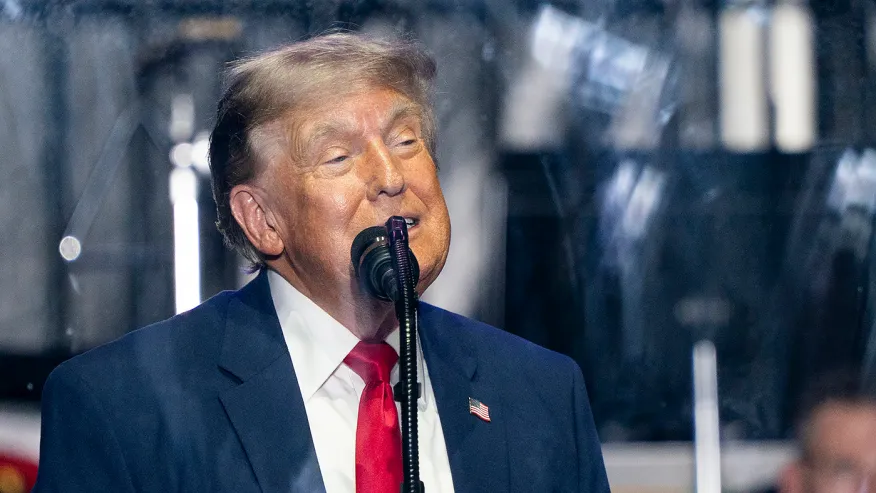
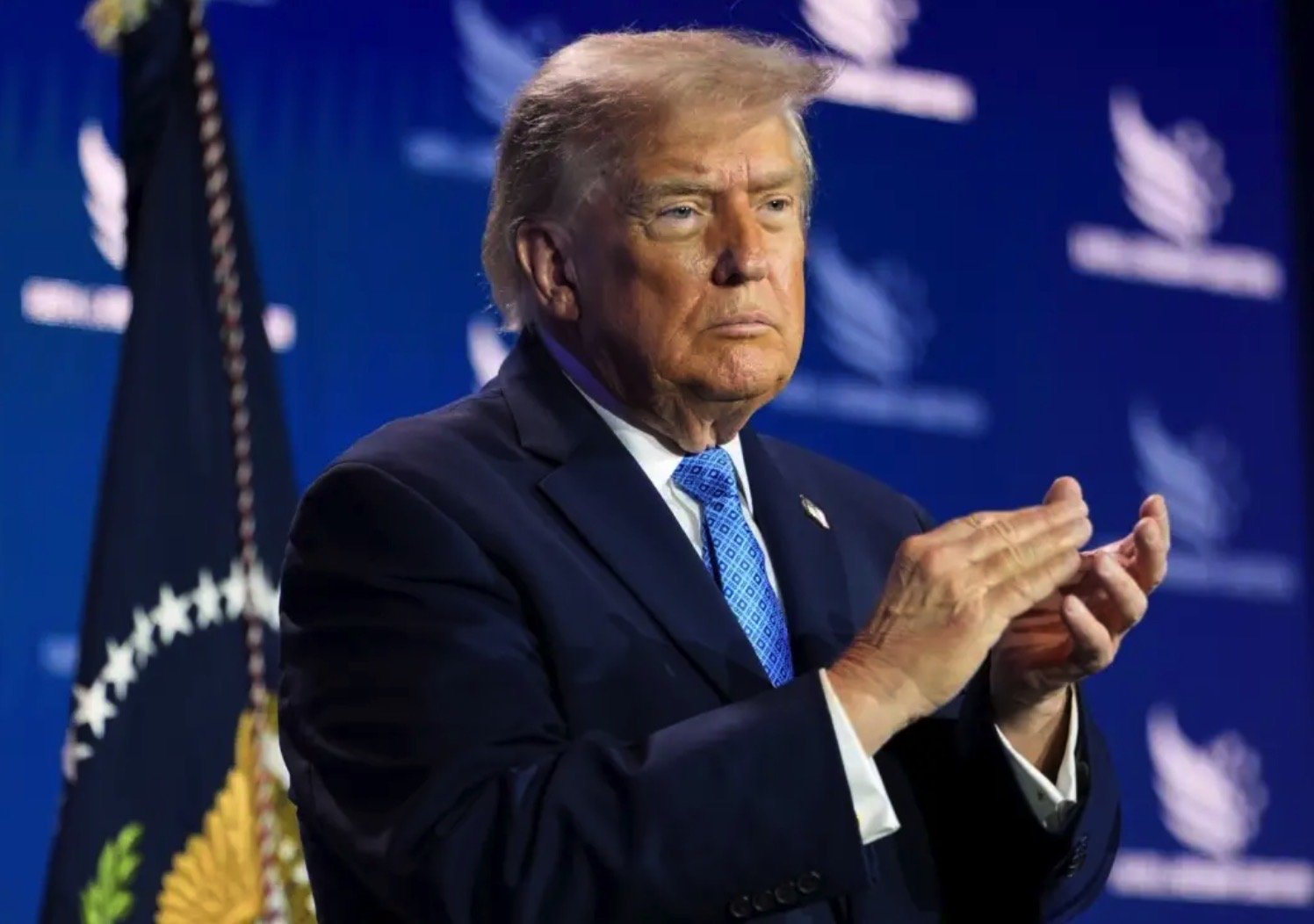
President Donald Trump’s focus on lavish White House projects has drawn renewed criticism from political opponents, some of whom have likened his priorities to those associated with the opulence of France’s last queen before the revolution.

Get today's headlines by email

The issue came into focus during a recent flight back to Washington from Trump’s Mar-a-Lago estate in Florida. While aboard Air Force One, the president presented artist renderings of a planned $400 million ballroom for the White House, highlighting design elements including hand-carved Corinthian columns that he described as “top-of-the-line.”
Trump said he had limited time to devote to the project because of other responsibilities, noting that he was “fighting wars and other things.” He then went on to discuss in detail what he called plans for “the greatest ballroom anywhere in the world.”
Democrats have seized on the episode to argue that the president is focused on grand projects while voters are increasingly concerned about economic pressures and government funding disputes. Some Republicans have also privately expressed concern that such attention could distract from issues important to voters ahead of November’s midterm elections.
Grand designs alongside policy agenda
The contrast was highlighted again on Thursday. As Trump travelled to Las Vegas to promote tax cuts aimed at workers who rely on tips, his administration was also advancing plans for another high-profile construction project in Washington.
Those proposals include a 250-foot Triumphal Arch near the Lincoln Memorial, featuring a statue resembling the Statue of Liberty and flanked by two golden eagles.
Trump’s political appeal has long included an unusual combination of populist messaging and personal wealth. A billionaire real estate developer before entering politics, he has emphasized economic growth and working-class issues in his campaigns, including during the 2024 election that returned him to the White House.
Republican strategist Rick Tyler noted that Trump’s wealth was initially viewed by supporters as evidence of business success when he first ran for president in 2016.
Comparisons from critics
Despite that background, critics say the focus on ornate projects appears disconnected from the financial concerns facing many Americans.
Senator Andy Kim, a Democrat from New Jersey, wrote on social media that the president had time to showcase a “billionaire backed ballroom” while the country was dealing with war and rising fuel prices.
California Governor Gavin Newsom, who is widely seen as a possible presidential contender in 2028, has drawn more pointed parallels with Marie Antoinette. During last year’s government shutdown, Newsom posted an AI-generated image depicting Trump in the role of the French queen and accused him of prioritising luxury projects over public needs.
White House defends president’s record
The White House rejected the criticism, saying Trump’s achievements would define his presidency.
Spokesman Davis Ingle said the president would be remembered as “the most successful and consequential president in our lifetime,” adding that his policies would shape the country long after his administration ends.
Trump faced similar criticism during his first term, but he has recently shown little hesitation in embracing the grand symbolism associated with the presidency.
A federal judge has ruled that construction on the above-ground portion of the ballroom project must pause until Congress grants approval. So far, however, the Republican-controlled House and Senate have not made legislation to advance the project a priority.
Senator John Kennedy, a Republican from Louisiana, said last year he was not closely following the debate, commenting that he was “not much into architecture.”
Voter perceptions ahead of midterms
Polling suggests concerns about political disconnect extend beyond the president alone. A February survey conducted by ABC News, The Washington Post and Ipsos found that about two-thirds of Americans consider Trump out of touch with ordinary people’s concerns. The same proportion expressed a similar view of the Democratic Party.
Elaine Kamarck, author of Why Presidents Fail And How They Can Succeed Again, said presidents often become absorbed in their own political narratives, but argued that Trump’s approach stands out.
She cited not only the ballroom plan but also other symbolic initiatives, including renovations to the White House, proposals to place Trump’s signature on paper currency and a move to rename the Kennedy Center after himself.
Supporters, however, argue that such projects align with Trump’s public persona. Texas-based Republican consultant Brendan Steinhauser said many voters expect the president’s bold style and background as a businessman to shape his approach to the presidency.
Still, Steinhauser warned that rising gasoline prices and economic uncertainty could shift voter attitudes before the midterm elections, giving Democrats an opportunity to frame the political debate around Trump and wealthy allies.

Join the discussion?

Already a member?


Adapted by ASEAN Now. Source 18 April 2026
webfact
webfact
Support for the United Kingdom rejoining the European Union has risen to a majority of voters, according to new polling released nearly ten years after the country voted to leave the bloc.

Get today's headlines by email

The research suggests that while many voters still back the government’s current approach to managing relations with the EU, enthusiasm for that strategy is limited. Analysts warn that the governing Labour Party could face political risks if it maintains a cautious stance on the issue.


Majority Back EU Membership
The survey found that 53% of voters support the UK rejoining the EU, with particularly strong backing among supporters of centre-left parties.
Among Labour voters, support for returning to the EU reached 83%, while 84% of Liberal Democrat voters and 82% of Green Party voters expressed the same view.
Backing for the policy was lower among right-leaning voters. The research indicated that 39% of Conservative supporters and 18% of Reform voters favoured rejoining the bloc.
The findings come from research conducted by Best for Britain, a civil society group that campaigns for closer ties between the UK and Europe.
Despite the growing support for EU membership, the government’s current approach to relations with Brussels still received approval from 61% of voters overall. However, only 19% said they supported the policy strongly.
Questions Over Labour’s Strategy
Researchers and political analysts say Labour’s cautious messaging on Brexit could create electoral pressures.
Tom Brufatto, director of policy and research at Best for Britain, said policies that fall between full integration and clear separation could struggle to satisfy voters.
The research examined six possible approaches to the UK’s relationship with the EU. These included continuing Labour’s current strategy, maintaining the Brexit deal negotiated by former prime minister Boris Johnson, diverging further from EU rules, joining the customs union and single market, or fully rejoining the EU.
Brufatto said returning to the customs union and single market would present major political challenges because it would reopen debates over sovereignty and regulatory control.
Such arrangements would require the UK to adopt large areas of EU regulation, he said, potentially making it difficult for any party to sustain public support during lengthy negotiations.
Concerns About ‘Rule-Taking’
Under Labour’s existing policy, the UK would align with certain EU standards without rejoining the single market, a position critics say leaves Britain adopting regulations it has little influence over.
The government has already pursued agreements aimed at easing trade barriers, including a sanitary and phytosanitary (SPS) deal designed to simplify procedures for agricultural exports.
However, negotiations over that agreement highlight the regulatory complexity involved. Since leaving the EU in 2020, the UK has diverged from 76 EU rules connected to the SPS framework.
At a Westminster event presenting the research, polling expert John Curtice questioned Labour’s low-profile approach to Brexit. He suggested that the party risked losing more support among pro-European voters than it might lose to pro-Brexit parties.
Curtice said Labour had lost roughly one in ten voters to Reform but around one in four to the Liberal Democrats and Greens.
Long-Term Debate Over Brexit
Former Labour leader Neil Kinnock said he believed the UK would eventually seek to return to the EU, although he did not suggest when that might happen.
He argued that Brexit had caused significant harm to the country and predicted that public opinion could shift further over time.
Anand Menon, director of the research organisation UK in a Changing Europe, said Labour’s position reflects a tension between acknowledging the economic costs of Brexit and proposing only limited policy changes.
He noted that estimates cited by the government suggest Brexit has reduced the size of the UK economy by around 8% of GDP, while the planned reset in relations with the EU is expected to generate growth of about 1%.
Menon added that the strategy of aligning with EU rules sector by sector could require continuous monitoring to prevent regulatory divergence, creating an ongoing administrative burden for policymakers.

Join the discussion?

Already a member?


Adapted by ASEAN Now. Source 18 April 2026

webfact
webfact
Pope Leo has warned that the world is being damaged by “tyrants,” delivering pointed remarks days after US President Donald Trump criticised the pontiff over his stance on the war involving Iran.

Get today's headlines by email

Speaking during a visit to the city of Bamenda in Cameroon, the pope called for peace and condemned leaders who use religion to justify violence. His comments came amid a public exchange with Trump, who had accused the pontiff of taking a position that could allow Iran to obtain nuclear weapons.
“The world is being ravaged by a handful of tyrants, yet it is held together by a multitude of supportive brothers and sisters,” Leo said during a speech in Bamenda on Thursday.
Trump later downplayed the dispute, telling reporters that he had the right to disagree with the pope.
“The pope made a statement. He says Iran can have a nuclear weapon. I say Iran cannot have a nuclear weapon,” Trump said.
Visit to conflict-hit Bamenda
The remarks were delivered during the pope’s visit to Bamenda, a city widely regarded as the centre of Cameroon’s long-running Anglophone crisis. The conflict between government forces and separatist groups has led to more than 65,000 deaths and displaced more than half a million people.
Leo arrived in Cameroon’s capital, Yaoundé, on Wednesday as part of a four-country tour of Africa. During his arrival, he urged the country’s authorities to tackle corruption while addressing the ongoing unrest.
On Thursday, the pope travelled to Bamenda, where thousands gathered to welcome him as he arrived in the popemobile. Many in the crowd waved branches symbolising peace.
Among those present was Jamconfidence Masha, a clothes maker whose shop was destroyed during the conflict. She said the pope’s visit carried a message of “love, hope and unity” for people affected by the violence.
During his visit, Leo also heard testimonies from individuals directly impacted by the crisis, including a group of nuns who had previously been kidnapped.
Warning against misuse of religion
In his address, the pontiff criticised leaders who exploit religious language for political or military purposes.
He condemned those who “manipulate religion and the very name of God for their own military, economic and political gain,” saying such actions drag what is sacred “into darkness and filth.”
Leo also criticised the exploitation of Africa’s natural resources by outside actors, arguing that profits from those resources often fuel further violence.
“Those who rob your land of its resources generally invest much of the profit in weapons, thus perpetuating an endless cycle of destabilisation and death,” he said.
“It is a world turned upside down, an exploitation of God’s creation that must be denounced and rejected by every honest conscience.”
Trump criticism and response
The latest exchange between the pope and Trump began earlier in the week, when the US president criticised Leo’s comments on the conflict involving Iran.
Speaking to reporters on Sunday, Trump described the pope as “terrible for foreign policy” and said he was not a supporter of the pontiff.
“We don’t like a pope that’s going to say that it’s OK to have a nuclear weapon,” he said.
Leo later addressed the remarks while speaking to reporters aboard a flight on Monday.
“The things I say are not meant as attacks on anyone,” the pope said, adding that he had no fear of the Trump administration and would continue speaking openly about the message of the Gospel.
Trump insisted on Thursday that the disagreement did not amount to a personal feud, saying he was not “fighting” with the pope and that the pontiff could “say what he wants.”


Join the discussion?

Already a member?


Adapted by ASEAN Now. Source 18 April 2026
webfact
webfact
The US Justice Department has removed the federal prosecutor overseeing an investigation into former CIA director John Brennan after she resisted pressure to rapidly pursue criminal charges, according to people familiar with the matter.

Get today's headlines by email

Maria Medetis Long, a career prosecutor based in Miami, informed lawyers connected to the case on Friday that she would no longer lead the probe. Sources said she had overseen the politically sensitive investigation for several months while facing demands from President Donald Trump to prosecute Brennan and other prominent critics.
The inquiry centres on one of Trump’s long-standing grievances: the US intelligence community’s 2017 assessment that Russia interfered in the 2016 presidential election in a bid to help his campaign.
Prosecutor reassigned amid pressure over pace
The decision follows growing pressure within the Justice Department to accelerate the case. Trump recently dismissed Attorney General Pam Bondi, reportedly in part due to frustration with the pace of investigations he has sought against political opponents.
Since Bondi’s removal, acting attorney general Todd Blanche has stepped up efforts to advance cases that align with the president’s priorities while seeking to remain in the role permanently.
People familiar with the Brennan investigation said Justice Department officials recently held meetings with Miami US Attorney Jason Reding Quiñones and members of his office to review the probe’s progress. During those discussions, Quiñones reportedly indicated that potential charges could still be months away.
Senior officials in Washington were said to have expressed dissatisfaction with that timeline.
In a statement, the Justice Department said the reassignment reflected routine management decisions.
“It is completely healthy and normal to change members of legal teams,” the department said, adding that attorneys are often moved between cases so offices can allocate resources effectively.
Investigation into statements on Russian interference
Investigators have recently conducted witness interviews and issued additional subpoenas, according to sources briefed on the matter. The activity suggests the investigation is continuing, though not at the speed some senior officials had hoped.
Prosecutors in the Southern District of Florida are examining whether Brennan misled Congress in testimony related to the intelligence assessment on Russian election interference.
During congressional testimony in 2017, Brennan said Russia had “brazenly interfered” in US elections and had made contact with individuals linked to Trump’s campaign. However, he did not characterise the activity as collusion.
Subsequent investigations into the matter concluded that Russia did interfere in the election but did not establish that Trump’s campaign or associates conspired with the Russian government. The inquiry also did not clear Trump of possible obstruction of justice.
Experienced prosecutor removed from high-profile case
Medetis Long is considered an experienced and respected federal prosecutor, according to current and former Justice Department officials.
She previously played a key role in securing a life sentence against a man accused of attempting to assassinate Trump at his golf course in West Palm Beach, a case that strengthened her standing among figures aligned with the president.
Some officials had viewed her leadership of the Brennan investigation as a sign that charging decisions would be driven by evidence rather than political pressure.
Her removal also echoes tensions in another Justice Department office earlier this year. In that case, prosecutors in the Eastern District of Virginia resisted pressure to file charges against former FBI director James Comey and New York attorney general Letitia James, citing insufficient evidence.
Trump later dismissed the US attorney overseeing that office and replaced him with Lindsey Halligan, a former personal lawyer. Charges were subsequently filed but later dismissed by courts because of questions surrounding Halligan’s appointment.
Investigation continues
Despite the change in leadership, people familiar with the matter said the Brennan investigation remains active. Prosecutors continue to gather documents and testimony as they evaluate whether charges should ultimately be filed.
Brennan’s legal team has been preparing for the possibility of an indictment for months, according to individuals familiar with the case.

Join the discussion?

Already a member?


Adapted by ASEAN Now. Source 18 April 2026
webfact
webfact
The United Kingdom is seeking deeper cooperation with the European Union as geopolitical tensions and economic pressures reshape international alliances, nearly a decade after the country voted to leave the bloc.

Get today's headlines by email

According to Nick Thomas-Symonds, the UK’s minister responsible for relations with Europe, the government is pursuing what he described as an “ambitious” and “ruthlessly pragmatic” strategy to strengthen ties with European partners in areas considered vital to British interests.
Speaking in Brussels at the residence of the UK ambassador to the EU, Thomas-Symonds said growing instability around the world had shifted public attitudes toward closer cooperation with Europe.
“The world is in a dangerous situation,” he said, pointing to ongoing conflict in Ukraine, economic strain linked to the war involving Iran, and deteriorating relations with the United States.
Security Cooperation Already Deepening
Cooperation between Britain and European nations has already expanded in areas such as defence and security. The UK has taken a prominent role in supporting Ukraine during its war with Russia and has worked closely with European partners on defence planning.
European governments have also signalled a willingness to collaborate more closely on the joint procurement of military equipment, particularly after calls for Europe to shoulder a greater share of its own defence responsibilities.
Beyond defence, the UK government is now focusing on rebuilding economic links with the EU, which remains Britain’s largest export market.
Prime Minister Keir Starmer has pledged to reduce the bureaucratic barriers created by Brexit that complicate trade between British businesses and EU countries.
Plans for Post-Brexit Agreements
Officials say several agreements could be reached in the coming months ahead of the next UK–EU summit scheduled for later this year.
Negotiations are under way on a food and agricultural safety agreement intended to ease checks on products traded between the UK and the EU, including goods moving to Northern Ireland.
Other proposed arrangements include linking carbon emissions trading systems and establishing a youth mobility programme allowing young people from both sides to work or study temporarily in each other’s countries.
The two sides also confirmed that the UK would rejoin the Erasmus+ student exchange scheme, enabling more British students to study at universities across the EU.
The government says these steps do not undermine the result of the 2016 Brexit referendum and remain within its pledge not to rejoin the EU, its single market or its customs union.
Political Criticism at Home
Opposition politicians have criticised the strategy, arguing that closer alignment with EU standards could force Britain to follow rules set in Brussels.
Nigel Farage, leader of Reform UK, described plans for new legislation allowing ministers to fast-track laws that match EU regulations as a “backdoor attempt” to place Britain back under EU influence.
Kemi Badenoch, leader of the Conservative Party (UK), said the government should be open if it intends to move the country closer to EU membership.
Meanwhile, Liberal Democrats (UK) and the Green Party of England and Wales argue the government has not gone far enough to repair economic ties with Europe.
Costs and Trade-Offs
Any deeper relationship with Brussels could also involve financial or regulatory compromises.
Participation in Erasmus+ is expected to cost Britain about £570 million in its first year, while involvement in the EU’s research programme Horizon Europe costs roughly £2.2 billion annually. Supporters note that British institutions have already benefited significantly from research funding through the scheme.
EU officials have also suggested that the closer Britain wants to be to the EU’s single market, the more it may need to align with EU regulations. In some areas, that could include financial contributions to EU programmes.
For example, negotiations over access to the EU’s internal electricity market could involve payments into the EU’s cohesion fund, which supports economic development in poorer regions of the bloc.
Thomas-Symonds said such proposals represented opening positions in negotiations and insisted the government would only agree to arrangements that serve the UK’s national interest.
Balancing EU Ties and Global Relations
The push to rebuild links with Europe also raises questions about Britain’s global trade strategy.
One of the central arguments for Brexit was that the UK would gain greater freedom to negotiate trade agreements independently. However, closer alignment with EU rules in certain sectors could complicate future trade negotiations with other partners.
This includes relations with the United States. In May, Donald Trump and Starmer announced a limited bilateral trade agreement expanding agricultural market access and reducing some U.S. tariffs on British cars, although broader tariffs remain in place.
Trump has recently threatened to cancel the agreement after Britain declined to support U.S. military action against Iran.
Despite the tensions, Thomas-Symonds said the UK continues to maintain strong ties with Washington while also strengthening cooperation with Europe.

Join the discussion?

Already a member?


Adapted by ASEAN Now. Source 18 April 2026
webfact
webfact
British Prime Minister Keir Starmer is facing renewed political pressure after revelations that his government appointed Peter Mandelson as the United Kingdom’s ambassador to Washington despite security officials advising against the move.

Get today's headlines by email

Starmer said he was “absolutely furious” after learning that the Foreign Office had overridden the recommendation of security vetting officials earlier in 2025. The prime minister said he had not been informed of the decision at the time.
However, opposition politicians have questioned that claim, saying it was difficult to believe the prime minister would not have been aware of concerns surrounding the appointment.
Senior Official Resigns Over Decision
The controversy deepened after the Foreign Office’s most senior civil servant, Olly Robbins, resigned late on Thursday, taking responsibility for the decision.
Starmer said he regarded the situation as “staggering” and “unforgivable” and promised to present the full details of the case to Parliament on Monday.
Despite that pledge, the issue has become one of the most serious political challenges of his premiership. Critics say the decision to appoint Mandelson — a prominent figure in the governing Labour Party (UK) — was a major misjudgment that could ultimately threaten Starmer’s position.
Mandelson, a former European Union trade commissioner, was chosen for the Washington role partly because of his experience negotiating international trade agreements. The government hoped his background would help maintain strong economic ties with the administration of U.S. President Donald Trump.
The appointment was announced in December 2024, and Mandelson took up the post in February 2025 after undergoing security vetting procedures.
Security Concerns and Epstein Links
Security officials had warned that Mandelson’s past relationship with convicted sex offender Jeffrey Epstein posed potential reputational risks for the government.
According to the government’s chief secretary, Darren Jones, the security assessment recommended that Mandelson should not be appointed. He said the Foreign Office ultimately chose to proceed with the appointment regardless.
Jones said ministers were not informed about the outcome of the security review. He explained that the background checks, carried out by the government body known as UK Security Vetting, involve highly confidential assessments of financial, personal and other sensitive information.
Documents released earlier this year suggested that Starmer had been warned by advisers about possible reputational damage linked to Mandelson’s past association with Epstein, who died in prison in 2019 while awaiting trial on sex trafficking charges.
The controversy intensified in February after the United States Department of Justice released millions of pages of documents related to Epstein, revealing the extent of Mandelson’s contacts with the financier even after Epstein’s 2008 conviction for offences involving a minor.
Emails from 2009 appeared to show Mandelson sharing sensitive government information with Epstein while serving in the government of former prime minister Gordon Brown.
Opposition Demands Accountability
Opposition figures have strongly criticised Starmer’s explanation. Kemi Badenoch, leader of the Conservative Party (UK), said the claim that the prime minister had been unaware of the security concerns was “completely preposterous.”
“This story does not stack up,” she said, arguing that the situation pointed toward a potential resignation.
Ed Davey, leader of the Liberal Democrats (UK), said Starmer would have to step down if it emerged that he had misled Parliament or the public about the appointment.
Starmer dismissed those claims but acknowledged that trusting Mandelson had been a serious mistake. The prime minister dismissed Mandelson in September 2025 after evidence emerged that he had misrepresented the extent of his links with Epstein.
Starmer has since apologised to the public and to Epstein’s victims for what he described as believing “Mandelson’s lies.”
Criminal Investigation Continues
British police later launched a criminal investigation into Mandelson’s conduct and searched properties linked to him in London and western England.
Mandelson was arrested in February on suspicion of misconduct in public office. He has denied wrongdoing and has not been formally charged. Authorities say the investigation remains ongoing.
Separately, Andrew Mountbatten-Windsor, the brother of Charles III, is also under investigation over his own links to Epstein. He has likewise been arrested but has not been charged.
The developments have placed additional pressure on Starmer as he prepares to address Parliament about the controversy.


Join the discussion?

Already a member?


Adapted by ASEAN Now. Source 18 April 2026
webfact
webfact
Iran has announced the reopening of the Strait of Hormuz to commercial shipping, but U.S. President Donald Trump said American naval restrictions on Iranian vessels and ports will remain in place until a broader agreement is reached with Tehran.

Get today's headlines by email

The announcement came on Friday after Iran’s foreign minister, Abbas Araghchi, said the vital waterway was once again open to commercial traffic. The Strait of Hormuz carries roughly one-fifth of the world’s oil supplies, making it one of the most strategically important shipping routes in global energy markets.
Strait Reopens but Under Iranian Oversight
Araghchi wrote on social media that vessels would be able to pass through the strait using routes coordinated with Iranian authorities. The statement suggested Tehran would still exercise some oversight of traffic moving through the channel, though it remained unclear whether ships would be required to pay fees or meet other conditions.
Shipping data firm Kpler reported that traffic in the area was still limited to corridors requiring approval from Iranian authorities.
Initial reaction from Trump appeared positive. In a social media post, he said the strait was “fully open and ready for full passage.” Minutes later, however, the president said the U.S. naval blockade targeting Iranian ships and ports would remain “in full force” until negotiations with Iran were fully resolved.
Iran Criticises Continued U.S. Blockade
Iranian officials quickly criticised the continued blockade. A spokesman for the Iranian foreign ministry, Esmail Baghaei, said the U.S. move violated a ceasefire agreement reached earlier between Washington and Tehran.
Baghaei said Iran was committed to its obligations under the truce but warned that Tehran would respond if the United States failed to uphold its side of the agreement.
Trump said Iran, with assistance from the United States, was working to remove naval mines from the strait. The blockade had been imposed earlier in the week after Iran restricted shipping during fighting connected to the conflict involving the Lebanese militant group Hezbollah.
The ceasefire, which had been brokered with mediation from Pakistan, paused nearly seven weeks of hostilities involving Iran, Israel and the United States.
Nuclear Talks Remain Uncertain
Negotiations between Washington and Tehran continued to face difficulties. Direct talks held the previous weekend ended without agreement, with the sides still divided over Iran’s nuclear programme and other issues.
Trump suggested that a second round of discussions could take place soon, telling the news outlet Axios that Iranian officials were seeking further talks and that a meeting might occur over the weekend.
Oil markets responded to the developments, with prices falling on expectations that a deal could ease tensions affecting global energy supply.
However, the announcement about reopening the strait appeared to face internal questions within Iran. Two Iranian semi-official news agencies, including Fars and Mehr, questioned the clarity of the decision and said further confirmation from senior leadership might be required.
Iran’s Supreme National Security Council has recently taken on a central role in decision-making, amid uncertainty surrounding the status of the country’s supreme leader, Mojtaba Khamenei, who was reportedly injured earlier in the conflict.
Lebanon Ceasefire Raises Hopes for Wider Deal
At the same time, a 10-day ceasefire between Israel and Hezbollah in Lebanon appeared to be holding, raising hopes that broader diplomatic progress might be possible.
Trump said the United States had warned Israel against launching further offensive strikes in Lebanon, though U.S. officials later clarified that Israeli forces could still act in self-defence.
Israel’s prime minister, Benjamin Netanyahu, said his government had agreed to the ceasefire at Trump’s request but insisted Israel’s campaign against Hezbollah was not yet finished.
Israeli Defence Minister Israel Katz said Israeli forces would continue to hold territory in southern Lebanon, including a buffer zone extending about 10km into the country.
Celebrations were reported in Beirut after the truce took effect, although sporadic shelling and an Israeli strike were reported within hours, leaving one person dead and several wounded, according to Lebanese health authorities.
Mediators working on a broader settlement are focusing on three major issues: Iran’s nuclear programme, security around the Strait of Hormuz and compensation for wartime damage.
Trump also claimed Iran had agreed to hand over its stock of enriched uranium. Neither Iranian officials nor mediators involved in the talks have confirmed such an arrangement.


Join the discussion?

Already a member?


Adapted by ASEAN Now. Source 18 April 2026
webfact
webfact
A federal judge has once again halted construction of the above-ground section of a planned White House ballroom ordered by US President Donald Trump, ruling that the project cannot move forward without approval from Congress. However, the court allowed work on an underground facility linked to the project to continue.

Get today's headlines by email

In a ruling issued on Thursday, Richard Leon said the administration appeared to be attempting to bypass an earlier court order by reclassifying the ballroom project as essential to national security. The judge rejected that justification, writing that such claims do not allow the government to avoid legal requirements.
“National security is not a blank cheque to proceed with otherwise unlawful activity,” Leon wrote.
Legal challenge and appeal
The US Department of Justice has filed a notice of appeal following the ruling. Trump responded on social media, insisting the ballroom was urgently required and arguing that the courts should not be able to stop it.
The decision represents the latest setback for the project, which Leon had already temporarily halted in late March. At that time, he ruled that proper procedures had not been followed before construction began.
The earlier suspension came after a lawsuit filed by the National Trust for Historic Preservation, which accused the White House of bypassing regulatory requirements.
The group said the administration had begun construction without submitting plans to the National Capital Planning Commission, without carrying out an environmental assessment, and without seeking authorisation from Congress.
The lawsuit also argued the move violated the US Constitution, which gives Congress authority over federal property.
Dispute over the project
Trump defended the ballroom plan in posts on his Truth Social platform, saying construction was ahead of schedule and within budget.
He criticised the judge’s decision, writing that it would prevent future US presidents and international leaders from having a secure venue for large meetings.
The president has described the underground portion of the project as a support structure for a larger complex that would include bomb shelters and medical facilities. According to Trump, the underground facilities would not function properly without the above-ground ballroom.
“It’s all tied together as one big, expensive, and very complex unit,” he wrote, adding that it was vital for national security and military operations.
Wider plans for Washington
The ballroom project forms part of a broader effort by Trump to reshape parts of Washington.
The White House’s East Wing, originally built in 1902, was demolished in October to make space for the development. Initial plans called for a ballroom that could host 500 guests, but the design was later expanded to accommodate up to 1,350 people.
Separately, a federal panel has given preliminary approval for another proposal: a 250-foot (76m) monument known as the “Arc de Trump”.
The United States Commission of Fine Arts voted to move the project forward despite strong criticism from members of the public and preservation groups.
If eventually approved, the monument would stand taller than both the United States Capitol and the Lincoln Memorial. Plans released by the White House show a gold-accented arch topped by a statue resembling the Statue of Liberty holding a torch and wearing a crown.
Funding documents show that the National Endowment for the Humanities plans to allocate $2m in special funds and $13m in matching funds to the monument. Trump has previously said that leftover funds from the ballroom project could also help finance the arch.
Project faces uncertain path
With the latest ruling in place, construction of the ballroom’s visible structures cannot proceed unless Congress authorises the project or the decision is overturned on appeal.
For now, the administration may continue work only on the underground elements while the legal dispute continues.

Join the discussion?

Already a member?


Adapted by ASEAN Now. Source 17 April 2026
webfact
webfact
More than one million people across the European Union have signed a citizen petition urging the bloc to suspend its association agreement with Israel over alleged crimes committed during the war in Gaza.

Get today's headlines by email

The initiative has reached the threshold required under the EU’s European Citizens’ Initiative (ECI) mechanism, meaning the European Commission and the European Parliament must now formally review the proposal.
Organisers say the campaign will continue collecting signatures with a target of 1.5 million before submissions close.
Petition targets EU–Israel agreement
The petition calls for the full suspension of the EU–Israel Association Agreement, a treaty that forms the basis of political relations and economic cooperation between the European Union and Israel.
In the text of the initiative, organisers accuse Israel of carrying out “an unprecedented level of killing and injury of civilians” in Gaza, as well as causing widespread displacement and damage to hospitals and medical infrastructure.
They argue that Israel has breached several obligations under international law and cite what they describe as a failure to prevent genocide following provisional measures ordered by the International Court of Justice.
The campaign was launched by the European Left Alliance (ELA) together with civil society groups and pro-Palestinian organisations.
Next steps under EU rules
Under the European Citizens’ Initiative process, once the required number of signatures has been collected across the EU’s 27 member states, national authorities have three months to verify them.
After verification, the proposal can be formally submitted to the European Commission.
The Commission must then set out whether it intends to act on the request or explain why it does not plan to do so. The European Parliament is also required to organise a hearing with the organisers and may hold a debate or vote on a resolution.
Although the initiative compels EU institutions to consider the proposal, it does not oblige them to introduce legislation or policy changes.
Divisions among member states
Diplomats say the prospect of suspending the EU–Israel Association Agreement remains uncertain due to divisions among EU member states.
The agreement, which entered into force in 2000, provides the framework for diplomatic relations and trade between the two sides. The European Union is Israel’s largest trading partner, with trade in goods reaching €42.6bn in 2024.
Calls for suspending the agreement intensified during Israel’s military campaign in Gaza.
In September 2025, European Commission President Ursula von der Leyen proposed partially suspending the agreement, citing what she described as a “man-made famine” in Gaza and warning that the conflict threatened prospects for a two-state solution.
However, the proposal has not advanced.
Several EU governments, including Germany, Hungary and the Czech Republic, have opposed the move. Their position has prevented the formation of the qualified majority required to introduce trade restrictions.
According to diplomats who spoke to Euronews, a number of member states reiterated their reluctance to proceed during recent discussions.
While the citizens’ initiative now obliges EU institutions to examine the proposal, political divisions within the bloc mean any decision to suspend the agreement would face significant hurdles.

Join the discussion?

Already a member?


Adapted by ASEAN Now. Source 17 April 2026
webfact
webfact
A prayer delivered by US Defense Secretary Pete Hegseth during a Pentagon worship service has drawn attention after appearing to echo a famous monologue from the 1994 film Pulp Fiction rather than a passage from the Bible.

Get today's headlines by email

Hegseth led the prayer on Wednesday while discussing the Sandy 1 rescue mission, an operation earlier this month that retrieved downed pilots stranded in Iran. He told the audience that the prayer — which he called “CSAR 25:17”, referring to Combat Search and Rescue — was intended to reflect the biblical verse Ezekiel 25:17.
However, viewers noted that the wording closely resembled the fictional version of the verse recited by a character in Pulp Fiction, spoken by actor Samuel L. Jackson.
Prayer tied to rescue mission
During the service, Hegseth said the prayer had been delivered at the start of the Sandy 1 mission and invited the audience to repeat it with him.
“The path of the downed aviator is beset on all sides by the inequities of the selfish and the tyranny of evil man,” he said. “Blessed is he who, in the name of camaraderie and duty, shepherds the lost through the valley of darkness, for he is truly his brother’s keeper and the finder of lost children.”
He continued: “And I will strike down upon thee with great vengeance and furious anger those who attempt to capture and destroy my brother, and you will know my call sign is Sandy 1 when I lay my vengeance upon thee. Amen.”
Hegseth described the prayer as a reference to Ezekiel 25:17, a verse from the Hebrew Bible.
Differences from the biblical verse
The wording of the biblical passage differs significantly from the prayer used in the service. In most translations, Ezekiel 25:17 reads: “And I will execute great vengeance upon them with furious rebukes; and they shall know that I am the Lord, when I shall lay my vengeance upon them.”
By contrast, the speech in Pulp Fiction includes additional lines not found in scripture. In the film, Samuel L. Jackson’s character, Jules Winnfield, recites a stylised version of the verse before killing an adversary.
The fictional passage begins: “The path of the righteous man is beset on all sides by the inequities of the selfish and the tyranny of evil men,” and continues with several lines describing a protector guiding the weak “through the valley of darkness”.
Similarities noted by viewers
Observers quickly pointed out the similarities between Hegseth’s prayer and the film’s monologue. While some wording was altered to reference aviators and military duty, much of the phrasing followed the structure of the speech delivered in the Quentin Tarantino film.
In the movie, the character concludes the monologue with the line: “And you will know my name is the Lord when I lay my vengeance upon you.”
Hegseth’s version instead referenced the Sandy 1 call sign used in the rescue operation.
The Pentagon has not publicly commented on the comparisons.


Join the discussion?

Already a member?

Adapted by ASEAN Now. Source 17 April 2026
webfact
webfact
Councillors in the City of London have agreed to ask Andrew Mountbatten‑Windsor to voluntarily relinquish his inherited Freedom of the City of London, an honorary status he received in 2012.

Get today's headlines by email

The honour was granted “by virtue of patrimony”, because his father, Prince Philip, was already a Freeman of the city. Under the rules governing the historic title, such inherited freedoms cannot be formally revoked by the authorities.
A spokesperson for the City of London Corporation said elected members had agreed to write to Mountbatten-Windsor asking him to give up the status voluntarily.
“Elected members have today agreed to write to Mr Mountbatten-Windsor, inviting him to formally relinquish the Freedom,” the spokesperson said. The corporation added it would review any response at a future meeting and then decide whether further action might be taken.
Historic honour with limited modern powers
The Freedom of the City of London is one of the capital’s oldest civic traditions, with origins believed to date back to 1237. Historically, the title allowed recipients to conduct trade within the city and granted privileges such as the symbolic right to drive sheep across London Bridge without paying a toll.
Today, the honour is largely ceremonial and is typically awarded to individuals nominated by councillors for contributions to public life. Among recent recipients are actor Cate Blanchett and comedian Lenny Henry.
Mountbatten-Windsor’s siblings, including King Charles III, also hold the Freedom of the City of London.
According to the corporation, applications granted through patrimony are not considered or endorsed by elected members, and there is currently “no effective legal mechanism” to remove such honours once they have been inherited.
Scrutiny following controversies
The request follows a series of developments that have intensified scrutiny of Mountbatten-Windsor in recent years. The former prince lost his royal titles, styles and military honours after further details emerged about his past association with convicted sex offender Jeffrey Epstein. Mountbatten-Windsor has denied wrongdoing.
In February he was arrested on suspicion of misconduct in public office after correspondence linked to the so-called Epstein files suggested he may have shared sensitive trade information. He was released after 11 hours in custody and remains under investigation.
Mountbatten-Windsor has largely withdrawn from public life and has not commented publicly on the City of London’s request.
Previous removals of civic honours
The move comes after another civic honour connected to Mountbatten-Windsor was withdrawn. In March, councillors in York voted unanimously to remove the Freedom of the City of York from Sarah Ferguson, citing her links to Epstein.
Both Ferguson and Mountbatten-Windsor had originally been granted York’s honour in 1987 as a wedding gift during an official visit. York councillors had already voted in 2022 to strip Mountbatten-Windsor of the title, making him the first person to have that honour removed.
Despite his loss of royal roles, Mountbatten-Windsor remains eighth in line to the British throne. Any formal removal from the line of succession would require legislation passed by the UK Parliament and the agreement of the 15 Commonwealth realms where the monarch is head of state. Canada, Australia and New Zealand have indicated support for such a move.

Join the discussion?

Already a member?


Adapted by ASEAN Now. Source 17 April 2026
webfact
webfact
El Salvador has enacted a new law allowing courts to impose life sentences on minors as young as 12 for serious crimes, including murder, terrorism and rape, as President Nayib Bukele’s government continues a sweeping crackdown on gang violence.

Get today's headlines by email

The legislation was published by the government on Tuesday and is scheduled to take effect on April 26. It forms part of a broader set of security policies introduced during a nationwide state of emergency that has been in force for more than four years.
Authorities say the measures are aimed at dismantling criminal gangs that have long plagued the country. Human rights organisations, however, warn the policies risk undermining legal protections and could lead to further abuses.
Hardline anti-crime campaign
El Salvador has been operating under a state of emergency since March 2022, when a surge in gang-related killings prompted the government to grant expanded powers to police and the military.
The emergency decree temporarily suspended certain civil liberties and was initially intended to last 30 days. It has since been extended repeatedly, becoming a central feature of the government’s anti-crime strategy.
During this period, security forces have carried out a mass arrest campaign that has resulted in more than 90,000 people being detained.
According to rights groups including Human Rights Watch, the crackdown has contributed to one of the world’s highest incarceration rates, with nearly 1.9 percent of El Salvador’s population currently in prison.
Some detainees have reportedly been held without formal charges, while others have faced mass trials. A legal change approved in 2023 allows courts to try up to 900 defendants simultaneously.
Constitutional change expands penalties
The new sentencing rules for minors stem from a constitutional amendment approved in March. The measure was promoted by President Bukele and passed by the legislative assembly, which is dominated by his Nuevas Ideas party.
Supporters argue that harsher penalties are necessary to deter violent crime, including offences carried out by youth linked to gangs.
Following the amendment’s approval, Bukele criticised opponents of the reform on social media, saying they were too lenient toward serious criminals.
“We shall see who supports this amendment, and who will dare to argue that the Constitution should continue to prohibit murderers and rapists from remaining in prison,” he wrote in a post on March 17.
Although the law allows life imprisonment for minors, it includes provisions for periodic reviews of sentences and the possibility of supervised release.
International concern over children’s rights
International organisations have expressed concern about the new legislation. The United Nations Children’s Fund (UNICEF) warned that life sentences for children could have lasting effects on their development and may not reduce crime.
In a joint statement with the UN Committee on the Rights of the Child, UNICEF said imposing extremely long prison terms on minors conflicts with international standards on child justice.
“The imposition of life sentences and excessively long detention measures on children and adolescents constitute a contradiction of the standards enshrined in the Convention on the Rights of the Child,” the organisations said.
They emphasised that international guidelines require justice systems to prioritise rehabilitation and reintegration for children in conflict with the law.
Human rights advocates have also urged El Salvador to end the prolonged state of emergency, arguing that the anti-crime campaign has weakened legal safeguards.
Last month, the International Group of Experts for the Investigation of Human Rights Violations under the State of Emergency in El Salvador released a report alleging that crimes against humanity may have been committed during the crackdown.
The report cited statements from President Bukele acknowledging that at least 8,000 detainees were innocent.
“These are not isolated cases, but a policy in which crimes are committed on a large scale and in a systematic manner,” said expert Jose Guevara.
Ongoing debate over security policies
Despite criticism, Bukele’s anti-gang strategy remains widely supported within El Salvador, where the government says tough measures have helped reduce violence and restore public safety.
The introduction of life sentences for young offenders is likely to intensify debate over the balance between security and human rights as the state of emergency continues.

Join the discussion?

Already a member?


Adapted by ASEAN Now. Source 17 April 2026
webfact
webfact
Russia carried out one of its largest aerial assaults in months on Ukraine overnight, launching hundreds of drones and missiles that killed at least 18 people across several cities, according to Ukrainian officials.

Get today's headlines by email

Authorities said the attacks struck multiple regions in waves, hitting major urban centres including Kyiv, Odesa and Dnipro. The barrage also coincided with Ukrainian drone strikes inside Russia, where officials reported two fatalities.
The escalation follows a brief ceasefire over Orthodox Easter last weekend, during which both sides accused each other of repeatedly violating the truce.
Deadly strikes across major cities
Local officials reported the highest death toll in the southern port city of Odesa, where nine people were killed in the strikes. Five others died in the central city of Dnipro.
In the Ukrainian capital, Kyiv, four people were killed, including a 12-year-old boy, according to Mayor Vitali Klitschko. Authorities said 45 people were injured in the city.
Air raid sirens sounded in Kyiv at around 02:30 local time on Thursday, followed by explosions shortly afterward. Footage shared online showed fires burning in central districts and large plumes of smoke rising into the sky. One video appeared to show a drone crashing into the side of a residential apartment building.
Emergency workers later pulled a mother and child from the rubble of a collapsed 16-storey building in the Podil district, Klitschko said. Four emergency medical workers were also among those injured in the northern part of the capital.
In Dnipro, regional head Oleksandr Ganzha initially said four people had been killed and around a dozen injured. City Mayor Borys Filatov later confirmed that another body had been discovered, raising the death toll there to five.
Elsewhere, in the north-eastern city of Kharkiv, a drone strike injured two civilians — a 77-year-old woman and a 66-year-old man.
Officials also said the southern cities of Mykolaiv and Kherson were left without electricity following the attacks.
Hundreds of drones and missiles launched
Ukraine’s air force reported that Russia fired 659 drones along with 44 cruise and ballistic missiles during the previous 24 hours.
According to the military, Ukrainian air defences shot down 636 drones and 31 missiles. However, officials said strikes still hit 26 locations across the country.
Ukrainian President Volodymyr Zelensky condemned the bombardment, saying it demonstrated the need for continued international pressure on Moscow.
Writing on X, he argued that sanctions imposed by the United States and European allies should not be weakened. “Russia is betting on war,” Zelensky said, adding that protecting lives and pushing for peace must remain priorities.
Earlier in the week, Zelensky warned that Ukraine was facing a severe shortage of Patriot air defence missiles, which are capable of intercepting ballistic missiles.
Global supplies of the US-made systems are limited, and many have reportedly been redirected to the Middle East since the United States and Israel began military operations against Iran in February.
Ukrainian Foreign Minister Andrii Sybiha described the latest Russian assault as a “war crime” and urged Ukraine’s allies to increase sanctions pressure on Moscow while expanding military support for Kyiv.
Strikes reported inside Russia
Russian officials also reported casualties from Ukrainian attacks. In the southern Krasnodar region, two people — including a 14-year-old girl — were killed in a Ukrainian drone strike in the city of Tuapse, according to regional governor Veniamin Kondratyev. Five others were reported injured.
The war, which began with Russia’s full-scale invasion of Ukraine in February 2022, has now entered its fifth year.
Although several rounds of peace talks have taken place with the United States acting as a mediator, negotiations have stalled after Washington shifted diplomatic attention toward the conflict in the Middle East.
Ukraine has repeatedly called for a comprehensive ceasefire as the first step toward a negotiated settlement. Russia, however, insists that a broader peace agreement must be reached before any ceasefire is implemented, a stance Kyiv says shows Moscow is not genuinely pursuing an end to the war.


Join the discussion?

Already a member?


Adapted by ASEAN Now. Source 17 April 2026
webfact
webfact
Europe could face significant pressure on aviation fuel supplies within weeks if disruptions to Middle Eastern exports continue, according to the International Energy Agency (IEA).

Get today's headlines by email

The agency warned that current stockpiles of jet fuel across Europe may last for only about six weeks under present conditions, raising the prospect of flight cancellations if replacement supplies cannot be secured quickly.
The warning comes after the Strait of Hormuz — a key shipping route for fuel exports from the Gulf — has remained effectively closed for more than six weeks following tensions linked to US and Israeli military action against Iran.
Gulf Disruption Strains Aviation Fuel Market
The IEA said the closure of the vital shipping corridor has severely disrupted the global aviation fuel market. Exports from the Gulf region represent the largest single source of jet fuel traded worldwide.
Fatih Birol, executive director of the agency, told the Associated Press that European inventories could reach a critical point by June unless the region can replace at least half of its lost Middle Eastern imports.
The organisation’s latest monthly oil market report said the disruption had significantly complicated global fuel flows. It noted that refining centres in countries such as South Korea, India and China also rely heavily on crude oil imports from the Middle East, limiting their ability to compensate for the shortfall.
As a result, the agency said the situation had “thrown a proverbial wrench” into aviation fuel supply chains.
Efforts to Replace Lost Imports
European countries have been trying to secure alternative supplies as the disruption continues.
Analysts say additional shipments are arriving from the United States and Nigeria, and the IEA reported a sharp increase in US jet fuel exports in recent weeks.
However, the agency warned that even if all of those shipments were redirected to Europe, they would replace only slightly more than half of the fuel typically imported from the Middle East.
The report outlined several possible outcomes. If Europe cannot replace at least half of its lost imports, fuel shortages could begin to appear at certain airports, potentially forcing airlines to cancel flights and reduce demand.
Even if three-quarters of the missing supply can be replaced, shortages could still occur later in the summer, possibly by August.
Airlines Monitor Risks Ahead of Summer Travel
Airlines and governments say they are closely monitoring the situation but stress that major disruptions have not yet occurred.
The UK government said it was working with airlines and fuel suppliers to ensure travel and business activity could continue. Officials said British carriers had not yet reported supply problems.
Airlines UK, which represents the country’s airline industry, said it was discussing possible contingency measures with the government in case the situation worsens. These could include regulatory adjustments intended to protect passengers and maintain the competitiveness of the aviation sector.
Industry analysts warn that even if shipments from the Gulf resume soon, the effects of the disruption could still be felt during the peak summer travel season.
Amaar Khan, who oversees European jet fuel pricing at Argus Media, said shortages in some regions were becoming increasingly likely. Larger hubs such as London Heathrow would likely receive priority supplies, he said, while smaller airports could face tighter availability.
Fuel Prices Surge Amid Supply Concerns
The disruption has already pushed aviation fuel prices sharply higher.
Benchmark European jet fuel prices reached a record $1,838 per tonne in early April, more than double the roughly $831 per tonne recorded before the conflict began.
Fuel typically accounts for between 20% and 40% of airlines’ operating costs, meaning sustained price increases can quickly affect profitability.
The European Commission said earlier this week that there was currently no evidence of fuel shortages across the European Union, although officials acknowledged that supply pressures could develop in the coming weeks.
Airlines have already begun adjusting operations. Dutch carrier KLM said it plans to cancel about 160 European flights in the coming month due to higher fuel costs, though it said the cuts represent less than 1% of its regional schedule and are not linked to fuel shortages.
Low-cost airline EasyJet also reported an additional £25m in fuel expenses in March, despite having secured much of its fuel in advance through hedging agreements.
Industry Calls for Policy Clarity
Aviation groups have urged European authorities to prepare for potential disruption.
Airlines for Europe has asked the European Union to clarify passenger compensation rules so that cancellations caused by fuel shortages or airspace closures linked to the conflict are classified as “extraordinary circumstances”.
Such a designation would exempt airlines from paying compensation in those situations.
Meanwhile, Airports Council International Europe warned the European Commission last week that jet fuel shortages could emerge if the Strait of Hormuz remains closed for several more weeks.
EU officials said energy coordination groups are meeting weekly and that further measures could be announced by the European Commission president next week.


Join the discussion?

Already a member?


Adapted by ASEAN Now. Source 17 April 2026
webfact
webfact
A measure aimed at restricting US President Donald Trump’s authority to conduct military operations against Iran has been rejected in the House of Representatives, marking the latest failed effort by lawmakers seeking greater congressional oversight of the conflict.

Get today's headlines by email

The resolution, introduced by Democrats, was defeated by a narrow margin of 213 to 214 on Thursday. The vote came one day after the Senate rejected a similar proposal, underscoring the difficulty opponents face in curbing the president’s war powers.
Although supporters argued the measure would reaffirm Congress’s constitutional role in decisions over war, the proposal was largely symbolic and unlikely to become law even if it had passed both chambers, as Trump was expected to veto it.
Narrow Vote in the House
The House vote revealed limited cross-party support. Republican Representative Thomas Massie of Kentucky was the only member of his party to vote alongside Democrats in favour of the resolution.
Democratic Representative Jared Golden of Maine broke with his party to oppose the measure, while Republican Warren Davidson of Ohio chose to vote “present”, effectively abstaining.
Gregory Meeks, a Democratic congressman from New York who sponsored the legislation, said after the vote that he would continue trying to build support for the measure. He indicated he planned to introduce another resolution in an attempt to pressure lawmakers to reassert congressional authority over military actions.
The House had already narrowly rejected a similar proposal last month. In that vote, two Republicans supported the measure while four Democrats voted against it.
Senate Also Blocks Resolution
The prospects for the resolution were already dim following the Senate’s decision a day earlier to reject its own version of the proposal.
That measure failed in a largely party-line vote of 47 to 52, with most Republicans opposing efforts to limit the president’s authority to carry out military operations against Iran.
Even if either chamber had approved the legislation, supporters would still have faced the challenge of passing it through the other chamber and overcoming a likely presidential veto.
Debate Over War Powers
The debate comes amid ongoing US military operations linked to the conflict involving Iran. Some Republican lawmakers have suggested their opposition to the resolution could change if the war continues for an extended period or expands beyond its current scope.
Trump has offered varying assessments of how long the conflict may last, recently telling reporters that the war was “close to over”.
Under US law, the president must seek approval from Congress if military engagement continues beyond 60 days. The current conflict began on 28 February following US-Israel strikes.
The legal framework governing these limits stems from the War Powers Resolution of 1973. Congress passed the legislation in an effort to curb presidential authority after then-President Richard Nixon continued US involvement in the Vietnam War without explicit congressional approval.
The law was designed to ensure lawmakers have a formal role in deciding whether prolonged military action should continue.


Join the discussion?

Already a member?


Adapted by ASEAN Now. Source 17 April 2026
webfact
webfact
U.S. President Donald Trump said Israel and Lebanon have agreed to begin a temporary ceasefire, presenting the move as a step toward easing tensions linked to the broader conflict involving Iran. Writing on Truth Social on Thursday, Trump said the two countries would start a 10-day ceasefire beginning at 5 p.m. EST following discussions with Israeli and Lebanese leaders.

Get today's headlines by email

“I just had excellent conversations with the Highly Respected President Joseph Aoun, of Lebanon, and Prime Minister Bibi Netanyahu, of Israel,” Trump said in the post. He added that both sides had agreed to the temporary halt in fighting “in order to achieve peace between their countries.”
The announcement follows weeks of Israeli air strikes in Lebanon that have complicated U.S. diplomatic efforts aimed at de-escalating tensions with Iran.
Questions Over Scope of Ceasefire
Details of the arrangement remain unclear, and it is uncertain how effective the agreement could be in halting the fighting.
Israel’s recent strikes have primarily targeted the militant group Hezbollah rather than Lebanese government forces. Because Hezbollah operates independently from the Lebanese state and the government has limited authority over the group, a ceasefire agreed with Beirut may not automatically end hostilities.
Trump said the United States would play a role in facilitating further negotiations between the two sides.
He said Vice President JD Vance, Secretary of State Marco Rubio and Joint Chiefs of Staff Chair Dan Caine would be dispatched to help oversee continued talks.
Speaking to reporters later on Thursday, Trump said Israel and Lebanon “are going to take care of Hezbollah” and indicated that leaders from both countries could visit Washington in the coming days.
In a subsequent message, Trump said he planned to invite Israeli Prime Minister Benjamin Netanyahu and Lebanese President Joseph Aoun to the White House for a summit. Neither country’s embassy immediately commented on the proposal.
Link to Wider Iran Negotiations
The ceasefire announcement comes as Washington continues negotiations with Tehran over a broader regional settlement.
Israel’s continued strikes on Lebanon had become a point of tension in the talks between the United States and Iran, which are aimed at reducing hostilities across the Middle East.
Iran had previously said Lebanon should be included in the ceasefire framework it negotiated with Washington earlier this year. While the United States and Iran reached a temporary truce in early April, Israeli attacks in Beirut and other cities continued.
Iranian Foreign Minister Seyed Abbas Araghchi warned last week that Israeli actions risked undermining diplomatic efforts, saying the United States would be responsible if negotiations collapsed.
Uncertain Path to Broader Deal
Trump has suggested that a wider agreement with Iran could be reached soon. Speaking on Fox Business on Wednesday, he said peace could come “very soon” if Iranian leaders acted “smart”.
However, recent negotiations have faced setbacks. Talks held in Pakistan last weekend broke down after Iran declined to commit to permanently abandoning efforts to develop nuclear weapons.
Trump said discussions with Tehran were still progressing and claimed Iran had offered assurances that it would not possess nuclear weapons for at least 20 years.
He said the next round of in-person talks could take place as early as this weekend and indicated he might travel to Pakistan to sign an agreement if one is reached.
Energy and Economic Pressures
The conflict has also had global economic consequences.
Earlier this year, Iran responded to a joint U.S.–Israeli military operation by effectively closing the Strait of Hormuz, a key route through which roughly one-fifth of the world’s oil supply passes. The disruption triggered a sharp rise in oil and gas prices.
Trump has tied efforts to end the conflict to reopening the strategic waterway. When negotiations stalled over the weekend, he ordered a blockade of the strait.
The surge in energy prices has raised political concerns in the United States, with some Republicans warning it could affect voter sentiment ahead of the autumn midterm elections.


Join the discussion?

Already a member?


Adapted by ASEAN Now. Source 17 April 2026
webfact
webfact
U.S. President Donald Trump has posted an image depicting Jesus embracing him on his social media platform days after facing criticism for sharing an AI-generated image portraying himself as a messianic figure.

Get today's headlines by email

The latest image, shared Wednesday on the president’s account on Truth Social, shows Jesus with an arm around Trump’s shoulder and a hand placed on his chest. Both figures appear with their eyes closed against a glowing backdrop that includes a halo of light and the American flag.
The image appears to have been generated using artificial intelligence and was first circulated by a Trump supporter on X.
In the accompanying message, Trump wrote that critics on the political left might object to the picture but said he believed it was “quite nice”.


@realDonaldTrump/Truth Social
Earlier image drew criticism
The post followed controversy over another AI-generated image shared by Trump days earlier. In that picture, he was depicted wearing flowing robes and performing a healing gesture over a sick man, with beams of light emerging from his hands.
The image also included patriotic imagery such as the Statue of Liberty, American flags and bald eagles.
The earlier post drew criticism from figures across the political spectrum, including religious commentators and political leaders.
Republican former congresswoman Marjorie Taylor Greene said she was praying against the image, while Vermont senator Bernie Sanders described the post as “deranged” and “egomaniacal”.
Christian activist Sean Feucht wrote that the image should be removed immediately, saying there was “no context where this is acceptable”.
Conservative commentator Megan Basham and journalist David Brody, who works with the Christian Broadcasting Network, also criticised the post, with Brody saying it crossed a line.
Former swimmer and conservative commentator Riley Gaines also questioned the decision to share the image, writing that she could not understand why it had been posted.
Post removed and defended
The earlier AI image was removed from Trump’s Truth Social account by Monday morning.
Speaking to reporters outside the White House, Trump said the image had been intended as lighthearted.
He said he viewed the image as portraying himself “as a doctor”, adding that it was meant as a humorous depiction of “playing the doctor and making people better”.
Trump said the post was deleted because he did not want people to be confused, and blamed media coverage for intensifying the controversy.
Comments amid international tensions
The social media posts came as Trump gave an interview in which he suggested his presidency was preventing global instability.
Speaking with Jonathan Karl of ABC News, the president said that without him in office “the world would be torn to pieces”.
The remarks were made as the United States and Iran attempt to negotiate a peace agreement during a two-week ceasefire following recent conflict in the region.
The war, launched earlier this year by the United States and Israel, has resulted in thousands of deaths in Iran, according to state media, and has displaced millions across the Middle East.
The conflict has also affected global energy markets. Iranian blockades in the Strait of Hormuz — a major route for global oil shipments — have disrupted supplies, contributing to oil prices approaching $100 a barrel and pushing average U.S. gasoline prices to about $4 per gallon.
Trump suggested in the interview that progress in negotiations could come soon, saying observers would see “an amazing two days ahead”.

Join the discussion?

Already a member?


Adapted by ASEAN Now. Source 16 April 2026
webfact
webfact
The UK government has pledged to take action against legal advisers accused of helping migrants submit false asylum claims, following an investigation that uncovered alleged abuse of the system.

Get today's headlines by email

Home Secretary Shabana Mahmood said lawyers found to be facilitating fraudulent applications would “face the full force of the law”. Her comments came after a report revealed that some migrants were being encouraged to falsely claim they were gay in order to secure asylum in the UK.
Officials at the Home Office have begun investigating individuals highlighted in the report as part of a wider probe into what they say is a growing pattern of fabricated claims based on sexual orientation.
The asylum system allows protection for people who cannot safely return to their home countries due to persecution. In countries such as Pakistan and Bangladesh, same-sex relations are illegal, meaning people who identify as gay can face serious risks.
However, the investigation found that some migrants whose visas were about to expire were allegedly being coached to fabricate stories about their sexuality. According to the findings, advisers charged thousands of pounds to provide prepared narratives and help applicants gather supporting materials such as letters, photographs and medical documentation.
Many of the applicants were said to be individuals whose student, work or tourist visas had expired, rather than migrants arriving through irregular routes such as small boats.
Investigation and regulatory response
Regulators have begun reviewing the allegations.
The Solicitors Regulation Authority (SRA) said it was urgently examining the law firms mentioned in the report. Jonathan Peddie, the SRA’s executive director of investigations, enforcement and litigation, said the regulator would act if lawyers were found to have breached their duty to operate lawfully.
The Immigration Advice Authority also said it was assessing the evidence and would pursue action against anyone providing immigration advice illegally.
Mahmood warned that anyone attempting to defraud the system could have their asylum claims rejected and face removal from the country. She added that individuals exploiting protections intended for people fleeing persecution were acting in a way that was “beyond contempt”.
Political reactions
The issue has prompted responses across the political spectrum.
Conservative shadow home secretary Chris Philp said the findings exposed what he described as “the scam at the heart of many asylum claims” and argued that those involved should face prosecution for immigration fraud.
Liberal Democrat immigration spokesman Will Forster called the allegations “abhorrent” and said the government must determine how widespread the problem was.
Labour MP Jo White suggested the Home Office should consider restricting study visas for applicants from Pakistan, similar to a recent decision affecting people from several other countries where officials said visa abuse had been identified.
Meanwhile, the opposition party Reform UK said it would criminalise facilitating false asylum claims if it came to power, proposing penalties of up to two years in prison. Its home affairs spokesman Zia Yusuf also said the party would remove legal aid for asylum applications from people who entered the country illegally or overstayed visas.
Concerns from advocacy groups
LGBT and refugee organisations said fraudulent cases risk undermining the credibility of genuine asylum claims.
Aderonke Apata, founder of the African Rainbow Family charity, said she was “appalled” by the findings, warning that they could make it harder for genuine LGBT asylum seekers to prove their cases.
Campaigner Peter Tatchell said most asylum claims based on sexual orientation were legitimate and subject to strict assessment, though he noted his organisation had received a surge of requests from people in Pakistan seeking recommendation letters.
Imran Hussain of the Refugee Council said it was unacceptable for advisers to exploit vulnerable people for profit, stressing that many LGBT refugees fleeing countries such as Pakistan or Uganda faced imprisonment, violence or abuse.
He added that wrongdoing by advisers should not undermine the credibility of people with genuine protection needs.

Join the discussion?

Already a member?


Adapted by ASEAN Now. Source 16 April 2026
webfact
webfact
U.S. immigration authorities have reduced the amount of information they release about detainee deaths, even as fatalities in custody increase, according to recent agency disclosures.

Get today's headlines by email

Immigration and Customs Enforcement (ICE) reported this week that 16 detainees have died in custody so far in 2026. By comparison, 11 deaths were recorded during all of 2024. Last year saw 33 deaths — the highest annual total in more than two decades.
Until late 2025, ICE typically published detailed reports when a detainee died. Those reports, usually about three pages long, outlined the circumstances surrounding the death, including timelines of medical checks, medications administered and other observations.
More recently, those reports have been replaced by brief summaries consisting of only a few paragraphs.
Reporting practices change
Previously, agency policy required ICE to notify Congress and the public within two days of a detainee’s death. Full investigative reports were then posted on the agency’s website within 90 days.
Those reports commonly contained detailed timelines showing when detainees were monitored, when medical treatments were provided and the official causes of death.
Since mid-December, however, public reports have typically contained only short descriptions of the events leading up to a death.
The Department of Homeland Security (DHS), which oversees ICE, did not directly address why the reporting format had changed. In a statement, the department said deaths represented a small share of the overall detainee population.
“All detainees are provided with proper meals, water, medical treatment, and have opportunities to communicate with their family members and lawyers,” the statement said. It added that ICE detention standards are higher than those in many U.S. prisons.
Growing scrutiny over detention conditions
The reporting changes come as the Trump administration has pledged to expand immigration enforcement and deportations. Detention facilities have grown more crowded, and migrants and advocacy groups have raised concerns about heat, illness and other conditions inside some centers.
Official accounts from ICE about detention conditions have often differed from descriptions provided by detainees and their advocates.
Although ICE arrests have declined by 21% and the number of detainees has dropped 11% since February, more than 60,000 migrants remain in custody — nearly twice the level before President Donald Trump returned to office.
Democratic lawmakers in Congress have increasingly questioned the number of deaths and the conditions in some detention facilities.
One location that has drawn particular attention is Camp East Montana in El Paso, Texas, the largest immigration detention site in the United States. A detainee died there in January. ICE initially said the death appeared to be a suicide, but a local coroner later ruled it a homicide.
Delays in investigations
Several deaths reported earlier this year still lack final investigative reports. At least four cases — in Georgia, El Paso, Houston and Philadelphia — occurred more than 90 days ago, yet the agency has not posted the full findings online.
ICE said one detainee died from heart-related problems and another from drug issues. But for two deaths announced in January, the causes were listed as “under investigation,” and no final conclusions have been released.
One of those detainees, Victor Manuel Diaz, a 36-year-old man from Nicaragua with no criminal history, died after what ICE described as a presumed suicide. Diaz had been arrested in Minneapolis on 6 January during a large immigration enforcement operation and transferred to the El Paso facility, where he died eight days later while awaiting deportation.
Another detainee, Heber Sanchaz Domínguez, a 34-year-old Mexican national, was arrested for driving with an expired license. He was found hanging in a detention center in Georgia about a week after his arrest. The official cause of death remains under investigation.
The ICE webpage that publishes investigative reports has not been updated since mid-February, according to archived records.
DHS said delays were linked to the federal government shutdown caused by an ongoing dispute in Congress over funding.
“Under these conditions, certain administrative and public-facing updates are not fully operational,” the department said, adding that ICE continues to carry out its core enforcement duties.


Join the discussion?

Already a member?


Adapted by ASEAN Now. Source 16 April 2026
webfact
webfact
Members of the UK Parliament have voted for a second time against a proposal that would prohibit children under 16 from using social media platforms, opting instead to back the government’s plan to consult further before considering potential restrictions.

Get today's headlines by email

The House of Commons rejected an amendment to the Children’s Wellbeing and Schools Bill that sought to introduce the ban. The House of Lords defeated the proposal, introduced by Conservative peer Lord Nash, by 256 votes to 150, a majority of 106.
The vote came as Prime Minister Keir Starmer prepared to meet senior executives from major social media companies to press them for stronger measures to protect children online.
Government backs consultation approach
While rejecting the proposed ban, MPs supported a separate amendment from the governing Labour Party that would grant ministers new powers to introduce age restrictions on social media platforms after a government consultation concludes next month.
The Nash amendment would have created a default ban on under-16s using social media and given ministers up to 12 months to determine which platforms should be covered.
Olivia Bailey, the early education minister, said the government’s consultation would allow officials to consider a broader range of online services and design features rather than focusing solely on age limits.
“Instead of the narrow amendment proposed in the House of Lords, our consultation allows us to address a much wider range of services and features,” Bailey said, adding that it was important not to pre-empt the consultation process.
The review is examining whether to raise the minimum age for social media use from 13 to 16. It is also considering whether features such as infinite scrolling and other mechanisms that encourage prolonged engagement should be restricted.
Pressure on technology companies
Ahead of a meeting scheduled for Thursday, Starmer said social media companies must act more quickly to improve safety standards for young users.
The prime minister is expected to meet representatives from TikTok, X, YouTube, Snapchat and Meta, which owns Facebook and Instagram.
“Parents rightly expect action and fast,” Starmer said. “That’s why we’ve already taken the powers needed to move quickly once our consultation ends. I will take whatever steps necessary to keep children safe online.”
He added that the meeting was intended to ensure technology firms “step up and take responsibility”.
Campaigners urge stronger action
The vote took place amid growing pressure from bereaved parents and campaign groups calling for tighter controls on children’s access to social media.
Before the Commons vote, campaigners gathered outside Downing Street to deliver a letter urging the government to restrict social media use for under-16s, ban mobile phones in schools and limit features such as autoplay and infinite scrolling.
Esther Ghey, whose daughter Brianna Ghey was murdered in 2023, said the government’s consultation risked delaying action on online harms.
She said social media had contributed to her daughter’s isolation and argued that greater restrictions could help protect vulnerable young people.
Other parents also called for stronger regulation. Stuart Stephens, whose 13-year-old son Olly Stephens was killed in 2021 after being lured to a meeting through online contact, said children’s developing brains made them particularly vulnerable to harmful online content.
Louise Gibson, whose 11-year-old son Noah died in 2021 in what she believes was linked to a social media challenge, said she remained hopeful the proposed changes could still be adopted.
Campaigners including Ellen Roome, whose son died four years ago, say technology companies have not done enough to address safety concerns and are calling for government intervention.
Meanwhile, the Molly Rose Foundation, an online safety charity, said banning social media for younger users would not be the most effective solution. Instead, it urged ministers to strengthen the Online Safety Act and focus on regulating the design of platforms.


Join the discussion?

Already a member?


Adapted by ASEAN Now. Source 16 April 2026
webfact
webfact
The US Senate has rejected a fourth attempt by Democrats to restrict President Donald Trump’s ability to expand military operations against Iran, as the conflict approaches the legal time limit for deployments not formally authorised by Congress.

Get today's headlines by email

In a 52–47 vote on Wednesday, senators defeated a motion that would have advanced a war powers resolution designed to curb the president’s authority to continue hostilities without explicit congressional approval.
The measure sought to force a vote on requiring the withdrawal of US forces from combat operations involving Iran unless Congress formally declared war or passed a specific authorisation for the use of military force.
Two senators crossed party lines during the vote: Republican Rand Paul of Kentucky opposed the Republican majority, while Democrat John Fetterman of Pennsylvania voted against advancing the resolution.
The vote marked the fourth time since the conflict began on 28 February that Senate Democrats have tried to pass legislation limiting the president’s war powers.
Democrats push to restrain military action
The resolution was introduced by Democratic Senator Tammy Duckworth of Illinois, a former US Army helicopter pilot, who argued that Congress has a constitutional responsibility to oversee decisions about war.
Speaking at a news conference on Tuesday, Duckworth said lawmakers could not allow the conflict to continue without stronger congressional involvement.
“We cannot let this chaos continue unchecked,” she said.
Duckworth also urged Republican lawmakers to support the effort, describing the measure as a way to end what she called an “illegal war of choice”.
Democratic leaders indicated they would continue pressing the issue despite repeated defeats.
On the Senate floor before the vote, Senate Minority Leader Chuck Schumer called on Republicans to support the resolution as the war approaches its seventh week.
“Republicans have voted against this resolution three times now,” Schumer said. “But as the war drags on for 47 days with no end in sight, they should join us on this resolution and end the war once and for all.”
He added that Democrats planned to continue forcing votes until the conflict ends or Republican senators shift their position.
Tensions over Trump’s rhetoric
The vote was the Senate’s first formal action on the conflict since President Trump escalated his rhetoric ahead of a deadline demanding that Iran reopen the Strait of Hormuz.
Last week, Trump warned that failure to comply could lead to consequences so severe that “a whole civilization will die,” remarks that drew criticism from Democrats and several Republicans.
Republican Senator Lisa Murkowski of Alaska said the comments could not simply be dismissed as negotiating tactics.
Shortly after the remarks, the president announced that the United States and Iran had agreed to a two-week ceasefire.
Focus turns to 60-day war powers deadline
While most Republican senators have supported the administration’s military actions so far, some have suggested their backing may change if the conflict continues beyond the legal limit set by the War Powers Resolution.
Passed in 1973 after the Vietnam War, the law was intended to restrict a president’s ability to conduct military operations without congressional approval.
It requires the president to notify Congress within 48 hours of deploying armed forces into hostilities and generally limits such engagements to 60 days without formal authorisation.
The period can be extended to 90 days if the president certifies that additional time is required to protect US forces.
Several Republican lawmakers have indicated that the approaching deadline could prompt closer scrutiny.
Senator John Curtis of Utah wrote in a recent opinion article that he supported the administration’s actions to defend US interests but would not back continued military operations beyond 60 days without congressional approval.
Senator Mike Rounds of South Dakota also said lawmakers expected the administration to outline its strategy as the conflict moves toward the two-month mark.
“We have to know what the next steps are,” Rounds told reporters.
Senate Majority Leader John Thune said many Republicans currently support the administration’s approach, arguing that the US had achieved significant results in the conflict.
He said if the administration’s objectives are met, Congress may not need to consider authorising the war formally.


Join the discussion?

Already a member?


Adapted by ASEAN Now. Source 16 April 2026
webfact
webfact
The United States has denied reports that it has asked to extend the current ceasefire with Iran, while officials say negotiations between the two sides remain ongoing and constructive.

Get today's headlines by email

White House Press Secretary Karoline Leavitt told reporters on Wednesday that media reports suggesting Washington had formally sought an extension were incorrect. She said discussions with Iran were continuing but no request had been made to prolong the truce.
“I saw some reporting this morning that we had formally requested an extension of the ceasefire. That is not true at this moment,” Leavitt said during a briefing.
She added that US leaders had described the talks as productive and said negotiations were continuing.
Naval blockade and economic impact
The comments came as the US military said a naval blockade imposed on Iran had effectively halted the country’s seaborne trade.
The blockade began on Monday, targeting all Iranian ports. It followed Iran’s earlier move to close the Strait of Hormuz to commercial shipping more than a month ago.
The narrow waterway is one of the world’s most important oil transit routes, with roughly one-fifth of global oil supplies passing through it. Its closure has given Tehran considerable leverage in the conflict with the United States and Israel.
US Central Command said the blockade had rapidly disrupted Iranian commerce.
Admiral Brad Cooper said in a statement that around 90% of Iran’s economy depended on maritime trade.
“In less than 36 hours since the blockade was implemented, US forces have completely halted economic trade going into and out of Iran by sea,” he said.
US Treasury Secretary Scott Bessent described the wider economic disruption caused by the conflict as temporary. Speaking at the same event as Leavitt, he said the volatility in global markets represented “short-term disruption” in pursuit of longer-term outcomes.
Diplomatic efforts continue
The blockade followed a round of negotiations between US and Iranian officials in Pakistan that ended without a breakthrough over the weekend.
President Donald Trump suggested further talks could soon take place and indicated he did not expect it would be necessary to extend the two-week ceasefire currently due to expire on 21 April.
“It could end either way, but I think a deal is preferable because then they can rebuild,” Trump said.
Mediators have indicated they are working to extend the ceasefire, although they say the blockade has complicated the negotiations.
The main disputes between the two sides include Iran’s nuclear programme, the reopening of the Strait of Hormuz and compensation for wartime damages.
Pakistan has played a central role in mediating the conflict. Its prime minister travelled to Saudi Arabia on Wednesday, while the head of the Pakistani military visited Iran as part of ongoing diplomatic efforts.
Strain with UK and wider regional tensions
Trump has also suggested relations with the United Kingdom have been affected by London’s refusal to take part in the conflict.
In an interview with Sky News, he said Britain and other NATO allies had not joined the war “when we needed them” and suggested a recent US-UK trade deal could be reconsidered.
The UK government has instead focused on coordinating international efforts to keep the Strait of Hormuz open once hostilities end.
Rising oil prices linked to the disruption have pushed up the cost of food and other goods. The International Monetary Fund has warned the war could reduce UK economic growth by half a percentage point this year.
Meanwhile, the conflict has also fuelled renewed fighting between Israel and Hezbollah in Lebanon.
Israeli and Lebanese officials held their first direct diplomatic talks in decades in Washington on Tuesday. Lebanon’s ambassador to the United States, Nada Hamadeh Moawad, described the meeting as constructive.
Israeli Prime Minister Benjamin Netanyahu said Israeli forces were continuing operations against Hezbollah positions in southern Lebanon and were expanding a security zone along the border.
Hezbollah has rejected the diplomatic efforts and said it would not accept any agreements reached in the talks.
According to officials, the broader conflict has killed at least 3,000 people in Iran, more than 2,100 in Lebanon, 23 in Israel and more than a dozen people in Gulf Arab states. Thirteen US service members have also been killed.
Despite the diplomatic contacts, Israeli strikes in southern Lebanon continued on Wednesday. Lebanese authorities said several paramedics were killed after rescue teams responding to wounded civilians were struck.


Join the discussion?

Already a member?


Adapted by ASEAN Now. Source 16 April 2026
webfact
webfact
US President Donald Trump has said he may fire Federal Reserve Chair Jerome Powell if Powell does not step down when his term ends in May, escalating a long-running dispute over interest rate policy and the leadership of the US central bank.

Get today's headlines by email

Powell’s current term is due to expire on 15 May. However, he has indicated he intends to remain in the role temporarily until the Senate confirms his nominated successor, former Federal Reserve governor Kevin Warsh.
Speaking in an interview with Fox Business, Trump said he would consider removing Powell if he stayed beyond the end of his term.
“Then I’ll have to fire him,” Trump said when asked about Powell’s plan to remain in office during the transition period.
The president added that he had previously resisted taking such action despite frustrations with Powell’s leadership.
“I’ve held back firing him. I’ve wanted to fire him, but I hate to be controversial,” Trump said.
Dispute over successor confirmation
Powell’s potential extended stay comes amid uncertainty over the Senate confirmation of Warsh, Trump’s nominee to lead the Federal Reserve.
Republican Senator Thom Tillis, a key member of the Senate committee responsible for overseeing nominations for the position, has threatened to block Warsh’s confirmation under certain conditions.
Tillis has warned the White House that he will oppose the appointment unless a criminal investigation into Powell connected to renovations at the Federal Reserve headquarters is dropped.
If Warsh is not confirmed before Powell’s term expires, Powell has said he intends to remain temporarily in the role to ensure continuity.
“That’s what the law calls for. That’s what we’ve done on several occasions,” Powell has previously said about remaining until a successor is confirmed.
Trump, however, said he was unwilling to halt the investigation linked to the renovation project.
“Don’t you think we have to find out what happened there? I have to find out,” he told Fox Business.
Despite the dispute, Trump expressed hope that Tillis would eventually support Warsh’s nomination.
“He is an American… he knows what to do,” Trump said of the senator.
Treasury expresses confidence
US Treasury Secretary Scott Bessent said he remained confident that the Senate would confirm Warsh before Powell’s term ends.
Speaking at a White House press briefing on Wednesday, Bessent said he believed lawmakers would ultimately move forward with the nomination.
“I am very optimistic that Kevin Warsh will be confirmed before May 15,” he said.
Bessent also noted that Senator Tillis had previously expressed support for the nominee.
“He has publicly said Kevin Warsh is a great candidate for the chair, so let’s get to the hearings and see where we are,” Bessent said.
Long-running tensions over interest rates
The latest dispute comes after years of tension between Trump and Powell, particularly over interest rate policy.
Trump has repeatedly criticised Powell for not lowering interest rates more aggressively, arguing that cuts would help boost economic growth.
He has also accused the Federal Reserve chair of mismanaging the renovation of the central bank’s headquarters, claiming billions of dollars had been spent on a project he suggested could have been completed far more cheaply.
In the past, Trump has publicly criticised Powell’s performance, describing him as a “knucklehead” and saying he was “doing a lousy job”.
Financial markets reacted nervously in 2025 after reports that Trump had previously considered dismissing Powell. At the time, US stocks and the dollar weakened following the reports.
Trump later said firing Powell was unlikely unless allegations of fraud were involved.
Removing a Federal Reserve chair would represent a significant break with historical practice. No US president has previously dismissed a Fed chair while in office.
Trump initially appointed Powell to lead the Federal Reserve during his first term in 2017, praising his “steady leadership, sound judgement, and policy expertise”. Powell was later reappointed to a second term by President Joe Biden in 2021.

Join the discussion?

Already a member?


Adapted by ASEAN Now. Source 16 April 2026
webfact
webfact
UK Chancellor Rachel Reeves has said the United States made a “mistake” by abandoning diplomatic talks with Iran and entering into a military conflict, warning that the war risks severe economic consequences and has not made the world safer.

Get today's headlines by email

Speaking at CNBC’s Invest in America forum in Washington, D.C., Reeves called for de-escalation, arguing that renewed diplomacy would provide the most effective path toward stability.
“The best economic policy now, not just for the UK but globally, is to de-escalate,” she said.
Her comments represent some of the strongest criticism from a senior British official since the United States launched military operations against Iran more than six weeks ago, in coordination with Israel.
Economic fallout and global concerns
The conflict has raised fears of a wider economic slowdown. The International Monetary Fund recently warned that the fighting could push the global economy toward recession, with the United Kingdom potentially among the hardest-hit advanced economies.
Energy prices have surged since hostilities began, largely because of disruption to shipping through the Strait of Hormuz, a critical route for global oil and gas exports.
Reeves said damage to energy infrastructure in the Middle East was already driving long-term economic risks.
She also confirmed that the UK government would not take part in the US-led military blockade of the Strait of Hormuz, which Washington has used as part of its strategy to pressure Iran.
“Our growth will be higher and inflation will be lower if the conflict comes to an end,” Reeves said, noting the UK’s vulnerability as a net importer of gas.
Diplomacy versus military action
Reeves said she shared the US administration’s concerns about Iran’s leadership but questioned the decision to abandon negotiations.
According to the chancellor, diplomatic channels had been open before the conflict began and offered a more effective route to addressing concerns over Iran’s nuclear programme.
“Iran does not currently have a nuclear weapon,” she said, adding that diplomacy was the best way to prevent it from acquiring one.
Reeves also criticised the lack of clarity about the US objectives in the war. She said it was unclear whether Washington aimed to force regime change, dismantle Iran’s nuclear program, or push Tehran back to the negotiating table.
The US has recently shifted its focus toward reopening the Strait of Hormuz to commercial shipping.
“If that’s the aim, well it was open a few weeks ago,” Reeves said.
Strains in the ‘special relationship’
Despite the disagreement, Reeves said relations between the UK and the US remained strong.
“Friends are allowed to disagree,” she said.
However, comments from US President Donald Trump suggested tensions between the allies.
Asked about the “special relationship” between the two countries in an interview with Sky News, Trump replied: “With who?”
He added that relations “had been better”, accusing Britain of failing to provide support when requested.
Meanwhile, the US Treasury Secretary Scott Bessent defended the conflict, saying some economic damage was justified if it reduced security risks posed by Iran.
UK leaders seek path to ceasefire
Reeves said the UK prime minister Keir Starmer and French President Emmanuel Macron were due to hold talks aimed at ensuring safe navigation through the Strait of Hormuz if a ceasefire can be reached.
The IMF has already lowered its forecast for UK economic growth this year to 0.8%, down from a January estimate of 1.3%.
Despite the downgrade, Reeves said she remained confident the UK economy could outperform expectations.
Earlier this week she told the Daily Mirror she was “frustrated and angry” that the United States had entered the war without a clear exit strategy.
The UK government has also said it has no intelligence assessment indicating that Iran intends to target Europe with missiles.


Join the discussion?

Already a member?


Adapted by ASEAN Now. Source 16 April 2026
webfact
webfact
Nine people, including eight students and a teacher, have been killed in a shooting at a secondary school in southern Turkey, officials said, in the second such incident in the region within two days.

Get today's headlines by email

Turkey’s interior minister, Mustafa Cifci, said the attack took place on Wednesday at Ayser Calik Secondary School in the Kahramanmaras area. Thirteen others were injured, six of whom remain in critical condition.
Authorities confirmed that the suspected attacker, a 14-year-old student, also died during the incident. An investigation into the shooting has been launched, though the motive remains unclear.
Details of the attack
According to Turkish media reports, the teenager entered two classrooms inside the school and opened fire. Officials said the attacker was carrying five guns and seven magazines.
Local governor Mukerren Unluer alleged that the weapons belonged to the student’s father, a former police officer.
The father has since been detained by police, local media reported.
Video footage verified by the BBC showed scenes of panic at the school as the attack unfolded. Some students appeared to jump from first-floor windows while others fled the building.
A reporter from Turkish broadcaster NTV said the sound of gunfire was intense and described chaotic scenes outside the school as people tried to escape.
Panic among parents and students
Shortly after the shooting, distressed parents gathered outside the school gates seeking information about their children.
One parent, Omer Erdag, told the AFP news agency that his child had witnessed the violence.
“My child witnessed the scene and said, ‘Dad, my friend got hurt,’” he said.
Erdag questioned whether it would be possible to send his children back to the school after the tragedy.
Second shooting in two days
The attack came just a day after another shooting at a high school in southern Turkey. In that incident, 16 people were injured when a former student opened fire before taking his own life.
Authorities have not indicated whether the two incidents are connected.
The back-to-back shootings have shocked communities in the region and prompted renewed concerns about school safety.
President offers condolences
Turkish President Recep Tayyip Erdogan expressed sympathy for the victims and their families following the attack.
In a message posted on X, he wished for a “speedy recovery to our children, our families, and our teachers.”
Officials have not yet released further details about the victims or the circumstances surrounding the shooting, as the investigation continues.


Join the discussion?

Already a member?


Adapted by ASEAN Now. Source 16 April 2026
webfact
webfact

Account

Navigation

Search

Search

Configure browser push notifications

Chrome (Android)
  1. Tap the lock icon next to the address bar.
  2. Tap Permissions → Notifications.
  3. Adjust your preference.
Chrome (Desktop)
  1. Click the padlock icon in the address bar.
  2. Select Site settings.
  3. Find Notifications and adjust your preference.