Skip to content
View in the app

A better way to browse. Learn more.

Thailand News and Discussion Forum | ASEANNOW

A full-screen app on your home screen with push notifications, badges and more.

To install this app on iOS and iPadOS
  1. Tap the Share icon in Safari
  2. Scroll the menu and tap Add to Home Screen.
  3. Tap Add in the top-right corner.
To install this app on Android
  1. Tap the 3-dot menu (⋮) in the top-right corner of the browser.
  2. Tap Add to Home screen or Install app.
  3. Confirm by tapping Install.

Become a member

Become a member

World News

Fresh news brought to you daily from around the world. Hot news, breaking stories as they happen.
The US Justice Department has asked a federal appeals court to dismiss convictions against 12 former members of the far-right groups Proud Boys and Oath Keepers for their roles in the January 6 United States Capitol attack, including several who had been found guilty of seditious conspiracy.

Get today's headlines by email

The request, filed on Tuesday, targets some of the last remaining criminal cases tied to the assault on the US Capitol in 2021. If granted, the move would erase convictions that had remained in place even after clemency actions taken by President Donald Trump.
Shortly after returning to office last year, Trump issued pardons for most people convicted in connection with the riot. However, 14 individuals had their prison sentences commuted rather than fully pardoned, allowing them to leave prison while leaving their convictions intact. Twelve of those individuals are included in the Justice Department’s latest filings.
High-profile defendants among those affected
Among those whose convictions prosecutors are seeking to vacate is Stewart Rhodes, the founder of the Oath Keepers and one of the most prominent defendants linked to the attack.
Rhodes was sentenced to 18 years in prison after being convicted of seditious conspiracy and related offences. Prosecutors previously argued that Rhodes and other members of the group began planning to oppose by force the transfer of presidential power after Trump lost the 2020 election.
On the day of the riot, the Justice Department said Rhodes coordinated activities while a group of Oath Keepers moved toward the Capitol building.
Also included in the filings are four members of the Proud Boys who had been convicted for their involvement in the attack. They include Ethan Nordean, a leader within the group who was sentenced to 18 years in prison after being found guilty of seditious conspiracy alongside Joseph Biggs and Zachary Rehl.
Another Proud Boys member, Dominic Pezzola, was also named in the motion. Video footage from the day showed Pezzola smashing a Capitol window with a riot shield, making him one of the more widely recognised participants in the breach.
Pezzola had been convicted of multiple offences including assaulting or resisting police officers, robbery involving government property and obstruction of an official proceeding.
Prosecutors cite “interests of justice”
The Justice Department submitted the requests in three separate appeals cases, asking the courts to vacate the lower court rulings with prejudice, meaning the charges could not be brought again.
In court filings, federal prosecutors from the United States Department of Justice said continuing the cases was no longer considered appropriate.
“In the Executive Branch’s view, it is not in the interests of justice to continue to prosecute this case or the cases of other, similarly situated defendants,” prosecutors wrote in one motion.
The filing was signed by Jeanine Pirro, the US Attorney for the District of Columbia. Her office declined to comment on the motions, and the Justice Department did not immediately respond to requests for further explanation.
Some cases not included
Two individuals connected to earlier prosecutions were not part of Tuesday’s filings.
Thomas Caldwell, who was accused of assisting the Oath Keepers but acquitted of seditious conspiracy, had been convicted on other charges and was later pardoned by Trump in March 2025.
Another former Proud Boys leader, Jeremy Bertino, pleaded guilty to seditious conspiracy in 2022 and was not included in the Justice Department’s request.
The latest motions follow lobbying efforts by Trump-allied lawyer Peter Ticktin, who last year urged senior officials to grant full pardons to the remaining defendants whose sentences had only been commuted.
Closing stages of a historic investigation
The filings represent an effort to dismantle some of the final elements of the Justice Department’s investigation into the Capitol attack, which became the largest criminal inquiry in the department’s history.
More than 1,500 people were arrested in connection with the riot. Many faced charges ranging from trespassing to assaulting police officers.
Over 700 defendants either completed their sentences or did not receive prison terms. Prosecutors also accused more than 170 people of using dangerous weapons against officers, including items such as fire extinguishers and bear spray.
Trump has repeatedly criticised the prosecutions, describing those charged in the attack as “hostages” and arguing they were treated unfairly while in custody. He has also characterised the events of 6 January as largely peaceful and linked them to his claims of election fraud following the 2020 vote.


Join the discussion?

Already a member?


Adapted by ASEAN Now. Source 15 April 2026
webfact
webfact
Nearly 400 United States service members have been wounded since the start of the conflict with Iran, according to a US official, as diplomatic efforts to halt the fighting have so far failed to produce a peace agreement.

Get today's headlines by email

The injuries come amid ongoing hostilities between Washington and Tehran, following large-scale military operations launched earlier this year.
US Launches Major Combat Operations
On 28 February, US President Donald Trump announced the start of what he described as “major combat operations” against Iran. The campaign involved extensive joint strikes carried out by US and Israel targeting Iranian military and government facilities.
The operations marked a significant escalation in tensions between the two countries, which have long been at odds over regional security and Iran’s nuclear programme.
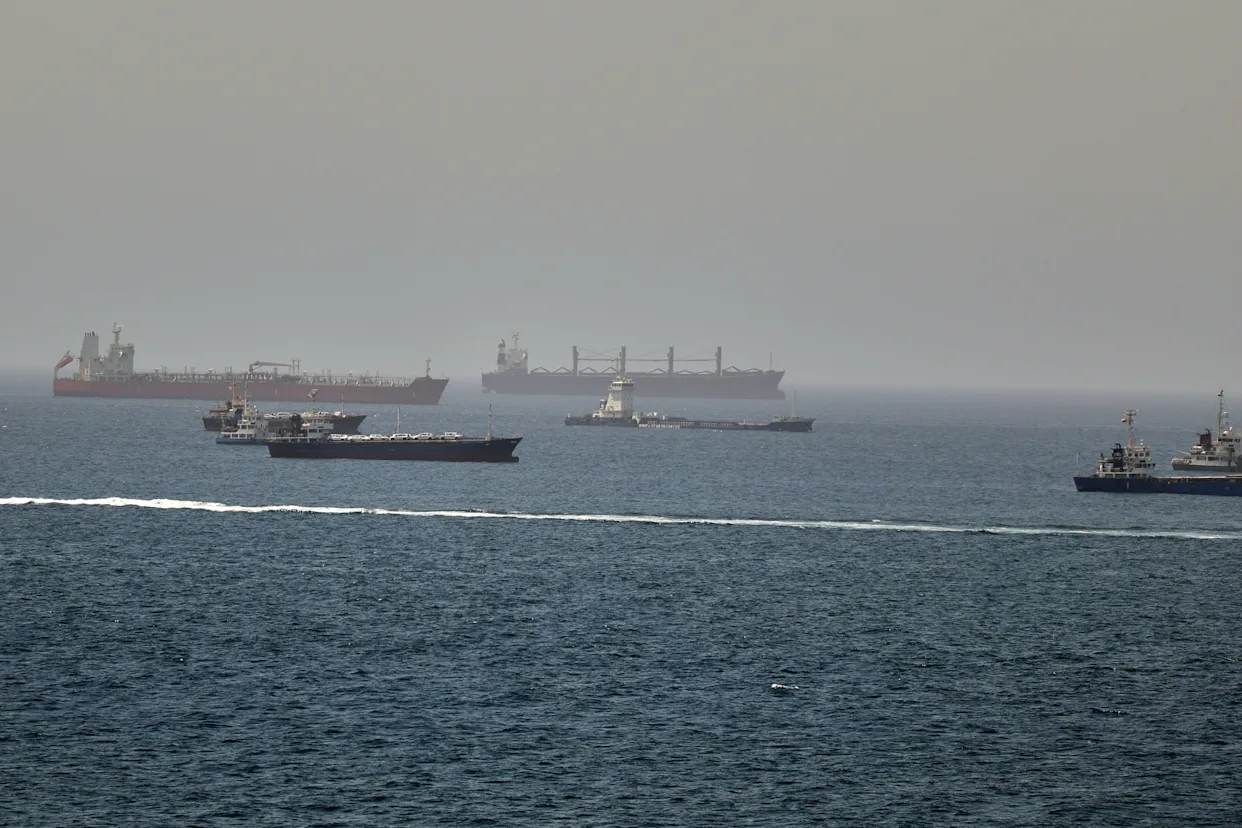
Washington later issued an ultimatum demanding that Iran fully reopen the Strait of Hormuz, one of the world’s most important oil transit routes. The US warned that failure to do so would result in broad attacks on Iran’s critical infrastructure.
Hours before the deadline expired, Trump said the United States would delay planned air strikes for two weeks after Iran indicated it would reopen the strategic waterway.
Talks Fail to Produce Agreement
Diplomatic negotiations between the US and Iran were subsequently held in Pakistan in an attempt to de-escalate the conflict.
However, the talks ended without a peace deal. Trump later said the main obstacle in the negotiations remained Iran’s nuclear programme.
According to the president, the United States was prepared to take further action if progress was not made. He announced that Washington would begin enforcing a blockade of the Strait of Hormuz starting at 10:00 a.m. Eastern Time on Monday.
The waterway is vital for global energy markets, with a large share of the world’s oil shipments passing through the narrow channel between the Persian Gulf and the Gulf of Oman.
Fighting Continues in Lebanon
While discussions with Iran have stalled, military operations have also continued elsewhere in the region.
Israeli forces have maintained ground operations and conducted intensive strikes in Lebanon, where they are fighting the Iran-backed militia Hezbollah.
Israeli Prime Minister Benjamin Netanyahu said he supported the ceasefire arrangement with Iran but stressed that it did not apply to Lebanon.
Netanyahu said the agreement related only to hostilities between Israel and Iran, despite objections raised by Tehran that the ceasefire should extend to all related fronts.
The continued fighting in Lebanon has added another layer of complexity to the wider regional conflict, raising concerns that tensions could further escalate even if a broader deal with Iran is eventually reached.
Officials have not yet provided detailed information about the circumstances in which the nearly 400 US service members were wounded, but the figure highlights the growing human toll of the conflict as diplomatic efforts struggle to bring the fighting to an end.

Join the discussion?

Already a member?


Adapted by ASEAN Now. Source 15 April 2026
webfact
webfact
The United Kingdom will experience the largest economic growth downgrade among advanced economies as a result of the war involving Iran, according to the latest outlook from the International Monetary Fund (IMF).

Get today's headlines by email

In its updated World Economic Outlook, the IMF reduced its forecast for UK growth in 2026 to 0.8%, down from the 1.3% projection made in January before hostilities began. The organisation attributed the downgrade to the economic fallout from the conflict, fewer expected interest rate cuts, and prolonged pressure from higher energy prices.
The IMF warned that the conflict risked destabilising the global economy and said a prolonged war could push the world toward recession. It also advised central banks to avoid tightening monetary policy too aggressively in response to energy-driven inflation.
Energy prices weigh on UK outlook
The UK’s forecast downgrade of half a percentage point is the largest among advanced economies, leaving the country with moderate growth compared with its peers.
The IMF said Britain remains particularly exposed to energy price spikes because it is a net importer of energy. Rising costs linked to the conflict are expected to weigh on economic activity through this year and potentially into next.
A similar warning was issued recently by the Organisation for Economic Co-operation and Development, which also concluded that the UK would face the biggest growth hit among G20 economies as a result of the conflict.
Despite the short-term slowdown, the IMF expects the UK economy to recover somewhat in 2027. Growth is forecast to reach 1.3% next year, potentially making Britain the fastest-growing European economy within the Group of Seven of advanced economies, although at a slightly slower pace than previously expected.
The UK government has set a goal of achieving the strongest growth rate in the G7 before the current parliamentary term ends.
Inflation expected to rise temporarily
Inflation in the UK is forecast to remain among the highest in the G7. The IMF predicts inflation will average 3.2% this year before easing to 2.4% in 2027, levels similar to those expected in the United States and Italy during that period.
The IMF expects UK inflation to rise temporarily towards 4% this year before gradually falling back to the Bank of England’s target rate of 2% by the end of 2027. The decline would be driven by easing energy pressures and slower wage growth as labour market conditions weaken.
UK inflation stood at 3% in the year to February, already above the central bank’s target. Some analysts believe interest rates could increase later this year, though the IMF cautioned against tightening policy too quickly.
Political reactions to the forecast
UK Chancellor Rachel Reeves acknowledged the economic impact of the conflict but argued Britain was better prepared because of earlier government decisions aimed at strengthening financial stability.
“The war in Iran is not our war, but it will come at a cost to the UK,” she said, adding that further action would be needed to respond to the economic consequences.
However, Scott Bessent, the US Treasury Secretary, argued that short-term economic disruption was justified if it reduced the risk of Iran developing nuclear weapons. Speaking to the BBC, he said the long-term security benefits outweighed temporary economic damage.
The UK government has previously stated there is no intelligence assessment indicating Iran is attempting to target Europe with missiles.
Opposition politicians also criticised the economic outlook. Conservative shadow chancellor Mel Stride blamed government tax policies for worsening the slowdown, while Liberal Democrat Treasury spokesperson Daisy Cooper criticised the conflict itself and those who supported it.
Limited room for government support
The IMF warned governments should be cautious about introducing large financial support programmes to offset the impact of rising energy costs.
The Fund’s chief economist, Pierre-Olivier Gourinchas, said the UK’s fiscal position meant there was limited scope for additional spending to help households and businesses.
He added that any support measures should remain within existing spending limits.
The IMF’s forecast assumes the conflict will ease by the second half of the year. If fighting continues and oil prices rise to around $110 per barrel this year and $125 next year, the IMF warned the global economy could come close to recession.


Join the discussion?

Already a member?


Adapted by ASEAN Now. Source 15 April 2026
webfact
webfact
US Vice-President JD Vance has defended his decision to campaign alongside Hungary’s outgoing prime minister Viktor Orbán shortly before the Hungarian leader’s election defeat, describing him as a “great guy” who had done a “very good job” in office.

Get today's headlines by email

Orbán’s long tenure ended after opposition party Tisza Party secured a decisive victory in Hungary’s parliamentary election. The party is led by Péter Magyar, who will now attempt to form the country’s next government.
Vance Stands by Campaign Visit
Vance had travelled to Hungary for a two-day visit just days before voters went to the polls, openly supporting Orbán’s campaign. Speaking to Fox News after the election result, the US vice-president said he had no regrets about the trip.
He described Orbán as one of the few European leaders prepared to challenge what he called “the bureaucracy in Brussels”, referring to the influence of the European Union on member states.
Although Vance said he was disappointed by Orbán’s defeat, he added that Washington expected to maintain a constructive relationship with Hungary’s incoming administration.
“We’ll work very well with the new government,” he said in the interview.
Election Campaign Tensions
Magyar, whose Tisza Party won the vote by a wide margin, had previously criticised Vance’s appearance in the campaign.
Last week he warned that outside powers should not attempt to influence Hungarian elections, saying “no foreign country may interfere”.
Despite that criticism, the opposition leader struck a more conciliatory tone after the results were announced. He described the United States as a “strong and important” ally within NATO and said he would be willing to speak with Donald Trump or other US officials if contacted.
Transition of Power Under Way
Orbán will remain in charge of Hungary in a caretaker capacity until a new government is formally installed. Magyar is expected to assume office once the constitutional process for forming a government is completed.
Hungarian President Tamás Sulyok has invited the leaders of the three parties represented in parliament to consultations on Wednesday.
As head of state, Sulyok is responsible for convening the new parliament and nominating a candidate for prime minister. Under the current timetable, that recommendation must be made by 12 May.
Magyar has urged the president to accelerate the process, calling on him to convene parliament quickly and step down afterward. He has previously criticised Sulyok as being closely aligned with Orbán’s government.
However, the presidential office has indicated that Sulyok has no intention of resigning.
Hungarian media report that the president is expected to discuss the schedule for convening the Hungarian National Assembly and the nomination of a new prime minister during his meetings with party leaders.
Magyar has suggested he could take office as early as 5 May, or potentially sooner if the process moves quickly.


Join the discussion?

Already a member?


Adapted by ASEAN Now. Source 15 April 2026

webfact
webfact
Britain’s national security is at risk due to underinvestment in defence and delays to key government plans, a former NATO secretary general has warned.

Get today's headlines by email

Lord George Robertson, a former Labour defence secretary who led the government’s Strategic Defence Review (SDR), said the UK was increasingly vulnerable and criticised what he described as complacency among political leaders.
Speaking in Salisbury on Tuesday, he said the country was “under-prepared” to face growing global threats and urged the government to prioritise defence spending.
Warning over defence readiness
Lord Robertson argued that the UK’s armed forces and security structures were not adequately equipped for current dangers.
“We are under-prepared. We are under-insured. We are under attack,” he said. “Britain’s national security and safety is in peril.”
He accused Britain’s leadership of failing to respond decisively to mounting risks, saying that although threats were acknowledged, meaningful action had yet to follow.
“There is a corrosive complacency today in Britain’s political leadership,” he said. “Lip service is paid to the risks and the bright red signals of danger.”
The former NATO chief also criticised delays to the government’s Defence Investment Plan, which is intended to outline how the recommendations of the Strategic Defence Review will be funded over the coming decade.
The SDR, published in June 2025, set out 62 recommendations designed to strengthen the UK’s military capability and shift the armed forces towards greater “war-fighting readiness”.
Although ministers accepted all the recommendations, details of how the programme will be financed have not yet been published.
Lord Robertson described the funding plan as “overdue”.
Government rejects criticism
The government rejected suggestions that defence had been neglected.
Defence minister Luke Pollard said officials were working intensively to finalise the investment plan and insisted that funding for the armed forces was already increasing.
“We already have extra money in our budget this year,” he said, adding that new defence contracts were being announced to ensure troops had the equipment needed to deter aggression.
A government spokesperson also said the latest spending review included the largest sustained increase in defence spending since the Cold War, with more than £270bn allocated across the current parliament.
Downing Street said the Defence Investment Plan would be published “as soon as possible”.
Defence spending currently stands at about 2.3% of the UK’s economic output, roughly £66bn a year. The government has pledged to raise this to 3% by the end of the next parliament and to 3.5% of GDP by 2035.
Debate over spending priorities
In his speech, Lord Robertson suggested Britain could not maintain security while welfare spending continued to expand.
“We cannot defend Britain with an ever-expanding welfare budget,” he said.
Government forecasts show welfare spending reaching about £322.6bn in 2025–26, equivalent to 10.6% of GDP.
Efforts by ministers to reduce welfare spending last year were dropped after strong opposition from Labour backbenchers.
Several political figures echoed concerns about defence funding. Tan Dhesi, chair of the House of Commons Defence Committee, described Lord Robertson’s warning as “sobering” and said government rhetoric had yet to match the scale of the challenge.
Growing international pressure
The debate comes amid heightened international tension following Russia’s invasion of Ukraine and renewed pressure on NATO allies to increase military spending.
General Sir Richard Barrons, another author of the Strategic Defence Review, said there was a “significant gap” between Britain’s current capabilities and what would be required to ensure national security.
He warned that European NATO members may have to take on a greater role in the future as the United States becomes less directly involved in regional defence.
“The US cavalry is not coming to bail us out now,” he said, adding that the Royal Navy and Royal Air Force were both too small to meet emerging threats.
NATO leaders have agreed to increase defence spending targets over the next decade, with members expected to devote at least 3.5% of GDP to core defence expenditure by 2035.


Join the discussion?

Already a member?


Adapted by ASEAN Now. Source 15 April 2026
webfact
webfact
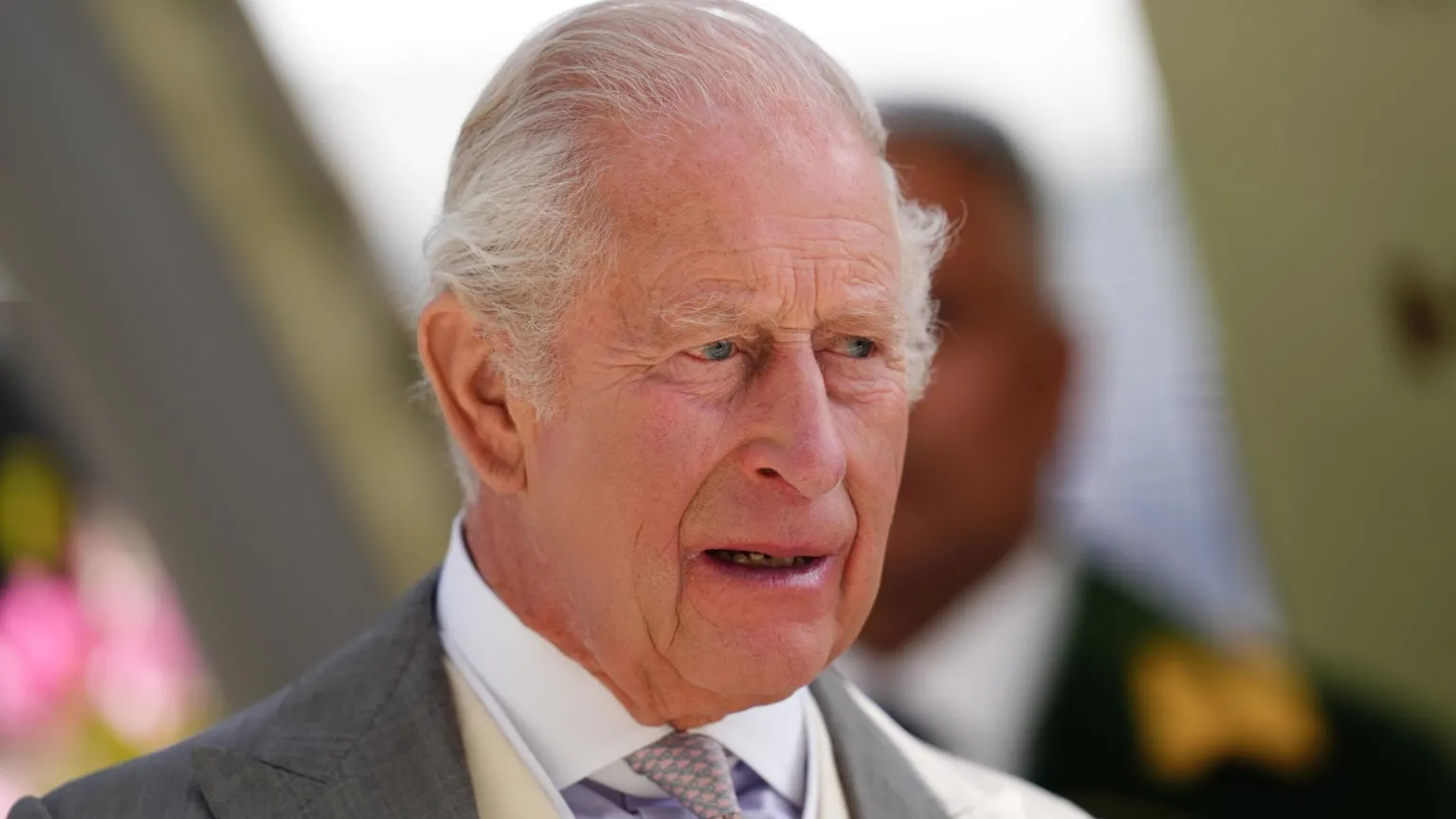
King Charles III and Queen Camilla will not meet survivors of sex offender Jeffrey Epstein during their upcoming state visit to the United States later this month, according to a source at Buckingham Palace, as further details about the four-day trip were released.

Get today's headlines by email

The visit, scheduled from 27 to 30 April, will see the monarch undertake a series of official engagements aimed at reinforcing ties between the UK and the US. However, despite calls from campaigners and lawmakers, palace officials say a meeting with Epstein’s victims will not take place.
Calls from Survivors and Lawmakers
In recent weeks, some survivors and political figures in the US had urged the royal couple to meet victims linked to Epstein’s abuse network. Among those calling for such a meeting were Ro Khanna, an American congressman, Epstein survivor Lisa Phillips, and relatives of the late Virginia Giuffre.
The pressure comes amid continued scrutiny of Epstein’s connections with prominent figures, including the British royal formerly known as Prince Andrew, Duke of York, whose links to Epstein have generated ongoing controversy.
However, palace sources said arranging such a meeting during the visit could interfere with ongoing investigations or potential legal proceedings related to Epstein’s case.
“We fully understand and appreciate the survivors’ position,” a source said, adding that any engagement that might affect police inquiries or possible legal action could undermine the pursuit of justice for victims.
Queen Camilla’s Advocacy
Although no meetings with Epstein survivors are planned, Queen Camilla is expected to meet representatives from organisations campaigning against domestic abuse and violence against women at events scheduled during the trip.
The Queen has long supported initiatives aimed at raising awareness of domestic violence and supporting survivors.
During a recent event at St James's Palace, she addressed survivors directly in a speech widely interpreted as acknowledging the challenges faced by those who report abuse.
“To every survivor of every kind of violence… please know that you are not alone,” she said.
Diplomacy Amid Strained Relations
The visit comes at a time of tension in the relationship between the United Kingdom and the US, particularly over disagreements surrounding the conflict with Iran.
Despite these differences, officials in London say the visit offers an opportunity to reinforce the long-standing partnership between the two countries.
Palace sources suggested the King could play a unique role in maintaining the alliance, which they said had endured through many political administrations and royal reigns.
A spokeswoman for the Foreign, Commonwealth, and Development Office also emphasised the value of the relationship, describing the US and Britain as close allies despite policy disagreements.
Planned Events Across Three Locations
According to the itinerary, the King and Queen will begin their visit in Washington, D.C., where they will attend several ceremonial events including a tea reception, a garden party and a military review.
King Charles is also expected to address the United States Congress — a moment officials describe as the diplomatic centrepiece of the trip.
During the visit, the King will also hold a private meeting with Donald Trump, who will host a state dinner at the White House.
The royal couple will later travel to New York City, where engagements include a visit to the National September 11 Memorial & Museum to meet first responders. Other events in the city include a community project in Harlem, a literacy programme marking the centenary of Winnie-the-Pooh, a business event and a reception.
In Virginia, the King — a long-time environmental campaigner — will visit a national park and meet members of Indigenous communities while attending events linked to the upcoming 250th anniversary of American independence.
Following the US tour, the King will travel to Bermuda before returning to the UK.
Officials say the visit will mark the 250th anniversary of US independence and celebrate the historic partnership between the two nations.

Join the discussion?

Already a member?


Adapted by ASEAN Now. Source 15 April 2026
webfact
webfact
Hamas has rejected a proposal to disarm Palestinian militant groups in Gaza that was presented as part of the next stage of a US-backed peace plan, according to a senior Palestinian official familiar with the negotiations.

Get today's headlines by email

The official said the group had told mediators it would not enter discussions on the second phase of the ceasefire agreement with Israel until the terms of the first phase had been fully implemented.
The proposal was outlined last month by Nickolay Mladenov, a senior figure involved in Donald Trump’s Gaza peace initiative. Hamas representatives have accused him of favouring Israel’s position during the negotiations.
The first phase of the deal, agreed between Hamas and Israel in October, halted the fighting and included the release of Israeli hostages held in Gaza in exchange for Palestinian prisoners held by Israel. It also required Israeli forces to carry out a partial withdrawal from the territory.
Dispute over second phase
The second stage of the plan, announced in mid-January by US Middle East envoy Steve Witkoff, is intended to move toward a permanent end to the conflict.
Under the framework presented by Mladenov, armed Palestinian factions in Gaza would dismantle their weapons as part of a process leading to reconstruction and a full Israeli withdrawal.
However, Palestinian officials say Hamas has refused to discuss disarmament before Israel completes what they describe as outstanding commitments from the first phase of the agreement.
A senior Hamas official told the BBC the group was waiting for a clear timeline showing when Israel would fulfil those obligations. He also called for guarantees that alleged Israeli violations would stop before talks on the next phase begin.
Israel has taken the opposite stance, saying progress on disarmament must occur before it agrees to move forward with further steps in the deal.
Conditions set by Hamas
Hamas and other Palestinian factions have communicated their position to regional mediators during meetings in Cairo, according to officials involved in the discussions.
They say negotiations on the next stage cannot begin until what they describe as Israeli attacks, killings and restrictions on humanitarian supplies end, alongside full implementation of the initial agreement.
Officials say Hamas is seeking a complete Israeli military withdrawal from Gaza and the deployment of international protection forces to support local police and safeguard civilians.
A second Hamas official outlined a list of outstanding measures that the group believes Israel must complete under phase one of the agreement.
These include finishing troop withdrawals, reopening the Rafah border crossing and other crossings for travellers, allowing greater flows of humanitarian aid and commercial goods, and enabling a Palestinian technocratic body known as the National Committee for the Administration of Gaza to operate.
Other demands involve restoring electricity, bringing in heavy equipment to clear rubble from destroyed buildings, and rehabilitating hospitals as well as water facilities and bakeries.
Reconstruction and security debate
The Hamas officials also criticised Mladenov’s framework, saying it ties reconstruction and humanitarian recovery directly to the disarmament of Palestinian groups.
They argue that such a condition would stall rebuilding efforts after the destruction caused during Israel’s military campaign in Gaza.
The war began after a Hamas-led attack on Israel on 7 October 2023 in which around 1,200 people were killed and 251 others were taken hostage in Gaza.
According to Gaza’s Hamas-run health ministry, more than 72,330 people have been killed by Israeli military action in the territory since the conflict began, including hundreds since the ceasefire took effect on 10 October 2025.
Last month, addressing the UN Security Council, Mladenov said the surrender of weapons by militant groups would represent a turning point for Gaza.
He said such a move could open the way to large-scale reconstruction and a full Israeli withdrawal, adding that the region faced a choice between renewed fighting and the possibility of a new beginning.
Israeli Prime Minister Benjamin Netanyahu has previously warned that Hamas will ultimately be disarmed, saying it could happen “either the easy way or the hard way”.


Join the discussion?

Already a member?


Adapted by ASEAN Now. Source 15 April 2026
webfact
webfact
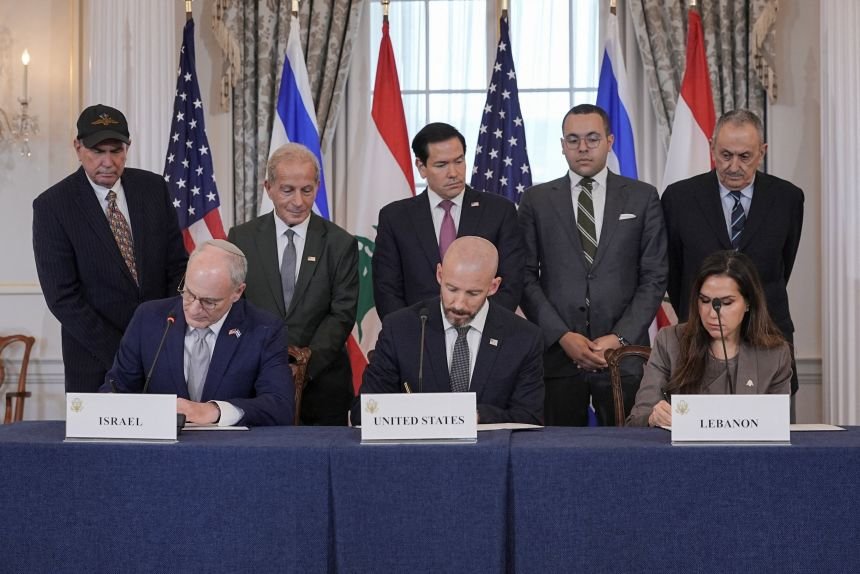
Israel and Lebanon have held their first direct diplomatic talks since 1993, in a rare meeting aimed at reducing tensions linked to the conflict with the Iran-backed Hezbollah movement.

Get today's headlines by email

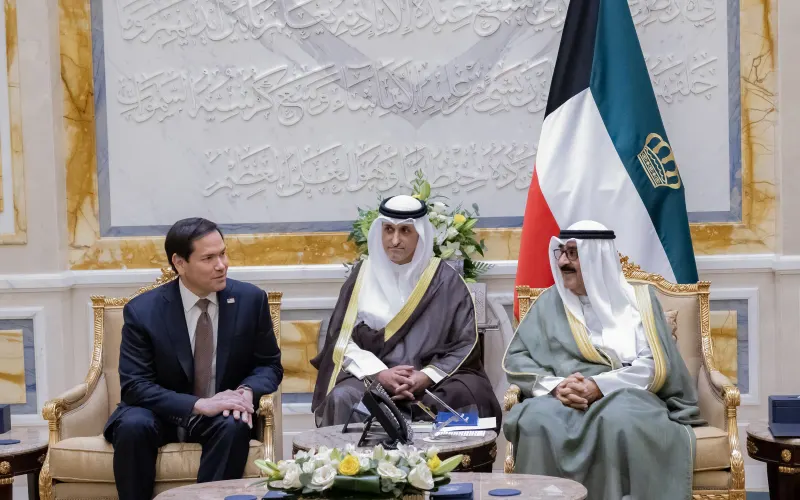
The discussions took place in Washington and were mediated by US Secretary of State Marco Rubio. Officials said the meeting could mark the beginning of a diplomatic process to address ongoing hostilities along the Israel-Lebanon border.
Push to curb Hezbollah influence
According to a statement from the US State Department, both sides discussed the possibility of holding further direct negotiations, although a date and location for any future talks have not yet been set.
Israel indicated that its main objective was the disarmament of non-state armed groups, an apparent reference to Hezbollah.
Lebanon, meanwhile, urged the establishment of a ceasefire and called for concrete steps to ease what it described as a worsening humanitarian crisis.
The two countries do not maintain diplomatic relations, and direct high-level discussions between them have been extremely rare. The last such talks took place more than three decades ago.
Ahead of the meeting, Rubio described the encounter as part of a broader process that could eventually reduce tensions.
“This will take time, but we believe it is worth this endeavour,” he told reporters, calling the meeting a “historic gathering”.
Fighting continues during talks
The diplomatic effort comes amid an escalation in violence. Israeli military operations in Lebanon began on 2 March, shortly after joint US and Israeli strikes were launched against targets in Iran.
Since then, more than 2,000 people have been killed, according to figures cited by officials. Around one million people have also been displaced since the latest round of hostilities began.
While the talks were under way in Washington on Tuesday, Hezbollah said it had carried out at least 24 attacks against Israel and Israeli forces operating in Lebanon.
Air raid sirens warning of drones and rockets sounded repeatedly across communities in northern Israel throughout the day.
Israel says its military campaign is aimed at dismantling Hezbollah’s military capabilities and preventing further attacks across the border.
Lebanon seeks end to conflict
Lebanon’s president, Joseph Aoun, expressed hope that the talks could help bring an end to the country’s suffering.
In a statement, he said the only viable solution would be for the Lebanese armed forces to become solely responsible for security in southern Lebanon.
However, analysts say the Lebanese government has limited capacity to confront Hezbollah, which remains a powerful armed movement with significant political influence.
Founded in 1982, Hezbollah maintains strong support in the predominantly Shia south of Lebanon and in the southern suburbs of the capital, Beirut. The group also holds two cabinet-level posts in the Lebanese government.
Hezbollah rejects Washington negotiations
A senior Hezbollah figure suggested the organisation would not necessarily accept any agreement reached in Washington.
Wafiq Safa, a member of Hezbollah’s political council, told the Associated Press that the group was not bound by decisions made during the talks.
Separately, Iranian negotiators in discussions with the US held in Islamabad argued that Lebanon should be included in any ceasefire arrangement. Both the United States and Israel rejected that proposal.
A US State Department official said the Israel-Lebanon meeting had been planned about a month earlier, before the separate negotiations with Iran were scheduled.
Despite the diplomatic initiative, fighting between Israel and Hezbollah continues along the border, underscoring the difficulty of achieving a lasting settlement.


Join the discussion?

Already a member?


Adapted by ASEAN Now. Source 15 April 2026
webfact
webfact
Iran carried out at least 1,639 executions in 2025, the highest annual total recorded in the country since 1989, according to a report released by two human rights organisations.

Get today's headlines by email

The figure marks a sharp rise from 2024, when 975 executions were documented. The new report, compiled by Norway-based Iran Human Rights (IHR) and Paris-based Together Against the Death Penalty (ECPM), says the latest total represents an increase of 68%.
The organisations warn that executions could rise further as authorities respond to unrest and ongoing conflict involving Iran.
Sharp rise in executions
According to the report, the Islamic Republic carried out an average of roughly four executions per day last year. Iran remains the world’s second-largest user of the death penalty after China, where the exact number of executions is unknown but believed by activists to run into the thousands annually.
Most of those executed in Iran were convicted of drug-related offences or murder.
The report says 795 people were executed for drug crimes, a 58% increase compared with the previous year. Another 747 executions were carried out for murder convictions, representing a 79% rise.
A further 37 individuals were executed after being convicted of rape.
The report also documented the execution of at least 48 women, the highest number recorded in more than two decades and a 55% increase compared with 2024.
Human rights groups said ethnic minorities and other marginalised communities were disproportionately represented among those put to death.
More than half of the executions followed verdicts issued by Iran’s Revolutionary Courts. The organisations criticised these proceedings, describing them as lacking due process and alleging that many trials were conducted under conditions they characterised as “grossly unfair”.
Executions linked to unrest and conflict
The report notes that some executions were linked to security-related charges.
At least 57 people were executed on such charges, including two individuals connected to protests earlier in the year. Demonstrations in January were met with a sweeping crackdown by Iranian security forces that reportedly left thousands of protesters dead and tens of thousands detained.
Since the conflict with the United States and Israel began on 28 February, seven people linked to the protests have been executed, the report says.
Six others were put to death after being convicted of membership in the exiled opposition organisation Mujahideen-e Khalq (MEK). Another individual was executed after being found guilty of spying for Israel.
Calls for death penalty debate
Human rights groups say the current political climate raises concerns that the use of capital punishment could increase.
The report warns that if the Iranian government remains in power after the current crisis, executions could be used more frequently as a method of repression.
According to the organisations, at least 16 people who were sentenced to death in connection with the 2022 “Woman, Life, Freedom” protests remain at risk of execution. Another 27 people have reportedly received death sentences this year over the same protest movement, while hundreds more face charges that could carry the death penalty.
Raphaël Chenuil-Hazan, executive director of ECPM, said the issue of abolishing capital punishment should be central to discussions aimed at ending the conflict between the United States and Iran.
Mahmood Amiry-Moghaddam, director of Iran Human Rights, said the rights of Iranian citizens had not been addressed in recent negotiations and called for a moratorium on executions along with the release of political prisoners.


Join the discussion?

Already a member?


Adapted by ASEAN Now. Source 14 April 2026
webfact
webfact
A global study has found that 2025 recorded the highest number of deaths from antisemitic attacks in more than three decades, with researchers warning that violent incidents against Jewish communities remain a serious concern worldwide.

Get today's headlines by email

According to the annual report released by Tel Aviv University on Monday, 20 people were killed in antisemitic attacks last year across several countries. Researchers said the figure represents the deadliest year for such violence since 1994.
The report links the continuing rise in antisemitic incidents to tensions that intensified after the Hamas-led attack on Israel on 7 October 2023 and the war in Gaza that followed.
“The data raise concern that a high level of antisemitic incidents is becoming a normalized reality,” said Uriya Shavit, the report’s chief editor.
Deadly incidents across three continents
The report documented lethal attacks in multiple countries during 2025, including incidents in Australia, the United States and Britain.
The deadliest occurred in December at a Hanukkah celebration at Sydney’s Bondi Beach, where 15 people were killed. Other fatalities were recorded in two separate attacks in the United States, in Washington, D.C., and Colorado.
In Britain, two people were killed in an assault at a synagogue in Manchester during Yom Kippur, the most sacred day in the Jewish religious calendar.
Researchers said these incidents illustrate the continued presence of violent antisemitism in different regions.
Report published ahead of Holocaust remembrance
The findings were released by Tel Aviv University’s Center for the Study of Contemporary European Jewry together with the Irwin Cotler Institute for Democracy, Human Rights and Justice.
The report is published each year ahead of Israel’s Holocaust Remembrance Day, which commemorates the six million Jews killed during the Holocaust. The annual memorial begins this year on Monday evening.
In addition to fatal attacks, the researchers recorded a rise in antisemitic incidents that resulted in physical harm, including assaults such as beatings and stone throwing.
Overall incidents remain elevated
While the total number of reported antisemitic incidents increased only moderately between 2024 and 2025, the figures remain significantly higher than those recorded before the Gaza war.
The report tracks a wide range of incidents, including vandalism, physical assaults, verbal threats and harassment on social media.
Researchers said the largest surge occurred immediately after the October 2023 attacks on Israel. Although numbers later declined, they rose again in 2025 rather than continuing to fall.
In the United Kingdom, 3,700 antisemitic incidents were recorded in 2025, compared with 3,556 the previous year.
Canada also reported a rise, with incidents increasing from 6,219 in 2024 to 6,800 in 2025 — more than three times the level recorded in 2022.
Australia saw similar trends. Between October and December 2025, authorities recorded 588 antisemitic incidents, compared with 492 during the same period in 2024. By contrast, the entire year of 2022 saw 472 incidents nationwide.
Lone attackers dominate incidents
According to Carl Yonker, the study’s director of research, many of the violent attacks were carried out by individuals acting alone.
He said this pattern makes prevention more difficult for authorities. Yonker added that perpetrators often came from extremist backgrounds, including white supremacist groups or radical Islamist networks, and that some attackers were unemployed or facing financial hardship.
The statistics used in the report are compiled from police data, government authorities and Jewish community organizations in various countries.
Researchers said the findings highlight the continuing challenge of addressing antisemitism and protecting Jewish communities amid ongoing geopolitical tensions.

Join the discussion?

Already a member?


Adapted by ASEAN Now. Source 14 April 2026
webfact
webfact
The United Kingdom will not participate in enforcing a United States blockade of Iranian ports, Prime Minister Keir Starmer has said, distancing Britain from Washington’s military response following failed negotiations with Tehran.

Get today's headlines by email

Speaking to the BBC, Starmer confirmed that British forces would continue existing security operations in the region but would not take part in blocking Iranian shipping. The prime minister said the UK’s priority was restoring access to the Strait of Hormuz, a vital route for global energy supplies.
“Our focus is on reopening the strait as quickly as possible,” Starmer said, adding that the government was working with international partners to stabilise shipping in the area.
US blockade announced after failed talks
The US decision came after negotiations between American and Iranian representatives in Islamabad ended without agreement. Following the talks, President Donald Trump said the United States would begin blockading vessels attempting to enter or leave the Strait of Hormuz.
US Central Command later confirmed that American forces would enforce the blockade on ships entering or leaving Iranian ports, including those in the Arabian Gulf and the Gulf of Oman.
The command said enforcement would be carried out “impartially” but clarified that vessels travelling to or from non-Iranian ports would not be obstructed. Commercial shipping companies would receive formal notice before the blockade takes effect.
UK focuses on keeping shipping routes open
Starmer said Britain had been working with partners in the region to maintain freedom of navigation through the strait rather than restrict it.
“We’re not supporting the blockade,” he said. “Our diplomatic, political and operational work is aimed at keeping the strait open.”
The prime minister confirmed that the UK possesses mine-sweeping capabilities in the region but declined to discuss operational details.
He also reiterated that Britain would not become directly involved in the wider conflict in the Middle East.
“My decision has been clear that we will not be dragged into the war,” Starmer said. “I will not act without a clear lawful basis and a well-thought-through plan.”
Energy markets and diplomatic efforts
The Strait of Hormuz is one of the world’s most important maritime chokepoints, carrying roughly one-fifth of global oil and liquefied natural gas shipments.
Iran has effectively blocked the route since US and Israeli strikes began on 28 February, triggering concern across energy markets. Global benchmark Brent crude rose above $100 per barrel after the US announced the blockade, compared with about $71 before the conflict.
Starmer said the UK was working with allies including France to develop a multinational plan to protect shipping once the conflict subsides. A summit co-hosted by Britain and France later this week is expected to focus on coordinating those efforts.
During a call with French President Emmanuel Macron, Starmer emphasised the need for a broad international coalition to guarantee safe passage through the strait.
A UK government spokesperson also criticised reports that Iran had begun charging transit fees of about $2 million for tankers passing through the waterway, saying vessels must not be subject to such charges.
Economic implications
The disruption to shipping has raised concerns about fuel prices in Britain. The government is currently planning to increase fuel duty in September, though opposition parties have urged ministers to cancel the rise in light of the crisis.
Starmer said the policy remained under review and would depend on developments in the coming weeks.
Meanwhile, Chancellor Rachel Reeves is expected to travel to Washington for meetings at the International Monetary Fund, where she will push for efforts to reopen the Strait of Hormuz to commercial shipping.


Join the discussion?

Already a member?


Adapted by ASEAN Now. Source 14 April 2026
webfact
webfact
The UK government is preparing legislation that would allow ministers to adopt certain future European Union regulations without requiring a full parliamentary vote each time.

Get today's headlines by email

Prime Minister Keir Starmer says the move would make it easier for Britain to align with EU standards in areas linked to potential trade agreements, including food safety, carbon pricing and electricity markets. Officials argue the approach would help smooth trade with Europe and reduce costs for businesses.
However, the proposal has triggered strong criticism from opposition parties, who warn it could limit Parliament’s role in scrutinising laws that originate in Brussels.
Fast-track powers for EU alignment
The legislation, expected later this year, would give ministers authority to introduce new rules through “secondary legislation”. This procedure allows measures to be approved more quickly than primary legislation and generally receives less parliamentary scrutiny.
The government says MPs and members of the House of Lords would still have opportunities to examine new regulations introduced under the system.
Ministers say the mechanism is necessary to support planned agreements with the EU in sectors such as food standards, industrial carbon trading and electricity cooperation. These arrangements could require the UK to dynamically align with regulations designed to maintain the EU’s single market for goods and services.
Before the UK left the European Union, the government regularly adopted EU measures through similar procedures to meet its legal obligations as a member state. However, critics say the situation is different now because the UK no longer participates in shaping EU laws.
Political opposition
Opposition figures argue the plan could reduce Parliament’s influence over laws that would affect the UK economy.
Conservative shadow business secretary Andrew Griffith said the proposal would leave Parliament “a spectator while Brussels sets the terms”.
Nigel Farage, leader of Reform UK, also criticised the plan and pledged to fight it in Parliament, describing it as an attempt to place Britain back under EU influence.
Meanwhile, Liberal Democrat education spokesperson Munira Wilson said she supported closer ties with Europe but warned that any approach which bypassed Parliament would be “wrong and undemocratic”.
Concerns have also been raised about how future EU legislation would be scrutinised, after Labour abolished a Commons committee that previously examined European laws.
Trade and economic arguments
The government maintains the proposed system is necessary to secure new agreements with the EU that could benefit the UK economy.
Officials estimate that a planned deal on food standards could generate billions of pounds annually by reducing red tape for exporters.
The agreement would likely require Britain to keep its regulations aligned with EU rules in areas such as food additives, animal health standards and labelling requirements, including those for organic pet food.
Ministers are also negotiating closer cooperation with the EU on carbon markets, potentially linking the UK’s emissions trading system with the bloc’s scheme. This would require alignment with EU rules governing carbon allowance trading.
Plans for summer summit
The government hopes to announce progress on both the food standards agreement and carbon trading cooperation at a UK-EU summit expected this summer.
Officials have also indicated they may pursue additional agreements with the EU if they meet the government’s broader economic and security priorities.
Chancellor Rachel Reeves recently said the UK would consider closer cooperation with Europe where it supports economic growth, investment and national resilience.
Starmer has argued that global instability has strengthened the case for stronger European partnerships. Speaking to BBC Radio 5 Live, he said the government wanted to make trade easier in ways that could ultimately lower prices for consumers.

Join the discussion?

Already a member?


Adapted by ASEAN Now. Source 14 April 2026
webfact
webfact
Hungary’s prime minister-elect Péter Magyar has said he would answer the phone if Russian President Vladimir Putin contacted him and would urge him to stop the war in Ukraine, following a decisive election victory that ended Viktor Orbán’s 16 years in power.

Get today's headlines by email

Magyar, leader of the Tisza party, made the remarks during a lengthy press conference on Monday, a day after his movement secured a sweeping parliamentary majority in Hungary’s national election.
While he said he had already spoken with several European leaders following the vote, Magyar indicated he had no plans to initiate contact with Putin or with U.S. President Donald Trump.
“If Vladimir Putin calls I’ll pick up the phone,” he told reporters. But he added he did not expect such a call to happen. If it did, he said he would urge the Russian leader “to put an end to the killing and end this war.”
New leadership after Orbán era
Magyar’s victory represents a dramatic political shift in Hungary, where Orbán and his Fidesz party had governed continuously since 2010.
Preliminary results show Tisza winning 136 seats in parliament, slightly lower than earlier projections but still enough to secure a two-thirds “supermajority”, allowing the party to amend the constitution.
Around 400,000 votes remained to be counted, though Magyar said he believed his party could still gain additional seats.
Speaking to journalists, the 45-year-old politician described the election outcome as more than a routine change of government.
“Voters did not only vote for a change of government, but for a complete regime change,” he said.
Magyar, a former member of Orbán’s Fidesz party, launched his movement on a platform focused on tackling corruption and dismantling what he described as entrenched patronage networks in government.
Rebuilding ties with Europe
Following his victory, Magyar said he had already spoken with ten European leaders. Among them was European Commission President Ursula von der Leyen, who said Hungary had “chosen Europe.”
Magyar emphasised that Hungary’s future lay firmly within the European Union and said it was in the country’s interest to join the eurozone.
He also outlined plans for early diplomatic visits to Poland, Austria and Germany, highlighting Hungary’s ties with those countries.
Under Orbán, relations with the EU had often been strained, with Budapest frequently clashing with Brussels over issues ranging from rule-of-law concerns to foreign policy.
Orbán’s government was also widely regarded as maintaining unusually close ties with Moscow compared with most EU states.
Ukraine war and relations with Russia
Magyar struck a markedly different tone on the war in Ukraine from his predecessor.
During the election campaign, Orbán blamed the EU and Ukrainian President Volodymyr Zelensky for prolonging the conflict. His government also blocked a €90bn EU loan to support Kyiv last month, drawing criticism from European partners.
Magyar said Hungarians broadly recognised that Ukraine was the victim of Russia’s invasion.
“The war makes no sense from a Russian perspective either,” he said, pointing to the heavy casualties suffered by Russian forces and the impact on Russian families.
Even so, he acknowledged that any conversation with Putin would likely have little effect.
“It would probably be a short phone call,” he said, adding he did not believe the Russian leader would end the war based on his advice.
Questions over outgoing government
Magyar also used the press conference to raise allegations concerning the departing administration.
He said he had received information suggesting outgoing Foreign Minister Péter Szijjártó was destroying confidential documents related to sanctions against Russia inside the foreign ministry building on Monday.
There was no immediate comment from the ministry.
Orbán’s government had faced scrutiny in recent months over its contacts with Moscow. Reports previously emerged that Szijjártó had shared information with Russian officials before and after EU meetings on sanctions.
In one leaked exchange, he was said to have told Russian Foreign Minister Sergei Lavrov: “I am at your service.” The disclosure prompted Orbán to order an investigation into possible wiretapping.
Magyar’s government is expected to take office in the coming weeks, marking the beginning of a new political chapter for Hungary.

Join the discussion?

Already a member?


Adapted by ASEAN Now. Source 14 April 2026
webfact
webfact
Italian Prime Minister Giorgia Meloni has criticised comments made by U.S. President Donald Trump about Pope Leo XIV, calling the remarks “unacceptable” amid growing international reaction.

Get today's headlines by email

Trump had sharply criticised the pontiff in a post on Truth Social, accusing him of being “weak on crime and terrible for foreign policy.” Speaking later to reporters, the U.S. president added that he was “not a big fan” of the head of the Catholic Church.
Meloni responded by emphasising the Pope’s role as a moral voice advocating peace.
“The Pope is the head of the Catholic Church, and it is right and normal for him to call for peace and to condemn every form of war,” she said in a statement.
Political allies at odds
Meloni, a practising Catholic who leads a right-wing coalition government in Italy, is widely regarded as a political ally of Trump. Her criticism followed pressure from Italian opposition parties, which had accused her of taking too long to respond to the president’s remarks.
Another member of her governing coalition, Matteo Salvini, leader of the populist League party, also criticised the attack, saying that targeting the Pope “doesn’t seem like a useful or intelligent thing to do.”
The exchange comes as tensions grow between Trump and the Vatican over the ongoing conflict involving Iran. Pope Leo has been outspoken in urging de-escalation and calling for an end to the war.
Pope avoids direct confrontation
Speaking to journalists while travelling to Algeria during an 11-day visit to Africa — his second major foreign trip since being elected last year — the Pope said he did not intend to engage directly with Trump.
“I don’t want to get into a debate,” he said, adding that his role was to promote peace rather than act as a political figure.
The pontiff also said he had “no fear” of the Trump administration and would continue speaking out against war.
“Too many people are suffering in the world today. Too many innocent people are being killed,” he said. “Someone has to stand up and say there is a better way.”
In a later speech, Pope Leo criticised what he described as repeated violations of international law and warned against “neocolonial tendencies,” while urging world leaders to uphold justice and solidarity.
Trump doubles down
Despite the backlash, Trump intensified his criticism on Monday, saying he would not apologise to what he described as a “very weak” Pope.
In his Truth Social post, Trump suggested that the pontiff had been elected because he was American and that Vatican officials believed this would help manage relations with the U.S. president.
“If I wasn’t in the White House, Leo wouldn’t be in the Vatican,” he wrote.
Speaking to reporters, Trump also claimed the Pope was overly liberal and criticised his approach to crime and nuclear threats, appearing to refer to Iran’s nuclear ambitions.
Wider reaction from Catholic figures
Trump’s remarks have prompted criticism among Catholic commentators and scholars.
Italian Catholic historian Massimo Faggioli said the comments represented an unusually direct attack on the papacy by a world leader.
“Not even Hitler or Mussolini attacked the Pope so directly and publicly,” he said.
Pope Leo has repeatedly condemned violence in global conflicts and urged diplomatic solutions, including in the Middle East. He previously criticised Trump’s threat to destroy Iranian civilisation as “truly unacceptable.”
The pontiff has also challenged the administration’s immigration policies, questioning whether those supporting strict enforcement measures could still describe themselves as “pro-life.”
Pope Leo is widely viewed as continuing the humanitarian approach of his predecessor, Pope Francis, who clashed with Trump during the 2016 U.S. presidential campaign over immigration.
About 20% of Americans — more than 70 million people — identify as Catholic, including U.S. Vice-President JD Vance.

Join the discussion?

Already a member?


Adapted by ASEAN Now. Source 14 April 2026
webfact
webfact
US President Donald Trump appears to have removed a controversial social media post portraying himself in a Jesus-like role after it triggered criticism from across the political and religious spectrum.

Get today's headlines by email

The image, shared on Trump’s platform Truth Social, was generated using artificial intelligence and showed the president wearing a white robe while placing a glowing hand on the forehead of a sick man lying in a hospital bed. Observers said the scene resembled traditional Christian artwork depicting Jesus Christ performing healing miracles.
The post quickly drew backlash, including from several figures who are generally supportive of the president.
Criticism from religious conservatives
Some Christian activists and commentators criticised the image as inappropriate.
Sean Feucht, a prominent evangelical activist involved in organising faith-based events tied to the 250th anniversary of the United States Declaration of Independence, called for the image to be removed.
“This should be deleted immediately,” Feucht wrote on social media, adding that there was “no context where this is acceptable.”
Riley Gaines also criticised the post, writing that “God shall not be mocked.”
Journalists from faith-focused outlets voiced similar concerns. David Brody wrote that while supporters might back Trump politically, the image “crosses the line”.


Trump says image showed him as a doctor
Speaking to reporters at the White House later in the day, Trump acknowledged posting the image but said he did not view it as religious imagery.
“It’s supposed to be as a doctor making people better,” he said. “And I do make people better. I make people a lot better.”
Trump added that he believed the image showed him as a doctor standing beside a Red Cross worker rather than portraying him as a religious figure.
The now-deleted image featured several patriotic elements in the background, including the Statue of Liberty, a large US flag, fighter jets and a bald eagle. It also showed figures including a nurse, a soldier and a woman praying.
Dispute with the pope
The image appeared shortly after Trump posted a separate message criticising Pope Leo XIV, who has spoken out against the ongoing US and Israeli military campaign in Iran.
The pope, the first American to lead the Catholic Church, has repeatedly condemned the conflict, describing it as “absurd and inhuman violence”.
Speaking earlier this week, he said he had “no fear” of the Trump administration and would continue speaking out about the message of the Gospel.
Trump responded to reporters by criticising the pope’s comments, saying the pontiff was “weak on crime” and “terrible for foreign policy”. He added that preventing Iran from obtaining nuclear weapons remained a priority.
Previous social media controversies
The episode is the latest in a series of controversies surrounding Trump’s posts on Truth Social.
Earlier this year, a racist video depicting former US president Barack Obama and former first lady Michelle Obama as apes was briefly shared on the platform before being removed.
At the time, the White House initially defended the clip as an “internet meme video”. After criticism from lawmakers, including several Republican senators, the post was taken down and officials said it had been shared by a staff member in error.
The latest image was removed several hours after it appeared online, following the growing backlash.


Join the discussion?

Already a member?


Adapted by ASEAN Now. Source 14 April 2026
webfact
webfact
The United States is weighing the possibility of holding another round of in-person negotiations with Iran as tensions persist despite a fragile ceasefire and the start of a US naval blockade targeting Iranian ports.

Get today's headlines by email

Officials involved in the diplomatic efforts say discussions about a potential follow-up meeting are underway, although it remains uncertain whether the talks will take place before the current ceasefire is due to expire on 21 April.
The latest developments follow a lengthy round of negotiations in Islamabad over the weekend that lasted more than 20 hours but failed to produce a breakthrough agreement between the two sides.
Preparations for possible new talks
According to officials familiar with the discussions, the administration of President Donald Trump is exploring possible dates and venues for a second meeting with Iranian representatives should indirect diplomacy through regional mediators show progress in the coming days.
These preparations are described as preliminary, with officials saying they want to be ready to convene talks quickly if conditions improve.
While the White House remains open to further negotiations, significant disagreements remain. Iranian officials have resisted several key US demands, raising doubts about whether Tehran would accept the terms proposed by Washington.
Despite the stalled negotiations, US officials say communication between the two sides has continued through intermediaries in the region.
Regional governments, including Turkey, Pakistan, Egypt and Oman, have been involved in facilitating contacts between Washington and Tehran. Another round of talks could again be hosted in cities such as Geneva, Vienna or Islamabad, officials said.
Blockade adds pressure amid ceasefire
The diplomatic effort is unfolding alongside a US naval blockade aimed at restricting Iranian maritime trade.
Washington views the blockade as a way to increase pressure on Tehran following weeks of conflict that have left both countries seeking a path toward de-escalation.
President Trump said on Monday that Iran had contacted his administration earlier in the day expressing interest in reaching an agreement. He did not provide details about who initiated the contact.
Officials close to the president say the administration believes Iran’s position has weakened after weeks of fighting and economic strain. From Washington’s perspective, the blockade is intended to encourage Iran to return to negotiations with greater willingness to compromise.
However, the move also introduces new uncertainty. Analysts say it remains unclear how aggressively the United States would enforce the blockade and how Iran might respond militarily in the coming weeks.
The Strait of Hormuz, a vital route for global oil shipments, remains a central point of contention in the conflict.
Nuclear dispute remains unresolved
The most difficult issue in negotiations continues to be Iran’s nuclear programme.
US officials say Washington’s non-negotiable demands include Iran ending all uranium enrichment activities, dismantling its major enrichment facilities and accounting for more than 400 kilograms of highly enriched uranium believed to be stored underground.
These conditions have long been rejected by Tehran and were a central factor in the collapse of earlier negotiations before the conflict escalated.
During the Islamabad talks, both sides presented proposals intended to address the nuclear dispute. One proposal from US negotiators would involve Iran pausing uranium enrichment for 20 years, according to people familiar with the discussions.
Another earlier idea under consideration involved the United States supplying Iran with nuclear fuel for civilian energy needs if Tehran agreed to halt enrichment.
Iran’s foreign minister said the weekend talks had progressed constructively for much of the meeting but ultimately broke down near the final stages. In a message posted online, he accused the United States of shifting its negotiating position and introducing new demands.
Economic and energy implications
The blockade is also closely tied to the broader strategic goal of reopening the Strait of Hormuz, which has become a key objective for US policymakers during the conflict.
Iran has demonstrated its ability to disrupt shipping in the waterway using mines, drones and small attack boats, creating risks for naval forces operating in the area.
Energy analysts say the blockade could place increasing financial pressure on Iran but may take several weeks before the economic effects become severe.
Iran has been able to export additional oil in recent weeks after the United States temporarily eased some sanctions earlier in the conflict, providing Tehran with a financial buffer.
At the same time, the disruption to Iranian exports could tighten global oil supplies and push fuel prices higher, creating new economic pressures for the United States and other countries.
Officials involved in the negotiations say they still hope a diplomatic solution can be reached before the ceasefire deadline, though significant gaps between the two sides remain.


Join the discussion?

Already a member?


Adapted by ASEAN Now. Source 14 April 2026
webfact
webfact
China has introduced a series of new incentives aimed at Taiwan, shortly after a senior figure from the island’s main opposition party completed a visit to the mainland.

Get today's headlines by email

The measures, announced on Sunday through the state news agency Xinhua, include steps to ease restrictions on tourism, facilitate food and fishery trade, and allow certain Taiwanese television programs to be broadcast in China.
The announcement followed a trip by Cheng Li-wun, chairwoman of Taiwan’s opposition Kuomintang (KMT), who met Chinese President Xi Jinping and discussed prospects for improving cross-strait relations.
New Measures Target Tourism, Media and Trade
According to Xinhua, the package contains 10 measures designed to encourage exchanges between the two sides of the Taiwan Strait.
Among them is a proposal to establish a regular communication mechanism between China’s Communist Party and the KMT. The plan also includes the full restoration of direct flights across the strait and the possibility of permitting residents from Shanghai and Fujian province to travel to Taiwan.
The measures also address trade and cultural exchanges. Beijing said it would create a mechanism aimed at simplifying inspection procedures for Taiwanese food and fishery products entering the mainland market.
However, the state media report indicated that such arrangements would depend on a political commitment to oppose Taiwan’s independence.
China also said it would permit Taiwanese television dramas, documentaries and animation to be broadcast domestically, provided they demonstrate what officials described as “correct orientation,” contain “healthy content,” and meet high production standards.
Taiwan Government Rejects Beijing’s Proposal
Taiwan’s government criticised the initiative, arguing that the measures were politically motivated.
In a statement, Taiwan’s Mainland Affairs Council said Beijing’s offer amounted to “unilateral concessions” that it described as “poisoned pills packaged as generous gift packages.”
The council said Taipei supports cross-strait exchanges when they are conducted in a healthy and orderly manner, but added that such interactions should not be tied to political conditions or objectives.
Relations between the two sides remain tense. China claims sovereignty over Taiwan and has repeatedly warned against moves toward formal independence.
Taiwan President Lai Ching-te, who took office earlier this year, rejects Beijing’s claims and has maintained that the island is already a sovereign entity.
Opposition Party Welcomes Announcement
The KMT responded more positively to the measures, describing them as beneficial for Taiwanese citizens.
In a statement, the party said the initiatives represented a “gift” to the people of Taiwan and could help improve economic and cultural exchanges.
The announcement also comes amid continuing disagreements over tourism and trade. Large-scale Chinese tourism to Taiwan has not resumed since the COVID-19 pandemic, with both sides blaming each other for the delay.
Taiwan has also previously accused China of imposing restrictions on imports of certain agricultural and aquatic products from the island, saying the bans were sometimes justified by claims about pests or diseases that Taipei disputes.
Continuing Cross-Strait Tensions
The diplomatic divide between Beijing and Taiwan’s current administration has limited direct dialogue between the two governments.
China has refused to engage with President Lai, whom it has labelled a separatist. Taipei, however, says Beijing’s pressure campaigns and political conditions undermine the prospects for constructive engagement.
The newly announced measures highlight Beijing’s continued effort to pursue exchanges with groups in Taiwan willing to maintain closer ties, particularly the KMT, even as official relations with the island’s government remain strained.


Join the discussion?

Already a member?


Adapted by ASEAN Now. Source 13 April 2026
webfact
webfact
Russia and Ukraine have accused each other of breaching a temporary ceasefire declared by Vladimir Putin for the Orthodox Easter weekend, less than a day after the truce was due to begin.

Get today's headlines by email

The Russian president announced a 32-hour halt in fighting, instructing Russian forces to stop hostilities from 4 p.m. on Saturday until the end of Sunday. The move was presented by Moscow as a humanitarian pause during one of the most significant holidays in the Orthodox Christian calendar.
Ukraine’s leadership said it would observe the ceasefire but warned that any violations would prompt an immediate response.
Ukraine Reports Thousands of Violations
Ukrainian officials said the truce was repeatedly broken after it came into effect.
In a statement on Sunday, the General Staff of Ukraine’s armed forces said it had documented 2,299 violations by Russian forces as of 7 a.m. local time. The incidents included ground assaults, artillery shelling and the launch of small drones.
However, the military said it had not recorded the use of longer-range weapons such as missiles, long-distance drones or guided aerial bombs during that period.
A Ukrainian military officer also told The Associated Press that Russian troops had continued to attack Ukrainian positions despite the ceasefire announcement.
Ukrainian President Volodymyr Zelenskyy had earlier said Kyiv would respect the pause but would retaliate swiftly if Russian forces carried out strikes.
Moscow Blames Ukrainian Attacks
Russia’s Defence Ministry said Ukrainian forces were responsible for numerous violations of the ceasefire.
According to the ministry, it had recorded 1,971 incidents attributed to Ukrainian forces. Officials also reported drone strikes on the Russian regions of Kursk Oblast and Belgorod Oblast, saying the attacks had injured civilians.
Both sides have frequently traded accusations of breaches during earlier attempts to pause the fighting.
Previous Truce Attempts Failed
Efforts to secure temporary ceasefires during the conflict have often collapsed quickly, with Moscow and Kyiv blaming each other for continuing hostilities.
Last year, Putin also announced a unilateral ceasefire over the Orthodox Easter holiday lasting around 30 hours. That truce similarly failed to hold, with both governments accusing the other of breaking the agreement.
The latest exchange of accusations highlights the continuing difficulty of implementing even short humanitarian pauses in the conflict, now in its third year, as front-line fighting and drone attacks persist across multiple regions.


Join the discussion?

Already a member?


Adapted by ASEAN Now. Source 13 April 2026
webfact
webfact
President Donald Trump has proposed painting a historic federal office building next to the White House with what he has described as a “magic paint,” but preservation specialists are warning that the material may not be suitable for the structure’s granite exterior.

Get today's headlines by email

The proposal centres on the Eisenhower Executive Office Building, an ornate 19th-century structure adjacent to the White House. According to documents reviewed by CNN, Trump has privately promoted the use of a mineral silicate coating that he believes could protect the stone while giving the building a bright white appearance.
However, heritage experts say the product is unlikely to work as intended and could potentially damage the building.
Proposed makeover for historic complex
The proposal will be reviewed by the U.S. Commission of Fine Arts, the federal body responsible for overseeing design changes to government buildings in Washington. The commission is expected to consider the plan during an upcoming meeting.
Renderings submitted for review present two possible approaches: painting the entire structure white, or applying white paint while leaving the exposed granite of the basement and sub-basement untouched.
In briefing materials prepared ahead of the meeting, the White House said the building’s exterior has suffered from decades of neglect since its completion in the late 1800s. Officials cited staining, cracks and abrasions in the granite that they attributed to years of inadequate maintenance.
Trump has reportedly argued that the coating — which he has described as “magic paint with silicate” — would reinforce the stone, prevent water damage and staining, and reduce the need for frequent repainting.
Preservationists question the science
Two preservation groups — the DC Preservation League and Cultural Heritage Partners — dispute those claims. They have commissioned an analysis from 25 specialists experienced in restoration projects involving mineral silicate paints.
The experts concluded that such paints are generally unsuitable for granite surfaces because the stone does not chemically bond with the material. According to their findings, applying a primer in an attempt to improve adhesion could permanently damage the stone.
They also said the paint would not strengthen granite or significantly improve its durability, and could even make discoloration more noticeable compared with the natural stone surface.
The groups have suggested alternative measures to improve the building’s appearance and condition, including conservation-grade cleaning, restoration of ironwork, improved lighting, window film to brighten the façade and new landscaping.
Legal challenge underway
The preservation organisations have also filed a lawsuit in the U.S. District Court for the District of Columbia seeking to halt any exterior alterations until a full environmental and historic-preservation review is completed.
They argue that bypassing the standard review process could lead to irreversible changes to one of Washington’s most prominent historic structures.
Completed in 1888, the Eisenhower Executive Office Building originally housed the State, War and Navy departments. Today it provides office space for senior presidential staff, including personnel from the vice president’s office, the National Security Council and the Office of Management and Budget.
The building contains more than 500 rooms with elaborate architectural features such as gilded interiors, stained-glass rotundas and ornate cast-iron details.
A controversial building since its debut
Despite its grandeur, the structure has been a subject of debate since it was completed. Designed by architect Alfred B. Mullett in the French Second Empire style, the building took around 17 years to construct.
By the time it was finished, the style had fallen out of favour with many critics. The American writer Mark Twain is widely quoted as describing it as “the ugliest building in America”.
White House officials have not yet responded publicly to the preservation groups’ findings.


Join the discussion?

Already a member?


Adapted by ASEAN Now. Source 13 April 2026
webfact
webfact
U.S. naval vessels received a warning from Iranian forces while operating in the Strait of Hormuz during efforts to clear sea mines from the critical shipping route, according to a report.

Get today's headlines by email

The incident occurred as American military ships began operations to secure the waterway, a key corridor for global oil transport, following heightened tensions between Washington and Tehran.
Radio exchange during naval operation
According to a report by the The Wall Street Journal, the navy of the Islamic Revolutionary Guard Corps (IRGC) transmitted a warning message to a U.S. destroyer navigating the strait.
“This is the last warning. This is the last warning,” Iranian forces reportedly radioed to one of two American destroyers operating in the area.
The U.S. vessel replied that it was navigating in line with international maritime law and had no intention of challenging Iranian forces. The response also referenced the temporary ceasefire between the two sides.
“Passage in accordance with international law. No challenge is intended to you, and I intend to abide by rules of our government’s cease-fire,” the American ship reportedly said in its response.
US mission to clear mines
The operation took place as the U.S. military began preparations to remove naval mines from the strategic waterway. The effort is being coordinated by U.S. Central Command (Centcom), which oversees American military operations in the region.
Centcom said its forces had started setting conditions for mine-clearing activities in the strait. The command added that two guided-missile destroyers — the USS Frank E. Petersen Jr. and the USS Michael Murphy — had transited the passage and were operating in the Arabian Gulf.
The ships are part of a wider mission intended to ensure the strait is safe for shipping after mines were previously laid in the area by Iranian forces.
Adm. Brad Cooper, commander of U.S. Central Command, said the military had begun establishing a safe maritime route.
“Today, we began the process of establishing a new passage and we will share this safe pathway with the maritime industry soon to encourage the free flow of commerce,” he said.
Iran denies US passage
Iran disputed the claim that American warships had moved through the strait.
In a statement posted in Persian on X, the IRGC navy said it maintained strict control over the passageway and denied reports that U.S. ships had entered it.
“The IRGC Navy fully and authoritatively manages the intelligent control of the Strait of Hormuz,” the force said.
It added that only non-military vessels were permitted to pass through the waterway under its regulations and warned that any attempt by military ships to cross would face a firm response.
Strategic shipping route
The Strait of Hormuz is one of the world’s most important maritime chokepoints, carrying a large share of global oil shipments.
Iran previously threatened to block or disrupt traffic through the waterway after the United States and Israel carried out strikes on Iranian targets. In response, the IRGC laid naval mines and warned commercial vessels against using the route.
Those threats led to a sharp drop in shipping traffic through the strait and triggered a spike in global oil prices.
Efforts by U.S. forces to remove the mines are intended to restore safe passage and stabilise maritime trade through the region.

Join the discussion?

Already a member?


Adapted by ASEAN Now. Source 13 April 2026
webfact
webfact
A London-born dual national says she has been left stranded in Europe and fears for her job after being caught out by new UK border requirements that came into force earlier this year.

Get today's headlines by email

Natasha Cochrane De La Rosa, 26, who holds both British and Spanish nationality, was refused boarding on a flight back to the UK on 2 April after attempting to travel using only her Spanish passport.
The rule change, introduced on 25 February, means dual British citizens must now present either a British or Irish passport when entering the UK, or hold a digital certificate of entitlement confirming their right of abode.
The UK Home Office says the policy aligns the country with practices already used by several other nations.
Denied boarding in Amsterdam
Cochrane De La Rosa, who was born and raised in Islington and says she has lived in the UK her entire life, had travelled to Amsterdam with friends when the issue arose.
When she attempted to return on a flight from Amsterdam to Luton Airport, airline staff refused to allow her to board because she was travelling on her Spanish passport alone.
She had previously entered and left the UK multiple times using the same passport without any difficulty.
After being denied boarding, she spent a night in Amsterdam before travelling to Spain, where she is now staying with relatives.
“My whole life is in the UK,” she told BBC London, adding that her career, family and friends are all based there.
Complex citizenship history
Her case is complicated by the circumstances of her birth.
She explained that her parents were not married when she was born in 1999, meaning her British father could not automatically pass his citizenship to her under nationality laws in force at the time.
Although she has lived, worked and paid taxes in the UK and has taken part in elections, she says immigration lawyers have warned that the situation places her in what they describe as a legal “grey area”.
Because of this, she faces uncertainty over whether a British passport application would succeed.
Difficult choices
Cochrane De La Rosa says she must now choose between applying for a British passport — a process that could take about six weeks and may be rejected — or paying £589 for a digital certificate of entitlement confirming her right to enter the UK.
She says the delay could put her employment at risk if she remains unable to return.
“It’s terrifying and I’m petrified,” she said.
She also criticised how the government communicated the changes, saying she was unaware of the new requirements when she booked her trip.
“If I had known about the rule change, I would not have travelled,” she said, adding that she would have organised the necessary paperwork before leaving the UK.
She said the situation had caused significant stress for her family, who have been closely following developments since she was unable to board her flight.
Government response
The Home Office says the updated requirement is designed to bring the UK into line with countries such as the United States and Australia, where citizens must use national documentation to enter.
In a statement, a spokesperson said that since 25 February 2026, dual British nationals must present a valid British passport or a certificate of entitlement when travelling to the UK.
Officials also defended how the changes were publicised, saying a government information campaign had been running since 2023, with specific guidance for dual nationals published in October 2024.
The department added that passport applications from overseas can sometimes be processed within four weeks, and that the digital certificate of entitlement — which confirms a person’s right to live in the UK — now only needs to be obtained once.
Concerns about wider impact
Cochrane De La Rosa said she feared other dual nationals might face similar problems.
She warned that not everyone would have the financial means, legal advice or support networks needed to deal with sudden changes to travel requirements.
“This isn’t just about my story,” she said. “There will be others who may struggle even more to cope with these changes.”

Join the discussion?

Already a member?


Adapted by ASEAN Now. Source 13 April 2026

webfact
webfact
Prime Minister Keir Starmer has urged the United States and Iran to continue diplomatic efforts to resolve their conflict, after initial negotiations between the two sides ended without an agreement.

Get today's headlines by email

The talks, held in Pakistan and involving senior officials from Washington and Tehran, concluded early on Sunday without producing a breakthrough. The outcome has raised uncertainty over the future of a fragile two-week ceasefire between the two countries.
Speaking after the talks, the UK prime minister warned against further escalation in the Middle East and called on both sides to seek a path forward through dialogue.
UK urges continuation of ceasefire
Downing Street said Starmer discussed the stalled negotiations during a phone call on Sunday with Haitham bin Tarik. Oman has often played a mediating role in regional diplomacy.
According to a statement from the prime minister’s office, both leaders stressed the importance of maintaining the ceasefire and avoiding any actions that could worsen the conflict.
“The leaders discussed the peace talks held in Pakistan over the weekend and urged both sides to find a way through,” a Downing Street spokeswoman said. “It was vital there was a continuation of the ceasefire, and that all parties avoided any further escalation.”
The UK was not directly involved in the negotiations but has repeatedly called for a diplomatic solution to the war.
Disagreement over nuclear commitments
The talks were attended by US Vice-President JD Vance, who travelled to Pakistan for the discussions.
Vance said the absence of a deal stemmed largely from Iran’s refusal to commit to abandoning efforts to develop a nuclear weapon.
Iran’s delegation was led by parliamentary speaker Mohammad Bagher Ghalibaf. He said Tehran had proposed “forward-looking initiatives” but argued the United States had not yet earned Iran’s trust.
Despite the lack of agreement, British ministers stressed that the meeting itself represented an important step.
Health Secretary Wes Streeting said it was “disappointing” that the talks had not yet produced a deal but emphasised the significance of the two sides engaging directly.
“The mere fact that the Americans and the Iranians were able to get around the table together is highly unusual and necessary,” he said on the BBC’s Sunday with Laura Kuenssberg programme. “It’s the only way we’re going to end this war.”
Streeting added that the UK hoped for a negotiated settlement that would definitively address Iran’s nuclear ambitions.
Tensions with Washington
Streeting also defended Starmer’s decision not to commit the UK to participating in potential US-Israeli military strikes against Iran.
He criticised recent remarks by US President Donald Trump, who last week warned that “a whole civilisation will die tonight” unless Iran agreed to a deal, describing the language as “outrageous” and “extraordinary”.
However, Streeting suggested the US president’s actions should be judged separately from his rhetoric, noting that Trump’s statements — particularly on social media — do not always reflect his eventual policy decisions.
Differences over Iran and other international issues have strained the traditionally close relationship between London and Washington. Starmer recently said British households were frustrated by rising energy costs driven by global tensions, including actions linked to Trump and Russian President Vladimir Putin.
Shipping and economic concerns
The conflict has also disrupted shipping through the Strait of Hormuz, a critical route for global energy supplies that Iran has effectively blocked during the fighting.
Starmer has discussed with Trump the need to restore safe passage for commercial vessels through the strait. The UK is due to host talks this week with a coalition of countries aimed at reopening the route.
Asked whether Britain might deploy Royal Navy ships to escort vessels through the waterway, Streeting said it would be too early to confirm any plans.
Meanwhile, political leaders in the UK warned that the conflict’s economic impact could soon be felt by households. Rising energy costs linked to disruption in Middle Eastern oil and gas supplies have contributed to higher food prices.
Ed Davey, leader of the Liberal Democrats, said food inflation could intensify later this year and called for greater support for domestic farming to strengthen food security.
Wider political debate
Opposition politicians also used the debate to press for changes in defence spending. Conservative shadow defence secretary James Cartlidge argued that the UK should increase funding for its armed forces, proposing that welfare spending be reduced to finance higher defence budgets.
The Green Party of England and Wales said diplomatic efforts must continue and called for the ceasefire between the US and Iran to be preserved while urging an end to Israeli bombing in Lebanon.
Despite the stalled negotiations, British officials say diplomacy remains the only viable path to ending the conflict.

Join the discussion?

Already a member?


Adapted by ASEAN Now. Source 13 April 2026
webfact
webfact
The United States military says a blockade targeting Iranian ports will begin on Monday, escalating tensions after negotiations between Washington and Tehran ended without an agreement.

Get today's headlines by email

In a statement, the United States Central Command said it would not obstruct vessels travelling through the strategic Strait of Hormuz if they were heading to or from non-Iranian ports. The passage is one of the world’s most critical routes for global oil shipments.
The move follows a message posted on Truth Social by US President Donald Trump, who said the US Navy would “blockade any and all ships” attempting to enter or leave Iranian ports via the strait.
Talks collapse after dispute over nuclear programme
Trump said negotiations held in Islamabad had failed because Iran refused to abandon its nuclear ambitions.
Iranian officials gave a different account of the talks, saying the two sides had been close to an agreement before Washington adopted what they described as maximalist demands and shifting conditions.
The negotiations were led on the Iranian side by parliamentary speaker Mohammad Bagher Ghalibaf, who said Tehran would not yield to pressure.
“Iran will not submit to any threat,” Ghalibaf said in remarks carried by local media following the talks.
Iran warns military vessels over Strait of Hormuz
Tensions increased further after Iran’s naval forces issued a warning over the presence of foreign military ships in the region.
The naval arm of the Islamic Revolutionary Guard Corps said any military vessels approaching the Strait of Hormuz would be treated as violating a ceasefire and could face a severe response.
The warning underscored the strategic importance of the waterway, through which a significant share of the world’s oil exports passes.
Oil prices rise amid fears of deeper energy crisis
Energy markets reacted sharply to the diplomatic breakdown and the prospect of military confrontation.
Global benchmark Brent crude climbed more than 7% to $102.37 per barrel, while US benchmark West Texas Intermediate rose about 8% to $104.56 as trading resumed on Sunday.
Analysts said the failure of the negotiations has intensified fears that the conflict could worsen disruptions to energy supplies, potentially prolonging the global energy crisis.
Ghalibaf also criticised Trump on social media, posting a message on X suggesting Americans could soon face significantly higher fuel costs if the blockade goes ahead.
“Enjoy the current pump figures,” he wrote, adding that US motorists might soon look back nostalgically on gasoline prices between $4 and $5 a gallon.


Join the discussion?

Already a member?


Adapted by ASEAN Now. Source 13 April 2026

webfact
webfact
Hungary’s Prime Minister Viktor Orbán has conceded defeat in a landmark election that appears to end his 16-year hold on power, after early results and exit polls indicated a decisive victory for opposition leader Péter Magyar and his Tisza movement.

Get today's headlines by email

Orbán acknowledged the result less than three hours after polls closed, congratulating Magyar as vote counting continued across the country. Preliminary projections suggested that Magyar’s movement could secure a two-thirds majority in parliament — a level of support that would allow sweeping political and constitutional changes.
The vote drew an exceptionally high turnout, reported to be the largest since the fall of communism in Hungary in the early 1990s.
Record turnout reshapes Hungarian politics
Hungarian voters turned out in large numbers to back Magyar’s Tisza movement, which built its campaign around pledges to tackle corruption and restore Hungary’s closer integration with the European mainstream.
The movement united a broad range of opposition forces that had previously struggled to challenge Orbán’s Fidesz party.
If confirmed, a two-thirds parliamentary majority would give Magyar the power to reverse several constitutional changes introduced during Orbán’s time in office. Critics say those reforms weakened the independence of the judiciary and strengthened Fidesz’s influence over political institutions.
Ballots were still being counted late into the evening, but early trends suggested the opposition’s lead was substantial.
European and international implications
The election had drawn considerable attention across Europe and beyond.
Orbán’s government frequently clashed with partners in the European Union, particularly over financial support for Ukraine and broader policy toward Russia. He opposed additional EU sanctions against Moscow and resisted further assistance to Kyiv, positions that often placed Budapest at odds with other EU member states.
Orbán has also faced allegations of corruption and misuse of EU funds, accusations he has consistently denied.


International figures became involved in the campaign as the vote approached. US Vice President JD Vance appeared alongside Orbán during the final stages of the race, while former US President Donald Trump addressed one of the prime minister’s rallies remotely.
Setback for Putin’s Influence in Europe
Orbán’s departure is widely expected to alter Hungary’s role inside the EU and NATO.
For years, analysts viewed the Hungarian leader as one of Russia’s most sympathetic partners within Western institutions. His government maintained comparatively close relations with Moscow and often resisted policies designed to isolate the Kremlin after Russia’s invasion of Ukraine.
With Orbán now leaving office, that dynamic could shift.
There has been no official reaction from Moscow to the election result. However, observers say the loss of a Kremlin-friendly leader inside the EU could weaken Russia’s influence in European decision-making.
At the same time, Hungary’s economic ties with Russia — particularly its reliance on Russian energy — are unlikely to change immediately. Analysts say these connections could continue to shape relations between Budapest and Moscow even under a new government.
Russian commentators have recently suggested that worsening economic or energy pressures in Europe could create instability within the EU. Despite the political shift in Hungary, those broader dynamics are expected to remain part of the region’s geopolitical landscape.


Join the discussion?

Already a member?


Adapted by ASEAN Now. Compiled from various sources 13 April 2026
webfact
webfact
Ceasefire Holds, But No Breakthrough
High-level talks between the United States and Iran ended without agreement after more than 20 hours of negotiations in Islamabad. Both sides failed to resolve key disputes despite what officials described as intensive discussions.
The talks were part of efforts to stabilise a two-week ceasefire agreed earlier in April following six weeks of conflict.
Pakistan hosted the negotiations, which marked one of the most direct engagements between the two countries in decades.

Strait of Hormuz Remains the Central Issue
The main sticking point remains control and access to the Strait of Hormuz — a critical shipping route.
The strait handles a significant share of global oil transport
Traffic has been heavily disrupted since the conflict escalated
Naval mines and military threats continue to limit safe passage
Iran previously restricted access to the waterway, contributing to sharp disruptions in global energy supply.

Military Activity Continues Despite Talks
Despite the ceasefire, military operations linked to reopening the strait are ongoing:
US warships have entered the waterway for the first time since the conflict began
The US military has started preparations to clear naval mines
Iran has warned it may respond to further naval movements
Officials say mine-clearing is necessary to restore commercial shipping, but the process is complex and could take time.

Limited Signs of Progress
There are early indications of partial recovery:
An Indian gas tanker successfully crossed the strait after the ceasefire
However, full reopening remains uncertain, and many commercial vessels are still avoiding the route due to safety concerns.

What Happens Next
Negotiations are expected to continue, but both sides remain far apart:
The US is pushing for guaranteed shipping access and security
Iran is seeking sanctions relief and broader regional concessions
With no agreement in place, the risk of renewed escalation remains, particularly if the ceasefire collapses.

Video: Live coverage of US–Iran talks


Join the discussion?

Already a member?


Adapted by ASEAN Now from numerous mainstream media sources 12 April 2026
ASEAN NOW News
ASEAN NOW News

Account

Navigation

Search

Search

Configure browser push notifications

Chrome (Android)
  1. Tap the lock icon next to the address bar.
  2. Tap Permissions → Notifications.
  3. Adjust your preference.
Chrome (Desktop)
  1. Click the padlock icon in the address bar.
  2. Select Site settings.
  3. Find Notifications and adjust your preference.