Skip to content
View in the app

A better way to browse. Learn more.

Thailand News and Discussion Forum | ASEANNOW

A full-screen app on your home screen with push notifications, badges and more.

To install this app on iOS and iPadOS
  1. Tap the Share icon in Safari
  2. Scroll the menu and tap Add to Home Screen.
  3. Tap Add in the top-right corner.
To install this app on Android
  1. Tap the 3-dot menu (⋮) in the top-right corner of the browser.
  2. Tap Add to Home screen or Install app.
  3. Confirm by tapping Install.

Become a member

Become a member

World News

Fresh news brought to you daily from around the world. Hot news, breaking stories as they happen.
A segment of the original staircase from the Eiffel Tower is set to go under the hammer in Paris next month, offering collectors the rare chance to own a physical piece of one of the world’s most recognizable monuments.

Get today's headlines by email

The steel staircase section, once used by visitors climbing between the tower’s upper levels, is expected to attract significant interest at auction. However, potential buyers will need both substantial funds and ample space to accommodate the sizeable structure.
Original Feature of the 1889 Tower
The staircase segment formed part of the spiral structure linking the second and third floors when the tower first opened in 1889. Constructed from steel and riveted sheet metal, the piece includes 14 steps mounted on a cross-shaped base.
It measures about 2.75 metres (9 feet) in height and 1.75 metres (5.7 feet) in diameter, making it a striking artifact from the tower’s early days.
The Eiffel Tower was unveiled during the Exposition Universelle (1889), an international fair marking the centenary of the French Revolution. Since then, roughly 300 million people have visited the structure, which draws around seven million visitors annually.
For decades, those who reached the tower’s summit would have climbed sections of the spiral staircase. But in 1983, the monument underwent a major modernization programme. During that overhaul, parts of the staircase were dismantled and replaced by elevators.
Rare Artifact Offered for Sale
The staircase section will be auctioned on May 21 by the Art Deco department of Artcurial in Paris.
According to the auction house, the piece is expected to sell for between €120,000 ($140,000) and €150,000 ($175,000). The current owner has not been publicly identified, but Artcurial says the staircase segment has remained in the same private collection for more than four decades since it was removed from the tower in 1983.
Sabrina Dolla said the staircase had been carefully preserved. In a statement to CNN, she noted that the piece had never been displayed outdoors and had undergone a full restoration ahead of the sale.
She described the object as more than a simple relic of the tower’s past.
“It’s an immersive experience, a stationary journey through time and space,” she said, inviting potential buyers to imagine standing on the steps in 1889 with sweeping views over Paris.
Pieces of the Tower Around the World
When the staircase was dismantled in 1983, around 20 sections were sold to collectors. Many remain with their original buyers.
Several pieces are now displayed in French museums, including the Musée d'Orsay and the Cité des Sciences et de l'Industrie. Another can be found at the Musée de l’Histoire du Fer.
Beyond France, staircase fragments have appeared in international locations. One section is exhibited in gardens belonging to the Yoishii Foundation in Yamanashi, Japan, while another is installed near the Statue of Liberty in New York.
Previous sales have demonstrated strong demand for these rare pieces of architectural history. In 2016, Artcurial sold another section for €523,800 (about $612,000), the highest price achieved for such an item.
According to Dolla, that sale reflected the intense interest of a determined collector. Ultimately, she said, the final price often depends on timing, opportunity and the passion of bidders.

Join the discussion?

Already a member?


Adapted by ASEAN Now. Source 9 April 2026
webfact
webfact
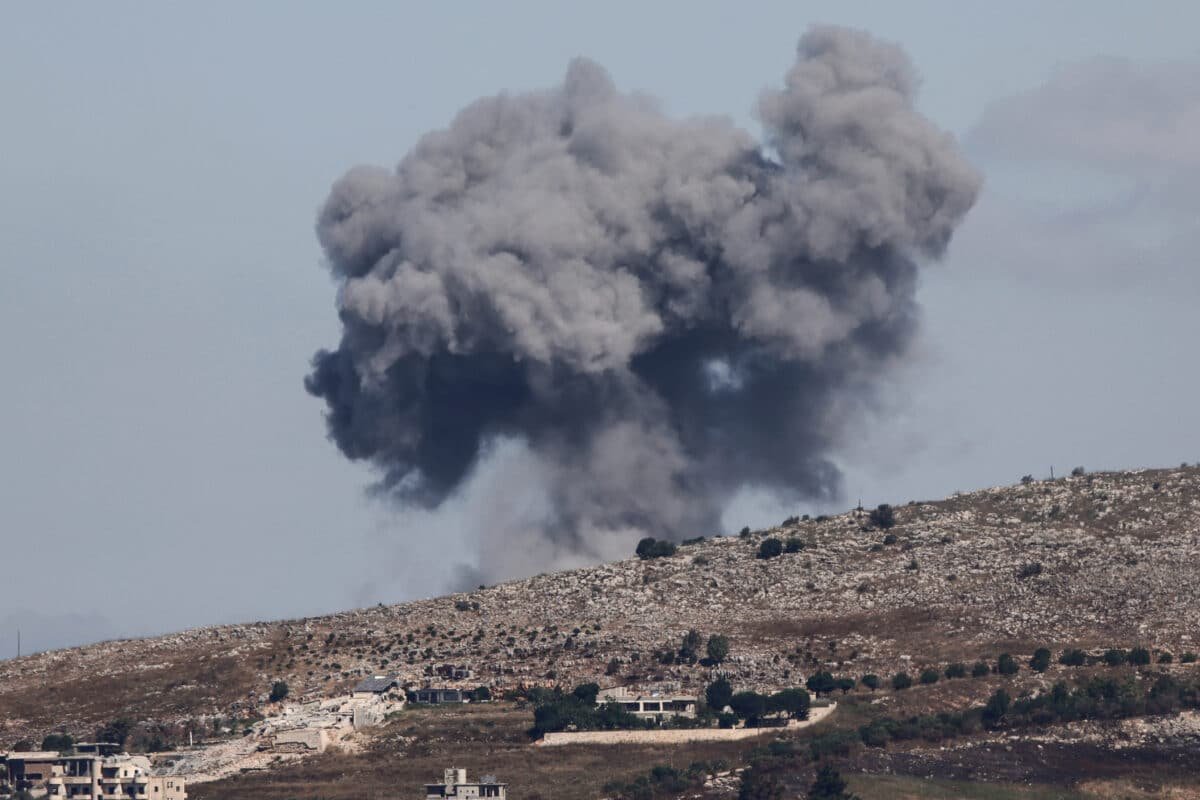
Israeli forces launched a large wave of air strikes across Lebanon on Wednesday, killing at least 182 people and injuring hundreds more, Lebanese officials said, in one of the deadliest escalations of the conflict with the armed group Hezbollah.

Get today's headlines by email

Israel said the operation targeted more than 100 Hezbollah command centres and military sites within a span of about 10 minutes, describing it as the largest wave of strikes carried out during the current fighting.
The attacks hit several locations including the southern suburbs of Beirut, southern Lebanon and the eastern Bekaa Valley.
Lebanon’s health ministry said at least 182 people had been killed and 890 wounded, warning that the toll could rise as emergency crews continue searching damaged buildings.
Scenes of destruction in Beirut
Hours after one of the most powerful strikes in Beirut’s southern suburbs, rescue teams were still combing through debris in search of survivors.
Amid the rubble were remnants of everyday life — family photographs, clothing and unfinished schoolwork scattered across the wreckage of destroyed homes.
Abdelkader Mahfouz, who had come to visit his injured brother, described the aftermath.
“There was a lot of body parts here. Only people are getting harmed. What should the people do? We can't do anything,” he said.
Ceasefire dispute and regional tensions
The strikes took place as Israeli officials rejected claims that a recently brokered ceasefire between the United States and Iran applied to fighting in Lebanon.
Pakistan, which helped mediate the US-Iran agreement, had suggested the arrangement covered the Lebanese front. But Israeli Prime Minister Benjamin Netanyahu’s office denied that interpretation.
In Washington, US President Donald Trump’s press secretary Karoline Leavitt also said the deal did not include Lebanon.
Hezbollah has not claimed responsibility for any new attacks since the ceasefire announcement, but the group warned it reserved the right to respond. It also advised displaced residents not to return to their homes until a formal ceasefire covering Lebanon is declared.
Lebanon’s presidency said it would continue diplomatic efforts aimed at ensuring the country is included in broader regional peace negotiations.
A war deepening Lebanon’s crisis
The latest escalation comes amid a long-running confrontation between Hezbollah and Israel that intensified after the group launched rockets into Israel following the killing of Iran’s supreme leader Ayatollah Ali Khamenei during the early stages of the wider regional war.
Hezbollah said the attack was also in response to ongoing Israeli strikes inside Lebanon despite a ceasefire agreed in November 2024.
According to Lebanon’s health ministry, more than 1,700 people have been killed in the conflict so far, including at least 130 children. The ministry does not differentiate between civilians and fighters.
Israel says around 1,100 Hezbollah combatants have been killed.
The war has displaced more than 1.2 million people — roughly one fifth of Lebanon’s population — with many forced to flee from predominantly Shia communities in the south.
Villages near the Israeli border have been heavily damaged as Israeli forces attempt to establish what they describe as a security buffer zone intended to dismantle Hezbollah infrastructure and push fighters further north.
The prospect that some areas could remain under Israeli control after the war has raised fears among residents that they may never be able to return home.
Inside Lebanon, Hezbollah has faced criticism from some groups who accuse it of dragging the country into conflict and serving the interests of Iran. Nevertheless, the organisation continues to retain strong support among many Lebanese Shia.
Political tensions and fragile diplomacy
The humanitarian crisis has placed additional strain on Lebanon’s already struggling economy and social fabric.
Schools converted into shelters are overcrowded, while many displaced families are living in makeshift tents, cars or public spaces. The movement of displaced people into other areas has also heightened sectarian tensions.
Following the 2024 ceasefire, Lebanon’s government announced plans to disarm Hezbollah. The group, however, has so far refused to discuss relinquishing its weapons.
President Joseph Aoun, a former army chief, has ruled out using force to disarm the organisation, warning that such a move could deepen divisions and spark internal violence.
After the latest escalation, his government said it was willing to open direct negotiations with Israel — a notable shift given the two countries have no diplomatic relations.
Israel has not responded to the proposal.


Join the discussion?

Already a member?


Adapted by ASEAN Now. Source 9 April 2026
webfact
webfact
A man accused of carrying out a series of killings that unsettled communities across Long Island for more than a decade has admitted responsibility for the murders of eight women.

Get today's headlines by email

Rex Heuermann, a 62-year-old architect, pleaded guilty in a Suffolk County courtroom on Wednesday, confirming he had strangled and dismembered several victims before leaving their remains along remote coastal areas of Long Island.
During the brief hearing, Heuermann responded mostly with short answers to questions from Judge Timothy Mazzei, acknowledging he had bound and killed each victim in a similar way. He appeared impassive throughout the proceedings and did not look toward the families of the victims seated behind him.
Relatives of the women, some visibly emotional, had waited years for answers in a case that had gripped the region since the discovery of human remains along Gilgo Beach in 2010.
Victims and crimes
Heuermann admitted to killing eight women between the mid-1990s and late 2000s. The victims were identified as Melissa Barthelemy, 24; Megan Waterman, 22; Amber Costello, 27; Maureen Brainard-Barnes, 25; Jessica Taylor, 20; Valerie Mack, 24; Sandra Costilla, 28; and Karen Vergata, 34.
Investigators believe the women, many of whom were sex workers at the time of their deaths, were contacted through advertisements posted online, including on Craigslist.
In court, Heuermann confirmed that he lured the women with offers of payment before killing them. Asked how the murders were carried out, he replied simply “strangulation,” before entering a plea of “guilty”.
An attorney representing some victims’ families later said Heuermann showed no remorse during the hearing.
Several life sentences are expected to be formally imposed on 17 June.
Breakthrough after years of investigation
The killings had remained unsolved for more than a decade, fuelling widespread speculation across Long Island.
Heuermann was arrested in July 2023 after investigators linked him to the crimes through DNA evidence obtained from a discarded pizza box. Police detained him outside his office in Midtown Manhattan.
Authorities later connected him to several victims using a combination of forensic and digital evidence, including burner phones used to contact victims, cell tower data and hair recovered from remains.
Investigators also revisited a key witness account from 2010. A roommate of victim Amber Costello had described an intimidating client driving a distinctive first-generation Chevrolet Avalanche. That description eventually helped lead investigators to Heuermann.
In 2022, Suffolk County Police formed a new task force that brought together local and federal agencies to re-examine the case. Officials said the renewed investigation identified Heuermann as a suspect within weeks.
The inquiry had previously been overshadowed by separate scandals involving senior law enforcement officials. Former Suffolk County police chief James Burke was later convicted on charges including obstruction of justice, while former district attorney Thomas Spota was also imprisoned on related corruption charges.
A neighbourhood and unanswered questions
Heuermann lived with his family in Massapequa Park, a suburban Long Island community of around 18,000 residents. Neighbours described his childhood home as noticeably dilapidated compared with surrounding houses, though many said they had never suspected the crimes.
Following his arrest, his wife Asa Ellerup and their two children continued to live in the house, drawing significant attention from media and onlookers.
At Wednesday’s hearing, Ellerup sat at the back of the courtroom alongside her daughter. Speaking briefly outside afterwards, she said her thoughts were with the victims’ families.
Despite Heuermann’s admissions, some aspects of the wider case remain unresolved. Authorities have long investigated the 2010 disappearance of Shannan Gilbert, whose emergency call led police to search the area where several victims were later found.
Police say they do not believe Heuermann was responsible for Gilbert’s death, which they say likely resulted from drowning or hazardous conditions in nearby marshland.
For many residents and relatives of the victims, the guilty plea brings a measure of closure after years of uncertainty — though questions about the full scope of the crimes and their lasting impact remain.

Join the discussion?

Already a member?


Adapted by ASEAN Now. Source 9 April 2026

webfact
webfact
US Vice President JD Vance urged Hungarian voters to support Prime Minister Viktor Orbán during a rally in Budapest, days before a closely contested national election that polls suggest the long-time leader could lose.

Get today's headlines by email

Speaking late Tuesday at the MTK Sportpark arena, Vance initially said he had not come to Hungary to instruct voters how to cast their ballots. But he ended his speech by openly encouraging support for Orbán.
“If you stand for sovereignty and democracy… then go to the polls this weekend and stand with Viktor Orbán,” Vance told the crowd, drawing applause from supporters.
The vice president had travelled to Hungary for what was described as a celebration of Hungarian-American friendship. In practice, his appearance became the centerpiece of a campaign rally for Orbán, a conservative leader who has cultivated close ties with the political movement around US President Donald Trump.
Tight race ahead of vote
Hungary is due to hold parliamentary elections on Sunday. Orbán, who has governed for more than a decade, faces a strong challenge from Péter Magyar, a former member of Orbán’s ruling Fidesz party.
Magyar now leads the opposition Tisza Party and has accused the government of widespread corruption. Polls suggest his party could win enough support to form a new government.
During the rally, Vance said the United States would work with whichever government emerges from the vote, but added that he believed Orbán would win. “We have got to get Viktor Orbán re-elected as prime minister of Hungary,” he said.
The visit has drawn criticism from some observers, who say it is unusual for a senior Western official to intervene so directly in another country’s election campaign.
Criticism and accusations of interference
A spokesperson for the European Commission, Thomas Regnier, responded to Vance’s comments by stating that elections in Europe are decided solely by citizens.
Vance defended his remarks the following day in Budapest, rejecting accusations of interference. He argued that “foreign influence” occurs when governments use pressure or economic leverage to dictate how people should vote.
He also criticised the European Union for freezing billions of euros in funding to Hungary over concerns about democratic standards, describing the move as political pressure.
Outside the rally venue, a small group of demonstrators criticised the visit. One protester said Vance’s appearance resembled campaign support rather than a normal diplomatic trip.
Orbán’s role in global populist politics
Orbán has become a prominent figure in international right-wing politics, advocating strict immigration policies and opposition to liberal social policies. He has also portrayed himself as a defender of national sovereignty against what he describes as interference from Brussels.
The EU and several academic studies have criticised Hungary’s government for weakening judicial independence and restricting media freedom. Some analysts describe the country as an “electoral autocracy,” a label rejected by Orbán and his allies.
Supporters argue the competitive election itself demonstrates Hungary’s democratic system remains intact.
Orbán has also faced criticism over his stance on the war in Ukraine and his government’s relationship with Vladimir Putin, the president of Russia. Hungary has repeatedly clashed with EU partners over sanctions and financial support for Ukraine.
Uncertain impact of US support
Analysts say it remains unclear whether Vance’s appearance will influence the outcome of the vote. Some suggest it could even harm Orbán if voters view it as outside interference.
A recent survey by the Pew Research Center found that public opinion in Hungary toward Trump is mixed, with a significant share of respondents expressing little or no confidence in him.
Despite the uncertainty, Orbán cast the election in sweeping terms, urging supporters to defend what he called Western civilisation and warning against political forces he says threaten Hungary’s sovereignty.
Hungarian voters will decide on Sunday whether Orbán’s long tenure continues or whether the opposition secures enough support to replace his government.


Join the discussion?

Already a member?


Adapted by ASEAN Now. Source 9 April 2026
webfact
webfact
The United States will begin automatically registering eligible men for the military draft starting in December, following a change aimed at simplifying the current self-registration system and reducing administrative costs.

Get today's headlines by email

The update stems from a rule proposed by the Selective Service System (SSS), the federal agency responsible for maintaining a database of individuals who could be called for service in a national emergency. According to the Office of Information and Regulatory Affairs, the proposal was submitted on 30 March and is currently under review before final approval.
Most American men aged 18 to 25 are already legally required to register with the Selective Service. However, the new policy will shift responsibility for registration from individuals to the government.
Shift to automatic registration
The change was mandated by the fiscal 2026 National Defense Authorization Act, passed in December 2025. Under the legislation, the Selective Service will use federal data sources to automatically enroll eligible men into the system.
Officials say the move is designed to streamline the process while lowering administrative expenses associated with the current requirement that individuals register themselves.
If the rule is finalised, men will be automatically added to the registry within 30 days of their 18th birthday.
Background to the draft system
The United States has not conducted a military draft since the Vietnam War. The country shifted to an all-volunteer military in 1973.
Seven years later, in response to rising Cold War tensions, then-president Jimmy Carter reinstated the Selective Service registration system in 1980. The system was designed to ensure that the government could rapidly mobilise personnel during a national emergency.
The registry can be used to supply personnel to the military and to organise alternative service for conscientious objectors, but only if authorised by both the president and Congress.
Debate amid tensions with Iran
The issue has recently drawn attention amid the ongoing conflict between the United States and Iran, which is currently under a fragile two-week ceasefire.
Speculation about whether a draft could be reinstated has increased during the crisis. In March, White House press secretary Karoline Leavitt said that a draft was “not part of the current plan right now”, though she added that President Donald Trump keeps “options on the table”.
However, the president cannot restore the draft through executive action alone. Congress would need to pass legislation amending the Military Selective Service Act before the president could order the induction of personnel into the armed forces.
Penalties for failing to register
Although the draft itself has not been used in decades, registration with the Selective Service remains mandatory for most men.
Failing to register is a criminal offence that can carry penalties including fines of up to $250,000 and a possible prison sentence of up to five years. It can also make individuals ineligible for federal employment opportunities, job-training programmes and some forms of state-funded financial aid.
Immigrants who fail to register may also risk losing the chance to obtain US citizenship.
Women are still not required to register for the draft. In recent years, lawmakers have repeatedly proposed expanding the requirement to include women as part of annual defence legislation, but those provisions have been removed before final votes on the bills.

Join the discussion?

Already a member?


Adapted by ASEAN Now. Source 9 April 2026
webfact
webfact
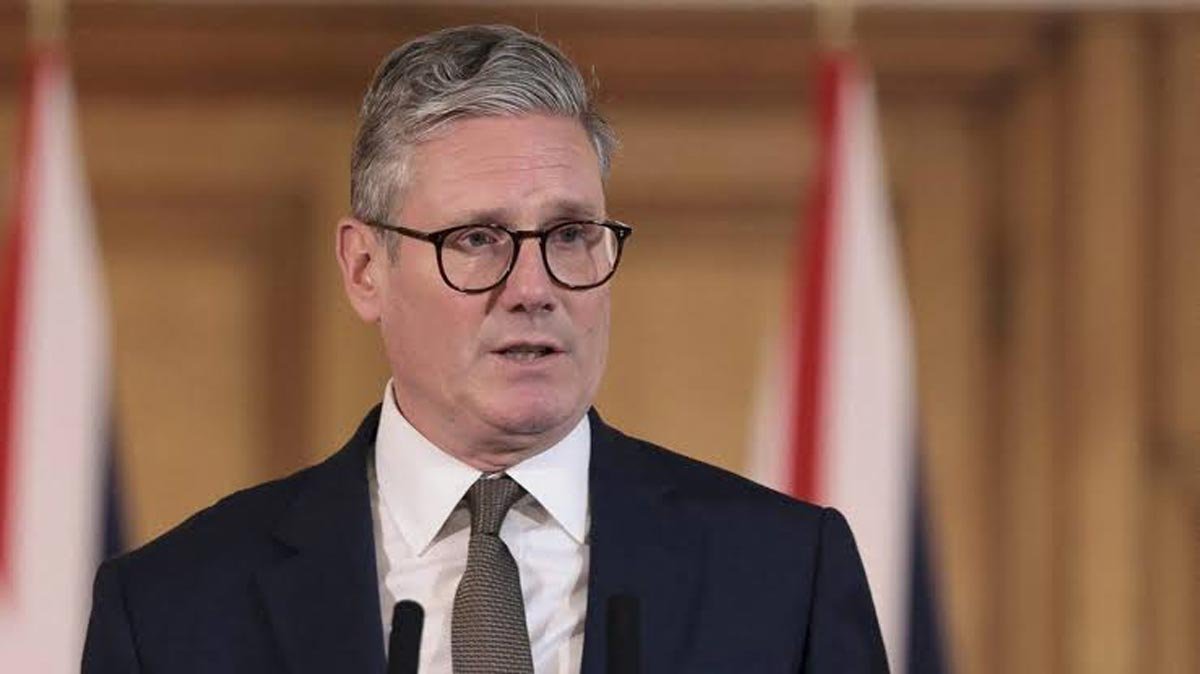
UK Prime Minister Keir Starmer has warned that significant work is still required to ensure a fragile ceasefire between the United States and Iran holds, as diplomatic efforts intensify to reopen the vital shipping route through the Strait of Hormuz.

Get today's headlines by email

Speaking during a visit to Saudi Arabia, Starmer said the two-week truce offered a moment of relief but stressed it was only the beginning of a broader effort to stabilise the region and restore energy flows.
The ceasefire follows threats by US President Donald Trump, who warned that an entire civilisation could be destroyed if Iran refused to halt hostilities and allow ships to pass through the strategic strait.
Diplomatic push in the Gulf
Starmer arrived in Saudi Arabia on Wednesday to meet regional partners and discuss how to support the ceasefire agreement and secure safe passage for shipping through the strait.
Addressing British and Saudi personnel at King Fahd Air Base in Taif, he said there remained “a lot of work to do” to ensure the ceasefire could evolve into a lasting peace.
He also emphasised the global importance of restoring traffic through the Strait of Hormuz, which carries roughly a fifth of the world’s energy shipments. Reopening the route, he said, would help stabilise oil and gas supplies and ease pressure on energy prices in the UK and beyond.
Later in the day, Starmer travelled to Jeddah to meet Saudi Crown Prince Mohammed bin Salman. According to Downing Street, the two leaders discussed international efforts to coordinate practical steps that would give commercial shipping the confidence to return to the waterway.
The UK government said Starmer also thanked Saudi Arabia for assisting British nationals in the region.
Uncertainty over shipping and wider conflict
Despite the agreement, questions remain about whether the ceasefire will hold. Iranian media reported that oil tankers had stopped passing through the strait, raising concerns that shipping has yet to resume normally.
Ship-broker SSY told BBC Verify that vessels operating in the Gulf had received messages warning that the waterway remained closed. Ships were reportedly told they would need approval from Iran’s Islamic Revolutionary Guard Corps before attempting to sail through the strait.
Further uncertainty surrounds the scope of the ceasefire. Pakistan, which helped mediate the negotiations, and Iranian officials said the deal extended to fighting in Lebanon between Israel and the Iran-backed militant group Hezbollah.
Israel, however, has said the temporary truce does not apply to its military campaign in Lebanon. Israeli officials also reported carrying out some of their largest strikes since their ground operation began there.
Political reaction in the UK
The ceasefire has drawn mixed reactions across Britain’s political spectrum.
Conservative shadow housing secretary James Cleverly said the pause in fighting should give Iran an opportunity to reconsider its behaviour both domestically and internationally. He argued that preventing Iran from obtaining a nuclear weapon must remain the central objective.
Liberal Democrat leader Ed Davey welcomed the ceasefire but questioned whether Washington could be relied upon as a partner, calling Trump an “unreliable ally”. He warned that failing to reopen the Strait of Hormuz would risk higher inflation and weaker economic growth.
Meanwhile, Reform UK leader Nigel Farage suggested Starmer might struggle to gain respect during his diplomatic outreach in the Gulf, claiming the government’s handling of the conflict had unsettled some allies.
Building a security coalition
The UK has been attempting to organise an international effort to safeguard the Strait of Hormuz once fighting subsides.
Last week, London hosted a virtual summit involving representatives from more than 40 countries aimed at establishing a coalition to ensure security in the waterway. A follow-up military planning conference was held on Tuesday.
The conflict began in February when the United States and Israel launched coordinated strikes against Iran over concerns that Tehran was accelerating efforts to develop nuclear weapons.
Iran responded with attacks across the Gulf and wider Middle East, while also restricting passage through the Strait of Hormuz. The disruption drove global oil prices sharply higher, raising fears of increased fuel costs and broader economic pressure worldwide.

Join the discussion?

Already a member?


Adapted by ASEAN Now. Source 9 April 2026
webfact
webfact
Israel has endorsed a ceasefire between the United States and Iran after five weeks of conflict, but Prime Minister Benjamin Netanyahu has signalled that Israel’s broader war goals remain unresolved.

Get today's headlines by email

When the Israeli leader announced the joint Israeli-US military campaign against Iran in late February, he projected confidence that the operation would neutralise what he described as the threat posed by Iran’s ruling clerical system.
However, the tone from Netanyahu’s office following the ceasefire announcement was notably restrained. The statement emphasised that the agreement had been declared by US President Donald Trump rather than by Israel, contrasting sharply with more celebratory claims of victory from Washington and Tehran.
Speaking on Wednesday, Netanyahu described the campaign as a success but stressed that the ceasefire did not necessarily mark the end of the conflict. He said Israel still had further objectives that could be achieved either through diplomatic arrangements or by resuming military action.
Unfinished War Goals
At the start of the conflict, Netanyahu said the aim of the campaign was to eliminate the threat posed by Iran’s leadership under the Islamic Republic.
While Israeli and US strikes killed several senior Iranian figures, including Iran’s Supreme Leader Ali Khamenei, Iran’s armed forces remain operational and the governing structure of the Islamic Republic has not collapsed.
Key questions also remain about the status of Iran’s nuclear programme and its stockpile of enriched uranium. Iran has continued to launch ballistic missile attacks on Israel during the conflict, even as its missile capabilities have been partially degraded.
Missile alerts sounded in Jerusalem overnight following Trump’s ceasefire announcement, with the Israel Defense Forces reporting multiple launches from Iranian territory.
Analysts say the outcome suggests Israel and the United States may have overestimated their ability to decisively weaken Iran or trigger a change in its political system.
Political Pressure at Home
Israeli journalist Anshel Pfeffer, who has written extensively about Netanyahu, said the prime minister had referred only to a temporary “suspension” of hostilities rather than the end of the war.
He suggested Netanyahu’s inability to achieve his declared objectives could create political difficulties and potentially strain relations with Washington if Israel felt it had limited influence over the ceasefire negotiations.
Until now, Netanyahu and Trump had publicly maintained a close alliance during the conflict. But analysts say their priorities may diverge if a lasting settlement emerges from negotiations between the United States and Iran.
If the final agreement reflects the “10-point proposal” from Tehran referenced by Trump, some observers believe Iran could claim a strategic victory.
Opposition leader Yair Lapid sharply criticised the government, saying Israel had been excluded from key negotiations affecting its security.
“The army did everything they asked of it,” Lapid said, arguing that the government had failed politically and strategically.
Israel is approaching an election year, raising the possibility that Netanyahu could face voters within months amid growing debate about the war’s outcome.
Ceasefire Dispute Over Lebanon
Another major uncertainty concerns whether the ceasefire applies to fighting in Lebanon, where Israel has been battling the Iran-backed armed group Hezbollah.
Iran and Pakistani Prime Minister Shehbaz Sharif, who helped mediate the agreement, have said the ceasefire includes Lebanon. But Netanyahu’s office insists the deal does not cover that front.
Israeli forces carried out large-scale air strikes in Lebanon on Wednesday, which Lebanese officials said killed at least 182 people and injured hundreds more, including in the capital Beirut.
Trump later told a journalist that Lebanon was not part of the ceasefire arrangement because of Hezbollah’s involvement, describing the fighting there as a separate confrontation.
The dispute has raised fears that the fragile truce between Washington and Tehran could collapse if regional tensions escalate further.
How Netanyahu manages the political fallout at home and whether Trump continues to support Israel’s position could determine whether the ceasefire holds in the coming weeks.


Join the discussion?

Already a member?


Adapted by ASEAN Now. Source 9 April 2026
webfact
webfact
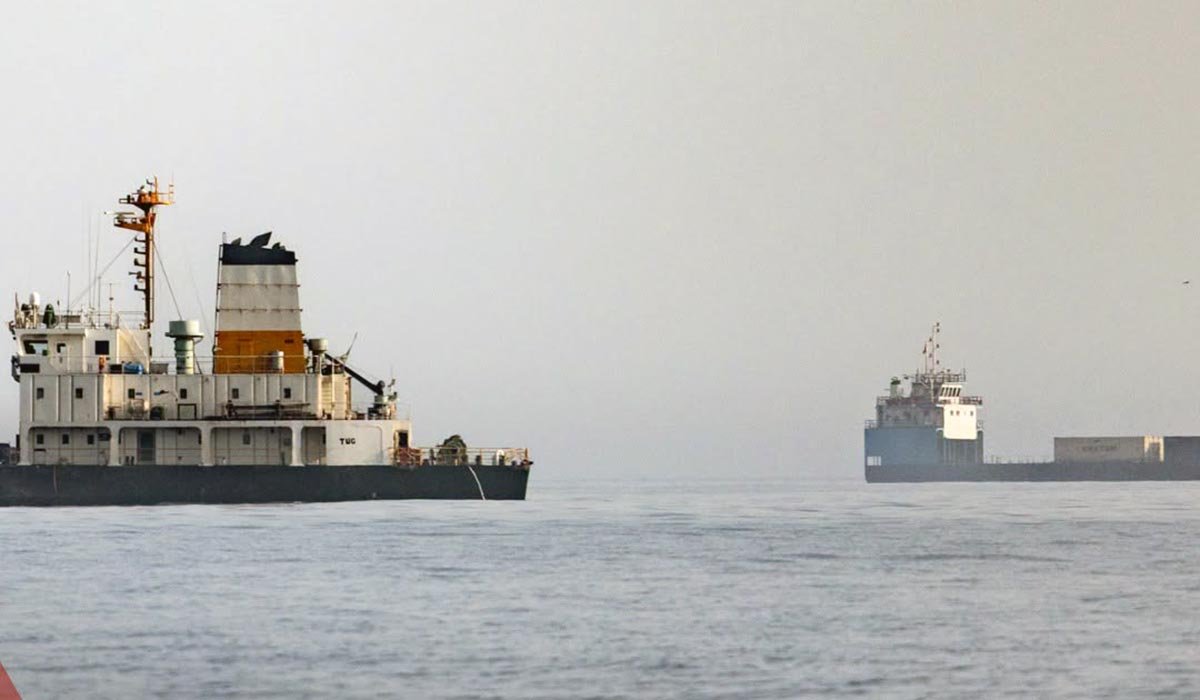
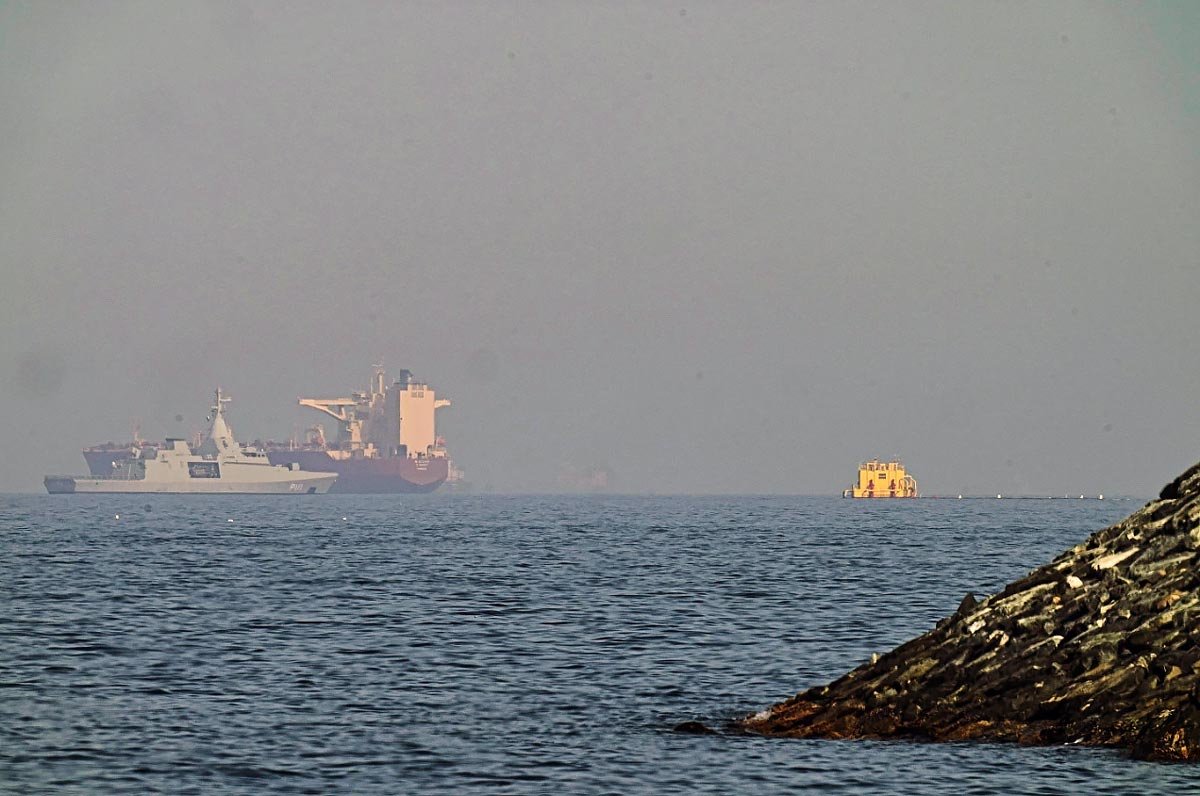
Iran has again closed the Strait of Hormuz after accusing Israel of breaching a newly agreed ceasefire, casting doubt on efforts to restore shipping through one of the world’s most critical energy routes.

Get today's headlines by email

The move came only hours after U.S. officials said the strategic waterway had reopened under a two-week ceasefire agreement between Washington and Tehran.
The strait is a vital channel for global oil and trade, and its reopening was considered a central element of the temporary truce announced late Tuesday.
Dispute over ceasefire terms
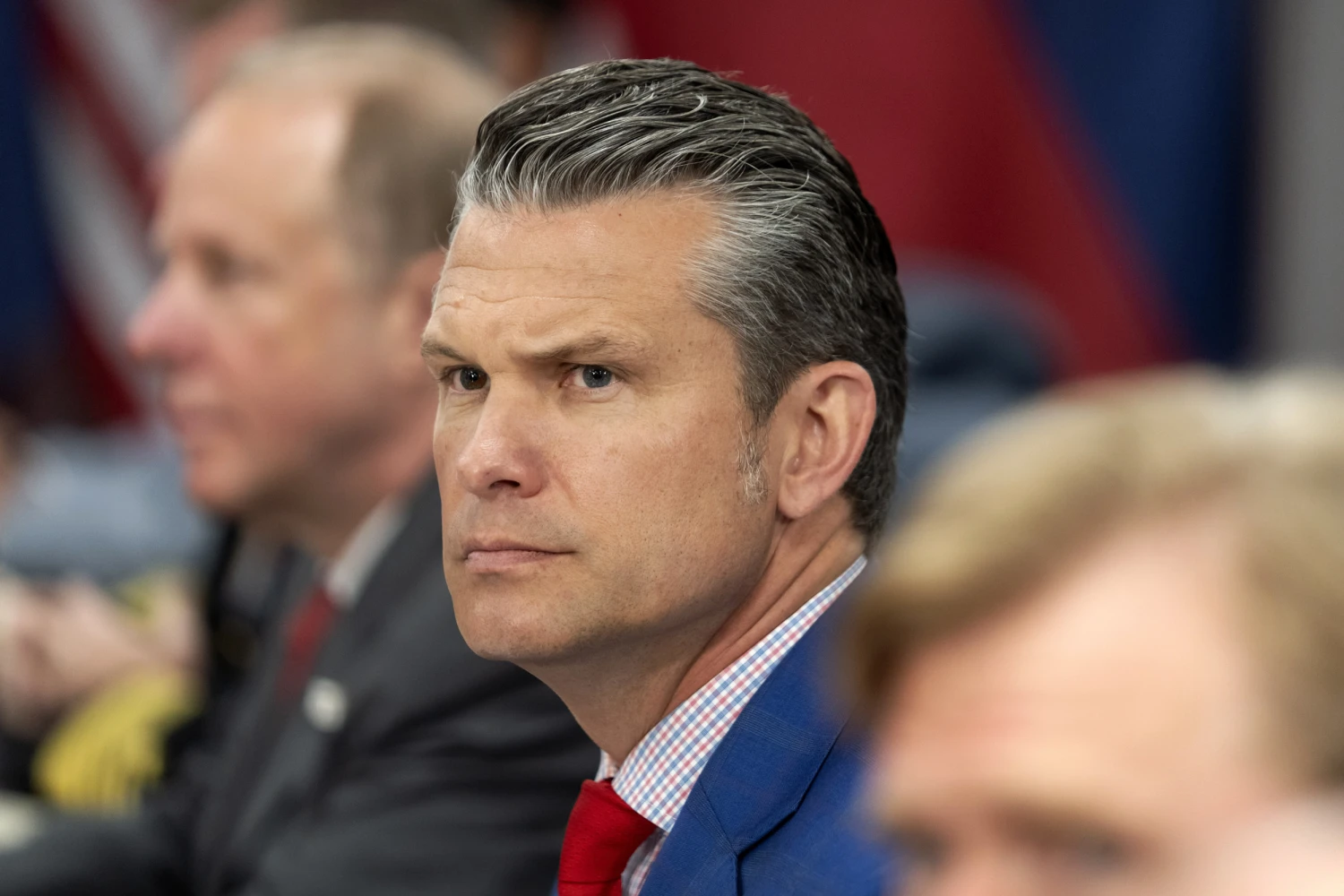
U.S. Defense Secretary Pete Hegseth and Gen. Dan Caine, chairman of the Joint Chiefs of Staff, told reporters on Wednesday that the passage had reopened following diplomatic negotiations tied to the ceasefire deal.
But Iranian authorities later said they had shut the route again after accusing Israel of launching a major attack in Lebanon, which Tehran says violates the agreement.
Iran’s foreign minister, Abbas Araghchi, said the United States must decide whether it supports the ceasefire or continued hostilities through Israel.
“The Iran-U.S. ceasefire terms are clear and explicit,” he said in a social media post, adding that the international community was watching how Washington would respond.
Iran’s state-linked Fars News Agency reported that the closure came after several vessels, including two oil tankers, had already passed through the strait earlier in the day.
Lebanon attack complicates negotiations
The ceasefire was announced shortly before a deadline set by U.S. President Donald Trump, who had warned Iran of severe consequences if an agreement was not reached.
Pakistan’s Prime Minister Shehbaz Sharif, who helped mediate the talks, urged all sides to respect the truce after reports of violations emerged across the conflict zone.
“I earnestly and sincerely urge all parties to exercise restraint and respect the ceasefire for two weeks,” he said in a statement.
Iranian officials argue that attacks in Lebanon fall within the ceasefire’s scope. Araghchi cited Sharif’s earlier remarks suggesting that the truce applied broadly across the region, including Lebanon.
However, the White House rejected that interpretation.
President Trump said in a phone interview that Lebanon was not included in the ceasefire agreement, noting that Hezbollah—an Iranian-backed group— has continued to launch attacks against Israel from Lebanese territory.
White House press secretary Karoline Leavitt later repeated that position during a briefing, saying all parties involved had been informed that Lebanon was excluded.
Shipping industry cautious
The renewed uncertainty has unsettled global shipping companies that had begun preparing to resume traffic through the waterway.
Ed Finley-Richardson, a shipping investment analyst at Contango Research, said there had been growing optimism after both Washington and Tehran signalled that the route would reopen.
Charterers had started arranging new cargo shipments from Gulf ports for the first time since the conflict began, he said.
“That optimism fell apart when Iran deemed that the ceasefire had been violated,” he added, though conditions may still allow for a partial return of shipping if tensions ease.
Maersk, one of the world’s largest container shipping companies, said the ceasefire might create opportunities for transit but warned that the situation remains uncertain.
The company said it would continue assessing risks before sending vessels through the strait, stressing that the safety of crews, ships and cargo remained its highest priority.
Fragile truce
Iran has indicated that it will allow shipping for a limited two-week period if attacks on its territory stop, though it has warned of retaliation if strikes continue.
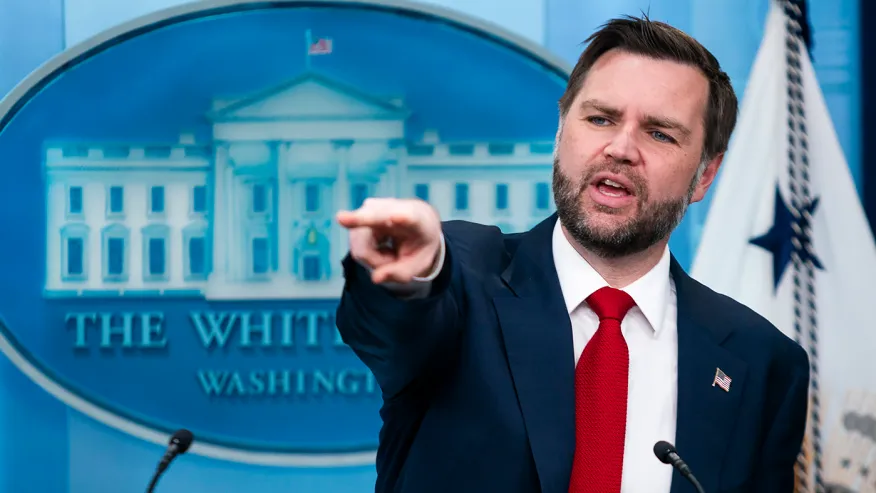
U.S. Vice President JD Vance described the agreement as a “fragile truce”, saying Iran had agreed to reopen the strait while the United States and its allies halted attacks.
With disputes over the ceasefire already emerging, the stability of the arrangement – and the reopening of the crucial shipping route — remains uncertain.


Join the discussion?

Already a member?


Adapted by ASEAN Now. Source 9 April 2026
webfact
webfact
Pope Leo XIV has criticised a threat by U.S. President Donald Trump to destroy Iranian civilisation, describing the remark as “truly unacceptable” and warning that attacks on civilian infrastructure would breach international law.

Get today's headlines by email

Speaking on Tuesday as he left his residence in Castel Gandolfo, south of Rome, the pontiff delivered some of his strongest comments so far on the escalating tensions surrounding the conflict involving Iran.
He urged citizens, particularly in the United States, to press their elected representatives to reject further escalation and work toward peace.
Pope denounces threat against Iranian people
Addressing reporters outside the papal residence, Leo said the threat directed at Iran’s population was deeply troubling.
“Today as we all know there was this threat against all the people of Iran,” he said. “This is truly unacceptable.”
The pope was referring to remarks by President Trump warning that a “whole civilization will die tonight” if Iran fails to meet a new deadline tied to negotiations that include reopening the Strait of Hormuz.
Leo framed the issue not only as a political dispute but also as a moral one, stressing that the targeting of civilian infrastructure would violate international law.
Appeal for citizens to pressure political leaders
The pontiff also called on people of “good will” to make their voices heard with political leaders.
He urged Americans and others to contact their political representatives and members of Congress to demand opposition to war and renewed efforts toward diplomacy.
According to Leo, such public engagement is necessary to remind leaders of their responsibility to protect civilians and uphold international legal standards.
He said attacks on civilian infrastructure are “against international law” and represent a dangerous escalation in any conflict.
Warning against escalation
Leo reiterated concerns he had previously raised during his Easter message, in which he appealed for peace and warned against further military confrontation.
He repeated his view that the current conflict risks becoming an unjust and expanding war that fails to resolve underlying tensions.
“Especially a war which many people have said is an unjust war, which is continuing to escalate, and which is not resolving anything,” he said.
The pope also warned that threats against entire populations reflect deeper divisions and hostility that can fuel prolonged violence.
Call for peace and restraint
Leo concluded his remarks by emphasising the destructive consequences of war and the importance of pursuing peace.
Attacks targeting civilian infrastructure, he said, illustrate “the hatred, the division, the destruction human beings are capable of.”
He added that people around the world must work together to prevent further escalation and support peaceful solutions to the crisis.
The comments come amid rising tensions linked to negotiations over Iran’s role in regional shipping routes and the future of the Strait of Hormuz, a key global energy corridor.

Join the discussion?

Already a member?


Adapted by ASEAN Now. Source 8 April 2026
webfact
webfact
A gunman was killed and two police officers were wounded during a shootout near the Israeli consulate in Istanbul, in an incident described by Turkish authorities as a terrorist attack.

Get today's headlines by email

The confrontation took place in broad daylight in the city’s Besiktas district, where the consulate building is located. According to officials, the two injured officers sustained minor wounds and were not in life-threatening condition.
Turkey’s president, Recep Tayyip Erdogan, condemned the incident, calling it a “heinous act of terror” and saying the country would not allow such attacks to undermine public confidence.
“We will not allow the climate of trust in Turkey to be damaged by such vile and timed provocations,” he said.
Authorities identify suspected attackers
Turkey’s interior minister, Mustafa Ciftci, said the attackers had travelled to Istanbul by rental car from the nearby city of Izmit.
In a statement on social media, the interior ministry identified the gunman who was killed as Yunus E.S. Officials said he had links to a militant organisation described as one that “exploits religion”, a phrase commonly used by Turkish authorities to refer to Islamic State.
No group has claimed responsibility for the attempted attack.
Police initially reported that two attackers had been killed. However, the governor of Istanbul, Davut Gul, later clarified that only one gunman had died.
Two other suspects, identified as brothers Onur Ç and Enes Ç, were injured in the exchange of fire and taken into custody. Authorities said the pair were being questioned as part of the investigation.
Gunfight in busy district
Officials said the attackers used rifles and pistols during the assault.
The two police officers injured in the gunfight were struck in the leg and the ear. Both received medical treatment and their injuries were described as minor.
Turkey’s interior ministry said investigators had detected “intensive digital communication” between the three suspects and that further questioning of the injured men was continuing.
Witnesses reported hearing sustained gunfire during the incident. One person at the scene told Reuters that the shots were loud and appeared to continue for around 15 to 20 minutes.
Videos shared on social media appeared to show the moment when one armed suspect was shot by police and collapsed in the street.
Security response and investigation
Footage circulating online also showed a heavy police presence around the consulate building after the attack, with the surrounding area sealed off for several hours while security forces carried out searches.
Governor Gul confirmed that no Israeli diplomatic staff were present in the building at the time.
The consulate has not been staffed for more than two years amid strained relations between Turkey and Israel linked to the war in Gaza.
Turkey’s justice minister said prosecutors had opened a formal investigation into the incident as authorities continue to examine the suspects’ possible connections and motives.


Join the discussion?

Already a member?


Adapted by ASEAN Now. Source 8 April 2026
webfact
webfact
Reform UK has said it would refuse to issue visas to nationals from countries that formally pursue slavery reparations from Britain if the party were to form a government.

Get today's headlines by email

The policy, announced by the party led by Nigel Farage, would apply to all visa categories, including those for tourism, study and employment. Reform said the measure would target governments that develop official approaches to seeking reparations from the UK over its role in the transatlantic slave trade.
Britain transported an estimated three million Africans across the Atlantic before the practice was abolished in the early 19th century.
Successive British governments have rejected calls for reparations, which have ranged from demands for financial compensation to symbolic gestures such as formal apologies.
Reform outlines proposed visa policy
Reform said the visa restrictions would apply to countries that formally pursue reparations claims against Britain. The party listed examples of actions it would consider to be such demands, including the creation of national reparations committees, legal claims in courts, motions submitted at the United Nations, or official government declarations.
Several Caribbean and African countries were identified by the party as already pushing for reparations. These included Barbados, Jamaica, Nigeria and Ghana.
Reform said that if any country formally demanded reparations, a future government led by the party would “immediately halt” the issuance of new visas to its nationals.
Zia Yusuf, the party’s home affairs spokesman, argued that demands for reparations overlook Britain’s role in abolishing slavery. He said the country “made huge sacrifices to be the first major power to outlaw slavery and enforce this prohibition”.
Debate over reparations intensifies
The proposal follows renewed international discussion about reparations. Last month the United Nations General Assembly adopted a resolution describing the transatlantic slave trade as “the gravest crime against humanity”.
The resolution stated that reparations claims represent a step toward addressing historical injustices experienced by Africans and people of African descent.
It passed with 123 votes in favour and three against, while the United Kingdom was among the countries that abstained.
Calls for reparations have also been led by the Caribbean Community (Caricom), which more than a decade ago produced a 10-point plan for what it calls “reparatory justice”. The proposals include a formal apology from former colonial powers, debt cancellation and investment programmes to address education and public health issues.
Political reaction in Britain
Reform’s announcement drew criticism from other UK political parties.
A spokesperson for the Labour Party described the policy as a “desperate gimmick”. The Conservative Party declined to comment.
Will Forster, the immigration and asylum spokesperson for the Liberal Democrats, said the proposal amounted to “chasing cheap headlines by threatening our allies” and warned it could harm the British economy and public services.
The Green Party of England and Wales pointed to a statement from one of its internal groups welcoming the UN resolution supporting reparations discussions.
At a summit of Commonwealth leaders in October 2024, members agreed that the “time has come” to discuss reparations related to the slave trade, despite efforts by the UK government to avoid placing the issue on the agenda.
Prime Minister Keir Starmer said at the time that no financial compensation had been discussed and reiterated the government’s position that Britain would not pay reparations.


Join the discussion?

Already a member?


Adapted by ASEAN Now. Source 8 April 2026
webfact
webfact
Microsoft co-founder and philanthropist Bill Gates is scheduled to testify before the US Congress in June as part of an investigation into the activities and network of convicted sex offender Jeffrey Epstein, lawmakers have confirmed.

Get today's headlines by email

The appearance will take place on 10 June before the U.S. House Oversight Committee, which is examining Epstein’s connections with prominent figures and reviewing material released from federal investigations.
A spokesperson for Gates said he was willing to cooperate with the committee’s work and would answer questions related to his past interactions with Epstein.
Congressional investigation expands
The committee has been gathering testimony from several prominent individuals as part of its broader inquiry into Epstein’s activities and relationships.
Gates is among the latest high-profile figures asked to provide evidence. He has not been accused of misconduct by any of Epstein’s victims, and his presence in investigative files does not indicate criminal wrongdoing.
Information about communications and contacts between Gates and Epstein surfaced earlier this year after the U.S. Department of Justice released more than three million documents related to the Epstein investigations. Officials say millions of additional records have yet to be made public.
The document release followed legislation signed by Donald Trump in November requiring the justice department to publish all materials connected to its investigations into Epstein.
Gates acknowledges “error in judgment”
Gates has previously addressed his past meetings with Epstein, describing them as limited and expressing regret over the association.
According to the Bill & Melinda Gates Foundation, the technology billionaire spoke to staff at the foundation and accepted responsibility for meeting with Epstein, answering questions during an internal discussion.
Reports by the The Wall Street Journal said Gates apologised to staff members and acknowledged that Epstein had learned about two affairs he had with Russian women. Gates was quoted as saying: “I did nothing illicit. I saw nothing illicit.”
In an earlier television interview with 9News Australia, Gates said his interactions with Epstein were confined to dinners and that he had never visited Epstein’s private island.
“Every minute I spent with him I regret and I apologise that I did that,” he said at the time.
A spokesperson later reiterated that Gates had never attended parties organised by Epstein and had no involvement in illegal activities associated with the financier.
Other prominent figures called to testify
The House Oversight Committee formally requested Gates’ testimony in a letter issued on 3 March as it continued to expand its inquiry.
Other political figures have already appeared before the panel. Former US president Bill Clinton and former secretary of state Hillary Clinton both testified earlier this year.
Additional testimony is expected from US commerce secretary Howard Lutnick and former attorney general Pam Bondi in the coming weeks.
The hearings form part of ongoing congressional scrutiny of Epstein’s activities and the individuals who had contact with him before his death in custody in 2019.


Join the discussion?

Already a member?


Adapted by ASEAN Now. Source 8 April 2026
webfact
webfact
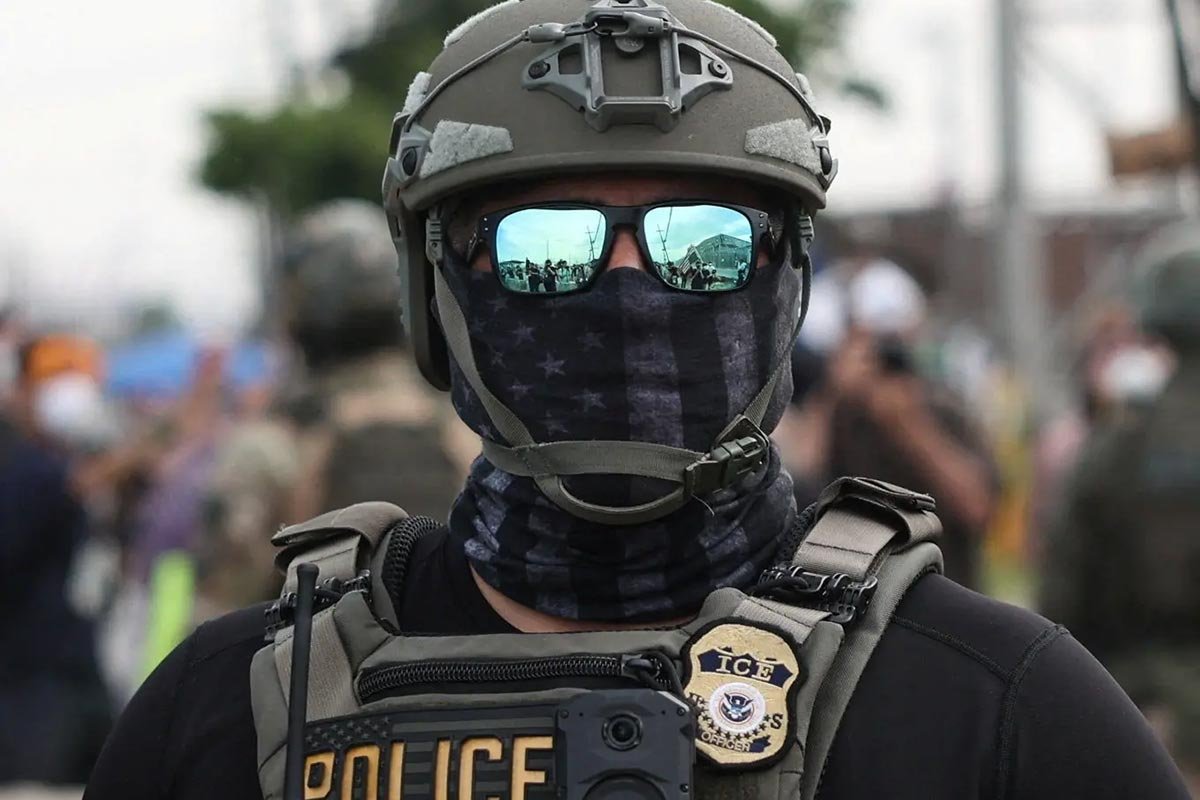
Newly released surveillance footage from Minneapolis appears to contradict the initial account given by federal authorities about the January shooting of a Venezuelan migrant during an encounter with immigration agents.

Get today's headlines by email

The video, published by city officials on Monday, shows events leading up to the 14 January shooting of Julio Cesar Sosa-Celis. Immigration and Customs Enforcement (ICE), part of the Department of Homeland Security (DHS), had previously said an officer fired after being attacked with a shovel and other objects during an altercation.
However, the footage appears to raise questions about that description of events.
Footage shows brief struggle
The grainy video, filmed from a distance in low light by city-owned cameras, shows a confrontation between several men shortly before the shooting.
In the recording, one man runs up a street while another follows him. The first man briefly falls, then stands and continues moving toward a nearby house. The two men then engage in a short struggle on the ground as federal agents approach.
The footage appears to show a shovel being discarded before physical contact occurs.
Sosa-Celis was shot in the leg during the incident.
While the images are unclear, the sequence shown in the video does not appear to match earlier claims that an officer was struck with a shovel during the confrontation.
Original DHS account
After the incident, DHS said the encounter followed a vehicle chase involving a Venezuelan national who was in the United States without legal status.
According to the department’s initial statement, the individual exited his vehicle and became involved in an altercation with a federal officer. Officials said the agent fired “defensive shots” after being attacked and “fearing for his life and safety as he was being ambushed by three individuals”.
Two men — Alfredo Alejandro Aljorna and Sosa-Celis — were subsequently charged with forcibly assaulting, resisting or impeding federal officers.
Those charges were dropped in February after ICE officials said two agents appeared to have provided false statements about the incident.
Questions over investigation
The footage released by Minneapolis was first reported by the New York Times. The city provided the video publicly but said it would not offer further comment or additional context.
Minneapolis Mayor Jacob Frey said the video raised serious concerns about the federal account of events.
In a statement to media outlets, he said the footage “makes it crystal clear that, just like in other situations during Operation Metro Surge, the federal government's account of what happened simply does not match the facts”.
The New York Times also reported that federal investigators had obtained the video within hours of the shooting but did not review it until nearly three weeks after the two migrants had been charged.
Wider tensions
The shooting became one of several violent incidents involving immigration enforcement officers in Minneapolis during a period of intensified federal operations in the city.
Two fatal shootings involving U.S. citizens — Alex Pretti and Renee Good — also occurred in encounters with ICE agents, events that contributed to protests in the city amid the Trump administration’s immigration crackdown.
The officers involved in the January shooting have not been publicly identified. They were placed on administrative leave while internal and criminal investigations into the incident continue.


Join the discussion?

Already a member?


Adapted by ASEAN Now. Source 8 April 2026
webfact
webfact
The acting US attorney general has said that only President Donald Trump knows why Pam Bondi was removed from her post, as he avoided detailed answers about the dismissal and other sensitive matters during his first news conference in the role.

Get today's headlines by email

Todd Blanche, who is serving as acting attorney general after Bondi’s departure, said he remained focused on continuing the work of the Justice Department while expressing strong support for the president.
“I love working for President Trump. It’s the greatest honor of a lifetime,” Blanche said when asked whether he hoped to be nominated permanently to lead the Department of Justice.
He added that he would accept any decision the president makes regarding the position. “If he chooses to nominate somebody else and asks me to go do something else, I will say: ‘Thank you very much, I love you, sir,’” Blanche said.
Asked why Bondi had been dismissed and whether the department’s direction would change, Blanche declined to offer details.
“Nobody has any idea why the attorney general is no longer the attorney general and I’m the acting attorney general except for President Trump,” he said.
Questions over Epstein investigation
Bondi’s position had been under pressure in part due to criticism surrounding the Justice Department’s handling of the investigation into Jeffrey Epstein.
Members of Congress had issued a subpoena seeking information about the department’s handling of the case. When asked about the outstanding subpoena from the House Oversight Committee, Blanche said the matter would be left to lawmakers to resolve.
“I’ll leave that to Chairman James Comer and others to figure out,” he said.
Blanche also said he had not decided whether the Justice Department would seek to assert privilege in an effort to block the subpoena.
“I’m not committing to anything,” he said. “I’m just saying I don’t know.”
Response to questions on Iran
During the briefing, Blanche was also asked about comments by Trump related to the ongoing conflict with Iran and whether the president’s proposed actions could raise legal concerns.
The acting attorney general declined to address the question directly, saying the Justice Department provides legal advice to the White House and the Department of Defense as needed.
“The Justice Department supports the White House and the Department of Defense,” Blanche said, adding that the department provides counsel to both agencies.
Leaks and potential subpoenas
Blanche was also asked about reports that Trump had threatened to jail a journalist as part of efforts to identify the source of a leak about missing US Air Force officers during operations in Iran.
Two officers were initially reported missing after their fighter jet was downed in Iranian territory. Both were later rescued.
While declining to discuss the details of any ongoing investigation, Blanche said the Justice Department would examine leaks involving classified information, particularly if they could endanger US personnel.
“We will always investigate” such leaks, he said.
Blanche added that subpoenas could be issued to journalists if investigators believed it was necessary.
“And we will investigate if it means sending a subpoena to the reporter,” he said. “That’s exactly what we should do, and that’s exactly what we will be doing.”


Join the discussion?

Already a member?


Adapted by ASEAN Now. Source 8 April 2026
webfact
webfact
CBS has announced it will replace the late-night slot currently held by The Late Show with Stephen Colbert with a two-hour comedy block led by Comics Unleashed with Byron Allen.

Get today's headlines by email

The network said the new schedule will begin on May 22, one day after the final episode of Colbert’s program airs. The show, which currently occupies the 11:35 p.m. time slot, is set to end its run on May 21.
Under the new arrangement, CBS will air two consecutive episodes of Comics Unleashed with Byron Allen each night to fill the hour beginning at 11:35 p.m. The program is a half-hour stand-up comedy series featuring a panel of comedians discussing and joking about topical issues.
The following slot at 12:35 a.m. will be taken by Funny You Should Ask, a syndicated comedy game show created by Allen and hosted by Jon Kelley.
Shift in the Late-Night Schedule
Comics Unleashed has already been part of CBS’s overnight lineup. The show moved into the 12:35 a.m. slot in September after the network cancelled the game show After Midnight.
By expanding the program to the earlier hour, CBS will effectively replace its long-running late-night talk format with a comedy panel show.
In a statement, Allen said he welcomed the decision by the network.
“I truly appreciate CBS’ confidence in me by picking up our two-hour comedy block of ‘COMICS UNLEASHED’ and ‘FUNNY YOU SHOULD ASK,’ because the world can never have enough laughter,” said Allen, a comedian and the founder and chief executive of Allen Media Group.
Time-Buy Agreement
CBS confirmed the programming arrangement is part of a time-buy agreement with Allen Media Group for the 2026–27 season. Under this type of deal, the production company pays the broadcaster to air its programming, rather than the network commissioning or funding the shows directly.
The approach differs from the traditional late-night model in which networks produce or finance talk shows and generate revenue through advertising.
End of a Long-Running Talk Show
CBS announced less than a year ago that The Late Show with Stephen Colbert would conclude in 2026, citing financial pressures affecting late-night television. The network described the decision at the time as “agonizing.”
Late-night programs across US television have faced declining advertising revenue and shrinking audiences as viewers increasingly shift toward streaming platforms and online content.
However, some observers suggested the cancellation may have had political dimensions. Colbert has been a frequent critic of President Donald Trump.
At the time CBS made the decision, its parent company Paramount was seeking approval from the Trump administration for a proposed sale to Skydance Media.
In the weeks before the cancellation was announced, CBS also reached a settlement in a defamation lawsuit filed by Trump, a case that several legal analysts had previously characterized as weak.
Allen’s Interest in the Slot
Allen had publicly expressed interest in taking over the time slot previously held by Colbert. Speaking during New York Ad Week in October, he said he would be ready to step in if the opportunity arose.
“If they’re looking for a show, my hand is already up,” he said at the time.
With the new schedule confirmed, Allen’s programming will now occupy both the 11:35 p.m. and 12:35 a.m. slots on CBS beginning in late May.


Join the discussion?

Already a member?


Adapted by ASEAN Now. Source 8 April 2026
webfact
webfact
The United States and Iran have agreed to a two-week ceasefire following last-minute diplomatic efforts led by Pakistan, halting a looming escalation after US President Donald Trump had warned Tehran to surrender or face large-scale military attacks.

Get today's headlines by email

Trump announced the agreement on Tuesday evening, less than two hours before a self-imposed 8pm Eastern Time deadline he had set for potential US strikes on Iranian power plants and bridges. Legal experts, officials from several countries and the Pope had cautioned that such attacks on civilian infrastructure could constitute war crimes.
Earlier in the day, Trump had posted on the social media platform Truth Social warning that “a whole civilization will die tonight, never to be brought back again”, adding that he did not want that outcome but believed it was likely. Reports indicated that B-52 bombers were already heading toward Iran before the ceasefire was confirmed.
Pakistan mediation
According to Trump, the ceasefire was brokered after intervention by Pakistan’s government. Pakistan’s Prime Minister Shehbaz Sharif had requested a two-week pause in hostilities to allow diplomatic negotiations to continue.
In a statement on social media, Trump said he would suspend bombing operations “subject to the Islamic Republic of Iran agreeing to the COMPLETE, IMMEDIATE, and SAFE OPENING of the Strait of Hormuz”.
He added that the pause in fighting would provide time for both sides to negotiate around a 10-point proposal presented by Tehran that could lead to a more permanent armistice.
“This will be a double sided CEASEFIRE,” Trump wrote, saying US military objectives had already been met and that progress was being made toward a broader agreement aimed at long-term peace in the Middle East.
Iran confirms agreement
Iran’s foreign minister, Abbas Araghchi, confirmed shortly afterwards that Tehran had accepted the temporary ceasefire.
In a statement, he said safe passage through the Strait of Hormuz would be permitted during the two-week period, coordinated with Iran’s armed forces.
The strait is one of the world’s most important energy shipping routes, carrying about a fifth of global oil supplies. Shipping traffic there had slowed significantly during the five-week conflict as tensions escalated.
Axios reported, citing an Israeli official, that Israel would also observe the ceasefire once Iran lifted its blockade of the waterway.
Escalation before the truce
Before the agreement was announced, tensions had continued to rise.
Iran’s ambassador to the United Nations, Amir-Saeid Iravani, told a UN Security Council session that Trump’s threats amounted to “incitement to war crimes – and potentially genocide”. He warned that Iran would exercise its right to self-defence if attacks continued.
The United Nations secretary-general, António Guterres, also reiterated that international law prohibits attacks on civilian infrastructure. Trump, however, said earlier he was “not at all” concerned about accusations that such actions could amount to war crimes.
In the hours leading up to the deadline, Israeli forces carried out strikes on Iranian infrastructure. Iranian state media reported that a railway bridge in the central city of Kashan was hit, killing two people. Other reported strikes targeted bridges near Karaj, Qom and Tabriz, while power outages were reported in Karaj after a substation and transmission lines were damaged.
The United States also launched attacks on around 50 military targets on Kharg Island, home to Iran’s main oil export terminal. Iran’s Revolutionary Guards said they had retaliated by striking Saudi Arabia’s Jubail petrochemical complex following an earlier attack on an Iranian petrochemical facility.
The ceasefire pauses a conflict that has lasted five weeks, during which fighting intensified with little indication that Tehran would surrender or relinquish control over the Strait of Hormuz.


Join the discussion?

Already a member?


Adapted by ASEAN Now. Source 8 April 2026
webfact
webfact
Explosions have been reported on Kharg Island, a critical hub for Iran’s oil exports near the Strait of Hormuz, according to the semi-official Iranian news agency Mehr. The reports emerged on Tuesday, just hours before a deadline set by US President Donald Trump for Iran to reach a ceasefire agreement with Washington and reopen the Strait of Hormuz to international shipping.

Get today's headlines by email

US outlet Axios, citing a senior American official, reported that the US military had carried out strikes against military targets on the island. The claims have not been independently confirmed.
The developments come amid rapidly escalating tensions in the region, with Washington warning of severe consequences if Tehran does not meet the demands outlined by the US administration.
Threats of major US strikes
Trump has warned that failure to comply with the US ultimatum could trigger a large-scale bombing campaign targeting key Iranian infrastructure.
The president said potential strikes could focus on Iran’s electric generating plants and bridges, promising a simultaneous and extensive attack on “each and every one” of those facilities.
Trump has repeatedly mentioned Kharg Island as a potential target in recent weeks.
On 30 March, he wrote on his Truth Social platform that the United States could conclude its “stay” in Iran by “blowing up and completely obliterating” the country’s electric power plants, oil wells and Kharg Island itself. He also mentioned the possibility of targeting desalination facilities.
In separate comments to the Financial Times, Trump suggested the US was considering several options regarding the island.
“Maybe we take Kharg Island, maybe we don’t,” he said. “We have a lot of options.”
On Monday, the president again criticised the Iranian government, saying it would “pay a big price” for its actions.
Israeli strikes reported across Iran
At the same time, the Israeli military said it had carried out a broad wave of strikes across Iran.
In a statement, the Israel Defense Forces (IDF) said it had targeted dozens of sites it described as infrastructure linked to the Iranian government.
“A short while ago, the IDF completed a wide-scale wave of strikes targeting dozens of infrastructure sites belonging to the Iranian terror regime in several areas across Iran,” the military said.
The statement did not specify the exact locations of the sites that were struck.
Strategic importance of Kharg Island
Kharg Island is widely regarded as one of the most important elements of Iran’s energy infrastructure.
The island handles nearly 90% of Iran’s oil exports, serving as the primary loading point for crude shipments leaving the country.
Much of Iran’s mainland coastline is too shallow to accommodate large oil tankers, making the offshore facility essential to the country’s energy trade.
Its location in the Persian Gulf, opposite US military bases in Kuwait and Saudi Arabia, also makes it particularly vulnerable during periods of heightened conflict.
The reported strikes come after Iran moved to close the Strait of Hormuz, a vital global shipping route through which a significant share of the world’s oil supply passes.
The closure has increased volatility in global energy markets and raised concerns about wider disruption to oil and gas supplies.

Join the discussion?

Already a member?


Adapted by ASEAN Now. Source 7 April 2026
webfact
webfact
Australia’s most decorated living soldier, Ben Roberts-Smith, has been charged with multiple war crimes linked to alleged killings during his service in Afghanistan.

Get today's headlines by email

The former Special Air Service (SAS) corporal was arrested at Sydney Airport on Tuesday and is due to appear in court over five charges related to the war crime of murder. He is expected to remain in custody overnight ahead of a bail hearing scheduled for Wednesday.
Roberts-Smith, 47, denies the allegations. He has previously described the claims against him as false and malicious.
Arrest and charges
Australia’s federal police confirmed that a former soldier aged 47 had been arrested and charged over alleged offences committed while deployed in Afghanistan between 2009 and 2012.
Authorities say the charges include one count of murder as a war crime, one count of jointly committing murder and three counts of aiding, abetting, counselling or procuring murder.
According to investigators, the case centres on allegations that unarmed detainees were killed during military operations.
Australian Federal Police Commissioner Krissy Barrett said prosecutors would argue that some victims were shot either by Roberts-Smith himself or by subordinate soldiers acting under his orders.
“It will be alleged the victims were shot by the accused or shot by subordinate members of the Australian Defence Force in the presence of, and acting on the orders of, the accused,” she told reporters in Sydney.
Previous civil court findings
The charges follow years of scrutiny over Roberts-Smith’s conduct during the Afghanistan conflict.
In 2023, a Federal Court judge ruled in a defamation case that newspaper reports accusing him of unlawful killings were substantially true. The ruling found, on the balance of probabilities, that he had been involved in several killings of unarmed Afghans.

Roberts-Smith brought the case after media outlets first published allegations against him in 2018. The civil trial was the first time an Australian court examined claims of war crimes involving the country’s forces in Afghanistan.
He argued the alleged deaths occurred lawfully during combat or did not happen. However, he lost the case and later failed in an appeal.
The judge concluded that Roberts-Smith had participated in at least four killings. These included allegations that he ordered junior soldiers to shoot unarmed detainees and that he was involved in the deaths of a handcuffed Afghan man and a captured Taliban fighter.
War crimes investigations
The case stems partly from a landmark military investigation known as the Brereton Report, released in 2020. That inquiry found credible evidence that Australian special forces had unlawfully killed 39 people during the war in Afghanistan.
The report recommended criminal investigations into 19 current or former members of the Australian Defence Force.
In response, authorities created a specialist investigative unit known as the Office of the Special Investigator (OSI).
Ross Barnett, the OSI’s director of investigations, said the arrest marked an important development but acknowledged the difficulties of investigating alleged crimes committed during wartime.
He noted investigators faced significant obstacles, including the lack of access to crime scenes in Afghanistan and limited forensic evidence.
“We can’t go to that country, we don’t have access to the crime scenes,” Barnett said, adding that investigators also lack physical evidence such as projectiles, photographs and other forensic material.
National reaction
Prime Minister Anthony Albanese declined to comment on the case, saying it was inappropriate to discuss matters before the courts.
Separately, the Australian War Memorial said it would review its display related to Roberts-Smith. His uniform and medals remain on exhibit, with accompanying information updated in recent years to reflect the allegations and legal proceedings.
Before the accusations emerged, Roberts-Smith had been widely celebrated in Australia for his military service. He received the Victoria Cross, the country’s highest military honour, for actions during a battle in Afghanistan in which he overpowered Taliban fighters attacking his SAS patrol.
His subsequent legal battle to challenge the allegations lasted seven years and cost millions of dollars, becoming one of the most closely watched court cases in Australia in recent history.


Join the discussion?

Already a member?


Adapted by ASEAN Now. Source 7 April 2026

webfact
webfact
Police in England and Wales have recorded a dramatic rise in stalking offences over the past 10 years, with experts attributing the increase to greater awareness of the crime and the growing role of technology in enabling perpetrators to monitor and harass victims.

Get today's headlines by email

Data compiled by the House Commons Library and analysed by the Liberal Democrats shows that more than 135,000 stalking offences were recorded by police last year. A decade earlier, the number stood at just under 3,000.
The figures reveal substantial increases across all regions, with some of the country’s largest police forces reporting particularly sharp rises.
Sharp increases across major police forces
In London, the Metropolitan Police recorded 11,798 stalking offences last year, compared with 647 a decade earlier. Greater Manchester Police reported a rise from 96 offences to 10,649 during the same period.
Prosecutions have also increased. The Crown Prosecution Service (CPS) said the number of stalking cases leading to charges climbed from 2,305 in the 2020–21 financial year to 6,790 in 2024–25, the highest figure recorded so far.
A CPS spokesperson said the organisation had seen charges more than double in the past five years. Officials said the nature of stalking has evolved as more communication and interaction takes place online.
“Even when abuse occurs digitally, the harm experienced by victims is significant,” the spokesperson said, adding that prosecutors are working with specialists in technology and trauma to improve responses to such cases.
Last month, the CPS launched its first dedicated action plan aimed at tackling stalking offences, particularly those involving digital abuse.
Links to domestic abuse and technology
Charities supporting victims say stalking is frequently connected to domestic abuse, especially after a relationship ends.
According to the Suzy Lamplugh Trust, which runs a specialist stalking helpline, nearly half of those seeking help report being targeted by a former partner. Many others say they know the person responsible.
Jo Silver, interim chief executive of SafeLives, said stalking often forms part of a broader pattern of coercive or controlling behaviour.
She noted that modern technology has expanded the ways perpetrators can track and harass victims, allowing abuse to continue beyond physical spaces.
Silver said the rise in recorded offences likely reflects several factors, including greater public awareness and improved identification of stalking by police. Behaviours that may previously have been classified differently are now more often recognised as stalking, she added.
However, she stressed the importance of ensuring support services and law enforcement responses keep pace with the scale of the issue.
Calls for stronger protections
The Liberal Democrats have urged the government to introduce emergency stalking protection notices, similar to measures used in domestic abuse cases, allowing police to intervene immediately.
Marie Goldman, the party’s spokesperson for women and equalities, said stalking can have severe consequences for victims’ mental and physical health.
She described the figures as evidence of the scale of the problem and said stronger action was needed to ensure offenders face legal consequences.
Police leaders acknowledged the seriousness of the crime and said improving early detection and intervention remains a priority.
A spokesperson for the National Police Chiefs’ Council said stalking had historically been under-reported but that awareness has grown both among the public and within policing.
They said forces are working to ensure call handlers ask the right questions to identify stalking early and that protection orders are considered promptly in relevant cases.
Officials added that police are collaborating with the Home Office and the CPS to strengthen the wider criminal justice response to stalking offences.

Join the discussion?

Already a member?


Adapted by ASEAN Now. Source 7 April 2026
webfact
webfact
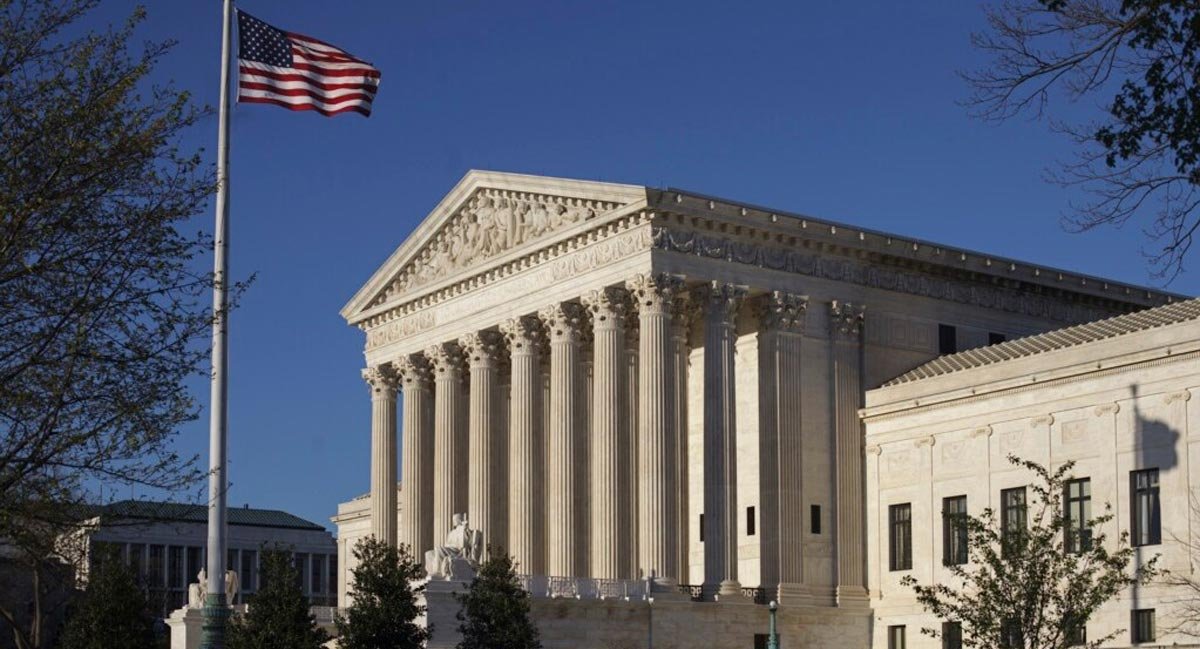
President Donald Trump has criticised the Supreme Court of the United States following a ruling against his tariff policy and amid ongoing legal scrutiny of his attempt to end birthright citizenship.

Get today's headlines by email

In a social media post on Monday, Trump accused the court of failing to act in the country’s interest and urged the justices to reconsider their approach to the issue of citizenship for children born in the United States to certain non-citizens.
The president’s comments came after the court heard arguments last week on an executive order he issued seeking to limit automatic citizenship under the Fourteenth Amendment to the United States Constitution.
Criticism following tariff ruling
Trump also expressed anger over a recent court decision that struck down his administration’s tariffs, arguing the ruling would cost the United States significant revenue.
“The country can only withstand so many bad decisions from a court that just doesn’t seem to care,” he wrote.
He claimed the judgment had deprived the government of “hundreds of billions of dollars” in potential returns tied to tariff measures he introduced during his presidency.
Trump’s remarks suggested he hopes the court will avoid blocking his order on birthright citizenship when it rules on the matter.
Push to reinterpret birthright citizenship
The executive order issued last year aims to prevent children born in the United States to immigrants without legal status or to temporary visitors from automatically receiving citizenship.
Trump has long argued that the Fourteenth Amendment, adopted after the Civil War, should apply only to children of US citizens or lawful permanent residents.
For more than a century, however, courts and government policy have interpreted the amendment to grant citizenship to nearly anyone born on US soil.
The Supreme Court heard arguments last week examining whether Trump’s order conflicts with that longstanding interpretation.
Conservative commentary enters the debate
Trump referenced commentary from Mark Levin, a conservative radio host and Fox News presenter, who questioned the historical basis for birthright citizenship during his programme on Life, Liberty & Levin.
Levin argued that the Constitution does not explicitly mention birthright citizenship and suggested that the authors of the Fourteenth Amendment intended it to apply only to certain children, excluding those of immigrants without legal status.
He also said legal debates before the court had become overly complex, criticising some justices for raising policy questions rather than focusing on constitutional interpretation.
Questions raised during Supreme Court hearing
During oral arguments, several justices explored how Trump’s order might work in practice.
Justice Ketanji Brown Jackson asked whether mothers might be required to provide documentation at hospitals to determine a newborn’s citizenship status.
Justice Neil Gorsuch questioned how the policy would classify Native Americans under the proposed framework.
The government’s lawyer, Solicitor General D. John Sauer, initially appeared uncertain about how the order would address that scenario.
Trump has urged the court to reconsider the traditional reading of the Fourteenth Amendment, saying such a decision would benefit the United States.
In his post, the president called on the justices to apply what he described as “common sense” when ruling on the issue.

Join the discussion?

Already a member?


Adapted by ASEAN Now. Source 7 April 2026
webfact
webfact
Ukraine launched more cross-border attack drones than Russia during March, marking the first time Kyiv appears to have outpaced Moscow in such strikes since the war began in 2022, according to figures released by both countries and analysed by ABC News.

Get today's headlines by email

Data published by Russia’s defence ministry showed that Russian forces claimed to have shot down 7,347 Ukrainian drones during the month. That represents the highest monthly total reported by Moscow since the conflict started and averages about 237 drones per day. The ministry's reports only include drones it claims to have intercepted.
Meanwhile, Ukraine’s air force reported facing 6,462 Russian drones and 138 missiles throughout March. Of these, Ukrainian authorities said 5,833 drones and 102 missiles were intercepted or suppressed — roughly 90% of the drones and just under 74% of the missiles launched.
Based on Kyiv’s figures, Ukraine experienced an average of just over 208 incoming drones and four missiles each day during the month.
Independent verification of either side’s data is not possible. Analysts note that both governments may seek to highlight the effectiveness of their air defence systems or emphasise enemy attacks as evidence of continuing hostilities despite ongoing diplomatic efforts.
Record level of Russian strikes
Ukraine’s tally of around 6,600 Russian drones and missiles during March represents the highest monthly total of long-range strikes reported by the Ukrainian air force.
Kyiv publishes daily summaries of Russian drone and missile launches, detailing how many projectiles are intercepted and how many reach their targets.
The largest single attack reported during the month occurred on 24 March, when Ukraine’s air force said Russia launched 948 drones and 34 missiles in a 24-hour period — the biggest barrage recorded in the conflict by either side.
Long-range aerial attacks have become a central feature of the war. Both countries have increasingly relied on drones and missiles to damage infrastructure, weaken economic activity and disrupt the opposing side’s ability to sustain the conflict.
The strikes have continued even as United States-mediated peace discussions have resumed.
Ukraine expands domestic drone industry
Russia has so far launched more drones and missiles overall during the war. Ukrainian officials frequently cite Moscow’s regular nighttime attacks as a major threat to the country’s strategic position.
However, the latest figures suggest Ukraine’s ability to strike back is growing as it expands domestic production of drones and missiles.
President Volodymyr Zelenskyy has repeatedly highlighted the development of Ukraine’s long-range strike capabilities.
“Our production potential for drones and missiles alone will reach $35 billion next year,” he said in October, adding that Ukrainian-made defence technologies were already competing with leading systems globally.
Most Ukrainian attacks are believed to rely on relatively inexpensive domestically produced drones. Ukraine has also begun deploying interceptor drones developed by local companies to destroy incoming Russian aircraft.
The country is developing cruise missiles as well, including the Flamingo system, which Kyiv says can travel more than 1,800 miles. Despite these advances, drones still account for the majority of Ukrainian projectiles reported by Russian authorities.
Energy infrastructure targeted
Over the past year Ukraine has increasingly targeted Russian oil infrastructure, including refineries and export terminals, in an effort to disrupt a key source of revenue for Moscow.
Among the most prominent strikes in March were attacks on oil facilities at the Baltic Sea ports of Ust-Luga and Primorsk, both major export hubs.
Kremlin spokesman Dmitry Peskov described the strikes as “terrorist attacks”.
Zelenskyy has defended the targeting of Russia’s energy sector, arguing that oil revenues help fund Moscow’s military operations.
Regional security concerns
Drone warfare has also raised concerns about the conflict spreading beyond Ukraine’s borders.
Countries like Poland and Romania frequently scramble NATO aircraft in response to Russian drones approaching Ukrainian territory near alliance borders. Officials in several NATO states — including Romania, Poland, Lithuania and Latvia — have reported incursions by Russian drones, though Moscow denies responsibility.
Stray Ukrainian drones have also reportedly fallen in nearby countries including Finland, Estonia, Latvia and Lithuania.


Join the discussion?

Already a member?


Adapted by ASEAN Now. Source 7 April 2026
webfact
webfact
US immigration authorities have detained the wife of an American soldier at the military base where he is stationed, only days after the pair were married, according to the family’s lawyer.

Get today's headlines by email

Immigration and Customs Enforcement (ICE) officers arrested Annie Ramos, 22, on 2 April at Fort Polk in Louisiana, where she had gone with her husband, US Army Staff Sergeant Matthew Blank, to register as a military spouse.
Relatives said the couple had gathered at the base to help Ramos obtain a military identification card and begin the process of applying for permanent residency in the United States.
Arrest at military base
Blank, 23, said he had expected the visit to mark the start of their life together following their wedding. Instead, ICE agents entered the facility and detained his wife.
“I never imagined that trying to do the right thing — registering my wife so she could receive her military ID, access the benefits she is entitled to as my spouse, and begin the process toward her green card — would lead to her being taken away from me,” Blank said in a statement.
The soldier added that instead of planning their future together, he is now working to secure her release.
Ramos, who was born in Honduras, has lived in the United States since early childhood. Her lawyer, Jessie Schreier, said she had been issued a removal order in 2005 when she was about 20 months old.
According to Schreier, the order could be enforced at any time, potentially leading to Ramos being deported to Honduras. She said such an outcome would separate Ramos from her husband, who may soon face a third overseas deployment with the US Army.
Immigration status and legal background
A spokesperson for the Department of Homeland Security (DHS) said Ramos was detained after she attempted to enter the military installation and noted that she does not have legal status in the country.
The spokesperson said Ramos had crossed the southern US border in February 2005 and later failed to attend a scheduled immigration hearing. As a result, an immigration judge issued a final order of removal on 7 April that year.
“This administration is not going to ignore the rule of law,” the spokesperson said.
Ramos has applied for Deferred Action for Childhood Arrivals (DACA), a programme that protects some undocumented immigrants who arrived as children from deportation. However, new applications to the programme are currently paused following ongoing legal challenges.
Her supporters say she has spent most of her life in the United States and is pursuing higher education. Ramos received a scholarship from The Dream.US, an organisation that helps undocumented students pay for college.
Family and supporters call for release
Advocates and relatives have criticised the detention. Gaby Pacheco, president and chief executive of TheDream.US, said detaining Ramos was harmful to a military family.
“Detaining a 22-year-old biochemistry student who has lived here for two decades and is married to a US Army staff sergeant preparing for deployment doesn’t make us safer,” Pacheco said in a statement.
Blank’s mother, Jen Rickling, described Ramos as a devoted student and family member who teaches Sunday school and is close to the family.
“She is kind, smart and dedicated,” Rickling said. “We absolutely adore her.”
Ramos is currently being held at an ICE detention facility in Basile, Louisiana, according to a government database.
Blank said he intends to continue seeking her release.
“I am proud to serve this country. I am proud to be her husband,” he said. “And I will stand by her, no matter what it takes.”

Join the discussion?

Already a member?


Adapted by ASEAN Now. Source 7 April 2026
webfact
webfact
The US Supreme Court has opened the door for the potential dismissal of a contempt of Congress conviction against Steve Bannon, sending the case back to a lower federal court where prosecutors have already asked for the indictment to be dropped.

Get today's headlines by email

Bannon, a longtime ally of Donald Trump, was convicted in 2022 after refusing to comply with subpoenas from a congressional committee investigating the January 6 United States Capitol attack.
In a brief unsigned order issued on Monday, the Supreme Court vacated an earlier appeals court decision that had upheld Bannon’s conviction and directed the case back to a federal district court in Washington DC. The justices cited the government’s pending request to dismiss the charges.
Case sent back to lower court
Bannon was originally found guilty on two counts of contempt of Congress for declining to provide documents and testimony requested by lawmakers probing the events surrounding the Capitol riot.
A federal jury convicted him in 2022, and an appeals court later affirmed the verdict. The Supreme Court had previously declined to intervene when Bannon sought to block the sentence stemming from that conviction.
He ultimately served a four-month prison term at a low-security federal facility in Connecticut.
The court’s latest move effectively nullifies the appeals ruling and returns the matter to a lower court, where prosecutors have already submitted a motion seeking to dismiss the indictment.
Government argues dismissal serves justice
The request to drop the case was made by the administration of President Joe Biden, which had originally pursued the prosecution against Bannon.
In filings to the Supreme Court, US Solicitor General D John Sauer said the government believed ending the case would serve “the interests of justice”. The administration did not oppose Bannon’s renewed appeal to the Supreme Court.
Because Bannon has already completed his prison sentence, any dismissal of the charges would carry largely symbolic significance. Nevertheless, it would erase the conviction from his record if the lower court agrees to dismiss the indictment.
Longtime Trump ally
Bannon has been a prominent figure in Trump’s political movement for more than a decade. He played a central role in shaping Trump’s successful 2016 presidential campaign and later served briefly as a senior adviser in the White House during Trump’s first term.
Since leaving the administration, Bannon has remained an influential voice among Trump supporters, hosting the widely followed podcast “War Room”.
He has also continued to advocate strongly for Trump’s political agenda, at times promoting controversial ideas such as the possibility of a third presidential term for Trump, something barred by the US Constitution.
The federal district court in Washington is now expected to consider the government’s motion to dismiss the case following the Supreme Court’s order.


Join the discussion?

Already a member?


Adapted by ASEAN Now. Source 7 April 2026
webfact
webfact
At least 10 Palestinians have been killed in central Gaza following Israeli air strikes and fighting between Hamas forces and a Palestinian militia reportedly backed by Israel, according to local officials and medical staff.

Get today's headlines by email

The violence occurred east of the Maghazi refugee camp, where Hamas security personnel were said to have clashed with members of the militia. Israeli strikes were later reported in the same area, although it remains unclear how many of the fatalities resulted from the air strikes and how many from the ground fighting.
Medical officials at al-Aqsa Hospital in Deir al-Balah reported receiving the bodies of 10 people from the scene. Dozens more were injured, with some reported to be in critical condition.
Neither the Israeli military nor Hamas issued immediate statements on the incident.
Fighting Near Maghazi
Witnesses said the confrontation began when militia members established a checkpoint east of the Maghazi refugee camp. Hamas security personnel allegedly attacked the position, triggering an exchange of fire between the two groups.
According to local accounts, Israeli drones later carried out strikes targeting Hamas personnel at three locations in the area. Witnesses said the drone attacks appeared to support the militia during the clashes.
The precise sequence of events remains difficult to verify independently.
Ceasefire Under Strain
The violence comes amid continuing tensions surrounding a ceasefire agreed nearly six months ago between Israel and Hamas. Both sides have repeatedly accused each other of breaching the truce.
Gaza’s Hamas-run health ministry says at least 723 Palestinians have been killed in Israeli attacks in the territory since the ceasefire took effect.
The Israeli military, meanwhile, says five of its soldiers have been killed in attacks carried out by Palestinian groups during the same period.
Disarmament Dispute
Efforts to advance the next stage of a peace initiative proposed by US President Donald Trump have stalled in part over disagreements about the disarmament of Palestinian armed groups.
Last week, a Hamas delegation met mediators from Egypt, Qatar, and Turkey in Cairo to discuss a proposal from the US-led Peace Board calling for Palestinian factions to dismantle their weapons.
On Sunday, a spokesperson for Hamas’s military wing rejected the proposal, saying disarmament could not be considered until Israel fulfilled its obligations under the first phase of the plan.
“We will not accept raising the issue of weapons in this crude manner,” said Abu Ubaida, referring to Israel.
He added that what Israel had failed to achieve through military force would not be achieved through political negotiations.
Israel’s Prime Minister Benjamin Netanyahu has previously stated that Hamas would be disarmed, either through peaceful means or through force.
Wider Regional Tensions
In his remarks, Abu Ubaida also linked the conflict in Gaza with broader regional hostilities involving Israel, the United States, and Iran.
He praised missile, drone and rocket attacks on Israel carried out by Iranian forces and by Iran-backed groups including Hezbollah in Lebanon and the Houthi movement in Yemen, describing them as an extension of Hamas’s fight.
The war in Gaza began after Hamas-led fighters attacked southern Israel on 7 October 2023, killing around 1,200 people and taking 251 hostages.
Israel subsequently launched a large-scale military campaign in Gaza. According to the territory’s health ministry, more than 72,300 people have been killed since the conflict began.


Join the discussion?

Already a member?


Adapted by ASEAN Now. Source 7 April 2026
webfact
webfact
US President Donald Trump has warned that the United States could destroy key Iranian infrastructure “in one night” if Tehran fails to reach an agreement before a deadline he set for reopening the Strait of Hormuz.

Get today's headlines by email

The ultimatum requires Iran to restore the free flow of energy shipments through the strategic Gulf route by 20:00 EDT (00:00 GMT) on Tuesday. The narrow waterway is one of the world’s most important oil transit corridors.
Speaking at the White House on Monday, Trump said the US was seeking what he described as an “acceptable” agreement that would ensure shipping could resume through the strait.
Deadline approaches amid uncertainty
At a news conference alongside Dan Caine and US Defence Secretary Pete Hegseth, Trump suggested that some Iranian officials appeared open to negotiations.
He said he believed “reasonable” leaders in Iran were negotiating in “good faith”, though he acknowledged the outcome remained unclear.
Iran has rejected proposals for a ceasefire and instead called for an immediate halt to hostilities, reconstruction following the conflict and the removal of sanctions imposed on the country.
Trump’s comments came days after US forces recovered two crew members from an F-15 fighter jet that had been shot down in southern Iran.
While praising what he called the “heroic” rescue operation, the president repeated his warning that the US could launch attacks on Iran’s energy and transport systems if the strait remained closed.
“The entire country can be taken out in one night — and that night might be tomorrow night,” Trump said.
Threats to infrastructure
Trump also said that if the deadline passed without agreement, Iran’s infrastructure could be severely damaged.
“They’re going to have no bridges,” he said. “They’re going to have no power plants.”
He added that Iran would be sent back to the “Stone Ages” if the US carried out such attacks.
Despite Tehran’s rejection of US demands so far, Trump maintained that negotiations might still produce results. He said the situation remained fluid following the deaths of several senior Iranian leaders in recent US and Israeli strikes.
“We’re going to find out,” he said.
Diplomatic efforts continue
A regional official familiar with the talks said significant progress was unlikely without a ceasefire first. The official, who spoke on condition of anonymity due to the sensitivity of the negotiations, said communication with Iranian officials had been slow because of a communications blackout in the country.
According to the official, relaying messages and receiving responses from Tehran can take about a day.
Several countries, including Pakistan, Turkey and Egypt, have been involved in mediation efforts.
Trump declined to provide details of the US strategy, saying only that he had “the best plan” but would not reveal it publicly.
Legal concerns and criticism of allies
Some legal experts have warned that deliberate attacks on civilian infrastructure could violate international law.
A former legal adviser to the National Security Council during the administration of Barack Obama told CBS News that sustained assaults on power plants and other civilian facilities could constitute war crimes.
Earlier in the day, Trump said he was not concerned by that possibility. He argued that the Iranian population would be prepared to endure hardship in pursuit of freedom, even though he said overthrowing Iran’s government was not the aim of US policy.
The president also criticised several US allies, including the NATO, the United Kingdom and South Korea, accusing them of failing to assist the United States during the conflict.
“That’s a mark on Nato that will never disappear,” he said, adding that the US does not “need” the UK.
According to the United States Central Command, American forces have carried out more than 13,000 strikes across Iran since the conflict began.


Join the discussion?

Already a member?


Adapted by ASEAN Now. Source 7 April 2026
webfact
webfact

Account

Navigation

Search

Search

Configure browser push notifications

Chrome (Android)
  1. Tap the lock icon next to the address bar.
  2. Tap Permissions → Notifications.
  3. Adjust your preference.
Chrome (Desktop)
  1. Click the padlock icon in the address bar.
  2. Select Site settings.
  3. Find Notifications and adjust your preference.