Skip to content
View in the app

A better way to browse. Learn more.

Thailand News and Discussion Forum | ASEANNOW

A full-screen app on your home screen with push notifications, badges and more.

To install this app on iOS and iPadOS
  1. Tap the Share icon in Safari
  2. Scroll the menu and tap Add to Home Screen.
  3. Tap Add in the top-right corner.
To install this app on Android
  1. Tap the 3-dot menu (⋮) in the top-right corner of the browser.
  2. Tap Add to Home screen or Install app.
  3. Confirm by tapping Install.

Become a member

Become a member

World News

Fresh news brought to you daily from around the world. Hot news, breaking stories as they happen.
Three Indian sailors have been confirmed dead after a US military strike on a tanker in the Gulf of Oman, marking the first reported fatalities involving seafarers since Washington launched its blockade of Iran-linked shipping in April.

Get today's headlines by email

India's Shipping Minister, Sarbananda Sonowal, said the three crew members, who were initially reported missing, had now been identified following recovery efforts.
“Sadly, three Indian seafarers initially reported missing are now confirmed dead after bodies have been located and identified,” Sonowal said.
Tanker targeted by US forces
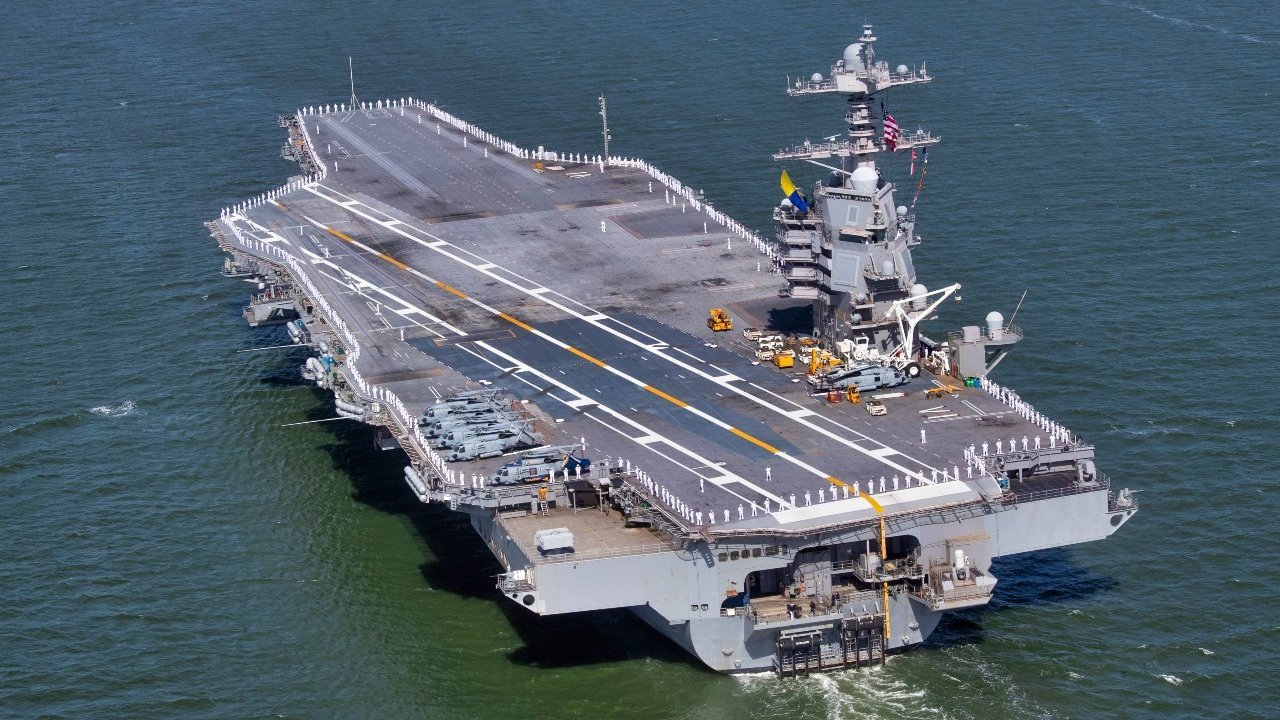
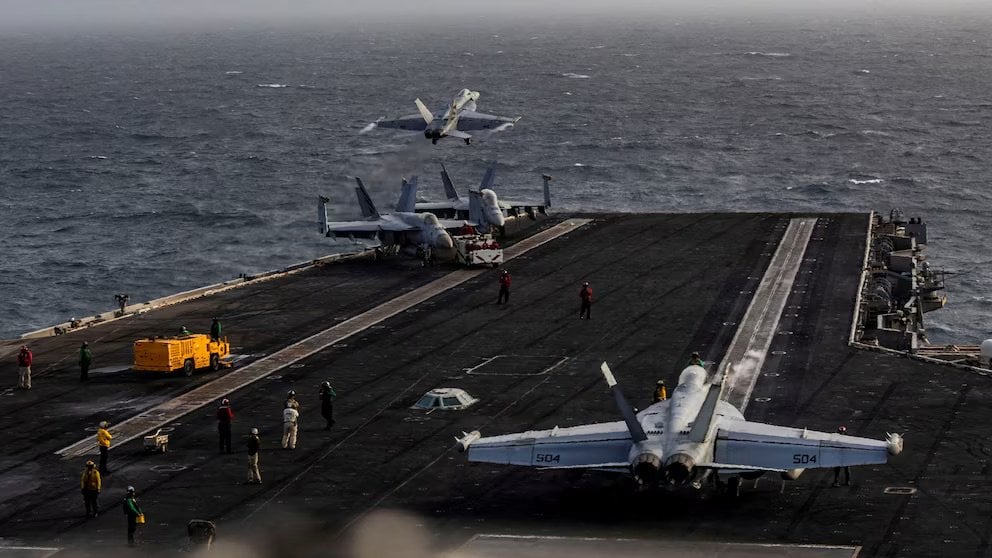
The incident involved the Palau-flagged oil products tanker Settebello, which was struck by US forces while transiting the Gulf of Oman.
According to the US military’s United States Central Command, an American aircraft fired precision munitions into the vessel’s engine room after the crew repeatedly failed to comply with instructions from US forces. CENTCOM said the tanker was attempting to transport Iranian oil in violation of the ongoing US blockade.
The blockade, which began on April 13, has so far disabled eight vessels deemed non-compliant, redirected 134 ships and allowed 42 humanitarian vessels to proceed, according to the US military.
India protests attack
India’s foreign ministry condemned the strike and said 21 of the 24 Indian crew members aboard the tanker had been rescued. The ministry said its embassy in Oman had worked closely with local authorities during search and rescue operations.
New Delhi also summoned the US deputy chief of mission and lodged a strong protest over the incident, according to Indian media reports and officials familiar with the matter.
The Omani Navy responded to the vessel’s distress call after the tanker reported an engine-room fire following the strike.
Growing risks for Indian seafarers
The deaths come amid heightened tensions in the region and increasing risks for commercial shipping operating near the Strait of Hormuz.
Separately, the Indian embassy in Oman reported another maritime incident involving a tanker off the Omani coast. The Forward Seamen’s Union of India identified the vessel as the MT Jalveer, although details remain limited.
Earlier this week, US forces also disabled the tanker Marivex in the Gulf of Oman after it allegedly attempted to sail to an Iranian port. All Indian crew members aboard that vessel were rescued safely.
India is one of the world's largest suppliers of seafarers, with more than 300,000 Indian nationals serving on international merchant vessels.
IMO condemns threats to seafarers
Responding to the incident, Arsenio Dominguez, secretary-general of the International Maritime Organization, condemned actions that place sailors and commercial shipping at risk.
“I strongly condemn any act from any party that endangers the lives of seafarers and the safety of international shipping. This is simply unacceptable,” he said on Wednesday.


Join the discussion?

Already a member?


Adapted by ASEAN Now. Source 11 June 2026

webfact
webfact
Anti-immigrant protests in Northern Ireland entered a second night on Wednesday as police deployed water cannons to disperse crowds following disorder linked to a recent knife attack that left a man seriously injured.

Get today's headlines by email

Violence erupted in Newtownabbey, north of Belfast, where protesters threw objects at police vehicles. Officers responded with water cannons as they sought to maintain public order.
Homes and Vehicles Set Alight
The latest disturbances followed a night of unrest across Belfast and other areas, during which masked rioters set fire to homes, vehicles and barricades. Several families were forced to leave their properties as violence spread through affected neighborhoods.
Political leaders said ethnic minority residents were among those targeted. Local pastor Jack McKee told the BBC that members of his congregation had suffered attacks on their homes, with windows smashed and nearby properties burned.
Authorities increased security measures ahead of further demonstrations. Some schools in Belfast closed early, while public transport services were scheduled to end earlier than usual. Police deployed an additional 200 officers across the region.
The disorder left two police officers injured on Tuesday night and heightened fears among minority communities. Residents reported concerns about safety, including incidents of racist abuse directed at children.
Knife Attack Sparks Tensions
The protests followed the charging of 30-year-old Sudanese national Hadi Alodid with attempted murder after a knife attack in Belfast that was filmed and widely shared online.
The victim, Stephen Ogilvie, suffered severe injuries, including the loss of his left eye, according to evidence presented in court. He also sustained injuries to his other eye, back and face. Alodid appeared in court on Wednesday charged with attempted murder, threats to kill and possession of a knife. He was denied bail.
British Prime Minister Keir Starmer described the attack as "horrific."
Ogilvie's family appealed for calm, urging people not to use the incident to promote division or hostility. They said peaceful protest was the only acceptable response and emphasized the positive contribution migrants make to British society.
Online Activity Under Scrutiny
Police warned that social media activity had contributed to rising tensions. Officers described the circulation of apparent lists containing residential addresses as "completely unacceptable" and said those sharing personal information intended to endanger others could face criminal investigation.
Anti-immigration activists and right-wing social media accounts amplified calls for demonstrations following the attack. Among those commenting online was Elon Musk, who reposted calls for protests.
Northern Ireland Justice Minister Naomi Long accused online figures of exploiting public anger to advance anti-immigration narratives. First Minister Michelle O'Neill condemned the violence, describing it as racism and intimidation.
Wider Concerns Across Britain
Smaller demonstrations were also reported in other parts of the United Kingdom, including Glasgow, London and Bangor. Police in Glasgow said two officers and three members of the public were injured, with some victims allegedly targeted because of their ethnicity.
Police said Alodid entered Ireland from France in February 2023, sought asylum and was granted permission to remain in the UK until 2028. Authorities said he was legally residing in Northern Ireland and that there is currently no evidence linking the knife attack to terrorism.
The unrest comes amid broader concerns about racial tensions and anti-immigration rhetoric across Britain, with officials warning that online platforms are increasingly being used to spread hatred and encourage violence.


Join the discussion?

Already a member?


Adapted by ASEAN Now. Source 11 June 2026
webfact
webfact
The Trump administration has asked a federal judge to throw out a lawsuit seeking to block a UFC event planned for the White House this weekend, arguing that the two plaintiffs have no legal standing and are attempting to derail a major public celebration.

Get today's headlines by email

In a court filing on Tuesday, the Justice Department said the lawsuit, brought by two Virginia residents, was filed far too late and lacks merit. The department argued that the plaintiffs could simply choose not to watch the event rather than seek court intervention.
“It would be easy enough to simply avert their gazes for the weekend,” the filing stated, adding that the plaintiffs were attempting to impose their personal preferences on the broader public and prevent an event intended to celebrate the United States.
Administration attacks legal challenge
The lawsuit, filed over the weekend by the Public Integrity Project on behalf of a political activist and a Vietnam veteran, claims the event was improperly approved and should have undergone an environmental review. It also argues that using White House grounds for the UFC event represents an unusual use of public land that benefits President Donald Trump and his allies.
The plaintiffs describe the event as “deeply corrupt” and contend that the administration relied on a temporary rule linked to the America 250 celebrations to bypass standard permitting requirements for activities on National Park Service land.
According to the lawsuit, because the UFC event is being organised by a private company rather than the federal government and is not directly tied to commemorating the 250th anniversary of American independence, it should not qualify for the exemption.
White House defends event plans
In response, the administration said the UFC card is among a series of high-profile events planned as part of the nation’s 250th birthday celebrations. The filing compared the event to longstanding White House traditions such as the Easter Egg Roll and the Congressional Picnic.
The Justice Department also highlighted the scale of preparations already completed for the event. According to the filing, more than $60 million and tens of thousands of labour hours have been invested in organising the spectacle.
Thousands expected to attend
Officials said more than 4,000 spectators are expected on the South Lawn, including over 1,000 members of the US military. An additional 120,000 people are expected to gather on the nearby Ellipse after obtaining free tickets through a lottery system.
The filing added that 14 fighters from around the world are scheduled to compete, including participants in two world championship bouts, and noted that athletes have spent months preparing for the event.
The government warned that cancelling the event at the last minute would disrupt plans for spectators, service members and competitors alike. It argued that the hopes of those involved should not be overturned because of objections raised by two individuals.
The administration has informed the judge overseeing the case, Amit Mehta, that government lawyers are available for oral arguments on Thursday if he decides a hearing is necessary.

Join the discussion?

Already a member?


Adapted by ASEAN Now. Source 11 June 2026
webfact
webfact
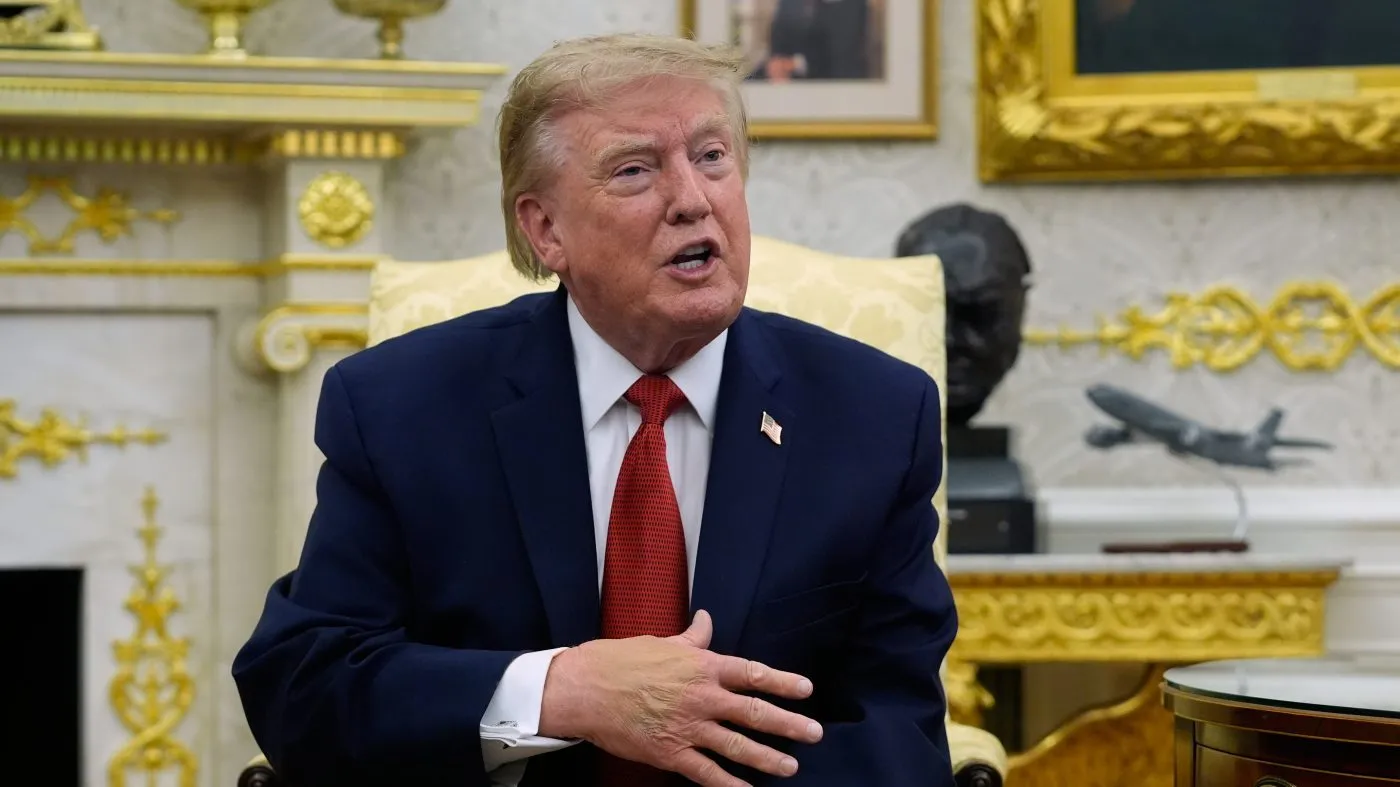
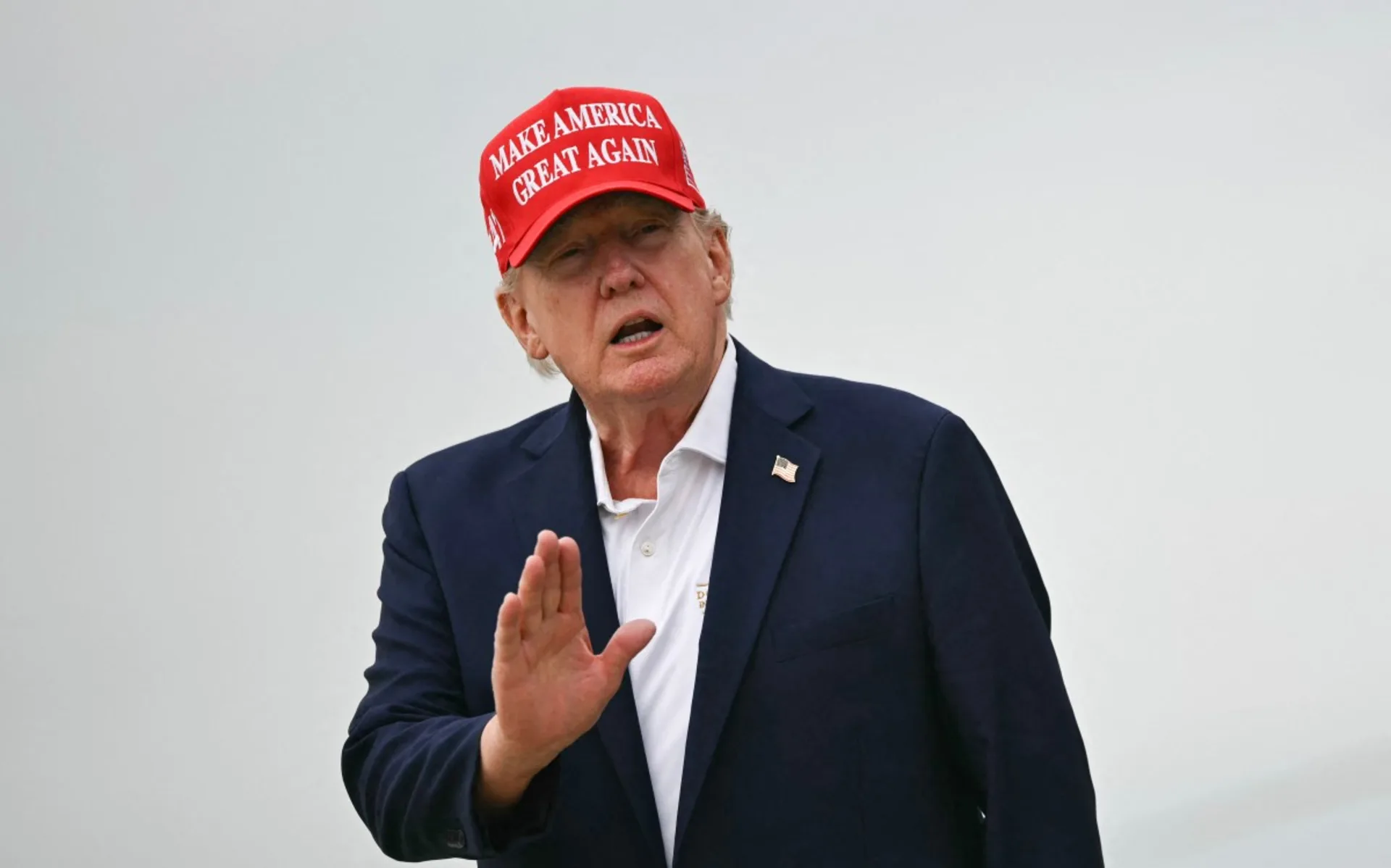
US President Donald Trump said the United States would launch further strikes against Iran on Wednesday, a day after American forces targeted Iranian military sites and Tehran responded with attacks on US bases across the region.

Get today's headlines by email

Speaking to reporters in the Oval Office, Trump said the US had struck Iran hard on Tuesday and would do so again. He also renewed calls for Tehran to agree to a deal, warning that Iran was paying the price for delaying negotiations.
Iranian President Masoud Pezeshkian responded in a post on X, saying the country would remain steadfast in the face of pressure and threats.
Renewed Military Exchange
The latest escalation followed US strikes launched on Tuesday after Trump said Iran had downed a US Army Apache helicopter. According to the US military, the attacks targeted Iranian defence systems, radar installations and ground control facilities near the Strait of Hormuz.
Iran's Islamic Revolutionary Guard Corps (IRGC) said it retaliated by launching attacks on American military facilities in the region. Iranian officials said 21 targets were struck, including bases in Bahrain and Jordan, while Kuwait reported intercepting incoming projectiles.
A US official cited by Reuters said nearly all Iranian missiles and drones were intercepted and no casualties had been reported.
Trump described the US action as a justified response to the helicopter incident. He later said an Iranian drone had struck the aircraft while it was flying at low altitude, though the helicopter did not explode and both crew members were rescued by an American sea drone. Iranian media reported that Tehran had not claimed responsibility for the incident.
Diplomatic Tensions Deepen
Despite continued negotiations, relations between Washington and Tehran remain strained.
Iranian foreign ministry spokesman Esmaeil Baqai accused the United States of undermining diplomatic efforts through inconsistent messaging, shifting demands and repeated ceasefire violations. He said Iran needed to reassess the situation and stressed that diplomacy required a degree of stability.
Trump maintained that the proposed agreement would permanently prevent Iran from obtaining nuclear weapons.
Separately, the International Atomic Energy Agency (IAEA) approved a US-backed resolution calling on Iran to provide further information about its uranium stockpile and nuclear production facilities. Iran's mission to the United Nations in Vienna criticised the measure, arguing that support for diplomacy was being contradicted by continued military action against Iranian infrastructure.
Shipping Incident in Gulf of Oman
The US military also announced that it had struck an oil tanker in the Gulf of Oman, alleging the vessel had violated a blockade by attempting to transport Iranian oil.
India said three of its nationals were missing after the attack on the tanker Settebello, while 21 crew members were rescued.
The United States has enforced a blockade of Iranian ports since the Strait of Hormuz was effectively closed by Iran following US and Israeli attacks on Tehran earlier this year. The Settebello was reported to be the eighth vessel targeted by US forces under the blockade.
Conflict Background
The current conflict began on 28 February when US and Israeli strikes killed Iran's supreme leader. Iran responded with attacks against Israel and Gulf states aligned with Washington, and fighting later spread across the region, including into Lebanon.
Although a ceasefire agreed in April reduced large-scale hostilities, both sides have continued exchanging intermittent fire while pursuing difficult negotiations aimed at securing a longer-term settlement.


Join the discussion?

Already a member?


Adapted by ASEAN Now. Source 11 June 2026
webfact
webfact
US consumer inflation accelerated to its highest level in three years in May, prompting renewed scrutiny of President Donald Trump’s economic policies after he welcomed the increase, declaring that he “loves the inflation.”

Get today's headlines by email

Data released by the Bureau of Labor Statistics showed consumer prices rose 4.2% in May compared with a year earlier, up from 3.8% in April. The increase marked the third consecutive monthly rise and was largely driven by higher energy costs linked to the ongoing US-Israel conflict with Iran.
Speaking at the White House, Trump described the figures as positive.
“I love it. The numbers were great. You know what? I really love the inflation,” the president said.
Energy Costs Drive Price Pressures
The latest inflation surge was fueled primarily by rising fuel and energy prices. Overall household energy costs, including gas and electricity, were nearly 25% higher than a year earlier, with petrol accounting for much of the increase.
According to motoring group AAA, the average price of a gallon of regular petrol has climbed to $4.15, compared with $2.98 on February 28, when Trump ordered strikes on Iran.
The conflict has disrupted global energy markets after Iran effectively closed the Strait of Hormuz, a key shipping route through which around one-fifth of the world’s oil and gas supplies normally pass. Although oil prices have eased slightly in recent days, Brent crude remains well above levels seen before the conflict began.
Trump said US military operations had removed millions of barrels of oil from Iran, helping to lower prices. He predicted energy costs would fall sharply once the conflict ends.
“When this conflict is over… you will see oil drop to where it was before,” Trump told reporters, adding that petrol prices could soon return to levels he said he observed during a trip to Iowa earlier this year.
Wider Inflationary Pressures
Beyond energy, the Bureau of Labor Statistics reported rising costs across several sectors, including air travel, medical and personal care services, recreation and communications.
The Consumer Price Index measures changes in prices compared with the same month a year earlier. The Federal Reserve’s long-term inflation target remains 2%, meaning current inflation is running at more than double the desired rate.
The latest figures highlight a growing challenge for Republicans ahead of November’s midterm elections, particularly after Trump campaigned heavily on reducing living costs.
Economists have warned that even if the conflict ends quickly, disruptions to shipping through the Strait of Hormuz could persist for years, potentially prolonging upward pressure on prices.
Fed Faces Interest Rate Dilemma
The inflation data also presents an early test for new Federal Reserve Governor Kevin Warsh, who is due to oversee his first interest-rate decision next week.
Central banks typically raise interest rates when inflation remains significantly above target, increasing borrowing costs and slowing economic activity to curb price growth.
Trump repeatedly urged the Fed to cut rates before Warsh’s appointment, criticising former chairman Jerome Powell for keeping borrowing costs elevated.
Most economists expect rates to remain within the current 3.5% to 3.75% range for now. However, some analysts believe continued inflationary pressure could eventually force policymakers to tighten monetary policy further.
Stephen Brown, chief North America economist at Capital Economics, said May’s figures alone were unlikely to persuade policymakers to raise rates immediately. Isaac Stell, investment manager at Wealth Club, argued that the inflation data, combined with strong recent employment figures, made a rate increase the most likely outcome if current trends continue.

Join the discussion?

Already a member?


Adapted by ASEAN Now. Source 11 June 2026
webfact
webfact
Ukraine has gained the upper hand in its war with Russia, according to several retired senior U.S. military officials, as Kyiv reports continued territorial gains and increasing success in disrupting Russian operations.

Get today's headlines by email

The assessment comes after Ukraine’s commander-in-chief, Oleksandr Syrski, said Ukrainian forces have recaptured 600 square kilometres (about 232 square miles) from Russian control since the start of the year. He did not specify the locations of the advances but said the most intense fighting was taking place in the southeastern areas of Oleksandrivka and Huliaipole.
Retired Generals See Ukrainian Advantage
Retired Lieutenant General Robert Ashley, who previously led the U.S. Defense Intelligence Agency, said Ukraine was succeeding at the operational level by preventing Russia from achieving its objectives while preserving its own ability to conduct future operations.
Two other retired U.S. generals echoed that view, arguing that Ukrainian forces have been consistently outmanoeuvring their Russian counterparts on the battlefield.
However, they stressed that operational success does not necessarily translate into a decisive victory in the broader war.
Drone Warfare Reshapes the Battlefield
Military analysts point to Ukraine’s expanding drone capabilities as a key reason for its recent gains.
Since 2023, Ukraine has built a large fleet of first-person-view (FPV) drones, which Ukrainian President Volodymyr Zelenskyy has said account for more than 90% of Russian battlefield casualties.
Ukraine has also expanded its use of long-range drones and cruise missiles. These weapons have been used to strike targets deep inside Russia, including military facilities near St. Petersburg, hundreds of miles from the Ukrainian border.
A major challenge had been striking targets located between roughly 30 and 60 miles behind the front line. Analysts now say Ukrainian forces have largely overcome that obstacle.
Pressure on Russian Logistics
Military analyst and former U.S. Marine officer Rob Lee said Ukrainian units are increasingly conducting regular strikes against command centres, ammunition depots, vehicle concentrations and logistics hubs located well behind Russian front-line positions.
According to Lee, these attacks are aimed at weakening the supply networks that sustain Russian offensives. Over time, such strikes could reduce the flow of personnel, equipment and ammunition reaching front-line troops.
The growing use of mid-range drones is particularly significant in what has become a prolonged war of attrition, with both sides seeking to exhaust the other's military and economic resources.
No Clear End in Sight
Despite the positive assessments of Ukraine’s recent performance, experts cautioned that the conflict remains highly uncertain.
Ashley described Ukraine’s gains as fragile and warned that the situation could change depending on how Russian President Vladimir Putin chooses to escalate the conflict.
Lee similarly argued that while conditions have improved for Ukraine, a major breakthrough remains unlikely.
Retired General Joseph Ralston said neither side could currently claim victory. He argued that Russia lacks the strength to seize all the territory it seeks, while Ukraine does not yet have the capability to recover all the land it has lost.
Even so, Ashley maintained that recent battlefield developments favour Kyiv. He said both Russia and Ukraine still believe they can achieve victory, making a ceasefire unlikely in the near future, while suggesting that time may not be working in Moscow’s favour.

Join the discussion?

Already a member?


Adapted by ASEAN Now. Source 11 June 2026
webfact
webfact
Major UK trade unions have rebuffed an invitation from Reform UK leader Nigel Farage to sever ties with Labour and consider affiliating with his party.

Get today's headlines by email

In an interview with The Times, Farage said Reform UK was open to working with organised labour, telling unions that his “door is open” if they represent working people. He also invited union leaders to attend Reform UK’s annual conference in September.
The offer followed a poll published by the newspaper which suggested Farage was the most popular party leader among trade union members.
Union leaders reject proposal
The response from several of Britain’s largest unions was swift and critical.
Sharon Graham, general secretary of Unite, said Reform UK had provided “absolutely no evidence” that it supported workers’ interests. She argued that Labour, rather than Reform, should strengthen its commitment to working people.
Andrea Egan, who leads Unison, accused Reform of undermining workers’ rights through its pledge to repeal Labour’s Employment Rights Act. She dismissed suggestions that Farage and his allies were genuinely interested in supporting unions.
The GMB union also rejected the overture, saying Reform UK’s rhetoric toward workers did not match its political record. The union accused the party of opposing basic workplace protections while presenting itself as a champion of workers.
Employment rights at centre of dispute
Criticism of Reform UK has focused largely on its commitment to repeal the Employment Rights Act, legislation introduced by Labour and enacted last year.
The law grants workers access to statutory sick pay from their first day of employment and allows employees to bring unfair dismissal claims after six months in a job.
Farage has argued that despite policy differences, unions and Reform UK could still find areas of agreement. In a social media video, he acknowledged there would be disagreements between union leaders and his party but urged them to attend the September conference to discuss potential cooperation.
He pointed to concerns surrounding the British Steel pension scheme as an example of an issue where Reform UK and unions might work together. Farage said his party wanted to help address what he described as historical injustices linked to the scheme.
Labour retains strong union links
Labour maintains close institutional and financial ties with the trade union movement. The party is affiliated with 11 unions representing around four million workers.
Union members play a role in Labour leadership elections, while union representatives hold seats on the party’s governing National Executive Committee.
Trade unions also remain an important source of funding for Labour through political funds and direct donations. According to figures published last week, Labour received £1.4 million in donations from seven unions during the first three months of the year.
Among the largest contributors were Unison, which donated £366,936, and Unite, which provided £392,544 despite ongoing criticism from its leadership of the Labour government.
Meanwhile, Wes Streeting, who has indicated he would enter a future Labour leadership contest, criticised Farage’s outreach effort. He argued that Farage’s voting record on workers’ rights was inconsistent with his attempt to court trade unions.

Join the discussion?

Already a member?


Adapted by ASEAN Now. Source 10 June 2026
webfact
webfact
A senior Russian military official has died after a car bomb exploded near his home outside Moscow, marking the latest in a series of attacks targeting Russian military figures since the start of the war in Ukraine.

Get today's headlines by email

Col Damir Davydov, 57, was killed early on Tuesday when an explosive device hidden beneath his BMW detonated as he drove through the city of Balashikha, according to reports from independent Russian outlet Astra. The blast occurred at about 5:30 a.m.
Davydov headed Russia’s artillery and missile ammunition supply directorate, a key logistics position responsible for overseeing the distribution of weapons and ammunition to the country’s armed forces.
Explosion Captured on Camera
Security footage circulated by pro-Kremlin media appeared to show the vehicle bursting into flames before rolling into a parked car. The Telegram channel Mash reported that passers-by rushed to rescue the driver from the wreckage.
A witness who attempted to help Davydov told Astra that the colonel was still alive when he was pulled from the burning vehicle.
The witness said Davydov’s clothing had caught fire and efforts were made to extinguish the flames, but his injuries appeared severe. He later died from his wounds.
No Immediate Claim of Responsibility
Neither Russian nor Ukrainian authorities have publicly commented on the incident.
However, Vladimir Shamanov, a Russian lawmaker and retired general, condemned the attack, describing it as an “outrage”. Without directly accusing Ukraine, he said those responsible should face an equivalent response.
Since Russia launched its full-scale invasion of Ukraine in 2022, Ukrainian intelligence services have been linked to numerous operations targeting senior Russian military officers and Moscow-installed officials in occupied territories. Kyiv has accused many of those targeted of involvement in alleged war crimes.
Security Concerns Renewed
The killing is likely to increase scrutiny of Russia’s security services and their ability to protect senior military and political figures.
The attack took place despite tighter security measures introduced for top officials, including Russian President Vladimir Putin, following several high-profile attacks in recent years.
The location of the bombing has added to concerns. Balashikha was also the site of another deadly car bombing just over a year ago, when Lt Gen Yaroslav Moskalik, deputy head of the Russian armed forces’ main operations directorate, was killed less than a mile away in a similar attack.
Shadowy Networks Inside Russia
Little is publicly known about the networks believed to be carrying out sabotage and assassination operations inside Russia and Russian-controlled territories. Analysts believe these groups have been responsible for attacks on military infrastructure and senior officials far from the front lines.
The continued success of such operations is widely seen as one factor behind Russia’s increasing use of internet shutdowns and communications restrictions, measures that have generated growing public frustration in parts of the country.


Join the discussion?

Already a member?


Adapted by ASEAN Now. Source 10 June 2026
webfact
webfact
European confidence in the United States as a security partner has fallen to its lowest recorded level, with only about one in 10 people across 15 countries now viewing the US as an ally, according to a new survey released ahead of key G7 and NATO meetings.

Get today's headlines by email

The poll, conducted in May by the European Council on Foreign Relations (ECFR), found widespread doubts about Washington's commitment to Europe's defence. Majorities in every country surveyed said they were not confident the US would come to their country's aid if it came under attack.
Confidence in US Falls Across Europe
The survey found that just 11% of respondents across the 15 countries regarded the US as an ally. That figure has steadily declined from 16% six months ago and 22% in November 2024.
Most Europeans now describe the US as a "necessary partner" rather than a close ally. Meanwhile, 13% of respondents considered the US a rival and 12% viewed it as an adversary.
According to the report's authors, the findings point to growing scepticism about American reliability under President Donald Trump. Concerns cited include US military actions in the Middle East, threats involving Greenland, suggestions of troop withdrawals from Europe and uncertainty surrounding NATO's future.
Support Grows for Stronger European Defence
The poll suggests Europeans are increasingly prepared to strengthen their own security capabilities rather than rely heavily on Washington.
Support for higher national defence spending has risen by an average of four percentage points since last year. Italy was the only country where a clear majority opposed increased military spending.
Nearly half of respondents, 47%, backed joint European Union borrowing to fund greater defence investment, while 35% opposed the idea. Support was strongest in Portugal, Denmark, the Netherlands and Spain.
Large majorities in most countries also favoured reducing dependence on American military equipment. Support for purchasing more European-made defence hardware was particularly strong in Denmark, the Netherlands, Sweden, Portugal and France.


Europeans Still Value NATO
Despite concerns about US reliability, there was little appetite for replacing NATO with a defence structure run solely by the EU. Only 29% of respondents supported creating an EU-only military alliance.
Most participants instead expected transatlantic relations to improve after Trump leaves office. More than 60% of respondents in France, Spain, Denmark, the Netherlands and Sweden said they believed ties between Europe and the US would likely improve in the future.
The survey also found that Europeans generally had greater confidence in support from neighbouring countries than from the US. In nearly all countries surveyed, respondents believed at least some European states would assist them in the event of a security crisis.
Divisions Over Russia and Ukraine
The poll highlighted continuing divisions over Europe’s approach to Russia and Ukraine.
Despite concerns about energy prices, 44% of respondents said restarting imports of Russian oil and gas would be a bad idea.
Opinion was also split over Ukraine's bid to join the European Union. Respondents in several countries, including Hungary, Bulgaria, Austria, Germany and Estonia, were more likely to oppose Ukrainian membership under current circumstances than support it.
The findings come as European leaders face increasing pressure to strengthen defence capabilities while reassessing the continent's long-term security relationship with Washington.

Join the discussion?

Already a member?


Adapted by ASEAN Now. Source 10 June 2026
webfact
webfact
House Republicans on Tuesday approved a $70 billion immigration enforcement package, sending the legislation to President Donald Trump after months of internal party disputes and tense negotiations on Capitol Hill.

Get today's headlines by email

The measure, one of the administration’s top legislative priorities, will provide funding for the Department of Homeland Security, including US Immigration and Customs Enforcement (ICE) and US Customs and Border Protection (CBP), through the remainder of Trump’s second term.
The House passed the bill by a narrow 214-212 margin along party lines. Independent Representative Kevin Kiley of California joined Democrats in voting against the measure.
GOP Divisions Nearly Derail Bill
The legislation faced several obstacles before reaching final passage. Disagreements emerged between Republican leaders over strategy, while Senate Republicans threatened to block the package because of concerns over a proposed Justice Department settlement fund backed by Trump.
Critics argued the fund could be used to benefit the president’s political allies. Although Acting Attorney General Todd Blanche told lawmakers the initiative would not proceed, some Senate Republicans continued pushing for language to prohibit it.
In the Senate, several Republicans initially delayed the bill over those concerns before ultimately supporting it. Only Senator Lisa Murkowski of Alaska voted against the measure.
House Hardliners Seek Immigration Vote
The bill also encountered resistance in the House during its final stages.
More than a dozen conservative Republicans temporarily withheld support for a procedural vote as they sought commitments from party leaders to consider a separate immigration crackdown proposal.
According to people familiar with the discussions, the group delayed House action while pressing for a vote on the stricter immigration measure. It remains unclear whether leadership agreed to their demands, and the proposal would likely face significant opposition if brought to the House floor.
Despite those tensions, Republican lawmakers ultimately united behind the funding package.
“This bill breaks the Democrats’ stranglehold over ICE and CBP funding,” Representative Tom McClintock of California said during floor debate.
Democrats Criticize Lack of Oversight
Democrats strongly opposed the legislation, arguing it provides billions of dollars for immigration enforcement without imposing new reforms or oversight requirements on ICE.
The agency has faced scrutiny following fatal shootings involving federal agents that contributed to Democrats blocking previous funding efforts.
Representative Pramila Jayapal of Washington said Republicans were approving the funding package with “no guardrails,” while Representative Morgan McGarvey of Kentucky argued the money could be better spent elsewhere.
“With $70 billion, we could end homelessness in America,” McGarvey said. “Just about anything would be better than giving it to ICE.”
White House Security Funding Removed
One notable administration request was dropped during negotiations.
Trump had sought roughly $1 billion for White House security improvements, including about $200 million connected to his proposed East Wing ballroom project. Senate Republicans raised concerns about the request, and parliamentary rulings also complicated its inclusion.
The final legislation excludes the White House funding provisions.
The bill’s passage highlights both the challenges and the limits of Republican majorities in Congress. Despite repeated threats of defections and disputes over key provisions, GOP lawmakers ultimately delivered a package that closely matches Trump’s original immigration funding demands.


Join the discussion?

Already a member?


Adapted by ASEAN Now. Source 10 June 2026
webfact
webfact
A former Air Canada pilot has been charged after allegedly operating hundreds of commercial flights over a 16-year period without holding the required license to serve as an airline captain.

Get today's headlines by email

Canadian police said Geoffrey Wall, 59, of Barrie, Ontario, is accused of flying more than 900 domestic and international flights between 2009 and 2025 without the necessary airline transport pilot license.
More Than 900 Flights
According to Peel Regional Police, Wall worked as an airline captain despite allegedly lacking the certification required to command large commercial passenger aircraft.
Air Canada said Wall held a valid commercial pilot license but did not possess the airline transport pilot license needed for promotion to captain.
The airline stated that he was removed from active duty after the issue was discovered and that the matter was voluntarily reported to Transport Canada, the country's aviation regulator. Wall is no longer employed by the carrier.
Investigation Began After Documentation Review
Police said irregularities were uncovered during a review of pilot documentation. Transport Canada subsequently contacted investigators earlier this year.
The airline also confirmed that Wall had been fined by the regulator for not holding the correct license required for a captain's position.
In addition to the licensing allegations, police said Wall is accused of filing a false report claiming that pilot documentation had been stolen.
Air Canada Says Safety Was Not Affected
Air Canada said an internal audit found no other cases of pilots operating outside licensing requirements.
The carrier maintained that passenger safety was not compromised because all pilots are required to complete recurrent training every six months and undergo an annual flight check conducted by a certified Transport Canada check pilot.
The airline said proper licensing remains a critical component of aviation safety and that it is treating the matter seriously.
Air Canada declined further comment, citing privacy laws and the ongoing criminal investigation.

Join the discussion?

Already a member?


Adapted by ASEAN Now. Source 10 June 2026
webfact
webfact
Hunter Biden has returned to the public spotlight with a highly active presence on social media platform X, attracting hundreds of thousands of followers through a mix of blunt political commentary, self-deprecating humor and reflections on addiction recovery.

Get today's headlines by email

The son of former President Joe Biden launched his X account on May 19 with the message: “I’m Hunter Biden. You’ve never actually heard from me.” His arrival followed appearances on podcasts hosted by Candace Owens and journalist Andrew Callaghan.
Since then, Biden has posted frequently on topics ranging from addiction recovery and cryptocurrency to criticism of the Trump administration. His account has gained significant traction, reflecting the growing popularity of direct and often unfiltered political commentary online.
Recovery and Self-Deprecating Humor
A central theme of Biden’s posts has been his recovery from addiction. He has shared messages aimed at people facing similar struggles, telling followers that recovery becomes “quieter” over time and saying that thousands of people have contacted him to discuss their own experiences.
Biden has also embraced jokes about controversies that surrounded him during his father’s presidency. Referring to the bag of cocaine discovered at the White House in 2023, he joked that it was not his because he “would have never forgotten” it. In another exchange, he corrected users who suggested cocaine use, noting that his past addiction involved crack rather than cocaine.
A Figure of Political Controversy
Biden spent much of his father’s presidency at the center of Republican criticism. His work for a Ukrainian energy company became a focus of investigations and political attacks that contributed to President Donald Trump’s first impeachment in 2019.
He was later scrutinized by congressional Republicans investigating the Biden family’s business dealings and faced federal criminal cases involving gun charges and tax violations. Before leaving office, President Biden granted his son a full pardon covering those convictions.
Biden has also used X to revisit past controversies, arguing that the story surrounding his laptop involved hacked cloud accounts and stolen devices rather than simply a single computer.
Winning Support Across Political Lines
Some Democratic figures have praised Biden’s openness about addiction and recovery. Representative Alexandria Ocasio-Cortez described him as a compelling advocate who helps reduce stigma around addiction through public vulnerability.
His online presence has also attracted unexpected praise from some conservatives. Political commentator Ian Miles Cheong wrote that Biden appeared more relatable and human than many people had assumed based on previous media coverage.
Embracing Online Trolling
Despite occasionally calling for a less hostile political culture, Biden has frequently engaged in online trolling. He has mocked critics, attacked political opponents and adopted some of the combative social media style associated with Trump-era politics.
Among his most notable posts were insults directed at White House deputy chief of staff Stephen Miller and jokes about AI-generated campaign images depicting a hypothetical 2028 presidential run.
Observers say part of Biden’s appeal stems from the fact that he is not viewed as a political candidate. Democratic strategist Cooper Teboe argued that users perceive him as a private citizen speaking freely rather than someone carefully crafting a public image for elected office.
As his following continues to grow, Biden has embraced the attention, joking that he is broke and asking followers how people make money on X. Whether the surge in popularity proves lasting remains unclear, but his unexpected return has made him one of the platform’s most talked-about political personalities.

Join the discussion?

Already a member?


Adapted by ASEAN Now. Source 10 June 2026
webfact
webfact
The White House has urged the UK government not to introduce a social media ban for children under 16, arguing that such measures could place an unfair burden on major US technology companies.

Get today's headlines by email

In a submission to a UK government consultation on online safety, the Trump administration opposed what it described as broad government restrictions and rigid regulatory approaches aimed at tackling online harms faced by young people.
The submission, published by the US embassy in London, questioned the effectiveness of age-verification measures for users aged 13 to 16. It argued that technologies designed to distinguish adults from minors are not easily adaptable to lower age thresholds.
US Favors Parental Controls
Instead of outright restrictions, the White House called for stronger parental oversight tools. It said parents should be given greater control over privacy settings, account management and safety features, while platforms should be required to provide healthier online environments for younger users.
The intervention highlights continuing disagreements between Washington and London over online regulation. The UK's Online Safety Act has faced criticism from some US politicians and officials who argue it could restrict free speech.
US Vice President JD Vance has previously said that free expression in Britain is "in retreat", while a senior Republican lawmaker has referred to the legislation as the UK's "online censorship law".
UK Considering New Restrictions
UK Prime Minister Keir Starmer is expected to unveil plans next week targeting what the government considers harmful social media applications.
The proposals are expected to include additional safeguards for children, potentially including restrictions on communication with strangers through gaming platforms. Limits on the use of AI chatbots by minors are also being considered.
The government has not specified which applications could fall under a ban. However, some educational services may be exempt, with reports suggesting that YouTube Kids could be excluded from any restrictions.
The debate follows similar action in Australia, where under-16s are barred from accessing major social media platforms including TikTok, Facebook, Instagram and Snapchat.
Concerns Over Impact on US Firms
The White House also expressed concern that regulatory approaches adopted by the UK and the European Union could disproportionately affect American technology companies.
In its submission, the US government said it was concerned about rules that create heavier compliance obligations for US firms or that apply differently to comparable online services.
A UK government spokesperson said ministers intend to act quickly once the consultation concludes but stressed that any measures must be practical, enforceable and effective in protecting children online.
Legal Challenges Loom
Officials are also understood to be aware of the possibility of legal challenges to any new measures.
Meanwhile, Meta Platforms, which owns Facebook and Instagram, is already pursuing a judicial review related to the Online Safety Act. The company is challenging aspects of the fee and enforcement regime being implemented by the UK's media regulator.


Join the discussion?

Already a member?


Adapted by ASEAN Now. Source 10 June 2026

webfact
webfact
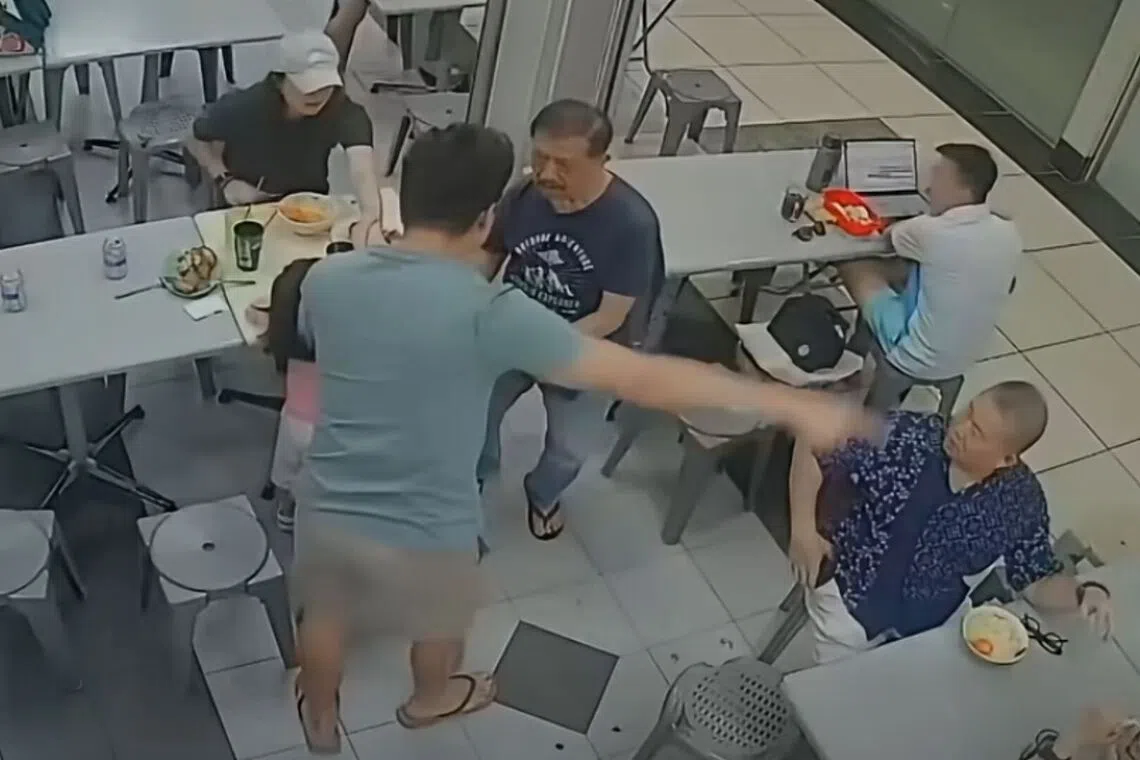
A Sudanese man has been arrested on suspicion of attempted murder following a knife attack in north Belfast that left another man seriously injured, police said.

Get today's headlines by email

The suspect, who is in his 30s, remains in custody after the incident, which occurred at about 22:30 BST on Monday. Officers said they are not seeking anyone else in connection with the attack.
Police recovered what they believe to be a kitchen knife from the scene. The victim, a man in his 40s, suffered serious injuries including slash wounds to his face and back as well as damage to an eye. He remains in hospital in a serious condition.
Authorities praised members of the public who intervened before officers arrived, saying their actions helped save the victim’s life. Video shared online appeared to show local residents confronting the suspect, including one person carrying a hurling stick.
Suspect’s Immigration Status
The UK Home Office said the suspect entered the country in 2023 and was granted refugee status the same year. He currently has leave to remain in the UK until 2028.
According to the Home Office, the man said he entered the UK through the Common Travel Area. Police initially stated that the suspect was Somali but later corrected the information, confirming he is Sudanese.
Police Service of Northern Ireland Chief Constable Jon Boutcher said investigators believe the man travelled from Sudan to Paris before flying to Dublin and then taking a bus to Belfast, where he claimed asylum on 10 February 2023.
Boutcher said there was no record of the suspect on national security databases and that he was not previously known to the PSNI.
Police Appeal for Calm
Assistant Chief Constable Ryan Henderson said police had consulted counter-terrorism partners but currently had no evidence indicating the attack was terrorism-related. He stressed that inquiries remain at an early stage.
Police also urged the public not to speculate about the case or share inaccurate information online regarding the victim’s condition.
With calls for protests circulating on social media, Henderson appealed for calm and said an increased police presence would be deployed across Northern Ireland in the coming days. He added that other UK police forces had offered support if required.
Some businesses announced early closures following the incident, while public transport operator Translink said services were expected to run normally. The Belfast Health Trust and the Driver and Vehicle Agency also outlined contingency measures in response to potential disruption.
Witnesses Describe Shock
A local resident who contacted emergency services described being deeply shaken by the attack. She said she heard screams outside her home and helped relay information to police through a delivery driver’s phone.
The woman said several people attempted to intervene as the incident unfolded and described the scene as unlike anything she had witnessed before. She added that the attack had left her fearful about safety in her neighbourhood.
Political Leaders Condemn Attack
Northern Ireland’s five main political parties issued a joint statement condemning what they described as a horrific act of violence. They expressed support for the victim, those who witnessed the attack and members of the public who stepped in to help.
Political leaders urged people not to share graphic footage and called for patience while police continue their investigation.
Several politicians, including Conservative leader Kemi Badenoch and Reform UK leader Nigel Farage, called for further information about the suspect’s background and immigration status.
Community organisations also condemned the attack and appealed for unity, warning against allowing the incident to divide local communities.


Join the discussion?

Already a member?


Adapted by ASEAN Now. Source 10 June 2026
webfact
webfact
President Donald Trump has accused Iran of shooting down a US military helicopter over the Strait of Hormuz and said Washington would respond to the incident, raising fresh concerns about tensions despite a fragile ceasefire between Iran and Israel.

Get today's headlines by email

The US Central Command (Centcom) confirmed that two crew members aboard the downed Apache helicopter were rescued and were unharmed.
“There were two pilots involved, both are safe and uninjured,” Trump wrote on Truth Social. “Nevertheless, the United States must, of necessity, respond to this attack.”
US officials have not announced what form any response might take. However, military action could threaten efforts to preserve the ceasefire that followed recent exchanges of fire between Israel and Iran.
Iran has not immediately commented on Trump’s accusation. One US official told CBS News that it remained unclear whether the aircraft was intentionally targeted.
Iranian media appeared to acknowledge the incident but stopped short of claiming responsibility. The semi-official Mehr News Agency reported that Iran had not taken responsibility for the helicopter’s loss.
Rising Regional Tensions
The incident comes as Israeli forces continued strikes across southern Lebanon. Tehran has warned that further Israeli military action in the area could prompt renewed retaliatory attacks.
Iranian Foreign Minister Abbas Araqchi said foreign military forces operating near Iran faced ongoing risks from accidents, miscalculations or being caught in crossfire.
“To reduce risk, best solution is for them to leave,” he wrote on X.
Shortly before Trump’s comments, Mohammad Baqer Qalibaf, Iran’s lead negotiator in talks with Washington, issued a warning on social media.
“We prefer the language of diplomacy, but we speak other languages far more fluently. Break your commitments, and we'll switch to what we speak best,” he wrote, adding: “You ride the horse you saddled!”
Ceasefire Under Pressure
Israel and Iran halted direct attacks after exchanging fire over the weekend, the first such confrontation since a truce reached in April.
Trump had urged both countries to “immediately stop ‘shooting’”, saying further hostilities could undermine negotiations aimed at ending the wider regional conflict.
He also expressed optimism about ongoing talks with Tehran, telling reporters that a deal could be reached within “two or three days” and that the Strait of Hormuz would reopen immediately afterward.
The helicopter incident, however, may complicate those diplomatic efforts, particularly if Washington concludes that Iran was directly responsible.
Rescue Operation
Centcom said the rescue took place at 19:33 EDT (23:33 GMT) on Monday.
According to the military, the operation was led by US Naval Forces Central Command and the 82nd Airborne Division, with support from US Air Force and Navy units, including the US Fifth Fleet’s Task Force 59.
A Centcom spokesperson said the pilots were recovered by an unmanned surface vessel operated by Task Force 59, a Bahrain-based unit established in 2024 to integrate unmanned systems into maritime security operations.
The drone transported the crew to another location at sea, where they were subsequently lifted aboard a helicopter and taken to safety.


Join the discussion?

Already a member?


Adapted by ASEAN Now. Source 10 June 2026
webfact
webfact
Ukraine's escalating drone campaign against Russian-occupied territories is disrupting Moscow's military supply network and worsening fuel shortages across occupied Crimea, according to officials, analysts and local reports.

Get today's headlines by email

The shortages have been linked to repeated Ukrainian strikes on transport routes connecting southern Russia to Crimea through the occupied city of Mariupol. Analysts describe the route as a critical artery for Russian military logistics in southern Ukraine.
Supply Routes Under Pressure
Clément Molin of the French think tank Atum Mundi said Ukraine had conducted around 300 drone strikes on trucks since early May, including about 30 fuel tankers, with attacks intensifying in recent weeks. Ukraine's drone forces commander, Robert Brovdi, said military cargo traffic along the route fell by 71% between late May and early June.
Fuel Shortages Hit Residents and Tourists
The disruption has had visible effects across Crimea, which Russia annexed in 2014 and uses as a key military base for operations against Ukraine.
Residents and tourists have reported long queues at petrol stations, with some people waiting up to 10 hours to obtain fuel. Many stations have limited purchases to 20 litres per customer through prepaid vouchers, while some have run out of fuel entirely.
Tourists who travelled to Crimea before the shortages began have also struggled to secure enough fuel for return journeys. In response, Moscow-appointed authorities established a dedicated hotline to assist stranded visitors.
Fuel scarcity has driven up petrol and diesel prices across the peninsula. On 5 June, Crimea's Russian-installed leader, Sergei Aksyonov, acknowledged that authorities could not fully meet fuel demand and warned that hundreds of buses would remain idle because of shortages.
Russia Acknowledges Supply Problems
Russia's Energy Ministry publicly recognised fuel supply difficulties on 8 June, citing an increase in Ukrainian attacks on fuel and energy infrastructure in southern regions. The ministry said a permanent headquarters had been created to coordinate efforts to address the situation.
Alternative supply routes remain limited. Maritime transport has become increasingly risky after Ukrainian attacks damaged several ferries serving Crimea. Traffic on the Kerch Bridge linking Crimea to mainland Russia has also been affected by previous attacks and security concerns.
Craig Kennedy, an expert on Russia's oil industry and an associate at Harvard University's Davis Center, said transporting fuel by road through occupied territory now presents significant risks because vehicles remain vulnerable along the route.
Military Impact and Expanding Campaign
Some Russian military commentators argue the disruptions are affecting both civilian life and military operations. Pro-Kremlin military analysis channel Rybar said fuel shortages impacting civilians are also reducing supplies available to Russian forces in southern Ukraine.
Ukraine has additionally targeted infrastructure in northern Crimea. Strikes on 6-7 June and again on 8-9 June damaged a bridge at Chonhar, a key crossing used by both military and civilian traffic, forcing authorities to suspend movement across it.
The logistical strain has been compounded by Ukraine's long-range attacks on Russian oil refineries and storage facilities. President Volodymyr Zelensky said nearly 40% of Russia's primary oil-refining capacity was disabled in May as a result of such strikes.
According to Kennedy, Ukraine's campaign is increasingly shifting from large refineries to local fuel distribution networks, creating concentrated pressure on specific regions, particularly Crimea.
Wider Effects Across Occupied Territories
Drone operations have also targeted occupied parts of the Luhansk and Kherson regions. Ukrainian commander Yevhen Karas said disrupting Russian logistics remains a central objective, with fuel depots, storage facilities and military infrastructure among priority targets.
Russia has meanwhile accused Ukraine of causing civilian casualties in several attacks in occupied territories, including incidents involving public transport. Karas did not comment on specific cases but said civilian vehicles were not deliberately targeted, while acknowledging that mistakes can occur in an active combat zone.
Authorities in occupied Luhansk have restricted bus services on key routes leading toward Mariupol and Crimea, citing security concerns.
The combined impact of Ukraine's strikes on fuel infrastructure and transport routes has increased pressure on Russian military logistics while also bringing the effects of the war more directly to residents of occupied territories.

Join the discussion?

Already a member?


Adapted by ASEAN Now. Source 9 June 2026
webfact
webfact
Israeli forces killed at least eight people in air strikes on the southern Lebanese city of Tyre on Tuesday, shortly after issuing a displacement order that expanded to include parts of the city previously spared from evacuation notices.

Get today's headlines by email

The attack hit a densely populated residential area in the coastal city, according to Lebanon’s civil defence agency. The latest evacuation order covered Tyre’s Christian quarter, an area that had largely been excluded from earlier directives. Israel said Hezbollah fighters were operating in the area.
Escalating attacks in southern Lebanon
The strike was the latest in a series of attacks on Tyre. A day earlier, an Israeli strike near a Red Cross centre killed five people and wounded eight others, according to Lebanon’s National News Agency.
Among the injured were four paramedics, while the bombardment also reportedly damaged a UNESCO-listed heritage site.
The renewed violence follows an exchange of fire between Israel and Iran, marking the most serious escalation since a ceasefire between the two countries took effect on April 8. The latest tensions were triggered by an Israeli strike on Beirut on Sunday.
Despite the ceasefire between Iran and the United States, Israel has continued military operations in Lebanon, arguing that its campaign against Hezbollah is separate from the conflict involving Iran.
Hezbollah reports attacks on Israeli forces
Hezbollah said it carried out 16 operations against Israeli troops in southern Lebanon, including near the strategically important Beaufort Castle.
The group claimed it destroyed two Israeli military bulldozers near Yohmor al-Shaqif and struck several Israeli troop positions. It also said it intercepted an Israeli drone over the Iqlim al-Tuffah area.
Lebanon became directly involved in the wider regional conflict on March 2 when Hezbollah launched rockets into northern Israel, citing continued Israeli attacks and the killing of Iranian Supreme Leader Ali Khamenei.
Iran warns of stronger response
Iran warned on Monday that any continued aggression, including attacks in southern Lebanon, could provoke a far harsher response.
The warning accompanied Tehran’s announcement that it would halt strikes on Israel following the recent exchange of fire.
Israeli Defence Minister Israel Katz dismissed the threat, saying operations against Hezbollah would continue and warning that attacks on northern Israel would trigger strikes on Beirut’s southern suburbs.
He also rejected any attempt by Iran to link developments in Lebanon to the broader confrontation between Tehran and Israel.
Humanitarian crisis deepens
Lebanese Prime Minister Nawaf Salam said Israel has carried out nearly 3,500 air strikes, more than 400 demolitions and six large-scale village razing operations since April 16.
According to Lebanon’s Health Ministry, the death toll from Israel’s offensive since March 2 has risen to 3,637, with 11,188 people wounded.
More than one million people have been displaced, representing roughly one-fifth of Lebanon’s population.
Salam’s office said government shelters in Beirut, Sidon and other regions have reached full capacity.
The International Rescue Committee warned that humanitarian conditions are deteriorating rapidly, with 94 percent of displaced people struggling to meet basic needs. Many residents returning to southern Lebanon have found their homes, and in some cases entire villages, destroyed.
Aid groups say a lasting ceasefire is needed to address mounting humanitarian needs and support recovery efforts.

Join the discussion?

Already a member?


Adapted by ASEAN Now. Source 9 June 2026
webfact
webfact
The Trump administration has launched what officials describe as the largest effort to strip U.S. citizenship from naturalized Americans accused of fraud or other serious offenses, filing cases against 17 people in courts across the country.

Get today's headlines by email

The move marks a significant expansion of the government's use of denaturalization powers, a legal process that allows authorities to seek the removal of citizenship from foreign-born Americans who are found to have obtained it unlawfully.
Broadening denaturalization efforts
The Justice Department announced the latest cases on Monday, following an earlier round of denaturalization actions unveiled last month. Officials said the new filings represent the largest single effort of their kind by the federal government.
Denaturalization has long been permitted under U.S. law, but it has historically been used sparingly. Government records indicate that between 1990 and 2017, the Justice Department filed an average of 11 denaturalization complaints each year.
To succeed, federal authorities must convince a judge that a naturalized citizen obtained citizenship through fraud, misrepresentation or concealment of important information. The process can take place through civil or criminal proceedings in federal court.
Cases target fraud and serious crimes
According to court filings, the administration argues that the 17 individuals either concealed criminal conduct during the naturalization process or otherwise failed to meet eligibility requirements for citizenship.
Federal officials said some of those targeted were convicted of violent crimes, including sexual offenses involving children. Others were accused or convicted of fraud-related offenses or immigration violations.
Among those named in the latest filings are a Haitian-born man accused of sexually abusing his daughter; a man from the former Yugoslavia convicted of sexually abusing a child under 15; a Mexican-born immigrant convicted of receiving sexually explicit images of minors; a former Catholic priest from Colombia accused of child sexual abuse; and a Filipino-born man who pleaded guilty to a child sex offense.
The cases also include an Indian-born immigrant accused of submitting fraudulent H-1B visa petitions, the daughter of a Colombian drug trafficker accused of money laundering, a Jamaican-born man convicted of wire fraud, and a Cuban-born woman accused of defrauding a tribal casino. Other individuals were accused of using false identities.
Part of wider immigration crackdown
The initiative forms part of the administration's broader immigration agenda. Since returning to office last year, President Donald Trump has pledged a major expansion of immigration enforcement, including deportations.
In 2025, the Justice Department widened the categories of naturalized citizens considered priorities for denaturalization proceedings. Last month's announcement of 12 cases was described at the time as the largest such action in years.
Acting Attorney General Todd Blanche said the department would continue pursuing cases involving individuals accused of abusing the naturalization system.
"Criminal aliens are lying about their past crimes, including drug dealers, sexual predators, and fraudsters," Blanche said.
Homeland Security Secretary Markwayne Mullin said citizenship must be obtained honestly and pledged continued use of legal tools to pursue denaturalization where appropriate.
Legal process remains available
Those facing denaturalization proceedings can challenge the government's claims in court and seek to keep their citizenship.
If a court revokes a person's citizenship, they return to their previous immigration status, which is typically lawful permanent residency. They also lose the protections and benefits associated with U.S. citizenship, including immunity from deportation.

Join the discussion?

Already a member?


Adapted by ASEAN Now. Source 9 June 2026
webfact
webfact
A federal judge has blocked a $100,000 fee on new H-1B visa applications introduced by the administration of Donald Trump, ruling that the measure exceeded presidential authority and infringed on Congress's power to set taxes and immigration policy.

Get today's headlines by email

U.S. District Judge Leo Sorokin sided with a coalition of 20 Democratic-led states that challenged the fee, concluding that the payment functioned as a tax regardless of how it was described by the administration.
“The substance and application of the $100,000 payment reveal that it is a tax, regardless of what the payment is called,” Sorokin wrote in his decision.
States Challenge Visa Fee
The fee was introduced through a presidential proclamation signed by Trump in September last year. It applied to new H-1B visa applications, with the cost generally borne by sponsoring employers.
Administration officials said the policy was intended to encourage companies to hire American workers rather than recruit talent from abroad.
The legal challenge was led by Rob Bonta and Andrea Campbell on behalf of Democratic-controlled states.
H-1B visas allow U.S. employers to hire foreign workers for specialized roles, particularly in technology and other skilled professions. Visa holders are typically admitted for up to three years but do not receive permanent resident status through the program.
Judge Cites Supreme Court Tax Ruling
Sorokin's decision drew on the Supreme Court's 2012 ruling that upheld the Affordable Care Act's individual mandate as a valid exercise of Congress's taxing authority.
Referring to that case, the judge wrote that the visa payment was “not a penalty,” comparing it to the fee considered by the Supreme Court.
The administration argued that the courts lacked authority to review the dispute and urged dismissal of the lawsuit, contending that Trump's action was shielded from judicial scrutiny.
Administration Defends Policy
A spokesperson for the Department of Homeland Security criticized the ruling, calling it “blatant judicial activism” and defending the administration's broader immigration agenda.
The spokesperson said the administration's reforms were intended to prioritize American citizens, workers and families.
The legal battle over the fee remains unresolved. In a separate lawsuit brought by the U.S. Chamber of Commerce and the Association of American Universities, another federal judge ruled that Trump acted within his authority when imposing the charge.
An appeals court heard arguments in that case in March and has yet to issue a decision.

Join the discussion?

Already a member?


Adapted by ASEAN Now. Source 9 June 2026
webfact
webfact
A woman who says she was abused and trafficked by convicted sex offender Jeffrey Epstein has told a U.S. congressional committee that she attended events at royal residences, including a dinner in Andrew Mountbatten-Windsor’s private apartments at Buckingham Palace.

Get today's headlines by email

Sarah Kellen gave the evidence to the House Oversight Committee as part of its investigation into Epstein, who died in a New York prison in 2019 while awaiting trial on sex trafficking charges.
Testimony to Congressional Investigation
Transcripts of Kellen’s testimony, released recently, show she described encounters with several prominent figures connected to Epstein during the years she worked for him. She told lawmakers she had been “sexually and psychologically abused” by Epstein for more than a decade.
Claims Involving Royal Residences
During her testimony, Kellen said she attended a dinner in Andrew Mountbatten-Windsor’s private apartments at Buckingham Palace and was also present at Princess Beatrice’s 18th birthday celebration at Windsor Castle in 2006.
The testimony marks the first known public account from a woman abused and trafficked by Epstein describing her attendance at royal residences.
Kellen was asked whether she had witnessed any inappropriate behaviour by several individuals, including Mountbatten-Windsor. She told the committee she had not.
Mountbatten-Windsor, the former Prince Andrew, has repeatedly denied any wrongdoing linked to his friendship with Epstein. He lost his royal titles following allegations connected to that relationship.
The BBC said Buckingham Palace referred it to a statement issued last October on behalf of the King and Queen. The statement said their thoughts and sympathies remained with victims and survivors of all forms of abuse.
Allegations Against Epstein and Maxwell
Kellen confirmed she had received compensation from Epstein’s estate through a victims’ fund established to provide financial relief to survivors who could support their claims with evidence.
She also told lawmakers she was sexually abused by Ghislaine Maxwell, Epstein’s longtime associate, who is serving a 20-year prison sentence for sex trafficking.
Kellen was highly critical of Maxwell, telling the committee she believed Maxwell played a significant role in shaping Epstein’s lifestyle and use of wealth.
The witness also said she was abused by three other associates of Epstein.
Questions Over Past Activities
Kellen told the committee that she may have organised meetings for Sarah Ferguson at Epstein’s office and residence in Palm Beach, Florida, while Epstein was on work release in 2008. At the time, Epstein was serving a sentence for soliciting sex from a minor and was permitted to leave prison during the day for work.
Previously described as an assistant to Epstein, Kellen was identified as a possible co-conspirator during an earlier plea agreement involving the financier. She told lawmakers she only became aware of that designation after it became public and said no law enforcement agency had sought her account at the time.
The BBC reported that it had approached representatives for Mountbatten-Windsor, Princess Beatrice and Maxwell’s legal team for comment. A spokesperson for Sarah Ferguson declined to comment.

Join the discussion?

Already a member?


Adapted by ASEAN Now. Source 9 June 2026
webfact
webfact
Armenian Prime Minister Nikol Pashinyan has secured a significant election victory, with his centrist Civil Contract Party winning 49.8% of the vote in a contest widely viewed as a referendum on the country's future direction.

Get today's headlines by email

The Strong Armenia Alliance finished second with 23.2%, while the Armenia Alliance took third place with 9.9%. Early results prompted Pashinyan to declare victory on Monday, saying voters had chosen “peace, regional prosperity and cooperation”.
Pro-West Course Backed by Voters
The election was the first since Armenia's 2023 military defeat to Azerbaijan, a conflict that reshaped the country's political landscape and intensified debate over its foreign policy orientation.
Russia-West Rivalry Shapes Campaign
The vote unfolded against a backdrop of growing tensions between Armenia and Russia, its traditional ally and largest trading partner.
Pashinyan has sought closer ties with the West, including passing legislation to begin the process of joining the European Union and advancing a US-backed peace agreement with Azerbaijan. Earlier this year, he also hosted a summit attended by EU leaders and Ukrainian President Volodymyr Zelensky in Yerevan.
European leaders welcomed the election outcome, with France and the EU congratulating Pashinyan and praising Armenia's growing engagement with Western partners.
Moscow, however, criticised the process. Russian foreign ministry spokesperson Maria Zakharova said opposition parties had faced “unprecedented pressure” and alleged Western interference. She also described Armenian society as deeply divided.
Economic Pressure and Domestic Challenges
The result came despite a decline in Pashinyan's popularity since his party won 54% of the vote in 2021. Recent polls had placed his support at around 30%.
Russia has warned Armenia about the economic consequences of moving closer to Europe. In recent months, President Vladimir Putin urged Armenia to decide between pursuing EU integration and remaining in the Russian-led Eurasian Economic Union.
Moscow has also highlighted Armenia's dependence on discounted Russian gas and, in the weeks before the election, imposed restrictions on several Armenian exports, including flowers, mineral water, brandy, fruit and vegetables.
Despite advocating stronger ties with Europe, Pashinyan has maintained that Armenia will remain a member of the EAEU while continuing its rapprochement with the West.
Nagorno-Karabakh Remains Divisive
Much of the opposition to Pashinyan stems from the fate of Nagorno-Karabakh, where around 100,000 ethnic Armenians fled after Azerbaijan regained control of the territory in 2023.
Critics accuse the prime minister of making excessive concessions in pursuit of peace, while supporters argue that reconciliation is necessary for stability. Public opinion remains split over the peace process with Azerbaijan.
In Yerevan, reactions to the result were mixed. Some voters praised Pashinyan's efforts to improve social services and pursue peace, while others questioned whether EU membership is realistic and expressed concern about the displacement of Armenians from Nagorno-Karabakh.
Fragmented Opposition
Nineteen parties and alliances contested the election, though only a handful secured enough votes to enter parliament. Turnout reached 59%, according to election officials.
Among the leading opposition groups were the pro-Russian Strong Armenia Alliance, led by businessman Samvel Karapetyan, and the Armenia Alliance, headed by former president Robert Kocharyan. The conservative Prosperous Armenia party, led by Gagik Tsarukyan, finished fourth with 4% of the vote.
The result strengthens Pashinyan's mandate to continue balancing relations between Russia and the West while pursuing a contentious peace agenda at home.


Join the discussion?

Already a member?


Adapted by ASEAN Now. Source 9 June 2026

webfact
webfact
Sir Idris Elba has said the James Bond franchise should remain true to its roots and warned against attempts to make the character “woke”.

Get today's headlines by email

The British actor, who was long linked with the role of 007 amid widespread speculation, told GQ that he was honoured to be considered but never viewed himself as a serious contender for the part.
Elba Reflects on Bond Speculation
Elba said Bond was created in a specific way and that there was a reason the character had been written as he was. While he appreciated being associated with the iconic spy, he suggested that not all audiences around the world would embrace a Black actor taking on the role.
“Bond is big all over the world,” he said, adding that some markets would not support a Black or African actor portraying the character because of cultural preferences.
Warning Against Change
The actor argued that the appeal of James Bond lies in its escapist nature and said efforts to reshape the character to reflect changing social expectations could undermine that purpose.
According to Elba, introducing a limited degree of realism can be beneficial, but the franchise should avoid trying to satisfy every audience preference or social trend. Instead, he said, Bond should remain focused on providing entertainment and escapism.
His comments come after years of discussion about the future direction of the franchise and whether the role should be opened to actors from more diverse backgrounds.
New Role Sparks Different Debate
Elba also spoke about his latest role as Man-at-Arms in the upcoming film Masters of the Universe.
The character, originally from the 1980s animated series, is known for his distinctive ginger moustache and appearance, leading Elba to joke about how different the role looks from him.
He said he initially thought about the contrast but quickly dismissed any concerns, arguing that a fictional character such as Man-at-Arms could be portrayed by anyone regardless of race. Referring to the character’s fantasy appearance, he joked that the debate seemed unnecessary given that the character also has green legs.
Search for the Next 007 Continues
Interest in Bond casting remains high as producers continue the search for a successor to Daniel Craig, who made his final appearance as the spy in No Time To Die five years ago.
The casting process officially entered a new phase last month. According to Variety, auditions have been taking place in recent weeks as work progresses on the next instalment of the franchise.
Amazon, which now oversees the series, has declined to discuss specific details of the search but said it looks forward to sharing updates with fans when appropriate.
The next Bond film will be directed by Denis Villeneuve, known for the Dune films, while Peaky Blinders creator Steven Knight has been announced as the screenwriter.
Variety also reported that casting director Nina Gold, whose credits include major film franchises such as Paddington, Star Wars, Jurassic Park and Mamma Mia!, is leading the search for the new 007.
Actors frequently linked to the role include Callum Turner, Henry Cavill and Aaron Taylor-Johnson.

Join the discussion?

Already a member?


Adapted by ASEAN Now. Source 9 June 2026
webfact
webfact
Israel and Iran have stepped back from renewed fighting after both sides signalled a pause in attacks following a call from U.S. President Donald Trump for them to “immediately stop shooting.”

Get today's headlines by email

In a televised address, Israeli Prime Minister Benjamin Netanyahu said Iranian attacks had ceased after Israel struck targets linked to Tehran’s leadership. He warned that any future attack by Iran would be met with a forceful response.
Fragile Halt to Hostilities
The exchange of Iranian ballistic missile launches and Israeli air strikes marked the most direct confrontation between the two countries since a ceasefire reached in April. While the latest pause has reduced immediate fears of a wider regional conflict, analysts have warned that the situation remains highly unstable.
Lebanon Remains a Flashpoint
Despite the halt in direct exchanges between Israel and Iran, tensions linked to Lebanon continue to threaten the truce.
Israeli Defence Minister Israel Katz said military operations against Hezbollah would continue and warned that attacks from Lebanon would trigger strikes on Beirut. Israel has rejected Iranian efforts to link a broader ceasefire to an end of Israeli operations against the Iran-backed militant group.
Iranian parliamentary speaker Mohammad Bagher Ghalibaf also adopted a defiant tone, saying Tehran would continue responding to what it described as repeated violations.
Reports on Monday indicated fresh rocket launches by Hezbollah into northern Israel, while Israel was said to have carried out a strike near Tyre in southern Lebanon.
Military Strikes and Diplomatic Pressure
Israel said it had targeted an Iranian petrochemical facility and dismantled air-defence systems in several parts of Iran. Iranian state media reported explosions in cities including Isfahan, Karaj, Tabriz and Tehran.
Iran’s military said it had delivered a “painful response” to Israeli attacks in Lebanon. The Islamic Revolutionary Guard Corps said it had targeted two Israeli military bases. Damage was reported to homes in a settlement in the West Bank after missile debris fell in the area, though no injuries were recorded.
Trump has been pressing Israel to limit military action in Lebanon as part of efforts to secure a broader agreement to end the conflict. On Monday, he said Israel and Iran both wanted an immediate ceasefire and that negotiations aimed at achieving peace were continuing.
Iranian foreign ministry spokesperson Esmail Baghaei said contacts with Washington were continuing but were taking place in an atmosphere of deep mistrust. He accused Israel of attempting to undermine diplomatic efforts.
Economic Concerns and Regional Risks
The latest escalation unsettled global markets, pushing oil prices about 5% higher before easing as signs emerged that both sides were stepping back from further attacks.
The conflict also risks widening through Iran’s regional allies. Yemen’s Iran-aligned Houthi movement said it would seek to block Israeli-linked shipping in the Red Sea and confirmed it had launched missiles at Israel in recent days.
Iran continues to seek concessions in negotiations, including a ceasefire in Lebanon, an Israeli withdrawal from Lebanese territory, partial access to frozen overseas assets and greater influence over the strategically important Strait of Hormuz. Tehran also wants to delay detailed discussions about its nuclear programme.
Meanwhile, Netanyahu faces domestic pressure ahead of elections later this year, while Iranian negotiators are confronting criticism from hardliners who oppose continued talks with the United States.


Join the discussion?

Already a member?


Adapted by ASEAN Now. Source 9 June 2026
webfact
webfact
The world’s oceans are facing growing pressure from human activity, with sea levels now rising at more than twice the rate recorded a decade ago, according to a major United Nations assessment.

Get today's headlines by email

The UN’s third World Ocean Assessment found that pollution, industrial fishing and climate change are placing “severe and accelerating” strain on marine ecosystems, driving biodiversity loss and weakening the ocean’s ability to support life and regulate the climate.
Sea Levels and Ocean Heat Rising
The report, compiled by nearly 600 scientists from 86 countries, examined ocean health between 2021 and 2025. It found that global sea-level rise accelerated from about 2mm per year before 2015 to 4.3mm per year in 2023.
Researchers also reported that 16% of all ocean heat gained since 1955 accumulated after 2018, highlighting the increasing pace of warming. The strongest relative temperature increases were recorded in the Atlantic Ocean and southern regions of the Indian and Pacific Oceans.
The assessment noted that major gaps in scientific knowledge remain. By 2025, only 27% of the ocean floor had been mapped, leaving many deep-sea ecosystems poorly understood.
Call for Greater International Action
UN Secretary-General António Guterres said the findings underscored the need for stronger international cooperation to safeguard marine ecosystems.
He warned that the ocean could no longer be treated as an unlimited resource and called for a new approach based on science, international law and shared responsibility.
The report acknowledged progress in ocean conservation, including the implementation of the High Seas Treaty, which establishes international rules for protecting marine areas outside national waters.
Together with 56 other agreements, the treaty has improved efforts to conserve biodiversity, reduce harmful subsidies and manage ocean resources. However, the report found that governance remains fragmented across regions and sectors, making stronger coordination essential.
Plastic Pollution and Population Pressures
Covering more than 70% of Earth’s surface, the ocean plays a critical role in regulating climate, sustaining biodiversity and providing food, energy and mineral resources.
According to the assessment, the ocean has absorbed about 90% of excess heat and 30% of carbon dioxide emissions generated by fossil fuel use. Scientists also warned that changing ocean currents could have significant implications for future climate patterns, although many impacts remain uncertain.
The report estimated that 52.1 million tonnes of plastic enter the ocean each year, contributing to around 24.4 trillion microplastic particles that affect more than 4,000 marine species.
Researchers identified population growth, technological development, changing governance systems and geopolitical instability among the main factors increasing pressure on marine environments. The global population rose from 7.7 billion in 2017 to 8.2 billion by the end of 2024, with more than one-third of people living within 100 kilometres of a coastline.
Environmental Groups Urge Faster Protection
Environmental campaigners said the findings should prompt governments to accelerate conservation efforts.
Greenpeace described the report as an urgent warning and called for stronger protections against deep-sea mining and industrial fishing.
The group urged governments to fulfil their commitment to protect 30% of the world’s oceans by 2030 through the creation of fully protected marine sanctuaries.

Join the discussion?

Already a member?


Adapted by ASEAN Now. Source 9 June 2026
webfact
webfact
Sir Keir Starmer has given major technology companies until September to introduce protections that prevent children from taking, sharing or viewing explicit images on mobile devices, warning that the government will legislate if firms fail to act.

Get today's headlines by email

The prime minister said companies including Apple and Google should deploy nudity-detection technology or other safeguards on smartphones and tablets to block the creation and sharing of sexually explicit images by users who have not been verified as adults.
Speaking at London Tech Week on Monday, Starmer said the UK could become the first country to make it impossible for children to access, send or receive nude images on their devices.
Protecting Children Online
Starmer rejected the idea that children’s exposure to explicit content was an unavoidable consequence of modern technology. He said technology companies must adapt their products to meet society’s needs and help protect children from online predators.
He called on technology firms operating in Britain to introduce controls that prevent minors from sending and receiving sexually explicit images. If companies do not implement suitable measures within three months, the government will introduce legislation requiring such protections on all phones and tablets sold in the UK.
Under the proposal, adults would still be able to access, create and share nude content after completing an age-verification process.
Pressure for Stronger Safeguards
The announcement follows the resignation of safeguarding minister Jess Phillips in May. Phillips said she had spent more than a year pushing for measures to stop children from taking nude images of themselves and criticised the pace of government action.
In her resignation letter, she argued that practical solutions had already been developed and that ministers had been reluctant to move beyond threatening legislation.
The Home Office said the proposed measures would help prevent sexual predators from exploiting victims through digital devices while also limiting children's access to pornography.
Current Technology and Industry Response
Ministers highlighted existing technology such as HarmBlock, software developed by UK-based SafeToNet and incorporated into devices produced by HMD Global. The software automatically detects and blocks explicit imagery.
Apple and Google have introduced features that warn younger users about sensitive content, but these protections can currently be bypassed using a passcode.
Neither company currently offers a system that blocks explicit content across an entire operating system, including third-party applications such as WhatsApp and Telegram.
International Context
The UK initiative follows similar moves in Australia, where authorities have encouraged technology companies to develop operating systems capable of detecting nudity and applying measures such as image blurring or warning messages.
The proposed changes would complement the UK's Online Safety Act, which already requires online platforms to remove content deemed illegal or harmful to children.
Broader discussions are also under way about introducing tougher age-verification requirements and restrictions on features considered addictive, as part of wider efforts to improve child safety online.

Join the discussion?

Already a member?


Adapted by ASEAN Now. Source 8 June 2026
webfact
webfact

Account

Navigation

Search

Search

Configure browser push notifications

Chrome (Android)
  1. Tap the lock icon next to the address bar.
  2. Tap Permissions → Notifications.
  3. Adjust your preference.
Chrome (Desktop)
  1. Click the padlock icon in the address bar.
  2. Select Site settings.
  3. Find Notifications and adjust your preference.