Skip to content
View in the app

A better way to browse. Learn more.

Thailand News and Discussion Forum | ASEANNOW

A full-screen app on your home screen with push notifications, badges and more.

To install this app on iOS and iPadOS
  1. Tap the Share icon in Safari
  2. Scroll the menu and tap Add to Home Screen.
  3. Tap Add in the top-right corner.
To install this app on Android
  1. Tap the 3-dot menu (⋮) in the top-right corner of the browser.
  2. Tap Add to Home screen or Install app.
  3. Confirm by tapping Install.

Become a member

Become a member

World News

Fresh news brought to you daily from around the world. Hot news, breaking stories as they happen.
U.S. President Donald Trump on Monday called on Iran and Israel to immediately stop attacking each other after a ceasefire appeared to unravel following a fresh exchange of strikes.

Get today's headlines by email

In a post on Truth Social, Trump said both sides must stop “shooting” without delay.
Iran Launches Missiles After Israeli Strikes
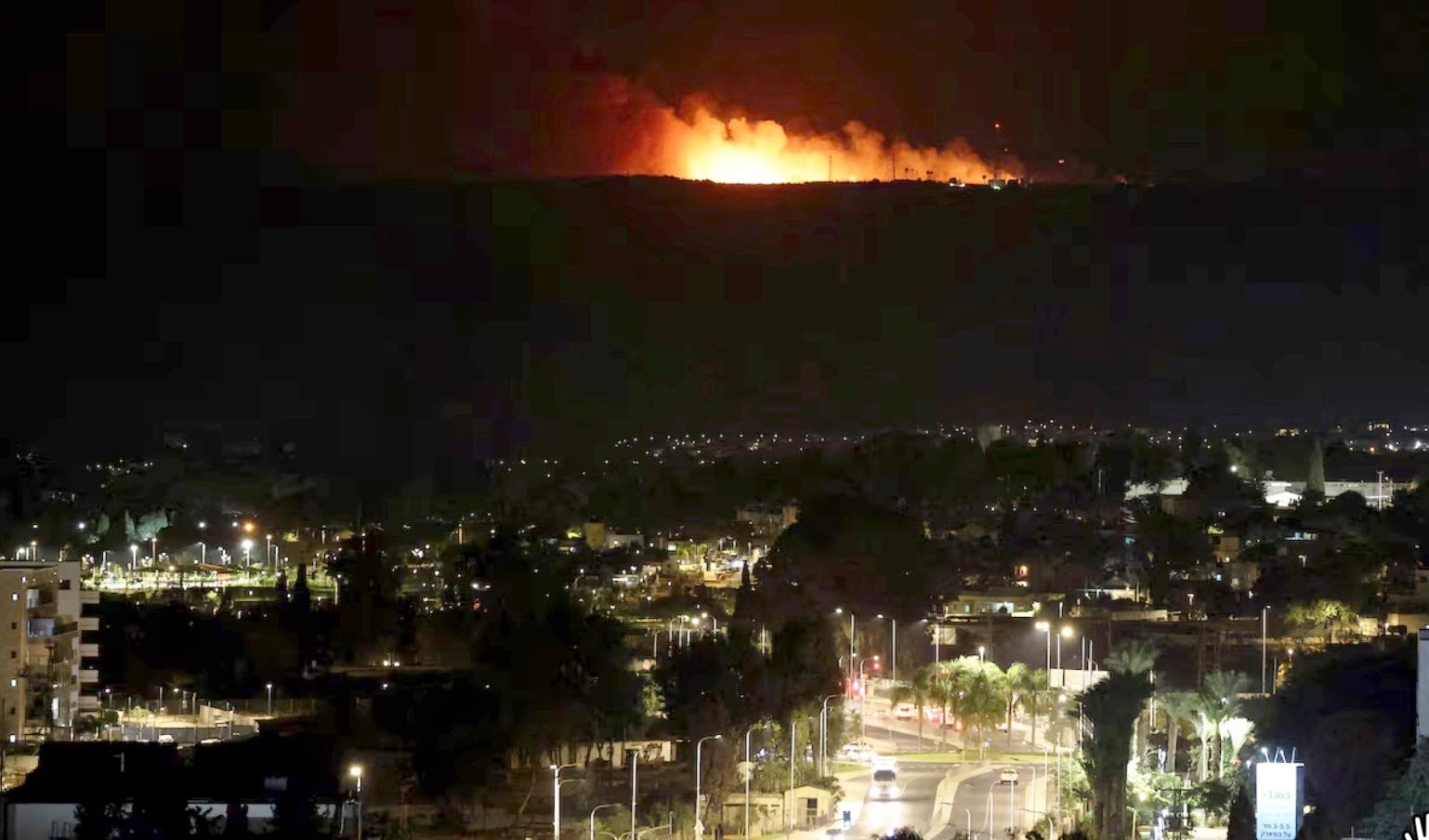
The appeal came after Iran launched missiles at Israel on Sunday night, marking the first direct exchange of attacks since a U.S.-backed ceasefire took effect in April. Tehran said the missile strike was carried out in response to Israeli attacks on Hezbollah targets in Lebanon earlier the same day.
Despite Trump's public call for restraint, Israel responded with its own strikes in the early hours of Monday morning.
Ceasefire Faces Renewed Pressure
According to reports, Trump had urged Israeli Prime Minister Benjamin Netanyahu not to retaliate against Iran. However, Israel proceeded with military action, raising concerns that the ceasefire agreement could collapse.
The renewed hostilities marked the first direct military exchange between Iran and Israel in more than two months and highlighted the fragility of efforts to prevent a wider regional conflict.

Join the discussion?

Already a member?


Adapted by ASEAN Now. Source 8 June 2026
webfact
webfact
Russian forces have struck a facility used for storing spent nuclear fuel near the decommissioned Chornobyl nuclear power plant, causing significant damage but no increase in radiation levels, Ukrainian officials said.

Get today's headlines by email

The attack occurred at around 2 a.m. local time on Sunday when a Russian Shahed drone hit the reception building of a spent fuel storage facility located roughly nine miles from the site of the 1986 Chornobyl disaster. The building was not housing fuel containers at the time of the strike.
Zelenskyy Condemns Strike
Ukrainian President Volodymyr Zelenskyy described the attack as deliberate and accused Moscow of targeting critical infrastructure.
“As of now, there is no heightening of radiation safety limits. But there is clearly a heightening of Russia’s already sky-high arrogance,” Zelenskyy said. He called the incident an “extremely vile Russian attack.”
The Ukrainian leader was scheduled to meet with Keir Starmer, Emmanuel Macron and Friedrich Merz in London on Sunday to discuss the ongoing war.
No Radiation Increase Detected
A fire covering approximately 40 square metres broke out following the strike but was later extinguished. No injuries were reported.
Ukraine’s state nuclear operator, Energoatom, said radiation levels remained within normal limits despite the damage.
The International Atomic Energy Agency said its experts were preparing to inspect the site. The agency confirmed that although the facility suffered substantial damage, radiation readings remained within established safety limits.
The storage facility is designed to hold spent nuclear fuel from Ukraine’s nuclear power plants for long-term storage.
Ukraine Accuses Russia of Nuclear Blackmail
Ukrainian Foreign Minister Andrii Sybiha said the strike reflected a broader pattern of Russian actions around nuclear sites.
“This is not the first time Russian forces are putting Ukrainian nuclear facilities at risk,” he wrote on social media, describing Moscow’s actions as deliberate threats to nuclear safety.
The latest incident follows a February 2025 drone strike that damaged the protective containment arch covering the reactor destroyed in the 1986 Chornobyl disaster. Russia denied responsibility for that attack.
Energoatom said the latest strike demonstrated what it called the Kremlin’s willingness to endanger nuclear and radiation safety.
Escalating Long-Range Attacks
The attack comes as both sides intensify long-range drone and missile operations.
On Saturday, Ukrainian forces reportedly launched a strike against the naval town of Kronstadt near Saint Petersburg. Meanwhile, Russia’s Defence Ministry said its air defence systems had intercepted 500 Ukrainian drones over the previous 24 hours.
The Kremlin has previously warned that it could expand attacks on key Ukrainian facilities, including what it describes as decision-making centres. Russia has not publicly commented on Sunday’s strike near Chornobyl.
Ukraine and Russia have also repeatedly accused each other of endangering the Russian-occupied Zaporizhzhia Nuclear Power Plant, Europe’s largest nuclear power station.
Elsewhere in Ukraine, Russian attacks reportedly killed at least two people at a public transport stop in the Zaporizhzhia region, while a drone strike nearby killed a 56-year-old minibus driver. In the central city of Dnipro, regional authorities said a separate attack killed a 59-year-old man.

Join the discussion?

Already a member?


Adapted by ASEAN Now. Source 8 June 2026
webfact
webfact
The Trump administration is reportedly considering a proposal to purchase the Chagos Islands from Mauritius as uncertainty continues over plans for the UK to transfer sovereignty of the territory.

Get today's headlines by email

According to reports first published by the Telegraph, the proposal would allow the United States to secure long-term control of the strategically important Diego Garcia military base, jointly operated by the US and UK in the Indian Ocean.
The White House has not commented publicly on the reported discussions.
Proposal Linked to Diego Garcia Base
Under the reported plan, Washington would seek to buy the islands directly from Mauritius rather than rely on the UK's proposed sovereignty transfer arrangement. However, the territory would first need to become fully sovereign before any direct negotiations between the US and Mauritius could take place.
Legislation related to handing control of the islands to Mauritius was reportedly shelved in April after the United States withdrew its support for the arrangement.
The purchase proposal is said to be one of several options being examined by US officials. The Telegraph reported that the idea was raised by Treasury Secretary Scott Bessent and presented to President Donald Trump, although it is not currently viewed as the leading option.
Some members of the administration have reportedly expressed concerns that transferring sovereignty to Mauritius could create security risks because of the country's ties with China, raising fears about potential espionage near the military facility.
Chagossian Refugees Call for Resolution
The debate has drawn criticism from representatives of displaced Chagossians, who say their interests have become overshadowed by political disputes.
A six-member delegation from the Chagos Refugees Group visited the UK last week and voiced support for efforts to reach an agreement on the future of the islands.
The group's leader, Louis Olivier Bancoult, said the priority should be securing the rights of Chagossians, including the right to return to their birthplace.
He argued that insufficient progress had been made toward resolving the long-running dispute and called for a solution that addresses the concerns of the islanders.
Strategic Importance During Iran Conflict
Interest in the future of the Chagos Islands has intensified amid the ongoing conflict involving the United States, Israel and Iran.
Diego Garcia lies about 3,800 kilometres from Iran and hosts facilities capable of supporting long-range US military operations. The base has played a role in the conflict, including missile operations directed at Iranian targets.
Reports indicate that Iran has launched several attacks against the facility since the conflict escalated. A strike in March was intercepted by a US warship.
The UK also authorised the use of the base for missile launches targeting Iranian missile sites earlier this year.
UK Maintains Support for Agreement
A UK government spokesperson said the proposed agreement with Mauritius was designed to protect the long-term security and operational control of Diego Garcia.
The spokesperson described the base as a critical military asset that has supported British and American security interests for nearly six decades.
The UK government added that the agreement was intended to prevent strategic rivals from gaining influence in the region and safeguard the future of the facility.
When asked whether Britain would proceed with transferring sovereignty if the United States objected, a government source said the UK had consistently maintained that it would not move forward without American support.

Join the discussion?

Already a member?


Adapted by ASEAN Now. Source 8 June 2026
webfact
webfact
U.S. President Donald Trump has granted a pardon to former Republican congressman Stephen Buyer, who was convicted of insider trading and served a prison sentence following his departure from Congress.
The pardon, announced in a proclamation dated June 4, clears Buyer of a conviction that stemmed from stock trades linked to confidential information about a major telecommunications merger.
Conviction and Prison Sentence
Buyer, a former representative from Indiana, was sentenced to 22 months in prison in September 2023 after a federal jury in Manhattan found him guilty of insider trading.
The case originated from allegations brought by the Securities and Exchange Commission in 2021. Regulators accused Buyer of using non-public information obtained through clients of a consulting business he established after leaving Congress in 2011.
According to prosecutors, Buyer traded shares based on confidential knowledge related to the merger between T-Mobile and Sprint, allowing him to benefit from information unavailable to the public.
He was released from prison last year after completing his sentence.
Trump Praises Public Service
In the pardon proclamation, Trump highlighted Buyer's record of public service, describing his work in Congress and in the U.S. Army as distinguished and highly productive.
The document focused on Buyer's career achievements and military service, including his role as a judge advocate general in the Army. It did not address the conduct that led to his conviction.
The proclamation also noted support for clemency from several Republican figures, including Senator Lindsey Graham of South Carolina.
Supporters Push for Clemency
The pardon followed a public campaign by Buyer's supporters urging Trump to intervene.
Days before the announcement, Trump shared letters from Republican backers, including 42 retired members of Congress, calling for Buyer to receive clemency.
The letters pointed to his 18 years in Congress and his military background. They also referenced his role as a House prosecutor during the impeachment proceedings against former President Bill Clinton.
Trump's Position on Insider Trading
Trump has previously criticized insider trading, particularly in relation to market activity during international conflicts and other major events.
At the same time, he has repeatedly voiced support for banning members of Congress from trading individual stocks. He has said he would sign legislation imposing such a ban if it were approved by lawmakers.
Buyer's pardon adds to a series of clemency actions taken by Trump during his presidency and comes despite the former congressman's conviction on charges related to financial misconduct.

Join the discussion?

Already a member?


Adapted by ASEAN Now. Source 8 June 2026
webfact
webfact
Deputy Prime Minister David Lammy has revealed that he personally challenged US Vice-President JD Vance over comments linking the murder of British teenager Henry Nowak to migration, telling him his assessment of the case was "wrong".

Get today's headlines by email

Speaking to the BBC, Lammy said he spoke with Vance on Saturday after the vice-president suggested that Nowak's death reflected the consequences of what he described as a "mass invasion of migrants" into Europe.
Lammy rejected that argument, saying the killing had "nothing to do with mass migration". He said the conversation with Vance was cordial but direct, describing it as a robust exchange between colleagues who remain on good terms despite political disagreements.
The dispute follows renewed attention on the murder of Nowak, an 18-year-old student who was fatally stabbed in Southampton in December last year.
Murder case sparks political debate
Vickrum Digwa was sentenced to life imprisonment after being convicted of murdering Nowak. Digwa, who was born in the UK and is British, falsely claimed he had been subjected to racial abuse and had acted in self-defence.
He told the court he carried the blade for religious reasons connected to his Sikh faith.
Body-worn camera footage released during the case showed police handcuffing Nowak as he lay dying after Digwa incorrectly told officers that he had been the victim of a racist attack.
The case triggered widespread debate over policing and knife crime, while violent protests later broke out in Southampton.
In a post on X on Friday, Vance described the killing as both tragic and infuriating. He argued that Nowak's death illustrated a broader decline in Western civilisation and claimed the teenager would still be alive if European leaders had resisted migration policies.
Lammy cites family's call for calm
Lammy said he reminded Vance that Nowak's family had urged restraint following the case.
After Digwa's sentencing, Henry Nowak's father, Mark, appealed for calm and said he did not want his son's death to be used to deepen divisions or create further tensions within communities.
The deputy prime minister said he disagreed with what he called Vance's portrayal of Western society and stressed that the two men were able to discuss their differences openly.
Lammy and Vance have developed a friendship over several years, beginning when Lammy was serving as an opposition MP and Vance had recently entered the US Senate. The two have met regularly since then, and last year Vance and his family stayed at Chevening, Lammy's official residence in Kent, during a visit to Britain.
Police actions and guidance under review
The controversy has also renewed scrutiny of police handling of the case.
The Independent Office for Police Conduct is investigating Hampshire Police's response, while the force's chief has publicly apologised for the decision to arrest and handcuff Nowak.
Attention has also focused on an anti-racism document produced by the National Police Chiefs' Council. The guidance states that racial equality does not necessarily mean treating everyone identically or adopting a colour-blind approach.
The council announced this week that it would review the wording of the document following criticism.
Reform UK home affairs spokesman Zia Yusuf argued there was a connection between police guidance and the events surrounding the case. While saying his party respected the family's wish to avoid division, Yusuf maintained that political debate on the issue should continue.
Asked about institutional racism in policing, Lammy said everyone was equal before the law. He acknowledged that ethnic minorities remain disproportionately represented at several stages of the criminal justice system but argued that policing had moved beyond the era of institutional racism identified in the past.


Join the discussion?

Already a member?


Adapted by ASEAN Now. Source 8 June 2026
webfact
webfact
US President Donald Trump abruptly ended an interview with NBC's Meet the Press after a series of exchanges with presenter Kristen Welker over his claims that recent elections were "rigged."

Get today's headlines by email

The interview, which aired on Sunday, featured Trump repeating allegations that both California's ongoing primary elections and the 2020 US presidential election had been manipulated. When Welker repeatedly asked him to provide evidence for his assertions about the California vote count, Trump responded: "All I have to do is look, and I listen."
Welker replied that such observations did not constitute evidence. Trump then accused the media of being dishonest before terminating the interview, saying: "Sorry, let's call it quits because I've had enough."
Dispute Over Election Claims
The discussion turned contentious after the pair addressed the 6 January 2021 US Capitol riot and Trump's continued claims about the 2020 election. Trump then shifted the focus to California's primary elections, where vote counting was still underway in several races, including the contest for governor.
Pointing to the delay in finalising results, Trump alleged that election officials were "cheating on the election." When Welker asked whether he had evidence to support the accusation, he repeated that he relied on what he had seen and heard.
California's vote-counting process often takes several days because of the state's extensive use of mail-in ballots and procedures designed to ensure ballots are verified and counted accurately. Trump has long criticised mail-in voting.
As the exchange continued, Trump called the media "crooked" and directed personal criticism at Welker. She rejected the accusation and attempted to continue the interview.
Interview Cut Short
The conversation deteriorated further when Trump told Welker she was "either crooked or you're stupid." After additional back-and-forth, he declared the interview over.
"I've sat in the rain with you for an hour, on and off in the rain, and I've given you enough time," Trump said. He also criticised the press, arguing that the country could not be successful with what he described as a dishonest media.
Trump then signalled to members of his team, stood up and left the set, ending the interview.
Weather and Foreign Policy Discussions
The interview had been conducted at a farming event in Wisconsin and was affected by technical problems and rain striking the metal roof of the venue. NBC reported that Trump walked out around 50 minutes after the interview began on Friday.
Before the dispute over elections, much of the discussion focused on tensions involving Iran. Trump defended US actions aimed at preventing Iran from obtaining a nuclear weapon and said any military involvement would not become "an endless war."
He also discussed a proposed $1.8 billion "anti-weaponisation" compensation fund, which has since been abandoned. The proposal had drawn criticism from Democrats and some Republicans, who argued it could have led to payments for people prosecuted in connection with the Capitol riot.
Following the broadcast, Welker said she had spoken with Trump on Saturday and that both acknowledged the difficulties caused by the weather. She added that the president had agreed to take part in another Meet the Press interview in the future.


Join the discussion?

Already a member?


Adapted by ASEAN Now. Source 8 June 2026
webfact
webfact
Reports that Iran fired missiles at Israel on Sunday have raised fresh concerns over the stability of a fragile ceasefire between Washington and Tehran.

Get today's headlines by email

The reported missile launches came after Iran's parliamentary speaker, Mohammad Bagher Ghalibaf, accused the United States of violating the ceasefire through its naval blockade and its actions related to Lebanon.
In a post on X, Ghalibaf said the US blockade and what he described as breaches of agreements concerning Lebanon amounted to violations of the truce. He added that American and Israeli assets and bases in the region had become “legitimate targets”.
Trump Briefed on Renewed Fighting
The White House confirmed that President Donald Trump had been briefed on reports of renewed hostilities after Iran allegedly launched a missile at Israel for the first time since the ceasefire took effect. Axios first reported the briefing.
CNBC said it could not independently verify the missile launches. However, the Associated Press reported that Israel said Iran had fired missiles toward its territory. The Israel Defense Forces said it had activated defensive systems after detecting incoming missiles.
Speaking to Fox News, Trump said the reported attacks were “certainly not going to help negotiations”.
Efforts to Prevent Escalation
According to Axios, Trump was expected to speak with Israeli Prime Minister Benjamin Netanyahu in an effort to discourage retaliatory military action against Iran.
The ceasefire between the United States and Iran has been in place since early April. However, ongoing clashes involving Israel and the Iran-backed Hezbollah in Lebanon have complicated diplomatic efforts to preserve the truce and reach a broader agreement.
Disputes Over Lebanon and Nuclear Demands
Iran has called for an end to fighting in Lebanon and the lifting of US restrictions on its ports and shipping. Washington, meanwhile, is seeking guarantees that Tehran will surrender its nuclear material and permanently abandon any effort to acquire nuclear weapons.
Reports that the Trump administration is considering using Iranian assets to help fund reconstruction in allied Gulf states have also sparked a response from Tehran.
Iranian Deputy Foreign Minister Kazem Gharibabadi rejected the idea, saying regional governments were not entitled to seek reparations from Iran. In comments reported by Reuters and posted on X, he said Iranian assets were “neither war spoils for Washington nor a payment fund for its allies”.

Join the discussion?

Already a member?


Adapted by ASEAN Now. Source 8 June 2026
webfact
webfact
Prime Minister Keir Starmer has told supporters he will stand in any Labour leadership contest that may emerge, signalling a firmer stance as speculation over his future intensifies.

Get today's headlines by email

Until now, Starmer and his allies had maintained that he would not step aside if a challenge materialised, but questions remained over whether he would actively seek re-election as party leader. The BBC understands that position has now hardened, with the prime minister informing supporters that he would contest any leadership vote.
Position Hardens Amid Leadership Speculation
The shift comes after Andy Burnham indicated he would seek to enter any future leadership race. According to the BBC, Burnham’s comments prompted Starmer to make clear that he would defend his position if challenged.
The prime minister is said to believe that a leadership contest could create political instability and distract from the government’s agenda. He has argued that Labour’s large election victory two years ago provided him with a mandate that he intends to fulfil.
For weeks, Westminster has been dominated by speculation over Starmer’s future following growing unrest within Labour ranks. Dozens of Labour MPs have reportedly urged him to resign, while potential rivals have begun positioning themselves for a possible contest.
Burnham and Streeting Signal Interest
Former Health Secretary Wes Streeting and Burnham are widely regarded as potential contenders should a leadership election be called.
Speaking on the BBC’s Question Time on Thursday, Burnham suggested he would enter the race if one took place.
“I think Wes Streeting seems to have launched a leadership contest, so if that is running, I would seek to join it,” he said, while acknowledging he would first need support from Labour MPs.
Streeting has already confirmed that he would stand in any leadership election. He has also publicly encouraged voters to back Burnham in the upcoming Makerfield by-election, saying he wants a competitive contest featuring the strongest candidates.
Makerfield Vote Could Prove Crucial
Attention is now focused on the Makerfield by-election on 18 June. Burnham must win the seat to return to Westminster and become eligible to stand in a Labour leadership contest.
Starmer’s decision to fight any challenge increases the likelihood of a full leadership battle should one be triggered. As the incumbent Labour leader, he would automatically secure a place on the ballot presented to party members.
Pressure After Election Setbacks
The pressure on Starmer has grown following a poor set of election results last month. Labour lost control of the Welsh Senedd and suffered the loss of nearly 1,500 councillors across England.
The aftermath saw Streeting and several junior ministers leave the government, while Burnham began pursuing a return to national politics through the Makerfield contest.
Although no formal leadership challenge has yet been launched, the prospect of a contest has become increasingly prominent, with several senior Labour figures openly discussing their intentions should the opportunity arise.


Join the discussion?

Already a member?


Adapted by ASEAN Now. Source 8 June 2026
webfact
webfact
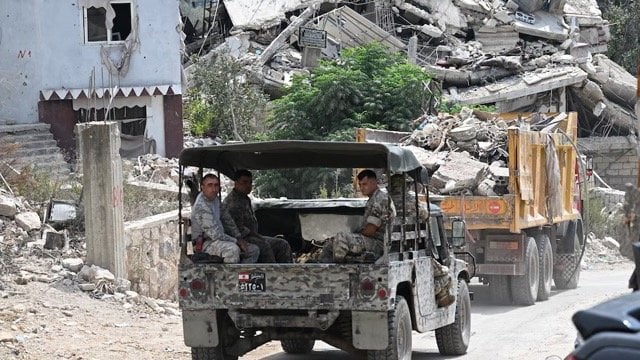
Israel carried out air strikes on southern Beirut on Sunday, marking the first attack on the Lebanese capital since a US-brokered truce was announced last week.

Get today's headlines by email

According to Lebanon's health ministry, two people were killed and at least 20 others injured when two apartment buildings in the Dahieh district, a Hezbollah stronghold, were hit. The wounded included four women and four children.
Israeli Prime Minister Benjamin Netanyahu said the strikes targeted what he described as "terrorist headquarters" in response to Hezbollah rocket fire into Israeli territory. Hezbollah later confirmed it had launched attacks against Israeli military positions.
Strike Hits Residential Area
One of the strikes heavily damaged a residential building, exposing lower-floor apartments and scattering debris across nearby streets. Videos shared on social media showed residents and emergency workers rushing to assist those injured in the attack.
Before the strikes, an Israeli military spokesperson issued a warning in Arabic on X, saying Hezbollah infrastructure was being targeted and suggesting additional operations could follow, ending the message with the words: "To be continued."
The Israeli military said it intercepted two projectiles fired from Lebanon into Israel.
Hezbollah Claims Responsibility
In a statement issued later on Sunday, Hezbollah said it had fired rockets at Israeli artillery positions at Yiftah Barracks and at troops near al-Marj Pond.
The group said the attacks were retaliation for what it described as Israeli violations of the ceasefire and continuing strikes on villages in southern Lebanon.
Iran also reacted strongly. Ebrahim Rezaie, spokesperson for the Iranian parliament's foreign policy and national security committee, warned that Israel would face a "decisive and painful response" for the Beirut attack.
Concerns Over Ceasefire Stability
The strike comes despite diplomatic efforts by the United States to contain the conflict. In the days before the 3 June truce, Israel had threatened a wider offensive against Dahieh, prompting many residents to flee and triggering intensive US diplomatic intervention.
US President Donald Trump later announced that there would be "no troops going to Beirut" following discussions with Netanyahu. Washington also informed Qatar, which had been involved in mediation efforts, that it had urged Israel to stand down.
However, speaking to NBC's Meet the Press on Sunday, Trump said Lebanon was not a required part of any broader peace agreement involving Iran, effectively separating the Lebanese conflict from negotiations with Tehran.
Conflict Continues Despite Truce
The latest violence follows months of fighting between Israel and Hezbollah. Lebanon became directly involved in the conflict on 2 March when Hezbollah launched rockets into Israel after an Israeli strike that killed Iran's supreme leader.
Israel responded with a large-scale air campaign across Lebanon and later launched a ground offensive in the country's south.
Although a ceasefire has officially been in place since 17 April, both sides have repeatedly accused each other of violating it.
Sunday's attack was the third Israeli strike on Beirut since the ceasefire began and the first targeting the capital since last week's truce announcement. The previous two strikes reportedly targeted Hezbollah commanders.
Political tensions also remain high within Lebanon. Parliament Speaker Nabih Berri, an ally of Hezbollah and leader of the Amal movement, recently rejected the US-brokered agreement, arguing it failed to address Israeli withdrawal from occupied areas in southern Lebanon.
Meanwhile, Hezbollah leader Naim Qassem said this week that disarming the group would serve "the enemy's objectives", underscoring the continuing divisions over any long-term settlement.


Join the discussion?

Already a member?


Adapted by ASEAN Now. Source 8 June 2026
webfact
webfact
Iran has accused the United States of refusing visas to several members of its national football team's support staff, despite Washington confirming that players and essential personnel have been cleared to travel for the 2026 FIFA World Cup.

Get today's headlines by email

The dispute emerged just 10 days before Iran's opening match against Belgium? Actually opening fixture is in Los Angeles on 15 June; avoid error. Let's rewrite correctly.
Visa Row Ahead of Tournament
US officials said on Friday that visas had been granted to all Iranian players and the support staff considered necessary for participation in the tournament. However, they added that Iran would not be permitted to use the process to bring individuals into the country under false pretences, including anyone linked to terrorism.
Iran's embassy in Turkey rejected the US position, accusing Washington of political interference in sport. The embassy said a significant number of managerial, executive and technical staff had been denied visas.
State-linked Iranian media reported that 15 officials were refused entry, including the president of Iran's football federation, his deputy and the team's media director.
Team Travels Via Mexico
Iran's squad departed its training camp in Turkey on Saturday and travelled to Mexico, where the team will be based during the World Cup. The players were expected to arrive early on Sunday following a journey of about 20 hours.
According to Iran's ambassador to Mexico, the visa conditions require the team to enter and leave the United States on the same day as each match.
In a statement, Iranian officials described the US announcement as a "whitewash" and claimed the treatment of the national team had become increasingly discriminatory. The embassy also called on FIFA to intervene in the dispute.
First World Cup During Wartime
The 2026 World Cup, jointly hosted by the United States, Canada and Mexico, begins on 11 June. Iran secured qualification in March 2025 by topping its qualifying group.
The tournament marks the first time a World Cup host nation will receive the team of a country with which it is at war.
Iran relocated its training base from Tucson, Arizona, to Mexico in late May as tensions between the two countries continued.
US Security Concerns
The US Department of Homeland Security did not clarify whether additional restrictions would apply to Iranian players or officials during their stay in the country. However, it said it remained committed to ensuring the safety of both the American public and World Cup attendees.
The department also said it was working across government agencies to secure all 11 host cities in the United States, including Los Angeles.
Earlier in the week, US Secretary of State Marco Rubio told lawmakers that members of Iran's delegation with links to the Islamic Revolutionary Guard Corps would not be allowed to enter the country.
Several players in Iran's squad have previously completed mandatory military service involving the organisation.
Iran are scheduled to play their group-stage matches in Los Angeles, California and Seattle during the tournament.

Join the discussion?

Already a member?


Adapted by ASEAN Now. Source 7 June 2026
webfact
webfact
Britain is facing its most dangerous security environment since the Cold War, the head of the armed forces has warned, citing growing threats from Russia and the need to prepare for prolonged conflicts.

Get today's headlines by email

Chief of the Defence Staff Sir Richard Knighton said the risks confronting the UK are greater than at any point during his military career. Speaking to BBC Radio 4's Today programme, he described the current period as the most dangerous he has known and said Russia was increasingly testing Western defences.
Knighton said Moscow had been "probing, challenging and testing" the UK's military capabilities through conventional and non-conventional means, including cyber activity, sabotage and assassination attempts. He warned that Russia was "raising the stakes" and risked crossing a dangerous threshold.
His comments come ahead of the long-awaited publication of the government's Defence Investment Plan, which is expected within weeks. The document will outline how defence equipment and infrastructure projects will be funded over the next decade. Originally scheduled for release in autumn 2025, the plan has been delayed several times.
Prime Minister Sir Keir Starmer said on Friday that the strategy would be published before the upcoming Nato summit. He said ministers had worked closely with the armed forces while developing the plan to ensure it met the country's security needs.
Calls for Faster Defence Spending
Knighton backed calls for higher defence spending, saying Britain needed to invest more rapidly to meet emerging threats.
"Exactly as the prime minister says, we need to spend more on defence and do it faster," he said, adding that ministers faced difficult decisions when balancing national priorities.
He expressed confidence that the government understood the seriousness of the security environment and was responding by increasing defence expenditure.
Russia's Growing Military Activity
The military chief pointed to increased Russian long-range aviation activity in the High North, including the Arctic region and surrounding areas. He said the number of Russian strategic aircraft operations observed in 2026 had already matched levels seen during the whole of 2025.
While Royal Air Force jets regularly intercept Russian aircraft approaching areas of interest to the UK, there have been no recent reports of Russian military planes entering British sovereign airspace.
Knighton said the Strategic Defence Review published last year should be viewed as a "call to arms". He argued that the UK military must move beyond planning for short, limited conflicts and prepare for longer wars similar to Russia's invasion of Ukraine.
Preparing for Future Warfare
He also highlighted the changing nature of warfare, saying drones and autonomous systems would play an increasingly significant role in future conflicts.
Knighton's remarks echo concerns raised earlier this year by former defence secretary Lord Robertson, who warned that Britain's security was "in peril" and criticised what he described as complacency among political leaders.
In an April speech, Robertson argued that the UK was underprepared for modern threats and questioned whether current spending priorities were sufficient to guarantee national security.
The government has rejected suggestions that it is neglecting defence, pointing to plans for increased military spending and describing the defence budget as being on course to reach record levels.

Join the discussion?

Already a member?


Adapted by ASEAN Now. Source 7 June 2026
webfact
webfact
The fragile ceasefire between the United States and Iran has come under renewed strain after both sides exchanged military strikes in the Gulf, raising fresh concerns about the stability of the truce agreed in April.

Get today's headlines by email

The US military said it targeted Iranian drones and radar installations after detecting what it described as an immediate threat to maritime traffic in the Strait of Hormuz. According to US Central Command (Centcom), four Iranian "one-way attack drones" were launched toward the strategic waterway before being intercepted and destroyed.
Washington said its subsequent strikes were aimed at radar sites linked to the drone activity.
Iran Condemns US Action
Iran denounced the attacks, accusing the United States of violating the ceasefire agreement. The Iranian foreign ministry described the strikes on radar facilities in Sirik and on Qeshm Island as a "flagrant" breach of the truce and an attack on the country's sovereignty and territorial integrity.
In a statement carried by news agencies, Tehran said the operation demonstrated Washington's disregard for international law and the United Nations Charter.
Missile Retaliation Across the Gulf
Iran responded by launching ballistic missiles at two US air bases in Kuwait and naval facilities in Bahrain, according to Iran's state-run Irib news agency.
Authorities in both Bahrain and Kuwait condemned the attacks, reporting that the incoming missiles and drones had been successfully intercepted.
Centcom said seven Iranian missiles were fired toward the two Gulf states. Initial assessments indicated that six were intercepted, while the remaining missile failed to reach its intended target.
The United Arab Emirates and Qatar also criticised the attacks on their Gulf neighbours.
Iran's Islamic Revolutionary Guard Corps (IRGC) said it had struck what it called "enemy bases" in retaliation for the American action.
Ceasefire Under Pressure
The latest exchange is one of several incidents that have tested the ceasefire since it took effect in April. Diplomatic efforts to secure a broader agreement have stalled, with reports in US media suggesting President Donald Trump has sought changes to the terms of a proposed settlement.
Earlier this week, Iran's foreign ministry spokesman accused Washington of repeatedly altering its position and introducing new or contradictory demands during negotiations.
Despite the ongoing hostilities, the US has granted visas to Iran's World Cup football team ahead of its opening match in Los Angeles on 15 June. The tournament is expected to mark the first time a host nation welcomes a team from a country with which it is at war.
Conflict's Wider Impact
The current conflict began on 28 February when the US and Israel launched extensive strikes against Iran. Tehran responded with attacks on Israel and US-aligned Gulf states, while also effectively shutting the Strait of Hormuz.
The waterway handles roughly one-fifth of global oil and liquefied natural gas shipments, including exports from Iraq, Kuwait, Qatar, Saudi Arabia and the United Arab Emirates. Disruption to shipping through the strait caused oil prices to surge worldwide.
Following the ceasefire agreement in early April, the US maintained a blockade of Iranian ports. Trump said the restrictions would remain in place until a formal agreement was reached, certified and signed.


Join the discussion?

Already a member?


Adapted by ASEAN Now. Source 7 June 2026
webfact
webfact
Several people were injured in a shooting near a festival in the US city of Toledo, Ohio, prompting a large police response and an ongoing search for those responsible.

Get today's headlines by email

Authorities said officers were called to reports of gunfire close to the Old West End Festival on Saturday. Upon arrival, they found multiple victims suffering from gunshot wounds.
Police said a number of those injured were taken to hospital for treatment but did not immediately disclose how many people had been shot or provide details on their conditions.
Search for Suspect Continues
The Toledo Police Department said officers are actively searching for the person or people involved in the shooting.
Investigators have established crime scenes in the area around Delaware Avenue and Robinwood Avenue, where the incident occurred.
Police have urged residents and visitors to stay away from the area while the investigation continues.
Festival Draws Large Crowds
The shooting took place near the Old West End Festival, an annual event that celebrates one of the largest historic districts in the United States.
According to festival organisers, the two-day event features live music, food vendors, shopping, house tours and other community activities.
A map published on the festival's website indicates that a food and entertainment area was located near the intersection where police are focusing their investigation.
Investigation Under Way
Authorities have not yet released information about a possible motive or whether any arrests have been made.
The investigation remains ongoing as officers work to identify and locate those responsible.


Join the discussion?

Already a member?


Adapted by ASEAN Now. Source 7 June 2026
webfact
webfact
US Defence Secretary Pete Hegseth used a speech marking the 82nd anniversary of D-Day in Normandy to criticise European migration policies, comparing migrant arrivals on the continent's shores to an "invasion".

Get today's headlines by email

Speaking at commemorations in northern France, Hegseth said Europe now faced new threats to the freedoms secured by Allied forces during the Second World War.
Migration Compared to an 'Invasion'
Referring to migrant arrivals across southern Europe, Hegseth said beaches in Spain, Italy, Greece and Bulgaria were being "stormed" by people arriving by boat.
"Sadly, today, different European beaches are stormed by different dangerous ideologies," he said. "Boats and men arrive. When will European capitals do something about that invasion?"
Migration remains a major political issue across Europe, where support has grown for parties advocating stricter immigration controls and tighter border security.
Part of Wider Trump Administration Criticism
Hegseth's remarks are the latest criticism of European migration policies from senior members of the Trump administration.
Earlier on Friday, US Vice-President JD Vance linked the killing of British student Henry Nowak to what he called a "mass invasion of migrants" and said the "only response" should be "righteous anger".
The UK government rejected those comments. Downing Street criticised "people trying to interfere in our democracy" and noted that Nowak's family had said they did not want his death used to create further division.
The Crown Prosecution Service has confirmed that Vickrum Digwa, who was convicted over the killing, was born in Britain.
D-Day Legacy and European Security
During his address, Hegseth said some European nations had become too comfortable with freedoms won through sacrifice and conflict.
He argued that the lessons of D-Day remained relevant and that current leaders must continue to defend those freedoms.
"The men who fought and died here restored freedom to Europe," he said. "That freedom must be maintained by this generation of leaders and war fighters or what they fought for was merely temporary."
D-Day, launched on 6 June 1944, was the largest seaborne military operation in history. Tens of thousands of troops from the United Kingdom, United States and Canada landed on five beaches in Normandy as part of the campaign to liberate Western Europe from Nazi occupation.
Migration Remains a Key Political Issue
US President Donald Trump has repeatedly criticised European immigration policies. Speaking at the United Nations last year, he said European countries were "going to hell" because of what he described as uncontrolled migration.
UK Prime Minister Keir Starmer responded by saying those comments were "not right", while acknowledging the challenge posed by illegal migration, particularly crossings of the English Channel in small boats.
According to the United Nations, more than one million people crossed the Mediterranean into Europe during the migration crisis of 2015.
Between April 2025 and March 2026, the UK, Greece, Italy, Spain and Cyprus recorded a combined 169,341 sea arrivals, with the UK accounting for about 23% of the total.
Official figures show that 9,142 people crossed the English Channel from France to the UK by small boat between 1 January and 3 June 2026, a decline of 38% compared with the same period a year earlier.
Immigration Central to Trump's Agenda
Immigration enforcement has remained a cornerstone of the Trump administration's domestic agenda.
A National Security Strategy published in December warned that Europe could become "unrecognisable" within two decades if current migration trends continued.
Meanwhile, agents from Immigration and Customs Enforcement (ICE) have carried out thousands of arrests since January 2025 as part of the administration's broader crackdown on illegal immigration.


Join the discussion?

Already a member?


Adapted by ASEAN Now. Source 7 June 2026
webfact
webfact
Ukraine carried out a large-scale drone attack on the Russian city of St Petersburg and surrounding areas on Saturday, prompting Russian officials to describe it as an “unprecedented” assault as the city hosted the final day of Russia’s flagship economic forum.

Get today's headlines by email

Russian authorities said more than 140 Ukrainian drones were intercepted over the surrounding Leningrad region. Regional governor Aleksandr Drozdenko reported that the attack sparked a fire at an unspecified military facility and led to the evacuation of nearby residents. He added that damage to buildings was limited.
For the first time since the start of the war, St Petersburg Governor Alexander Beglov urged residents to remain indoors while air defence systems responded to the threat.
Kyiv Targets Naval and Military Sites
Ukrainian President Volodymyr Zelensky said the operation struck military targets deep inside Russia, including naval arsenals and a base in Kronstadt, home to the Russian Navy’s Baltic Fleet.
Writing on social media, Zelensky said Ukrainian drones had travelled around 1,000km (620 miles) to reach the St Petersburg region. He described the attacks as a justified response to continuing Russian strikes on Ukraine and repeated his call for an end to the conflict.
Zelensky also said Ukrainian forces hit an oil depot in Russia’s southern Krasnodar region, roughly 500km (310 miles) away. He referred to the operation as part of Ukraine’s campaign of “long-range sanctions”, a term Kyiv has used for attacks on Russian military and energy infrastructure.
The latest strikes came only days after Ukrainian drones targeted areas on the outskirts of St Petersburg as Russia’s annual economic forum was beginning.
Peace Talks Remain Elusive
The attacks occurred amid renewed disagreement over potential peace negotiations.
On Thursday, Zelensky publicly called for a ceasefire and direct talks with Russian President Vladimir Putin, arguing that it would be wrong to wait for international attention to return to the war.
In a social media post on Saturday, the Ukrainian leader said it was “time to end this war” but accused Putin of wanting to continue the fighting.
Speaking at the economic forum on Friday, Putin rejected the idea of a face-to-face meeting with Zelensky. He maintained that a ceasefire would only allow Ukraine to rebuild its military capabilities and said Russia would end the war only after achieving its objectives.
Moscow continues to demand that Ukraine withdraw from the Donetsk, Luhansk, Kherson and Zaporizhzhia regions and abandon its ambitions to join NATO. Kyiv has consistently rejected those conditions, arguing that territorial concessions would encourage future Russian aggression.
Drone Campaign Expands in Occupied Areas
Elsewhere, authorities in the Russian-occupied Luhansk region announced restrictions on transport services following a series of Ukrainian drone attacks aimed at Russian supply routes.
The Moscow-backed administration suspended coach services on two motorways, advising residents not to use the roads for security reasons. It also halted commuter train operations and banned organised transportation of groups of children within the region.
The measures came despite Putin’s recent assertion that Russia had established full control over what Moscow calls the “Luhansk People’s Republic”.
In recent weeks, Ukraine has increasingly targeted logistics networks in occupied territory. According to an analyst interviewed by the BBC, more than 200 lorries and over 30 fuel trucks have been struck since the beginning of May.
Ukraine's Expanding Long-Range Capabilities
More than four years after Russia launched its full-scale invasion, Ukraine has significantly expanded its domestic defence industry and long-range strike capabilities.
Kyiv now routinely targets sites inside Russia, particularly energy facilities, fuel depots and military infrastructure that it views as supporting Moscow’s war effort. The latest attack on the St Petersburg region underscores Ukraine’s growing ability to strike strategic targets far from the front lines.

Join the discussion?

Already a member?


Adapted by ASEAN Now. Source 6 June 2026
webfact
webfact
A federal appeals court on Friday examined the Trump administration’s claim that President Donald Trump can proceed with construction of a new White House ballroom without congressional approval, as Justice Department lawyers argued that courts lack the power to stop the project once it is underway.

Get today's headlines by email

During a hearing before the U.S. Court of Appeals for the D.C. Circuit, Principal Deputy Assistant Attorney General Yaakov Roth said judges could not block the project, even as construction advances. He noted that more than 3 million pounds of steel reinforcing bar had already been delivered to the site and said the project was “well on its way.”
Judge Patricia Millett repeatedly challenged that position, asking whether any court could prevent the ballroom from being built. Roth replied that it could not.
Statue of Liberty Hypothetical Draws Attention
The hearing took a dramatic turn when Millett posed a hypothetical scenario involving the destruction of the Statue of Liberty.
She asked whether the administration’s legal argument would also mean that no lawsuit could stop the government from quickly bulldozing the monument if construction moved fast enough. Roth agreed, saying that once an alleged injury becomes impossible for a court to remedy, it is no longer legally redressable.
The exchange prompted audible reactions in the courtroom.
Millett criticized what she described as a “move fast and break things” approach, questioning whether rapid action by the government could effectively prevent legal challenges from succeeding.
Preservation Group's Right to Sue Under Scrutiny
The case was brought by the National Trust for Historic Preservation, which argues that it has standing to challenge the ballroom project because of its mission to protect historic sites and because some of its members would be harmed by alterations to the White House complex.
Roth contended that the organization lacks standing because the original East Wing has already been demolished and courts can no longer provide meaningful relief.
The judges appeared divided on the issue. While Millett expressed skepticism toward the administration’s arguments, Judge Neomi Rao raised questions suggesting concerns about whether the preservation group has the legal right to bring the lawsuit.
Millett also questioned the administration’s dismissal of claims by National Trust board member Alison Hoagland, who argues that the project would alter the historic character of the White House grounds.
Authority and Security Concerns Debated
Several judges also questioned whether federal laws cited by the administration provide sufficient authority for the project.
Judge Bradley Garcia noted that one statute appears to authorize maintenance and upkeep of the White House but does not explicitly permit major construction projects involving demolition and replacement of existing structures.
Rao likewise questioned whether the Office of the Executive Residence has the authority to oversee construction work on behalf of the National Park Service.
The Justice Department defended the project by arguing that it serves critical security purposes. Roth said the former East Wing lacked the protections needed to address modern threats, including drone attacks, and that the redevelopment is intended to provide a secure location for the president and senior government officials during emergencies.
Construction Continues During Appeal
The Trump administration is seeking to overturn a March ruling by U.S. District Judge Richard Leon, who found that Trump exceeded his authority in pursuing the ballroom project and ordered construction halted.
That order was temporarily suspended by the appeals court in April, allowing work on the project to continue while the legal challenge proceeds.
The appellate panel has not yet issued a decision on whether the lawsuit can move forward or whether construction should ultimately be allowed to continue.

Join the discussion?

Already a member?


Adapted by ASEAN Now. Source 6 June 2026
webfact
webfact
U.S. Immigration and Customs Enforcement (ICE) has ended a policy requiring the agency to report and investigate the deaths of former detainees who die within 30 days of their release, reversing a measure introduced during the Biden administration.

Get today's headlines by email

The change was ordered by acting ICE director David Venturella in a recent memo and was first reported by the Washington Post.
Biden-Era Rule Revoked
The policy being withdrawn was introduced in 2021 and required ICE to notify Congress and conduct reviews when former detainees died within a month of leaving custody.
The measure was intended to prevent the agency from avoiding accountability by releasing seriously ill detainees shortly before their deaths. Under the rule, deaths occurring shortly after release remained subject to scrutiny, allowing investigators to assess whether medical care or detention conditions may have contributed.
In his memo, Venturella said ICE would return to its previous practice of reporting only deaths that occur while individuals are in agency custody.
Concerns Over Accountability
Supporters of the 2021 policy argued that it closed a potential loophole in detention oversight.
The rule was adopted after the death of a man who suffered a stroke while being held for two years at the Adelanto detention centre in California. After contracting Covid-19, he was released by ICE and died three days later.
At the time, Deborah Fleischaker, then acting chief of staff at ICE, said the policy change was intended to make clear that detainees should not be released simply to avoid recording deaths in custody.
Cases involving detainees suffering from severe infections or brain injuries who died soon after release also helped shape the policy.
Agency Under Scrutiny
The decision comes as ICE faces increased scrutiny over healthcare and detention conditions.
According to the report, 18 detainees have died during the first five months of this year. The agency has also faced concerns over a number of suicides in detention facilities.
Critics argue that ending post-release reporting could make it harder to assess the full impact of detention policies and medical care provided while individuals are in custody.
ICE Defends Move
An ICE spokesperson defended the policy change, describing it as a return to a more practical approach.
The spokesperson told the Washington Post that the agency remains committed to transparency regarding deaths that occur while detainees are in custody. However, the spokesperson said ICE should not be responsible for monitoring or reviewing deaths that take place weeks after individuals have left detention.
The change marks a significant shift in how the agency tracks and reports deaths connected to its detention system, narrowing oversight to those that occur while a person remains in ICE custody.

Join the discussion?

Already a member?


Adapted by ASEAN Now. Source 6 June 2026
webfact
webfact
The UK government has criticised remarks by US Vice-President JD Vance following his comments on the murder of Henry Nowak, accusing outside figures of attempting to deepen divisions in British society.

Get today's headlines by email

A spokesman for Downing Street said there were people “trying to interfere in our democracy and seeking to stir up division” after Vance linked Nowak’s death to immigration in a post on X.
The response came after Vance described the killing of the 18-year-old student as both “tragic” and “enraging”. He argued that Nowak would still be alive if European leaders had resisted what he called a “mass invasion of migrants”, adding that the appropriate reaction was “righteous anger”.
Family's Wishes Highlighted
In its response, Downing Street pointed to the wishes of the Nowak family, saying they had made clear they did not want his death used to create further division.
The spokesman said political leaders should seek to unite people, even in the aftermath of deeply distressing events, adding that this reflected the values of the country.
Vance’s comments followed a statement from the US State Department, which criticised what it described as “ideological conditioning” and “two-tiered policing” in Western countries.
Political Row Intensifies
Earlier in the week, Prime Minister Keir Starmer accused tech entrepreneur Elon Musk of attempting to inflame tensions over the case.
Musk had shared comments on X urging people to circulate footage showing Nowak’s final moments. He alleged that police treated the victim unfairly while showing deference to his attacker.
The controversy has centred on body-camera footage released by police, which showed officers handcuffing Nowak after he was stabbed. Police said the suspect, Vickrum Digwa, had falsely claimed he was the victim of a racist attack.
Protests and Political Debate
The footage prompted violent protests in Southampton on Tuesday. During the unrest, officers were struck by missiles, leaving eleven police officers and one police dog injured. Police arrested two people in connection with the disorder.
Digwa was later sentenced to life imprisonment with a minimum term of 21 years. The court heard he used a 21cm blade, which he said he carried as part of his Sikh faith, to fatally stab Nowak as the teenager walked home alone after a night out with friends on 3 December.
The case has also fuelled debate among political parties. The Conservative Party and Reform UK have criticised what they describe as “two-tier policing”, arguing that different groups are treated differently by law enforcement.
Meanwhile, Ed Davey, leader of the Liberal Democrats, called for restraint. He said attempts to use Nowak’s death for political purposes should be resisted, regardless of whether they came from American political figures or their supporters in Britain.

Join the discussion?

Already a member?


Adapted by ASEAN Now. Source 6 June 2026
webfact
webfact
Russian President Vladimir Putin has dismissed a proposal from Ukrainian President Volodymyr Zelensky for direct talks aimed at ending the war, saying there is currently “no point” in a face-to-face meeting between the two leaders.

Get today's headlines by email

Zelensky made the appeal in an open letter published on Thursday, urging direct negotiations and calling for a ceasefire. He argued that it was wrong to wait for the conflict to once again become a major focus of US attention before seeking a resolution.
The Ukrainian leader's message adopted a defiant tone and included criticism of Putin. In response, the Russian president described parts of the letter as rude and questioned whether it was a genuine attempt to arrange talks.
Speaking at Russia’s annual economic forum in St Petersburg on Friday, Putin said he did not believe the proposal was intended to create the conditions for a meeting.
“I don't see any point for now,” he said when asked whether he would accept Zelensky’s offer.
Ukraine Criticises Moscow’s Position
Following Putin’s remarks, Zelensky accused Russia of choosing to continue the conflict rather than seeking peace.
Writing on Telegram, he said Putin did not want to end the war and suggested many countries would be disappointed by the Russian leader’s response.
Putin repeated Moscow’s longstanding position that negotiations should come before any ceasefire agreement. He argued that a temporary halt in fighting would give Ukraine an opportunity to regroup while key Russian demands remained unresolved.
According to Putin, experts should first work on potential agreements before any meeting between the two leaders takes place.
Russia Maintains War Aims
The Russian president also said military operations would continue until Moscow achieved its objectives.
Russia has consistently demanded that Ukraine withdraw from the regions of Donetsk, Luhansk, Kherson and Zaporizhzhia. It has also insisted that Kyiv abandon its ambition to join NATO.
Ukraine has rejected those conditions, maintaining that it will not surrender territory. Kyiv argues that making concessions would encourage future Russian aggression, noting that Russia launched its full-scale invasion in 2022 after annexing Crimea in 2014.
In his letter, Zelensky also suggested that age was affecting Putin after more than two decades in power and highlighted recent Ukrainian strikes inside Russia, including one targeting St Petersburg on Thursday.
Fighting Continues
The exchange between the two leaders came as hostilities continued on multiple fronts.
US President Donald Trump welcomed the prospect of direct talks, saying it would be positive if Putin and Zelensky met.
Meanwhile, Ukraine said it had struck five vessels carrying what it described as illegal cargo in the Sea of Azov and waters near Russian-occupied territories. Ukraine’s drone commander, Robert Brovdi, said the ships were involved in transporting Ukrainian grain as well as fuel and military supplies.
Azerbaijan’s foreign ministry reported that five people were killed in attacks on two vessels in the Sea of Azov. It did not assign responsibility for the strikes and said the ships were not Azerbaijani.
Ukraine also said one of its drones exploded in the Romanian Black Sea port of Constanta after being diverted by Russian electronic interference.
Elsewhere, Ukrainian officials reported that at least 13 people were killed and 70 injured in Russian attacks over the previous day. Among the fatalities were four people killed when a dairy factory near Kyiv was struck and a 35-year-old woman who died in a drone attack on a petrol station in Kherson.


Join the discussion?

Already a member?


Adapted by ASEAN Now. Source 6 June 2026
webfact
webfact
Artificial intelligence has been used to create a new type of vaccine designed to provide protection against entire families of viruses, marking what researchers describe as a major step forward in pandemic preparedness.

Get today's headlines by email

Scientists at the University of Cambridge say the vaccine is the first to have its central antigen component designed entirely by AI before being tested in human volunteers. The approach aims to generate protection not only against existing viruses but also against future variants and emerging pathogens that could trigger new outbreaks.
Targeting Entire Virus Families
Traditional vaccines are typically developed using a specific strain of a virus. However, rapidly mutating viruses can reduce vaccine effectiveness over time, requiring regular updates, as seen with Covid-19 and seasonal influenza vaccines.
The Cambridge team used genetic sequences from a wide range of coronaviruses collected through surveillance programmes monitoring potential disease threats. An AI system analysed the data and designed a “super-antigen” intended to train the immune system to recognise characteristics shared across the coronavirus family.
Researchers believe this could provide protection against known coronaviruses, including Covid-19 variants, as well as animal viruses that may one day spread to humans.
Professor Jonathan Heeney said the goal is to move beyond responding to existing threats and instead prepare for future ones before they emerge.
“This is about making vaccines that protect us, not just from today's viruses, but protect us from what can cause the next outbreak or disease,” he said.
Early Human Trial Results
The first clinical trial involved 39 participants and was primarily designed to assess safety. A larger study involving about 200 people is now under way to provide more information about the vaccine's ability to stimulate immune responses.
Results published in the Journal of Infection described the immune response as “modest”, but researchers say the findings remain encouraging given the early stage of development.
Professor Saul Faust, who conducted some of the trials, said the technology showed significant promise, particularly for tackling rapidly changing viruses.
Beyond Coronavirus Protection
The research team is already applying the same AI-based approach to other diseases. Studies in animals are examining universal influenza vaccines that would not require annual reformulation, as well as vaccines targeting H5N1 bird flu.
Scientists are also investigating vaccines for viral haemorrhagic fevers, including Ebola. One focus is a species involved in the current outbreak in the Democratic Republic of the Congo, for which no vaccine has yet been developed.
Experts See Major Potential
Professor Andy Pollard, who was not involved in the research, said the approach had already produced compelling results in animal studies and that the key test would be whether those findings can be replicated in humans.
More broadly, he said AI could transform vaccine development by helping scientists predict immune responses more quickly and accurately.
Professor Marian Knight described the trial as a significant advance in efforts to provide broad and lasting protection against viral diseases.
Meanwhile, Science Minister Lord Vallance said the project demonstrated how AI and scientific research could be combined to develop new medical treatments and potentially accelerate vaccine deployment worldwide.

Join the discussion?

Already a member?


Adapted by ASEAN Now. Source 5 June 2026
webfact
webfact
Chinese President Xi Jinping will travel to North Korea next week for talks with North Korean leader Kim Jong Un, marking his first visit to the country since 2019.

Get today's headlines by email

State media in both countries said Xi will be in Pyongyang from 8 to 9 June at Kim's invitation. The visit comes at a time of shifting regional dynamics and growing attention on North Korea's relationships with both China and Russia.
China Remains North Korea's Key Partner
China is North Korea's largest trading partner and its most important diplomatic backer. The two countries share a 1,400km border and are linked by a mutual defence treaty signed 65 years ago. The agreement remains China's only formal military alliance.
North Korea continues to face extensive international sanctions over its nuclear weapons programme and allegations of human rights abuses, making Beijing a vital economic lifeline for Pyongyang.
Analysts expect Kim to seek stronger economic cooperation during Xi's visit, including expanded cross-border trade and an increase in Chinese tourism. North Korea has invested heavily in new tourism projects, including beach and ski resorts, and is looking to attract more visitors.
Balancing Russia's Growing Influence
The summit follows a period of intensified engagement between Pyongyang and Moscow. North Korea has deepened ties with Russia since supporting its war effort in Ukraine, raising questions about the future balance of influence among the three countries.
While Beijing maintains close relations with both North Korea and Russia, China is viewed as cautious about the strengthening partnership between Kim and Russian President Vladimir Putin.
For Kim, the visit offers an opportunity to demonstrate North Korea's international standing after emerging from years of pandemic-related isolation. He has increasingly showcased the country's military capabilities and infrastructure projects while stressing its independence from both Washington and Seoul.
Focus on Diplomacy and Nuclear Issues
South Korea hopes Xi's visit could help revive diplomatic efforts on the Korean Peninsula. Since late 2024, North Korea has abandoned reunification initiatives with the South, cut communication channels and adopted a more confrontational stance toward Seoul.
South Korean Unification Minister Chung Dong-young said he believes discussions between Xi and Kim could include the possibility of restarting talks between North Korea and the United States.
North Korea's nuclear programme is also expected to feature prominently in the talks. Although China has traditionally supported denuclearisation of the Korean Peninsula, Beijing has placed less public emphasis on the issue in recent years.
Following a recent meeting between Xi and US President Donald Trump, the White House said both leaders reaffirmed support for the goal of North Korean denuclearisation. However, China's foreign ministry did not explicitly confirm that account, saying only that its position had remained consistent.
Pyongyang has continued to reject calls to abandon its nuclear ambitions. This week, Kim said the country's capacity to produce weapons-grade nuclear material had more than doubled over the past five years as he visited a newly built nuclear facility, according to state media.

Join the discussion?

Already a member?


Adapted by ASEAN Now. Source 5 June 2026
webfact
webfact
Britain’s asylum system is struggling under mounting pressure and risks repeating past mistakes, according to a critical report from a cross-party committee of MPs.

Get today's headlines by email

The report, published on Friday by the UK's public accounts committee, said the asylum system was “failing to cope” and described its findings as “disturbing”. MPs warned that government efforts remained focused on short-term solutions rather than a long-term strategy.
Concerns Over Control and Oversight
Committee chairman Geoffrey Clifton-Brown said control of the asylum system had been “all but lost”, blaming a lack of coordination and a reactive approach to managing growing pressures.
He said asylum seekers were being left either waiting indefinitely for decisions or disappearing from official oversight altogether. The report criticised what it called a “directionless bureaucracy” that was shifting problems between different parts of the system rather than resolving them.
One of the committee’s strongest criticisms concerned failed asylum seekers whose claims had been rejected. MPs said it was “shocking and unacceptable” that the Home Office could not account for all of these individuals and therefore could not say with certainty who remained in the country.
The committee recommended a complete overhaul of monitoring arrangements and urged ministers to explain how they would locate those no longer in contact with authorities, tackle illegal employment and penalise employers who break the rules.
Rising Costs and Hotel Contracts
The report examined government data collection, accommodation management and spending on asylum support.
In the 2024–25 financial year, the Home Office spent around £4.9 billion on the asylum system. Of that total, £3.4 billion went towards accommodation and support for asylum seekers.
MPs called for a full review of hotel contracts used to house asylum seekers, saying the government should assess whether current profit levels for contractors are justified.
Government Defends Reforms
A Home Office spokesperson said the findings reinforced the need for reforms that are already being implemented.
Earlier this year, Home Secretary Shabana Mahmood announced changes including plans for people granted asylum to receive temporary protection that would be reviewed every 30 months.
Political opponents offered differing interpretations of the report. Shadow home secretary Chris Philp said more than 73,000 migrants had crossed the English Channel since Labour entered government and argued that the system for removing those without a right to remain was breaking down.
Meanwhile, Max Wilkinson, the Liberal Democrats’ home affairs spokesperson, said the government had failed to repair an asylum system that he said had been left dysfunctional by previous Conservative administrations.
Mixed Performance Indicators
Despite the committee’s concerns, some official indicators have shown improvement.
Home Office figures released in February showed asylum applications fell by 4% in 2025, even as arrivals on small boats increased by 13%.
The backlog of unresolved asylum claims dropped to 64,426, its lowest level since 2020. The number of asylum seekers housed in hotels also fell by 19% to 30,657 as more people were moved into longer-term accommodation.

Join the discussion?

Already a member?


Adapted by ASEAN Now. Source 5 June 2026
webfact
webfact
Republicans in the US House of Representatives joined Democrats on Thursday to approve a bill providing military and reconstruction support for Ukraine, marking another public break with President Donald Trump by members of his own party.

Get today's headlines by email

The Ukraine Support Act passed by a vote of 226 to 195 after 18 Republicans crossed party lines to support the measure. The legislation would allocate more than $1 billion in aid for Ukraine and authorize a further $8 billion in financing loans to support the country's defence efforts.
Despite clearing the House, the bill faces long odds of becoming law. It must still be approved by the Senate and signed by Trump, who has not indicated support for the measure.
Republicans Defy Party Leadership
The vote was made possible after Republican supporters joined Democrats in signing a discharge petition, a procedural move that allowed lawmakers to bypass House leadership and force the legislation onto the floor for consideration.
The outcome highlights growing divisions within the Republican Party over foreign policy and the administration's approach to international conflicts.
It follows another rare display of dissent earlier this week, when four House Republicans joined Democrats to pass a largely symbolic resolution aimed at preventing Trump from taking further military action in Iran.
Pressure Builds Over Iran Policy
Although the White House dismissed that resolution as an unconstitutional attempt to limit presidential authority, its passage added to pressure on the administration as the conflict with Iran continues.
The administration has also retreated from plans to establish an “anti-weaponisation” fund after criticism from both Democrats and some Republicans.
Republican lawmakers had warned they could block a key immigration bill if the administration proceeded with plans that would have directed public funds to Trump supporters, creating another source of tension within the president's party.
Zelensky Seeks Direct Talks With Putin
The House vote came as Ukrainian President Volodymyr Zelensky renewed efforts to revive peace negotiations with Russia.
In an open letter addressed to Russian President Vladimir Putin, Zelensky called for a face-to-face meeting between the two leaders, arguing that direct engagement offered the best chance of ending the war.
He said it would be a mistake to wait until the conflict once again becomes a primary focus of US attention and urged a full ceasefire during any future negotiations.
Putin rejected the idea of a ceasefire earlier on Thursday.
Trump later said he believed a meeting between the Russian and Ukrainian leaders would be beneficial.
Peace Efforts Remain Stalled
Attempts to negotiate an end to the war have made little progress in recent months. Previous rounds of talks held in Geneva, Abu Dhabi and Istanbul have failed to produce a breakthrough.
Zelensky's appeal coincided with Putin's attendance at a major economic forum in Saint Petersburg.
The letter also referenced a Ukrainian drone strike on the outskirts of the city a day earlier. Meanwhile, Russian-installed authorities in Crimea accused Ukraine of attacks that killed four people in Simferopol. Ukraine said it had targeted a fuel depot.

Join the discussion?

Already a member?


Adapted by ASEAN Now. Source 5 June 2026
webfact
webfact
Employees at the Kennedy Center have been instructed to begin removing President Donald Trump’s name from the performing arts venue following a federal court ruling that blocked efforts to rename the institution.

Get today's headlines by email

According to an internal memo sent on Thursday and first obtained by CBS News, the center’s legal team directed staff to immediately revert to the venue’s official title, “The John F. Kennedy Center for the Performing Arts,” or simply “Kennedy Center,” in all communications and materials.
The directive requires updates to email signatures, letterhead, official documents and other branding elements. It also sets a June 12 deadline for replacing interior and exterior signs and removing the Trump-associated name from furniture and other physical assets across the facility.
Staff Ordered to Restore Original Name
The memo represents the clearest indication yet that the arts institution is complying with a recent federal court decision that found the renaming effort unlawful.
Last week, District Judge Christopher R. Cooper ruled in favour of Representative Joyce Beatty of Ohio, an ex officio member of the Kennedy Center’s Board of Trustees. Beatty challenged both the decision to rename the institution and a separate plan to close it for two years to undertake major renovations.
Court Ruling Forces Compliance
In his ruling, Cooper said federal law leaves no ambiguity regarding the center’s identity.
“The Kennedy Center’s organic statute makes crystal clear that the Center is to be named for President Kennedy, and it cannot bear any other formal name or public memorial based on the Board’s unilateral say-so,” the judge wrote.
The court determined that the board lacked authority to formally change the institution’s name, which was established by Congress in honour of President John F. Kennedy.
Renovation Plans Remain Uncertain
While the ruling halted the renaming effort, it did not outright prevent the planned closure of the venue for renovation work.
The Kennedy Center is scheduled to begin a $257 million renovation project on July 5. However, the internal memo stated that officials are still evaluating their next steps and will provide further guidance on whether the facility will remain open beyond that date.
Cooper said the board could revisit the closure proposal, provided it does so carefully and in accordance with applicable legal requirements.
“The Court is not persuaded that the closure is categorically unwarranted or impermissible under the U.S. Code,” he wrote, adding that the preliminary injunction does not prevent the board from reconsidering the matter.
Trump Criticises Judge
Trump sharply criticised Cooper following the ruling, saying the judge should “be ashamed of himself” for blocking the administration’s proposal to rename the venue as “The Trump Kennedy Center.”
Since returning to office, Trump has pursued a broader effort to place his name on federal initiatives, buildings and programmes.
Among the changes, Trump’s name has been added to the exterior of the U.S. Institute of Peace building in Washington, while a large banner featuring his image was displayed outside the Justice Department headquarters. Several government initiatives, including TrumpRx, a prescription drug discount programme, and Trump Accounts, an investment scheme for children, also carry his name.
The Hill said it had contacted the Kennedy Center for comment.

Join the discussion?

Already a member?


Adapted by ASEAN Now. Source 5 June 2026
webfact
webfact
The federal commission responsible for overseeing development on government land in Washington has delayed a decision on President Donald Trump’s proposed 250-foot triumphal arch, requesting additional information on the project’s design, safety implications and impact on the surrounding area.

Get today's headlines by email

The National Capital Planning Commission voted on Thursday to seek further details from the Department of the Interior, which submitted plans for the monument. The arch is proposed for a site between the Lincoln Memorial and Arlington National Cemetery.
The move follows nearly three hours of public testimony, with most speakers expressing opposition to the project, which is among several initiatives Trump is pursuing as part of a broader effort to reshape the capital.
Commission Requests Additional Information
Commission members asked for more justification for the monument’s proposed height and sought further details on issues including aviation safety, lighting, stormwater management, traffic flow and visitor parking.
Will Scharf, the commission chairman and Trump’s White House staff secretary, acknowledged that the proposal requires additional work before it can advance.
He said officials should provide more information about how the structure would appear in relation to other major landmarks in Washington. Scharf nevertheless argued that the nation’s upcoming 250th anniversary celebrations presented an opportunity to add a lasting feature to the city.
Vice Chairman Stuart Levenbach described the location as one of the few places where a large civic monument could potentially be appropriate, while noting that questions remain over whether such a prominent architectural statement belongs there.
Public Opposition Remains Strong
The commission received around 1,700 public comments ahead of the meeting, the majority opposing the project.
Critics cited concerns over the arch’s size, its effect on Washington’s skyline and potential safety issues in a heavily visited area. Some described it as an unnecessary use of public funds, while others characterized it as a personal legacy project for the president.
Representatives from organizations including the National Parks Conservation Association, the National Trust for Historic Preservation and the Society of Architectural Historians spoke against the proposal.
Among them was military veteran Gary Langston, who argued that the project would disrupt the historic sightline linking the Lincoln Memorial and Arlington House, a visual connection intended to symbolize national reunification following the Civil War.
Monument Design and Funding Questions
Current plans call for a granite arch rising 250 feet from its base to a torch-bearing figure resembling Lady Liberty. Two gilded eagles would flank the top of the structure, while previously proposed lion statues at its base have been removed.
The phrases “One Nation Under God” and “Liberty and Justice for All” would appear in gold lettering, and the Pledge of Allegiance would be inscribed on both sides of the monument.
An observation deck would provide panoramic views across the Washington region.
Opponents argue the structure would overwhelm nearby landmarks. The proposed arch would stand more than twice the height of the Lincoln Memorial and nearly half the height of the Washington Monument.
The final cost has not yet been determined. Trump previously suggested private donations could help fund the project, while a White House official said both public and private money are expected to contribute.
Broader Washington Projects Face Scrutiny
The arch is one of several Trump-backed projects drawing criticism and legal challenges.
A coalition of veterans and a historian has filed a lawsuit seeking to halt construction, citing concerns about the impact on historic views.
Speaking in the Oval Office on Thursday, Trump described the proposed monument as a celebration of American military victories.
The administration also announced the completion of work to add a blue coating to the interior of the Lincoln Memorial Reflecting Pool ahead of July 4 celebrations marking the nation’s 250th anniversary. That project is facing a separate legal challenge from the The Cultural Landscape Foundation, which argues federal preservation review procedures were not properly followed.
Meanwhile, the White House East Wing has been demolished to make way for a large ballroom, another element of Trump’s effort to remake parts of Washington.

Join the discussion?

Already a member?


Adapted by ASEAN Now. Source 5 June 2026
webfact
webfact

Account

Navigation

Search

Search

Configure browser push notifications

Chrome (Android)
  1. Tap the lock icon next to the address bar.
  2. Tap Permissions → Notifications.
  3. Adjust your preference.
Chrome (Desktop)
  1. Click the padlock icon in the address bar.
  2. Select Site settings.
  3. Find Notifications and adjust your preference.