



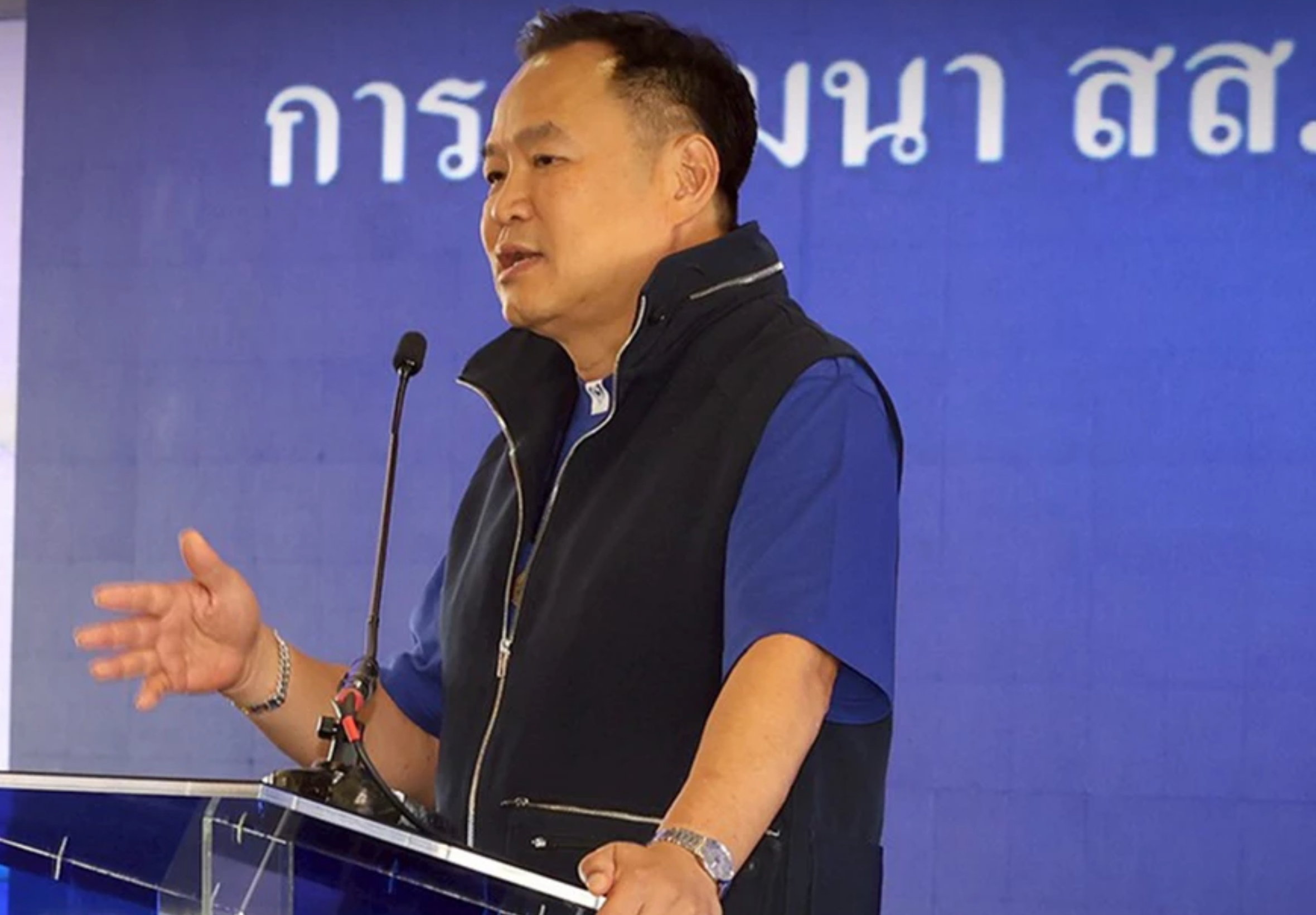

The Bhumjaithai Party has identified four urgent legislative and policy priorities it plans to accelerate, aiming to tackle economic challenges and streamline government processes. A party source revealed on March 9 that the measures are intended to use legislative mechanisms to drive the executive branch while addressing pressing public concerns.
Get today's headlines by email 
Among the key proposals is an amendment to merge the Ministry of Tourism and Sports with the Ministry of Culture, based on the view that their missions are closely aligned. Under the plan, the sports portfolio would be separated to focus exclusively on sports development and excellence. The amendment is expected to be submitted to parliament within six months.
The party also intends to push the draft Facilitation of Licensing and Public Service Act, widely known as the “Super License” law. The legislation aims to create a one-stop service system for permits, allowing businesses such as factories, hotels and spas to obtain approvals through a single authority instead of multiple government agencies.
The proposal is designed to simplify procedures for entrepreneurs and investors, both domestic and foreign, and is intended to attract more investment to Thailand. The initiative has been proposed by Ekniti Nitithanprapasand and Suphajee Suthumpun, with completion targeted within six months.
Another priority is the draft Homeland Development Act, which the party aims to finalise within one year. The bill would allow local authorities to generate their own revenue for development by enabling citizens to allocate 30% of their taxes to support their hometown or other localities they wish to see developed.
The proposal also includes a public oversight mechanism allowing citizens to monitor how tax revenue is used. The system is intended to create stronger checks than existing bodies such as the National Anti-Corruption Commission and the Public Sector Anti-Corruption Commission, ensuring that local authorities do not misuse public funds.
In addition, the bill would remove existing restrictions on the age and term limits of local officials, allowing them to serve beyond the current two-term limit. Party sources said the reforms are intended to improve accountability and strengthen local governance.
On constitutional amendments, the party believes economic hardship should take priority over structural political changes, particularly during the current economic crisis.
On the executive side, a Bhumjaithai-led government would aim to introduce several urgent policies within three to six months. One proposal would cap household electricity costs so consumers pay no more than 3 baht per unit for the first 200 units, with higher consumption charged on a progressive tiered rate.
The Nation reported that the measure could be implemented immediately through a ministerial announcement from the Ministry of Energy. In the longer term, the party plans to liberalise the electricity sector by increasing competition among providers, similar to the mobile telecommunications market, allowing consumers to choose companies offering the most favourable services and benefits.
Join the discussion? 
Already a member? 
 Adapted by ASEAN Now Nation 10 Mar 2026