

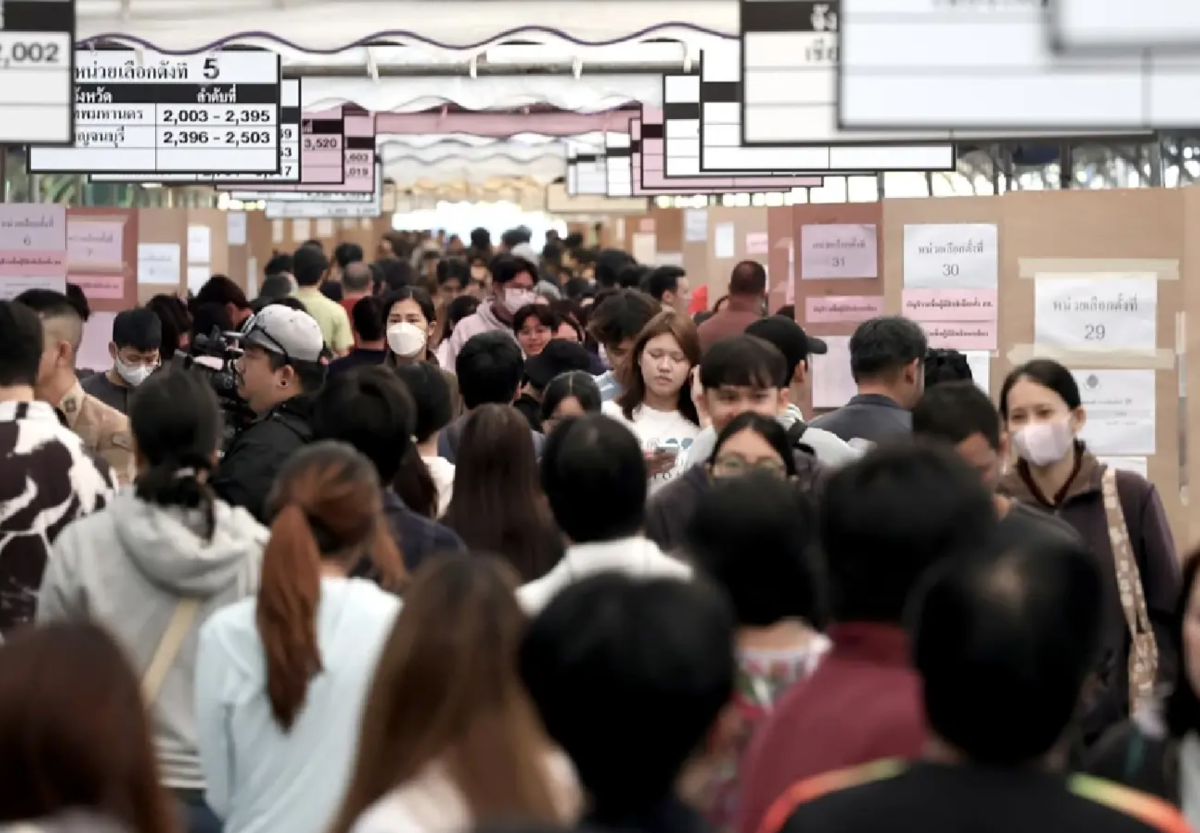
The Election Commission (EC) reported that advance voting nationwide on Sunday, February 01, 2026, proceeded smoothly overall, with more than 2.2 million registered participants turning out across the country. While the process was largely orderly, some polling stations faced overcrowding and traffic congestion, prompting on-the-spot coordination with local authorities to maintain access and flow.
At a press conference held at the Office of the Election Commission, EC Secretary-General Sawaeng Boonmee provided an overview of the opening of central polling stations for Members of the House of Representatives, both within and outside constituencies nationwide. High-level EC executives attended the briefing, which outlined participation figures, logistics, and monitoring measures in place during the voting process.
Sawaeng stated that Sunday (February 1) was designated for advance voting both outside and within constituencies. A total of 8,610 people registered for advance voting within their constituencies, 2,206,138 registered to vote outside their constituencies and 1,666 registered voters were persons with disabilities, infirmities, or elderly citizens.
Polling was conducted at 521 locations within constituencies, 524 locations outside constituencies, and 22 locations designated for voters with disabilities, infirmities, and the elderly. Polling units opened at 8am and the EC reported that voting across all 77 provinces had remained orderly, with a high level of public participation.
The Bangkapi district recorded the highest number of registered advance voters, exceeding 58,000 people. Chatuchak district and Chiang Mai also reported more than 50,000 registrants each, while Bang Khen district recorded 19,000 registered voters, where heavy traffic was reported before entry to polling units.
The EC acknowledged that some polling units had insufficient space to accommodate the volume of registered voters, contributing to congestion in certain areas. In response, the EC coordinated with polling officials and traffic police from the Bangkok Metropolitan Administration to urgently address traffic issues and facilitate quicker access to polling stations.
Alongside logistical management, the EC confirmed it remained on high alert for vote-buying, particularly in 42 provinces identified as having intense electoral competition. The commission iworked with police, intelligence units and the Bank of Thailand to monitor suspicious financial activities, including large cash withdrawals potentially linked to candidates.
The Nation reported that Sawaeng noted that while intelligence units had detected “movements” related to possible vote-buying, most complaints so far related to social media campaigning. A viral allegation of vote-buying was investigated and subsequently proven to be false and isolated incidents, such as the removal of a campaign banner in Chonburi province, were resolved.
Picture courtesy of The Nation
Key Takeaways
• Advance voting on February 01, 2026, was largely orderly despite congestion in some high-turnout areas.
• More than 2.2 million voters registered for advance voting nationwide across 77 provinces.
• The EC is intensified monitoring efforts to prevent vote-buying in 42 high-risk provinces.


Adapted by ASEAN Now from Nation 2026-02-02