



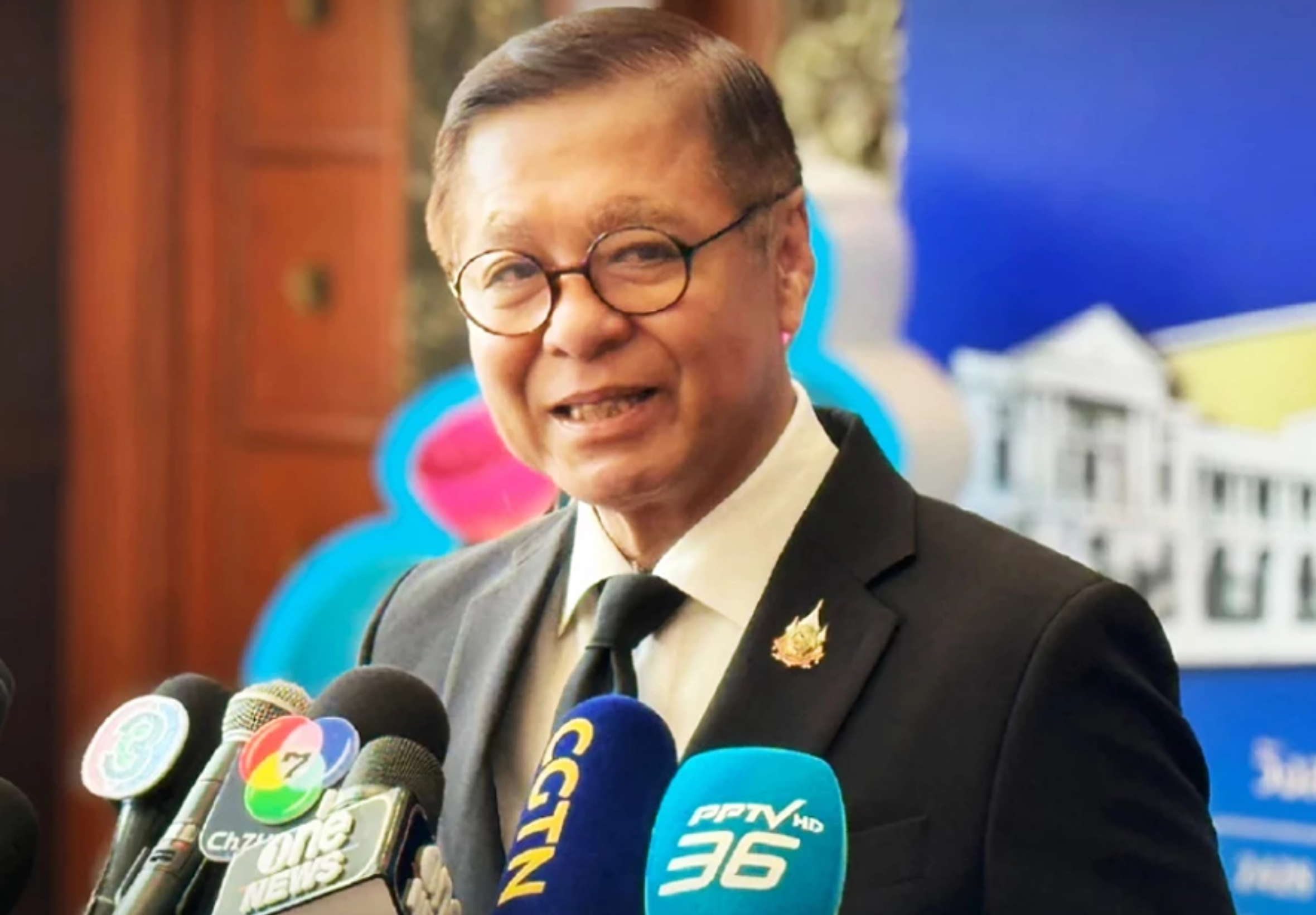

The Foreign Minister Sihasak Phuangketkeow has denied reports that the United States asked to use U-Tapao International Airport as a military base for operations against Iran. The minister said a meeting on 4 March between the prime minister and Sean K. O’Neill did not include any such discussion. Instead, talks focused on bilateral relations, tariffs and defence cooperation.
Get today's headlines by email 
Sihasak stated that while Thailand permits routine use of its airports for refuelling and overflights under existing security arrangements, using them as bases to launch attacks against another country would contradict national policy. He emphasised that Thailand maintains good relations with Iran and would not allow its territory to be used for offensive military operations against another state.
The minister addressed the issue amid rising regional tensions and speculation about potential military activity linked to the Iran conflict. Thailand has long allowed certain logistical cooperation with partner countries, including the United States, but these arrangements typically involve transit or refuelling rather than operational combat roles.
Sihasak also confirmed discussions with the Embassy of the Islamic Republic of Iran in Thailand regarding the evacuation of Thai nationals currently in Iran. According to the foreign ministry, more than 200 Thai citizens remain in the country, and authorities are working to ensure their safe return.
Plans involve transporting evacuees from Tehran by land to the Turkey border. Sihasak said an evacuation plan had already been prepared, although operational details could not be disclosed publicly for security reasons.
Thai authorities have coordinated with both the Embassy of Thailand in Iran and the Iranian embassy in Thailand to ensure safety arrangements. The government has also been in contact with the United States and Israel regarding the route, timing and logistical details for moving evacuees from Tehran to the Turkish border.
The minister described the evacuation effort as a humanitarian operation and stressed that the route should remain clear of fighting. He outlined Thailand’s position on the broader conflict, saying the government’s priorities were protecting Thai citizens, maintaining neutrality and supporting a peaceful resolution through diplomatic negotiations.
Sihasak added that Thailand also supports solutions based on international law and the principles of the United Nations Charter. Responding to criticism from some experts and former officials who argued the government’s stance lacked clarity, he insisted Thailand’s position was already clear and balanced.
The Nation reported that he said the government’s approach was designed to safeguard national interests, particularly the safety of more than 100,000 Thai nationals living across the wider region affected by the conflict.
Join the discussion? 
Already a member? 
 Adapted by ASEAN Now Nation 7 Mar 2026