Skip to content
View in the app

A better way to browse. Learn more.

ASEAN NOW

A full-screen app on your home screen with push notifications, badges and more.

To install this app on iOS and iPadOS
  1. Tap the Share icon in Safari
  2. Scroll the menu and tap Add to Home Screen.
  3. Tap Add in the top-right corner.
To install this app on Android
  1. Tap the 3-dot menu (⋮) in the top-right corner of the browser.
  2. Tap Add to Home screen or Install app.
  3. Confirm by tapping Install.

Become a member

Become a member

World News

Fresh news brought to you daily from around the world. Hot news, breaking stories as they happen.
The Trump administration has issued final notice of plans to introduce tighter visa rules for foreign students, including limiting how long they can remain in the United States without federal permission.

Under the changes, which are set to come into effect in September, foreign students on F-1 and J-1 visas will no longer be allowed to stay for the full duration of their studies under the existing “duration of status” approach. Instead, the rules will introduce a time limit on length of stay, restricting how long students can remain in the country before they must obtain permission from the US Department of Homeland Security.
Restrictions on transfers and extensions
The Department of Homeland Security said the policy would also narrow student options to switch programmes and transfer between universities and colleges.
Until now, higher education institutions had the authority to grant visa extensions for students. The new rules reduce that flexibility, placing tighter controls on how students maintain their status while studying.
DHS said the policy “combats rampant visa abuse, and strengthens national security through regular vetting”.
New grace period after graduation
The new framework also changes the period students have after completing their course.
Foreign students will be given 30 days to leave the US after graduation or to change to another visa category. This is a reduction from the previous 60-day grace period.
Department officials argued that the previous system allowed students to remain in the US indefinitely. Homeland Security Secretary Markwayne Mullin said that, “for decades, foreign students have been admitted into the US indefinitely, allowing thousands to abuse our immigration system by perpetually enrolling in courses to avoid having to leave the US.”
Duration-of-status set to end
Under the prior rules, F-1 and J-1 students were able to remain in the US as long as it took to complete their degrees. The new policy replaces that approach with a cap, preventing students from staying for more than four years unless they receive permission from the federal government.
Most undergraduate programmes in the US are typically four years, but graduate studies, including doctorates, often take longer to complete. The administration said this could affect fields where students frequently need additional time, particularly in science and technology disciplines.
Graduate courses often require more time and involve research activities that can extend study periods. DHS also noted that funding shortfalls and personal circumstances can lengthen the time needed to finish a programme.
Criticism from international education group
NAFSA: Association of International Educators, a non-profit that advises schools on foreign student enrolment, criticised the new rules.
Fanta Aw, its chief executive, said the policy “injects uncertainty, bureaucracy, and fear into a system that has long worked effectively. It is a solution in search of a problem.”
The new rules form part of a wider Trump administration effort to reduce the number of foreign students in the US and tighten immigration controls. The administration has sought to cap the number of students at some elite colleges and has also moved to revoke visas of students who have been critical of US foreign policy.

Join the discussion?


17 July 2026
webfact
webfact
Polish prosecutors have charged an 18-year-old Ukrainian man with carrying out sabotage acts on behalf of Russian intelligence, allegedly aimed at stoking tensions between Poland and Ukraine.

The suspect, identified as Illia K under Polish privacy rules, faces 47 criminal charges covering the period from November 2024 to August 2025, when he was arrested.
Alleged acts targeting memorials
Prosecutors said the alleged operations included the desecration of memorials for Polish victims linked to the Volyhnia massacre, which they said was carried out by the Ukrainian Insurgent Army (UPA) during the Second World War. The UPA is widely known for involvement in mass killings of Polish civilians in areas that were then part of Poland and are now in western Ukraine.
Poland’s Internal Security Agency (ABW) said the objective was to “incite ethnic tensions” between the two countries.
Prosecutors also said that although the defendant allegedly acted for financial reasons rather than ideology, most of the alleged sabotage was carried out for the benefit of foreign intelligence.
Espionage investigations rise
In May, the ABW said it had launched 48 espionage investigations in 2024, more than double the number started the previous year. It said Russian intelligence services had focused on discrediting Poland internationally and exploiting “historical ethnic antagonisms”, particularly in Polish-Ukrainian relations.
The charges against Illia K included alleged vandalism at the Monument to the Jewish Heroes of the Warsaw Ghetto in Warsaw, as well as damage to memorials to Polish victims of the Volyhnia massacre in Domostawa and Wrocław. Prosecutors said the defendant placed inscriptions and symbols that, they alleged, glorified the UPA.
Drone plan and alleged recruitment via crypto
Prosecutors further alleged that the man made preparations to fly a drone over President Karol Nawrocki’s vehicle during the Polish Armed Forces’ Day parade in Warsaw on August 15. They said he was arrested three days before the event.
ABW said the suspect allegedly recruited people to take part in the crimes, using cryptocurrencies registered in Russia and China to pay participants.
According to prosecutors, Illia K received tasks from an unidentified handler through a messaging service. He then allegedly sent back photos to show the tasks had been carried out.
If convicted, he faces life imprisonment.
Long-running dispute over UPA legacy
The Volyhnia massacre took place between 1943 and 1945, as the UPA fought to create an independent Ukraine for Ukrainians. Prosecutors said up to 100,000 members of the minority Polish population were killed during the conflict.
The issue continues to affect relations between the neighbours. At times, Kyiv has blocked Polish requests to exhume victims’ remains from mass graves, although exhumations have resumed.
The dispute came to the fore again in May, when President Volodymyr Zelensky issued a decree naming a Ukrainian military unit after the “Heroes of the UPA”. In response, Nawrocki removed Poland’s highest state honour, the Order of the White Eagle, from Zelensky. The action had previously been taken only once in more than 300 years.
A Polish academic specialising in eastern affairs, Wojciech Konończuk, director of Warsaw’s Office for Eastern Studies, said Poles and Ukrainians view the UPA differently. In a recent interview with the BBC, he said many Ukrainians regard the group as heroes for fighting the Soviet forces, while in Poland the UPA is seen as a criminal formation responsible for killings of Polish civilians.

Join the discussion?


17 July 2026
webfact
webfact
Children under 16 in England will be prevented from buying high-caffeine energy drinks from April under new government rules, ministers have said. From that date, drinks containing more than 150mg of caffeine per litre will be illegal to sell to children and younger teenagers in shops, restaurants, cafés, vending machines and online.
What the ban will cover
The restriction applies only to higher-caffeine drinks above the 150mg threshold. Lower-caffeine soft drinks, such as Diet Coke, would not be covered, and the rules would not extend to tea and coffee.
Several widely sold energy drink brands would fall above the limit, the government said, including Red Bull, Monster, Relentless and Prime.
Ministers said the legislation is intended to reduce consumption by children and younger teenagers, rather than placing additional controls on products for adults.
Why ministers say the change is needed
The government said the measures are aimed at tackling obesity and reducing potential health harms linked to energy drinks, including disrupted sleep, increased anxiety and difficulties with concentration and school performance.
Public Health Minister Sharon Hodgson said the ban showed the government’s commitment to improving children’s health. She said the proposal had originally been put forward last year.
The government also cited concerns raised by experts about caffeine effects on young people, noting that children can be more sensitive because they have smaller bodies and because their brains are still developing.
It said around 100,000 children in England consume energy drinks every day, and that the drinks can affect pupils’ ability to focus at school. It added that some popular products contain more caffeine than two cups of coffee or four cans of cola.
The government also highlighted potential risks associated with excessive caffeine intake, including headaches and sleep problems, as well as reports of more serious effects such as a rapid heart rate, abnormal heart rhythms and seizures. It said deaths linked to excessive caffeine have been reported, although they are rare.
Enforcement and consultation
The ban is subject to parliamentary approval and will be introduced through secondary legislation using powers from the Food Safety Act 1990.
Local authorities will enforce the rules, and businesses that break the law could face fines of up to £2,500.
The government said the decision followed a consultation that received 1,100 responses, with strong support for introducing an age limit.
At present, drinks (other than tea or coffee) with more than 150mg of caffeine must carry a label warning that they are not recommended for children or for pregnant or breast-feeding women.
Ministers also referenced advice for adults, saying that for most people up to 400mg of caffeine a day is considered safe, which they equated to about four cups of instant coffee or five cups of tea.
Reactions and wider UK approach
Katharine Jenner, executive director of the Obesity Health Alliance, welcomed the policy and said restricting sales to children at a “vital time” was common sense.
The British Soft Drinks Association said the ban was unnecessary. A spokesperson said that since 2010 its members have agreed not to market or promote energy drinks to under-16s and that high-caffeine beverages carry a “not recommended for children” label.
The government said a previous Conservative administration had planned a similar restriction but abandoned it in 2022, and that it had argued consumption should be a personal choice.
Northern Ireland, Scotland and Wales are also considering bans.

Join the discussion?


17 July 2026
webfact
webfact
A White House teleprompter operator is under investigation after allegations that he used inside information to place bets on US President Donald Trump’s upcoming remarks, earning nearly $100,000, according to reports.
Gabriel Perez, who worked at the White House from 2016, is accused of making trades tied to the specific words Trump would use in major public addresses. The alleged betting included wagers connected to the State of the Union speech.
The trades were placed on Kalshi, a prediction markets platform that allows users to bet on real-world outcomes. Kalshi said it reported the activity to the Commodity Futures Trading Commission (CFTC), the agency that regulates the platform.
Kalshi later froze Perez’s account before any gains could be withdrawn, according to the reports.
Bets on Words Trump Would Mention
The company said its analysts identified unusual activity on “mention markets” in March. These contracts are designed to predict whether a speaker will use common terms, including references to specific countries, economic phrases, or campaign slogans.
Kalshi said the wording used by political figures, such as presidents and Federal Reserve chairs, can move financial markets, including foreign exchange, oil futures and stocks.
Using account information, Kalshi concluded that the bettor was a federal employee who operated White House teleprompters.
After connecting the trading to the alleged federal role, the exchange froze more than $90,000 before the funds could be taken out, the reports said.
Kalshi Reports Trading to Regulators
Robert DeNault, Kalshi’s head of enforcement, said the firm flagged the trades and provided evidence to regulators.
White House press secretary Karoline Leavitt said in a statement that President Trump was aware of the teleprompter operator and that Perez had been put on unpaid leave. She added that Perez would no longer work at the White House.
The allegations were first reported by ABC News and have been confirmed by CBS News, the BBC’s US partner.
Sources cited in the reporting said Perez has been “fully cooperative” with the CFTC.
ABC said federal prosecutors in Manhattan declined to open a criminal case.
CFTC Will Not Confirm Probe
When contacted by the BBC to confirm whether it was investigating, the CFTC said it could not “confirm or deny” any probe.
Kalshi has said it turned the matter over to regulators after identifying the trading activity on its platform.


Join the discussion?


17 July 2026
webfact
webfact
President Volodymyr Zelenskyy has defended his decision to dismiss Ukraine’s popular defence minister, Mykhailo Fedorov, and said relations had broken down between the ministry and senior military leadership.

Zelenskyy, speaking in Kyiv with British prime minister Keir Starmer, confirmed that his administration had faced a difficult exchange between Fedorov and the commander in chief, Col Gen Oleksandr Syrskyi. He said he wanted unity but that it had not been reached, adding that the problem also lay with him.
“[I] would very much like to see unity. The sides have not found it. And the problem lies not only with the sides, but with me as well,” Zelenskyy said. “But things are as they are. And in such a situation, you have a choice: either one side or the other.”
Acting defence minister appointment
Zelenskyy said he had appointed Yevhenii Khmara, the acting head of Ukraine’s security service, as acting defence minister. He also asked parliament to approve him for the role.
The president said the dialogue between Fedorov, described as a reformist and moderniser, and Syrskyi had been challenging. He added that he had made his choice following the breakdown.
Civil society groups and foreign partners reacted strongly to the move, with some seeing it as backing Syrskyi over Fedorov.
Protests in Kyiv
More than 1,000 protesters gathered outside the presidential office on Thursday, calling for Fedorov to stay and chanting against Syrskyi.
Demonstrators carried placards supporting Fedorov, including messages reading “For what?” and “Is your head screwed on?” Chants of “Syrskyi out” echoed near central Kyiv, according to the report.
It was only the second time since Vladimir Putin’s full-scale invasion in 2022 that large numbers of people have taken to the streets in anti-government protests. A similar backlash followed Zelenskyy’s earlier decision, later reversed, to close two anti-corruption agencies.
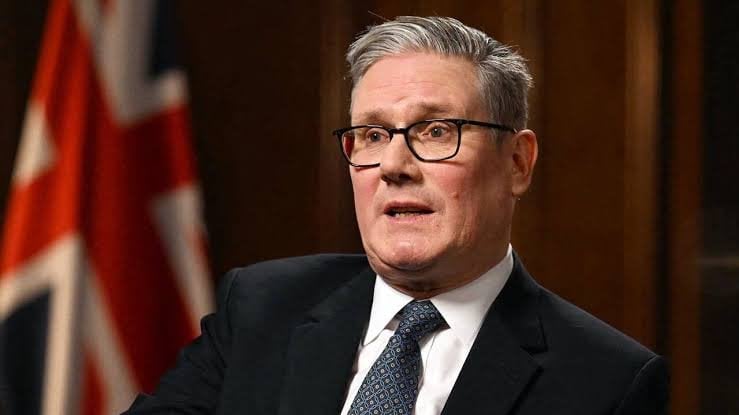
The domestic dispute unfolded as Starmer ended his farewell visit to Kyiv before leaving Downing Street on Monday. The two leaders laid wreaths at the Wall of Remembrance and then held one-on-one talks in the garden of the presidential palace.


Picture courtesy of The Guardian
Starmer visit and UK backing
At a joint press conference, Zelenskyy awarded Starmer the Order of Freedom, Ukraine’s highest foreign honour. Starmer, appearing emotional, presented Zelenskyy with a framed Ukrainian flag that had hung above Downing Street in February 2022 as Russian tanks advanced towards Kyiv.
Starmer said he would soon step away from the political stage but that British support for Ukraine would not change. “It is in our bones,” he said, adding that flags are displayed across the UK in churches and town halls.
He also said Ukrainian drone strikes on long-range targets inside Russia had shifted the war’s momentum. Putin was “losing”, Starmer said, pointing to a more optimistic mood in Ukraine over the past six or seven months and attributing it to “hard work, guts, resolve and courage”.
Asked about whether frequent turnover of British prime ministers affected Ukraine, Zelenskyy said relations with the UK would remain strong. He added that he hoped to meet Starmer’s successor “as soon as possible”.
Zelenskyy and Starmer embraced warmly after their meetings and walked back into the palace for an official lunch.
Fedorov criticises military brass
Fedorov held his own press conference, accusing Ukraine’s top brass of obstructing reforms and using methods he described as Soviet-style. He said decisions on which military brigades to support, including with drones, were made based on “loyalty” rather than data.
“It’s impossible to develop the system on this basis,” he said, adding that Ukraine’s general staff opposed his plans to create centres of excellence and to change the army’s organisational structure.
He said the general staff instead blocked initiatives and engaged in “bureaucratic wrangling”, and he claimed that he had proposed replacing Syrskyi, a move that appears to have contributed to his dismissal on Wednesday. Fedorov also said Zelenskyy had offered him a role as a government adviser, but that he turned it down.
In his remarks, Fedorov paid tribute to Syrskyi for thwarting Russia’s plans to seize Kyiv, but said the commander in chief refused to discuss disagreements openly. He said Syrskyi “weaved intrigues” that “divide the country”.
Reshuffle and battlefield progress
Fedorov’s comments suggested the political dispute over Zelenskyy’s reshuffle was likely to widen. On Wednesday, Ukraine’s parliament accepted the resignation of prime minister Yulia Svyrydenko after Zelenskyy said his government needed a reboot. Her replacement is expected to be Serhiy Koretskyi, head of energy company Naftogaz.
During Fedorov’s six months in office, Ukraine’s battlefield position improved, with Kyiv repeatedly striking Russian oil refineries, which it said embarrassed the Kremlin and contributed to nationwide fuel shortages. Ukraine also destroyed key land and sea routes, targeting tankers and ferries as part of efforts to isolate occupied Crimea.
Demonstrators who had gathered outside Kyiv’s Ivan Franko theatre speculated that the 35-year-old minister was removed because he was seen as a potential presidential rival. In 2024, Zelenskyy dismissed Gen Valerii Zaluzhnyi and sent him to London as ambassador.
One protester, Andrii Dligach, said Fedorov represented a new type of politics focused on openness, transparency and modernisation. He said: “Syrskyi is an old-fashioned general. Some of the people around him are allegedly corrupt and have their own drone projects. The problem is that Zelenskyy opposes anybody who shows political ambition.”
Dligach added that he believed only a small number of people influenced the president’s thinking and that most were against Fedorov, preferring “an old-fashioned management style, similar to the one in Russia, with a tsar”.


Join the discussion?


17 July 2026
webfact
webfact
The United States military launched another wave of strikes on Iran, while Tehran said it retaliated with missile and drone attacks against US military assets in Kuwait, Bahrain and Jordan.

Iran’s Health Ministry said at least 35 people were killed and more than 300 injured since fighting resumed last week.
US Central Command (CENTCOM), which oversees operations in the Middle East, said it carried out an evening operation that began as part of a wave of strikes against Iran, concluding at 9pm ET on Wednesday (01:00 GMT on Thursday).
CENTCOM says 90-minute strike
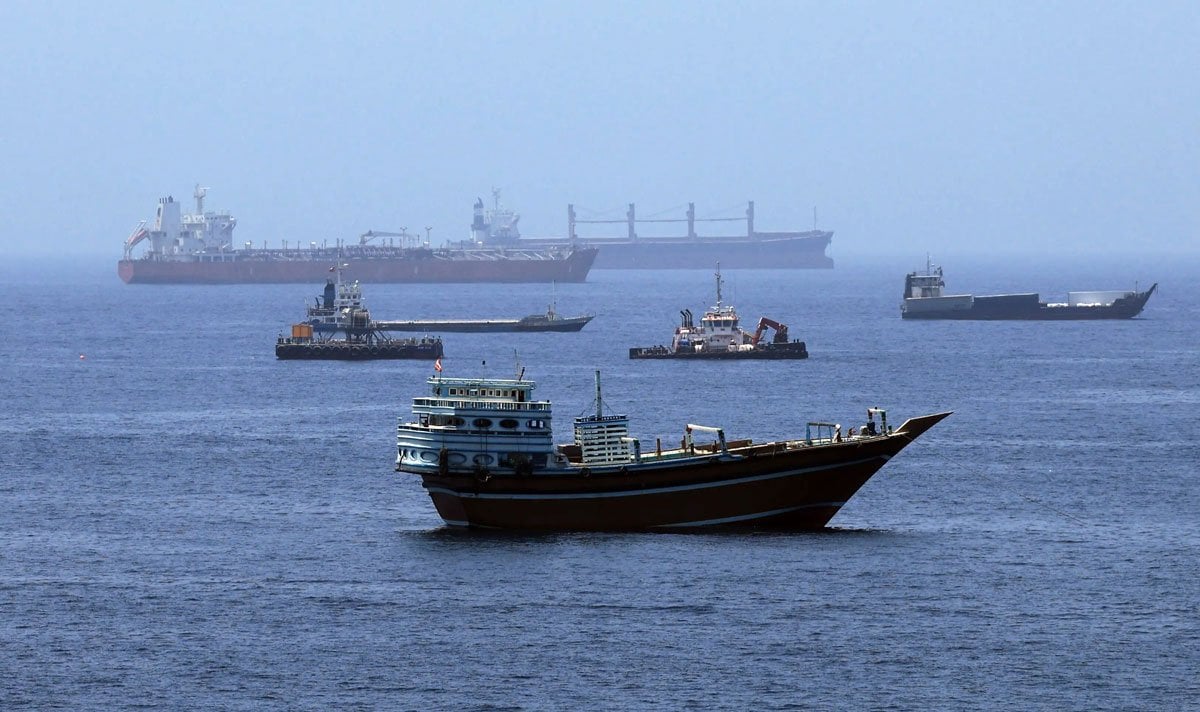
CENTCOM said the 90-minute mission targeted what it described as Iranian command centres, air defence sites, missile and drone capabilities, and coastal surveillance facilities. It said the aim was to reduce Iran’s ability to disrupt shipping through the Strait of Hormuz.
The command said the operation hit Bandar Abbas, a southern port city and naval hub overlooking the waterway. It also targeted coastal defence and cruise missile sites on Greater Tunb island, one of three islands near the Strait of Hormuz.
Iranian air defences were activated over Tehran, according to state media reporting attacks across much of the country.


Picture courtesy of Al Jazeera
Iran reports attacks across multiple provinces
Explosions were reported in Bandar Abbas and on Qeshm island in the south. Iranian media also reported strikes in Sirik, Chabahar and Konarak on the southeastern coast, along with attacks further inland in Rask, Khondab, Khorramabad and Semnan.
Iranian authorities said there were no casualties in Pakdasht or at the Parchin military complex near Tehran. In Semnan, the state broadcaster IRIB, citing a senior security official, said there were no deaths or injuries following the attack.
Reporting from Tehran, Al Jazeera said a civilian airport building in Semnan was attacked, with only minor damage reported. The network said a storage facility in the same city was also hit.
In Khuzestan province, the Islamic Revolutionary Guard Corps (IRGC) said it intercepted and shot down a US MQ-9 drone over Andimeshk.
Retaliation claimed across Kuwait, Bahrain and Jordan
Iran said it carried out retaliatory missile and drone attacks against facilities used by US forces in Kuwait, Bahrain and Jordan. The Iranian army said its missiles targeted US radar and air defence systems in Kuwait and Bahrain.
Kuwait’s military said its air defences were confronting attacks by “hostile drones”. It said any explosion sounds were the result of interceptors handling the attacks.
Kuwait said it intercepted four cruise missiles and 21 drones launched from Iran between Wednesday and early Thursday.
Iranian state media said missiles struck Patriot missile batteries and fuel tanks used by US forces at Ali Al Salem Air Base in Kuwait. The Iranian army added that drones targeted communications equipment, Super Hawk radar systems and Patriot air defence installations used by US forces at Sheikh Isa Air Base in Bahrain. It also claimed missile and drone attacks on Jordan’s al-Azraq Air Base.
Jordan’s military said earlier on Wednesday it intercepted eight Iranian missiles. In a statement addressed to the Jordanian public, the IRGC said it had “targeted and destroyed” what it called a fighter jet storage ramp and a new command and control centre in West Asia at a “very large base” in Al-Azraq, using Khyber-Shakan ballistic missiles.
Iran’s army spokesman Mohammad Akraminia warned that attacks “will spread to new areas” if the US continues its strikes, saying Iran’s response would be commensurate and exceed expectations.
Blockade enforcement and Trump comments
The latest escalation comes less than a month after Washington and Tehran signed a memorandum of understanding extending an April ceasefire and setting out plans for negotiations to end the war that began on February 28, following Israeli and US strikes on Iran. Both sides have since accused the other of violating the agreement.
Separately, CENTCOM said US forces disabled an oil tanker attempting to sail towards an Iranian port. It said the Curacao-flagged M/T Belma was observed transiting towards Kharg Island despite warnings, and that a US aircraft fired Hellfire missiles into the ship’s smokestack. CENTCOM said the vessel stopped transiting towards Iran, and that during the first 24 hours of enforcement it redirected two compliant commercial vessels and disabled one non-compliant vessel.
Reporting from Washington, Al Jazeera said President Donald Trump has indicated he could broaden US military operations beyond targeting Iranian military facilities, including storage and naval assets, and has raised the possibility of striking parts of Iranian infrastructure, such as power plants and bridges.


Join the discussion?


17 July 2026
webfact
webfact
Vice President JD Vance said the Trump administration mishandled communications around the release of Jeffrey Epstein files, arguing that everything should have been made public immediately while insisting the administration was not trying to conceal information.

Speaking on The Joe Rogan Experience in an episode released on Wednesday, Vance said officials had “absolutely screwed up the comms” relating to the files. He was asked whether attempts to keep the documents under wraps involved “undue influence” or were intended to hide something.
“I say this with all candor, like we absolutely screwed up the comms of the Epstein files, like we just did,” Vance said. He added that he did not believe the reason for the communications failure was concealment.
“But do I think the reason we screwed up the comms is because we were trying to hide something? No,” he said.
Blowback over handling of the files
Vance’s comments came as the administration faced criticism from within the president’s own support base over how it dealt with the Epstein records.
In discussing what he said went wrong, the vice president pointed to public remarks made by then-Attorney General Pam Bondi, who suggested a purported client list was on her desk. Vance also referenced a set of binders provided to right-wing social media influencers in February 2025, describing them as “largely documents that were already released”.
He said he did not know the purpose behind those actions, but argued their impact was to increase public mistrust in the overall effort.
“I don’t know what the purpose of it was, but I know the effect of it was to make people mistrust the entire effort,” Vance said. He added that he did not think Bondi was acting “anything malicious”.
Bondi “overstated” what the administration had
Vance said Bondi was trying to respond to the political moment but overstated what materials were available.
“I think Pam was trying to respond to the political moment. I think she overstated what we had and what we didn’t have, and I think she got roasted for it publicly by a lot of people, including me,” he said.
He returned to the broader handling of the case, describing himself as an early proponent of Epstein-related conspiracy theories and saying he had “gone down every single rabbit hole”.
Vance argued that the “original sin” of the Epstein investigation was in 2007 and 2008, when he said it was pursued “way too narrow”. He cited former US Attorney Alex Acosta, who negotiated a controversial plea deal with Epstein, as central to what he described as the failure of the investigation.
“If there was a broader conspiracy — and you know my view is that there probably was — the evidence that existed in 2007, that was the opportunity to get it out,” Vance said.
He also responded to questions about claims that Epstein may have had links to Israel’s Mossad or other intelligence services, saying: “Yeah, Mossad or CIA or some other deep state.”
“He clearly had connections to the upper, the highest levels of American intelligence. He clearly had connections to the highest levels of Israeli intelligence,” he added.
Defending Trump’s decision to release records
Vance defended President Donald Trump’s role in releasing the Epstein files, rejecting claims that Trump acted only because of pressure. He argued that Trump could have prevented the congressional push to compel the Justice Department to release the records if he had wanted to.
“Trump could have killed” the effort, Vance said, referencing prior attempts by Trump and Republican leaders to quash the move before he reversed course at the last minute.
Despite defending the decision to release the files, Vance conceded the process took longer than it should have.
“If people want to say we mishandled the Epstein release, guilty. We did mishandle it, especially the communications of it,” he said.
He added that the administration should have moved faster.
“I think that we should have just dropped everything at the very beginning,” Vance said. “We should have just done it as quickly as possible.”


Join the discussion?


16 July 2026
webfact
webfact
Argentina face the prospect of disciplinary action from Fifa after players celebrated their World Cup semi-final win over England with a banner supporting Argentina’s claim to the Falkland Islands.

The defending champions produced a late comeback in Atlanta, scoring twice to beat Thomas Tuchel’s side 2-1 and secure a final against Spain on Sunday.
Argentina warned after semi-final celebrations
After the final whistle, Argentina players held up a banner that read “Las Malvinas son Argentinas” — a message translated as “The Falklands are Argentine”. They also sang chants that referenced the islands and Argentine greats Diego Maradona and Lionel Messi following their previous last-16 win over Egypt.
Falklands sovereignty dispute
The Falkland Islands are a British overseas territory in the south-west Atlantic Ocean and remain at the centre of a sovereignty dispute between Britain and Argentina.
The two countries fought a war over the islands, located about 300 miles off Argentina’s east coast, from April to June 1982. The 74-day conflict resulted in the deaths of 655 Argentine servicemen and 255 British servicemen, with three fatalities among islanders.
In 2014, Fifa fined the Argentine Football Association £20,000 after Argentina players displayed a banner carrying the same message during a friendly against Slovenia. Fifa said the gesture breached rules on political activity and team misconduct.
Villarruel highlights message online
Following Wednesday’s win, Argentina vice-president Victoria Villarruel posted on X alongside a video that appeared to show Argentine soldiers. She shared the line “The Falklands are Argentine” and said stadium access restrictions had been imposed, while adding that the islands remained part of Argentinians’ “blood and hearts”.
In the build-up to the match, Villarruel had said the semi-final was about putting “invaders” in their place. Manager Lionel Scaloni, however, had previously said he would not mix football with politics.
He said the match was a football game and that it should be approached with respect for a period of conflict in the countries’ history, while arguing that the sport should not be confused with war elsewhere in the world.
UK minister calls banner inappropriate
MP Peter Kyle, Secretary of State for Business and Trade, said the banner was “entirely inappropriate” and that he expected Fifa to investigate. He told BBC Breakfast that an inquiry was likely, given the breach of rules prohibiting political activity as part of football.
The semi-final itself was played under increased security measures due to historical tensions between the two nations. England’s run ended when Enzo Fernandez and Lautaro Martinez struck late to seal Argentina’s 2-1 victory.


Join the discussion?


16 July 2026
webfact
webfact
A 15-year-old British girl was stranded in Rome for six weeks after being refused permission to return to her UK school, after the Home Office rule requiring dual British nationals to hold a British passport or a “certificate of entitlement” to enter the country came into force in February.

The girl, who has dual nationality, was in Italy in April to visit her grandmother when she was prevented from boarding a flight home. Her father, Rowan Somerville, said she missed six weeks of education while the issue was resolved.
Passport rule blocks return for dual nationals
Under the policy, dual nationals risk being denied boarding of a flight, train or ferry if they do not present a British passport, whether current or expired, or a certificate of entitlement. The certificate, priced at £589, is linked to the passport of the person’s second nationality.
Somerville said the Home Office and the Foreign, Commonwealth and Development Office were unable to help him secure a temporary document to allow his daughter to travel because she did not hold a British passport in the first place.
Her school wrote to government departments, saying it was increasingly concerned about her prolonged absence from education.
Emergency travel document issued in May
Somerville and his family then sought help through their local MP, Joe Powell. Powell said he made representations to the Home Office and the FCDO and that, in May, the FCDO issued the girl with an emergency travel document, allowing her to return to the UK.
Powell said the case was not unique, and urged the immigration minister, Mike Tapp, to ensure no other schoolchildren were left stranded by the rules. He said the policy changes were not communicated meaningfully to the public and that the outcome showed weaknesses in how government departments support people who fall through administrative gaps.
Powell said the girl had two valid passports and a British parent and had been in UK education since nursery. He added that the changes to the Home Office’s requirements left her stuck in Rome and missing six weeks of school.
Home Office says carriers must verify citizenship
Somerville described the process of getting his daughter the necessary British passport as prolonged and difficult. He said getting the passport took about three months, while the government website states it takes three weeks. He said the Passport Office’s front-line customer service staff were helpful, but added that he encountered what he described as bureaucratic obstacles once his complaint was escalated, including a call during which staff told him they could no longer speak to him because his daughter had turned 16.
The Home Office previously rejected claims that it had not informed the public about the rule change, saying information is available on gov.uk.
A Home Office spokesperson said Somerville’s daughter “was granted an emergency travel document in May, enabling them to return to the UK”, and added that the department remained in contact about a passport application. The spokesperson said that once information was received and checks were concluded, a passport was issued within eight days.
The spokesperson said that since February all dual British citizens have needed to present either a valid British passport or a certificate of entitlement when travelling to the UK, arguing that without the documents “carriers cannot verify British citizenship”, which may lead to delays or refused boarding.

Join the discussion?


16 July 2026
webfact
webfact
The Trump administration has removed a slavery-focused exhibition from the home of former US President George Washington in Philadelphia, replacing it with another display, the Associated Press reported.

On Wednesday, officials swapped the exhibit at Washington’s former residence with a different version. Historians cited by the AP said the replacement is not historically accurate.
In a statement posted on X, Philadelphia Mayor Cherelle Parker said the city remained “committed to the honest and accurate portrayal of history at the President’s House.”
“A portrayal that was the hard-fought and hard-won result of the effort of countless federal, state, and local officials as well as advocates, including Avenging the Ancestors Coalition, dedicated to telling the truth,” Parker added.
Panels removed before the new display
Parker said that during the previous night the federal government removed panels at the President’s House that, she said, presented a thorough history of Philadelphia.
She said the Trump administration had the authority to make the change following a federal court decision. The mayor did not provide further details of the ruling in her statement.
The exhibition being replaced had been designed to describe the lives of enslaved people who lived in the former executive mansion. It included information about nine people enslaved by Washington.
Washington lived in the house, along with John Adams, before the White House was built. The location later became associated with the presidential era as part of the federal historical site.
Exhibit opened 16 years ago
The slavery exhibit opened 16 years ago. It was presented as part of the public interpretation of Washington’s Philadelphia home, and it aimed to document the presence of enslaved people in the former mansion.
According to the AP, the administration’s newly installed version has been criticised by historians who argue that it does not reflect the historical record in the same way as the previous display.
The AP said the change followed the removal and reinstatement of the exhibition in earlier months, indicating that the exhibit’s future has been contested through both legal and administrative action.
Earlier removal and court deadline
This was not the first time the exhibit had been taken down. It was removed in January, but restored in February after a federal judge set a deadline ordering the National Park Service (NPS) to bring the display back.
The NPS is responsible for managing the site, and the February reinstatement occurred before the deadline established by the court.
In the AP report, The Hill said it had reached out to the Department of the Interior for comment. The Department of the Interior oversees the NPS.
What the dispute centres on
At the centre of the dispute is how the President’s House presents slavery and the enslavement linked to the historic residence. Parker, speaking for the city, said Philadelphia would continue to push for what she described as an “accurate portrayal” of the history connected to the site.
The administration’s actions, according to the mayor and the AP, were carried out under federal authority after litigation, even as historians raised concerns about the historical accuracy of the replacement materials.


Join the discussion?


16 July 2026
webfact
webfact
House Democrats nearly split evenly on Wednesday in a vote on an amendment to cut off U.S. aid to Israel, highlighting how the issue is reshaping divisions within the party. The amendment, led by Rep. Thomas Massie, was widely expected to fail as a political gesture. But it also acted as a litmus test for Democrats facing increasing pressure from an activist wing over Israel policy.

The amendment was defeated by 104 votes to 314, with 10 members voting present. In total, 103 Democrats supported the measure, while 98 voted against it. Massie, a Republican, was the only Republican to vote in favour of the amendment.
A defeated amendment, but a clear party split
The vote was on a fiscal year 2027 funding bill covering the State Department and national security. The measure would have prevented funds in the bill from being used for Israel and would have reduced the Foreign Military Financing (FMF) programme by $3.3 billion, an amount intended to match funds designated for Israel.
Democratic leaders were divided. House Minority Leader Hakeem Jeffries and House Democratic Caucus Chair Pete Aguilar both opposed the amendment, while House Democratic Whip Katherine Clark voted for it. Former Speaker Nancy Pelosi also voted in favour.
The 10 Democrats who voted “present” were Reps. Ami Bera of California, Shontel Brown of Ohio, Janelle Bynum of Oregon, Sarah Elfreth of Maryland, Jared Huffman of California, Betty McCollum of Minnesota, Kelly Morrison of Minnesota, Chris Pappas of New Hampshire, Linda Sánchez of California and Mike Thompson of California.
Jeffries and Clark disagree on whether the measure helps
Jeffries said he planned to vote against the bill on Tuesday, arguing in a “Dear Colleague” letter that the amendment was too broad because it would “prohibit or limit” funding tied to longstanding initiatives. He said it would affect areas including humanitarian assistance, refugee resettlement, peace-building and operations linked to the U.S. Embassy.
In his view, more direct steps were needed to force change regarding the Israeli government. He accused Republican leaders of using the amendment for partisan purposes.
Clark said in her Wednesday remarks that the amendment was also overly broad, and she characterised it as an attempt by Republicans to score political points. However, she said the current approach was not sustainable. Clark argued that the United States should not provide a “blank check” for military aid to any country that does not comply with U.S. law, interests and values, and that the Netanyahu government had not met those standards. She said she would vote for the amendment to change course, while not endorsing the entirety of the Republican proposal or the reasons behind its timing.
Pelosi backs the amendment’s message despite reservations
Pelosi said she remained committed to a strong U.S.-Israel relationship and to support for a two-state solution. She also said the amendment created an “unfortunate choice” for the House.
Pelosi argued that, for the sake of Israelis and Palestinians, U.S. policy must change to achieve what she described as a just and lasting peace. She said the United States must promote security and stability, and that Americans were demanding an end to what she described as a perpetual cycle of war. She said the Netanyahu government could not continue on its current path. While she called the amendment ill-conceived, Pelosi said she voted yes to send what she viewed as the right signal.

Join the discussion?


16 July 2026
webfact
webfact
President Donald Trump reversed a temporary move to pause most vehicle stops by Immigration and Customs Enforcement after complaints from supporters, according to two people familiar with the matter.

CNN reported on Tuesday that ICE officers had been instructed to largely suspend vehicle stops until further notice, with some exceptions. Tom Homan, the White House border czar, said the step was meant to be temporary, following ICE-related shootings in Houston, Texas, and Maine.
ICE Review After Fatal Shootings
The shootings have led senior officials within the Department of Homeland Security to consider interim changes to operations, sources said. The pause—however brief—removed a key enforcement tool as the administration sought to increase arrests tied to Trump’s mass deportation plans.
Officials have also been working under pressure to meet the administration’s self-set target of 2,000 arrests per day.
Markwayne Mullin, the Homeland Security secretary, and Homan did not inform Trump about the traffic stop change before it was put in place, according to two people familiar with the timeline.
Trump Reacts to Coverage and Orders Overturn
Trump became angry after seeing media coverage that described the temporary policy shift as weakening immigration enforcement. Early on Wednesday, he ordered that the guidance be reversed and posted on Truth Social that “The Radical Left Dumocrats would like to see this done, but it won’t happen on my watch.”
CNN asked the White House for comment.
A reversal followed amid heightened criticism from prominent figures in the MAGA base. Steve Bannon, a longtime adviser to Trump, and conservative lawyer Mike Davis criticised the decision to suspend traffic stops in comments broadcast on Wednesday.
Davis, speaking on Bannon’s “War Room” programme, said Mullin should not be aligned with Senate Democrats and Susan Collins, and called for stronger action if the administration could not carry out enforcement priorities.
Guidance Reversed, Officers Told to Keep Options
The traffic stop guidance was later rolled back, a White House official said, describing it as an effort to ensure ICE officers had appropriate options while carrying out arrests aimed at deporting undocumented people.
Mullin said in a statement that he and Trump shared the same position and that ICE officers should have “all options available” to keep them safe while pursuing the administration’s mission of removing “as many illegal alien criminals” as possible.
Earlier on Wednesday, Mullin posted an image of Trump’s Truth Social message reversing the guidance. On X, he added that the top priority was to keep officers safe and remove criminals from US streets, and that anyone in the country illegally should leave.
According to the source, the guidance applied to ICE staff in Enforcement and Removal Operations, the unit responsible for arrest and deportation of undocumented immigrants. It imposed a pause on initiating vehicle stops. Officers were instead told to coordinate with partner agencies to conduct a stop when executing a criminal warrant involving an individual in a vehicle.
Killings Spur Body Camera Pledge
The administration ordered the vehicle stop pause after two fatal shootings during federal immigration enforcement operations drew renewed scrutiny of ICE. Lorenzo Salgado Araujo was killed in Houston and Joan Sebastian Durán Guerrero was shot in Biddeford, Maine. Sources said neither man was the target of the operations in which they were killed.
In the aftermath of the shootings, the Department of Homeland Security said it would “rapidly” deploy body cameras to officers across the country, as pressure mounted for independent investigations.

Join the discussion?


16 July 2026
webfact
webfact
A 14-year-old boy from south London has been charged with an offence linked to “extreme rightwing terrorism” after police found documents of concern during a search of his home.

The Metropolitan Police said the teenager was arrested on 9 July on suspicion of criminal damage to a vehicle. Officers who went to the address then uncovered what they described as “a number of documents of concern”, prompting further counter-terrorism work.
Alleged target in Sutton
The terrorism charge relates to an alleged plan to target two mosques in the Sutton area of south London.
The Met said the mosques affected had been contacted and were receiving support from specialist officers. It added that officers were not looking for any other suspects in connection with the plot.
Following further inquiries by counter-terrorism officers working with the Crown Prosecution Service, the boy was charged with preparation of terrorist acts on or before 9 July.
Other charge
He was also charged with racially aggravated damage to property after officers alleged he damaged a car window on or before 20 June in Sutton. Both charges stem from matters investigated after the initial vehicle incident and the subsequent search.
Helen Flanagan, head of counter-terrorism policing for London, said the charge was serious and would be of concern to the public and local community.
She said the case was particularly worrying for the Muslim community and that police were working with the venues affected to provide updates, advice, support and reassurance. Flanagan added that the force is seeing an increasing number of children and young people in its counter-terrorism casework.
Nick Blackburn, the Met’s deputy commander for local policing in south London, said the cumulative impact of such incidents can be significant for Muslim communities.
He said the charges were brought just days after 12 people were arrested over a suspected threat to an Islamic festival in Suffolk, and after a man was arrested over an alleged assault outside a mosque in Leyton. Blackburn said counter-terrorism colleagues were involved throughout the investigation and that additional patrols had been put in place in affected areas, with further patrols expected in the coming days.
Wider security guidance
Last month, new national guidance from the Muslim Council of Britain advised mosques in the UK to carry out lockdown drills, strengthen links with police and improve CCTV coverage. The guidance was issued amid growing concerns about anti-Muslim attacks and warned that Muslim places of worship faced increasing risks including vandalism, intimidation, threats and targeted hostility.
The Met’s announcement follows a wider pattern of incidents affecting Muslim communities. These include a “potential serious threat” to an event in Suffolk, racist riots in Belfast last month, and attempted firebombings, vandalism and violent attacks on mosques in Glasgow, Edinburgh, Manchester, Liverpool, Shrewsbury and parts of east London.

Join the discussion?


16 July 2026
webfact
webfact
A 68-year-old man in Berlin has been charged with 22 counts of raping women who prosecutors say were unconscious, with investigators also believing the assaults may have involved as many as 60 victims.

Berlin prosecutors said they have indicted the German national, an electrician who has not been named, on charges covering sexual assault of 14 women. They said he has been in custody since March and that the offences were allegedly filmed.
Investigators believe that the suspect may have attacked up to 60 people, based on video material gathered during an ongoing probe. Prosecutors said the case formed part of a wider pattern of high-profile series offences in which victims were targeted without their knowledge and the assaults were recorded.
Charges and alleged victims
Prosecutors said the indictment relates to 22 counts involving 14 women. They also said their investigation has uncovered numerous alleged offences against a total of 58 women.
They added that 10 of the women had not yet been identified.
Prosecutors said the charges are framed not only around sexual violence, but also around violations of the right to one’s own image. They said the suspect is alleged to have recorded each offence, and that this element is part of the legal basis for the charges.
Sedation and online approach
Prosecutors said the suspect is accused of sedating the women using various sleeping tablets combined with alcohol, before allegedly raping them.
They said the victims were allegedly lured beforehand through online dating platforms.
Several people believed to have been attacked told investigators they could not remember the alleged assaults, and they only became aware of what had happened after the videos were found.
Prosecutors said the man had not responded to the charges.
How investigators built the case
The case emerged after a tip from police in Lower Saxony. In early 2025, officers there were investigating similar allegations against another man who later died. Prosecutors said that man had been in contact with the Berlin suspect through online chats.
The tip led Berlin police to search the suspect’s home in the Friedrichsfelde suburb. During the search, officers reportedly discovered a large set of digital files.
In 2026, an investigator found several videos of sexual assaults in which the suspect is believed to be the attacker. Police then carried out another raid at his flat in March of this year and detained him.
Parallels with other cases
Prosecutors said the allegations have prompted comparisons with other incidents investigated in Germany this year, including cases in Berlin and Munich involving drugged women whose assaults were recorded.
German media also drew parallels with the highly publicised trial of Gisèle Pelicot in France, in which her husband was convicted of drugging and abusing her and offering her unconscious to multiple strangers to be raped. The comparisons were drawn by media reports, rather than by prosecutors in Berlin.

Join the discussion?


16 July 2026
webfact
webfact
US Defence Secretary Pete Hegseth has announced a new Department of Defense programme to screen soldiers aged 30 and above for testosterone deficiency, describing it as a way to support readiness and long-term health.

In a video posted on X on Wednesday, Hegseth said the department would authorise annual testing for “warfighters” aged 30 and over as part of their routine health assessments. He said service personnel under 30 would be able to opt in to the screening.
Hegseth said the move is intended to ensure troops have “right testosterone levels” to operate at their best, linking the programme to what he described as the demands of modern combat. He said addressing health indicators early would help maintain psychological and mental readiness, and that the initiative formed part of the department’s commitment to provide “elite medical care”.
Annual testing and voluntary treatment
Under the plan, annual tests would be carried out for eligible personnel over the age of 30. Hegseth said treatment, including testosterone replacement therapy, would be voluntary.
He said the programme is designed to “restore and optimise” capabilities and to prioritise long-term health, with the aim of keeping service members “strong and resilient” for their entire lives. The announcement also framed the screening as part of maintaining physical and mental readiness for modern combat.
Hegseth did not give further details on how the tests would be implemented beyond describing them as part of ongoing health assessments.
Medical body urges caution on diagnosis
The initiative comes as “low T” has become a prominent political topic in the US. It is not the first time figures in the Trump administration have discussed testosterone levels publicly.
In a statement, the American Urological Association said it appreciates the administration’s recognition of the importance of screening for testosterone deficiency. However, it cautioned that diagnosing testosterone deficiency should not rely on a single blood test.
The association said testosterone testing can provide a baseline value for people who need further evaluation, but that a diagnosis should be based on symptoms and two separate tests rather than one result.
“Low T” debate and gender care not addressed
Hegseth’s announcement did not address active duty women in the US military. According to the text, more than 231,000 women serve on active duty.
The wider debate around testosterone has been taken up across parts of the political right and online. The article says Robert F Kennedy Jr, the US health secretary, has spoken about testosterone as part of his personal anti-ageing approach, and warned in October that teenagers have significantly less testosterone than older men, despite saying the claim was not backed by evidence.
The report also points to right-leaning media commentary, including Tucker Carlson criticising what he described as a masculinity crisis in films such as The End of Men, alongside influencers promoting “T-maxxing” and direct-to-consumer testosterone injections.
Research cited from the journal Social Science & Medicine says young men are being targeted online by influencers and wellness companies promoting hormone tests and treatments as essential to being a “real man”, despite screening for low testosterone being medically unwarranted for most people in that age group.


Join the discussion?


16 July 2026
webfact
webfact
Sir Keir Starmer told MPs his final Prime Minister’s Questions marked “the end of my political journey” as he prepares to step down as prime minister. In a 50-minute session in the House of Commons, normal political hostilities were largely set aside. MPs across the chamber paid tribute to the departing prime minister, traded light jokes and shared personal anecdotes before his exit.

Tributes and a standing ovation
Several of Sir Keir’s close allies appeared emotional as he thanked staff for their support. He said his team had been “prepared to walk through fire” for him, and acknowledged their work over his time in office.
As he left the chamber, his own MPs gave him a standing ovation. Many on the opposition benches also rose, while his family watched from the gallery.
Chancellor Rachel Reeves, seated beside him on the front bench, appeared close to tears. Labour MP Carolyn Harris also struggled to hold back emotion as she told the House that she saw his “decency and his courage” reflected in daily work.
Sir Keir was due to hand over power to Andy Burnham on Monday. Burnham, the former Greater Manchester mayor, is set to be confirmed as Labour leader at a special party conference on Friday.
Badenoch praises, then warns
Conservative leader Kemi Badenoch did not attack Sir Keir’s record directly during her questions. Instead, she praised his work on Ukraine and his friendship with Volodymyr Zelensky, the president of the country.
However, she made clear Labour MPs and their next leader would face difficult times. Badenoch said the change of prime minister was not a “silver bullet” and warned that “their troubles are only just beginning”.
She also asked whether Burnham should take questions in the Commons rather than “scurrying away for the summer”. With the Commons due to rise for its recess on Thursday, Burnham was not likely to take questions in Parliament until September.
Badenoch framed her exchanges around the idea of continuity and timing, while Sir Keir did not directly respond when she asked if he had advice for his successor. He promised “wholehearted support”, adding that he would offer it privately if asked, rather than publicly when not asked for.
Sir Keir also thanked Badenoch for kindness following the death of his brother and after an arson attack on his family home.
World Cup and Clacton banter
The session, held around eight hours before England’s World Cup semi-final against Argentina, included multiple references to the match. Jokes about football hopes were interspersed with comments on politics closer to home, including the Clacton by-election.
Conservative MP Graham Stuart joked that the prime minister had been given the “red card” by “400 dodgy referees”. Liberal Democrat MP Will Forster asked whether Sir Keir’s last act would be to declare a bank holiday if England won the World Cup. Sir Keir replied that he did not want to “tempt fate” and suggested Forster ask him again on Sunday.
There were also references to the Clacton contest, triggered by the resignation of Reform UK leader Nigel Farage. The main parties are not taking part, accusing Farage, who is re-fighting the constituency, of pulling a stunt as he stands again in Essex. The boycott means opponents are largely either independent or novelty candidates.
Sir Keir told people in Clacton to “put your vote in the bin”. Sir Ed Davey said he could not “back joke figures with ridiculous policies”, and said that was why he was supporting Count Binface. Reform UK MP Danny Kruger replied that a “comedian with a dustbin on his head” was a suitable substitute for the major parties.
Looking back and a leaving gift
Sir Keir was met with cheers as he arrived, despite having been forced out by his own MPs two years after delivering a landslide election victory.
In comments to guests of the prime minister in the gallery, he said those whose lives had been “changed or improved by this Labour government”, and people who “struggle to be seen or heard” across the country, were “the reason” he came into politics.
Before leaving office, the cabinet also marked the moment. Deputy prime minister David Lammy organised a whip-round to buy Sir Keir a vintage silver carriage clock as a leaving gift. The clock, made in the 1920s by the firm responsible for building Big Ben, was presented at Sir Keir’s final cabinet meeting on Wednesday morning, with a plaque reading: “Change promised, change fought for, change delivered. Thank you Keir – The Cabinet,” Downing Street said.


Join the discussion?


16 July 2026
webfact
webfact
France’s National Assembly has passed a bill to create a right to assisted dying, with strict safeguards, after years of debate and repeated reversals in the upper house.

MPs voted 291 to 241 to approve the measure, which had previously been rejected three times by the Senate. Prime Minister Sébastien Lecornu is expected to refer parts of the bill to France’s Constitutional Council to determine whether it complies with the constitution before it can become law.
Eligibility and safeguards
The legislation would allow assisted dying for French adults with a “serious and incurable” illness that is life-threatening and in an advanced or terminal stage. It would require that the condition leaves the person in constant physical or psychological suffering that is unbearable and resistant to treatment.
The patient would have to make a request to a doctor, expressing their intention freely. After consultation, the doctor would decide within 15 days.
Two-step confirmation and administration
Once the doctor has agreed that the criteria are met, the patient would be given a two-day period to reflect, after which they would confirm their request again.
The final step would involve the patient administering a lethal substance themselves. If they were unable to do so, a doctor or nurse could carry out the administration. The decision to proceed would also need to be verified by the physician on the day of the procedure.
Constitutional review and political delay
Wednesday’s vote means France could join a number of European countries that have decriminalised assisted dying in some form.
On the eve of the vote, Lecornu said he intended to submit provisions of the bill to the Constitutional Council, a nine-member body that checks whether laws comply with the constitution.
President Emmanuel Macron has previously backed end-of-life legislation, but the process was delayed after he called snap elections two years ago. Since 2024, French prime ministers have shown greater reluctance to advance the assisted dying bill, and Lecornu is known to have reservations about its terms.
Ahead of the vote, Lecornu’s office said the National Assembly had debated the bill extensively, but that the Senate had not allowed scrutiny that addressed “both the aspirations of its supporters and concerns of those worried about its implementation”.
It said the constitutional review should focus on three specific elements: whether the two-day reflection period is too short; whether patients protected under the law but with impaired judgement can still give free and informed consent; and the role of health and social care facilities in providing assisted dying services, given their stated mission to deliver palliative care for those who are terminally ill.
European context and UK debate
The assisted dying issue has been highly contentious in France, with opposition from the Catholic Church and parts of the medical profession. Despite the political conflict, opinion polls have indicated that a large majority of people in France support giving terminally ill patients a choice between palliative care and assisted dying.
Similar arguments have played out elsewhere in Europe. The UK’s bill to legalise assisted dying in England and Wales stalled earlier this year and is due to return to Parliament in September.
In the Netherlands and Belgium, assisted dying has been legal since 2002 for people with unbearable suffering from incurable illness, with the practice carried out under a physician’s oversight. Switzerland has long allowed assisted suicide where the person who helps acts unselfishly.

Join the discussion?


16 July 2026
webfact
webfact
China is now viewed more positively than the United States in many countries worldwide, according to a new study by Pew Research Center, the first time the organisation has recorded that pattern at that scale.

The non-partisan, US-based think tank found favourable opinions of China have reached record highs in multiple countries, while perceptions of the United States have weakened. Pew said respondents also showed low confidence in both US President Donald Trump and Chinese leader Xi Jinping, though Xi was rated more positively than Trump.
Global views shift
Pew surveyed more than 42,000 people across 36 countries between February and May. Participants were asked whether they had a very favourable, somewhat favourable, somewhat unfavourable or very unfavourable view of each superpower.
Across the 36 countries, Pew reported that in 25 nations there were more respondents with favourable views of China than of the US. The centre said this marked the first time it had seen such a result across so many countries since it began tracking global sentiments towards the two powers in 2002.
Pew research director Jonathan Schulman said the organisation previously recorded dips in positive views of the United States, including in 2008 at the end of George Bush’s presidency and in 2017 at the start of Trump’s first term. Even during those declines, favourable views of China were generally similar to, or slightly below, those of the US, Schulman told the BBC.
In this year’s survey, major swings towards China were reported in Spain, Indonesia, Italy, Greece and Canada. Only six countries still preferred the United States more: Poland, the Philippines, South Korea, India, Japan and Israel, which are described as staunch US allies.
Pew also found that median favourable views followed different trajectories in its wider dataset. The median favourable opinion of the US across 20 countries fell steadily in recent years, while the median favourable opinion of China rose. Pew said favourable views of China increased in more than a third of the countries surveyed in recent years, based on an expanded dataset that included the United States.
The study also pointed to record highs for China in several places, including Italy, Spain, Colombia, Mexico, Indonesia, Malaysia, Nigeria and Turkey.
Allies still back US
Pew said the pattern of attitudes often differed by country income level. Middle-income countries tended to hold more positive views of China, while wealthier countries were more likely to have negative views. One exception was Singapore, where Pew recorded both a high GDP per capita and a high level of positivity towards China.
In Asia-Pacific, Pew reported especially sharp contrasts. It said about 90% of respondents in Pakistan appeared to favour China, compared with 11% in Japan.
Confidence in Xi and Trump
Pew’s survey also asked respondents about confidence in Xi and Trump to do the right thing regarding world affairs. Overall, confidence scores were low for both leaders, with most countries recording results below 50%. Many countries, however, expressed more confidence in Xi than in Trump.


For Xi, Pew reported the highest rating was in Pakistan at 83% and the lowest was in Japan at 7%. For Trump, the highest confidence rating was in the Philippines at 68% and the lowest was 4% in the West Bank/East Jerusalem.
Schulman said the survey suggested people did not have as firm a view of Xi as they did of other political leaders, while respondents were more likely to give answers at the extremes when rating Trump.
Pew also found that while more people believed the US government respected personal freedoms more than China’s government did, the gap had narrowed. When asked about foreign policy, Pew said China was viewed as interfering less than the US in the affairs of other countries.


Foreign policy assessments
In additional questions Pew asked in several middle-income countries, a median of 75% said the US interfered in other countries’ affairs a great deal or a fair amount, while 45% said the same of China.
Similar studies by other groups have produced related but not identical results. Gallup reported last year that China surpassed the US in global approval ratings, with the widest gap in China’s favour recorded in 20 years. Separately, the Asia Society’s Global Public Opinion on China survey said China’s image, which dipped during the pandemic, had made only a modest recovery.
Carnegie China scholar Chong Ja Ian said Pew’s findings were consistent with expectations, citing what he described as the volatility of US policy and its economic effects, and saying that China can appear more predictable. He added that while people may not necessarily hold strong confidence in Xi personally, they can still show more positive views of China overall.

Join the discussion?


16 July 2026
webfact
webfact
An American man arrested in Spain after allegedly providing material support for Hamas is being held without bail in Madrid as the US government seeks his extradition, prompting fresh concerns among leftwing supporters of Palestinian causes about “chilling effects” on humanitarian and political activity.

Get today's headlines by email

Spanish authorities detained James “Fergie” Chambers on Friday in Ibiza. He is now in custody in the Spanish capital, where a hearing has been set for Thursday to decide whether he can be released on bail. The indictment against him has been sealed.
Spanish extradition process
The Spanish high court has 40 days to rule on the US extradition request submitted by the Trump administration. If the court rejects the bid, the proceedings end at that stage. If it approves the request, the Council of Ministers makes the final decision, according to a spokesperson for the court.
Stanley Cohen, an attorney with decades of experience in terrorism cases, said the case is the first known instance of the US pursuing extradition of a citizen who has been arrested and charged in connection with support for Hamas.
In comments reported by supporters, Cohen said the decision to seek extradition would “look good” politically, adding that he believed the move was made for “political purposes”. Chambers’s case, he suggested, could influence how other people and groups view the risks of involvement in pro-Palestinian work.
Donations and alleged links
Chambers, who describes himself as anti-imperialist, is the heir to a wealthy US family that owns Cox Communications. His legal team says he has funded progressive and humanitarian projects, including initiatives supporting children and other community efforts in the Middle East, and that he has donated more than $1m to humanitarian projects in Gaza.
His attorney, Llorenç Salvà, said in a statement that Chambers has long been known to US authorities and that the Trump administration, which has prioritised disrupting alleged terrorist-related funding, is now seeking his extradition. In statements about the arrest, Chambers’s partner, Stella Schnabel, said he was being jailed for using his wealth to support Palestine, characterising it as political persecution.
Chambers also said he had been on the US federal government’s radar for more than a decade. According to the account of his activities, he sold stock in mid-2023 worth around $250m as part of transactions within his family’s holdings, and later directed money towards causes he supported.
The case drew attention in the United States after Chambers was profiled in US media. In late 2023, he gave an interview on local television in New Hampshire about a direct action against Elbit Systems, described as an Israel defence contractor, which he said was carried out by a group that he had backed financially. He later moved to Tunisia, where he bought the football club Club Africain.
Leftwing concerns and legal precedents
Spanish politicians and lawmakers from left-of-centre parties have questioned whether the state is treating humanitarian or solidarity work as criminal support for terrorism.
Irene Montero, a member of Podemos and a Spanish representative in the European Parliament, posted on X on Monday that Spain should not collaborate with the Trump administration in what she described as the persecution of Palestinian solidarity, arguing the government should protect Chambers.
Separately, six members of Spain’s Congress from Sumar wrote that Chambers’s arrest occurred in the context of “growing repression” from the Trump administration against the Palestinian solidarity movement. They also pointed to Spain’s wider public critiques of Israel’s actions in Gaza and said that heightened tensions with the Trump administration form part of the background to the US request.
Trevor Aaronson, author of books on the FBI and terrorism, linked the Chambers case to arguments made within Trump-era counter-terrorism thinking that leftwing groups can be treated as part of a broader network connected to violence. He said the approach echoes legal reasoning developed in the post-9/11 “War on Terrorism”, including the mid-2000s Holy Land Foundation case, where prosecutors argued that money can be “fungible” and that support for governed areas could indirectly aid groups such as Hamas.
Aaronson said that such reasoning can create a “chilling effect”, discouraging people from donating to Palestinian groups or other leftwing organisations for fear their actions could be interpreted as terrorism-related support. He also criticised the timing, saying that humanitarian needs in Gaza are greater than ever and that linking aid to terrorism is significant.

Join the discussion?


15 July 2026
webfact
webfact
British lawmakers marked the deaths of three politicians over the past decade on Monday, using tributes in Parliament to highlight growing concern about security and the wider impact of violence on political life.

Get today's headlines by email

Home Secretary Shabana Mahmood said MPs should be able to carry out their work without fear. “Politics is a calling for those of us here, but it should not be a dangerous one,” she told the House, adding that ministers and police must remain alert to “changing threats” as they develop.
The latest killing, of former Conservative MP Ann Widdecombe, has drawn renewed attention to a period in which Britain has seen an unusually high number of political deaths in a short span. Widdecombe’s death came after the murders of sitting MPs Jo Cox in 2016 and David Amess in 2021.
Investigation into Widdecombe death
Police said Widdecombe was found dead at her home last week with “serious injuries”. She had previously served as an MP and later became the immigration spokesperson for Reform UK, a right-wing populist party.
Authorities initially said they had no information indicating her death was politically motivated. They subsequently announced that counter-terrorism police were leading the investigation.
A 28-year-old White British man was arrested, first on suspicion of murder and later on suspicion of “commission, preparation or instigation of acts of terrorism”. On Tuesday, the police said Widdecombe had been killed in a “targeted attack”. They have not given a motive but said one “line of enquiry” was whether the suspect was targeting Reform UK figures.
Calls to avoid simple links
Alan Renwick, a politics professor at University College London and director of the Constitution Unit, cautioned against connecting “the very extreme actions of a small number of individuals” to broader trends in society. He said, however, that the overall threat faced by MPs and others in public life has risen.
Renwick told CNN that threats are now directed at politicians “almost routinely”, which he said represents a shift from the past and “seriously impairs democracy”.
Threats and violence against MPs have increased sharply in recent years, according to reporting and parliamentary figures. The annual number of crimes against MPs reported to police reached almost 1,000 in 2025, nearly doubling from 2022, The Times reported in March. A parliamentary report said the number was 151 in 2017, describing it as a ten-fold increase since then.
Online debate and changing politics
Speakers linked the current risk environment to the political climate shaped by events earlier in the decade, including the period around the 2016 vote to leave the European Union. They also pointed to social media’s role in amplifying hostility.
Brendan Cox, Widdecombe’s predecessor Jo Cox’s widower, told Sky News he feels “much less optimistic” about political discourse than he did after his wife’s murder. He said the killing had initially prompted shock and unity across the political spectrum but that over time politics have moved further into opposing factions.
Cox said the “Wild West culture” online helps drive violence by making extreme content easier to spread and more likely to be treated as legitimate. He argued that regulators and the political system allow social media to continue promoting the most extreme material, often violent, content.
Diane Abbott, who has faced sustained abuse as the first Black woman elected to parliament, also drew attention to online activity, saying conditions have “got much, much worse” with the rise of online engagement.
While debate has focused on political attacks, officials noted that crime rates against individuals and households in Britain have generally fallen over the last decade.
Fears over constituent contact and Europe-wide pattern
Compared with many European countries, Britain’s number of murdered politicians is described as exceptional, although other parts of Europe have seen rising harassment and intimidation. The European Parliament has attributed that trend to increased political polarization.
In Britain, a parliamentary survey found that one in three MPs who took part were considering not standing for re-election, while many said their relationship with constituents had been affected.
Mahmood said security concerns have also changed how MPs interact with the public. When she was first elected in 2010, she held open constituency surgeries where residents could turn up. She said such sessions, where Cox and Amess were murdered, are now “no longer possible”.
“I still offer advice surgeries, but on terms that are very different from when I first became an MP,” Mahmood told MPs. “It is a tragedy because it does change the way we relate to our constituents.”

Join the discussion?


15 July 2026
webfact
webfact
The UK government has announced plans for a midnight social media curfew for 16 and 17-year-olds, saying the measure will be switched on by default but can be avoided by changing account settings.

Get today's headlines by email

Under the proposal, popular platforms including Instagram, TikTok and YouTube would be set to be unavailable between midnight and 06:00 for older teenagers. The government said the curfew would be paired with changes to “addictive” design features, including auto-play and infinite scroll, which it wants to disable during the same period.
The government argued that the combination would help improve teenagers’ sleep, attention at school and college, and family time. Technology Secretary Liz Kendall said the steps were designed to ensure young people “enjoy the benefits of technology” while having tools to help them “thrive” online.
Critics, however, said the approach was incomplete. Laura Trott, the Conservative shadow education secretary, described the plan as a “dog’s dinner”, arguing that it amounted to a curfew that can be bypassed. Child safety organisations and experts also raised concerns about whether a time-based restriction would protect vulnerable children.
Linked with wider online restrictions for children
The announcement comes after the government said in June that children under 16 in the UK would be barred entirely from a range of social media platforms.
The Department for Science, Innovation and Technology said it intends to put the new proposals before Parliament by the end of 2026, with a goal of bringing them into effect next spring alongside the planned ban for under-16s.
Alongside the curfew, the government said it wants measures to improve the safety of children using AI chatbot services. It said providers should introduce regular breaks for under-18s.
Government cites curfew trials; critics question impact
The government said it had trialled several approaches, including overnight curfews, in households across the UK. It reported that 300 teenagers took part in tests in which social apps were disabled overnight from 21:00 to 07:00, or capped to one hour, while some participants saw no changes. The government said the tests lasted one month and were designed to compare experiences.
In a report published on Tuesday, officials said the overnight curfews produced the biggest gains in sleep, alongside more engaging family evenings and a lighter burden for parents. It added that the option was also the most manageable to enforce compared with the other interventions tested.
Kendall said the findings supported what parents have long told the government: reducing time on social media brings benefits.
However, Andy Burrows, chief executive of the Molly Rose Foundation, said the plan was “piecemeal” and not the comprehensive child safety framework needed. Prof Sonia Livingstone, an expert in children’s digital rights at the London School of Economics, warned that a curfew could be harmful for vulnerable children if it restricts access to support at night.
“If it’s a curfew on companies using push notifications to wake someone up in the night, absolutely have a curfew,” Prof Livingstone told the BBC. She said a restriction that prevents a child in need of help or comfort from reaching trusted sources during the night could cause harm.
Ofcom powers, VPN concerns and Australia comparison
Dame Rachel de Souza, England’s children’s commissioner, said young people do not want a ban but do want protection from addictive features such as infinite scrolling. She said she wanted to understand how the policies would be delivered and said she would monitor whether they are effective while also urging Ofcom to use its powers to make online services safer for children.
The government’s moves have been framed as following steps taken in Australia, where restrictions on social media for under-16s began in December. In Australia, providers were required to close existing accounts and stop teens from opening new ones, but the measures have been criticised as ineffective, with many young people reporting they can still access sites that were meant to be blocked.
Questions have also been raised about the practicality of age checks for under-16s, and about how any UK regime might handle virtual private networks (VPNs). On Tuesday, the government said research it commissioned found little evidence that many children use VPNs to bypass age checks.

Join the discussion?


15 July 2026
webfact
webfact
China has detained a US seismologist who studies nuclear test activity for nearly two years on espionage allegations, the man’s family said, while Beijing said the case is being handled under Chinese law.

Get today's headlines by email

Detained in Beijing visit
Chen Youlin, 54, was arrested in November 2024 while travelling to Beijing to visit family, according to Global Reach, a US hostage advocacy group. His relatives decided to speak publicly after they said they had not seen any indication that Chinese authorities would release him.
Chen’s wife, Rong Yufang—also a seismologist—said she has not been able to speak with her husband for more than 600 days and is concerned for his health and welfare. She said in a statement carried by Global Reach that he has been denied regular contact.
China’s foreign ministry said on Tuesday that judicial authorities handle cases according to law. Spokesman Lin Jian said there was “no such thing as so-called wrongful detention”. In China, he noted, espionage convictions can lead to life imprisonment or the death penalty.
Chen is currently the only US citizen designated as “wrongfully detained” by Global Reach.
Work focused on North Korea tests
Rong told Reuters that Chinese authorities questioned Chen more than 100 times about his research and that he was not allowed to see a lawyer for the first 13 months of his detention.
Chen, who was born in China and became a US citizen in 2011, lives in Boston, Massachusetts. His published work focuses on North Korea, a close Chinese partner that has been under long-running sanctions over its nuclear weapons programme and underground nuclear tests.
It is not clear, the reporting said, whether and how Chen’s research intersected with any nuclear activity by China. US intelligence has suggested that China is developing a new nuclear arsenal and has carried out secret tests, charges Beijing denies.
Rong said Chen worked with Chinese colleagues in ways she described as transparent, adding that his work was collaborative rather than secretive.
His research included a study in December 2020 that used seismic data recorded across Asia—including China—to improve nuclear test monitoring and estimate yields.
Treaty monitoring and US-funded projects
Chen’s work drew on seismological methods to detect nuclear explosions. He also undertook projects funded by the US government, according to Global Reach.
The advocacy group said there are “suspicions within the US government” that Chen’s arrest was linked to China conducting nuclear tests in violation of the Comprehensive Nuclear Test Ban Treaty. The treaty aims to ban all nuclear explosion tests, but several “nuclear-capable” states have not ratified it, including the US and China. Both countries have observed voluntary moratoriums on explosive nuclear testing.
In June 2020, during Donald Trump’s first term, the US administration accused China of conducting a covert underground nuclear test at the Lop Nur facility in the country’s north-west. China rejected the allegations as unfounded and politically motivated.
Health concerns and US response
A separate US-based hostage advocacy group, the Foley Foundation, said Chen’s health is a concern and noted he has diabetes, high blood pressure and high cholesterol. It said he needs reliable access to medical treatment that is not available while he is imprisoned.
US Senator Edward Markey, a Massachusetts Democrat, said China’s handling of Chen “has undermined [its] partnership [with the US]” and could discourage other academics from working with Chinese counterparts. In a statement published on Tuesday, Markey said he hoped increased attention would lead to Chen’s release.
Details about Chen’s detention emerged about a month after China confirmed it had arrested another US academic, Min Zin, director of a Myanmar-focused think tank. Beijing has accused Min of spying and of endangering Chinese national security.

Join the discussion?


15 July 2026
webfact
webfact
US President Donald Trump said next week the United States would strike Iran’s bridges and power plants unless Tehran resumed talks, escalating pressure as fighting between the two countries entered its fourth consecutive day.

Get today's headlines by email

The remarks were made in an interview on Fox News, in the same period that US and Iranian forces reported continued exchanges of fire.
Threat Linked to Resuming Negotiations
Trump said he warned Iranian authorities that “it gets really bad” unless Iran “gets to the table and negotiate”. He said the US would “knock out” power plants and bridges, repeating threats he had previously made and which were condemned at the time by UN officials.
In April, Trump threatened strikes on civilian infrastructure in Iran, including bridges and power plants. Volker Türk, the UN human rights chief, said deliberately attacking civilians and civilian infrastructure is prohibited under international law and amounts to a war crime. The Geneva Conventions, agreed in 1949, bar attacks on sites essential for civilians.
In Tuesday night’s interview, Trump also said US negotiators had told their Iranian counterparts that they needed to make a deal or “you’re not going to have anything left”.
US Says It Targeted Capabilities Used to Attack Shipping
The latest escalation in rhetoric coincided with a renewed round of US strikes. US Central Command said late on Tuesday that its forces began an additional round of strikes against Iran to degrade capabilities used to attack commercial shipping in the Strait of Hormuz.
US Admiral Brad Cooper said in a late Tuesday statement that Iran had “intentionally targeted civilians” by attacking seven commercial ships. Cooper said the attacks resulted in nearly a dozen civilian crew members killed, missing, or injured.
The United Arab Emirates said on Monday night that Iranian cruise missiles had hit two UAE tankers, killing one Indian crew member and wounding eight others, with four in serious condition.
Iran’s Islamic Revolutionary Guard Corps later confirmed the strikes via Telegram, saying two tankers ignored warnings, switched off navigation systems and tried to pass through a mined route. Centcom did not specify which other incidents its statement referred to, and the IRGC did not immediately comment beyond its Telegram message.
In the early hours of Wednesday, Kuwait’s military said it was intercepting Iranian attack drones, while Bahrain activated air raid sirens. Kuwait’s army said air defences were engaging hostile drone attacks, and Bahrain’s interior ministry urged residents to move to safe places.
Tehran said on Tuesday it had targeted US military facilities in Bahrain and Jordan after earlier attacking two UAE tankers.
Fee Plan Row and Blockade Move
Trump’s comments came after he said a 20% fee he had threatened to impose on cargo moving through the Strait of Hormuz would be replaced by “massive” trade and investment deals with Gulf states. The announcement was made hours before the US resumed its blockade of Iranian ports.
On Truth Social, Trump said he had decided to replace the “United States Reimbursement Fee” with trade and investment deals to be made by Gulf states with the US, adding that the investments would be “MASSIVE” and “extraordinarily good” for them, without giving further details. He also said the strait was open to all ship traffic except for Iran and said oil was flowing “like never before”.
After talks in Washington with Iraq’s new Prime Minister Ali al-Zaidi, Trump said he did not like the concept of a fee, but that it was “not fair” for the US to protect the strait for the entire world. He said he had adjusted his initial plan after receiving calls from Gulf leaders.
Iran said it would remain in control of the Strait of Hormuz. Deputy Foreign Minister Kazem Gharibabadi told state television that the decision to tighten measures, including a blockade, had “dismantled” an earlier agreed truce, according to AFP. Reuters reported him saying that if the US tried to squeeze Iran through military actions and an economic blockade, it would be a mistake.
The US imposed a naval blockade of all Iranian ports in April. About five weeks later, it said it had redirected 100 commercial vessels and disabled four. The US lifted the blockade in June as part of a memorandum of understanding aimed at ending the conflict, but a dispute over the strait remains a key point.
Shipping data shows traffic through the Strait of Hormuz has slowed to a two-month low, while Brent crude prices have risen sharply.

Join the discussion?


15 July 2026
webfact
webfact
Sir Keir Starmer has become the first serving prime minister of the United Kingdom to receive France’s highest award, the Legion d’honneur.

Get today's headlines by email

He was presented with the decoration at the end of a meeting associated with the “Coalition of the Willing”, a group of countries set up with French President Emmanuel Macron to support Ukraine following Russia’s full-scale invasion in 2022. Starmer and Macron helped establish the coalition, according to the account of the event.
Macron praises Starmer’s role
At the ceremony in the French presidential palace, Macron said he wanted to express gratitude for Starmer’s “years as prime minister”. He praised Starmer’s “human qualities” and described him as a “reliable and friendly partner”.
Macron also referenced commitments from the UK that, he said, supported not only the country but “the security of Europe” and Ukraine, alongside the bilateral relationship between France and the UK.
Ukraine’s President Volodymyr Zelensky, who was among those attending to recognise Starmer ahead of his departure, also paid tribute to the outgoing prime minister. Starmer is due to leave office next week.
Zelensky and Merz thank the outgoing leader
During the event, Zelensky and German Chancellor Friedrich Merz both publicly thanked Starmer. Zelensky’s comments were part of the acknowledgements made at the conclusion of the meeting in Paris.
Merz thanked Starmer in person at the French presidential palace, as did Zelensky, who was listed among those paying tribute.
What the Legion d’Honneur is
The Legion d’honneur is awarded each year to around 2,000 French people and 200 foreign nationals. Recipients are recognised for “outstanding merits”.
Among past honours in the order is Sir Winston Churchill, who received the highest rank of the decoration, known as Grand Croix (Grand Cross). That level is awarded for continued “outstanding merit” over an extended period.
A controversial decoration with notable recipients
The Legion d’honneur has faced criticism since it was created by Napoleon Bonaparte in 1802.
Past recipients include leaders such as Nelson Mandela and former US President Dwight Eisenhower, as well as Zelensky. It has also been granted to figures including Russian President Vladimir Putin and Libya’s Muammar Gaddafi, and earlier to Benito Mussolini of wartime Italy and Spain’s dictator Francisco Franco.
So far, only one foreign recipient has had the honour withdrawn: former Panamanian President Manuel Noriega.
Under Macron, French officials also removed the award from Hollywood producer Harvey Weinstein following a series of accusations of sexual harassment and rape, according to the report of the decision.

Join the discussion?


15 July 2026
webfact
webfact
Donald Trump’s shifting demands over how the United States would secure shipping through the Strait of Hormuz have underscored how hard it is proving to end the war with Iran, which has now dragged on for more than four months.

Get today's headlines by email

On Monday, the president announced on Truth Social that the United States would resume a naval blockade of Iranian-linked shipping and said all vessels passing through the strait, including ships from US allies, would have to pay a 20% fee. Trump said the charges were meant to reimburse the US “for any and all costs” tied to providing safety and security in what he described as a volatile area.
The proposal lasted a day. On Tuesday, Trump withdrew it, instead saying he would pursue “trade and investment deals” with Gulf allies. The message suggested Washington would offer them safe passage through Hormuz in exchange for cooperation on economic arrangements.
Hormuz proposal flips after short run
The abrupt change came as negotiations between Washington and Tehran, temporarily framed by a memorandum of understanding, failed to produce an enduring ceasefire.
The MOU had been meant to put a ceiling on hostilities and set out a path for further talks. Both sides had previously described it as a breakthrough, though key aspects were left for later negotiation.
Trump’s blockade announcement on Tuesday signaled the end of that framework. At 10:16 ET (16:16 BST), the MOU “died” on Truth Social, according to Trump’s post, as he also cited a wave of renewed US military strikes across Iran.
Blockade returns as attacks spread
Iran responded by intensifying attacks on US allies and on commercial shipping in the region. Traffic through the Strait of Hormuz again slowed to near standstill, according to the report.
The renewed cycle of fighting followed weeks of stop-and-start diplomacy. Each time a ceasefire appeared to hold, occasional incidents tested the terms, leaving doubts about whether both sides were observing the same understanding.
Although the US had, in military terms, carried out strikes that it said achieved its immediate aims—destroying Iranian ships, aircraft and targets and degrading defence capabilities—the political track remained unresolved. The ability to deny Iran access to the strait was also not automatic, the article said, and without a major escalation by American forces in the region, the US could not fully prevent Iranian pressure on shipping.
Prior “tolls” criticism resurfaces
Trump’s latest Hormuz fee idea was not new, having been floated at various points during the war. But it collided with earlier US messaging from within the administration.
In a statement last month, Secretary of State Marco Rubio condemned an Iranian plan to impose “fees” on shipping through the strait, saying international waterways should not be subject to tolls and referring to existing international law and practice across global routes.
The memorandum’s text had also left room for Iran to play a role in managing the safe passage of commercial vessels through Hormuz. It stated that the Islamic Republic would make arrangements, using its best efforts, for safe passage “with no charge”.
Alongside that language, the MOU included promised investment in Iran and an end to international sanctions. Those elements had been treated by some as inducements aimed at reducing Iran’s incentive to use geography for leverage in the strait. The report said that assessment has proved wrong, at least for now.
Defense Priorities director Rosemary Kelanid said the MOU was effectively undone, with the commitments it described “completely” reversed.
Patience tested on both sides
With the blockade back in place, Iran faces renewed pressure as oil revenue—described as a lifeline for the regime—comes under strain again. Trump, meanwhile, is confronted with a recurring choice: expand the conflict further, or accept an outcome that leaves Iran in place despite the risk that the fighting could restart.
Elliot Abrams, a senior fellow at the Council on Foreign Relations, said the two sides are again asking who can outlast the other, with Iran unable to export oil and the US and other customers dependent on Persian Gulf supply.
The dispute also leaves the underlying issues unresolved, including control of the strait, Iran’s nuclear programme, and Iran’s regional influence. Abrams said there could be room for negotiations over a Hormuz arrangement, but not a return to the earlier memorandum framework.
As the war approaches a fifth month, Trump pointed out that other US conflicts, including the Vietnam War, had lasted for years. The report noted that a prolonged conflict contributed to political damage for Lyndon Baines Johnson, and that Trump’s team is also mindful of the domestic backdrop heading into November’s midterm elections—especially given the concern that higher oil prices would reverse recent improvements in consumer inflation trends. After Trump’s Monday post, the price of a barrel of oil rose nearly 10%, the biggest one-day gain in six years.
With the MOU dismantled and hostilities resumed, the article said the war does not appear closer to resolution than it was in the early weeks of the conflict.

Join the discussion?


15 July 2026
webfact
webfact

Account

Navigation

Search

Search

Configure browser push notifications

Chrome (Android)
  1. Tap the lock icon next to the address bar.
  2. Tap Permissions → Notifications.
  3. Adjust your preference.
Chrome (Desktop)
  1. Click the padlock icon in the address bar.
  2. Select Site settings.
  3. Find Notifications and adjust your preference.