Skip to content
View in the app

A better way to browse. Learn more.

Thailand News and Discussion Forum | ASEANNOW

A full-screen app on your home screen with push notifications, badges and more.

To install this app on iOS and iPadOS
  1. Tap the Share icon in Safari
  2. Scroll the menu and tap Add to Home Screen.
  3. Tap Add in the top-right corner.
To install this app on Android
  1. Tap the 3-dot menu (⋮) in the top-right corner of the browser.
  2. Tap Add to Home screen or Install app.
  3. Confirm by tapping Install.

Become a member

Become a member

World News

Fresh news brought to you daily from around the world. Hot news, breaking stories as they happen.
The U.S. Secret Service moved reporters into the White House briefing room on Saturday evening after sounds believed to be gunfire were heard near the White House complex, according to reports from NewsNation and local journalists at the scene.

Get today's headlines by email

Chris Flanagan, an anchor for DCNewsNow who was on White House grounds at the time, said on social media platform X that he heard “about 30 shots” shortly after 6 p.m. local time before members of the press were quickly ushered indoors.
The incident prompted a response from federal law enforcement agencies as authorities worked to verify what had happened near the intersection of 17th Street and Pennsylvania Avenue NW, close to the White House perimeter.
In a statement posted on X, the Secret Service Office of Communications said officials were “aware of reports of shots fired” in the area and were seeking confirmation from personnel on the ground.
“We are working to corroborate the information,” the agency said, adding that further details would be released when available.
FBI Director Kash Patel also confirmed on X that FBI personnel were at the scene alongside other law enforcement officers.
Trump at White House
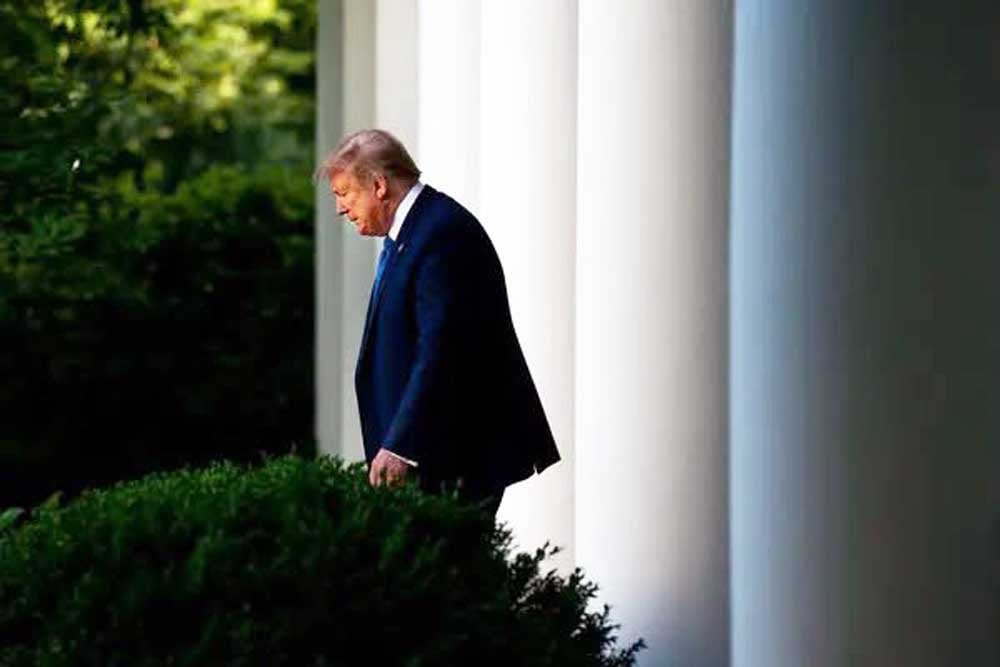
President Donald Trump was at the White House during the incident. Earlier in the day, he had canceled a planned trip to his golf club in Bedminster, New Jersey, amid ongoing reports of negotiations involving Iran.
At around 4:30 p.m., Trump posted on Truth Social that he was “in the Oval Office.”
White House Communications Director Steven Cheung later said on X that the president had been working at the White House since early Saturday morning.
Investigation Ongoing
Authorities had not immediately confirmed whether shots had actually been fired or whether there were any injuries, suspects, or arrests connected to the reports.
Law enforcement agencies continued to investigate the situation Saturday evening as security remained heightened around the White House grounds.


Join the discussion?

Already a member?

Adapted by ASEAN Now. Source 24 May 2026
webfact
webfact
Russian President Vladimir Putin is facing mounting military and economic pressure as the war in Ukraine drags on, according to Estonia’s top intelligence official, who said the Kremlin may soon lose its ability to negotiate from a position of strength.

Get today's headlines by email

Kaupo Rosin, head of Estonia’s Foreign Intelligence Service, told CNN that Russia’s battlefield setbacks, growing casualties and economic strain are increasing pressure on Moscow. Speaking from the agency’s headquarters in Tallinn, Rosin said the next few months could prove decisive.
“In four or five months, Putin may no longer be able to negotiate from a position of strength,” Rosin said, arguing that “time is not in Russia’s favor.”
Battlefield gains slow
Estonia, a former Soviet republic and NATO member bordering Russia, closely monitors developments inside its neighbor. Rosin said attitudes within the Kremlin have shifted as Russian forces struggle to make meaningful advances in Ukraine.
“I do not hear any more talk about total victory,” Rosin said. “People in the Kremlin recognize that the situation on the Ukrainian battlefield is not going too well.”
Analysts from the Washington-based Center for Strategic and International Studies have estimated that Russian troops advanced by an average of about 70 meters a day over a two-year period ending in January, while suffering roughly 1,000 killed or wounded daily.
Recent progress has slowed further. US Secretary of State Marco Rubio said last week that Russia was losing between 15,000 and 20,000 troops each month. Ukrainian officials reported more than 35,000 Russian soldiers were killed or seriously wounded in April, broadly in line with the previous two months. Neither side regularly publishes official casualty figures, and the claims cannot be independently verified.
Drone warfare reshapes conflict
Rosin said the war has increasingly become dominated by drones, limiting the possibility of major breakthroughs by either side.
“Both sides are unable to conduct a massive, mechanized breakthrough,” he said.
Ukraine and Russia have both expanded their drone capabilities during the conflict. Ukraine says improved interceptor drones are reducing the effectiveness of Russian attacks on cities.
Ukraine’s defense minister Mykhailo Fedorov said this week that the proportion of Iranian-designed Shahed drones destroyed by interceptors had doubled in the past four months.
Economic strain deepens
Rosin said Russia’s only realistic option for significantly accelerating its offensive in eastern Ukraine would be another large-scale mobilization of troops. However, he warned such a move could create internal instability.
Russia’s partial mobilization in 2022 triggered protests and prompted many men to leave the country to avoid conscription. Since then, authorities have relied heavily on financial incentives to attract recruits.
At the same time, Russia’s economy is coming under increasing pressure from war spending, labor shortages, sanctions and Ukrainian attacks on energy infrastructure.
Last week, Moscow lowered its economic growth forecast for 2026 from 1.3% to 0.4%. Deputy Prime Minister Alexander Novak blamed labor shortages, high government spending and Western sanctions.
Rosin said Ukrainian drone strikes on refineries, export hubs and pipelines had caused “billions and billions of dollars” in damage to Russia’s energy sector. He added that attacks on Moscow have brought the war closer to ordinary Russians.
Internal concerns in Moscow
Despite the pressures, Rosin believes Putin is unlikely to abandon his objectives in Ukraine. He said the Kremlin would continue trying to weaken Ukraine, including through attacks during the coming winter and political efforts aimed at installing a pro-Russian government in Kyiv.
Rosin also described growing concern within the Kremlin over domestic stability, with tighter security measures around Putin and reports of fears over possible internal unrest.
He said Russian soldiers returning from the war have contributed to rising violence and crime, with some joining organized criminal groups. A study last year by the Center for Strategic and International Studies estimated that returning soldiers had killed or injured more than 1,000 people inside Russia.
Although Rosin said he sees little immediate sign of mass protests due to the tight control of Russia’s security services, he warned that authoritarian systems can sometimes weaken rapidly beneath the surface.


Join the discussion?

Already a member?


Adapted by ASEAN Now. Source 24 May 2026

webfact
webfact
The UK has explored the idea of joining a broader single market for goods with the European Union as part of efforts to deepen post-Brexit economic ties, according to reports.

Get today's headlines by email

Industry representatives briefed on the discussions said the proposal has not progressed after meeting scepticism from the EU. Attention has instead shifted to ongoing negotiations covering food, agriculture and energy trade.
The discussions nevertheless point to growing ambition within the UK government for closer economic integration with Europe ahead of a UK-EU summit expected in July.
Prime Minister Keir Starmer and Chancellor Rachel Reeves have spent recent weeks publicly advocating a stronger economic relationship with the EU as part of a wider reset in post-Brexit relations.
Broader trade ambitions
Until now, public details of the government’s plans have largely focused on talks aimed at easing trade barriers in areas such as food, farming products, electricity and emissions trading.
However, it has emerged that UK officials suggested a more far-reaching agenda for the next stage of negotiations. One option discussed involved frictionless trade within a UK-EU single market covering all goods.
The proposal was first reported by the Guardian.
A spokesperson for the European Commission declined to comment directly on the reported UK proposal but said there was room to strengthen industrial and defence cooperation. The spokesperson pointed to Britain’s interest in discussions linked to financial support for Ukraine.
The UK government did not confirm the exact nature of the talks but acknowledged that a range of proposals had been discussed with the EU in recent months and that negotiations were continuing.
EU resistance
Business groups in Britain were reportedly informed both about the proposal and about resistance from Brussels.
According to those briefed, EU officials indicated that such a comprehensive arrangement would be difficult to negotiate while the UK maintains existing red lines, including opposition to restoring freedom of movement.
Some ministers believe recent shifts in the United States’ approach towards Europe could encourage greater openness among EU governments to closer economic cooperation with Britain.
The issue comes as the Labour government seeks to rebuild relations with European partners without reversing Brexit or rejoining the EU single market in full.
Legal framework planned
In the recent King’s Speech, the government announced plans for a European Partnership Bill. The proposed legislation would create a mechanism for aligning UK and EU rules in sectors covered by future agreements.
Ministers have suggested the framework could initially apply to areas such as food trade but could later be extended to other industries if new deals are reached.
The upcoming summit in July is expected to provide further indication of how far both sides are willing to go in reshaping the post-Brexit relationship.

Join the discussion?

Already a member?


Adapted by ASEAN Now. Source 24 May 2026
webfact
webfact
French authorities temporarily suspended additional European Union border checks at Dover on Saturday after thousands of travellers faced lengthy delays at the port during the busy May bank holiday weekend.

Get today's headlines by email

Queues built up early in the day as holidaymakers heading for cross-Channel ferries encountered slow processing in soaring temperatures. The Port of Dover said it had raised the “challenging situation” with border authorities, leading to the temporary suspension of the extra checks to ease congestion at the terminal and on nearby roads.
Travellers reported waiting up to two hours to reach the port, followed by an additional two-and-a-half hours for processing once inside the terminal.
By lunchtime, the port said traffic conditions had improved, with queues moving slowly and processing times reduced to under an hour. Shortly after 14:00 local time, officials said traffic had become “free-flowing”.
EU Border System Tested
The busy holiday weekend is seen as an early test of the European Union’s upcoming Entry/Exit System (EES), a new digital border control programme for non-EU travellers.
Passengers travelling through Dover must complete French border checks before boarding ferries to France. The EES system will eventually introduce biometric checks, including fingerprint scans and facial recognition, across 29 countries in the Schengen Area.
Although the biometric machines have not yet been activated at Dover, French border officials were still collecting traveller information manually for entry into the system’s database. The additional processing contributed to the long delays seen on Saturday.
French authorities later reinstated the extra checks shortly before 17:00, after traffic conditions improved. Standard border procedures remained in place throughout the disruption.
Port Frustration Over Delays
Port of Dover chief executive Doug Bannister said more than 8,000 cars were expected to pass through the port on Saturday.
He said 84 kiosks had already been installed to support the future digital border system and to manage high passenger volumes safely.
However, Bannister said processing had been much slower than expected despite prior assurances from British and French authorities.
“I think we’re all quite frustrated,” he told the BBC.
Passengers who missed scheduled ferry departures because of the delays would be transferred to the next available sailing, the port added.
Travel Disruption Across UK
Elsewhere, transport disruption affected rail and road networks across Britain during the bank holiday getaway.
LeShuttle, which operates services through the Channel Tunnel between Folkestone and Calais, reported delays of around 90 minutes because of longer border processing times.
Major engineering works disrupted several rail routes, including lines between London St Pancras International and London Blackfriars, York and Darlington, and Bristol Parkway and Newport. Some services were cancelled or significantly altered.
Industrial action also affected West Midlands Railway services on Saturday.
Traffic monitoring agencies reported widespread congestion on roads across the UK. National Highways issued 22 severe congestion alerts on motorways and major A-roads by mid-afternoon, while heavy traffic was also reported in parts of Scotland and Wales.
Heatwave Conditions Expected
The travel disruption coincided with unusually hot weather across the UK during the bank holiday weekend.
Saturday became the warmest day of the year so far, with temperatures reaching 30.5C in Frittenden, Kent.
The previous day saw highs of 28.4C recorded at Heathrow, Cranwell in Lincolnshire and Cambridge.
Forecasters said temperatures were expected to rise further over the weekend, with some areas likely to meet official heatwave criteria. Amber heat-health alerts remain in place in parts of England as temperatures are forecast to stay above 30C.

Join the discussion?

Already a member?


Adapted by ASEAN Now. Source 24 May 2026
webfact
webfact
California has declared a state of emergency as emergency crews worked through the weekend to contain a dangerous chemical leak at an aerospace manufacturing facility in Orange County.

Get today's headlines by email

Officials warned that a tank holding about 7,000 gallons of methyl methacrylate — a highly flammable chemical used in plastic production — was at risk of catastrophic failure. Thousands of residents were ordered to evacuate surrounding areas as a precaution.
The emergency is centred on a facility operated by GKN Aerospace in the city of Garden Grove, around 35 miles southeast of Los Angeles and about five miles from Disneyland. The theme park remains open and is outside the evacuation zone.
Tank Temperature Continues to Rise
Officials said the damaged tank’s internal temperature was significantly higher than first believed and continued rising on Saturday.
Orange County Fire Authority division chief Craig Covey said crews were preparing for two possible outcomes: a rupture causing a chemical spill, or a thermal runaway reaction leading to an explosion.
Emergency teams have been spraying water on the tank in an effort to cool it and reduce pressure buildup. However, authorities said an inoperable valve had complicated efforts to stabilise the situation.
Covey said officials initially believed the tank had cooled to around 16C (61F) after drone measurements on Friday evening. But when crews later checked the internal gauge directly, they discovered the temperature had climbed to about 32C (90F) and was increasing by roughly one degree Fahrenheit per hour.
“Letting this thing just fail and blow up is unacceptable to us,” Covey told reporters.
Evacuations and Road Closures
Authorities have closed local schools and shut several major road exits to restrict access to the area.
Officials are also constructing containment barriers in case chemicals spill from the tank. Covey said the aim was to stop hazardous material from reaching storm drains or flowing into the ocean.
Orange County health officer Dr Regina Chinsio-Kwong warned residents to report any noticeable “fruity and heavy smell”, which could indicate the presence of chemical vapours.
She said exposure to the vapour could lead to breathing difficulties, dizziness and eye irritation, but added that people outside the one-mile evacuation zone were not believed to face immediate danger.
Covey warned on Friday that the situation was no longer theoretical.
“This thing is going to fail, and we don’t know when,” he said during a news conference.
Residents Describe Uncertainty
Residents forced to leave their homes described confusion and anxiety as emergency sirens sounded across neighbourhoods.
Mark Olsen, who evacuated to the Garden Grove Sports and Recreation Center, told local media he woke to emergency alarms before being instructed to leave the area.
He said uncertainty over when residents could safely return home was difficult.
“It’s just frustrating,” Olsen said.
Company Apologises
GKN Aerospace said it was cooperating fully with emergency responders and hazardous materials teams.
A company spokesperson apologised to residents and said efforts remained focused on protecting the local community, employees and emergency personnel as crews continued attempts to stabilise the tank.


Join the discussion?

Already a member?


Adapted by ASEAN Now. Source 24 May 2026
webfact
webfact
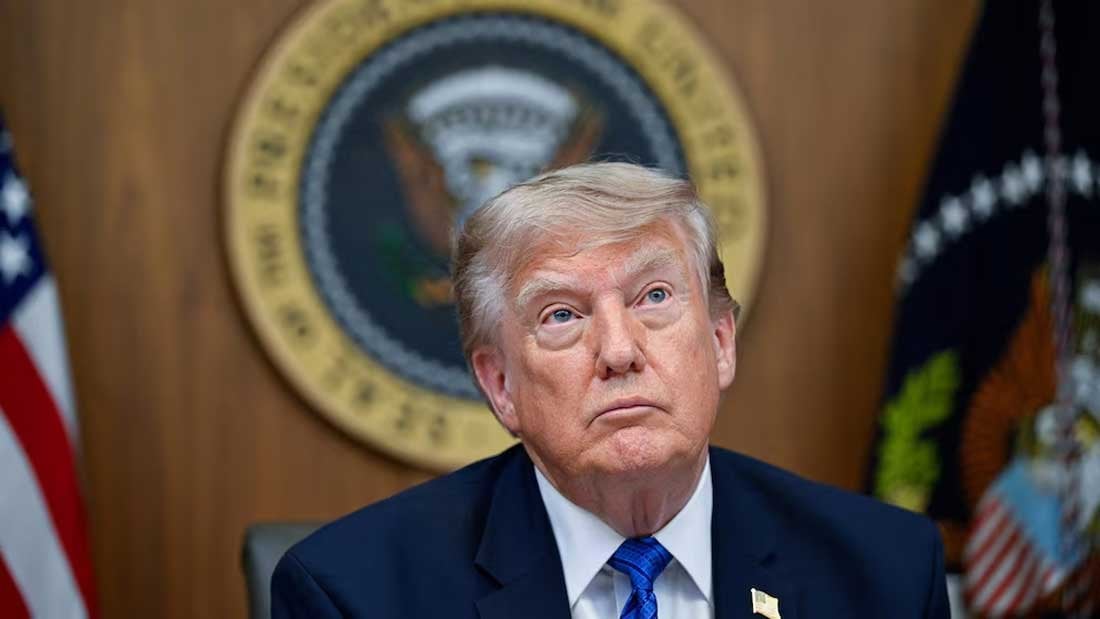
US President Donald Trump said an agreement with Iran had been “largely negotiated”, adding that details of the proposed deal — including the reopening of the Strait of Hormuz — would be announced soon.

Get today's headlines by email

In a social media post on Saturday, Trump said he had held a “very good call” with the leaders of Saudi Arabia, United Arab Emirates and Qatar regarding what he described as a “Memorandum of Understanding pertaining to PEACE”.
“An agreement has been largely negotiated, subject to finalization between the United States of America, the Islamic Republic of Iran, and the various other Countries, as listed,” Trump wrote.
He said the remaining details were still being discussed and would be made public shortly.
Hormuz reopening discussed
Trump did not provide specifics about the draft agreement, but said it would include reopening the Strait of Hormuz. The waterway is one of the world’s most important shipping routes for oil and gas exports.
The US president has repeatedly insisted that any deal with Iran must ensure Tehran cannot obtain a nuclear weapon.
Trump also said he had spoken by phone with Israeli Prime Minister Benjamin Netanyahu on Saturday, describing the conversation as having gone “very well”.
Earlier in the day, Iranian foreign ministry spokesman Esmaeil Baqaei said Tehran and Washington had moved closer in their positions over the past week, although he cautioned that major disagreements remained.
Speaking on Iranian state television, Baqaei accused the US of making “contradictory statements” and warned that progress did not guarantee agreement on key issues.
Framework under discussion
Baqaei said Iran was seeking a deal “in the form of a framework” made up of 14 points. He added that both sides were finalising a memorandum of understanding that could pave the way for further talks within 30 to 60 days and eventually lead to a final agreement.
The renewed diplomatic momentum follows growing tensions in recent days.
On Friday, anonymous US officials told domestic media outlets that the administration was preparing for another round of military strikes, although no final decision had been taken.
Trump also posted on Truth Social that he would not attend his son Donald Trump Jr’s wedding this weekend because he needed to remain in Washington during what he called an “important period of time”.
Only last week, the president said the existing truce with Iran was on “massive life support” after rejecting Tehran’s demands as “totally unacceptable”.
Blockade and maritime tensions
The temporary ceasefire between the United States and Iran began in early April.
The US has maintained a blockade of Iranian ports since 13 April. On Saturday, US Central Command said it had redirected 100 vessels, disabled four ships and allowed 26 humanitarian aid vessels to pass since the operation began.
Centcom commander Admiral Brad Cooper said US forces had been “highly effective” in preventing trade through Iranian ports and increasing economic pressure on Tehran.
At the same time, Iran has claimed military control over waters surrounding the Strait of Hormuz and stated that ships passing through the area require authorisation from the Persian Gulf Strait Authority.
The US and its Gulf allies have rejected Iran’s claims over the strait, while Washington has instructed ships not to comply with Iranian regulations.

Join the discussion?

Already a member?


Adapted by ASEAN Now. Source 24 May 2026
webfact
webfact
At least 82 people have been killed after a gas explosion tore through a coal mine in northern China, according to state media reports.

Get today's headlines by email

China’s state news agency Xinhua said the blast occurred at the Liushenyu Coal Mine, operated by the Tongzhou Group in Shanxi Province.

The explosion happened at 19:29 local time on Friday (11:29 GMT), Xinhua reported.

A total of 247 workers were reportedly on duty at the mine when the incident took place.

Authorities said rescue operations were continuing at the site as emergency crews searched for survivors and worked to assess the full scale of the disaster.

No immediate details were released about the cause of the explosion or the condition of the remaining workers.

Shanxi Province is one of China’s main coal-producing regions and has seen a number of mining accidents over the years despite repeated government pledges to improve industrial safety standards.


Join the discussion?

Already a member?


Adapted by ASEAN Now. Source 23 May 2026
webfact
webfact
Alberta will hold a referendum in October on whether the province should remain part of Canada, in a move that marks the most serious challenge to Canadian unity in decades.

Get today's headlines by email

Premier Danielle Smith announced on Thursday that voters will decide whether Alberta should stay within Canada or begin the constitutional process that could eventually lead to a binding vote on independence.
The referendum is scheduled for 19 October and follows months of mounting pressure from separatist groups in the oil-rich western province.
A citizen-led petition supporting separation reportedly collected more than 300,000 signatures earlier this year, while another petition backing Alberta remaining in Canada drew more than 400,000.
Polls, however, continue to indicate that most Albertans oppose leaving the country.
Referendum question announced
In a televised address, Smith said voters would be asked: “Should Alberta remain a province of Canada or should the Government of Alberta commence the legal process required under the Canadian Constitution to hold a binding provincial referendum on whether or not Alberta should separate from Canada?”
Smith said she personally supports Alberta staying within Canada.
“That is how I would vote on separation in a provincial referendum,” she said, adding that her government and caucus also back remaining in the federation.
At the same time, the premier criticised a recent court ruling that halted a petition seeking a separation referendum. An Alberta judge dismissed the petition process after Indigenous First Nations groups argued they had not been properly consulted, which they said violated their rights.
Smith said the decision unfairly blocked the voices of Albertans who supported the initiative.
“As Premier, I will not have a legal mistake by a single judge silence the voices of hundreds of thousands of Albertans,” she said.
She argued that delaying the issue would only intensify divisions and prolong debate over Alberta’s future.
Long-standing grievances with Ottawa
Support for greater autonomy — and in some cases outright independence — has grown in Alberta over concerns that the federal government in Ottawa does not adequately represent the province’s interests.
Many Albertans believe federal environmental and climate policies have harmed the province’s oil and gas sector, a major driver of the local economy.
There is also a long-standing perception that Alberta contributes more to the national economy through its resource wealth than it receives in return from the federal government.
Smith echoed some of those frustrations in her address, accusing Ottawa of moving toward a more centralised political system and interfering in provincial jurisdiction.
“I categorically reject Ottawa’s attempts to do so,” she said.
While separatist movements have historically remained on the political margins in Alberta, calls for greater provincial powers have become more prominent over the past year.
Legal hurdles remain
Even if voters support the proposal in October, Alberta would still face a lengthy and uncertain path toward separation.
Canada established legal rules for any province seeking independence after two referendums in Quebec, including a narrow 1995 vote in which 50.58% backed remaining in Canada.
Earlier this month, Prime Minister Mark Carney said any separation effort would need to comply with the federal Clarity Act, introduced after the Quebec referendums.
Under the law, any future independence vote would require a clear referendum question and a “clear majority” in favour of separation, with oversight from Canada’s House of Commons.
If those conditions were met, Alberta and the federal government would then enter negotiations over the terms of separation.
Carney has recently worked with Smith on energy and infrastructure issues, including plans for a possible new oil pipeline to the Pacific coast.
Federal ministers and opposition politicians also stressed support for national unity following Thursday’s announcement.
Dominic LeBlanc said the federal government believes Alberta’s interests are best served within a united Canada, while Conservative leader Pierre Poilievre said he would continue campaigning to keep the country united.

Join the discussion?

Already a member?


Adapted by ASEAN Now. Source 23 May 2026
webfact
webfact
The founder of a community group in Greater Manchester has called on Reform UK leader Nigel Farage to apologise after an unannounced visit by him and his campaign team to a cafe supporting young adults with additional needs.

Get today's headlines by email

The dispute arose during campaigning in Makerfield, where Farage and members of the Reform UK team stopped at a cafe operated by Hamlet Wigan CIC for tea and to use the toilets.
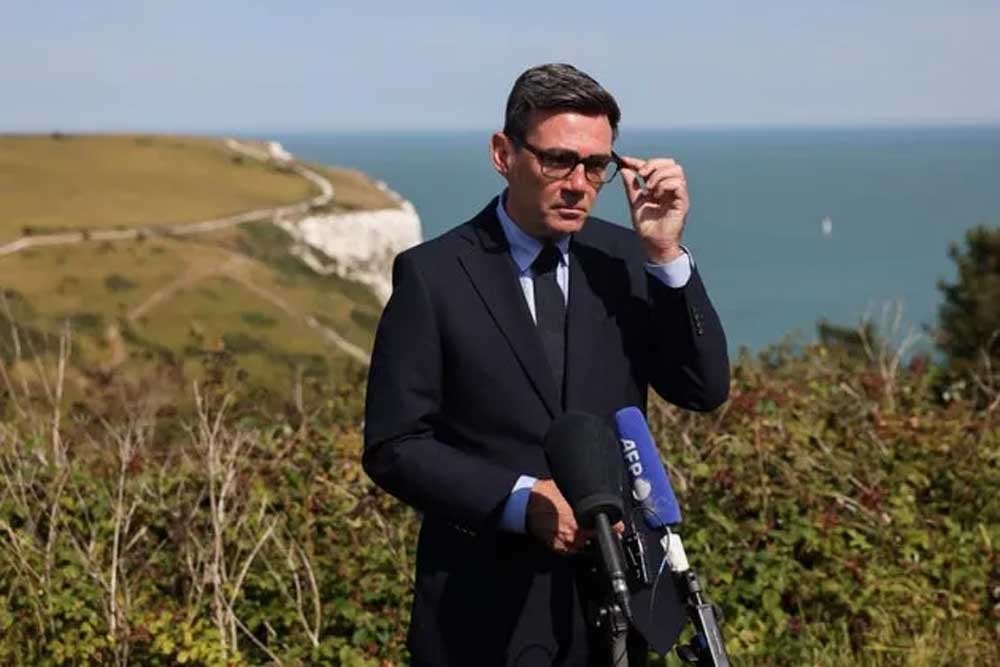
At the time, the venue was hosting a celebration for trainees who had completed their gold Duke of Edinburgh awards. Around a dozen young people attended the event, alongside Andy Burnham, who has long supported the organisation.
Concerns Over Visit
Gemma Crompton, director of the Hamlet, later wrote to Farage describing the visit as “intimidating and overwhelming” for trainees, staff and families.
She said the arrival of a large group, including security staff and media crews, created distress at what had been intended as a private celebration event.
Crompton said the organisation welcomed visitors from all political backgrounds but objected to the way the visit was handled. In her letter, she requested a formal apology and assurances that similar incidents involving organisations supporting vulnerable people would not happen again.
She also accused members of the visiting group of filming and taking photographs without permission, despite requests for media activity to stop once staff became aware of it.
Political Row
Reform UK MP Lee Anderson said the stop had been spontaneous and non-political, describing it as a quick visit for “a cuppa” and to use the toilet facilities.
Anderson questioned why the complaint had been made, saying Crompton had spoken with the group during the visit, posed for photographs and thanked them before they left.
The incident also led to criticism of Burnham after reports suggested he reacted sharply when approached by a journalist accompanying Farage’s team. According to reports, Burnham said campaigners should not enter a venue like the Hamlet unannounced.
Burnham has previously supported the organisation, including attending the opening of its new buildings in 2023. Crompton stressed, however, that the Duke of Edinburgh celebration “was not intended to be a political event or a platform for campaigning”.
Video Response
Following Anderson’s comments, Crompton posted a video online while visiting Buckingham Palace with trainees attending the Duke of Edinburgh celebrations.
In the video, she contrasted Burnham’s attendance with the Reform visit, saying the mayor had arrived alone and without media crews.
She alleged that a group of at least 15 people connected to Reform UK entered the cafe and immediately began filming and taking photographs. Crompton said no consent had been given for the cafe to be used in a political context.
Burnham later backed the organisation’s criticism, saying those involved should “hold their hands up and apologise”.
Reform UK denied the visit had been political. In a statement responding to Crompton’s letter, the party said the stop had been made “in good faith and without political motivation”.
The party also disputed claims that wider filming or photography had taken place, although it acknowledged that staff members had taken selfies with Farage and Reform candidate Robert Kenyon. Reform said some young adults at the cafe had spoken with Farage and shaken his hand.
The statement added that the tone of Crompton’s letter gave the impression it had been politically influenced.


Join the discussion?

Already a member?


Adapted by ASEAN Now. Source 23 May 2026
webfact
webfact
The Trump administration has announced that many legal immigrants seeking permanent residency in the United States will now have to leave the country and apply for green cards from their home nations, marking a major shift in immigration policy.

Get today's headlines by email

The new guidance, issued by U.S. Citizenship and Immigration Services on Friday, limits the long-standing “adjustment of status” process that has allowed immigrants already living legally in the US to apply for permanent residency without leaving the country.
Agency officials described the move as a return to the original purpose of immigration law, while critics said it would disrupt the lives of millions of legal immigrants.
New rules for green card applicants
Under the policy, people living temporarily in the US on student, work or other visas will generally be required to return to their home countries to seek permanent residency. Exceptions will apply only in what the administration described as “extraordinary circumstances.”
USCIS spokesperson Zach Kahler said the administration was seeking to ensure immigrants “navigate our nation’s immigration system properly.”
“From now on, an alien who is in the U.S. temporarily and wants a Green Card must return to their home country to apply,” Kahler said in a statement.
He added that the change would reduce the number of people who remain in the US illegally after being denied residency applications.
The policy coincides with a halt in immigrant visa processing by the U.S. Department of State in 75 countries, further complicating immigration pathways for applicants abroad.
Adjustment of status curtailed
For decades, adjustment of status has been one of the main legal pathways to permanent residency in the US. The process allowed eligible immigrants already in the country to change from temporary visas to green cards without leaving.
Students, temporary workers and spouses of US citizens have commonly used the system to secure permanent residency.
David Bier, director of immigration studies at the Cato Institute, said the process had been used by more than half of legal immigrants over the past generation.
Bier criticised the administration’s decision, arguing that Congress intended eligible immigrants to remain in the US while their applications were processed.
“These are all people who qualify to stay here permanently and Congress clearly wanted them to have a way to stay,” Bier wrote on social media.
He also described the administration as hostile to legal immigration, warning the changes could cost immigrants their jobs and separate families.
Growing immigration backlog
The policy arrives as USCIS faces a large backlog of pending immigration cases. Bier said there are already around one million pending adjustment-of-status applications.
The backlog has expanded since the Trump administration ordered a pause on immigration applications around Thanksgiving last year after the fatal shooting of a National Guard member in Washington, DC. That earlier policy remains the subject of legal challenges.
Legal experts also expect the latest directive to face court scrutiny. Opponents may argue that such a significant change to immigration procedures should have gone through a formal public rulemaking process before being implemented.
While the administration maintains the policy restores the original intent of immigration law, immigration advocates warn it could create uncertainty for long-term residents who have legally built their lives in the United States.

Join the discussion?

Already a member?


Adapted by ASEAN Now. Source 23 May 2026
webfact
webfact
Sir Paul McCartney joined Stephen Colbert for an emotional farewell as “The Late Show” aired its final episode after more than three decades on CBS.

Get today's headlines by email

The programme ended Thursday night with McCartney performing Hello Goodbye alongside Colbert, who sang backing vocals during the performance. Musicians Elvis Costello and Jon Batiste, along with members of the show’s staff, also took part in the closing number.
A Return to a Historic Stage
The finale also marked a return to a venue closely linked to McCartney’s career. The theatre that hosted “The Late Show” was also home to The Ed Sullivan Show, where The Beatles made one of their first US television appearances in 1964.
During the interview segment, Colbert asked McCartney whether the theatre still brought back memories of Beatlemania.
“When you close your eyes, do you hear the girls screaming?” Colbert asked, prompting loud cheers from audience members.
“Yeah,” McCartney replied
Asked how often that still happens, the former Beatle answered: “Often.”
McCartney also recalled the band wearing heavy television makeup during their Sullivan appearance, describing it as “bright orange”.
“That’s very popular in certain circles these days,” Colbert joked, drawing laughter from the audience.
Reflections on America and the Beatles Film
McCartney spoke about how the Beatles once viewed the United States as “the land of the free” and “the greatest democracy”.
“That was what it was,” he said. “It still is, hopefully.”
The musician also discussed the forthcoming Beatles biopic project and praised Paul Mescal, who is set to portray him on screen.
When Colbert asked who was “cuter” — a young McCartney or Mescal — the singer replied: “Me,” before adding that the actor was “very cute”.
The End of ‘The Late Show’
CBS announced in July 2025 that it would end “The Late Show” franchise, describing the move as a financial decision made during a difficult period for late-night television. The show first launched in 1993 with David Letterman as host before Colbert took over in 2015.
Earlier in the finale, Colbert, Costello and Batiste performed Costello’s lesser-known song Jump Up.
As “Hello Goodbye” came to an end, Colbert walked to the studio light switch and invited McCartney to join him. Together, they switched off the lights, plunging the theatre into darkness.
The closing sequence then shifted into a surreal scene in which the building appeared inside a snow globe being sniffed by a dog. Colbert’s voice could be heard saying, “C’mon Benny, let’s go,” before the programme ended.


Join the discussion?

Already a member?


Adapted by ASEAN Now. Source 23 May 2026
webfact
webfact
A second federal lawsuit has been filed against the Trump administration’s planned $1.8 billion “Anti-Weaponization Fund”, escalating legal challenges over a compensation programme intended for people who say they were targeted by the Biden administration.

Get today's headlines by email

The complaint, filed on Friday in the Eastern District of Virginia, argues that the fund was created without congressional approval and violates constitutional limits on federal spending. The suit also claims the initiative breaches the 14th Amendment’s ban on using public money “in aid of insurrection or rebellion against the United States”.
The legal action was brought by a coalition of nonprofit groups and individuals, including a former prosecutor involved in January 6 cases, the advocacy group Common Cause, the National Abortion Federation, and the city of New Haven, Connecticut.
In court filings, the plaintiffs argued the fund lacked any legal foundation or oversight.
“Created following a collusive agreement between the President and his own administration, this Fund has no congressional authorization, no basis in law, and no accountability,” the lawsuit stated.
Second Legal Challenge
The latest case follows a separate lawsuit filed earlier in Washington, D.C., by former Capitol Police officer Harry Dunn and Metropolitan Police officer Daniel Hodges. Both officers defended the Capitol during the January 6, 2021 attack and are seeking to block the fund before it is established.
The Department of Justice announced the creation of the “Anti-Weaponization Fund” as part of a broader settlement arrangement involving President Donald Trump. In exchange, Trump agreed to drop a $10 billion lawsuit against the Internal Revenue Service and two additional civil claims.
The proposed fund has triggered criticism from both Democrats and some Republicans, particularly over the possibility that taxpayer money could ultimately benefit people convicted or accused in connection with the Capitol riot.
Under the agreement, Acting Attorney General Todd Blanche is expected to establish the fund within 30 days. Blanche would also appoint a five-member commission responsible for reviewing and approving claims.
Trump Defends the Plan
Although Trump previously said he was not directly involved in creating the programme, he publicly defended it on social media on Friday.
He said he had sacrificed the possibility of securing a large personal settlement in order to support people he described as victims of a “weaponized” Biden administration.
Trump cited both the disclosure of his tax returns and the FBI search of his Mar-a-Lago property among the grievances connected to the settlement discussions.
The Virginia lawsuit also challenges the administration’s planned use of the federal Judgment Fund, a permanent appropriation typically used to pay legal settlements and court judgments against the government.
Plaintiffs argue the administration is improperly using that fund to bypass Congress’s constitutional authority over federal spending.
Questions Over Legal Standing
Despite growing political controversy, some legal experts have questioned whether the lawsuits will succeed.
A key issue is whether the plaintiffs can demonstrate legal standing — meaning they can show they would be directly harmed by the creation of the fund.
ABC News legal contributor James Sample said the earlier case brought by the Capitol officers may struggle to meet that requirement because many of the harms they cite relate to past events rather than future consequences tied directly to the compensation programme.
Sample acknowledged that the officers had faced threats and harassment since speaking publicly about January 6, but argued those injuries may not be legally connected to the proposed use of the Judgment Fund.
The lawsuits were filed before the compensation fund itself has formally begun operating.


Join the discussion?

Already a member?


Adapted by ASEAN Now. Source 23 May 2026
webfact
webfact
Russian President Vladimir Putin has vowed retaliation after accusing Ukraine of carrying out a deadly drone strike on a student dormitory in the Russian-occupied town of Starobilsk in eastern Ukraine.

Get today's headlines by email

Speaking at a reception at the Kremlin on Friday, Putin said six people were killed and 39 injured in the overnight attack in the occupied Luhansk region. He added that another 15 people were missing following the strike.
Moscow said the building targeted was a student dormitory and denied claims that military facilities were located nearby.
“There are no military facilities, intelligence service facilities, or related services in the vicinity,” Putin said. He also rejected suggestions that the damage may have been caused by Russian air defence systems or electronic warfare equipment.
The Russian leader said the attack had been carried out in three waves using 16 drones and instructed the military to prepare proposals for a response.
Ukraine claims military target
Ukraine’s military later confirmed carrying out a strike in Starobilsk, saying it had targeted the headquarters of Russia’s elite Rubicon drone unit. Kyiv did not specify whether the military site was located in the same building identified by Russian authorities as a dormitory.
In a statement, Ukraine accused Rubicon personnel of repeatedly attacking civilians and civilian infrastructure inside Ukraine.
The military said Ukrainian forces were striking “military infrastructure and facilities used for military purposes” while adhering to international humanitarian law and the laws of war.
Russian state television broadcast footage of what it said was one of the injured students, identifying her as 19-year-old Diana Shovkun. Reports said she suffered head injuries after being struck by falling concrete during the collapse of part of the building.
No images or videos of the people Moscow said were killed were publicly released.
Escalating strikes
The reported attack came amid continuing cross-border drone and missile strikes by both sides in the war, now in its fourth year since Russia launched its full-scale invasion of Ukraine in 2022.
On Thursday, Ukrainian President Volodymyr Zelensky said Ukrainian forces had struck the headquarters of Russia’s FSB security service in occupied parts of the southern Kherson region.
Zelensky claimed around 100 Russian personnel had been killed or wounded in the operation.
Russia’s defence ministry has not commented on the reported Kherson strike, although a pro-Kremlin Telegram channel reported casualties after what it described as a “massive drone strike”.
Civilian casualties remain a major point of dispute between Moscow and Kyiv.
Ukraine has repeatedly accused Russia of deliberately targeting civilians and residential areas during the war, allegations the Kremlin denies.
Last week, Ukrainian officials said a Russian missile strike on a high-rise residential building in Kyiv killed 24 people, including three girls.

Join the discussion?

Already a member?


Adapted by ASEAN Now. Source 23 May 2026

webfact
webfact
British police investigating Andrew Mountbatten-Windsor have appealed for further witnesses to come forward as detectives examine allegations that could include sexual misconduct linked to his time as a UK trade envoy.

Get today's headlines by email

In an update on Friday, Thames Valley Police said investigators believed more people may hold relevant information as part of the force’s ongoing inquiry into alleged misconduct in public office by the former prince.
The force confirmed it had contacted lawyers representing a woman who previously claimed she was taken to an address in Windsor for sexual purposes in 2010.
The allegation, first reported by the BBC earlier this year, relates to an alleged encounter at Royal Lodge, Mountbatten-Windsor’s former residence.
Contact With Alleged Victim
The woman’s lawyer, Brad Edwards of US law firm Edwards Henderson, told the BBC that his client had been sent to Britain by convicted sex offender Jeffrey Epstein while she was in her 20s.
He said the woman later spent a night with Mountbatten-Windsor and was given a tour of Buckingham Palace.
Police said they had not yet spoken directly to the alleged victim but stressed that any future complaint would be handled carefully and confidentially.
“We have engaged with the woman’s legal representative to confirm that, should she wish to report this to police, it will be taken seriously and handled with care, sensitivity and respect for her privacy and her right for anonymity,” the force said.
Investigators added that any contact with police would proceed according to the woman’s wishes.
Broad Misconduct Inquiry
The statement marked the first public update since Mountbatten-Windsor was arrested in February at his home in Sandringham, Norfolk, over allegations linked to misconduct in public office.
He was released under investigation later the same day.
Mountbatten-Windsor has denied all wrongdoing connected to Epstein and has rejected accusations that he benefited personally from his role as Britain’s trade envoy.
Assistant Chief Constable Oliver Wright said investigators continued to examine “a number of aspects of alleged misconduct” following the release of US government files related to Epstein.
“Our misconduct in public office investigation is continuing,” Wright said. “Misconduct in public office is a crime that can take different forms, making this a complex investigation.”
Focus Beyond Confidential Information
The update came after the British government published documents relating to Mountbatten-Windsor’s appointment as a trade envoy in 2001.
The papers suggested there was no evidence he had undergone formal vetting before taking the role and showed that the late Queen Elizabeth II had supported his appointment.
Previously released documents from the US Department of Justice appeared to indicate Mountbatten-Windsor shared confidential material with Epstein while serving as a trade envoy. Officials in such positions are barred from disclosing sensitive commercial or political information.
However, Britain’s PA Media news agency reported that detectives were concerned the public may wrongly believe the investigation only concerns alleged information-sharing.
Under British law, misconduct in public office can cover a wide range of alleged behaviour, including corruption, conflicts of interest, financial misconduct, wilful neglect of duty and sexual misconduct.
Police said they continued to support other UK forces contacting victims and survivors connected to Epstein investigations.


Join the discussion?

Already a member?


Adapted by ASEAN Now. Source 23 May 2026
webfact
webfact
US Secretary of State Marco Rubio has sought to reassure Nato allies over shifting American troop deployments in Europe, following a series of announcements by President Donald Trump that have unsettled members of the alliance.

Get today's headlines by email

Rubio spoke after a meeting of Nato foreign ministers in Helsingborg, where concerns were raised over recent US decisions involving troop movements in Poland and Germany.
Troop changes spark uncertainty
Trump announced on Thursday that the US would deploy an additional 5,000 troops to Poland.
The move came only a week after the Pentagon cancelled a planned deployment of 4,000 troops to the country and days after Washington confirmed plans to withdraw 5,000 troops from Germany.
The sequence of announcements has caused confusion among Nato members, many of whom are already uneasy about Washington’s long-term commitment to European security.
Rubio addresses Nato concerns
Speaking to reporters on Friday, Rubio said the US was continually reviewing its military posture abroad in light of wider global obligations, including ongoing tensions in the Middle East linked to the conflict involving the US, Israel and Iran.
“Allies understand that the United States troop presence in Europe is going to be adjusted,” Rubio said, adding that consultations with Nato partners had already taken place.
US says allies were informed
While acknowledging concerns among allies, Rubio said they were aware changes were under discussion even if they were not fully satisfied with them.
Rubio also said troop deployments were being reassessed as part of broader global military commitments, including operations outside Europe.
Trump links move to Polish ties
Trump announced the new deployment to Poland while Nato ministers were meeting in Sweden.
In a post on his Truth Social platform, he linked the decision to Washington’s relationship with Polish President Karol Nawrocki, whom Trump supported during Poland’s presidential election campaign.
Uncertainty over deployment plans
The US president did not clarify whether the extra troops were connected to the previously cancelled deployment or represented a separate operation altogether.
Questions have also been raised about whether the troops leaving Germany could instead be redirected to Poland.
Germany withdrawal adds to confusion
Earlier this month, Washington confirmed plans to reduce its military presence in Germany after tensions between Trump and German Chancellor Friedrich Merz over the conflict involving Iran.
The overlapping announcements have left several allies uncertain about the direction of US military planning in Europe.
Sweden highlights allied unease
Swedish Foreign Minister Maria Malmer Stenergard said the mixed signals from Washington had been difficult for allies to interpret.
“It is confusing indeed, and not always easy to navigate,” she said while hosting the Nato talks.
US remains central to Nato defence
The US remains Nato’s largest military power and has stationed troops across Europe for decades as part of the alliance’s collective defence structure.
Since Russia launched its full-scale invasion of Ukraine in February 2022, European allies have repeatedly urged Washington to maintain a strong military presence on the continent.
Large US military presence in Europe
Germany hosts the largest number of US troops in Europe, with more than 36,000 personnel stationed there.
Poland and the UK each host around 10,000 US troops, while Italy has roughly 12,000.
Trump presses Nato on spending
Trump has long criticised Nato members for relying too heavily on the US and failing to spend enough on defence.
He has repeatedly argued that European allies should contribute more financially to the alliance.
Europe moves toward self-reliance
Several Nato countries have since pledged increases in defence spending, though tensions remain over Washington’s broader “America First” foreign policy approach.
The White House has recently indicated that it plans to reduce overall US troop numbers in Europe as part of that strategy.
Nato Secretary General Mark Rutte said Europe would continue moving towards greater military self-reliance.
Rubio stresses value of alliance
Rubio also acknowledged longstanding debate within the US over the value of Nato, saying the alliance must remain beneficial not only for Europe but also for the United States.


Join the discussion?

Already a member?


Adapted by ASEAN Now. Source 23 May 2026
webfact
webfact
Tulsi Gabbard will resign as US director of national intelligence at the end of June, citing her husband's recent bone cancer diagnosis as the reason for leaving the Trump administration.

Get today's headlines by email

In a resignation letter obtained by CBS News, Gabbard said she could not continue in such a demanding role while her husband, Abraham, faces serious health challenges.
“His strength and love have sustained me through every challenge,” she wrote. “I cannot in good conscience ask him to face this fight alone while I continue in this demanding and time-consuming position.”
US President Donald Trump praised Gabbard in a social media post, saying she had “done an incredible job” and would be missed. He added that she wanted to focus on supporting her husband during his treatment.
Her resignation takes effect on 30 June. Aaron Lukas, the principal deputy director of national intelligence, will serve as acting director, Trump said.
Tensions Over Iran Policy
Gabbard, a former Democratic congresswoman from Hawaii, became one of Trump’s most prominent intelligence officials after being confirmed in early 2025. However, she has maintained a lower public profile in recent months as the administration intensified its foreign policy actions involving Iran, Cuba and Venezuela.
Known for her long-standing opposition to US military intervention abroad, Gabbard faced scrutiny after the United States joined Israeli strikes on Iran. She stopped short of fully endorsing the decision and avoided directly answering questions during a congressional hearing in March about whether the administration understood the potential consequences of the conflict.
She also came under pressure from Democrats over what they viewed as inconsistencies between intelligence assessments and White House statements regarding Iran’s nuclear programme.
Last year, Trump publicly dismissed Gabbard’s testimony to Congress that Iran was not actively seeking to build a nuclear weapon.
“I don’t care what she said,” Trump told reporters at the time. “I think they were very close to having a weapon.”
The president has repeatedly cited Iran’s nuclear capabilities as justification for US military action.
Senior Departures From Administration
Gabbard is the fourth Cabinet-level official to leave the Trump administration this year. Former labor secretary Lori Chavez-DeRemer departed in April, while Homeland Security Secretary Kristi Noem and Attorney General Pam Bondi also stepped down earlier in 2026.
Her resignation follows the earlier departure of her top aide, former National Counterterrorism Center Director Joe Kent, who left over disagreements concerning US policy toward Iran. Kent had urged Trump to “reverse course” on the conflict.
After Kent resigned, Gabbard publicly defended the president’s approach, saying the commander-in-chief was responsible for deciding what constituted an imminent threat to the United States.
From Democrat to Trump Ally
A military veteran who served in Iraq with a medical unit, Gabbard first entered politics in 2002 when she was elected to the Hawaii Legislature at the age of 21, becoming the youngest person ever elected in the state.
She later served in Congress as a Democrat from 2013 to 2021 and became the first Hindu member of the US House of Representatives.
Gabbard ran unsuccessfully for president in 2020 on an anti-interventionist platform. Two years later, she left the Democratic Party, accusing it of being controlled by what she called an “elitist cabal of warmongers”.
After becoming a political commentator on Fox News, she increasingly aligned herself with Trump, endorsing him during the 2024 presidential campaign and joining his transition team after the election.
Trump later nominated her to lead the US intelligence community, a role that oversees coordination among multiple intelligence agencies and advises the president on national security matters.


Join the discussion?

Already a member?


Adapted by ASEAN Now. Source 23 May 2026
webfact
webfact
President Donald Trump has announced that the United States will deploy an additional 5,000 troops to Poland, days after his administration paused a planned military deployment there and confirmed plans to reduce the American troop presence in Germany.

Get today's headlines by email

The move marks a sharp shift in U.S. military positioning in Europe and comes amid growing tensions within NATO over support for the recent U.S.-Israeli military campaign against Iran.
Trump revealed the decision in a social media post on Thursday, linking the deployment directly to his relationship with Polish President Karol Nawrocki, a nationalist leader elected last year with backing from Poland’s Law and Justice party.
“Based on the successful Election of the now President of Poland, Karol Nawrocki, who I was proud to Endorse, and our relationship with him, I am pleased to announce that the United States will be sending an additional 5,000 Troops to Poland,” Trump wrote.
Allies caught off guard
The announcement followed confusion over a previously planned U.S. military exercise in Poland involving around 4,000 troops. Polish officials had earlier been informed that the deployment was being canceled, according to prior reports, before Vice President JD Vance later said the exercise had merely been delayed.
A Polish official and a NATO representative said allies had not been consulted in advance about the latest troop announcement. Both spoke anonymously because of the sensitivity of internal discussions.
The Pentagon referred questions to the White House, which did not immediately provide further details about the deployment or its timeline.
The decision also comes after Washington confirmed plans earlier this month to withdraw 5,000 troops from bases in Germany. Trump has repeatedly criticised NATO allies over defence spending and has expressed frustration with countries that declined to support U.S. and Israeli military operations against Iran.
Poland seeks larger U.S. presence
Poland has long sought a stronger American military presence on its territory, viewing the U.S. as a key security guarantor on NATO’s eastern flank.
Nawrocki said earlier this month that he would ask Trump to redirect troops leaving Germany to Poland. Other eastern European countries, including Estonia, Lithuania, Latvia and Romania, have also pushed for increased U.S. deployments following the proposed reductions in Germany.
Polish Prime Minister Donald Tusk previously said Warsaw would welcome opportunities to expand the U.S. presence but cautioned against transferring forces away from other European allies.
Polish officials also held discussions with Trump administration representatives in Washington this week regarding U.S. troop deployments, according to a Polish government summary of the meeting.
Foreign Minister Radosław Sikorski said at a defence conference in Warsaw that additional American troops would be “welcome in Poland” regardless of where they had previously been stationed.
Germany drawdown sparks concern
Trump’s decision to reduce forces in Germany reportedly surprised Pentagon officials, particularly because it appeared to diverge from an ongoing Pentagon review of the U.S. global military footprint.
The reductions followed a public dispute between Trump and German Chancellor Friedrich Merz over the Iran conflict. Merz had said that Washington was “being humiliated by the Iranian leadership.”
Trump later suggested the cuts in Germany could deepen further, telling reporters: “We’re cutting a lot further than 5,000” troops.
The latest troop shift is likely to intensify debate within NATO over U.S. commitments in Europe and the future balance of American forces across the continent.

Join the discussion?

Already a member?


Adapted by ASEAN Now. Source 22 May 2026
webfact
webfact
US Secretary of State Marco Rubio has said Cuba poses a “national security threat” to the United States and warned that the chances of reaching a peaceful agreement with Havana were “not high”.

Get today's headlines by email

The remarks came a day after the US charged former Cuban president Raúl Castro with murder over the 1996 downing of two aircraft that killed US nationals.
Speaking to reporters on Thursday, Rubio said Washington still preferred diplomacy but suggested relations with Cuba’s leadership were unlikely to improve soon.
“Diplomacy remains our preference with Cuba,” Rubio said. “I’m just being honest with you, the likelihood of that happening, given who we’re dealing with right now, is not high.”
Rubio also accused Cuba of being “one of the leading sponsors of terrorism in the entire region”, a claim strongly rejected by Havana.
Cuban response
Cuban Foreign Minister Bruno Rodríguez Parrilla accused Rubio of spreading “lies” and denied that Cuba had ever threatened US security.
In a post on X, Rodríguez said Rubio was attempting to “instigate a military aggression” against the island and accused Washington of “ruthlessly and systematically” attacking Cuba.
The exchange marked a further escalation in tensions between the two countries as the Trump administration increases pressure on Cuba’s communist government.
Pressure on Havana
Cuba is facing a severe economic crisis, with fuel shortages, prolonged blackouts and food scarcity affecting much of the population.
Rubio said Cuba had accepted a US offer of $100m (£74.4m) in humanitarian assistance, although the Cuban government has continued to blame US sanctions and economic restrictions for worsening conditions on the island.
US President Donald Trump has repeatedly tightened pressure on Havana and has openly discussed the possibility of ending the communist system established after the 1959 revolution.
On Wednesday, the US Justice Department announced charges against Castro and several others linked to the 1996 shooting down of two planes operated by the Miami-based group Brothers to the Rescue. Prosecutors allege Castro, then Cuba’s defence minister, ordered the attack.
Asked whether the US intended to bring Castro to America to face trial, Rubio declined to discuss possible plans.
“I’m not going to talk about how we’re going to get him here,” he said.
Acting Attorney General Todd Blanche said the US expected Castro to appear in court “by his own will or another way”.
Trump hints at further action
Speaking in the Oval Office, Trump described Cuba as a “failed country” and said his administration was attempting to help the Cuban people “on a humanitarian basis”.
He also suggested he could succeed where previous US presidents had failed.
“Other presidents have looked at this for 50, 60 years doing something and it looks like I’ll be the one that does it,” Trump said.


Join the discussion?

Already a member?


Adapted by ASEAN Now. Source 22 May 202
webfact
webfact
German Chancellor Friedrich Merz has urged the European Union to consider granting Ukraine an “associate membership” status while also reviving diplomatic efforts with Russia to help end the war, according to a letter obtained by The Associated Press.

Get today's headlines by email

The proposal comes as the EU debates whether it should take a more active role in negotiations with Moscow, amid stalled U.S.-brokered talks and Washington’s growing focus on the conflict involving Iran.
Associate membership proposal
Under Merz’s plan, Ukraine would be allowed to participate in EU meetings without voting rights. Kyiv would also gain non-voting representation within the European Commission and the European Parliament.
Merz argued that the arrangement would go beyond the current EU-Ukraine Association Agreement and should not be viewed as a diluted form of membership. He also suggested introducing a “snap-back mechanism” that could suspend the arrangement if Ukraine failed to maintain democratic standards.
Last month, Antonio Costa and Ursula von der Leyen said formal accession talks with Ukraine should begin “without delay.” Merz also backed the opening of those negotiations.
Ukrainian President Volodymyr Zelenskyy welcomed signs of progress this week, saying Kyiv had fulfilled all necessary conditions for advancement in the accession process.
Obstacles to EU accession
Countries seeking EU membership must align their laws with the bloc’s standards across 35 policy chapters, covering areas from judicial reform to agriculture and fisheries. Every stage of the process requires unanimous approval from all 27 member states.
Hungary has so far blocked the start of negotiations with Ukraine, although that position could shift following the formation of a new government in Budapest earlier this month.
Some EU officials are expected to resist Merz’s proposal, arguing that membership should remain strictly merit-based and only be granted once all conditions are fully met.
However, the German leader said the associate membership model could also apply to other countries seeking EU entry, particularly states in the Western Balkans. EU leaders are due to discuss enlargement issues at a summit next month.
Renewed debate over Russia talks
Merz said closer EU integration for Ukraine could support efforts to reach a negotiated settlement with Russia, describing such diplomacy as vital for European security.
Ukraine views EU membership as an important long-term security guarantee after the war. Kyiv still considers NATO membership its strongest possible safeguard, but the Trump administration has ruled out that option for now, while some allies remain reluctant to admit a country still engaged in active conflict.
As U.S.-led mediation efforts struggle to make progress, European officials have increasingly discussed whether the EU should launch its own parallel diplomatic initiative with Russia.
Earlier this month, Costa said Europe would eventually need direct talks with Moscow to address broader security concerns, while stressing that such efforts should not undermine American negotiations.
Speculation has since grown over who could represent Europe in potential talks with Russian President Vladimir Putin. Names mentioned in European media include former German Chancellor Angela Merkel and former European Central Bank chief Mario Draghi.
Putin has reportedly suggested former German Chancellor Gerhard Schröder as a possible interlocutor, though the idea has received little support in Germany due to Schröder’s longstanding ties to Russia’s energy sector and his relationship with Putin.
EU foreign policy chief Kaja Kallas dismissed the suggestion, saying it would be unwise to let Putin effectively choose Europe’s negotiator.
Zelenskyy has also called for a stronger European presence in any peace process, saying Europe must have “a strong voice and presence” in negotiations.

Join the discussion?

Already a member?


Adapted by ASEAN Now. Source 22 May 2026
webfact
webfact
The US Supreme Court has narrowly spared an Alabama death row inmate from execution, leaving in place a lower court ruling that found he is intellectually disabled and therefore protected from capital punishment under the Constitution.

Get today's headlines by email

In a 5-4 decision on Thursday, the justices dismissed an appeal from Alabama officials seeking to reinstate the death sentence of Joseph Clifton Smith, who was convicted of first-degree murder in a 1997 robbery killing.
The court did not provide a full explanation for its ruling.
Dispute over IQ scores
The case centred on whether Smith met the legal standard for intellectual disability, which the Supreme Court ruled more than two decades ago bars the execution of people convicted of capital crimes under the Eighth Amendment’s ban on “cruel and unusual” punishment.
Smith had taken five IQ tests over nearly 40 years, recording scores of 75 in 1979, 74 in 1982, 72 in 1998, 78 in 2014 and 74 in 2017.
Alabama argued that only scores of 70 or below should qualify someone as intellectually disabled and said Smith’s results did not meet that threshold. State lawyers maintained that the Constitution did not prevent his execution for the murder of Durk Van Dam.

Medical groups, however, have long advised courts to assess intellectual disability using a broader evaluation that includes practical and social functioning, rather than relying solely on IQ test scores. They also note that such tests include margins of error, meaning Smith’s 72 score could effectively fall below 70.
Two lower federal courts concluded that Smith’s intellectual functioning, combined with school records and behavioural history, showed he was intellectually disabled.
Court documents said Smith had been classified at school as “Educable Mentally Retarded” in seventh grade and consistently performed below his expected grade level before later dropping out. He also alleged he suffered physical and verbal abuse during childhood.
Split among the justices
Justice Sonia Sotomayor, joined by Justice Ketanji Brown Jackson, wrote separately to say the court was not in a position to establish a broader legal standard for weighing multiple IQ scores.
She said courts should continue to assess such cases individually, guided by precedent and medical expertise.
“If a conflict among the states or lower courts emerges and a case properly presents the issue, it may be appropriate for this court to weigh in with more specific guidance,” Sotomayor wrote.
Four conservative justices dissented from the decision. Justice Samuel Alito, joined by Justices Clarence Thomas, Neil Gorsuch and Chief Justice John Roberts, criticised the majority for declining to clarify the law.
“The court shies away from its obligation to provide workable rules for capital cases,” Alito wrote.
Thomas separately argued that the constitutional ban on executing intellectually disabled offenders should be reconsidered.
Broader death penalty debate
The ruling leaves unresolved how courts should interpret differing IQ test results in death penalty cases, an issue that continues to divide states and lower courts.
According to the Death Penalty Information Center, as many as 20% of the roughly 2,100 people on death row in the United States may have some degree of intellectual disability.
Smith’s death sentence will now remain blocked, and he is expected to spend the rest of his life in prison.

Join the discussion?

Already a member?


Adapted by ASEAN Now. Source 22 May 2026
webfact
webfact
Iran has restarted parts of its drone production network during the six-week ceasefire that began in April, according to US intelligence assessments cited by multiple sources familiar with the findings. The assessments suggest Tehran is rebuilding sections of its military-industrial base more quickly than US officials had initially expected after sustained US and Israeli strikes.

Get today's headlines by email

Several sources told CNN that Iran is already restoring damaged weapons production capabilities, including missile launchers, launch sites and manufacturing systems tied to drones and ballistic missiles. US intelligence estimates reportedly indicate Iran could fully restore its drone attack capability within six months.
One US official said Iranian efforts had surpassed previous expectations for how quickly the country could recover from the damage caused during the conflict.
Drone production resumes
US intelligence believes Iran resumed some drone manufacturing activity during the ceasefire period that followed weeks of fighting earlier this year. Drones are viewed as a continuing threat to both Israel and Gulf states because they can supplement Iran’s weakened missile arsenal if hostilities resume.
President Donald Trump has repeatedly warned that the US could restart military operations if negotiations with Tehran fail. He said earlier this week that he had come close to authorising renewed strikes.
According to sources familiar with the intelligence, Iran’s rapid recovery has been helped by several factors, including external support and the limited effectiveness of some strikes against critical infrastructure. One source said Russia and China had contributed to Iran’s ability to rebuild.
Two sources said China had continued supplying components that could be used in missile production during the conflict, although those deliveries may have slowed because of a US blockade.
Israeli Prime Minister Benjamin Netanyahu recently alleged that China was providing Iran with missile-manufacturing components. China rejected the accusation, with foreign ministry spokesman Guo Jiakun saying the claims were unfounded.
Missile and drone capabilities remain
Recent intelligence assessments indicate Iran still retains significant ballistic missile, drone and air defence capabilities despite the damage caused by US-Israeli operations.
CNN previously reported that roughly half of Iran’s missile launchers were believed to have survived the strikes. More recent assessments reportedly place that figure closer to two-thirds, partly because the ceasefire allowed Iran time to recover launchers buried beneath rubble.
The intelligence also suggests around half of Iran’s drone capability remains intact, with thousands of drones still available.
Sources said a large proportion of Iran’s coastal defence cruise missiles also survived because US air operations largely avoided coastal military infrastructure. Those systems are considered central to Iran’s ability to threaten shipping through the Strait of Hormuz.
Pentagon claims questioned
US Central Command commander Adm. Brad Cooper told lawmakers this week that “Operation Epic Fury” had destroyed 90% of Iran’s defence industrial base and severely weakened its missile and drone forces.
Cooper said the operation had damaged Iran’s military capacity to such an extent that it would take years to recover.
However, intelligence assessments reviewed by CNN appear to contradict that timeline. Two sources familiar with the findings said the damage was more likely to delay Iran’s recovery by months rather than years.
Some parts of Iran’s military-industrial infrastructure remain operational, according to the intelligence, potentially accelerating reconstruction efforts for key weapons systems.
A spokesperson for US Central Command declined to comment on intelligence matters. Pentagon spokesman Sean Parnell said the US military retained the capability to carry out further operations whenever ordered by the president.
The intelligence assessments overall suggest the conflict significantly weakened Iran’s military capabilities but did not eliminate them. Officials believe Tehran is now attempting to limit the long-term impact of the strikes through a rapid rebuilding campaign.


Join the discussion?

Already a member?


Adapted by ASEAN Now. Source 22 May 2026
webfact
webfact
Single-sex spaces such as toilets and changing rooms should be used according to biological sex, new guidance from Britain’s equality watchdog has confirmed.

Get today's headlines by email

The updated code of practice, produced by the Equality and Human Rights Commission and approved by ministers, states that a transgender woman should not use female toilets or changing facilities because she is biologically male.
Instead, the guidance says transgender people should be offered alternative facilities, including gender-neutral or third spaces where possible.
The guidance follows last year’s landmark ruling by the Supreme Court of the United Kingdom, which found that the definition of a woman under the Equality Act is based on biological sex.
New rules for public services
The code of practice outlines how businesses, associations and public services should organise facilities ranging from gyms and shopping centres to hospitals and restaurants.
It also states that denying transgender people access to all facilities would likely be disproportionate and could amount to discrimination.
The guidance recommends that gender-neutral toilets and changing rooms should include self-contained lockable cubicles with floor-to-ceiling walls and wash basins. The EHRC said organisations could also choose to allow transgender people to use disabled toilets.
Where premises only have separate male and female toilets, the guidance says they could instead be redesignated as unisex facilities.
The code, which runs to more than 300 pages, has now been placed before parliament. MPs and peers have 40 days to object before it becomes statutory guidance.
The EHRC first submitted the draft guidance to the government in September 2025. Ministers initially said the issue would be handled “thoroughly and carefully” before releasing the document eight months later.
Women and Equalities Minister Bridget Phillipson said the government’s aim was to ensure people could live free from discrimination and harassment.
“Our focus has always been making sure organisations have clear, accessible guidance on how to implement the law,” she said.
Debate over impact on trans people
EHRC chair Mary-Ann Stephenson said she hoped the public would approach the code “with an open mind”.
“I think we do need to broaden out the debates, and we need to start from a point of saying, how do we make sure that everyone has access to the services they need,” she said.
At the Watershed arts cinema in Bristol, chief executive Clare Reddington said delays to the guidance had caused confusion and misinformation.
The venue, which has gender-neutral toilets alongside separate male and female facilities, won a Loo of the Year award in 2024.
Reddington described the impact on transgender people as “toxic” and said many had been waiting for clarity on what the guidance would mean for “their ability to live a full public life”.
“I would say that designing toilets for everyone is great for business,” she added.

Clare Reddington
Campaign groups divided
Gender-critical campaign group Sex Matters welcomed the guidance.
Its co-founder Maya Forstater said organisations could no longer claim they were waiting for official clarification before changing policies.
“The new guidance is long and detailed, but at its heart is a simple principle: ‘sex’ means what it says – male and female,” she said.
However, transgender rights group TransActual said the guidance reduced protections for transgender people and the wider LGBT community.
The group said it would continue campaigning for equal access to public life and would publish a fuller response after reviewing the code in detail.
Employment lawyer Joanne Moseley of Irwin Mitchell said businesses were increasingly seeking legal advice on how to respond to the changes.
She said clear signage and the availability of gender-neutral facilities would be important, but warned that organisations could still face discrimination claims even before the guidance formally comes into force.

Join the discussion?

Already a member?


Adapted by ASEAN Now. Source 22 May 2026


webfact
webfact
Sexually transmitted infections including gonorrhoea and syphilis reached record levels across Europe in 2024, according to new figures from the European Centre for Disease Prevention and Control (ECDC).

Get today's headlines by email

The agency said both infections had climbed to their highest levels in more than a decade, warning that gaps in testing, prevention and awareness were contributing to the rise.
Gonorrhoea cases surged to 106,331 across participating European countries last year, marking a 303% increase since 2015. Syphilis cases also more than doubled over the same period, reaching 45,557.
Health officials warned that untreated infections can lead to serious long-term health problems, including infertility, chronic pain and damage to the heart or nervous system.
Sharp rise in infections
Bruno Ciancio, head of the ECDC’s Directly Transmitted and Vaccine-Preventable Diseases unit, said the increase in congenital syphilis cases was especially concerning.
Congenital syphilis occurs when the infection passes from a pregnant person to a newborn baby and can lead to lifelong complications.
The ECDC said congenital syphilis cases nearly doubled between 2023 and 2024.
Ciancio urged people to take simple preventive measures, including using condoms with new or multiple partners and getting tested if symptoms appear.
Symptoms of gonorrhoea can include pain, unusual discharge and inflammation of the genitals, although some people may show no symptoms at all.
Syphilis symptoms may include sores around the mouth or genitals, rashes on the hands, hair loss and flu-like illness. The symptoms can appear and disappear over time, making the infection difficult to detect in its early stages.
Spain reports highest totals
Among participating European countries, Spain recorded the highest number of confirmed cases for both infections in 2024.
The country reported 37,169 gonorrhoea cases and 11,556 syphilis infections.
The ECDC said men who have sex with men continued to be the group most disproportionately affected, showing the steepest long-term increases in both diseases.
However, the agency also noted significant rises in syphilis cases among heterosexual women of reproductive age.
While gonorrhoea and syphilis rose sharply, chlamydia remained the most commonly reported bacterial sexually transmitted infection overall.
A total of 213,443 chlamydia cases were recorded in 2024, although this represented a 6% decline compared with 2015.
UK figures remain separate
The UK has not contributed data to the ECDC study since leaving the European Union, but British health authorities publish separate annual statistics for United Kingdom.
According to figures released by the UK Health Security Agency in December, England recorded 71,802 gonorrhoea cases and 9,535 syphilis cases in 2024.
There were also 168,889 chlamydia diagnoses during the same period.
The UK introduced a gonorrhoea vaccination programme in 2025 after cases in England hit a record 85,000 in 2023.
The NHS advises that both gonorrhoea and syphilis can be prevented through consistent condom use and treated effectively with antibiotics if diagnosed early.

Join the discussion?

Already a member?


Adapted by ASEAN Now. Source 22 May 2026

webfact
webfact
The US indictment of former Cuban president Raúl Castro has intensified speculation over Washington’s next steps towards Havana, as the Trump administration increases pressure on the island’s Communist government.

Get today's headlines by email

Castro, 94, has been charged with murder over the 1996 downing of two civilian aircraft by Cuban fighter jets, an incident that killed four people. The move comes amid severe economic hardship in Cuba, where fuel shortages, blackouts and food scarcity have deepened public frustration.
President Donald Trump has said he does not believe “escalation” will be necessary, but senior US officials have continued to warn against the presence of a hostile government close to US territory.
Analysts say three broad scenarios could emerge as tensions rise between Washington and Havana.
Capture of Raúl Castro
One possibility is a direct US operation targeting Castro himself.
The indictment immediately prompted comparisons with recent US action in Venezuela, where American forces captured President Nicolás Maduro earlier this year and transferred him to New York to face criminal charges. Observers have also pointed to the 1989 US invasion of Panama, which led to the arrest of former ruler Manuel Noriega.
Several Republican lawmakers have publicly suggested similar action could be taken against Castro. Florida Senator Rick Scott said Washington should not rule out such a mission.
Security analysts say an operation to detain Castro would likely be possible from a military standpoint, despite the extensive protection surrounding him. However, they warn that the political consequences could be far more complicated.
Experts also question how much impact Castro’s removal would have on Cuba’s current leadership. Since stepping down as president in 2018, he has largely been viewed as a symbolic revolutionary figure rather than a central decision-maker.
Negotiated leadership change
Another possible outcome is a negotiated political transition involving elements of Cuba’s existing leadership.
Trump has repeatedly hinted that some Cuban officials are seeking US assistance as economic conditions worsen on the island. In a post on Truth Social earlier this month, he said Cuba was “asking for help”.
Shortly afterwards, CIA Director John Ratcliffe met Cuban officials including Castro’s grandson, Raúl Guillermo Rodríguez Castro, and Interior Minister Lázaro Álvarez Casas.
US Secretary of State Marco Rubio later said Washington preferred a “negotiated agreement” with Havana rather than a violent confrontation.
Analysts say the administration may be looking for reforms that stop short of dismantling the Cuban state entirely. Possible US demands could include economic liberalisation, increased foreign investment and reduced Russian or Chinese influence on the island.
However, experts note that Cuba lacks a clear alternative figure capable of taking over leadership in the way Venezuelan officials emerged during that country’s crisis. Cuba’s political system is also viewed as more centralised and tightly controlled.
Economic collapse and migration
A third scenario is that Cuba’s worsening economic crisis could place further strain on the government and trigger wider instability.
The island has faced prolonged power cuts, fuel shortages and shortages of basic goods as economic conditions deteriorate. Trump recently described Cuba as “falling apart” and suggested authorities were struggling to maintain control.
Even so, specialists on Cuba argue that the country’s security structures remain intact despite the economic turmoil. They say there is an important distinction between the weakness of the economy and the continued functioning of the state.
Analysts also warn that any broader collapse could lead to a major migration crisis, with large numbers of Cubans attempting to leave the island.
Florida would likely be the main destination because of its proximity to Cuba, although some migrants could also head towards Mexico. Experts say the worsening shortages of food and healthcare would normally be expected to drive even larger numbers of people to flee.


Join the discussion?

Already a member?


Adapted by ASEAN Now. Source 22 May 2026
webfact
webfact
Russia and China have criticised the United States after federal prosecutors charged former Cuban president Raúl Castro with murder over the 1996 downing of two aircraft operated by a Cuban-American dissident group.

Get today's headlines by email

The case has intensified tensions between Washington and Havana as US President Donald Trump continues to increase pressure on Cuba’s communist government through sanctions and diplomatic threats.
Moscow and Beijing denounce indictment
China’s foreign ministry accused the US of using its legal system and sanctions as tools of coercion against Cuba, one of Beijing’s long-standing allies.
Foreign ministry spokesman Guo Jiakun said Washington should stop “threatening force at every turn” and abandon efforts to pressure Havana “under any pretext”.
Russia also condemned the move. Kremlin spokesman Dmitry Peskov told Russian state media that US actions against Cuba “cannot be condoned”, describing the pressure campaign as methods that “border on violence”.
He said such measures should never be used against current or former heads of state.
Charges linked to 1996 plane shootdown
US prosecutors announced the indictment on Wednesday, accusing Castro and five others of involvement in the destruction of two planes operated by the exile group Brothers to the Rescue.
The aircraft were travelling between Cuba and Florida in 1996 when they were shot down, killing four people, including three US citizens.
At the time, Castro was serving as head of Cuba’s armed forces. He stepped down as president in 2018 after nearly a decade in office following the rule of his brother, Fidel Castro.

US officials say the offences carry possible penalties ranging from life imprisonment to death.
The incident has remained a major source of dispute between Cuba and the United States for decades, particularly among Cuban exiles living in Florida.
Cuba’s current president, Miguel Díaz-Canel, rejected the charges, calling them “a political manoeuvre” lacking any legal basis.
Trump increases pressure on Havana
The indictment comes amid a broader escalation in US pressure on Cuba under the Trump administration.
Washington has imposed new sanctions targeting Cuba’s energy, defence, financial and security sectors. The US has also tightened restrictions on oil shipments to the island, worsening fuel shortages, blackouts and food supply problems.
Trump has repeatedly suggested that Cuba’s government could collapse under growing pressure. Since the capture of former Venezuelan president Nicolás Maduro earlier this year, he has publicly stated that Cuba was “ready to fall”.
US Secretary of State Marco Rubio declined to say whether the administration planned to bring Castro to the United States for trial.
Speaking in Florida, Rubio said Castro had “openly admits and brags about” ordering the planes to be shot down. Asked about possible US-backed regime change in Cuba, he said Washington preferred a negotiated solution but added the president could act if national security was threatened.
Rubio also issued a message in Spanish to Cubans, portraying US actions as an opportunity for political change and greater freedoms similar to those enjoyed by Cuban-Americans.
Oil shortages deepen crisis
Cuban and US officials have reportedly held talks for several months aimed at easing tensions between the two countries.
However, Washington has continued to increase pressure while Cuba faces worsening economic conditions. A recent Russian oil shipment that reached the island earlier this year has already been exhausted.
Before Maduro’s removal from power in Venezuela, his government was believed to supply Cuba with around 35,000 barrels of oil per day, helping Havana withstand years of Western sanctions.


Join the discussion?

Already a member?


Adapted by ASEAN Now. Source 22 May 2026
webfact
webfact

Account

Navigation

Search

Search

Configure browser push notifications

Chrome (Android)
  1. Tap the lock icon next to the address bar.
  2. Tap Permissions → Notifications.
  3. Adjust your preference.
Chrome (Desktop)
  1. Click the padlock icon in the address bar.
  2. Select Site settings.
  3. Find Notifications and adjust your preference.