Skip to content
View in the app

A better way to browse. Learn more.

Thailand News and Discussion Forum | ASEANNOW

A full-screen app on your home screen with push notifications, badges and more.

To install this app on iOS and iPadOS
  1. Tap the Share icon in Safari
  2. Scroll the menu and tap Add to Home Screen.
  3. Tap Add in the top-right corner.
To install this app on Android
  1. Tap the 3-dot menu (⋮) in the top-right corner of the browser.
  2. Tap Add to Home screen or Install app.
  3. Confirm by tapping Install.

Become a member

Become a member

World News

Fresh news brought to you daily from around the world. Hot news, breaking stories as they happen.
US inflation accelerated to 3.8% in April, driven largely by rising energy costs linked to the conflict involving Iran, according to new government data.

Get today's headlines by email

Figures from the Bureau of Labor Statistics (BLS) showed prices increased at their fastest pace since May 2023, as higher gasoline and food costs pushed the Consumer Price Index (CPI) upward. The annual rate rose from 3.3% in March.
The jump marks the highest inflation level since prices reached 4% three years ago.
Energy Costs Drive Price Surge
Nearly half of April’s increase was attributed to rising energy prices, the BLS said. Housing and food costs also contributed to the overall rise in consumer prices.
The increase comes as the conflict involving Iran and Israel has disrupted global oil markets. The effective closure of the Strait of Hormuz — a key route for global energy shipments — has pushed oil prices higher.
As a result, gasoline prices in the United States have surged. Data from the AAA motoring group shows the national average price for a gallon of unleaded fuel has climbed to $4.50 (£3.33), the highest level since July 2022.
Air travel has also become significantly more expensive. The price of jet fuel has risen sharply due to the shipping disruption, and US airlines — many of which do not hedge their fuel costs — have passed the increases on to passengers.
Government figures show average airfares increased by 20.7% in April compared with a year earlier.
Prices for clothing also rose during the period, while the cost of new cars declined slightly.
Pressure on Interest Rate Outlook
The rise in inflation has reduced expectations that the Federal Reserve will cut interest rates later this year.
Isaac Stell, investment manager at Wealth Club, said the data could even reopen the possibility of rate increases.
“The latest inflation increase leaves possible interest rate hikes firmly on the table,” he said.
The figures come just days before Kevin Warsh, appointed by President Donald Trump, is due to take over as chair of the Federal Reserve from Jerome Powell.
Stell said the incoming central bank chief would enter the role with “little room for manoeuvre” and may have to adopt a cautious policy stance.
Trump had previously clashed with Powell over the Fed’s reluctance to lower interest rates, arguing that cuts would support economic growth. The president has indicated he expects Warsh to pursue rate reductions.
Political Challenge Before Midterms
The inflation rise also presents a political challenge for the Republican administration ahead of November’s midterm elections.
Trump’s 2024 re-election campaign focused heavily on pledges to bring inflation down.
Responding to the latest figures on Tuesday, the president described the increase as temporary and said Americans would support his focus on preventing Iran from obtaining a nuclear weapon.
He also pointed out that inflation had been higher under his predecessor Joe Biden, when the rate peaked at 9.1% in June 2022.
Danni Hewson, head of financial analysis at AJ Bell, said fuel costs have an especially strong impact on public sentiment.
“Americans are supremely sensitive to the price of gasoline,” she said, noting that voters had backed Trump partly because of his promise to reduce living costs.
“With the midterms approaching, rising grocery bills could again become political kryptonite for the governing party,” she added.
Wage Growth Falls Behind Prices
April’s inflation data also showed that wages are no longer keeping pace with rising prices.
While consumer prices increased by 3.8% over the year to April, average pay grew by 3.6%, marking the first time in three years that wage growth has lagged inflation.
Financial markets reacted negatively to the data. US stock markets opened lower, with the S&P 500 falling 0.6% and the Dow Jones Industrial Average down 0.7%.


Join the discussion?

Already a member?


Adapted by ASEAN Now. Source 13 May 2026
webfact
webfact
Sir Keir Starmer is set to meet Health Secretary Wes Streeting at Downing Street on Wednesday as the prime minister faces growing pressure from within the Labour Party to step aside.

Get today's headlines by email

The meeting comes after a turbulent day for the government in which four ministers resigned and more than 90 Labour MPs publicly called for a change in leadership. The scale of the internal revolt has raised questions about Starmer’s ability to remain in office.
Reports suggest Streeting, widely viewed as a potential leadership contender, will use the talks to discuss the crisis within the party and ask how Starmer intends to restore stability.
Meeting fuels leadership speculation
The discussions between Starmer and Streeting, first reported by The Times, have intensified speculation that a leadership challenge could be imminent.
According to the report, Streeting is expected to raise concerns about the “turbulence” affecting the party and seek clarity on how the prime minister plans to “get us out of this mess”.
Despite the speculation, it is understood that Streeting will avoid making any public comments following the meeting that might distract from the King’s Speech and the State Opening of Parliament.
Ministers resign as pressure mounts
Starmer’s difficulties deepened after several members of his government stepped down.
Among those leaving their roles were prominent MP Jess Phillips and health minister Zubir Ahmed, who is considered an ally of Streeting. Their departures added to the pressure on the prime minister from critics within Labour who say the party needs new leadership.
At the same time, a group of more than 90 Labour MPs issued calls for Starmer to resign, arguing the party must change direction following a damaging set of election results last week.
Divisions within Labour
The growing dissent has exposed deep divisions across the parliamentary party.
While dozens of MPs have urged Starmer to step down, another group of more than 100 Labour lawmakers signed a separate statement backing the prime minister and warning against launching a leadership contest.
The statement said the party faced a “devastatingly tough set of election results” and stressed the need to rebuild public trust. It urged colleagues to focus on governing rather than internal disputes.
“This is no time for a leadership contest,” the statement said.
Allies defend the prime minister
Starmer told cabinet colleagues on Tuesday he intended to continue in office despite the mounting rebellion.
Several senior figures have publicly backed him, including deputy prime minister David Lammy. Speaking outside Downing Street, Lammy warned that internal divisions could benefit Nigel Farage’s Reform UK party, which made significant gains in last week’s elections.
Lammy said Starmer had been elected with a mandate of five years less than two years ago and retained his full support.
He also challenged critics calling for the prime minister to step down to name an alternative leader, arguing no clear rival had emerged.
Meanwhile, speculation that Home Secretary Shabana Mahmood might resign was dismissed by her office, which said she was continuing with her work.
Despite the political turmoil, the government has sought to continue its agenda. Downing Street said ministers had focused on international issues during meetings on Tuesday, including efforts to reopen the Strait of Hormuz amid tensions with Iran.
Starmer also chaired a Middle East response committee meeting and later met construction apprentices in London, although the event was not open to reporters.


Join the discussion?

Already a member?


Adapted by ASEAN Now. Source 13 May 2026

webfact
webfact
Iranian authorities have executed a postgraduate student convicted of espionage for the United States and Israel, according to the country’s judiciary, as rights groups criticised the case and said the charges were fabricated.

Get today's headlines by email

Erfan Shakourzadeh, 29, was hanged on Monday after being found guilty of collaborating with the CIA and Israel’s Mossad intelligence service. The execution was reported by the judiciary’s Mizan Online website.
His death is the latest in a series of executions carried out during heightened tensions linked to Iran’s conflict with the United States and Israel.
Espionage conviction
Mizan Online said Shakourzadeh had been working on satellite technology and had supplied foreign intelligence agencies with sensitive information. The report said he shared details about his workplace, level of access, professional duties and other classified material.
Authorities also said his confessions would be broadcast on state television on Monday evening.
According to Iranian officials, the student’s activities amounted to collaboration with both the CIA and Mossad. Iran frequently accuses foreign intelligence services of operating inside the country and has previously executed individuals convicted of espionage.
Shakourzadeh is the fifth person to be executed on spying charges since the war between Iran, the United States and Israel began in late February.
Rights groups dispute case
Human rights organisations outside Iran strongly criticised the execution. Norway-based groups Iran Human Rights (IHR) and Hengaw said Shakourzadeh had denied the accusations and described the case as based on forced confessions.
They said he had been studying aerospace engineering at Tehran’s Iran University of Science and Technology and described him as a high-achieving student.
According to the groups, Shakourzadeh had earlier graduated in electrical engineering from the University of Tabriz and was among the top-ranked students in his postgraduate programme.
IHR said he had been kept in solitary confinement and subjected to torture during detention.
Hengaw reported that he had written a message before his execution stating that the espionage charges were fabricated and that he had been forced to confess after months of isolation and pressure.
The groups said he had been arrested in February 2025 and had spent about nine months in solitary confinement before the execution.
Execution carried out near Tehran
Hengaw said Shakourzadeh had been transferred earlier this month from Tehran’s Evin prison to Ghezel Hesar prison, located outside the capital, where he was executed at dawn.
The execution comes amid a broader increase in capital punishment in Iran, according to human rights organisations.
IHR said authorities had also executed 13 men accused of involvement in protests that took place in January, one person linked to demonstrations in 2022, and 10 individuals accused of ties to banned opposition groups.
Activists have long accused Iran of using executions to deter dissent during periods of domestic unrest and international tension.
Rising number of executions
Iran is widely considered one of the world’s most frequent users of the death penalty. Rights groups say only China carries out more executions each year.
According to a joint annual report released last month by Iran Human Rights and the Paris-based group Together Against the Death Penalty, at least 1,639 people were executed in Iran in 2025. The report said 48 women were among those put to death.
IHR has also recorded at least 190 executions so far in 2026.
Authorities have stepped up executions following waves of protest across the country. One of the most significant demonstrations occurred in 2022–2023 after the death of Mahsa Amini, a young Iranian Kurdish woman who died in custody.
Earlier this year, three men were executed after being convicted of killing police officers during those protests. Among them was Saleh Mohammadi, a member of Iran’s national wrestling team.
Iranian judicial officials have defended the use of the death penalty, saying harsher enforcement is needed to counter what they describe as internal and external threats to the country.
Human rights organisations, however, say many cases involve closed-door proceedings in which defendants cannot adequately challenge the accusations against them.

Join the discussion?

Already a member?


Adapted by ASEAN Now. Source 12 May 2026
webfact
webfact
Hotels and holiday resorts are tightening rules on reserving poolside loungers after a court awarded compensation to a tourist who complained he could not access a sunbed during a family holiday.

Get today's headlines by email

The ruling, issued by a district court in Hanover, Germany, granted a refund of about £850 to a holidaymaker who argued that towel reservations meant he spent part of each morning searching for a free lounger.
The decision has prompted renewed attention on what many travellers call the “dawn dash”, where guests place towels on sunbeds early in the morning to reserve them for later use.
Court backs complaint over unavailable loungers
The man had booked a package holiday to the Greek island of Kos in 2024, paying €7,186 (£6,211) for a trip with his wife and two children.
In court, he argued that his tour operator had failed to enforce the hotel’s rule against reserving sunbeds with towels. According to his claim, loungers were already taken even when he arrived at the pool area at 06:00.
He said he spent around 20 minutes each day trying to find a place to sit and that, at times, his children had to lie on the floor because no loungers were available.
Although the tour operator had already offered a partial refund of €350 (£302), judges ruled that the family should receive €986.70 (£852.89).
The court acknowledged that the operator did not manage the hotel directly and could not guarantee a sunbed would always be available. However, judges said the company still had a responsibility to ensure there was an organisational system that provided a reasonable number of loungers for guests.
Speaking to the Daily Mail, the man said he hoped the decision would act as a warning to travel companies that allow the practice.
Guests report widespread problem
Other holidaymakers say competition for poolside loungers has become a familiar part of some resort holidays.
Andrew Mills, from Newcastle, told the BBC he avoided the pool area during a trip to the Greek island of Zante because loungers were already reserved by early morning.
Another traveller said the same issue affected his recent holiday in Antalya, Turkey, adding that the situation had “taken the shine out of the trip”.
Some guests said they had witnessed towels being placed on loungers overnight in order to secure a spot the following day.
Resorts introduce stricter systems
In response, some hotels have introduced measures to discourage early reservations.
At two holiday camps on France’s Mediterranean coast, one visitor said staff sounded a horn twice a day and removed belongings left on unattended loungers, placing them in lost property if no one returned.
Other resorts have introduced allocation systems designed to prevent competition for poolside space.
At a hotel in Protaras, Cyprus, guests are assigned a specific sunbed when they check in and can request their preferred location for the duration of their stay.
A similar system operates at a resort in Paphos, Cyprus, according to holidaymaker Colin Davison from Newcastle-upon-Tyne, who described it as effective.
Another traveller said a hotel in Cyprus allocated numbered parasols and loungers to guests at the start of their holiday, typically assigning one parasol for every two people.
Informal tactics also reported
Some holidaymakers say they have witnessed less official attempts to tackle the issue.
One traveller said that during a trip to Ibiza, guests who were frustrated by overnight towel reservations began removing them and throwing them into the swimming pool.
Such actions are not recommended by resorts, which increasingly prefer formal policies to manage the demand for poolside seating.
The recent court ruling has highlighted the issue for both travellers and tour operators as the summer holiday season approaches.


Join the discussion?

Already a member?


Adapted by ASEAN Now. Source 12 May 2026
webfact
webfact
European Union foreign ministers have agreed to impose new sanctions on Israeli settlers and organisations accused of involvement in violence against Palestinians in the occupied West Bank.

Get today's headlines by email

The decision was approved by the bloc’s 27 foreign ministers on Monday after months of delay, as concerns grow over a rise in settler attacks since the outbreak of the Gaza war in October 2023.
Officials said the measures target individuals and groups linked to extremist settler activity, though technical and legal procedures must still be completed before the sanctions formally take effect.
EU Moves After Months of Delay
The sanctions plan had previously been stalled due to opposition from Hungary’s former prime minister Viktor Orban, a close ally of Israel. A recent change in Hungary’s government removed that obstacle, allowing EU ministers to move forward with the proposal.
EU foreign policy chief Kaja Kallas said the move signalled a shift from political stalemate to concrete action.
“It is high time we move from deadlock to delivery,” she said, adding that extremism and violence must carry consequences.
French Foreign Minister Jean-Noel Barrot also confirmed the measures, saying the EU had decided to sanction several Israeli organisations accused of supporting what he described as extremist and violent settlement expansion in the West Bank.
Alongside the measures targeting settlers, EU ministers also agreed to add additional representatives from Hamas to the bloc’s sanctions list.
Israel Condemns the Decision
Israel strongly criticised the EU’s move. Foreign Minister Gideon Sa’ar said the sanctions were politically motivated and unjustified.
He said Israel would continue to defend what he called the right of Jewish people to live in the “heart of our homeland”.
Sa’ar also rejected comparisons between Israeli citizens and Hamas members, describing the EU’s approach as a “distorted moral equivalence”.
The Israeli government has long supported the expansion of settlements, which many in Israel see as a security and historical claim to the land. Critics, however, argue the policy undermines prospects for a Palestinian state.
Settlements and Rising Violence
Israeli settlements are built on land captured during the 1967 Middle East war, including the West Bank and East Jerusalem. Under international law they are widely considered illegal, a view Israel disputes.
Around 160 settlements have been established since 1967 and are now home to roughly 700,000 Israelis.
Settlement expansion has accelerated since Prime Minister Benjamin Netanyahu returned to office in late 2022 leading a right-wing coalition that includes pro-settler parties.
Violence in the West Bank has also increased since the Gaza war began, which followed the Hamas attack on Israel on 7 October 2023.
According to United Nations figures, more than 1,800 settler attacks causing casualties or property damage were recorded across about 280 Palestinian communities in 2025 alone.
Recent incidents cited by UN officials include a Palestinian man shot dead during a settler attack in the village of Tayasir and a series of assaults on villages where homes, vehicles and farmland were set on fire.
The UN human rights office has also condemned reports that settlers forced Palestinians to exhume a grave, describing the allegation as “appalling”.
Individuals and Groups Targeted
EU officials said seven settlers or settler organisations would be subject to the sanctions.
Israeli media reports indicate those listed include Daniella Weiss, a prominent figure in the settler movement who has already been sanctioned by the UK.
Organisations reportedly facing sanctions include Nachala and Regavim, both known for promoting settlement expansion. HaShomer Yosh and Amana, groups that provide financial and logistical support to unauthorised settlement outposts, are also said to be included.
Reports also name Regavim chief executive Meir Deutsch and HaShomer Yosh head Avichai Suissa among those targeted.
Suissa had previously been sanctioned by the United States in 2024 but was later removed from the sanctions list during Donald Trump’s presidency.
Separately, some EU countries are pushing for a ban on goods produced in Israeli settlements, though member states have not yet reached agreement on that proposal.


Join the discussion?

Already a member?


Adapted by ASEAN Now. Source 12 May 2026
webfact
webfact
The Pentagon has disclosed the location of a U.S. Navy nuclear-armed submarine in a rare public statement, a day after President Donald Trump rejected Iran’s latest proposal aimed at ending hostilities.

Get today's headlines by email

The submarine, part of the U.S. Navy’s Ohio-class ballistic missile fleet, arrived in Gibraltar on Sunday, according to an announcement on Monday from the United States Sixth Fleet.
Submarines carrying nuclear weapons typically operate in secrecy, and their locations are rarely disclosed publicly.
Rare disclosure of submarine position
In a statement, the United States Sixth Fleet said the visit underscored Washington’s military capabilities and commitment to allies.
“The port visit demonstrates U.S. capability, flexibility and continuing commitment to its NATO allies,” the fleet said.
It added that Ohio-class ballistic missile submarines serve as stealth launch platforms for submarine-launched ballistic missiles and represent the most survivable component of the U.S. nuclear deterrent.
The Pentagon did not reveal the name of the submarine involved. Details about the movements and deployments of nuclear-armed submarines are normally treated as highly classified due to their strategic role.
Ceasefire with Iran described as fragile
The announcement came as tensions with Iran remained high.
Speaking to reporters on Monday, Donald Trump said the U.S. ceasefire with Iran was on “life support” and described the agreement as “unbelievably weak.”
The comments followed Iran’s latest counteroffer aimed at ending the conflict. According to reports, Tehran’s proposal included demands for war reparations, recognition of Iran’s sovereignty over the Strait of Hormuz and the removal of U.S. sanctions.
Trump rejected the proposal on Sunday, calling it “totally unacceptable.”
Role of the Ohio-class fleet
In addition to the ballistic missile submarines, the class also includes four guided missile submarines. These vessels are configured to carry conventional weapons, including more than 150 Tomahawk cruise missiles.
The submarines are capable of long patrols at sea, operating covertly for extended periods as part of the United States’ global deterrence posture.
META: The Pentagon publicly revealed a nuclear-armed U.S. submarine had docked in Gibraltar as tensions with Iran rise after Trump rejected Tehran’s latest proposal.


Join the discussion?

Already a member?


Adapted by ASEAN Now. Source 12 May 2026
webfact
webfact
The number of deaths caused directly by alcohol in the United Kingdom declined in 2024, marking the first drop since the Covid-19 pandemic, according to newly released national statistics. Figures published by the Office for National Statistics show that 9,809 alcohol-specific deaths were registered across the UK last year. The total represents a fall from the record high of 10,473 recorded in 2023.

Get today's headlines by email

The decline brings the rate down to 14.8 deaths per 100,000 people, the lowest since 2020. While campaigners described the change as a modest improvement, they said alcohol-related deaths remain significantly higher than before the pandemic.
Alcohol-specific deaths refer to fatalities caused by health conditions that are wholly attributable to alcohol consumption.
First decline after years of increases
Alcohol-related deaths had been rising steadily since 2018, with the trend accelerating during and after the pandemic.
The 2024 figures show declines in both England and Wales. England recorded 13.8 deaths per 100,000 people, while Wales reported 16.8 per 100,000, both lower than the previous year.
However, Scotland and Northern Ireland continued to record the highest rates in the UK. Scotland reported 20.9 deaths per 100,000 people, while Northern Ireland had the highest rate at 21.4 per 100,000.
Regional differences were also evident within England. The North East recorded the highest alcohol-specific death rate at 21.1 per 100,000 people, while London had the lowest rate at 10.9 per 100,000.
Dr Richard Piper, chief executive of Alcohol Change UK, said the fall could not be attributed to a single cause but stressed that overall levels remained elevated.
“They are significantly higher than they were before the pandemic and are still the biggest we've seen in decades,” he said.
Economic pressures and access to alcohol
Dr Piper pointed to a range of factors that may have contributed to rising alcohol consumption in recent years.
He said economic pressures, including the cost-of-living crisis, had increased stress and anxiety for many people. At the same time, he noted that more than 70% of alcohol in the UK is bought for consumption at home, where prices remain relatively low.
While younger people in the UK have been drinking less in recent years, Dr Piper said this trend would not necessarily translate into an immediate reduction in deaths.
The data also showed a significant difference between men and women. In 2024, the death rate for men was 20.2 per 100,000 people—nearly double the rate for women.
Age-specific figures showed declines in alcohol-related deaths among people aged 25 to 79 compared with 2023. However, deaths among those aged 80 and over increased. Dr Piper suggested this could reflect the cumulative health effects of alcohol over a lifetime.
Calls for stronger policy measures
Campaigners said the latest figures underline the need for stronger action to reduce alcohol harm.
Alcohol Change UK is urging the government to introduce minimum unit pricing in England and tighten regulations on online alcohol marketing.
Dr Katherine Severi, chief executive of the Institute of Alcohol Studies, said the fall should not lead to complacency.
“Alcohol deaths remain at a deeply unacceptable level, and we cannot allow that to become normal,” she said.
A spokesperson for the UK Department of Health and Social Care said the government recognised the scale of the problem.
“Any death from alcohol is a tragedy,” the spokesperson said, adding that while the figures showed a slight reduction, deaths linked to alcohol remained too high.
The department said the government’s 10-year health plan includes proposals for clearer alcohol labelling to provide health and nutritional information to consumers.
It also said £3.4bn in ring-fenced funding would be provided over the next three years through the Public Health Grant to support prevention, treatment and recovery services related to drugs and alcohol.

Join the discussion?

Already a member?


Adapted by ASEAN Now. Source 12 May 2026
webfact
webfact
US President Donald Trump has said the fragile ceasefire between the United States and Iran is barely holding, describing the truce as being on “massive life support” as tensions remain high and negotiations stall.

Get today's headlines by email

Speaking to reporters in the Oval Office on Monday, Trump said the month-long ceasefire was still technically in effect but extremely fragile. He compared the situation to a patient with almost no chance of survival.
“I would say the ceasefire is on massive life support,” Trump said. “When the doctor walks in and says your loved one has approximately a 1 percent chance of living.”
The comments came a day after Iran submitted a counter-proposal outlining conditions it says are necessary to end the conflict and reopen the Strait of Hormuz, a key shipping route for global energy supplies. Trump rejected the proposal outright, calling it “totally unacceptable” and dismissing it as a “piece of garbage”.
Iran defends proposal
Iran’s foreign ministry defended the offer, saying it was a serious attempt to resolve the conflict. Spokesperson Esmail Baghaei described the proposals as “responsible” and “generous”.
According to Iran’s semi-official Tasnim news agency, Tehran’s counter-offer includes several demands. Among them are an immediate end to the war across all fronts, a halt to the US naval blockade of Iranian ports, and guarantees that Iran will not face further attacks.
The reference to ending hostilities “on all fronts” includes ongoing Israeli strikes against Hezbollah in Lebanon, a group backed by Iran.
The proposal also calls for compensation for damage caused during the conflict and stresses Iran’s sovereignty over the Strait of Hormuz.
Trump reacted strongly on social media after reviewing the document.
“I have just read the response from Iran's so-called ‘Representatives.’ I don't like it — TOTALLY UNACCEPTABLE,” he wrote on Sunday.
Dispute over nuclear material
Trump also accused Iran of reversing its position on allowing the United States to remove its stockpile of enriched uranium. The US president reiterated his position that Iran would never be allowed to obtain a nuclear weapon.
However, Tasnim cited a source close to Iran’s negotiating team who rejected that claim, saying Iran’s proposal contains no agreement permitting enriched uranium to be taken out of the country.
The disagreement highlights a central dispute in the negotiations, which have struggled to move forward despite the ceasefire.
Earlier in the week, Trump said he believed the conflict could end quickly. But Israeli Prime Minister Benjamin Netanyahu suggested the situation was far from resolved.
In an interview on the CBS programme 60 Minutes, Netanyahu said the conflict could not be considered over until Iran’s enriched uranium stockpile is removed and its nuclear enrichment facilities dismantled.
“There’s still enrichment sites that have to be dismantled,” he said.
Global energy concerns
Details of the US negotiating framework have also begun to emerge. According to the US news outlet Axios, an initial one-page memorandum from Washington includes 14 points.
The proposals reportedly involve suspending Iran’s nuclear enrichment activities, easing sanctions on Tehran, and restoring free navigation through the Strait of Hormuz. Axios cited two US officials and two additional sources familiar with the discussions, though none were named.
Many of the provisions in the memorandum would only take effect once a final agreement is reached, the report said.
Meanwhile, Iran has continued to block the Strait of Hormuz, a move that has driven global oil prices higher. Normally about 20% of the world’s oil and liquefied natural gas shipments pass through the narrow waterway.
The United States has responded by enforcing a naval blockade of Iranian ports in an attempt to pressure Tehran into accepting its conditions — a measure that Iranian officials have strongly condemned.
The conflict escalated sharply on 28 February when US and Israeli forces launched large-scale air strikes on Iranian targets. A ceasefire was agreed last month, but sporadic exchanges of fire have continued since then.


Join the discussion?

Already a member?


Adapted by ASEAN Now. Source 12 May 2026
webfact
webfact
Prime Minister Keir Starmer is facing mounting pressure to step aside after senior cabinet ministers joined more than 70 Labour MPs calling for him to set out a timetable for leaving office, deepening a leadership crisis within the party.

Get today's headlines by email

The appeals came hours after Starmer insisted he would remain in the role and fight any leadership challenge, warning that the country would “never forgive” Labour if it descended into the turmoil of a leadership contest.
Reports suggest several senior figures in the government privately urged the prime minister to oversee an orderly transition following a series of damaging election defeats that have cast doubt on the future of his premiership.
Cabinet pressure builds
Two senior ministers — Yvette Cooper and Shabana Mahmood — are believed to have told Starmer he should prepare for a managed handover of power.
Two other cabinet members, John Healey and David Lammy, also discussed how a “responsible, dignified and orderly” process might unfold if he were to step aside.
However, not all ministers have urged him to go. Some cabinet allies, including Richard Hermer and Steve Reed, are said to have encouraged the prime minister to remain in office and resist the growing pressure.
One minister said Starmer had listened to the differing views in cabinet and would need to decide his next steps before the next cabinet meeting.
MPs call for leadership change
More than 70 Labour MPs have publicly called for Starmer to resign, representing roughly a quarter of the party’s backbenchers. Many say they no longer believe he can lead Labour successfully into the next general election.
Among those pressing for a transition are MPs linked to Health Secretary Wes Streeting, although allies insist he has no intention of forcing an immediate challenge.
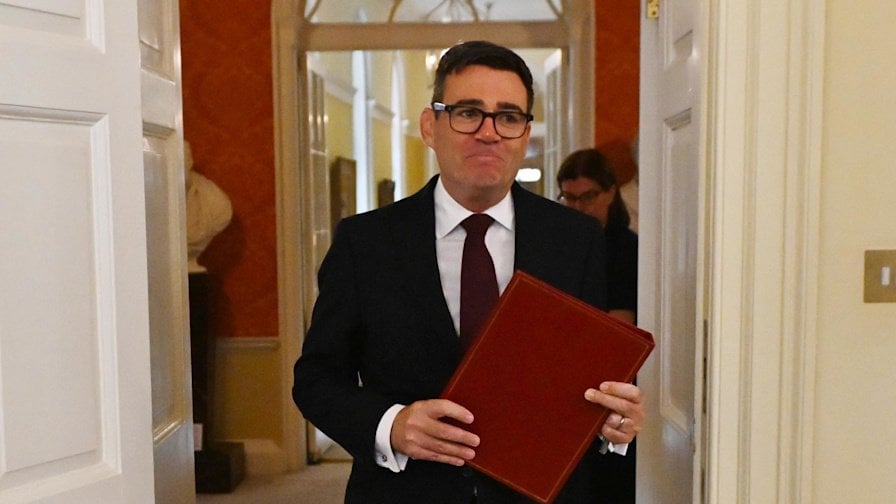
Other Labour figures have also been drawn into speculation over possible successors. Supporters of Greater Manchester mayor Andy Burnham have published letters urging Starmer to step down, while Deputy Prime Minister Angela Rayner has argued Burnham should have been allowed to return to parliament earlier this year.
Rayner herself had once been considered a possible contender but her prospects have been complicated by an ongoing dispute over her tax affairs. Some allies now suggest she may instead support a broader leadership team.
Starmer vows to stay
In a speech earlier on Monday, Starmer rejected calls to resign and said he would continue leading the government.
“I take responsibility for not walking away, not plunging our country into chaos,” he said, arguing that a leadership contest could destabilise the government and damage Labour’s credibility.
He acknowledged frustration among voters and within his own party but said he intended to prove his critics wrong.
Divisions within Labour
While pressure on Starmer has intensified, some Labour MPs warned that replacing a prime minister less than two years after coming to power could harm the party.
MP Andrew Lewin cautioned that forcing a leadership change could hand a political advantage to Reform UK leader Nigel Farage and undermine Labour’s reputation for stable governance.
Nevertheless, discontent has continued to spread. Several junior frontbenchers resigned from their roles, including Joe Morris, Tom Rutland, Naushabah Khan and Melanie Ward, each calling for the prime minister to step down.
Many MPs said voters had linked disappointing local election results to dissatisfaction with the national leadership.
Despite the escalating calls for change, Starmer remains defiant, insisting he will continue in office and challenge those who doubt his leadership.


Join the discussion?

Already a member?


Adapted by ASEAN Now. Source 12 May 2026
webfact
webfact
A survey has found that a significant minority of Americans believe recent assassination attempts against former US President Donald Trump were staged, highlighting the spread of conspiracy theories and growing distrust in institutions.

Get today's headlines by email

About one in four Americans say the April shooting during the White House Correspondents’ Dinner was fabricated, according to a poll published on Monday by NewsGuard.
The survey indicates a strong partisan divide, with Democrats more likely than Republicans to doubt the authenticity of the incident.
Poll shows partisan differences
The poll found that 24% of US adults believed the shooting at the Washington Hilton hotel was staged. By contrast, 45% said the event was genuine, while 32% said they were unsure.
Among Democrats, roughly one-third of respondents said they believed the incident had been staged. Among Republicans, about one in eight shared that view.
Younger respondents were also more likely to suspect the event was fake. People aged between 18 and 29 were more inclined than older groups to say the shooting had been staged, the survey said.
The poll was conducted by YouGov between 28 April and 4 May and surveyed 1,000 American adults.
Charges filed over alleged attack
The survey comes after a federal grand jury in Washington, DC, indicted the alleged gunman, Cole Tomas Allen.
He faces four felony charges, including the attempted assassination of Donald Trump.
Authorities say the suspect was arrested following the shooting at the Washington Hilton during the White House Correspondents’ Dinner in April.
Shortly after the incident, conspiracy theories circulated online claiming the Trump administration had staged the attack to boost support for the president, the Republican Party and a planned White House ballroom project.
The White House dismissed the claims. Spokesman Davis Ingle said suggestions that Trump staged an attempt on his own life were baseless.
Conspiracy claims extend to earlier incidents
The survey also examined views about two earlier assassination attempts against Trump during the 2024 presidential campaign.
One occurred at a rally in Butler, Pennsylvania, while another took place at Trump International Golf Club in West Palm Beach, Florida.
According to the poll, 24% of respondents believed the Butler rally shooting had been staged. Among Democrats, 42% held that view compared with 7% of Republicans.
For the golf club incident, 16% of respondents said they believed the attack was staged. That included 26% of Democrats and 7% of Republicans.
Overall, 21% of Democratic respondents said they believed all three incidents were fabricated. The same view was held by 11% of independents and 3% of Republicans.
Distrust fuels conspiracy thinking
Researchers say the findings reflect wider mistrust in political institutions and the media.
Sofia Rubinson of NewsGuard said the results showed growing scepticism across the political spectrum. She said many people distrust both government and news organisations, yet are more willing to believe unverified information circulating online.
Media manipulation researcher Joan Donovan said the results also reflected the theatrical nature of modern political communication.
She said the idea that the event was staged appeared “incredibly Hollywood”, suggesting that some people see politics increasingly through the lens of entertainment.
Jared Holt, who studies online extremism, said the results illustrated how conspiracy thinking has become more widespread in US politics.
He said such reactions were not surprising, describing the trend as a sign that conspiratorial interpretations of events are becoming more common.
Researchers added that people often turn to conspiracy theories when trying to understand complex events, particularly when trust in institutions is low.

Join the discussion?

Already a member?


Adapted by ASEAN Now. Source 12 May 2026

webfact
webfact
US President Donald Trump has dismissed Iran’s response to a US proposal aimed at ending the conflict in the Middle East, calling it “totally unacceptable”.
Iran outlines conditions
According to Iran’s semi-official Tasnim News Agency, Tehran’s response was delivered through Pakistan, which has been acting as a mediator between the two sides.
The proposal reportedly called for an immediate end to fighting across all fronts, the lifting of a US naval blockade, and guarantees that Iran would not face further attacks.
A ceasefire introduced to support negotiations following the conflict launched by the US and Israel in February has largely held, despite occasional exchanges of fire.
Earlier this week, Trump said the war in Iran would be “over quickly”.

Get today's headlines by email

Strait of Hormuz tensions
Iran has continued to warn regional countries against supporting US sanctions and has issued threats related to shipping through the Strait of Hormuz, one of the world’s most important energy corridors.
Military spokesman Mohammad Akraminia said vessels passing through the strait could face “severe consequences” if they failed to co-operate with Tehran first.
Iran has repeatedly used its influence over the waterway during the conflict, which began after US and Israeli strikes on 28 February. Around a fifth of global oil and natural gas shipments normally pass through the strait.
The US maintains military bases across the Gulf region, including in Qatar, Bahrain, Kuwait, the United Arab Emirates, Saudi Arabia and Oman.
Security concerns grow
Britain announced over the weekend that the Royal Navy would send a warship to the region as part of a planned international effort to safeguard shipping routes once fighting ends.
UK Prime Minister Keir Starmer and French President Emmanuel Macron have backed the initiative, although Macron later said France was considering a security mission rather than a direct naval deployment.
Iran warned on Sunday that any British or French deployment in the strait would trigger a “decisive and immediate response”.
Elsewhere in the Gulf, Qatar reported a cargo vessel had been struck by an unidentified projectile north-east of Doha, causing a small fire but no casualties. Kuwait and the UAE also reported intercepting drones believed to have originated from Iran.
Disagreement over Iran’s nuclear programme
Israeli Prime Minister Benjamin Netanyahu said Iran’s enriched uranium stockpile must be dismantled before the conflict can truly end.
“There’s still enrichment sites that have to be dismantled,” Netanyahu said in comments due to air on CBS’s 60 Minutes.
Iranian President Masoud Pezeshkian meanwhile said negotiations should not be viewed as surrender.
Trump later posted on Truth Social that he had reviewed Iran’s reply and did not accept it.
US outlet Axios reported that the US proposal included suspending Iranian uranium enrichment, easing sanctions and restoring free passage through the Strait of Hormuz, although many conditions would depend on a final agreement.

Join the discussion?

Already a member?


Adapted by ASEAN Now. Source 11 May 2026
ASEAN NOW News
ASEAN NOW News
A man previously imprisoned for his role in the 6 January 2021 attack on the US Capitol has been sentenced to seven years in prison after being convicted of burglary in Virginia months after receiving a presidential pardon.

Get today's headlines by email

Zachary Alam, 34, had served nearly four years of an eight-year sentence for his part in the Capitol riot before he was granted clemency by President Donald Trump in January 2025, on the first day of Trump’s second term in office.
A jury later found Alam guilty of breaking into an occupied home outside Richmond in May 2025 and stealing electronics and jewellery.
Break-in near Richmond
Authorities in Henrico County said Alam entered the house on 8 May 2025. When confronted by the family living there, prosecutors said he told them he was there to repair their internet service before leaving the property with stolen items.
Police responding to the burglary located Alam in a nearby neighbourhood and identified him as the suspect. He was arrested the following day.
In October, a Henrico jury convicted him of breaking and entering an occupied dwelling and grand larceny.
On Thursday, Circuit Court Judge Randall G. Johnson imposed two 20-year prison sentences, one for each conviction. However, the judge suspended the entire sentence for grand larceny and all but seven years of the breaking and entering sentence.
Alam will also be required to serve 20 years of probation for each conviction once released from prison.
Previous role in Capitol attack
Before his pardon, Alam had received one of the longest prison sentences given to participants in the Capitol attack. A federal court sentenced him to eight years in prison after he was convicted of eight felony counts, including assaulting law enforcement officers, and three misdemeanours.
During that case, the judge described Alam as “by far the loudest, the most combative and the most violent of the rioters” present during the assault on the Capitol building.
Prosecutors said Alam was among the first individuals in a crowd that entered the building from the west lawn and that he threw objects at police officers from a balcony.
Evidence at trial showed he used a helmet to smash glass panels in a door leading toward the House chamber. Witnesses said the opening he created allowed rioter Ashli Babbitt to attempt to climb through moments before she was shot and killed by a police officer guarding the chamber.
After the shooting, prosecutors said Alam urged others to return later with firearms before leaving the building.
The Trump administration later reached a $5m settlement with Babbitt’s family to resolve a wrongful death lawsuit.
Prosecutors cite impact of pardon
Local broadcaster WRIC reported that prosecutors presented a recorded telephone call in which Alam said he believed he had done “the right thing” during the Capitol attack.
He had expressed similar views at his federal sentencing hearing, saying he believed his actions that day were justified.
Henrico County Commonwealth’s Attorney Shannon Taylor said in a statement that the presidential pardon may have encouraged Alam to believe he was not bound by the law. However, she noted that the federal clemency did not affect state charges brought in Virginia.
Alam’s arrest in Henrico County is believed to be the first time a pardoned Capitol attack participant has been charged and sentenced for a new crime following the mass clemency issued in January 2025.
Authorities say several other individuals who were pardoned for offences linked to the Capitol attack have since been arrested on unrelated charges.


Join the discussion?

Already a member?


Adapted by ASEAN Now. Source 11 May 2026
webfact
webfact
Authorities say a coordinated international operation has disrupted a key maritime drug trafficking corridor across the Atlantic, seizing large quantities of narcotics and intercepting multiple vessels linked to smuggling networks.

Get today's headlines by email

The mission, coordinated by Europol, targeted routes used to transport cocaine from Latin America to Europe through complex transfers at sea designed to evade detection.
Officials reported that more than 12 tonnes of cocaine and about 9.5 metric tonnes of hashish were confiscated during the two-week operation. Eight vessels suspected of trafficking were intercepted and 54 people were arrested.
Coordinated effort across the Atlantic
The crackdown took place between April 13 and April 26 and involved several international law enforcement agencies operating across the Atlantic Ocean.
Investigators focused their efforts on waters between the Canary Islands and the Azores, an area authorities say has become a major corridor for narcotics shipments bound for Europe.
Teams were deployed to strategic locations across the ocean to detect, track and intercept vessels suspected of transporting drugs. The operation aimed to disrupt trafficking networks that rely on covert transfers between boats at sea, rather than moving large shipments directly through heavily monitored ports.
Traffickers adapting their routes
Europol said the operation confirmed earlier intelligence suggesting that smuggling groups are increasingly moving their operations offshore.
According to the agency, criminal networks are adopting what it calls “fragmented maritime routes”, where shipments are broken up and transferred in stages between vessels. By dividing cargo and moving it across multiple boats, traffickers attempt to spread risk and reduce the chance of detection by authorities.
This strategy allows smuggling groups to avoid scrutiny at major European ports, which have strengthened inspections in recent years.
Intelligence from the “cocaine highway”
Investigators say the waters between the Canary Islands and the Azores have become so heavily used for these transfers that authorities refer to the area as the “cocaine highway”.
Europol said intelligence gathered during the operation has helped authorities better understand how these evolving trafficking networks operate across the Atlantic.
Jean-Philippe Lecouffe, Europol’s deputy executive director of operations, said criminal organizations involved in the trade are becoming increasingly flexible and internationally connected.
However, he said law enforcement agencies are also adapting their response.
“Over a two-week operational period, law enforcement dealt a significant blow to what is known as the cocaine highway,” Lecouffe said in a statement.
The agency said the intelligence collected during the operation will now be used to help identify and dismantle the criminal networks responsible for these trans-Atlantic trafficking operations.

Join the discussion?

Already a member?


Adapted by ASEAN Now. Source 11 May 2026
webfact
webfact
Israeli Prime Minister Benjamin Netanyahu has said the conflict with Iran cannot be considered finished until the country’s highly enriched uranium is removed and its nuclear enrichment infrastructure dismantled.

Get today's headlines by email

Speaking in an interview broadcast Sunday on the TV programme 60 Minutes, Netanyahu said that despite a fragile ceasefire involving the United States and Iran, key elements of Tehran’s nuclear capability remain intact.
Netanyahu told the programme’s chief Washington correspondent, Major Garrett of CBS News, that Israel had significantly weakened Iran’s military and nuclear-related capacity during the conflict but that further action was still required.
Uranium removal central to Israeli position
Netanyahu said that highly enriched uranium held by Iran must be taken out of the country and that enrichment facilities should be dismantled to prevent Tehran from developing a nuclear weapon.
“Now, we’ve degraded a lot of it,” he said, referring to Iran’s nuclear programme as well as the capabilities of allied militant groups in the region and Iran’s missile production.
“But all that is still there, and there’s work to be done,” he added.
International monitoring bodies estimate that Iran retains about 970 pounds (roughly 440 kilograms) of uranium enriched to levels close to weapons-grade.
According to Netanyahu, removing that stockpile would be a crucial step in ensuring that Iran cannot quickly advance towards producing a nuclear weapon.
Possibility of negotiated solution
Netanyahu said that reaching an agreement with Iran to remove the enriched uranium would be the most effective path.
“You go in, and you take it out,” he said when discussing how such material might be removed.
If a deal could be negotiated, he said, it would represent “the best way” to eliminate Iran’s highly enriched uranium reserves.
His comments come as diplomatic efforts continue following a fragile ceasefire arrangement involving the United States and Iran, aimed at halting direct hostilities and preventing a wider regional escalation.
No timetable for further action
The Israeli leader declined to say what actions Israel might take if an agreement with Iran is not reached regarding the nuclear material.
Netanyahu said he would not provide a timetable for any further steps but emphasised the importance Israel places on the issue.
“I’m not going to give a timetable to it,” he said, describing the removal of Iran’s enriched uranium as “a terrifically important mission”.
The remarks underline Israel’s continuing focus on Iran’s nuclear programme even as ceasefire efforts attempt to stabilise the situation following recent tensions.


Join the discussion?

Already a member?


Adapted by ASEAN Now. Source 11 May 2026
webfact
webfact
Hungary’s new prime minister, Péter Magyar, has taken office after his Tisza party secured a sweeping election victory that ended 16 years of rule by Viktor Orbán.

Get today's headlines by email

Speaking after being sworn in before parliament in Budapest, Magyar pledged to govern in service of the country rather than dominate it. “I will not rule over Hungary — I will serve my country,” he said following the oath ceremony.
The result marked a dramatic political shift. Tisza, founded only two years ago, captured 141 seats in Hungary’s 199-member parliament, surging from having no representation previously. Orbán’s governing Fidesz party saw its parliamentary strength collapse from 135 seats to just 52.
Thousands were expected to gather outside parliament along the Danube in Budapest for what organisers described as a “celebration of freedom and democracy”. Magyar has framed the moment as a decisive break with the previous political era, urging Hungarians to step through what he called a “gateway of regime change”.
Collapse of the old governing bloc
Following the defeat, Orbán and several senior figures from Fidesz decided not to take their seats in the new parliament. The party has signalled only a broad intention to regroup politically, leaving its immediate future unclear.
Meanwhile, allegations of corruption linked to the previous administration continue to surface. The outgoing government had overseen Hungary largely unchallenged since 2010.
Members of the incoming administration say they intend not only to change leadership but to overhaul the system of governance.
“The main priority is to set up the government on the ruins of the previous one,” said Zoltán Tarr, the incoming minister for social relations and culture. He added that the new leadership expects to inherit a difficult economic situation but said the scale of the challenge remains uncertain.
Economic concerns and political scrutiny
Officials say public finances are under strain following a surge in government spending during the final months of the Orbán administration. That spending came after years in which state contracts and funds were widely directed toward business networks linked to Fidesz.
Hungary’s budget deficit has already climbed close to the full-year target set by the previous government.
The new administration has sought to demonstrate a break with past practices. Businessman György Wáberer, who switched his support from Fidesz to Tisza shortly before the election, revealed he had donated €280,000 to the party. Magyar ordered the funds returned.
Questions over ethics also surfaced when Magyar’s brother-in-law, Márton Melléthei-Barna, was nominated for justice minister. After criticism online, he withdrew from consideration, saying he did so to ensure no doubts overshadowed the transition.
Incoming ministers say they will avoid political retaliation against their predecessors but insist that financial wrongdoing will be investigated. Plans are underway to establish an office dedicated to recovering misused public assets.
Tarr stressed that any investigations would follow legal procedures rather than political retribution.
Investigations and EU tensions
Authorities have already begun several inquiries. One investigation involves the media network linked to businessman Gyula Balásy, whose companies received government contracts and ran pro-government campaigns targeting critics including philanthropist George Soros, Ukrainian president Volodymyr Zelensky and Magyar himself.
Balásy recently said he was willing to hand over his companies and investments to the state, although he denied any wrongdoing. Some company accounts connected to his businesses have been frozen.
Another investigation concerns Hungary’s National Cultural Fund, including its Urban Civil Fund, which has a budget of about €64.9m. Authorities are examining claims that money may have been directed toward Fidesz candidates.
The government’s most urgent challenge may lie in relations with the European Union. Around €17bn in EU funding has been withheld by the European Commission during Orbán’s tenure.
Commission officials have indicated that some of those funds could be permanently lost.
Hungary must also decide its stance on an EU migration pact set to take effect on 12 June. The country continues to face daily fines of €1m for failing to comply with rulings by the European Court of Justice over migrant policies.
Despite the challenges, Tarr said the new leadership remains optimistic about working with EU partners while responding to domestic concerns about migration, Ukraine’s possible EU membership and Hungary’s continued reliance on Russian energy supplies.

Join the discussion?

Already a member?


Adapted by ASEAN Now. Source 11 May 2026
webfact
webfact
British Army medics have parachuted onto one of the world’s most isolated inhabited islands to assist a British man with suspected hantavirus after concerns grew over limited medical resources on the remote territory.

Get today's headlines by email

A team of British paratroopers and medical staff landed on Tristan da Cunha, a tiny island territory in the South Atlantic, to help a resident who developed symptoms weeks after leaving a cruise ship linked to a deadly outbreak.
Emergency mission to Tristan da Cunha
The patient had disembarked from the vessel MV Hondius on 14 April before returning to the island, where he lives. According to the World Health Organization, he reported diarrhoea on 28 April and developed a fever two days later.
Officials say he is currently in a stable condition and isolating.
The island has a population of 221 British citizens and normally relies on a medical team of only two people. With oxygen supplies running critically low, the UK government launched an emergency mission.
Six paratroopers and two clinicians from 16 Air Assault Brigade parachuted onto the island to provide additional medical support. An Airbus A400M Atlas transport aircraft from the Royal Air Force dropped oxygen supplies on Saturday.


High-risk parachute operation
The aircraft departed from RAF Brize Norton before flying via Ascension Island en route to Tristan da Cunha.
Because the island has no airstrip and can only normally be reached by sea, parachuting was considered the only viable option to quickly deliver assistance.
Two of the soldiers jumped in tandem with an intensive care nurse and an intensive care doctor, who will help support the island’s limited medical services.
The drop itself posed significant challenges due to strong winds and the island’s small landing area.
Brigadier Ed Cartwright said the team exited the aircraft roughly 5km above the South Atlantic before navigating the wind back toward the island. A miscalculation could have sent them into the ocean.
The paratroopers eventually landed on the island’s golf course, according to local officials, while residents helped prepare facilities and welcome the team.
Officials said around 3.3 tonnes of medical supplies were also delivered for the island’s hospital.
Cruise ship outbreak and response
The emergency operation follows a hantavirus outbreak linked to the cruise ship MV Hondius.
Six confirmed infections have been recorded so far, including two other British nationals who are receiving treatment in the Netherlands and South Africa.
Three people connected to the outbreak have died, two of whom were confirmed to have had the virus.
Hantavirus is a group of viruses usually carried by rodents. Most strains do not spread between people, but the Andes strain — detected among passengers from the cruise ship — can transmit between humans.
The ship has now arrived in Tenerife, where authorities are helping more than 100 passengers disembark so they can return home.
The remaining 22 British passengers will be flown back to the UK on a charter flight. They will then isolate for 45 days at Arrowe Park Hospital under monitoring by the UK Health Security Agency.
Health authorities say the risk to the general public remains very low.
Support for overseas territories
UK officials said the operation demonstrated the government’s commitment to protecting British citizens and overseas territories, even in extremely remote locations.
The paratroopers and medical team are expected to leave Tristan da Cunha later by ship once the medical situation allows.


Join the discussion?

Already a member?


Adapted by ASEAN Now. Source 11 May 2026
webfact
webfact
Senior Democratic Senator Jack Reed has said President Donald Trump will arrive at upcoming talks with Chinese leader Xi Jinping in a weakened position, citing tensions with Iran, economic pressures at home and shifts in U.S. military deployments.

Get today's headlines by email

Trump is scheduled to visit Beijing on Thursday and Friday for a summit with Xi. The meeting will mark the first in-person talks between the two leaders since October, and the first visit to China by a U.S. president in more than eight years.
Reed, the top Democrat on the Senate Armed Services Committee, made the comments during an interview on Fox News Sunday.
“President Trump is going into this meeting terribly weakened,” Reed said, pointing to the wider consequences of the conflict involving Iran.
Iran tensions and oil concerns
Reed argued that the ongoing confrontation with Iran has complicated Washington’s position ahead of the summit.
He said the situation had reached a stalemate and warned that Iran’s military restrictions on shipping through the Strait of Hormuz put a significant portion of the world’s oil supply at risk.
According to Reed, the uncertainty surrounding the waterway — a crucial global energy route — has added pressure on the United States and contributed to rising fuel costs.
The meeting between Trump and Xi comes as Washington seeks a permanent end to hostilities with Iran. China, which maintains close relations with the Iranian government, has taken steps that could undermine U.S. efforts to isolate Tehran economically.
Earlier this week, Chinese authorities instructed domestic companies to disregard U.S. sanctions on Chinese refineries linked to Iranian oil purchases.
Last month, the U.S. Treasury Department imposed sanctions on Hengli Petrochemical Refinery, describing the company as one of Iran’s largest customers for crude oil and petroleum products.
China’s energy strategy
Reed also pointed to China’s investments in alternative energy, arguing that they have strengthened Beijing’s economic position despite sanctions targeting Iranian oil trade.
China remains the world’s largest emitter of greenhouse gases. However, it has rapidly expanded renewable energy production in recent years.
In 2024, the country installed 360 gigawatts of new wind and solar capacity — more than half of the global additions that year — according to figures cited by the World Economic Forum.
Reed said these developments meant China was “doing quite well” in maintaining energy supplies while diversifying its energy mix.
Military shifts and regional tensions
The senator also raised concerns about the redeployment of U.S. military personnel and equipment during the confrontation with Iran.
According to Reed, some forces and assets have been moved from the Indo-Pacific region to the Middle East, which he said could affect American military readiness in relation to China.
The Indo-Pacific remains a key strategic focus for Washington, particularly as Beijing has increased military activity near Taiwan in recent months. China claims Taiwan as part of its territory, though the island governs itself independently.
Reed argued that the combination of military shifts abroad and economic pressures at home weakens Washington’s position heading into the summit.
“We’re seeing at home significant gas prices, significant increases in grocery prices and in all sorts of prices for the American home,” he said. He added that public concern over the Iran conflict was also growing.
Reed said those factors meant Trump was not negotiating with China from a position of strength when engaging with a major geopolitical and economic rival.

Join the discussion?

Already a member?


Adapted by ASEAN Now. Source 11 May 2026

webfact
webfact
Russian President Vladimir Putin said the war between Russia and Ukraine may be nearing its conclusion, as both sides observe a short ceasefire announced to coincide with Russia’s Victory Day commemorations.

Get today's headlines by email

Speaking to reporters on Saturday, Putin said he believed the conflict, which has lasted more than four years, was approaching its final stage. According to Reuters, the Russian leader said he believed “the matter is coming to an end.”
He also indicated Russia was willing to discuss broader European security arrangements, suggesting that negotiations on the continent’s future security framework could follow the fighting.
Ceasefire Linked to Victory Day
The comments came shortly after the announcement of a temporary halt in hostilities between Russia and Ukraine.
U.S. President Donald Trump said on Friday that Moscow and Kyiv had agreed to pause fighting for three days beginning on Saturday. The pause coincides with Russia’s Victory Day celebrations, an annual commemoration marking the Soviet Union’s role in defeating Nazi Germany during the Second World War.
Trump said he hoped the temporary ceasefire could lead to a longer break in fighting.
“I’d like to see a big extension,” he said in an interview with NewsNation when asked whether he planned to speak with Putin and Ukrainian President Volodymyr Zelensky about prolonging the truce.
The U.S. president said the brief halt in combat could save lives and create space for further diplomacy.
“We have a little period of time where they’re not going to be killing people,” Trump said. “That’s very good.”
Prisoner Exchange Planned
Trump also said both sides had agreed to conduct a prisoner exchange during the ceasefire period.
According to the president, around 1,000 prisoners held by each side are expected to be transferred back in what would be one of the largest exchanges since the war began.
“They also agreed to give a thousand prisoners back,” Trump said, adding that the transfers were expected to begin almost immediately.
Diplomatic Efforts Continue
Since returning to office for a second term, Trump has sought to broker an end to the conflict and has met separately with both Putin and Zelensky.
Despite those diplomatic efforts, the war has continued, and negotiations have yet to produce a lasting settlement.
Relations between Trump and Zelensky have at times been strained. A meeting between the two leaders in 2025 drew significant attention after it became marked by visible tensions.
The latest ceasefire announcement and Putin’s comments about the war nearing its end may signal a potential shift in the conflict. However, it remains unclear whether the temporary truce will lead to extended negotiations or a more durable halt to the fighting.
Uncertain Prospects for Peace
The Russia-Ukraine war, which began with Russia’s full-scale invasion in 2022, has resulted in widespread destruction, heavy military casualties and millions of displaced people.
Although the current ceasefire is limited to three days, officials in Washington have suggested they hope the pause could create momentum for broader peace talks.
For now, the truce offers only a short respite from the fighting while diplomatic efforts continue.


Join the discussion?

Already a member?


Adapted by ASEAN Now. Source 11 May 2026

webfact
webfact
Iran has submitted its response to a U.S. proposal aimed at easing tensions in the region, according to Iranian state media. The Islamic Republic News Agency (IRNA) reported that Tehran had delivered its reply to Washington, citing a source familiar with the matter.

Get today's headlines by email

The report said ongoing contacts between Iran and the administration of U.S. President Donald Trump were focused on halting hostilities in the region.
The development comes after Washington presented a short memorandum earlier in the week outlining a potential path toward broader negotiations.
Proposed Framework for Talks
According to a source familiar with the discussions, the U.S. proposal consists of a one-page document intended to establish a framework for future negotiations over Iran’s nuclear programme.
The outline was reportedly shared with Tehran earlier in the week. Details of the document have not been publicly confirmed by the White House.
Media reports say the proposal includes a temporary halt to Iran’s nuclear enrichment activities. In exchange, the United States would lift sanctions imposed on the country and release billions of dollars in Iranian funds that have been frozen abroad.
The proposed arrangement would also involve removing restrictions on shipping through the strategically important Strait of Hormuz, a key route for global oil shipments.
The White House has not publicly commented on the reported proposal. Requests for comment were sent by media outlets including The Hill.
Iranian Officials React
Iranian officials have responded cautiously and, at times, critically to reports of the U.S. offer.
Ebrahim Rezaei, a spokesperson for the Iranian parliament on national security matters, dismissed the reported proposal as unrealistic.
Writing on the social media platform X, Rezaei described the plan as a “wish list” from Washington. He warned that the United States would not achieve through conflict what it had failed to obtain in direct negotiations.
“Iran has its finger on the trigger and is ready,” he wrote, adding that Tehran would respond forcefully if the United States or its allies attempted hostile actions.
President Signals Defiance
Iran’s president, Masoud Pezeshkian, also signalled a defiant stance in remarks posted on social media after the response was reportedly submitted.
Pezeshkian said that engaging in dialogue with Washington should not be interpreted as a sign of weakness or concession.
“We will never bow our heads before the enemy,” he wrote. “If talk of dialogue or negotiation arises, it does not mean surrender or retreat.”
He added that Iran’s objective in any discussions would be to defend national interests and uphold the rights of the Iranian people.
Uncertain Path Ahead
The reported exchange marks the latest development in a period of heightened tension between Washington and Tehran.
While the U.S. proposal appears to aim at de-escalating hostilities and opening the door to broader negotiations on Iran’s nuclear programme, Iranian officials have publicly pushed back against elements of the reported plan.
It remains unclear whether the response submitted by Tehran will lead to further talks or adjustments to the proposed framework.
Neither side has publicly confirmed the details of the memorandum or outlined a timeline for potential negotiations.


Join the discussion?

Already a member?


Adapted by ASEAN Now. Source 11 May 2026
webfact
webfact
Dutch authorities have taken the pornography website Motherless offline after mounting international scrutiny over content linked to sexual abuse and non-consensual imagery.

Get today's headlines by email

The move follows a CNN investigation that highlighted how the platform and associated messaging groups were used to distribute videos depicting suspected drug-facilitated sexual assaults and other forms of gender-based violence.
A spokesperson for the Dutch Public Prosecution Service confirmed that the site had been taken down and said prosecutors in the Zeeland-West-Brabant region had opened a preliminary investigation.
The platform appeared to go offline on Thursday evening.
Investigation and hosting arrangements
Motherless had been hosted on servers in the Netherlands operated by NFOrce Internet Services, a hosting provider based in Steenbergen in the south of the country.
Public attention intensified after CNN reported on a broader online network where the site hosted large amounts of material involving non-consensual imagery and alleged drug-facilitated assaults. Earlier investigations by journalists in Germany and Canada had also documented thousands of videos appearing to show unconscious women being raped or sexually abused.
According to reporting by the Dutch broadcaster NOS, the platform had been hosted on Dutch servers since at least 2024. Coverage by NOS and the current affairs programme Nieuwsuur increased pressure on Dutch authorities to intervene after the CNN investigation.
An analysis of 20,000 videos that appeared on the site’s homepage last week found that clips tagged “incest” were among the most viewed categories. One of the most watched videos during the same period was labelled with the tags “rape,” “sister” and “school girl,” the broadcasters reported.
CNN had earlier found more than 20,000 videos classified as “sleep” content using tags such as “#passedout” and “#eyecheck.” Although those tags appeared to have been removed after the investigation was published in March 2026, videos appearing to show drug-facilitated sexual abuse were still visible earlier this week.
Hosting provider review
In response to the media reports, NFOrce said on Thursday it had launched an urgent compliance and abuse-handling review and had given the platform 12 hours to respond.
The company later published the response it said it received from the site’s operators. In the statement, Motherless said it had carried out a comprehensive review of content linked to the allegations and removed files considered potentially unlawful, exploitative or non-consensual.
It also said accounts associated with repeat offenders had been suspended or permanently banned.
The platform added that it had reviewed high-risk search terms and moderation categories while strengthening filtering systems, upload restrictions and escalation procedures. A retrospective review of archived uploads had also been conducted, it said.
NFOrce stressed that it provides only infrastructure services and does not manage or moderate content on customer platforms. The company said complaints about illegal material must normally include specific web addresses to be assessed through formal abuse-reporting channels.
Reactions and concerns
Advocacy groups welcomed the shutdown but warned that removing content from the internet remains difficult once it has been widely shared.
Robbert Hoving of the Dutch online safety group Offlimits described the action as an important signal that websites normalising sexual violence could face consequences. However, he said regulators should act proactively rather than waiting for investigations before intervening.
Survivor advocate Zoe Watts, who spoke publicly during CNN’s reporting and helped launch the #EndEyeCheck campaign with fellow survivor Amanda Stanhope, said the site’s existence had enabled widespread abuse.
Campaigners also caution that similar platforms can quickly reappear by relocating servers or registering new domains in other jurisdictions.
Motherless itself issued a statement on Saturday saying it had “voluntarily taken the site offline” while reviewing content and addressing system vulnerabilities that allowed certain uploads to bypass rules. The operators said they intended to remove violating material and close those loopholes before bringing the site back online.
A complex global structure
The platform drew about 82 million visitors in March and describes itself as a “moral free file host where anything legal is hosted forever.”
Its domain name is registered in the Czech Republic, while its parent company is registered in Costa Rica — a structure that advocates say reflects a common tactic used by platforms accused of hosting abusive material to complicate regulatory action across multiple jurisdictions.
Hoving said the shutdown should be only the first step. Those responsible for enabling the platform, he said, should ultimately be held accountable.

Join the discussion?

Already a member?


Adapted by ASEAN Now. Source 10 May 2026
webfact
webfact
Alexandria Ocasio-Cortez has declined to rule out a potential run for the White House in 2028, saying her political goals are focused on broader national change rather than holding a particular office.

Get today's headlines by email

The New York Democrat made the remarks during a Friday event in Chicago when she was asked about speculation surrounding a possible presidential campaign.
Responding to the question from Democratic strategist David Axelrod, Ocasio-Cortez rejected the suggestion that her ambitions were tied to seeking a specific title or position.
Remarks Fuel Questions About Future Bid
“They assume that my ambition is a title or a seat, and my ambition is way bigger than that,” she said. “My ambition is to change this country.”
She added that while elected officials may come and go, policies such as single-payer healthcare can have lasting impact.
Ocasio-Cortez said she bases her political decisions on current circumstances rather than long-term plans tied to a particular role.
“Conditions change radically all the time,” she said, explaining that she evaluates the political landscape day by day to determine which actions might help advance her policy goals.


Decisions Guided by ‘Conditions’
The congresswoman, who is serving her fourth term in the House of Representatives, said she seeks to make decisions that move the country “closer to that future, stronger, faster, better than yesterday.”
Her comments come amid growing discussion about possible Democratic candidates in the 2028 presidential race.
Democrats Eye Possible Contenders
Several Democratic figures are already being mentioned as potential contenders to return the party to the White House in 2028.
Among those frequently cited are Gavin Newsom, governor of California; former vice president Kamala Harris; Michigan governor Gretchen Whitmer; former transportation secretary Pete Buttigieg; Pennsylvania governor Josh Shapiro; and Kentucky governor Andy Beshear.
Illinois governor JB Pritzker recently praised what he described as the Democratic Party’s strong bench of possible candidates.
Speaking at an event in New York, Pritzker said he was focused on winning re-election as governor but stressed his commitment to helping the party reclaim the presidency.
“We have a pretty good bench,” he said, adding that he intends to work to elect a Democrat in 2028.
Republican Field Also Taking Shape
On the Republican side, several figures are also seen as potential successors to Donald Trump after his second term.
Among those widely viewed as possible candidates are Vice President J. D. Vance and Secretary of State Marco Rubio.
Trump himself has at times suggested he might seek a third term, despite the limit set by the Twenty-second Amendment to the United States Constitution, which restricts presidents to two terms in office.
The president’s business organization, the Trump Organization, introduced “Trump 2028” hats last April, and Trump later told reporters he would “love to” run again.
Speculation Likely to Continue
While Ocasio-Cortez did not confirm any presidential ambitions, her comments left open the possibility of a future bid as discussion about the 2028 race continues within both major political parties.

Join the discussion?

Already a member?


Adapted by ASEAN Now. Source 10 May 2026
webfact
webfact
Russia’s president Vladimir Putin declared that his country would ultimately prevail in the war in Ukraine as he presided over a scaled-down Victory Day parade in Moscow, held under tight security amid concerns about possible Ukrainian attacks.

Get today's headlines by email

Speaking in Red Square, Putin linked the conflict in Ukraine with the Soviet Union’s fight against Nazi Germany during the Second World War. He said the sacrifices of the wartime generation continued to inspire Russian troops engaged in what the Kremlin calls a “special military operation”.
“They stand against an aggressive force armed and supported by the entire NATO bloc,” Putin told the crowd. “Despite this, our heroes move forward. Victory has always been and will always be ours.”
Heightened security across Moscow underscored the tense atmosphere surrounding the annual event. Authorities restricted internet services across the city and deployed extensive protective measures amid fears of Ukrainian drone or missile strikes.
Parade scaled back
Despite Putin’s confident tone, the parade itself was markedly reduced compared with previous years. The event lasted about 45 minutes — roughly half the usual duration — and lacked many of its traditional displays of military hardware.
Missiles and armoured vehicles, a central feature since they were introduced to the parade in 2017, were not shown this year. Instead, attendees watched a video presentation highlighting Russia’s drone technology and nuclear capabilities.
The audience included a small group of foreign leaders from Belarus, Kazakhstan, and Uzbekistan. Soldiers from North Korea also marched through the square, reflecting increasingly close ties between Moscow and Pyongyang as North Korean troops have supported Russian forces in Ukraine.
Pro-Kremlin commentator Sergei Markov described the ceremony as “a modest parade”, adding that Russia still faced “enormous challenges”.
Ceasefire and security concerns
Uncertainty over potential attacks lingered until shortly before the event began. On the eve of the parade, Donald Trump, the US president, announced that Russia and Ukraine had agreed to a three-day ceasefire and a prisoner exchange.
The temporary halt in fighting was expected to last until 11 May.
Earlier in the week, Putin had urged Ukrainian president Volodymyr Zelenskyy to observe a ceasefire during the celebrations. Kyiv initially dismissed the suggestion as an attempt to protect the parade from drone attacks.
Zelenskyy responded shortly before the event with a decree stating that Ukraine would “permit” the parade to go ahead by choosing not to strike Moscow, citing the request by the US president.
Russian officials acknowledged that the extensive security measures in the capital were designed largely to protect Putin, reflecting the ongoing threat posed by Ukrainian long-range strikes.
War strains and uncertain outlook
This year’s parade marked the first Victory Day celebration since Russia’s war in Ukraine has lasted longer than the Soviet Union’s entire campaign against Nazi Germany during the Second World War.
Putin has repeatedly portrayed the current conflict as a continuation of that historic struggle, a comparison rejected by Ukraine and its allies.
Symbolically, the Russian leader was seated alongside soldiers who had fought in Ukraine rather than veterans of the Second World War, as had been customary in earlier years.
Inside Russia, the prolonged conflict has begun to strain both public sentiment and the economy. Weeks of internet shutdowns ahead of the parade, introduced as security precautions, have prompted public frustration.
Economic growth, which had been supported by heavy military spending, has slowed sharply. Inflation is rising and the federal budget deficit has reached record levels.
On the battlefield, the war has largely stalled. Both Russian and Ukrainian forces have suffered heavy losses and are struggling to make significant advances while continuing attacks on each other’s energy infrastructure.
Despite the stalemate, there has been little sign of a shift in Moscow’s position. Kremlin aide Yuri Ushakov said Russia saw no basis for new talks involving the United States and Ukraine unless Ukrainian forces withdrew from the Donetsk Oblast region — a demand Kyiv has rejected.
Ukrainian forces continue to hold several fortified cities in Donetsk, positions that have been defended at significant human cost.


Join the discussion?

Already a member?


Adapted by ASEAN Now. Source 10 May 2026
webfact
webfact
A Frontier Airlines aircraft struck and killed a person who had breached security and run onto a runway at Denver International Airport late on Friday, forcing the jet to abort take-off and triggering an emergency evacuation of passengers.

Get today's headlines by email

Air traffic control recordings captured the pilot reporting the incident moments after the aircraft accelerated for departure.
“We just hit somebody,” the pilot of Frontier Flight 4345 told the control tower. “We’re stopping on the runway. We have an engine fire.”
The Airbus A321 had been preparing to depart for Los Angeles International Airport at about 23:00 local time when the collision occurred, according to airport authorities.
Smoke was reported in the cabin, but firefighters from the Denver Fire Department quickly extinguished the engine fire. All 224 passengers were evacuated using inflatable emergency slides as a precaution, Frontier Airlines said.
Airport officials said 12 passengers reported minor injuries during the incident. Five of them were taken to nearby hospitals, though their conditions were not immediately known.
Security breach before take-off
Authorities said the individual had climbed over a perimeter fence and entered the runway area roughly two minutes before the aircraft struck them.
The person is not believed to have been an airport employee, Denver International Airport said in a statement.
Transport Secretary Sean Duffy said the aircraft was travelling at a “high speed” when the impact occurred. Commercial airliners typically reach speeds of around 150–180mph (240–290km/h) during take-off.
“Late last night, a trespasser breached airport security at Denver International Airport, deliberately scaled a perimeter fence, and ran out onto a runway,” Mr Duffy said.
“No one should ever trespass on an airport,” he added.
Airport authorities said an inspection of the perimeter fence after the incident found it to be intact.
Pilot alert captured on audio
Air traffic control audio shows that the Frontier crew had just been cleared for take-off shortly before the collision.
An air traffic controller told the pilot the aircraft was cleared for departure and wished the crew a good night.
After a brief pause, the pilot contacted the tower again to report the emergency.
“We’re stopping on the runway,” the pilot said, adding that there had been “an individual walking across the runway”.
The crew also told the tower that there were 231 people on board the aircraft, including seven crew members.
Passenger accounts
Images and video shared by passengers showed smoke inside the aircraft cabin shortly after the impact.
Passenger Jose Cervantes told a local television station affiliated with CBS that he heard a loud impact before noticing flames near the wing.
“I heard a thud,” he said. “I just see the right wing just on fire and like, it’s exploding.”
He said the sight of flames and smoke made him fear the worst.
“I thought I was going to burn to death,” he added.
Passengers were evacuated from the aircraft and transported by bus back to the terminal while emergency crews responded at the scene.
Investigation launched
The runway was closed as federal authorities began investigating the incident.
The Federal Aviation Administration and the National Transportation Safety Board are examining what happened.
Frontier Airlines said it was cooperating with investigators.
“We are deeply saddened by this event,” the airline said in a statement.
Denver International Airport also expressed sympathy to those affected, saying it was “extremely saddened by this incident and express our sympathies to those involved”.
Most passengers later continued their journey to Los Angeles on a replacement Frontier flight.


Join the discussion?

Already a member?


Adapted by ASEAN Now. Source 10 May 2026
webfact
webfact
Australia’s right-wing One Nation party has secured its first seat in the federal lower house, marking a historic breakthrough for the populist party in a by-election in New South Wales.

Get today's headlines by email

With most votes counted, One Nation candidate David Farley won the seat of Farrer with around 57% of the two-candidate preferred vote, comfortably ahead of independent contender Michelle Milthorpe.
The vote was triggered by the resignation of Sussan Ley, who stepped down after losing her position as leader of the opposition Liberal Party.
Although the result will not threaten the Labor government’s sizeable parliamentary majority, the outcome is widely seen as a sign that some voters are shifting away from Australia’s traditional political parties.
Breakthrough for One Nation
Saturday’s vote represented the first federal electoral test for One Nation since the party performed strongly in the South Australian state election in March, where it recorded the second-largest share of votes among all parties.
Celebrating the victory, party leader Pauline Hanson told supporters the result represented more than just a local win.
She said the outcome was a “win for Australia” and indicated that the party intended to contest other electorates in future.
Farley, whose professional background is in agribusiness, described the result as a turning point for the party.
Addressing supporters, he said One Nation had moved beyond its early stage and suggested the party was entering a new phase of political growth.
Preferential voting system
Australia uses a preferential voting system in federal elections, requiring voters to rank candidates in order of preference.
If no candidate wins an outright majority of first-choice votes, preferences from lower-ranked candidates are redistributed until two remain. The final result is then calculated between those two candidates to determine who commands majority support.
Farley’s victory came after preferences were distributed, producing a final two-candidate preferred tally in his favour.
A seat long held by major parties
The electorate of Farrer covers about 127,000 square kilometres across regional New South Wales—an area larger than South Korea—and includes centres such as Albury, Griffith and Deniliquin.
Historically, the constituency has been held by candidates from either the Liberal or National parties, making One Nation’s win a significant break from long-standing voting patterns.
One Nation had previously never secured a seat in the federal House of Representatives. In the late 1990s, Hanson held a parliamentary seat as an independent before losing her re-election bid. She later returned to federal politics as a senator.
During the by-election campaign, Farley said he had grown disillusioned with the major parties, arguing that their promises often differed from their actions once in parliament.
Test for opposition leadership
The by-election also provided an early test for the newly appointed leaders of the Liberal and National parties.
Angus Taylor replaced Ley as leader of the Liberal Party in February, while Matt Canavan took over leadership of the Nationals from David Littleproud in March.
Both parties remain under pressure following their heavy defeat in last year’s federal election, the worst result in the coalition’s history.
Since then, the opposition alliance has faced internal disputes and declining support in opinion polls.
The result in Farrer adds to the challenges confronting the coalition as it seeks to rebuild support among voters.

Join the discussion?

Already a member?


Adapted by ASEAN Now. Source 10 May 2026
webfact
webfact
Canada’s armed forces are experiencing their strongest recruitment growth in three decades, marking a potential turning point after years of severe personnel shortages and criticism over the country’s defence spending.

Get today's headlines by email

The increase comes amid global conflicts, expanded military funding and domestic political tensions that have renewed attention on national defence.
Global tensions drive renewed interest
Recruitment applications began rising sharply around 2022, roughly when Russia launched its full-scale invasion of Ukraine. Analysts say heightened global instability has prompted more Canadians to consider military service.
Charlotte Duval-Lantoine, a fellow at the Canadian Global Affairs Institute who studies military culture, said recruitment often rises when people perceive a growing threat to national security.
“When people see that the world is not as safe, that their country might be at risk, we tend to see people join the military,” she said.
The surge has also coincided with comments by US President Donald Trump referring to Canada as the “51st state”, remarks that many Canadians viewed as challenging the country’s sovereignty.
At the same time, economic pressures have played a role. Youth unemployment in Canada stood at nearly 14% in March, making the armed forces’ job stability and improved pay more attractive to young people considering their career options.
New funding and higher salaries
The recruitment boost follows significant new defence spending under Prime Minister Mark Carney’s government.
In March, Canada announced it had reached Nato’s target of allocating 2% of its gross domestic product to defence spending for the first time since the late 1980s. The move represents more than C$63bn ($46bn; £34bn) in defence spending in a single year.
Carney has also joined a Nato pledge to increase defence spending to as much as 5% of GDP by 2035.
The funding includes higher salaries for military personnel, investment in new equipment, upgrades to existing bases and new infrastructure projects in the Arctic.
The government has described its defence plan as an ambitious effort to modernise and expand the Canadian Armed Forces after decades of underinvestment.
Recruitment numbers rise sharply
In late April, the military said it had enrolled more than 7,000 new members during the past fiscal year — the highest annual intake in 30 years.
Interest in joining the armed forces has been even greater than those final enrolment numbers suggest.


According to Canada’s Department of National Defence, confirmed applications nearly doubled over the past year, increasing from 21,700 to 40,116. Total expressions of interest reached close to 100,000.
This marks a significant rise compared with the 2019–20 period, when around 36,000 people applied.
Travis Haines, a lieutenant colonel in the Canadian Armed Forces, said part of the increase stems from reforms that simplified the application process.
For years, the military faced criticism for slow recruitment procedures that discouraged potential candidates. The system has since been partially digitised, allowing applicants to submit documents electronically and speeding up reviews.
“There was always interest,” Haines said. “It was just hard to get through the system.”
Opening recruitment beyond citizens
Another major change came in 2022, when Canada began allowing permanent residents — not only citizens — to apply for military service.
Foreign nationals accounted for about 20% of new recruits last year.
Canada is also planning to significantly expand its military. Current plans aim for 85,500 regular service members and a mobilisation force of up to 300,000 reservists.
Duval-Lantoine said Canada has not pursued a mobilisation strategy on that scale since 2004, reflecting concerns about future conflicts and lessons drawn from the war in Ukraine.
Challenges remain despite gains
Despite the improved recruitment figures, analysts say Canada’s military capacity still trails many allies.
Richard Shimooka, a senior fellow at the Macdonald-Laurier Institute, said the armed forces currently have the ability to deploy only a few thousand troops at a time along with a limited number of fighter jets.
By comparison, the United Kingdom can deploy around 10,000 troops when necessary.
“The state of the Canadian Armed Forces is currently at a very low point,” Shimooka said, adding that it could take five to 10 years before increased funding translates into meaningful improvements.
Canada has long been criticised for relying heavily on the United States for its defence, with several US officials accusing the country of failing to meet its Nato commitments.
Even after reaching the 2% spending benchmark, Canada still ranks among Nato’s lower defence spenders compared with countries such as the United States, the United Kingdom and France.
Morale improving within the ranks
Service members say recent funding commitments have begun to boost morale.
During a recent Arctic sovereignty operation in Nunavut, Royal Canadian Air Force first officer Alden Campbell said the military had fallen behind after years of underinvestment but welcomed the new measures.
“We’re a couple of decades behind, but at least we’re trying to do things now,” he said.
Campbell added that improved pay and promises of upgraded equipment have helped restore confidence among personnel.
“Hopefully I can be at an age and a time in my career where I can be a beneficiary of these updates.”

Join the discussion?

Already a member?


Adapted by ASEAN Now. Source 10 May 2026
webfact
webfact

Account

Navigation

Search

Search

Configure browser push notifications

Chrome (Android)
  1. Tap the lock icon next to the address bar.
  2. Tap Permissions → Notifications.
  3. Adjust your preference.
Chrome (Desktop)
  1. Click the padlock icon in the address bar.
  2. Select Site settings.
  3. Find Notifications and adjust your preference.