Skip to content
View in the app

A better way to browse. Learn more.

Thailand News and Discussion Forum | ASEANNOW

A full-screen app on your home screen with push notifications, badges and more.

To install this app on iOS and iPadOS
  1. Tap the Share icon in Safari
  2. Scroll the menu and tap Add to Home Screen.
  3. Tap Add in the top-right corner.
To install this app on Android
  1. Tap the 3-dot menu (⋮) in the top-right corner of the browser.
  2. Tap Add to Home screen or Install app.
  3. Confirm by tapping Install.

Become a member

Become a member

World News

Fresh news brought to you daily from around the world. Hot news, breaking stories as they happen.
US President Donald Trump said he is reviewing a new proposal from Iran aimed at ending the ongoing conflict with the United States, but expressed doubt that it would lead to an agreement.

Get today's headlines by email

Speaking to reporters on Saturday before boarding Air Force One, Trump said he would examine the plan in more detail once its final wording had been delivered.
“I’ll let you know about it later,” he said, adding that Iranian officials were expected to provide the exact text shortly.
Shortly after the remarks, Trump wrote on social media that he struggled to see how the proposal could be acceptable. He argued that Iran had “not yet paid a big enough price for what they have done to Humanity, and the World, over the last 47 years.”
Two semi-official Iranian news agencies, Tasnim and Fars, reported that Tehran had submitted a 14-point proposal in response to a nine-point plan put forward by the United States. The proposal was reportedly sent via Pakistan, which has previously hosted discussions between the two sides.
Iran’s state-run media have not yet reported on the proposal. Earlier this week Trump rejected a separate Iranian plan, though diplomatic contacts have continued and a three-week ceasefire between the sides remains in place.
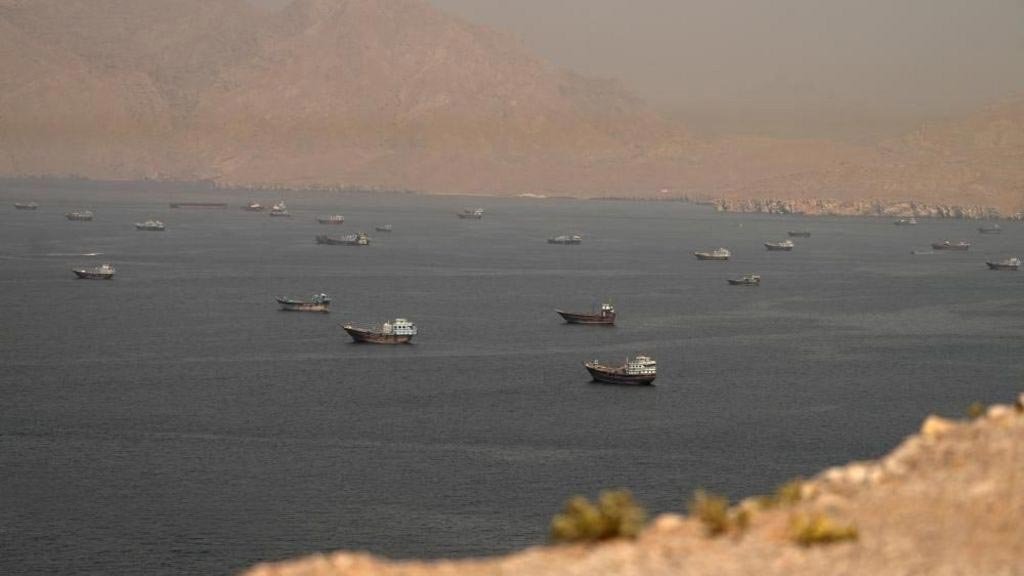
Trump has also floated the possibility of reopening the Strait of Hormuz, the narrow waterway linking the Persian Gulf with global shipping routes. Roughly a fifth of the world’s oil and natural gas trade normally passes through the strait.
Concern over jailed activist’s health
Meanwhile, concerns have grown over the health of imprisoned Iranian human rights lawyer Narges Mohammadi.
Her family and foundation said on Saturday that her condition was at “very high risk”, accusing Iran’s Intelligence Ministry of blocking her transfer to the capital, Tehran, for treatment by doctors of her choosing.
Mohammadi, a Nobel Peace Prize laureate in her early 50s, was urgently taken to hospital in the north-western city of Zanjan on Friday after suffering a cardiac episode and fainting.
Her relatives say her health has deteriorated partly because of injuries sustained during her arrest in December.
Doctors in Zanjan have asked for her medical records before providing treatment and have recommended that she be moved to Tehran. However, her husband, Taghi Rahmani, said the Intelligence Ministry opposed the transfer for angiography, a medical imaging procedure used to examine blood vessels.
The Norwegian Nobel Committee called on Iranian authorities to allow Mohammadi to be transferred immediately to her medical team, warning that her life was at risk.
Before her arrest on 12 December, Mohammadi had been serving a sentence of 13 years and nine months on charges including collusion against state security and propaganda against the government. She had been temporarily released on furlough since late 2024 because of medical concerns.
Shipping sanctions warning
The United States has also warned shipping companies that they could face sanctions if they pay Iran to pass safely through the Strait of Hormuz.
Tehran effectively closed the strait after attacking or threatening vessels following the start of the war between the United States, Israel and Iran on 28 February.
Iran later allowed some ships to use routes closer to its coastline in exchange for fees.
Washington warned that payments could include not only cash but also “digital assets, offsets, informal swaps, or other in-kind payments”, such as charitable donations or payments made through Iranian embassies.
The US has imposed a naval blockade on Iranian ports since 13 April in an effort to restrict the country’s oil revenue. United States Central Command said on Saturday that 48 commercial vessels had been ordered to turn back.
Iran executes men accused of spying
Iranian authorities also announced the execution of two men accused of spying for Israel.
According to the judiciary’s news outlet Mizanonline, Yaghoub Karimpour was convicted of sending sensitive information to an officer in Israel’s Mossad intelligence agency. Another man, Nasser Bekrzadeh, was accused of providing information about government and religious figures as well as details relating to the nuclear facility in the city of Natanz.
Iran has executed more than a dozen people in recent weeks on charges of espionage or terrorism. Human rights groups say such cases often involve closed trials where defendants cannot properly challenge the accusations against them.


Join the discussion?

Already a member?


Adapted by ASEAN Now. Source 3 May 2026
webfact
webfact
A Syrian asylum seeker sent back to France under a UK-France migration agreement now faces the possibility of being deported to Syria after French authorities rejected his asylum claim, in what is believed to be the first such case.

Get today's headlines by email

The 26-year-old Kurdish man arrived in the UK by small boat but was returned to France last November under the “one in, one out” scheme agreed by British Prime Minister Keir Starmer and French President Emmanuel Macron in July 2025.
The arrangement aims to deter Channel crossings by returning one small-boat arrival from the UK to France in exchange for allowing another asylum seeker in northern France to enter the UK through legal routes. Both governments described France as a safe destination for people sent back under the plan.
However, after submitting an asylum claim in France, the Syrian man has now been told by French authorities that he could safely return to Syria.
First case linked to the scheme
The decision is believed to be the first known instance of an asylum seeker returned under the policy subsequently facing deportation to their country of origin.
In a rejection letter, French officials stated that the applicant had failed to demonstrate that returning to Syria would expose him personally to a serious threat.
“The individual … has not presented any relevant arguments that would convince the office that his personal circumstances would pose a serious and individual threat to his life or person should he return to his country,” the letter said.
Syria is not included on the European Union’s current list of countries considered safe for the return of asylum seekers.
The man’s asylum interview reportedly lasted just over an hour, followed by a second session lasting 49 minutes. According to documents seen by the Guardian, much of the questioning focused on verifying his claim that he had lived in a particular Syrian village.
Fleeing forced conscription
The man says he fled Syria after learning that the Kurdish militia operating in his area had placed his name on a list for compulsory military service.
He said a village leader told him the militia, known as the YPG, planned to conscript him.
“I didn’t want to go to war and kill people,” he said.
He left Syria last year with members of his family, including his mother and younger siblings. They crossed into Turkey with the help of smugglers but were separated during the journey.
According to his account, the smugglers forced him into a different vehicle from the rest of his family.
“I do not know what has happened to my family,” he said. “I have not managed to make contact with them since the smugglers separated us.”
The uncertainty and stress of the situation, he said, have taken a toll on his health.
“I am so stressed by everything that has happened to me that my hair has started falling out,” he said.
Debate over the policy
Since the system began operating in September 2025, a total of 561 people have been returned to France after arriving in the UK on small boats, according to official figures released up to 24 April. In exchange, 551 people in northern France have been allowed to enter the UK legally.
The figures were published shortly after a separate spike in Channel crossings, when 602 asylum seekers reached the UK by small boat on 18 April alone.
Critics say the case highlights concerns that people returned to France could ultimately be deported to countries where they face danger.
Immigration solicitor Sonia Lenegan said the situation illustrated the risks associated with the agreement.
“Most people who make the journey across the Channel are refugees,” she said. “Returning people to France puts them at real risk of being sent back to countries where they face persecution.”
Campaigners have also targeted companies involved in removal flights. The Joint Council for the Welfare of Immigrants said more than 6,500 people had written to airlines urging them to stop participating in the deportations.
Government response
A spokesperson for the UK Home Office said the agreement with France had led to the removal of more than 600 people who entered Britain illegally.
Officials added that nearly 60,000 people had been returned since July 2025, representing a 31% increase compared with the previous 19-month period.
Home Office sources said Syrian asylum seekers whose applications are rejected could be returned to Syria if conditions allowed, though no one would be deported if they faced a risk of persecution or serious harm.
France’s interior ministry has been approached for comment.

Join the discussion?

Already a member?


Adapted by ASEAN Now. Source 3 May 2026
webfact
webfact
Four people were taken to hospital after a drive-by shooting in Brixton, south London, early on Saturday, in what police described as an “act of indiscriminate violence”.

Get today's headlines by email

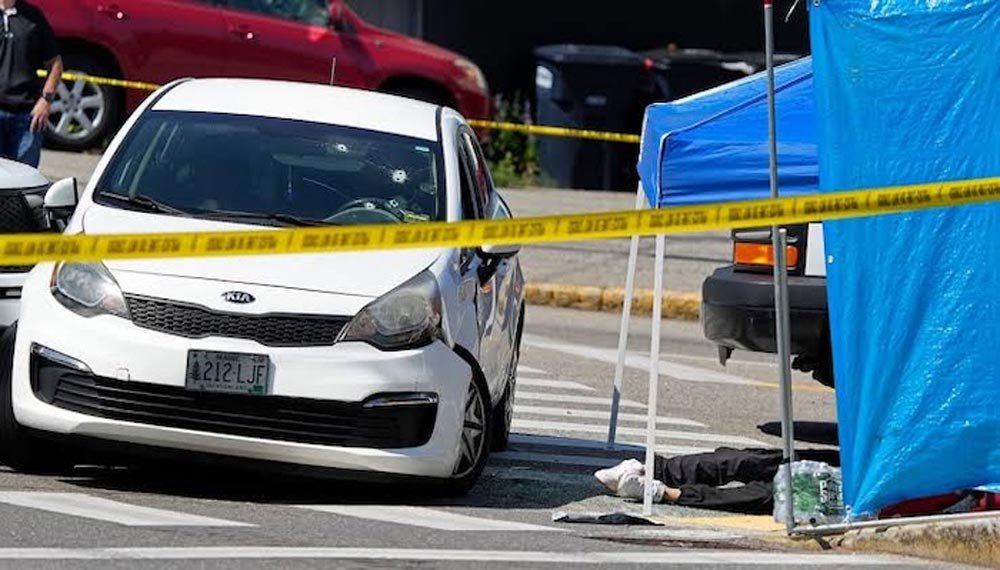
The shooting happened on Coldharbour Lane shortly after 01:00, leaving a 25-year-old man with life-threatening injuries. Three other people – aged 21, 47 and 70 – were also injured but their conditions have been assessed as not life-threatening or life-changing.
The Metropolitan Police said no arrests had been made and detectives are continuing their investigation.
Gunfire in Brixton
Police were called at 01:14 after reports of a firearm being discharged on Coldharbour Lane, a major road in the Brixton area of south London.
Officers, including specialist crime teams, arrived within minutes. They provided emergency first aid at the scene alongside paramedics from the London Ambulance Service while the injured were treated.
According to the ambulance service, two of the victims were taken to a major trauma centre, while the other two were transported to a local hospital.
A trauma team from London’s Air Ambulance also attended the incident to support ambulance crews.
Victims Hospitalised
The most seriously injured victim, a 25-year-old man, remains in hospital with life-threatening injuries.
Three other people – aged 21, 47 and 70 – were also admitted to hospital. Police said their injuries are not considered life-threatening or life-changing.
Authorities have not said whether the victims were the intended targets of the shooting.
Police Investigation
Detective Chief Inspector Allam Bhangoo, who is leading the investigation, said the shooting would cause concern among residents.
He described the incident as “an act of indiscriminate violence” and said detectives were working quickly to identify those responsible.
“We understand how concerning this incident will be for the local community and want to reassure residents that officers are working at pace to identify those responsible,” he said.
Bhangoo urged anyone who witnessed the shooting or has information that could help investigators to come forward.
Appeal for Witnesses
Police have asked anyone with information or relevant footage to contact them via 101.
Information can also be provided anonymously through the independent charity Crimestoppers.
Officers said residents can expect an increased police presence in the Brixton area in the coming days while inquiries continue.


Join the discussion?

Already a member?


Adapted by ASEAN Now. Source 3 May 2026
webfact
webfact
Prime Minister Sir Keir Starmer has suggested that some protests could potentially be banned, amid growing concern about the impact of repeated pro-Palestinian marches on Britain’s Jewish community.

Get today's headlines by email

Speaking on BBC Radio 4’s Today programme, Sir Keir said he remained committed to protecting the right to peaceful protest but indicated the government was considering stronger measures in certain cases.
“I think certainly the first, and I think there are instances for the latter,” he said when asked whether he supported tougher policing of protest language or halting some demonstrations entirely.
His remarks come days after two Jewish men were stabbed in the north London area of Golders Green.
Stabbing attack and terror investigation
Shloime Rand and Moshe Shine were seriously injured in the attack on Wednesday but have since been discharged from hospital.
Police have charged 45-year-old Essa Suleiman with three counts of attempted murder. He is also accused of attacking Ishmail Hussein, a man he had known for about two decades, in a separate incident in Southwark on the same day.
Authorities declared the Golders Green stabbing a terrorism incident.
The attack follows a series of violent incidents targeting Jewish people in recent months.
Debate over protests
Calls for stronger action on protests have intensified following the attack.
Jonathan Hall KC, the government’s independent reviewer of terrorism legislation, recently proposed a temporary halt to pro-Palestinian marches, arguing it was currently “impossible” for them not to foster antisemitism.
Chief Rabbi Sir Ephraim Mirvis also called for a pause, saying the demonstrations had contributed to what he described as a growing “tone of Jew hatred” in the UK.
Sir Keir said he understood concerns expressed by Jewish communities about the “cumulative effect” of repeated demonstrations.
“In relation to the repeated nature of the marches, many people in the Jewish community have said to me it’s the repeat nature, it’s the cumulative effect,” he said.
He added the government would examine whether additional powers were needed to address such concerns.
At the same time, the prime minister emphasised that strong opinions about the conflict in the Middle East should not be suppressed.
“I will defend the right of peaceful protest very strongly and freedom of speech,” he said.
Political reactions
The suggestion of possible restrictions drew criticism from several political figures and campaign groups.
The Stop the War Coalition, which has helped organise a number of pro-Palestinian marches, said it condemned antisemitism and racism but argued it was wrong to link the demonstrations with attacks on Jewish people.
Green Party deputy leader Zack Polanski accused the government of exploiting fear within the Jewish community to justify greater limits on protest rights.
Jeremy Corbyn’s political movement, Your Party, also warned that responses to the attacks should not undermine civil liberties.
Other parties took a different view. Conservative leader Kemi Badenoch said it was time to ban the marches altogether, arguing they had become a platform for intimidation and violence against Jews.
The Liberal Democrats said demonstrations should only proceed if they can be carried out safely and should be closely scrutinised by police.
Existing powers and controversial slogans
Police in England and Wales already have the authority to place restrictions on protests, including limiting their routes or timings. Officers can request an outright ban if such conditions are insufficient to prevent serious public disorder, although such powers are rarely used.
Earlier this year the government approved a police request to ban London’s Al Quds Day march, the first such prohibition since 2012.
Sir Keir also criticised chants such as “globalise the intifada”, describing them as “very dangerous” to the Jewish community and saying they should be prosecuted.
The term “intifada”, meaning uprising in Arabic, became widely known during the Palestinian uprising against Israeli rule in the West Bank and Gaza in 1987. Jewish organisations often interpret the phrase as a call for violence against Jews, while pro-Palestinian groups say it represents resistance to Israeli occupation.
During a visit to Golders Green on Thursday, the prime minister was confronted by protesters chanting “Jew harmer”.
He acknowledged that many Jewish people in Britain currently felt fearful but rejected claims the government had failed to respond, pointing to increased police presence and additional funding to protect Jewish communities.

Join the discussion?

Already a member?


Adapted by ASEAN Now. Source 3 May 2026
webfact
webfact
Somali pirates have hijacked an oil tanker in the Gulf of Aden after boarding the vessel off the coast of Yemen, according to Somali security officials.

Get today's headlines by email

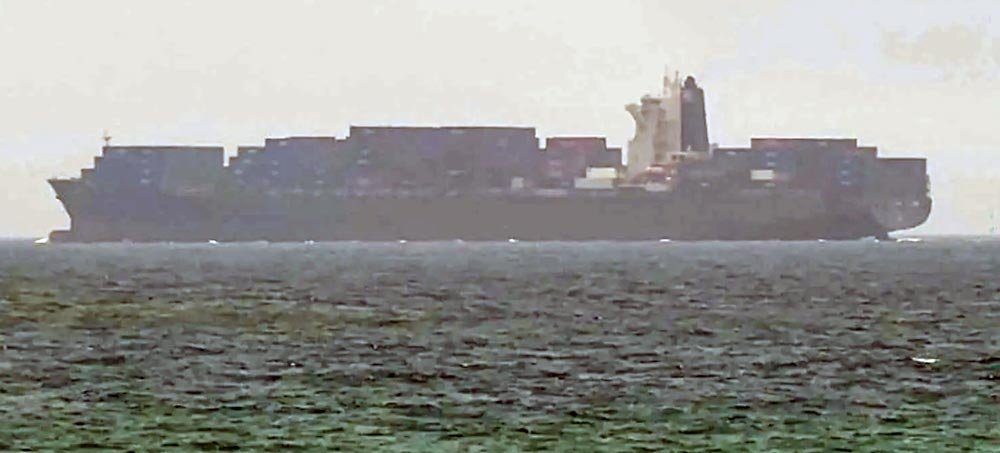
The tanker, MT Eureka, was reportedly seized early in the morning and is now being taken toward Somali waters. Officials said the ship was sailing under the flag of Togo when armed men overran it near the Yemeni port of Qana.
The incident is the latest in a series of piracy attacks that suggest renewed activity along Somalia’s coastline.
Tanker Taken Toward Somali Waters
Security officials from Somalia’s semi-autonomous Puntland region said the tanker was boarded by gunmen at around 05:00 local time (03:00 BST). The attackers are believed to have launched their operation from a remote coastal area near the town of Qandala on the Gulf of Aden.
After taking control of the vessel, the pirates began sailing it across the Gulf of Aden between Yemen and Somalia. Officials expect the ship to anchor in Somali waters in the coming hours.
Earlier, the Yemeni coastguard confirmed that the tanker had been hijacked and said it was heading toward Somalia.
No details have yet been released about the number of crew members on board or their nationalities. Authorities have also not confirmed whether any injuries occurred during the takeover.
Second Oil Tanker Hijacked in 10 Days
The seizure of MT Eureka follows another piracy incident involving an oil tanker less than two weeks earlier.
On 22 April, Somali pirates captured the tanker Honor 25, which was transporting about 18,500 barrels of oil destined for Mogadishu. That attack raised concerns among maritime security officials about a resurgence of piracy in the region.
The latest case marks the second oil tanker hijacked within a 10-day period and the fourth successful pirate seizure reported in the past two weeks.
Separate Encounter Near Yemen
In a separate maritime security report on Friday, the United Kingdom Maritime Trade Operations (UKMTO) said a bulk carrier near the Yemeni port city of Al-Mukala had been approached by armed individuals traveling in a small boat.
The group, described as “armed persons” on a skiff, later left the area.
Somali security officials said those individuals were believed to have departed from a remote coastal zone near the fishing town of Caluula, about 209km (130 miles) from the area where the attackers set out to seize MT Eureka.
While the incident did not result in a hijacking, it added to concerns that piracy activity is spreading along Somalia’s extensive coastline.
Concerns Over Renewed Piracy
Somalia has the longest coastline in mainland Africa, stretching roughly 3,333km (2,071 miles). The length of the coast and limited maritime enforcement have historically made the region vulnerable to piracy.
Piracy in Somali waters had fallen sharply after 2011 following years of international naval patrols. However, security officials say attacks have risen again since late 2023.
The resurgence has partly been linked to attacks by Yemen’s Houthi rebels on shipping in the Red Sea and Gulf of Aden. Those strikes have drawn the attention of international naval forces toward countering the Houthi threat, potentially leaving fewer resources focused on anti-piracy patrols.
A security official from Puntland warned that the scale of pirate activity may be greater than widely understood.
“The ongoing crisis with the pirates is much worse than many realise,” the official said, adding that armed groups were increasingly active along the coast.
Somali authorities and the European Union Naval Force, which coordinates anti-piracy operations in the region, have not yet issued statements on the latest hijacking.

Join the discussion?

Already a member?


Adapted by ASEAN Now. Source 3 May 2026
webfact
webfact
California will soon begin issuing traffic citations to companies operating driverless vehicles when their cars break road rules, closing a gap that has frustrated police as autonomous technology spreads across the state.

Get today's headlines by email

New regulations announced by the California Department of Motor Vehicles (DMV) will allow officers to send a “notice of AV noncompliance” directly to the manufacturer responsible for a vehicle that commits a traffic offence.
The rules take effect on 1 July and form part of broader legislation adopted in 2024 aimed at tightening oversight of autonomous vehicle technology.
Officials say the measures will create a clearer system of accountability as self-driving cars become more common on city streets.
New system for traffic violations
Under the updated framework, police officers will be able to cite companies whose autonomous vehicles commit moving violations, even if no human driver is present.
Previously, enforcement posed difficulties because traditional traffic tickets are issued to drivers. When a driverless vehicle broke the rules, officers often had no straightforward way to penalise the company operating it.
The new process allows authorities to document the violation and notify the manufacturer directly.
The regulations also require companies operating autonomous vehicles to respond to requests from police or emergency services within 30 seconds. Vehicles entering active emergency zones may face penalties under the updated rules.
Steve Gordon, director of the DMV, said the changes are intended to ensure public safety while the technology continues to expand.
“California continues to lead the nation in the development and adoption of AV technology, and these updated regulations further demonstrate the state’s commitment to public safety,” he said in a statement.
State officials described the new framework as the most comprehensive set of autonomous vehicle regulations in the United States.
Incidents highlight enforcement challenges
Authorities have cited several incidents that illustrate the difficulty of regulating driverless vehicles under existing traffic laws.
In September last year, police in San Bruno, a city south of San Francisco, observed an autonomous vehicle operated by Waymo making an illegal U-turn at a traffic light.
Officers stopped the vehicle but were unable to issue a citation because there was no driver present. Instead, police contacted the company to report what they described as a technical “glitch”.
Similar situations have been reported elsewhere, prompting calls for clearer enforcement rules as robotaxis and test vehicles appear more frequently in urban areas.
Growing presence of robotaxis
Autonomous vehicles are already operating commercially in parts of California.
Waymo runs a fleet of fully driverless robotaxis in the San Francisco Bay Area and Los Angeles County. Other companies, including Tesla, hold permits allowing them to test autonomous vehicles on public roads in several California cities.
The rapid expansion has also brought operational challenges.
During a major blackout in San Francisco in December, multiple Waymo vehicles stopped in the middle of busy intersections, worsening congestion in parts of the city.
Emergency responders have also raised concerns. The San Francisco Fire Department has repeatedly warned that robotaxis have sometimes obstructed emergency vehicles or blocked access to incidents.
The new regulations are intended to address such situations by ensuring companies remain responsible for the behaviour of their autonomous vehicles on public roads.


Join the discussion?

Already a member?


Adapted by ASEAN Now. Source 3 May 2026
webfact
webfact
Germany’s defence minister has said the United States decision to withdraw around 5,000 troops from the country was anticipated, as the NATO alliance seeks further details from Washington about the move.

Get today's headlines by email

Speaking to the German news agency DPA, Boris Pistorius said the continued presence of American forces in Europe — particularly in Germany — remained beneficial to both sides.
“The presence of American soldiers in Europe, and particularly in Germany, is in our interest and in the interest of the US,” he said.
A spokesperson for NATO, Allison Hart, said the alliance was working with Washington to better understand the scope and implications of the decision.
US Move Follows Political Tensions
The troop reduction comes after Donald Trump criticised German Chancellor Friedrich Merz for comments suggesting the United States had been “humiliated” by Iranian negotiators during talks related to the ongoing conflict in the Middle East.
Germany currently hosts the largest contingent of US troops in Europe. More than 36,000 American personnel are stationed in the country, compared with about 12,000 in Italy and roughly 10,000 in the United Kingdom.
Asked about the reduction on Saturday, Trump indicated the withdrawal could exceed the initial figure.
“We’re going to cut way down, and we’re cutting a lot further than 5,000,” he said, without giving additional details.
The US president has also floated the possibility of reducing American troop deployments in Italy and Spain.
Last year, Washington already scaled back its military presence in Romania, part of a broader plan by the Trump administration to shift US strategic focus from Europe toward the Indo-Pacific region.
Concerns Inside the Alliance
The announcement has prompted concern among members of the 32-nation NATO alliance that the move could weaken the organisation.
Donald Tusk, the prime minister of Poland, warned that divisions among allies posed a serious risk.
“The greatest threat to the transatlantic community are not its external enemies, but the ongoing disintegration of our alliance,” he said, calling for urgent efforts to reverse what he described as a damaging trend.
Two senior Republican lawmakers in Washington also expressed unease about the plan. Roger Wicker, chair of the Senate Armed Services Committee, and Mike Rogers, who leads the House Armed Services Committee, said they were “very concerned” by the decision to remove a US brigade from Germany.
They argued that maintaining a strong American military presence in Europe remained an important deterrent.
Europe Urged to Boost Defence Role
Pistorius said the development underscored the need for European countries to assume greater responsibility for their own security.
He said Berlin would intensify cooperation with its European partners and pointed to Germany’s growing defence spending.
For years, Trump had criticised Germany for failing to meet NATO’s benchmark of allocating 2% of gross domestic product to defence. Under the Merz government, however, spending has risen sharply.
Germany is expected to allocate €105.8bn (£91bn) to defence by 2027. When additional security-related funds are included, overall defence spending is projected to reach 3.1% of GDP, partly reflecting continued support for Ukraine in its war against Russia.
Hart said the troop reduction highlighted the importance of Europe increasing its defence commitments. NATO allies agreed at a summit in The Hague last year to work toward spending 5% of GDP on defence and related security investments.
Dispute Over Iran Talks
The dispute between Trump and Merz was sparked by remarks the German chancellor made earlier in the week.
Speaking to university students, Merz said the United States lacked a clear strategy in negotiations with Iran, accusing Iranian officials of delaying talks and leaving US diplomats without results.
He said the situation had left the United States “humiliated”.
Trump rejected the criticism on his Truth Social platform, claiming Merz believed Iran should be allowed to obtain nuclear weapons and saying the German leader “doesn’t know what he’s talking about”.
Soon after, Washington announced the planned troop withdrawal.
A Pentagon spokesperson, Sean Parnell, said the order had been issued by Defence Secretary Pete Hegseth, adding that the withdrawal was expected to be completed within six to twelve months.
The decision comes amid wider tensions between Washington and its allies over operations to reopen the Strait of Hormuz, a key oil shipping route disrupted after Iranian restrictions on maritime traffic following US and Israeli strikes in late February.


Join the discussion?

Already a member?


Adapted by ASEAN Now. Source 3 May 2026
webfact
webfact
Public surveys suggest many Americans are uneasy with President Donald Trump’s efforts to attach his name and image to government projects, buildings and symbols, with several proposals drawing strong opposition across party lines.

Get today's headlines by email

When historians assess the presidency of Donald Trump, some analysts suggest his ambition to leave a visible personal imprint on public institutions may become a defining feature.
Among the most visible initiatives is a plan to demolish the East Wing of the White House and replace it with a large ballroom designed for official receptions and high-profile gatherings. The proposal emerged during a period of economic strain and quickly became controversial.
Plans to reshape Washington
Early polling showed significant opposition. A recent survey conducted by The Washington Post and ABC News indicates attitudes have remained unchanged.
According to the poll, 56% of Americans oppose demolishing the East Wing and constructing the ballroom, while 28% support the idea. The same margin was recorded in October, suggesting little shift in opinion despite months of debate.
Trump has said the ballroom would be financed through private donations, but some Republicans recently floated the possibility of allocating roughly $400 million in taxpayer funding for the project.
Security argument fails to sway opinion
The ballroom plan briefly resurfaced in political debate following a shooting incident linked to the annual White House Correspondents' Dinner, traditionally held at the Washington Hilton.
Some Republicans argued a ballroom at the White House could provide a more secure venue for the event. However, the Washington Post–ABC poll, conducted both before and after the shooting, found no statistically meaningful shift in public opinion tied to the incident.
Overall opposition remained roughly two to one. Among those expressing strong views, opponents outnumbered supporters by about three to one.
Monument and currency proposals face pushback
Other proposals linked to Trump’s personal branding have also drawn criticism.
One plan calls for a 250-foot triumphal arch to be constructed between the Lincoln Memorial and Arlington National Cemetery. Polling shows 52% of Americans oppose the project, while 21% support it.
Support among Republicans is limited: just over half back the idea. Independent voters oppose it by nearly five to one.
Another initiative has proved even more unpopular. The United States Department of the Treasury has explored placing Trump’s signature on paper currency, something not previously done while a president remains in office.
Survey results show 68% of Americans oppose the move, compared with only 12% in favor. Even among Republicans, opposition outweighs support.
Naming buildings while in office
Separate research released by Pew Research Center found little enthusiasm for naming government buildings after Trump during his presidency.
Only 9% of Americans said doing so while he remains in office would be appropriate. Another 21% said such recognition could be acceptable after he leaves the White House, while half of respondents said it would not be appropriate at all.
Public opinion about broader cultural changes tied to Trump appears similarly skeptical.
A January survey by CNN found 62% of Americans believed Trump had “gone too far” with changes affecting institutions such as the John F. Kennedy Center for the Performing Arts and the Smithsonian Institution.
That figure was the highest level of opposition recorded among eight policy initiatives tested in the poll.
Political impact uncertain
Trump’s approval ratings have often remained stable despite controversy during his political career. However, the recent surveys suggest that proposals seen as personalizing government institutions may resonate negatively with a broad segment of the public.
With the administration facing additional pressure from issues including the Iran conflict and rising fuel prices, polling indicates that efforts to attach Trump’s name or symbolism to public landmarks and institutions are unlikely to improve public sentiment.


Join the discussion?

Already a member?


Adapted by ASEAN Now. Source 3 May 2026
webfact
webfact
Conspiracy theories helped fuel the political rise of Donald Trump, but now the same forces are increasingly turning against him as both right- and left-wing commentators question his actions and spread claims targeting the president.

Get today's headlines by email

For years, Trump embraced conspiracy narratives that energized supporters. Early in his political career, he promoted the false “birther” claim that Barack Obama had not been born in the United States. Later he amplified allegations about a supposed “deep state” undermining his presidency and continued to insist that the 2020 election had been fraudulently taken from him.
Yet conspiracy movements often operate outside the control of any single political figure. Recently, Trump has become the focus of speculation and accusations from some of the same voices that once championed him.
Claims spread after White House dinner
The shift became visible following Saturday’s White House Correspondents’ Association dinner. Soon after reports emerged of an apparent assassination attempt, social media filled with unfounded claims that the incident had been staged to benefit Trump politically. No evidence has surfaced to support those allegations.
Some of the speculation came from figures who had previously been vocal supporters of the president. Conspiracy broadcaster Alex Jones suggested online that the shooting might have been orchestrated. Former Republican congresswoman Marjorie Taylor Greene questioned the rapid release of writings linked to the suspect.
Skepticism also appeared on the political left. Progressive podcasters Jennifer Welch and Angie Sullivan published an episode speculating about possible “false flag” elements in the aftermath of the shooting.
The White House rejected the claims outright. Spokesman Davis Ingle said suggestions that Trump staged an assassination attempt were baseless. Republican senator Bernie Moreno, who attended the dinner, also dismissed the theories, saying those making the claims should step away from social media.
Trump himself appeared surprised by the speed with which conspiracy narratives circulated. Speaking to 60 Minutes, he remarked that such claims usually take longer to emerge.
Break with influential supporters
The backlash highlights a widening rift between Trump and several prominent conservative commentators who previously supported him.
Media personalities including Tucker Carlson and Candace Owens have recently criticised the president, particularly over the conflict with Iran and disputes surrounding information about disgraced financier Jeffrey Epstein.
Trump has responded with sharp criticism, accusing some of the figures of promoting extreme or baseless claims. In a social media post he labelled several former allies “nut jobs,” citing conspiracy theories they had spread.
A former senior campaign official said tensions with influential right-wing commentators could pose a political challenge for Trump. The person pointed to internal polling suggesting some softening in Republican support.
Influence of online personalities
Researchers who study online political communities say the split reflects broader changes in the digital media ecosystem.
According to Brian Friedberg of the Harvard Kennedy School Shorenstein Center, several pro-Trump media outlets have seen declines in their audiences, while independent personalities such as Carlson and Owens remain highly popular on video platforms.
The fragmentation makes it difficult to predict whether shifting narratives among online commentators will translate into changes in voter behaviour.
Conspiracy theories across the political spectrum
The trend also illustrates how conspiracy thinking has spread beyond any single political camp.
Trump’s early campaigns were closely linked with conspiracy claims, from the birther theory about Obama to false assertions that he won the 2020 election. During his presidency he also declined to fully distance himself from the movement known as QAnon.
However, conspiracy narratives have increasingly appeared among critics of Trump as well. A survey published by the National Academy of Sciences found that more than three-quarters of Americans believe at least one conspiracy theory.
Some Democratic politicians, including Ro Khanna and Jamie Raskin, have suggested cooperating with unlikely allies on issues such as opposition to war. Others within the party caution that aligning with conspiracy-minded figures could be politically risky.
Political strategists say the evolving landscape reflects a broader shift in American politics, where distrust of institutions and cross-ideological populist sentiments can bring together activists from different sides of the spectrum.

Join the discussion?

Already a member?


Adapted by ASEAN Now. Source 2 May 2026
webfact
webfact
A man who once shared a jail cell with convicted sex offender Jeffrey Epstein says he discovered what appeared to be a suicide note written by the financier following an earlier suicide attempt in 2019.

Get today's headlines by email

The document is now sealed in court records connected to the criminal case of Nicholas Tartaglione, a former New York police officer who was later convicted of four murders.
Tartaglione told The New York Times the note was written on paper from a yellow legal pad and hidden inside a book in their cell.
Alleged note discovered after first incident
According to Tartaglione, he found the note in July 2019 shortly after Epstein was discovered in his Manhattan jail cell following what authorities described as an apparent suicide attempt.
A Bureau of Prisons incident report stated that Epstein was found on 23 July with a homemade noose around his neck. Officers reported he was lying on the floor in a fetal position wearing a T-shirt and boxer shorts.
The report said Epstein was breathing heavily and snoring when discovered. Officials noted redness around his neck and a circular mark at its base, along with friction marks on the front of his neck.
Initially, Epstein told investigators that Tartaglione had attacked him. He later said he could not remember what had happened. Tartaglione has consistently denied harming Epstein.
Details shared publicly in podcast
Tartaglione first publicly mentioned the alleged suicide note during a podcast interview last year.
He said the note referred to a federal investigation and included a message suggesting authorities had looked into him for months without finding evidence of wrongdoing.
According to Tartaglione, the note also contained a brief farewell message and a drawn smiley face.
The document itself has not been released publicly and remains part of sealed court filings.
Court asked to unseal document
The New York Times has now asked a federal court to unseal the alleged note.
The newspaper argued that the document should be made public because Tartaglione has already discussed it openly and because a two-page timeline referencing the note appeared in recently disclosed files from the U.S. Department of Justice.
Kenneth Karas, a U.S. District Court judge, has ordered parties involved in the case to respond to the request by 4 May.
Federal prosecutors from the U.S. Attorney’s Office for the Southern District of New York told ABC News they were not aware of any suicide note written by Epstein. However, a chart included in Justice Department records references the document.
The chart states that Tartaglione discovered the note sometime between 23 July and 27 July 2019.
Epstein denied suicidal thoughts
Records from Epstein’s jail evaluation show that he denied having suicidal thoughts after the initial incident.
During a suicide risk assessment, Epstein reportedly told staff he had no plans to harm himself and intended to fight the charges against him.
A psychologist at the Metropolitan Correctional Center wrote that Epstein said he had “no interest” in killing himself and described having a “wonderful life”.
Epstein had been arrested in 2019 on federal charges accusing him of running a network that recruited and sexually exploited underage girls at properties in New York and Florida.
He died on 10 August 2019 while awaiting trial in the same jail. The New York City Office of Chief Medical Examiner ruled his death a suicide by hanging, a conclusion also accepted by the U.S. Department of Justice.
Tartaglione was later convicted in 2023 of four murders and sentenced in 2024 to four consecutive life terms. His appeal is currently before the United States Court of Appeals for the Second Circuit.


Join the discussion?

Already a member?


Adapted by ASEAN Now. Source 2 May 2026
webfact
webfact
The United States will withdraw about 5,000 troops from Germany following an order from President Donald Trump, marking a significant shift in the American military presence in Europe amid rising tensions with Berlin.

Get today's headlines by email

The move, confirmed by the Pentagon on Friday, comes as relations between Washington and the German government led by Friedrich Merz have deteriorated in recent days.
Troop levels to return to pre-2022 levels
A senior Pentagon official said the redeployment would reduce the number of US service members stationed in Germany to roughly the level seen before 2022.
The withdrawal will affect a brigade combat team currently deployed in the country, as well as potentially other American forces based there.
Plans by the previous administration to deploy a long-range fires battalion to Germany later this year are also expected to be scrapped as part of the changes.
Pentagon officials said the repositioning of troops would take place gradually, with the process expected to be completed within six to twelve months.
Friction with Germany over Iran conflict
The decision follows growing frustration within the Trump administration toward Germany and other members of the North Atlantic Treaty Organization over their role during the United States’ war with Iran.
Washington has repeatedly criticised some European allies for what it views as insufficient support during the conflict.

The dispute intensified this week after Chancellor Merz publicly commented on the situation in the Strait of Hormuz, where Iranian actions have disrupted global energy supplies.
Merz said Iran was “humiliating” the United States as it restricted shipping through the strategic waterway, triggering volatility in international energy markets.
Pentagon cites review of European deployments
Chief Pentagon spokesperson Sean Parnell confirmed the withdrawal in a statement, saying the move followed a review of the US military’s posture in Europe.
He said the decision reflected “theatre requirements and conditions on the ground” and was made after assessing how American forces are deployed across the region.
The Pentagon did not provide details about where the withdrawing troops might be relocated.
Expected political backlash
The planned withdrawal is likely to face resistance in Washington.
Members of both major political parties in Congress are expected to challenge the decision, reflecting longstanding bipartisan support for maintaining a strong US military presence in Europe.
Germany hosts one of the largest contingents of American forces outside the United States and has long served as a key hub for US military operations across the continent.
Any significant reduction in troop numbers could therefore carry wider implications for NATO’s posture in Europe and the alliance’s response to security threats.


Join the discussion?

Already a member?


Adapted by ASEAN Now. Source 2 May 2026
webfact
webfact
Britain’s chief rabbi has warned that people who appear visibly Jewish are no longer safe in the country, after two men were stabbed in a north London neighbourhood that has seen several recent antisemitic incidents.

Get today's headlines by email

Ephraim Mirvis said the attack had intensified fears among Britain’s Jewish community. Speaking to the BBC, he said the incident demonstrated that those who can be identified as Jewish in public are increasingly at risk.
“I’m sad to say that today’s event proves that if you are visibly Jewish, you’re not safe, and far more needs to be done,” he said.
He added that many people had been asking themselves where the next attack might occur.
Stabbings in north London
Police said the attack happened on Wednesday morning in the London neighbourhood of Golders Green, an area with a large Jewish population. Officers are treating the stabbings as a terrorist incident.
One of the victims was attacked at a bus stop while putting on a kippah, a traditional Jewish skullcap. The second was stabbed while walking along the street.
Both men were taken to hospital and are reported to be in stable condition. Police arrested a 45-year-old man on suspicion of attempted murder.
Authorities later confirmed the suspect had previously been referred to the government’s Prevent programme, which is designed to identify people at risk of becoming involved in extremism.
Threat level raised
Following the attack, the Joint Terrorism Analysis Centre raised Britain’s terrorism threat level to “severe” from “substantial”. The level, the second-highest on the UK scale, means an attack is considered highly likely within the next six months.
The centre operates within MI5.
Head of counter-terrorism policing Laurence Taylor said Britain had been facing a growing terrorist threat for some time.
He said both Islamist and extreme right-wing extremism were contributing to the risk and warned that Jewish and Israeli individuals and institutions in the UK were facing an elevated threat.
Series of antisemitic incidents
The stabbings follow a series of antisemitic incidents in London’s Jewish community in recent weeks.
Last month, arsonists set fire to four ambulances belonging to a Jewish charity in Golders Green. A synagogue in the area was also attacked two weeks earlier.
The rise in incidents has prompted warnings from senior officials. Government terrorism adviser Jonathan Hall described the situation as the most serious national security concern the country has faced since a wave of attacks in 2017, including the bombing at an Ariana Grande concert in Manchester that killed 35 people.
He told the BBC that many Jewish residents, particularly in London, now fear they cannot live normally because of repeated attacks.
Government response
The UK government said it was treating the recent incidents with urgency. Interior minister Shabana Mahmood described the attacks as an emergency, though she stopped short of calling the situation a national emergency.
Police are also investigating claims of responsibility made by a group said to be backed by Iran, though officials said it was not yet clear whether those claims were credible.
The government announced an additional £25 million in funding to strengthen security for Jewish communities, including synagogues, schools and community centres. The funding comes on top of £33 million already pledged earlier this year.
Prime minister Keir Starmer said the attacks had left many Jewish people afraid to openly practise their religion or reveal their identity at work, school or university.
He said policing would be increased in affected areas and pledged faster legal action in antisemitism cases. Starmer also warned that Britain must strengthen its ability to counter hostile actions from states such as Iran.
Despite the measures, anger remains within parts of London’s Jewish community. Protesters gathered during Starmer’s visit to the area, calling for stronger protection.
Some commentators have argued the government should consider measures similar to those taken in France after the 2015 Charlie Hebdo attack, when thousands of soldiers were deployed to guard Jewish sites.


Join the discussion?

Already a member?


Adapted by ASEAN Now. Source 2 May 2026
webfact
webfact
Former Conservative prime minister John Major has warned that Britain should avoid repeatedly replacing its prime ministers, arguing that political leaders must focus on long-term challenges rather than short-term political battles.

Get today's headlines by email

In an interview with BBC programmes Radio 5 Live and Newsnight, Sir John criticised what he described as a growing tendency in politics to prioritise media attention and personal career advancement over addressing complex national issues.
The former leader said modern politics risked becoming like a “game show”, where politicians concentrate on headlines rather than the difficult decisions needed to tackle issues such as healthcare costs, pensions and climate change.
Warning over political instability
Sir John, who led the country from 1990 to 1997, said frequent changes of leadership risk undermining effective government.
“I mean, it isn’t a good idea to keep changing prime ministers,” he said, suggesting that political systems with fixed leadership terms could provide greater stability.
Pointing to the United States model, he said the two-term limit for a president offered a sensible structure for leadership.
However, he declined to offer direct advice to the current Labour government led by Keir Starmer, saying he did not want to make the “mistake” of publicly advising a prime minister from another party.
Speculation has circulated about pressure on Starmer from senior Labour figures including Angela Rayner and Wes Streeting, though Sir John said the fate of individual politicians mattered less than developing effective policies.
Long-term problems being avoided
Sir John argued that governments were failing to confront major long-term challenges facing the UK, particularly the implications of an ageing population.
He said rising healthcare costs and pension pressures were being left unresolved, with the burden likely to fall on future generations.
Leaders were also delaying decisive action on climate change, he said, warning that current policies risked leaving younger people to face worsening economic and environmental conditions.
“The first role of any government, in my view, is to leave something better for the next generation than your generation inherited,” Sir John said.
Instead, he warned, today’s young people were inheriting a more difficult world than previous generations.
He also suggested governments had become reluctant to refuse demands for higher public spending out of fear of losing votes.
Politicians, he said, should be willing to make difficult arguments to the public if the policies would improve conditions for future generations.
Concern over political careers and representation
Sir John also criticised the changing background of many modern MPs, saying political parties now relied increasingly on professional politicians rather than candidates with broader life experience.
He said Labour MPs once included more working-class representatives who had close connections with their communities. Today’s MPs, he said, tended to be younger, more highly educated and less directly connected to their constituents.
He added that the Conservative benches also lacked people from professions that had previously been common in politics, such as business leaders or members of the armed forces.
Sir John himself did not attend university and said his interest in politics began when he was 13 after meeting his local MP, Marcus Lipton, who arranged a visit for him to the House of Commons.
Call for young people to enter politics
Despite his concerns, Sir John urged young people to consider entering politics and public service.
He warned that if talented individuals focused solely on private careers and avoided public life, the quality of political leadership could decline.
The former prime minister said public service remained essential to tackling the country’s long-term problems and ensuring future generations inherited a better society.

Join the discussion?

Already a member?


Adapted by ASEAN Now. Source 2 May 2026
webfact
webfact
Lawyers representing convicted Bosnian Serb commander Ratko Mladić say he is close to death and should be released from prison, according to a request filed with a United Nations court.

Get today's headlines by email

The 84-year-old former general, serving a life sentence for genocide and other crimes committed during the wars in the former Yugoslavia, is currently held at a UN detention facility in The Hague. His legal team argues that his health has deteriorated significantly and that he should be transferred to a hospital or hospice.
A judge is now reviewing the request after ordering an independent medical assessment of his condition.
Lawyers cite stroke and worsening health
In a submission to the court, Mladić’s lawyers said he had already been confined to a bed or wheelchair for a prolonged period. They claim his condition worsened after he suffered a suspected stroke during a phone call with his son.
According to the filing, the episode left him largely unable to speak. Two doctors who examined him described his condition as serious and warned that the risk of imminent death was high.
The defence team asked the court to grant provisional or conditional release so he could receive care in a medical facility where Serbian is spoken.
Although the request does not explicitly state where he should be sent, officials in Serbia have indicated they are prepared to accept him if the court approves his release.
Serbia’s justice minister, Nenad Vujic, said the government would provide guarantees to the court if Mladić were allowed to leave detention.
UN judge orders medical review
The request is being considered by Judge Graciela Gatti Santana, who has asked independent medical experts to assess Mladić’s health.
The review is expected to address his current medical condition, the adequacy of treatment available in detention and whether doctors can estimate his life expectancy.
Mladić commanded Bosnian Serb forces during the 1992–95 war in Bosnia and Herzegovina, which followed the breakup of Yugoslavia.
His forces carried out campaigns of ethnic cleansing during the conflict. They also laid siege to Sarajevo, where more than 10,000 people were killed.
He was also convicted for the massacre of around 8,000 Muslim men and boys in Srebrenica in 1995.
Previous release requests rejected
Mladić was indicted by an international tribunal in 1995 but remained in hiding for years before being arrested in rural Serbia in 2011. He went on trial in The Hague the following year and was convicted in 2017.
His life sentence was upheld on appeal in 2021.
His lawyers argue that the prison hospital cannot adequately care for him and that continued detention now amounts to “cruel and inhumane punishment”.
However, groups representing survivors and families of victims strongly oppose any release. They say similar attempts have been made repeatedly and describe the latest request as a legal strategy rather than a humanitarian measure.
Earlier efforts by the defence have been unsuccessful. A bid for release in July 2025 was rejected, and a later request for temporary leave to attend a relative’s memorial service in November 2025 was also denied.
Mladić’s son, Darko Mladić, told Serbian media that he intends to visit his father at the prison hospital next week.
Awaiting the court’s decision
The UN judge has said the medical review will help determine both Mladić’s prognosis and whether the treatment he is receiving in detention is adequate.
The court will decide on the request once the medical findings have been evaluated.

Join the discussion?

Already a member?


Adapted by ASEAN Now. Source 2 May 2026
webfact
webfact
US President Donald Trump has said he will raise tariffs on cars and trucks imported from the European Union to 25%, intensifying trade tensions between Washington and Brussels. The announcement was made in a post on the social media platform Truth Social on Friday.

Get today's headlines by email

Trump said the increase would take effect next week, accusing the EU of failing to comply with a previously agreed trade arrangement, though he did not specify how the bloc had breached the deal.
“I am pleased to announce that… next week I will be increasing tariffs charged to the European Union for cars and trucks,” the president wrote.
The European Commission responded by saying the EU was continuing to implement the agreement and was seeking clarification from Washington about its claims.
Officials added that the bloc would “keep its options open” to defend European economic interests if the United States takes steps inconsistent with the agreement.
Automotive sector targeted
Trump’s decision focuses on the automotive industry, a sector that plays a major role in the economies of several EU member states.
European carmakers export large numbers of vehicles to the United States each year, making the sector particularly sensitive to trade policy changes.
In his statement, Trump urged European manufacturers to relocate production to the United States in order to avoid the tariffs.
“It is fully understood and agreed that, if they produce cars and trucks in U.S.A. plants, there will be no tariff,” he wrote.
The president also said billions of dollars were being invested in American car and truck factories, describing the level of investment as unprecedented in the country’s automotive industry.
Trade deal tensions
The latest move comes less than a year after the US and EU reached a trade agreement during talks held at Trump’s Turnberry golf resort in Scotland.
That deal set tariffs on most European goods at 15%, reducing the risk of the 30% tariffs Trump had previously threatened as part of his broader “Liberation Day” tariff policy.
In return, European leaders agreed to increase investment in the United States and take steps intended to boost American exports.
However, relations between the two sides deteriorated in the months that followed.
Disputes intensified after Trump suggested the United States should annex Greenland, a self-governing territory belonging to Denmark. The controversy led the European Parliament to temporarily suspend approval of the trade agreement earlier this year.
The parliament eventually approved the deal in March, but added a clause allowing the agreement to be suspended if Washington undermined its objectives, discriminated against EU businesses, or applied economic pressure on member states.
European reaction
The European Commission said the EU had been implementing the agreement according to normal legislative procedures while keeping US officials informed.
A commission spokesperson said the bloc remained committed to a stable and mutually beneficial transatlantic relationship but would respond if necessary.
Bernd Lange, chair of the European Parliament’s international trade committee, criticised the US announcement and questioned Washington’s reliability as a trading partner.
He said lawmakers were still working on legislation required to implement the deal fully and expected to finalise it by June.
Lange acknowledged that implementation had been paused earlier due to tensions over Greenland and legal developments in the United States, but he argued that Washington had already breached the agreement in other areas, including tariffs affecting goods containing steel and aluminium.
Legal backdrop
Trump’s earlier “Liberation Day” tariffs were imposed using emergency powers under the International Emergency Economic Powers Act. Those measures were later ruled unlawful by the Supreme Court of the United States, prompting companies that had paid the tariffs to seek refunds.
However, the proposed tariffs on cars fall under a different legal mechanism and are not affected by that ruling.
Trade specialists say the EU is likely to examine the legal details of Trump’s announcement before deciding whether to retaliate.
Professor Simon Evenett of the IMD Business School said policymakers in Brussels would want to see the official legal measures behind the announcement before responding.
He added that critics who believe the US administration struggles to maintain trade agreements would view the latest development as further evidence of that concern.


Join the discussion?

Already a member?


Adapted by ASEAN Now. Source 2 May 2026
webfact
webfact
US President Donald Trump has told members of Congress that hostilities between the United States and Iran have ended under an ongoing ceasefire, arguing that he therefore does not require congressional approval to continue military actions linked to the conflict.

Get today's headlines by email

In letters sent to congressional leaders, Trump said there had been no direct exchanges of fire between US forces and Iran since 7 April 2026.

“The hostilities that began on February 28, 2026 have terminated,” he wrote.
The communication was delivered on the 60th day after the administration formally notified lawmakers about US military strikes against Iran — a deadline set under US law for securing congressional authorisation or ending the use of American forces.
Debate over the War Powers deadline
Under the War Powers Resolution, a president must halt the use of US armed forces within 60 days of notifying Congress of combat operations unless lawmakers approve the action or grant an extension of up to 30 additional days to allow for the withdrawal of troops.
Trump argued that his authority as president allowed him to direct US military activity without further authorisation.
“I have and will continue to direct United States Armed Forces consistent with my responsibilities and pursuant to my constitutional authority to conduct United States foreign relations and as Commander in Chief and Chief Executive,” he wrote.
The law was enacted in 1973 following the Vietnam War, as Congress sought to limit the power of then-president Richard Nixon to continue the conflict without legislative approval.
Ceasefire and legal disagreement
At a congressional hearing on Thursday, US Defence Secretary Pete Hegseth told lawmakers that the ceasefire effectively paused the 60-day deadline set by the War Powers Resolution.
“We are in a ceasefire right now, which our understanding means the 60-day clock pauses or stops in a ceasefire,” Hegseth said.
Democratic Senator Tim Kaine challenged that interpretation, saying he did not believe the statute supported such a pause.
Lawmakers have faced increasing pressure to decide whether Congress should hold votes in both chambers to formally authorise the conflict with Iran.
Previous efforts led by Democrats to limit Trump’s military authority in relation to Iran have failed in both houses of Congress, largely due to opposition from Republicans.
However, some Republican lawmakers have indicated they could reconsider their stance after the 60-day deadline.
Negotiations remain uncertain
Although active fighting has halted, the United States and Iran have not yet reached a broader agreement through negotiations.
Iranian media reported on Friday that Tehran had submitted a proposal for talks with Washington through intermediaries in Pakistan.
The Iranian state news agency Islamic Republic News Agency said the proposal had been delivered to Pakistani mediators, though it did not disclose details of the offer. It remains unclear whether the proposal has reached US officials.
Speaking to reporters later on Friday, Trump said his administration had recently held discussions with Iran but expressed frustration with the pace of diplomacy.
“We just had a conversation with Iran. Let’s see what happens,” he said. “But I would say that I am not happy.”
Trump added that negotiations had been complicated by confusion within Iran’s leadership following the deaths of several senior military figures during the conflict.
He said military planners from United States Central Command had presented him with a range of possible approaches on Thursday — from launching further strikes to pursuing a negotiated settlement.


Join the discussion?

Already a member?


Adapted by ASEAN Now. Source 2 May 2026
webfact
webfact
A senior Democratic senator has accused US Defence Secretary Pete Hegseth of exaggerating the success of the war in Iran and failing to provide Donald Trump with an accurate assessment of the conflict, during a tense Senate hearing on the Pentagon’s latest budget proposal.

Get today's headlines by email

The criticism came from Jack Reed, the leading Democrat on the Senate Armed Services Committee, as Hegseth appeared alongside Dan Caine, chairman of the Joint Chiefs of Staff, to defend a proposed US military budget of $1.45tn.
Lawmaker challenges claims of victory
Opening the hearing, Reed said the defence secretary had painted an overly optimistic picture of the conflict, which has entered its eighth week and remains unresolved.
He told the committee that US families were already bearing the economic consequences of the war, particularly through rising fuel prices, despite limited public support for the military campaign.
“American families are bearing the cost of a war they wanted nothing to do with and have gained nothing from,” Reed said, adding that Hegseth had declared victory prematurely.
The senator also argued that the Iranian government remained firmly in power and retained enriched uranium stockpiles, meaning its nuclear programme was still intact. He warned that portraying the situation as a decisive triumph risked misleading the president and the public.
“Our military has performed heroically,” Reed said. “But military force without a sound strategy is a path to long-term defeat.”
Heated exchanges at budget hearing
The hearing marked the second day of congressional testimony from Hegseth and Caine regarding the Pentagon’s record defence spending request.
Proceedings were briefly interrupted when protesters shouted accusations of “war criminal” and “despicable” as Hegseth began his opening remarks. They were removed from the chamber before the hearing continued.
Reed also criticised what he described as the administration’s lack of a clear strategy and said the decision to launch military action had been taken without adequate consultation with Congress or the public.
He further condemned comments made by Hegseth about relaxing rules of engagement and showing “no mercy” toward Iranian forces, warning that such rhetoric could be counterproductive and potentially violate international law.
The senator additionally questioned the defence secretary’s management of the military, citing moves such as restructuring the Pentagon’s chaplain corps, cancelling flu vaccine requirements for service members and restricting attendance at certain universities.
Reed also criticised Hegseth for dismissing several senior commanders and blocking some promotions, arguing the decisions could undermine morale within the armed forces.
Democrats question public support
Hegseth rejected the accusations and defended the administration’s conduct of the war.
He repeated claims he had made during a House hearing a day earlier, saying critics in Congress were undermining a historic effort to confront Iran, which he described as a decades-long threat.
“The biggest adversary we face at this point are the reckless naysayers and defeatist words of congressional Democrats and some Republicans,” Hegseth said.
The defence secretary later clashed with other Democratic senators, including Kirsten Gillibrand and Richard Blumenthal, who challenged his assertion that the war had widespread support among Americans.
Gillibrand said the conflict lacked authorisation and argued that public backing for the campaign was weak.
Hegseth initially maintained that Americans supported the operation but later acknowledged that public opinion was more divided than he had suggested, attributing scepticism partly to criticism from Democrats and media coverage.
Blumenthal said that success in war historically depended on sustained domestic support.
“If what you’re seeing as success now is winning,” he said, “I would hate to see what losing looks like.”
The senator later attempted to ask Hegseth whether he agreed with comments by Trump suggesting Ukraine had been militarily defeated by Russia, but the defence secretary declined to answer directly.
Ongoing conflict and political fallout
The confrontation highlighted deep political divisions in Washington over the war with Iran. After two months of fighting, the conflict has reached a stalemate, while tensions in global energy markets have risen following the closure of the Strait of Hormuz.
As the administration seeks approval for its record defence budget, lawmakers remain sharply divided over both the strategy and the costs of the campaign.

Join the discussion?

Already a member?


Adapted by ASEAN Now. Source 1 May 2026
webfact
webfact
An 18-year-old French student has been charged in Singapore after posting a video online that appeared to show him licking a straw from an orange juice vending machine and placing it back into the dispenser.

Get today's headlines by email

Didier Gaspard Owen Maximilien was charged on April 24 with mischief and public nuisance following the incident at a shopping mall on March 12, according to a report by The Straits Times. He has not yet entered a plea.
The video circulated widely on social media after it surfaced online, drawing attention to the incident and prompting action from authorities.
Charges and possible penalties
Singaporean prosecutors have charged the teenager with two offences under local law.
The mischief charge carries a potential penalty of up to two years in prison, a fine, or both. The public nuisance charge is less severe and can result in up to three months’ imprisonment, a fine, or both.
Maximilien is currently studying at a French business school in Singapore. Lawyers representing him declined to comment when contacted about the case.
Court grants travel request
Despite the pending charges, a court granted the teenager permission to travel to the Philippines for a school trip required for his graduation.
He is scheduled to visit Manila from May 2 to May 25 before returning to Singapore. The court has ordered him to appear again on May 29 for further proceedings.
Vending machine operator responds
The juice vending machine involved in the incident is operated by IJooz.
The company said it filed a police report after the video emerged. As a precaution, it disinfected the machine and replaced all 500 straws stored inside the dispenser.
IJooz also announced plans to modify its machines to reduce the risk of similar incidents. The upgrades will include individually packaged straws and compartments that release straws only after a customer completes a purchase.
Strict public behaviour rules
Singapore is known for strict laws governing public behaviour and hygiene in the densely populated city-state.
Authorities enforce a range of regulations aimed at maintaining public cleanliness and order. These include restrictions on chewing gum sales and heavy penalties for offences such as littering and vandalism.
The case has drawn attention online, highlighting both Singapore’s strict enforcement of public conduct rules and the potential legal consequences of behaviour recorded and shared on social media.

Join the discussion?

Already a member?


Adapted by ASEAN Now. Source 1 May 2026
webfact
webfact
The United Kingdom has raised its national terrorism threat level from “substantial” to “severe” following a stabbing in north London that police are treating as a terrorist incident.

Get today's headlines by email

Officials said the change reflects both the attack in Golders Green and a wider increase in extremist threats, including Islamist and far-right activity.
Under the UK’s threat system, a “severe” rating means a terrorist attack is considered highly likely.
Stabbing in Golders Green Investigated as Terrorism
Two Jewish men were stabbed on Wednesday in Golders Green in north London. The incident is being investigated by the Metropolitan Police as a suspected terrorist attack.
Police arrested a 45-year-old man, Essa Suleiman, on suspicion of attempting to murder Shloime Rand, 34, and Moshe Shine, 76. He remains in custody.
The Metropolitan Police said the suspect had previously been referred to the government’s Prevent programme in 2020, which forms part of the UK’s counter-terrorism strategy, but the case was closed later that year.
Officers are also investigating whether he may have been linked to a separate incident in south-east London on Tuesday.
Assistant Commissioner Laurence Taylor, who heads counter-terrorism policing, said authorities had been seeing a gradual rise in threats across several ideological movements.
He said investigators were handling a growing number of cases and noted an elevated threat to Jewish and Israeli individuals and institutions in the UK.
Government Response and Community Concerns
Home Secretary Shabana Mahmood said the increase in the threat level would cause concern for many people, particularly within the Jewish community.
She said the government would continue efforts to combat antisemitism and urged the public to remain vigilant and report suspicious activity.
Security Minister Dan Jarvis said people should stay alert but not alarmed, adding that police and intelligence services were working continuously to keep the public safe.
London Mayor Sadiq Khan said additional police officers, including armed patrols, would be deployed across the capital to reassure residents and visitors.
Prime Minister Keir Starmer visited Golders Green on Thursday to meet Jewish volunteer organisations and emergency responders. The visit was marked by protests, with some demonstrators shouting at the prime minister during the trip.
Starmer said he understood the anxiety felt by many members of the Jewish community following the attack.
Recent Incidents Targeting Jewish Community
The stabbings are the latest in a series of incidents involving Jewish institutions and communities in the UK.
In October last year, two Jewish people were killed and three others seriously injured in a car-ramming and stabbing attack outside a synagogue in Manchester. One of the attackers was shot dead by police.
Earlier this year, four ambulances belonging to the Jewish emergency charity Hatzola were set on fire in a synagogue car park in Golders Green.
In recent weeks, the Finchley Reform Synagogue was attacked and a bottle containing an accelerant was thrown through a window at the Kenton United Synagogue.
Police say some previous incidents have been linked to groups with connections to foreign regimes, although investigators have not made any such link to Wednesday’s attack.
UK Terror Threat Level System
The decision to raise the threat level was taken by the Joint Terrorism Analysis Centre, which independently assesses the risk of terrorism in the UK.
Britain operates a five-level threat system:
Critical – an attack is highly likely in the near future
Severe – an attack is highly likely
Substantial – an attack is likely
Moderate – an attack is possible but not likely
Low – an attack is highly unlikely
The UK last moved to a “severe” threat level in November 2021 after a bomb exploded outside Liverpool Women's Hospital and the killing of MP David Amess. The level was lowered to “substantial” in February 2022.
The government has also announced £25m in additional funding for policing and security measures around synagogues, schools and community centres.


Join the discussion?

Already a member?


Adapted by ASEAN Now. Source 1 May 2026
webfact
webfact
Israeli naval forces intercepted a flotilla carrying aid to Gaza near the Greek island of Crete and detained about 175 activists, organisers and officials said on Thursday.

Get today's headlines by email

The vessels were part of the Global Sumud Flotilla (GSF), a campaign organised by pro-Palestinian activists seeking to challenge Israel’s naval blockade of Gaza. Organisers said Israeli forces boarded several boats in international waters during an overnight operation north-west of Crete, more than 965km (600 miles) from Gaza.
Israel said the interception was lawful and carried out without casualties.
Flotilla operation and Israeli response
The flotilla had departed two weeks earlier, with 58 vessels joining the convoy from Spain, France and Italy. According to GSF organisers, 22 boats carrying humanitarian aid were intercepted during the Israeli operation.
In a statement, the group accused Israeli forces of conducting a “violent raid in international waters”, claiming that engines were damaged and communications jammed during the boarding.
Organisers said more than 180 civilians from several countries had been affected. They alleged that after detaining participants, Israeli forces left some boats disabled in rough conditions as a storm approached.
Israel rejected the accusations. Its foreign ministry described the flotilla as a “public relations stunt” intended to undermine a proposed Gaza peace plan promoted by US President Donald Trump.
The ministry said Israeli forces had detained about 175 activists and transferred them onto Israeli naval vessels. Foreign Minister Gideon Saar said those detained would be taken ashore in Greece later on Thursday.
According to Israel, the operation took place peacefully and did not result in casualties. Officials added that an initial inspection of the boats had uncovered materials including drugs and contraceptives.
The ministry also accused organisers of attempting to block an Israeli merchant ship and alleged that the flotilla’s organisers were working with the Palestinian armed group Hamas.
Greek response and political reactions
Greek officials said the interception occurred outside Greece’s territorial waters and that authorities had not been consulted beforehand.
Government spokesman Pavlos Marinakis said Israeli naval vessels were operating in international waters at the time. He added that Greece’s coast guard had been informed by Israeli counterparts that several flotilla vessels had been left adrift while the activists were transferred to Israeli warships.
Marinakis said Greek authorities were on alert but could only intervene in international waters during search and rescue operations.
Opposition politician Dimitris Mantzos called on the Greek government to explain its response to what he described as an illegal act.
International criticism
Several European figures criticised the seizure.
Italian Prime Minister Giorgia Meloni called for the immediate release of Italian citizens detained during the operation. Italian media reported that 24 Italians were among those held.
Meloni also urged Israel to respect international law and ensure the safety of those involved.
A spokesperson for the European Union’s foreign affairs service, Anouar El Anouni, reiterated the bloc’s call for Israel to comply with international humanitarian and maritime law.
Gaza humanitarian concerns
The flotilla’s organisers say their mission aims to challenge Israel’s naval blockade of Gaza and push for the creation of a permanent humanitarian corridor into the territory.
Israel maintains that aid deliveries into Gaza are permitted and says there is no cap on the volume of assistance entering through authorised crossings.
However, a senior United Nations official warned this week that humanitarian conditions in Gaza remain severe. Khaled Khiari, the UN assistant secretary-general for the Middle East, told the Security Council that the territory’s population of about 2.1 million people continues to face deadly strikes and deteriorating living conditions.
He said aid access had improved somewhat in recent weeks but remained unpredictable, with restrictions on some supplies and limited crossing points hampering relief efforts.
The current conflict began after Hamas led an attack on southern Israel on 7 October 2023, in which around 1,200 people were killed and 251 taken hostage. Israel’s military campaign in Gaza has since killed more than 72,600 people, according to Gaza’s Hamas-run health ministry.


Join the discussion?

Already a member?


Adapted by ASEAN Now. Source 1 May 2026
webfact
webfact
The war involving the United States, Israel and Iran has entered its eighth week, placing President Donald Trump under growing pressure as efforts to resolve the conflict remain uncertain and the closure of the Strait of Hormuz continues to disrupt global oil supplies.

Get today's headlines by email

When US warplanes joined Israeli forces in launching strikes against Iranian leadership and military targets, the operation was expected to be swift. The military campaign succeeded in damaging Iranian command structures, but the political outcome anticipated by Washington has yet to materialise.
Iran remains defiant and has shut the Strait of Hormuz, a key maritime route through which roughly one-fifth of the world’s oil supply normally passes. The closure has intensified pressure on global energy markets and raised fuel prices, including in the United States.
Washington responded by imposing its own blockade aimed at restricting Iran’s oil exports. The move is estimated to be costing Tehran about $500 million a day while threatening the country’s long-term energy production. However, diplomatic negotiations aimed at resolving the standoff have stalled.
Strait of Hormuz becomes central battleground
Analysts say the conflict has evolved beyond its initial objectives. Aaron David Miller, a former US diplomat and Middle East negotiator now with the Carnegie Endowment for International Peace, said the confrontation had shifted from a conflict involving the United States, Israel and Iran into a wider economic crisis.
Rising energy costs are already affecting American consumers, with petrol prices approaching a four-year high. The increases come as the United States prepares for midterm elections that could determine control of Congress.
One possible diplomatic option under discussion would involve a temporary reopening of the Strait of Hormuz while postponing negotiations over Iran’s nuclear programme, including the fate of more than 400 kilograms of highly enriched uranium and Tehran’s future right to enrich uranium.
But talks have proved difficult. According to reports, Iran has indicated it would reopen the strait only if ships pay transit fees and has shown little willingness to negotiate on its nuclear programme.
Trump has publicly suggested that Iran is under internal strain. In social media comments, he said the country was struggling to determine its leadership after recent strikes and claimed Tehran wanted the waterway reopened.
Yet earlier rounds of negotiations ended without agreement, and attempts to send US envoys to the region — including businessman Steve Witkoff and former White House adviser Jared Kushner — were reportedly halted by the president.
Comparisons with earlier nuclear deal
Officials in Washington are wary of concluding a deal that could highlight how US objectives in Iran have fallen short. Any agreement could invite comparisons with the Joint Comprehensive Plan of Action, the 2015 nuclear accord negotiated during the presidency of Barack Obama.
Trump withdrew the United States from that agreement in 2018, arguing it failed to permanently halt Iran’s nuclear ambitions.
Former negotiators involved in the earlier accord say Iran’s decision to close the Strait of Hormuz has altered the balance of the current crisis, giving Tehran leverage that some analysts describe as potentially more useful than possessing a nuclear weapon.
Military option carries risks
One alternative being discussed is a US-led operation to reopen the strait by force. Such a mission would involve escorting oil tankers through the waterway while protecting them from attacks by Iranian boats, missiles, drones and mines.
Supporters of the plan say naval escorts, destroyers and air support could help shield tankers from Iranian forces. However, analysts caution that some attacks would likely penetrate defences and cause casualties.
Another, more extreme option — a large-scale attack on Iran’s infrastructure or a ground invasion — is viewed by many experts as even riskier and unlikely to guarantee political concessions from Tehran.
Leadership vacuum adds uncertainty
The conflict has also created instability within Iran’s leadership. Airstrikes killed Iran’s long-time supreme leader Ali Khamenei and injured his son and successor Mojtaba Khamenei, leaving rival factions competing for influence.
Critics in Washington say the situation reflects the consequences of the military campaign launched by the United States and Israel, led by Prime Minister Benjamin Netanyahu.
Some analysts warn the conflict is now contributing to economic pressures in the United States as well as geopolitical instability, increasing scrutiny of the administration’s strategy as the war continues with no clear resolution in sight.

Join the discussion?

Already a member?


Adapted by ASEAN Now. Source 1 May 2026
webfact
webfact
Street artist Banksy has confirmed that a large statue which appeared in central London this week is his work, drawing crowds to view the latest installation by the elusive figure.

Get today's headlines by email

The sculpture, bearing the artist’s signature, depicts a suited man striding forward from a plinth while carrying a flag that obscures his face. The piece was placed at Waterloo Place in St James’s, an area historically associated with monuments commemorating Britain’s imperial past.
Nearby statues include figures such as Edward VII and Florence Nightingale, as well as the Crimean War Memorial.
Representatives for Banksy told the BBC the statue was installed during the early hours of Wednesday. The artist later posted a video of the piece on his Instagram account on Thursday afternoon confirming authorship.
Commenting on the placement of the work on a ceremonial island in the square, Banksy wrote: “There was a bit of a gap.”
Crowds Gather at New Artwork
Since its appearance, increasing numbers of visitors have come to see the statue.
Ollie Isaac, a 23-year-old student among those viewing the work, said the installation might not remain for long.
“With Banksy, it’s a limited time event because it’s public art – you don’t know how long it’s going to be up,” he said.
Isaac described the sculpture as “brilliant,” suggesting it could be a response to what he called a resurgence of nationalism. He added that the figure’s clothing resembled that of a politician.
Teacher Lynette Cloraleigh, 55, said she visited the site after seeing a post about it on Instagram.
“I like it,” she said. “I like where it is. It’s intriguing how it got here.”
Contractors were later seen installing safety barriers around the sculpture on Thursday afternoon.
Council Moves to Protect the Work
Westminster City Council, which oversees the area, said the statue would remain in place for public viewing.
“We’re excited to see Banksy’s latest sculpture in Westminster, making a striking addition to the city’s vibrant public art scene,” the council said in a statement.
It added that initial steps had been taken to protect the piece but that visitors would still be able to access it.
Interpretations of the Statue
James Peak, host of the BBC podcast series The Banksy Story, said the artwork appeared to depict a powerful figure blinded by the flag he carries.
“Here you’ve got a comment on a chest-puffed man in power with the flag completely obscuring his vision,” he said, suggesting the figure is about to step off the plinth.
Peak described the installation as an unusual type of statue because it captures a moment of movement rather than a static pose.
He also questioned how the artist managed to place the large sculpture at the location despite security in the area.
Discussing the setting, Peak said Britain’s imperial history and its monuments may form part of the context for the work, noting that many of Banksy’s pieces function as political commentary.
Online responses to the Instagram post included viewers describing the statue as a critique of “blind patriotism.” Some users praised the simplicity of the concept, saying the image of a suited figure obscured by a flag reflected themes commonly associated with the artist.
Part of a Series of London Works
This is not the first time Banksy has placed a statue in London. In 2004, he installed The Drinker, a parody of Auguste Rodin’s famous sculpture The Thinker, on Shaftesbury Avenue. The piece was later stolen.
The latest installation also follows several recent works attributed to the artist in the capital. In December, a mural appeared in Bayswater showing two children lying on the ground. In September, Banksy said he created a painting at the Royal Courts of Justice depicting a protester lying beneath a judge holding a gavel.
In 2024, the artist also produced an “animal trail” across London featuring images including a goat, elephants, monkeys, piranhas and pelicans.
As with many of his works, the pieces were installed without public announcement and later confirmed through posts on his Instagram account.
Banksy’s identity remains officially unknown, and many of his works — often interpreted as political statements — are removed or disappear soon after they appear.


Join the discussion?

Already a member?


Adapted by ASEAN Now. Source 1 May 2026
webfact
webfact
Global oil prices climbed to their highest level since 2022 after reports that the U.S. military is preparing to brief Donald Trump on possible new military options in the conflict involving Iran.

Get today's headlines by email

Benchmark Brent crude briefly surged nearly 7% to more than $126 a barrel before retreating later in the day. The spike followed a report by Axios that United States Central Command had prepared plans for a wave of “short and powerful” strikes aimed at breaking a deadlock in negotiations with Tehran.
The BBC said it had contacted both Central Command and the White House for comment.
Oil markets react to escalating tensions
Energy markets have been volatile throughout the week as diplomatic efforts appear to have stalled. The situation has been compounded by disruption around the Strait of Hormuz, a crucial shipping route for global energy supplies.
Roughly one-fifth of the world’s oil and liquefied natural gas shipments normally pass through the narrow waterway linking the Persian Gulf to international markets. Ongoing tensions have effectively closed the route, sending energy prices sharply higher.
Brent crude reached $126.31 a barrel earlier Thursday, its highest level since Russia's full-scale invasion of Ukraine. Prices later fell back to around $114.
Analysts partly attributed the sudden drop to technical factors linked to oil trading contracts.
Futures contracts add to price swings
The June Brent futures contract expired on Thursday, contributing to the sharp change in price, according to Naveen Das, a senior oil analyst at Kpler. Futures contracts are agreements to buy or sell an asset at a specified price on a future date.
The more actively traded July contract was priced lower, at roughly $110 a barrel.
Despite the late-day decline, the recent surge in crude prices has pushed up costs for motorists and businesses, raising concerns about broader inflation.
Rising costs for consumers
Crude oil is a key component in the production of petrol and diesel. Since the start of the Iran conflict, fuel prices have climbed significantly in several countries.
In the UK, petrol now averages 157 pence per litre, according to the motoring group RAC, about 24 pence higher than before the war began. Diesel prices stand at 188.5 pence per litre, up 46 pence compared with pre-war levels.
Simon Williams, head of policy at RAC, said wholesale petrol costs have reached their highest point since the conflict began, even though prices at the pump have eased slightly in recent days.
He added that diesel prices, which have fallen modestly in wholesale markets, could decline further.
Wider economic impact feared
Governments and analysts warn the effects may extend beyond fuel prices.
Higher energy costs could push up the price of food, electricity and air travel. Fertiliser prices have already started rising after shipments of urea, a key fertiliser component, were disrupted.
Some airlines have begun raising fares or reducing services as fuel costs increase.
Axios reported that one U.S. proposal involves targeting infrastructure in Iran through limited strikes. Another option reportedly focuses on securing parts of the Strait of Hormuz in order to reopen the route to commercial shipping, potentially involving ground troops.
Meanwhile, a statement attributed to Iran’s Supreme Leader Mojtaba Khamanei said Tehran would safeguard the waterway and end what it described as “abuses” by adversaries.
Washington has warned it may blockade Iranian ports as long as Tehran threatens shipping in the strait, a move that could further disrupt global energy flows.
Analysts say the escalation risk has left markets unsettled, with investors increasingly concerned about the potential inflationary impact of rising oil prices.


Join the discussion?

Already a member?


Adapted by ASEAN Now. Source 1 May 2026
webfact
webfact
President Donald Trump said the United States is reviewing whether to reduce the number of American troops stationed in Germany, raising fresh questions about Washington’s military posture in Europe and its relationship with NATO allies.

Get today's headlines by email

In a message posted on Truth Social on Wednesday, Donald Trump said the administration was examining the possibility of scaling back forces.
“The United States is studying and reviewing the possible reduction of Troops in Germany, with a determination to be made over the next short period of time,” he wrote.
Background to U.S. presence in Germany
The United States has maintained a large military presence in Germany since the aftermath of World War II and throughout the Cold War. According to figures from the United States Department of Defense, more than 36,000 active-duty American troops were stationed across German bases as of December last year.
In addition to those personnel, roughly 1,500 reservists and about 11,500 civilian employees are also based there. Among foreign countries hosting U.S. forces, only Japan has a larger American troop presence.
Germany hosts several key facilities central to U.S. military operations. The country is home to the headquarters of United States European Command and United States Africa Command, while Ramstein Air Base functions as a major logistics and operational hub.
Tensions over Iran and NATO
The announcement comes amid growing friction between Washington and some European governments over the conflict involving Iran. Several European leaders have been reluctant to support the U.S. approach to the crisis.
Mr Trump has voiced frustration with allies who have distanced themselves from the conflict and has criticised NATO for not joining the war effort, once describing the alliance as a “paper tiger”. A law passed in 2023 prevents a U.S. president from withdrawing from NATO without approval from Congress.
Relations with Berlin have also been strained following remarks by German Chancellor Friedrich Merz. Earlier this week, he criticised the U.S. handling of the conflict with Iran, saying Washington appeared to lack a clear strategy and suggesting American negotiators were being “humiliated” by their Iranian counterparts.
In response, Mr Trump accused the German leader of misunderstanding the issue and suggested he was tolerant of Iran obtaining nuclear weapons.
“No wonder Germany is doing so poorly, both Economically, and otherwise,” the president wrote on social media.
Despite the exchange, Mr Merz told reporters shortly before the troop reduction proposal was raised that he maintained a good relationship with the U.S. president.
Previous disputes over defence spending
Mr Trump’s criticism of NATO predates the current dispute. During both his presidential campaigns and his time in office, he has repeatedly accused member states of failing to meet defence spending commitments and relying too heavily on the United States for security.
In 2020, during the final year of his first administration, he announced plans to withdraw about 12,000 U.S. troops from Germany, arguing that Berlin had not contributed enough to defence spending. The proposal faced opposition from lawmakers in both parties and was later reversed by his successor, Joe Biden.
More recently, in a smaller adjustment last autumn, U.S. officials said about 700 troops deployed across Germany, Romania and Poland would return to the United States.
U.S. Army Europe and Africa said at the time that the move was part of a broader effort to maintain a balanced military presence and did not represent a withdrawal from Europe or a reduced commitment to NATO.


Join the discussion?

Already a member?


Adapted by ASEAN Now. Source 1 May 2026
webfact
webfact
President Donald Trump said he held a lengthy call with Russian President Vladimir Putin on Wednesday and suggested that Moscow consider a limited ceasefire in Ukraine, adding that the Russian leader might soon make an announcement on the idea.

Get today's headlines by email

Speaking to reporters in the Oval Office, Trump said the discussion covered both the war in Ukraine and tensions involving Iran. He said he proposed what he described as “a little bit of a ceasefire” in Ukraine and believes Putin may consider it.
“I had a long talk with President Putin,” Trump said during the appearance, which took place alongside astronauts from the Artemis II mission at an event recognising their achievements. “I suggested a little bit of a ceasefire and I think he might do that. He might announce something having to do with it.”
Russia’s state news agency TASS reported that Putin told Trump he was ready to declare a ceasefire tied to Victory Day, a national holiday on May 9 marking the Soviet Union’s victory over Nazi Germany in 1945.
Ceasefire linked to Victory Day
According to TASS, the proposed ceasefire would coincide with Victory Day commemorations, which are a major annual event in Russia.
Trump said the call with Putin lasted more than 90 minutes. Russia launched its full-scale invasion of Ukraine more than four years ago, and fighting has continued despite repeated international efforts to negotiate a settlement.
The US president has been pressing both Moscow and Kyiv for months to reach a deal to end the conflict, though little visible progress has been reported so far.
Trump said he believes the Russian leader is open to finding a resolution.
“I think he would like to see a solution,” Trump said of Putin. “He was ready to make a deal a while ago.”
He added that he expects a solution could emerge relatively quickly, although he did not provide details on how negotiations might advance or when a breakthrough might occur.
Uncertainty over war timelines
During the remarks, Trump was asked whether the conflict between Russia and Ukraine or the US confrontation with Iran might end first.
The president said he could not predict which situation would be resolved sooner and suggested they might unfold on a similar timeline.
“Which war would end first? I don’t know, maybe they’re on a similar timetable,” Trump said, describing the question as “interesting”.
The United States has been engaged in escalating tensions with Iran while continuing diplomatic efforts related to the conflict in Ukraine.
Discussion of Iran’s uranium
Trump said Iran was also discussed during the call, and that Putin offered to help address the issue of enriched uranium in the country.
According to Trump, the Russian president suggested Moscow could assist with “enrichment”, which Trump indicated might refer to helping remove Iran’s enriched uranium.
However, Trump said he told Putin he would prefer Russia concentrate on ending the war in Ukraine.
“He told me he’d like to be involved with the enrichment, if he can help us get it,” Trump said. “I said, ‘I’d much rather have you be involved with ending the war with Ukraine.’ To me, that would be more important.”
The call comes as diplomatic efforts continue around both conflicts, though no immediate changes on the battlefield or in negotiations were announced.

Join the discussion?

Already a member?


Adapted by ASEAN Now. Source 30 April 2026
webfact
webfact

Account

Navigation

Search

Search

Configure browser push notifications

Chrome (Android)
  1. Tap the lock icon next to the address bar.
  2. Tap Permissions → Notifications.
  3. Adjust your preference.
Chrome (Desktop)
  1. Click the padlock icon in the address bar.
  2. Select Site settings.
  3. Find Notifications and adjust your preference.