Skip to content
View in the app

A better way to browse. Learn more.

Thailand News and Discussion Forum | ASEANNOW

A full-screen app on your home screen with push notifications, badges and more.

To install this app on iOS and iPadOS
  1. Tap the Share icon in Safari
  2. Scroll the menu and tap Add to Home Screen.
  3. Tap Add in the top-right corner.
To install this app on Android
  1. Tap the 3-dot menu (⋮) in the top-right corner of the browser.
  2. Tap Add to Home screen or Install app.
  3. Confirm by tapping Install.

Become a member

Become a member

World News

Fresh news brought to you daily from around the world. Hot news, breaking stories as they happen.
Israel has carried out an air strike on Lebanon’s capital Beirut for the first time since a ceasefire was agreed last month, while US forces said they fired on an Iranian-flagged tanker that attempted to breach a blockade.

Get today's headlines by email

The Israeli military said the strike in Beirut targeted a senior commander in Hezbollah’s Radwan force, an elite unit responsible for operations against Israel.
Israeli officials said the commander had overseen attacks on Israeli communities and operations that harmed Israeli soldiers.
Israeli media reported that the military believes the targeted commander was killed in the strike, though Hezbollah has not confirmed the claim.
Strike on Beirut
The attack marks the first Israeli strike on Beirut since a ceasefire between Israel and Hezbollah came into effect last month.
In a joint statement, Israeli Prime Minister Benjamin Netanyahu and Defence Minister Israel Katz said the target was a commander whose fighters had been involved in attacks against Israeli civilians and members of the Israel Defense Forces.
According to the Israeli military, the Radwan force commander’s unit had been responsible for firing toward Israeli communities and conducting operations against Israeli troops.
No immediate confirmation has been issued by Hezbollah regarding the commander’s fate.
While the ceasefire halted large-scale fighting between Israel and Hezbollah, tensions along the Israel–Lebanon border have remained high.
Continued strikes in southern Lebanon
Despite the truce, Israeli operations in southern Lebanon have continued in recent weeks.
Israeli officials say the strikes are aimed at Hezbollah operatives and infrastructure that they claim still pose a threat to Israeli territory.
The latest attack on Beirut signals an escalation compared with recent strikes, which had largely been confined to areas in southern Lebanon near the border.
Local sources reported explosions in the Lebanese capital following the strike.
US fires on Iranian tanker
Separately, the United States military said its forces fired several rounds at an Iranian-flagged oil tanker on Wednesday after the vessel attempted to sail toward an Iranian port despite a blockade.
US Central Command said the tanker was not carrying cargo.
In a statement, the command said American forces had repeatedly warned the vessel that it was violating the US-imposed blockade before opening fire.
“American forces issued multiple warnings and informed the Iranian-flagged vessel it was in violation of the US blockade,” the statement said.
Oil prices fall despite tensions
Even as military tensions continued in the region, oil prices dropped sharply on Wednesday.
Prices fell below $100 per barrel and reached $89 after signs that the United States and Iran could be nearing an agreement that may end the conflict between them.
The war between the two countries has lasted for more than two months.
Markets appeared to respond to the possibility that hostilities could ease if an agreement is reached.

Join the discussion?

Already a member?


Adapted by ASEAN Now. Source 7 May 2026
webfact
webfact
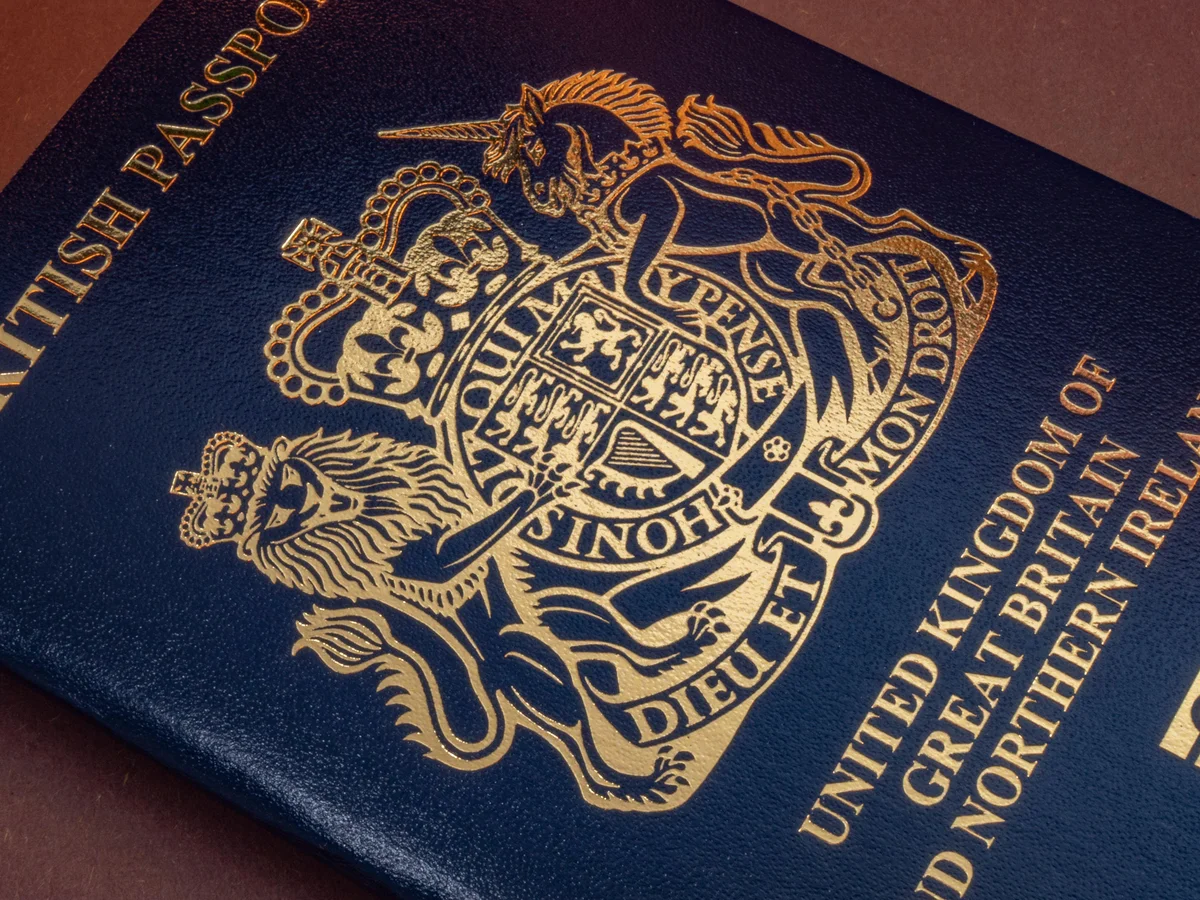
Pornhub will once again be accessible to a portion of users in the United Kingdom after its parent company said it would allow access through Apple devices that have completed new age checks.

Get today's headlines by email

The adult website’s owner, Aylo, announced that people in the UK using iPhones running the latest version of iOS will be able to view the platform if their age has been verified through Apple’s device-level system.
The move partially reverses restrictions introduced earlier this year that blocked most UK visitors from the site.
Site access restricted after safety law
In February, Pornhub limited access for UK users following the implementation of new age-verification requirements under the country’s Online Safety Act.
The platform allowed entry only to users who had previously created accounts and verified that they were adults. New visitors were largely prevented from accessing explicit content and instead saw “safe for work” material.
Aylo said at the time that the age-verification rules were not being applied consistently across the adult-content industry and described the system as flawed. The company therefore declined to continue participating in what it argued was an uneven regulatory framework.
Apple device checks enable limited return
The situation has changed after Apple introduced age-verification tools through an update to its mobile operating system. The feature, rolled out with iOS 26.4, verifies whether a UK user is over 18 at the device level.
Under this approach, eligible users who pass Apple’s checks can once again access Pornhub from their iPhones or iPads running the latest version of iPadOS.
Aylo said it had long supported device-based age checks as a more reliable method of restricting minors from viewing explicit material online.
Alex Kekesi, Aylo’s head of community and brand, said Apple’s update marked the first device-based age verification system of its kind and described it as an important step toward a broader solution for protecting children online.
He said the company would therefore allow age-confirmed UK users on Apple devices back onto the site.
Impact of UK rules on traffic
The policy change comes after Pornhub reported a significant drop in British traffic following the enforcement of the Online Safety Act.
In October 2025, Aylo said visits from the UK had fallen by more than 75% after stronger age-verification requirements came into force. Some observers questioned whether the decline reflected people turning to virtual private networks to bypass restrictions.
Several months later the company further tightened access, effectively preventing new UK users from joining the platform.
Regulator monitoring changes
The UK communications regulator Ofcom, which enforces the Online Safety Act, said it had been in contact with Aylo about how the company intends to comply with the rules.
A spokesperson said the regulator would closely examine the new arrangements and emphasised that websites and apps remain responsible for preventing children from accessing pornographic content.
While device-level checks can be used, companies must be able to demonstrate to Ofcom that their systems are highly effective and be prepared to provide evidence when requested.
Debate over Apple’s verification system
Apple first announced the new safety measures in March, prompting UK iPhone users to complete an age-verification process.
The system can confirm whether someone is over 18 by analysing the length of time they have held an Apple account, checking linked payment details or scanning identification documents.
Initially, some users said they could not complete the process without providing a credit card or driving licence. Apple later updated guidance to say passports could also be used.
The changes have drawn criticism from digital rights group Big Brother Watch. Its director, Silkie Carlo, argued the verification requirements could restrict internet access for people unwilling or unable to confirm their age.

Join the discussion?

Already a member?


Adapted by ASEAN Now. Source 6 May 2026
webfact
webfact
Prime Minister Sir Keir Starmer has said all parts of British society must act to confront what he described as a “crisis” of antisemitism, announcing new funding and faster legal action against hate crimes following a series of attacks targeting Jewish communities.

Get today's headlines by email

Speaking at a summit at Downing Street, Starmer told leaders from policing, business, higher education and the arts that tackling antisemitism required a coordinated national response. He said the government would strengthen security, accelerate prosecutions and expect institutions to take stronger action against anti-Jewish hatred.
Recent incidents have included violent assaults and suspected arson attacks on Jewish sites, prompting growing concern within the community and criticism of the government’s response.
Summit response to rising attacks
The meeting brought together senior figures including Metropolitan Police Commissioner Sir Mark Rowley, Greater Manchester Police Chief Constable Sir Stephen Watson, university vice-chancellors and representatives from organisations such as Arts Council England.
Starmer said recent attacks on British Jews represented “a crisis for all of us”.
“It is not enough simply to say we stand with Jewish communities,” he said. “We must show that through action, and that responsibility lies with each and every one of us.”
The government announced £1.5m in additional funding aimed at strengthening community cohesion and improving protection for Jewish communities in areas facing the highest risks.
Hate crime prosecutions will also be prioritised, with the Director of Public Prosecutions issuing guidance allowing charges to be brought quickly once the evidential threshold is met, with supporting evidence gathered later.
Measures targeting institutions
Universities will be required to publish data on antisemitism on their campuses and demonstrate the steps they are taking to address the problem.
A Downing Street spokesperson said further measures could follow if institutions fail to respond adequately, though details would be set out later.
The government also said the Arts Council should withdraw public funding from cultural projects that promote antisemitism.
Phil Rosenberg, president of the Board of Deputies of British Jews, said the summit had been constructive but acknowledged anger within the community.
“There is anger that antisemitism has been allowed to fester and become a crisis,” he said. “We need to protect, prosecute and partner.”
Investigation into recent incidents
The summit followed a stabbing in Golders Green in north London last week in which two Jewish men were seriously injured.
Police say Shloime Rand, 34, and Moshe Shine, 76, were attacked in the incident. A third man, Ishmail Hussein, who knew the suspect, was also assaulted earlier the same day.
Essa Suleiman, 45, has been charged with three counts of attempted murder linked to the attacks.
Counter-terrorism officers are also investigating a suspected arson attack at a former synagogue in Whitechapel in east London. Other recent incidents include suspected arson attacks on ambulances belonging to a Jewish charity and on a synagogue in north London.
Starmer said authorities were examining whether foreign actors might have been involved in some cases.
“Our message to Iran, or to any other country seeking to foment violence, hatred or division in our society, is that it will not be tolerated,” he said.
Ministers are considering new powers that could allow the government to ban organisations seen as state-backed threats, including Iran’s Islamic Revolutionary Guard Corps.
Political debate over protests
The issue has also sparked political debate over pro-Palestinian demonstrations held in recent months.
Conservative leader Kemi Badenoch described current levels of antisemitism as a “national emergency”, arguing that hatred toward Jews had become normalised.
Starmer has suggested the government may consider banning some marches if their cumulative impact causes fear within Jewish communities.
However, organisers of the protests reject claims that the demonstrations are linked to antisemitic violence and say participants have a right to peaceful protest.
Liberal Democrat MP Munira Wilson said while many people march peacefully, hateful speech should face zero tolerance.
Funding for community programmes
Alongside the £1.5m announcement, the government said it would expand the £4m Common Ground programme with an additional £1m to support community initiatives, including youth programmes, school projects and interfaith work aimed at countering antisemitism.
Another £500,000 will go to Barnet Council in north London, which has a large Jewish population and has seen several recent incidents.
These measures add to £25m previously allocated for increased police patrols and enhanced security at synagogues, schools and community centres.


Join the discussion?

Already a member?


Adapted by ASEAN Now. Source 6 May 2026
webfact
webfact
Pope Leo said the Catholic Church’s mission is to preach the Gospel and promote peace, responding to criticism from U.S. President Donald Trump over the pontiff’s stance on conflict in the Middle East.

Get today's headlines by email

Speaking on Tuesday, the Pope said he would continue advocating for peace even if his comments attracted criticism.
“The mission of the Church is to preach the Gospel, to preach peace,” he said, according to Reuters. “If someone wants to criticise me for preaching the Gospel… I hope simply to be listened to because of the value of God’s words.”
Trump criticism and nuclear claim
Trump has repeatedly criticised the first U.S.-born pontiff, particularly over his opposition to the war involving the United States, Israel and Iran.
In remarks this week on a conservative radio show hosted by Hugh Hewitt, Trump claimed the Pope believed it was acceptable for Iran to possess a nuclear weapon. The Vatican has made no such statement.
Trump said the Pope was “endangering a lot of Catholics and a lot of people” because he “thinks it's fine for Iran to have a nuclear weapon”.
The dispute comes amid broader disagreements over the Middle East conflict. Pope Leo has repeatedly spoken against the war, urging leaders to pursue peaceful solutions.
Last month he said: “As a pastor, I cannot be in favour of war.”
“I would like to encourage all to make efforts to look for answers that come from a culture of peace and not from a place of hate and division,” he added.
Rubio visit to Vatican
The exchange between Trump and the Vatican comes as U.S. Secretary of State Marco Rubio prepares for a two-day visit to the Vatican and Italy.
The U.S. State Department said the trip aims to strengthen bilateral relations with Italy and the Holy See and address international issues, including developments in the Middle East and shared interests in the Western Hemisphere.
Speaking before the visit, Rubio rejected suggestions the trip was intended to ease tensions between Washington and the Vatican.
“It’s a trip we have planned from before, and obviously we had some stuff that happened,” Rubio said. “There’s a lot to talk about with the Vatican.”
Diplomats downplay rift
Despite the public criticism, U.S. Ambassador to the Holy See Brian Burch said relations between the United States and the Vatican remained stable.
“Nations have disagreements, and I think one of the ways that you work through those is through fraternity and authentic dialogue,” Burch told reporters.
“I don’t accept the idea that somehow there’s some deep rift,” he added, saying upcoming meetings could provide an opportunity to address differences.
The dispute has also created tension between Trump and Italian Prime Minister Giorgia Meloni, once considered a close ally of the U.S. president.
Meloni criticised the Middle East war and defended the Pope’s position. When asked by reporters whether she would meet Rubio during his visit, she replied: “I think so.”
Social media backlash
Trump also attacked the Pope on social media, describing him as “weak on crime” and “terrible for foreign policy”.
He suggested the pontiff had been chosen because he was American and could help the Church deal with his presidency.
“If I wasn’t in the White House, Leo wouldn’t be in the Vatican,” Trump wrote.
Shortly afterwards, Trump posted an image depicting himself in a Jesus-like pose. The post was later removed. He later told reporters the image showed “me as a doctor”.
Vice-President JD Vance, who converted to Catholicism, defended Trump and said the Vatican should focus on moral matters rather than political issues.

Join the discussion?

Already a member?


Adapted by ASEAN Now. Source 6 May 2026
webfact
webfact
A 2022 passenger jet crash in China that killed all 132 people on board was caused after fuel to both engines was cut during the flight, according to newly released findings from the US National Transportation Safety Board (NTSB).

Get today's headlines by email

The data indicates that fuel switches controlling the aircraft’s engines were moved to the “cut-off” position while the plane was cruising at about 8,839m (29,000ft), stopping fuel flow to both engines.
The aircraft involved in the crash was a Boeing 737 operated by China Eastern Airlines on flight MU5735. The jet went down in March 2022, marking China’s deadliest air disaster in decades.
China has not yet issued a final investigation report into the crash.
Findings from black box data
The NTSB findings were released through a request under the US Freedom of Information Act and are based on information retrieved from one of the aircraft’s flight recorders, commonly known as a “black box”.
According to the data, engine speeds on both engines decreased shortly after the fuel switches were moved. Fuel switches control the flow of fuel into aircraft engines and are typically used by pilots to start or shut down engines.
The flight recorder was recovered from the wreckage and sent to the NTSB laboratory in Washington for analysis.
The plane had departed from Kunming, the capital of China’s Yunnan province, and was scheduled to land in Guangzhou later that afternoon.
After more than an hour in the air, the aircraft suddenly entered a steep descent while nearing its destination.
Rapid descent before crash
Flight tracking data showed the aircraft falling thousands of metres in a short period of time. Data from FlightRadar24 indicates the plane was cruising at about 29,100ft before rapidly losing altitude.
Within roughly two minutes and 15 seconds, it had dropped to about 9,075ft. The last recorded data point showed the aircraft at 3,225ft shortly before contact was lost at around 14:22 local time.
Air traffic controllers attempted to contact the aircraft several times during its descent but received no response.
Investigation and unanswered questions
Because the crash occurred in China and involved a Chinese airline, the investigation has been led by the Civil Aviation Administration of China.
However, the United States also took part in the inquiry because the aircraft was designed and manufactured there. The NTSB assigned a senior investigator to assist with the probe.
Authorities initially considered several possible causes, including deliberate action, pilot error, structural failure or a mid-air collision.
Shortly after the crash, officials from the Civil Aviation Administration of China said investigators had not reached a clear conclusion.
They also said the crew held valid licences, were adequately rested and had passed health checks on the day of the flight.
Speculation over cause
Media speculation at the time suggested the crash could have been intentional, potentially involving someone in the cockpit. Chinese aviation authorities rejected those claims.
In April 2022, a Civil Aviation Administration official said such rumours had misled the public and interfered with the investigation.
China has since faced criticism for not publishing a final report into the disaster. Officials have said that releasing certain information could affect national security and social stability.
Despite the scale of the tragedy, aviation accidents are relatively rare in China, where safety standards have improved significantly over recent decades.

Join the discussion?

Already a member?


Adapted by ASEAN Now. Source 6 May 2026
webfact
webfact
Russian attacks killed more than 20 people across Ukraine on Tuesday, hours before rival unilateral ceasefires proposed separately by Moscow and Kyiv were due to take effect.

Get today's headlines by email

Ukrainian officials said a Russian aerial assault on the southeastern region of Zaporizhzhia killed 12 people. Ukrainian President Volodymyr Zelensky described the attack as a “cynical terrorist strike”.
Elsewhere in Ukraine, authorities reported five deaths in Kramatorsk and four in Dnipro following additional Russian strikes.
At the same time, officials in Russia said a Ukrainian drone attack killed two people and injured 32 in the Chuvash Republic early on Tuesday.
The violence occurred shortly before separate ceasefires announced by each side were due to begin, though neither truce has been jointly agreed or coordinated.
Rival ceasefires announced
On Monday, Russia said it would pause hostilities on 8 and 9 May to coincide with commemorations marking the Soviet Union’s victory over Nazi Germany during the World War II.
The Kremlin warned that if Ukraine violated the truce, Moscow could launch a “massive missile strike” against central Kyiv.
Kyiv responded by announcing its own ceasefire starting at midnight on 6 May. Ukrainian officials said the pause in fighting would be open-ended and that Ukraine would act “symmetrically” depending on Russia’s actions.
Zelensky’s chief of staff, Kyrylo Budanov, said Ukraine would maintain the ceasefire if Russia reciprocated.
“If the ceasefire announced by the Ukrainian president is supported, we will continue to observe it,” Budanov said. “The next move is Russia’s.”
Zelensky urged Moscow to halt military operations and move toward negotiations, saying that asking for calm during anniversary celebrations while continuing attacks beforehand was “utter cynicism”.
Drone attacks deepen tensions
Before Ukraine’s ceasefire came into force, Kyiv carried out several strikes inside Russia. Ukrainian forces targeted an industrial area in Kirishi as well as a factory producing military components in Cheboksary.
Zelensky said domestically produced Flamingo cruise missiles were used in the strike on the Cheboksary facility, about 1,500km (930 miles) from the front line.
Russia’s defence ministry later said its forces shot down six of the missiles along with 601 drones.
The attacks also disrupted air traffic across Russia. Several airports temporarily suspended operations on Tuesday morning, while Sergei Sobyanin said air defences had intercepted multiple drones near Moscow.
Security concerns before Victory Day
Tensions are rising ahead of Russia’s annual Victory Day on 9 May, a key national event marking the defeat of Nazi Germany in 1945.
The Kremlin said this year’s celebrations would be scaled back because of what it called a “terrorist threat” from Ukraine. Officials confirmed that the traditional military parade on Red Square would proceed without heavy military hardware.
Authorities in Moscow also warned residents that mobile internet access could be disrupted for several days leading up to the commemorations.
Zelensky said Russia’s security precautions suggested it could not hold the parade without Ukraine’s cooperation in observing a ceasefire.
In recent weeks, Ukraine has intensified long-range drone strikes against Russian targets, hitting energy facilities and oil refineries and disrupting parts of the country’s oil trade. Ukrainian drones have increasingly reached deep inside Russia, sometimes bypassing air defences, including an attack on a high-rise building in central Moscow earlier this week.
Meanwhile, Russian missile and drone strikes on Ukrainian cities continue to cause civilian casualties. Thousands of people have been killed since Russia launched its full-scale invasion of Ukraine in February 2022.

Join the discussion?

Already a member?


Adapted by ASEAN Now. Source 6 May 2026
webfact
webfact
US Secretary of State Marco Rubio said the offensive phase of the United States’ military campaign against Iran had ended, stressing that American forces would now only respond if attacked.

Get today's headlines by email

Speaking at a press conference on Tuesday, Rubio said the initial military action had concluded and that US operations were currently focused on protecting ships and maintaining security in the strategic Strait of Hormuz.
“We are only responding if attacked first. This is a defensive operation,” he said.
“If no shots are fired at these ships and no shots are fired at us, we’re not firing shots. But if we’re fired on, we will respond.”
The conflict between Washington and Tehran has effectively halted commercial traffic through the narrow waterway, one of the world’s most important routes for oil and gas shipments. Disruptions in the strait have pushed energy prices higher and raised concerns about wider economic consequences.
Ship reportedly struck during tensions
Rubio’s remarks came as the United Kingdom Maritime Trade Operations reported that a cargo vessel had been struck in the Strait of Hormuz. The incident appeared to challenge US claims that the shipping route had been secured following recent military operations.
The US military earlier said it had destroyed six small Iranian boats and intercepted cruise missiles and drones during a naval mission ordered by President Donald Trump.
The operation, known as Project Freedom, was launched to reopen shipping lanes through the strait after Iranian forces targeted vessels and threatened regional maritime traffic.
Rubio said American officials had contacted several commercial ships to encourage them to leave the area for safety, echoing earlier statements from US Defense Secretary Pete Hegseth.
Diplomatic talks continue
Despite ongoing tensions, the United States said it remained open to negotiations with Tehran. Rubio said American envoys Steve Witkoff and Jared Kushner were continuing efforts to pursue a diplomatic solution.
Any agreement, he said, would need to address Iran’s remaining nuclear material, which Washington believes could still be stored in underground facilities.
“The president’s been clear that part of the negotiation process has to be not just the enrichment, but what happens to this material that’s buried deep somewhere that they still have access to if they ever wanted to dig it out,” Rubio said.
He declined to provide details on progress in the talks but stressed that negotiations would likely take time due to the complexity of the issues involved.
“This is highly complex and highly technical,” Rubio said, adding that both sides would need to clarify what topics they were prepared to negotiate and what concessions they were willing to make.
Iran issues warnings
Iranian officials responded with warnings that the conflict could escalate further.
The speaker of Iran’s parliament, Mohammad Baqer Qalibaf, said Tehran believed the situation was becoming increasingly difficult for Washington.
“We know well that the continuation of the current situation is unbearable for the United States, while we have not even begun yet,” he said.
Iran’s foreign minister, Abbas Araghchi, also warned that both the United States and the United Arab Emirates risked being drawn deeper into the conflict.
Tehran has meanwhile published a map claiming expanded control over a wider maritime zone beyond the Strait of Hormuz, including sections of the UAE coastline.
The move underscores the growing tension in the region, where the stand-off between Iran and the United States continues to threaten one of the world’s most vital shipping corridors.


Join the discussion?

Already a member?


Adapted by ASEAN Now. Source 6 May 2026
webfact
webfact
European leaders meeting in Armenia sought to present a united front on security and support for Ukraine, but discussions were overshadowed by concerns about the United States and its role in Europe’s defence.

Get today's headlines by email

Although not mentioned directly in official remarks, the influence of Donald Trump was widely acknowledged during the European Political Community (EPC) summit in Yerevan.
French President Emmanuel Macron described growing uncertainty about US security commitments as “the elephant in the room”, warning that Europe remains too dependent on American military protection.
“We have an over-reliance on the US security umbrella,” Macron said during discussions with European leaders gathered in the Armenian capital.
Security concerns grow
The EPC summit brought together leaders from across the continent at a sports complex in Yerevan. Participants focused on energy security, safeguarding democratic institutions and maintaining support for Ukraine as it continues to resist Russia’s invasion.
But the event unfolded against the backdrop of rising tensions with Washington.
A key trigger for concern was the decision by Donald Trump to withdraw 5,000 US troops and long-range missile systems from bases in Germany. The missiles had been deployed under former president Joe Biden as a deterrent against potential Russian aggression.
The move has heightened fears among European leaders that the United States may be stepping back from its long-standing role as the continent’s primary security guarantor.
Nato Secretary General Mark Rutte acknowledged Washington’s concerns about defence spending by European allies, saying they had “heard” the US president’s frustrations.
Meanwhile, tensions between Berlin and Washington have added to the strain. Germany’s Chancellor Friedrich Merz was not present at the summit but recently criticised Trump’s military action against Iran as lacking a clear strategy.
The White House responded sharply, with Trump saying Merz was “doing a terrible job”.
War and economic pressures
Beyond the diplomatic tensions with Washington, European leaders are also grappling with the broader consequences of conflicts affecting the region.
Economic disruption from the US-Israeli war with Iran and the resulting blockage of the Strait of Hormuz has created further challenges for energy supply and trade.
At the same time, Russia’s ongoing invasion of Ukraine remains central to discussions.
Ukrainian President Volodymyr Zelensky urged allies to maintain pressure on Moscow, warning that the coming months could prove decisive.
“This summer will be a moment when Vladimir Putin decides what to do next,” Zelensky said. “We must push him towards diplomacy.”
He argued that Russia’s difficulties in acquiring military equipment suggested its forces were under strain.
UK seeks closer EU ties
The summit also highlighted efforts by the United Kingdom to strengthen cooperation with the European Union.
Prime Minister Keir Starmer said Europe’s alliances were “not where we want them to be”, while urging countries to accelerate efforts to strengthen their defences.
Britain is currently negotiating to join an EU-led €90bn (£78bn) loan programme designed to support Ukraine. While the UK has been among Kyiv’s strongest backers since Russia’s invasion, it is increasingly working through European structures to coordinate support.
Starmer said closer cooperation would benefit both Ukraine and the British economy through job creation, though he declined to comment on reports that Brussels is seeking an annual contribution from the UK as part of broader negotiations on resetting relations.
Long road to autonomy
For many European leaders, the discussions underline a deeper strategic challenge.
Calls for greater “strategic autonomy” — reducing reliance on US military power — have grown louder, but building such capabilities could take decades.
In the meantime, European governments face the delicate task of strengthening their own defences while maintaining workable relations with Washington as they confront continued geopolitical pressures.


Join the discussion?

Already a member?


Adapted by ASEAN Now. Source 6 May 2026

webfact
webfact
A shooting during a business meeting at a shopping centre in Carrollton, Texas, left two people dead and three others injured on Tuesday morning, police said. Officers later arrested a suspect after a brief chase on foot.

Get today's headlines by email

Authorities said the gunfire erupted shortly before 10:00 local time at a Korean shopping complex in Carrollton, a city about 20 miles north of Dallas. Police were called to the scene after receiving reports of shots fired at K Towne Plaza.
When officers arrived, they found two people dead at the location, according to Carrollton Police Chief Roberto Arredondo. Three additional people who had been wounded were taken for treatment and were reported to be in stable condition.
Suspect detained after foot pursuit
Police said the suspected gunman was captured nearby following a short foot pursuit. Chief Arredondo identified the suspect as 69-year-old Seung Han Ho.
Investigators detained him close to the shopping centre, in an area locally referred to as Koreatown. Officers had been working across several locations around K Towne Plaza and the neighbouring shopping area as they secured the scene and searched for the suspect.
Arredondo described the response as involving a “complicated scene”, with police managing multiple areas linked to the incident. Authorities did not provide details about what led to the shooting or how the events unfolded before officers arrived.
Meeting linked to business matter
Police said the people involved had been meeting with the suspect for a business-related purpose when the shooting occurred. Arredondo stressed that investigators do not believe the attack was random.
“This is not a random act of gunfire,” he said during a press briefing.
Authorities said there was no ongoing danger to the wider public following the suspect’s arrest.
Investigators are continuing to examine the relationship between the suspect and the victims to understand the circumstances behind the meeting and what may have led to the violence.
Victims not yet identified
Police confirmed that all of the victims were adults but did not release further details about their identities.
Officials also declined to provide information about the nature of the injuries sustained by the three survivors, beyond confirming that they were in stable condition.
The investigation remains ongoing as police gather evidence from the scene and speak with witnesses. Authorities have not said whether the suspect will face charges or when additional information about the case may be released.
The shooting took place in a commercial area that serves the local Korean community and includes a range of businesses and restaurants. Police continued working across several locations in and around the shopping complex as part of the investigation.
Investigation continues
Officers remained at the site on Tuesday as they worked to piece together the events surrounding the shooting and determine the motive.
Chief Arredondo said police would release more details once investigators had a clearer understanding of the incident and the business relationship connecting those involved.
For now, officials say the suspect is in custody and the immediate threat has passed, while authorities continue their efforts to establish exactly what led to the deadly confrontation.


Join the discussion?

Already a member?


Adapted by ASEAN Now. Source 6 May 2026
webfact
webfact
A federal judge has sharply criticised the conditions under which a man accused of attempting to assassinate President Donald Trump is being held, saying he was “very troubled” by the restrictions imposed during the suspect’s first days in custody.

Get today's headlines by email

Cole Allen faces charges of attempting to assassinate the president and two firearms offences following an alleged incident at the White House Correspondents' Dinner on 25 April. Prosecutors say Allen, carrying a shotgun, ran through a security checkpoint above the ballroom of the Washington Hilton hotel, where about 2,600 guests – including the president, senior officials and journalists – were attending the annual event.
Allen has agreed to remain in custody while awaiting trial, but his lawyers argue that the conditions of his detention at the D.C. jail have been excessively harsh.
Judge questions jail conditions
During a hearing on Monday, U.S. Magistrate Judge Zia Faruqui pressed officials from the District of Columbia Department of Corrections about Allen’s treatment since his arrival at the facility.
Allen’s lawyers told the court he was placed on suicide watch shortly after entering jail last week. Under that status, he was held in a padded cell with lights on at all times and without access to a phone or tablet.
The following day, officials downgraded the status to suicide precautions, which still significantly limited his ability to make calls or leave his cell, according to his legal team.
Lawyers also said Allen had been denied access to a Bible, had not yet received a working tablet for legal materials and had been unable to meet privately with his attorneys during his first week in detention.
Addressing the defendant directly in court, Faruqui said he was “very troubled by the conditions you’ve been treated to,” and apologised for the issues raised about Allen’s treatment.
Officials cite safety concerns
Tony Towns, acting general counsel for the D.C. Department of Corrections, told the judge that many of the problems raised during the hearing would be resolved in the coming days.
He said a tablet allowing Allen to read court filings and legal documents would soon be set up.
Towns also said a psychiatrist had determined Allen posed a suicide risk, though the written medical evaluation was not included in the court record. Faruqui asked to see the assessment.
Officials have also issued a separation order for Allen, meaning he is housed apart from other inmates and did not travel to court alongside other detainees.
“We don’t really know how to keep him safe, your honour, outside of separation,” Towns said.
Faruqui responded that the situation itself appeared to indicate a problem.
Wider concerns raised in court
The judge, who has previously criticised aspects of federal prosecutions, said the case raised broader concerns about how detainees are treated.
Faruqui said he was particularly struck by what he described as differences between Allen’s conditions and those faced by some defendants charged over the January 6 United States Capitol attack, many of whom were later pardoned and held in medium- or low-security facilities rather than in strict isolation.
“A lot of people seem to have forgotten January 6,” he said, adding that pardons may erase convictions but not the historical events themselves.
While acknowledging the seriousness of the allegations against Allen, Faruqui said he struggled to understand why the current detention conditions had been imposed.
Prosecutors defend precautions
After the hearing, Washington’s top federal prosecutor Jeanine Pirro criticised the judge in a message on X, saying he appeared to believe a suspect accused of attempting to assassinate the president deserved preferential treatment.
Prosecutors also told the court that Allen had made statements to FBI agents after the alleged attack suggesting he did not expect to survive.
Assistant U.S. Attorney Jocelyn Ballantine said that raised concerns about potential suicide risk.
Next steps in detention decision
Faruqui ordered the Department of Corrections to update the court by Tuesday morning on how long it will take to decide where Allen will be held while awaiting trial.
If officials cannot provide a clear timeline, the judge said he would convene another hearing to examine the issue further.
Towns told the court that a prison housing board meeting would soon be held to determine Allen’s placement, stressing that the department’s primary concern is both his safety and his health.


Join the discussion?

Already a member?


Adapted by ASEAN Now. Source 5 May 2026
webfact
webfact
U.S. Secret Service agents shot a man near the White House on Monday after he allegedly fired toward officers during an attempted apprehension, authorities said. A bystander was also injured in the incident.

Get today's headlines by email

Officials said it was not immediately clear whether the episode had any connection to the White House or to President Donald Trump.
Confrontation Near the White House
According to Secret Service Deputy Director Matthew Quinn, plainclothes officers spotted a man they considered suspicious at around 3:30 p.m. ET. Quinn said the individual appeared to have a firearm, prompting officers to alert nearby uniformed personnel.
When officers approached him, the suspect fled on foot and then produced a firearm, Quinn said.
Authorities say the man fired toward Secret Service agents, who returned fire. The suspect was struck and later taken to hospital. Quinn told reporters he did not know the man’s condition.
The incident occurred at the intersection of 15th Street and Independence Avenue, just south of the White House complex.
Bystander Injured
During the exchange of gunfire, a bystander was also hit by a shot allegedly fired by the suspect. Quinn said the injured person is a minor.
The bystander was taken to hospital with injuries described as non-life-threatening.
Investigators later recovered a weapon from the suspect, though officials did not immediately release details about the firearm.
Quinn said plainclothes officers had first identified the man after noticing what he described as a “visual print” of a gun, suggesting the outline of a weapon visible through clothing.
Motorcade Passed Nearby
The shooting occurred shortly after the motorcade of Vice President JD Vance passed through the area.
Quinn said the suspect did not target the motorcade and that there was no indication he intended to approach or attack it.
Witnesses told NBC News they saw a man running toward the motorcade shortly before shots were heard. NBC journalists at the scene reported hearing three or four gunshots moments after the motorcade departed the White House grounds.
White House Activity Uninterrupted
At the time of the shooting, Trump was inside the White House hosting a small business summit in the East Room. Officials said the event continued without interruption.
The White House North Lawn was briefly evacuated during the incident. Secret Service personnel carrying long guns directed members of the press to leave the lawn and move inside the briefing room.
Reporters were allowed to return outside less than 10 minutes later.
Quinn said it remained unclear whether the suspect had any connection to the president or to the White House itself.
Investigation Underway
The investigation will be led by Washington’s Metropolitan Police Department.
Asked whether the incident might be linked to previous threats against Trump, Quinn said authorities would continue examining the circumstances.
The shooting comes about a week after a man from California, Cole Allen, was charged with attempting to assassinate the president on April 25.
Quinn declined to provide further details on how officers initially determined the man was suspicious.
“We’re patrolling this area and every site we do, 24/7, hard core,” he said.
Security Scrutiny
The episode highlights ongoing security concerns around the White House and its surrounding streets, which are regularly monitored by the Secret Service.
Officials said investigators are continuing to gather evidence and review witness accounts to determine what led to the confrontation.

Join the discussion?

Already a member?


Adapted by ASEAN Now. Source 5 May 2026


webfact
webfact
President Donald Trump’s rising disapproval ratings are emerging as a potential challenge for Republican candidates as the party seeks to maintain its narrow hold on power in Washington ahead of the November midterm elections.

Get today's headlines by email

A new poll conducted by ABC News, The Washington Post and Ipsos shows Trump’s disapproval rating climbing to 62%, while 37% of respondents said they approve of his performance as president. The survey also recorded strong public dissatisfaction with his handling of several key issues, including the cost of living and inflation, with 76% and 72% disapproving respectively. A further 66% said they disapproved of how he has managed the ongoing conflict with Iran.
Polling pressures for Republicans
The latest figures add to a string of surveys indicating declining support for Trump during the early months of his second term. Analysts say the numbers could create complications for Republican candidates competing in congressional races, particularly if the election becomes closely tied to views about the president.
Democrats have already begun framing the midterms as a referendum on Trump’s leadership. Spencer Kimball, executive director of Emerson College Polling, said that strategy could place Republicans in a difficult position.
“The Democrats are going to say, ‘This is about Trump. Forget about who we are. Forget about our platform or issues. This is just about what the president is,’” Kimball said.
He added that Republican candidates may face pressure to balance support for Trump’s policies with efforts to appeal to voters concerned about the president’s record.
“The Republicans are going to have to somehow distance themselves from some of those policies while still coming up with other ideas for why voters should vote for them,” Kimball said.
Economy and foreign policy concerns
Other recent surveys show similar trends. A Reuters/Ipsos poll last week found Trump’s overall approval rating at its lowest level of his second term, including record lows on economic management and foreign policy.
Trump has defended his economic record, saying he “won affordability” and brought inflation under control. He has also blamed rising prices on policies from the previous administration, while promoting his tariff measures and a major tax-cut law passed last year.
However, economic data released in March showed the annual inflation rate rising to 3.5%, up from 2.8% in February. The unemployment rate also edged up to 4.3% in March from 4% in January, according to the Bureau of Labor Statistics.
The Associated Press-NORC Center for Public Affairs Research found Trump’s approval rating on economic management dropped eight percentage points between March and April. Support among Republicans also declined, with 62% approving of his economic policies compared with 74% a month earlier.
War in Iran adds pressure
Trump’s approval ratings have also been affected by the conflict with Iran, which has pushed energy prices higher and drawn mixed reactions from the public.
The United States is attempting to negotiate a new nuclear agreement with Tehran after Trump withdrew from a previous deal during his first administration. Iran recently threatened action in the Strait of Hormuz, a crucial shipping route for global oil supplies, after Trump said the U.S. would help ensure vessels could move safely through the waterway.
In the AP-NORC survey, just 32% of Americans said they approved of Trump’s leadership on Iran. A Reuters poll found 61% of respondents disapproved of U.S. strikes against Iran, including a quarter of Republicans and two-thirds of independent voters.
Republican strategist Jason Cabel Roe said the party’s electoral prospects may depend partly on whether energy prices stabilise before the election.
“If there is a stabilising situation, not just in the conflict but for the region long-term, you’re going to see that reflected in the price of oil,” Roe said, adding that lower fuel prices could ease pressure on the cost of living.
Midterm stakes and political landscape
Historically, the party of a sitting president tends to lose seats in midterm elections. Democrats need a net gain of three seats to win control of the House of Representatives and four seats to take the Senate.
Recent averages from Decision Desk HQ show Democrats leading the generic congressional ballot by 46% to 41%. However, both parties currently have negative favorability ratings.
Republicans maintain a significant financial advantage. The Republican National Committee reported about $117 million in funds, compared with roughly $14 million held by the Democratic National Committee, which also reported more than $18 million in debt.
At the same time, analysts say changes in electoral maps following redistricting may reduce the number of competitive House races, potentially limiting large swings in either direction.
Charles Franklin, director of the Marquette Law School Poll, said the growing number of safe districts for both parties could make the outcome harder to predict than in past elections.
Uncertain outlook
Some analysts argue Trump’s approval rating could still rebound before November. Scott Tranter, director of data science at Decision Desk HQ, said Trump’s polling numbers have historically fluctuated and may return to the low-to-mid 40% range.
Even so, Republicans acknowledge the political risks as the election approaches, particularly if economic pressures and the conflict with Iran continue to shape voter sentiment.

Join the discussion?

Already a member?


Adapted by ASEAN Now. Source 5 May 2026

webfact
webfact
The United States said its forces destroyed several Iranian boats and intercepted missiles and drones on Monday as Washington launched a military operation aimed at reopening the strategically vital Strait of Hormuz.

Get today's headlines by email

The operation, ordered by US President Donald Trump and named Project Freedom, seeks to restore commercial shipping through the narrow waterway after Iran effectively blocked the route following the start of the conflict with the US and Israel on February 28.
US military officials said Iranian forces attempted to disrupt the mission with a series of attacks, but all threats were successfully repelled.
Iranian attacks intercepted
US Admiral Brad Cooper, head of US Central Command, said American forces shot down Iranian cruise missiles and drones and destroyed six Iranian fast boats that approached ships under US protection.
“The IRGC has launched multiple cruise missiles, drones and small boats at ships we are protecting,” Cooper said, referring to Iran’s Islamic Revolutionary Guard Corps.
He said US forces had “defeated each and every one of those threats” using defensive weapons.
Cooper warned Iranian units to stay away from US military assets as the mission expanded, saying commanders had full authority to protect both their forces and commercial shipping.
The operation involves about 15,000 US troops, naval destroyers, more than 100 aircraft operating from land and sea, and additional undersea assets.
Operation to reopen the strait
US officials said the mission was designed to reopen the Strait of Hormuz, a key maritime corridor through which about one fifth of the world’s oil and liquefied natural gas supplies moved before the conflict disrupted traffic.
The effort began with clearing Iranian mines from the waterway. US forces later sent two US-flagged commercial vessels through the passage to demonstrate that the route was safe.
Cooper said the operation differed from a traditional escort mission for merchant ships. Instead, it uses a broader defensive structure including naval vessels, helicopters, aircraft and electronic warfare systems to counter potential threats.
The Iranian fast boats that were destroyed were targeted by US Apache and Seahawk helicopters, he added.
Conflicting claims from Iran
Iran’s Revolutionary Guards denied that any commercial ships had crossed the strait recently and dismissed US claims about the military operation.
Iranian state media also rejected reports that Iranian vessels had been sunk.
Meanwhile, a South Korean vessel was damaged by an explosion in the Strait of Hormuz on Monday. Trump said in a social media post that the ship was not part of the US operation, suggesting it might benefit from joining the American effort to protect shipping near Iran.
Trump also estimated that US forces had sunk seven Iranian fast boats, though the US military reported six.
Shipping urged to resume passage
Cooper said the US military had been contacting shipping companies and vessels in the region to encourage traffic through the strait despite Iranian warnings.
He said ships from 87 countries had been effectively stranded in the Gulf due to Iran’s blockade and threats of military action.
According to Cooper, early responses from the shipping industry had been positive, with some movement through the waterway already beginning.
The United States is also maintaining a separate blockade preventing vessels from entering or leaving Iran, a measure Cooper said had so far been highly effective.

Join the discussion?

Already a member?


Adapted by ASEAN Now. Source 5 May 2026
webfact
webfact
More than 800 people crossed the English Channel in small boats during the first three days of May, according to figures released by the UK Home Office. The data shows 55 people were brought ashore in Dover on Friday, followed by 325 arrivals on Saturday and 422 on Sunday.

Get today's headlines by email

The figures bring the total number of migrants arriving in the UK by small boat so far this year to 7,218.
Authorities said the crossings occurred despite ongoing enforcement efforts aimed at reducing the number of people attempting the journey across the English Channel.
Crossings lower than last year
The cumulative figure for 2026 remains lower than the same point last year. During the corresponding period in 2025, 11,516 people had already reached the UK via small boats.
The Channel route has become one of the most frequently used paths for migrants seeking to reach Britain, often departing from the northern coast of France in small, inflatable vessels.
Officials have repeatedly warned that the crossing is dangerous due to heavy maritime traffic, cold water and unpredictable weather conditions.
Fatalities reported during crossing
On Sunday, two women died while attempting to cross the Channel. Authorities have not released further details about the circumstances surrounding their deaths.
Fatal incidents during crossings have been reported in previous years, with rescue services frequently called to assist vessels carrying migrants attempting the journey.
Government response
A spokesperson for the UK Home Office said the government was intensifying efforts to curb the crossings.
“This government is bearing down on small boat crossings,” the spokesperson said.
The department said the home secretary had signed what it described as a landmark agreement with France aimed at strengthening enforcement along beaches used by smugglers and improving cooperation between the two countries.
The agreement is intended to help disrupt criminal networks involved in organising Channel crossings and to increase arrests of people-smuggling gangs.
Officials added that joint operations between the UK and French authorities had prevented more than 42,000 migrants from attempting the crossing since the most recent general election.
The spokesperson also said the government had removed or deported nearly 60,000 people who were in the country without legal permission.
According to the Home Office, further measures are being introduced to reduce incentives that encourage irregular migration to the UK.
Continuing political focus
Small boat crossings remain a major political issue in the UK, with successive governments facing pressure to reduce the number of people reaching the country through irregular routes.
Authorities continue to work with French officials and border agencies to increase patrols, disrupt smuggling networks and intercept vessels before they reach British waters.
Despite these efforts, crossings continue throughout the year, often increasing during periods of calmer weather in the Channel.

Join the discussion?

Already a member?


Adapted by ASEAN Now. Source 5 May 2026
webfact
webfact
Two people have died and more than 20 others were injured after a car drove into a crowd in the German city of Leipzig on Monday afternoon, authorities said.

Get today's headlines by email

Police said the suspect, a 33-year-old German man, was arrested shortly after the incident. Officials said the motive remains unclear.
The car struck pedestrians in the busy central area of Grimmaische Straße after crossing Augustusplatz, according to police. The vehicle then continued along the street before coming to a stop.
Local officials said the incident is being treated as a violent rampage carried out by a lone attacker.
Victims and injuries
Leipzig’s fire chief Axel Shuh said 22 people were injured in the incident, two of them seriously.
Prosecutors later confirmed that two people were killed — a 63-year-old woman and a 77-year-old man, both German citizens.
Authorities said the suspect is being investigated on suspicion of murder and attempted murder.
The head of the eastern German state of Saxony, Michael Kretschmer, said the man had previously suffered from mental illness. Officials said there is currently no indication that the attack was motivated by religion or politics.
How the incident unfolded
Police spokesperson Susanne Luebcke said the incident began shortly after 17:35 local time.
“A person drove a vehicle across Augustusplatz into Grimmaische Street, continuing past the market,” she said, adding that several people were struck.
“We unfortunately also have to report two fatalities.”
Authorities said they believe the suspect acted alone and that there is no ongoing threat to the public.
Eyewitness accounts
Witnesses described scenes of panic as the vehicle drove through the crowded street.
One woman, identified as Susi, told Radio Leipzig she had been sitting on a bench with a friend on Grimmaische Straße when they heard a loud crash.
She said the car appeared to be travelling at high speed. The two women ran into a nearby jewellery shop for safety.
When they later emerged, she said several injured people were lying on the ground.
Another witness said the vehicle eventually stopped after hitting bollards. According to the account, bystanders rushed to help the injured while others attempted to restrain the driver.
The witness said around 15 people surrounded the car and tried to pull the man out through an open window. The driver reportedly attempted to escape through the passenger side before police arrived and restrained him using cable ties.
Recent attacks involving vehicles
Germany has experienced several incidents in recent years in which vehicles were used to target crowds.
In December 2024, at least six people were killed and more than 300 injured in a car-ramming attack at a Christmas market in Magdeburg.
In February last year, a driver ploughed into a crowd in Munich, injuring at least 30 people more than a week before the country’s federal elections.
Investigations into Monday’s attack in Leipzig are continuing.


Join the discussion?

Already a member?


Adapted by ASEAN Now. Source 5 May 2026
webfact
webfact
A Ukrainian drone struck a luxury residential high-rise in Moscow early Monday, damaging the building’s façade but causing no injuries, Russian officials said. The incident comes days before Russia’s annual Victory Day celebrations marking the Soviet Union’s defeat of Nazi Germany in World War II.

Get today's headlines by email

The attack was the third consecutive night that drones targeted the Russian capital, increasing tensions ahead of a scaled-down military parade scheduled for Saturday.
Damage in Upscale Moscow District
Footage circulating on social media, which has not been independently verified, appeared to show firefighters entering a heavily damaged apartment filled with dust and debris, with windows blown out by the blast. Separate video clips showed fragments believed to be drone wreckage scattered on a street below.
Moscow Mayor Sergei Sobyanin said two additional drones were intercepted before reaching the city. Authorities temporarily halted operations overnight at Vnukovo and Domodedovo international airports as a precaution.
The building that was struck lies in an affluent neighbourhood in south-western Moscow, less than 10km (six miles) from the Kremlin and Red Square, where Victory Day commemorations are due to take place.
Wave of Drone Attacks Across Russia
Russia’s defence ministry said air defences intercepted 117 drones across several regions between Sunday and Monday.
Sixty of those were aimed at the St Petersburg region, where the regional governor, Aleksandr Drodzhenko, described the barrage as a “massive” attack.
Ukraine has repeatedly launched drone strikes deep into Russian territory since Moscow began its full-scale invasion in February 2022. While drones have occasionally reached Moscow, successful hits close to the centre of the capital remain uncommon.
Much of the city is protected by the Pantsir-S air defence system, and most incoming drones are intercepted before causing damage.
Despite this, alerts triggered by drone threats have frequently forced temporary closures of airports around the capital and disrupted flights.
Security Tightened Ahead of Victory Day
Authorities have taken additional security measures ahead of the 9 May celebrations.
The Kremlin said last week that this year’s Victory Day parade in Red Square would be scaled back because of what it described as a “terrorist threat” from Ukraine. For the first time since 2008, the event will not feature armoured vehicles or missile systems.
Russia also announced a unilateral ceasefire on 8 and 9 May to coincide with the commemorations. At the same time, the defence ministry warned it could launch a major retaliatory strike on central Kyiv if Ukraine attempted to disrupt the celebrations.
Russian media reported that several mobile phone operators in Moscow plan to restrict mobile internet access during much of the week for security reasons.
Ukrainian President Volodymyr Zelensky suggested Moscow was concerned about the possibility of drone attacks during the parade. “The Kremlin is afraid that drones will fly over Red Square,” he said.
Zelensky also dismissed the proposed one-day ceasefire as “not serious,” adding that Kyiv had not received an official offer. He said Ukraine would instead observe its own ceasefire starting shortly after midnight on the night of 5–6 May.
Wider Strikes Continue
Ukraine has increasingly relied on long-range drones capable of striking targets hundreds of miles from its borders. These attacks often focus on Russian energy infrastructure, including refineries and oil facilities, with the aim of limiting Moscow’s oil production and revenue.
On Sunday, Zelensky said Ukrainian forces had struck three Russian oil tankers, a cruise-missile carrier warship and a patrol boat in separate operations at two Russian ports. He said the tankers were part of Russia’s so-called “shadow fleet”, used to bypass Western sanctions imposed after the 2022 invasion.
Meanwhile, Russia continues to conduct aerial attacks on Ukrainian cities.
Ukrainian officials said on Monday that a missile strike near Kharkiv, close to the Russian border, killed four people and injured 18 others.


Join the discussion?

Already a member?


Adapted by ASEAN Now. Source 5 May 2026
webfact
webfact
The Kremlin has tightened security around Russian President Vladimir Putin, introducing stricter controls for staff and limiting his movements amid fears of assassination attempts and possible political intrigue within Russia’s elite, according to a European intelligence report obtained by CNN.

Get today's headlines by email

The dossier outlines a series of new precautions adopted after a string of killings targeting senior military figures and rising concern inside the Kremlin over internal instability as the war in Ukraine continues.
New Restrictions on Staff and Visitors
The report says individuals working closely with Putin — including cooks, bodyguards and photographers — are now prohibited from using public transport. Staff members must rely on phones without internet access, while visitors seeking meetings with the Russian leader must pass through two rounds of security screening.
Surveillance systems have also reportedly been installed in the homes of some presidential staff.
The intelligence assessment suggests these steps reflect growing unease within the Kremlin as Russia faces mounting pressures from the war, economic strain and signs of dissent at home.
Reduced Public Appearances
According to the report, security officials have significantly reduced the number of locations Putin regularly visits.
The president and his family have reportedly stopped using several residences in the Moscow region and at Valdai, a well-known retreat between Moscow and St. Petersburg often associated with the Russian leader’s private stays.
The dossier also claims Putin has not visited military facilities so far this year, despite making such trips regularly in 2025. Instead, the Kremlin is said to distribute pre-recorded images to maintain the appearance of normal public activity.
Since Russia’s full-scale invasion of Ukraine in 2022, the report says Putin has also spent extended periods in fortified bunkers, including locations in Russia’s Krasnodar region near the Black Sea.
Concerns Over Coup Plot
The intelligence document says the Kremlin has been increasingly worried about the risk of internal betrayal since March 2026, including potential information leaks and the possibility of a coup attempt.
It claims Putin is particularly concerned about drones being used in a possible assassination attempt by members of Russia’s political elite.
One notable figure mentioned in the report is former defence minister Sergei Shoigu, now secretary of Russia’s Security Council. The dossier says Shoigu retains significant influence among senior military leaders and is therefore associated with a potential risk of a coup.
The report adds that the arrest of Shoigu’s former deputy, Ruslan Tsalikov, on corruption charges in March may have weakened longstanding informal protections among Russia’s ruling elite.
Russia’s investigative committee has said Tsalikov was detained on allegations including embezzlement, bribery and money laundering.
The intelligence report does not present evidence supporting claims about Shoigu’s possible involvement in a coup plot.
Tensions Within Security Leadership
The dossier also describes tensions among Russia’s top security officials following the killing of Lieutenant General Fanil Sarvarov in Moscow in December 2025.
After the assassination, Putin reportedly summoned senior officials including Chief of the General Staff Valery Gerasimov and Federal Security Service chief Alexander Bortnikov.
According to the report, Gerasimov criticized the security services for failing to protect senior officers, while Bortnikov complained about insufficient resources.
Following the dispute, Putin expanded the responsibilities of the Federal Protection Service to provide security for additional senior military commanders.
Intelligence Claims Hard to Verify
The intelligence report comes as Russia’s war in Ukraine enters its fourth year, with heavy casualties and increasing Ukrainian drone strikes inside Russia.
However, the claims in the dossier are difficult to independently verify. Western intelligence leaks often reflect broader political messaging as well as confidential information.
The Kremlin has not publicly responded to the report.
Putin has continued to appear at official meetings, including recent talks with Chechen leader Ramzan Kadyrov and Iranian Foreign Minister Abbas Araghchi.
Security concerns have also affected public events. Russia’s annual Victory Day parade on May 9 — marking the Soviet victory in World War Two — will reportedly take place without heavy weaponry this year.
Kremlin spokesman Dmitry Peskov has said the adjustments reflect security threats, including the growing reach of Ukrainian strikes inside Russian territory.

Join the discussion?

Already a member?


Adapted by ASEAN Now. Source 5 May 2026
webfact
webfact
Rudy Giuliani, the former mayor of New York City and one-time personal lawyer to Donald Trump, has been admitted to hospital and is reported to be in critical but stable condition, according to his spokesperson.

Get today's headlines by email

Ted Goodman, speaking on behalf of the 81-year-old, said Giuliani was receiving medical care but did not disclose the cause of his hospitalization or identify the facility where he was being treated.
“Mayor Rudy Giuliani is currently in the hospital, where he remains in critical but stable condition,” Goodman wrote on social media on Sunday. He added that the former mayor “is a fighter” who has confronted challenges throughout his life and was continuing to show the same determination while in hospital.
Goodman also asked supporters to pray for Giuliani’s recovery.
Limited Details on Hospitalisation
No further details have been released about what prompted Giuliani’s admission to hospital, and his spokesperson has not said when he was first admitted.
Giuliani, once widely known for his leadership of New York City during the aftermath of the September 11 attacks, has remained a prominent political figure in recent years due to his close association with Trump.
Trump Confirms Hospitalisation
President Trump confirmed Giuliani’s hospitalization in a message posted on his social media platform, Truth Social.
In the post, Trump described Giuliani as a “true warrior” and praised him as the best mayor in the history of New York City. He also used the message to criticise Democrats, accusing them of treating Giuliani unfairly.
Trump wrote that it was “sad” to see Giuliani in hospital and repeated claims that political opponents had targeted him.
Legal Battles After the 2020 Election
Giuliani played a prominent role in efforts by Trump and his allies to challenge the outcome of the 2020 United States presidential election. Acting as Trump’s personal attorney, he helped lead legal attempts to overturn the results in several states.
Many of those lawsuits were dismissed by courts.
Following his involvement in those efforts, Giuliani was disbarred in both New York and Washington, D.C., with disciplinary authorities concluding that he had made false statements about the election.
He has also faced criminal charges in the states of Georgia and Arizona related to attempts to overturn the election results. Giuliani has denied wrongdoing in those cases.
In addition, he was listed as an unindicted co-conspirator in the federal election interference case brought against Trump by special counsel Jack Smith.
Despite the legal challenges, Giuliani has remained an outspoken supporter of Trump and continues to be a visible figure in US political debates.
For now, attention has turned to his health, with supporters awaiting further updates on his condition.


Join the discussion?

Already a member?


Adapted by ASEAN Now. Source 4 May 2026
webfact
webfact
Senior Democrat says the president lacks a clear strategy and may be sidestepping war powers law. Jack Reed, the top Democrat on the Senate Armed Services Committee, criticised Donald Trump over the handling of the conflict with Iran, saying he does not believe the president has a coherent plan to achieve his stated objectives.

Get today's headlines by email

Speaking on ABC’s “This Week”, Reed said the United States appeared to be in a weaker position since the war began. “We’re in, in many respects, a much worse position,” Reed told co-anchor Martha Raddatz. He argued that the government in Tehran had become more hostile and that key issues, including Iran’s nuclear material, remained unresolved.
Concerns over direction of the conflict
Reed said the military campaign had shown U.S. capability but had not achieved the strategic goals outlined by the president. He added that he had seen little evidence of a clear plan to reach those goals.
War enters its tenth week
The conflict between the United States and Iran has now lasted about 10 weeks. Although a ceasefire is currently in place, negotiations aimed at ending the fighting broke down on April 12, leaving the two sides at an impasse.
One of the most significant economic consequences has been the continued closure of the Strait of Hormuz, a critical shipping route for global oil supplies. The disruption has pushed energy prices higher worldwide.
The Trump administration has repeatedly said its central objective in the war is to prevent Iran from developing nuclear weapons. Iranian authorities have consistently denied seeking such weapons.
Warnings about possible further strikes
Reed was also asked about comments by fellow Democratic senator Richard Blumenthal, who suggested additional U.S. military strikes on Iran could be under consideration.
Blumenthal said briefings and other information he had received suggested a potential attack could be imminent, raising concerns about the possibility of American casualties.
Reed said U.S. forces were positioned in ways that would allow further strikes if ordered, but he stressed that he did not know what decision the president might take next.
“I don’t believe the president has a plan,” Reed said, describing the administration’s approach as reactive and driven by short-term decisions rather than long-term planning.
Dispute over war powers law
Reed has also clashed with Defense Secretary Pete Hegseth over the administration’s description of the conflict’s progress.
During a recent Senate Armed Services Committee hearing, Reed accused Hegseth of overstating the war’s military achievements. He said Iran’s leadership remained in power, the country still held stockpiles of enriched uranium, and its nuclear programme continued to operate.
The disagreement also extends to the legal authority for continuing military action. Under the War Powers Resolution, presidents must seek congressional approval if military operations continue beyond 60 days.
That deadline passed on Friday. Hegseth told lawmakers the countdown had effectively stopped after Trump declared a ceasefire.
In a letter sent to Congress the same day, Trump said hostilities that began on February 28 had ended.
Reed rejected that interpretation, arguing the statute does not allow the administration to pause the timeline without formally notifying Congress or requesting an extension.
“The language of the statute does not provide for timeouts,” he said, adding that the president had not submitted the required notification to lawmakers.
Political pressure grows
The dispute highlights growing political tension in Washington over the handling of the Iran conflict. Critics say the administration has not provided a clear strategy or legal justification for continuing military operations.
With peace talks stalled and the ceasefire fragile, questions remain over whether the conflict could escalate again and how the administration intends to bring it to a lasting conclusion.

Join the discussion?

Already a member?


Adapted by ASEAN Now. Source 4 May 2026
webfact
webfact
The United Kingdom plans to open negotiations on joining a €90bn (£78bn) European Union loan programme aimed at supporting Ukraine, Prime Minister Keir Starmer has said.

Get today's headlines by email

The proposal, which would allow Britain to participate in the EU’s financial support mechanism for Kyiv, will be raised at a summit of the European Political Community (EPC) in Armenia on Monday. The initiative marks another step in the government’s push to strengthen cooperation with European partners following Brexit.
Officials say the talks are intended both to reinforce Ukraine’s defence capabilities and to ensure British companies can compete for future reconstruction and supply contracts.
Summit diplomacy in Yerevan
Sir Keir met Ukrainian President Volodymyr Zelensky on Sunday in Yerevan, the Armenian capital, ahead of the gathering of 48 European leaders invited to attend the EPC meeting.
During the meeting, Zelensky asked the British prime minister to convey his thanks to King Charles III for recent remarks supporting Ukraine during a state visit to the United States.
Speaking before the summit, Starmer said the UK was ready to work closely with its allies to sustain support for Ukraine as the war continues.
He said Britain would cooperate with partners to provide Kyiv with the assistance required to defend itself while maintaining pressure on Vladimir Putin’s Russia in pursuit of what he described as a “just and lasting peace”.
Downing Street also indicated that further UK sanctions targeting Russian companies are expected later this week, with the aim of disrupting supply chains linked to Moscow’s military operations.
EU funding plan
European Union leaders approved the €90bn loan programme last month after Viktor Orbán’s Hungary lifted its veto. The funds are intended to be distributed to Ukraine over the next two years.
According to EU officials, around two-thirds of the money will be allocated to strengthening Ukraine’s defence capacity, while the remaining share will be directed towards wider financial support for the country’s economy.
Ukrainian Deputy Prime Minister Taras Kachka previously described the financial package as “a matter of life and death” for the country as it continues to resist Russia’s invasion.
Britain is not an EU member but is seeking ways to participate in joint European initiatives related to security and defence. The government argues that involvement would also open opportunities for British industry to contribute to Ukraine’s recovery and defence supply needs.
Wider security discussions
The EPC summit is also expected to address tensions in the Middle East. British officials say Starmer will discuss regional security concerns with European counterparts, including developments around the Strait of Hormuz.
Shipping through the strategic waterway has been severely restricted by Iran following air strikes carried out by the United States and Israel earlier this year.
The EPC, which first convened in October 2022 months after Russia launched its full-scale invasion of Ukraine, brings together EU members and non-EU countries to coordinate responses to security challenges across Europe.
Starmer has repeatedly said his government wants to rebuild cooperation with European partners on defence and economic issues while maintaining Britain’s position outside the EU.
However, opposition parties have raised concerns about aspects of the government’s approach. The Conservatives and Reform UK have criticised proposed legislation that could allow Britain to adopt certain EU rules without requiring a full parliamentary vote each time.
The government insists closer cooperation with the bloc does not represent a reversal of Brexit, but rather reflects the need for joint action on security and economic stability.

Join the discussion?

Already a member?


Adapted by ASEAN Now. Source 4 May 2026
webfact
webfact
Iran says it has received a response from the United States to its latest proposal aimed at ending the conflict, according to Iranian state-linked media. Iran’s foreign ministry said the message was delivered through Pakistan and is currently being examined in Tehran, the Tasnim news agency reported. Washington has not formally confirmed that it has sent a reply.

Get today's headlines by email

US President Donald Trump reportedly told Israel’s Kan News on Sunday that Iran’s proposal was unacceptable, though the White House has not issued an official response.
Details of Iran’s proposal
Iranian state media said Tehran’s plan contained 14 points and called for the withdrawal of US forces positioned near Iran’s borders and an end to the US naval blockade of Iranian ports.
The proposal also demanded a halt to all hostilities in the region, including Israel’s ongoing military operations in Lebanon.
According to the reports, the plan urged the two sides to reach a formal agreement within 30 days. It also stressed the need to focus on ending the war rather than prolonging the current ceasefire arrangement.
Iran’s foreign ministry spokesman, Esmaeil Baghaei, said there were currently no nuclear negotiations under way between Tehran and Washington, an issue that has been a key demand from the United States.
Iran has consistently denied that it is pursuing nuclear weapons, maintaining that its nuclear programme is intended solely for civilian use. However, the country remains the only non-nuclear-armed state known to have enriched uranium to levels close to weapons-grade.
Shipping plan announced
Separately on Sunday, Trump announced that the United States would help countries with vessels stranded in the Strait of Hormuz, a vital global shipping route.
Posting on social media, the president said the initiative — which he called “Project Freedom” — would guide ships through restricted waterways so they could resume normal trade.
He said the programme would begin on Monday and warned that any interference would be dealt with “forcefully”.
Iran has sharply limited traffic through the strait since the conflict began in February, while the United States has maintained a naval blockade of Iranian ports.
Questions over the war
Trump confirmed on Saturday that Washington had received Iran’s latest proposal. In a post on his Truth Social platform, he said he would review the plan but suggested it would not be acceptable.
Speaking to reporters in Palm Beach, Florida, he said he had been briefed on the outline of the proposal and was awaiting the full details.
Asked whether US military strikes inside Iran might resume, Trump said it remained “a possibility”, depending on Tehran’s actions. He also indicated the United States would not withdraw from the conflict entirely.
Growing pressure in Washington
The latest developments come as some lawmakers in Washington question the direction of the war.
Republican Senator Josh Hawley of Missouri said the administration should begin redeploying forces away from the conflict and argued that Congressional approval would be required if hostilities continued.
Another Republican senator, Lisa Murkowski of Alaska, warned against both a prolonged conflict and an abrupt withdrawal, saying neither option offered a clear solution.
Under US law, a president must obtain approval from Congress within 60 days after notifying lawmakers of military action. Trump formally informed Congress of strikes against Iran on 2 March, two days after US and Israeli attacks began.
Trump has argued that the legal deadline does not apply because the conflict was effectively “terminated” when a ceasefire took effect on 8 April.
Despite the ceasefire, tensions remain high as both sides consider whether negotiations could lead to a broader agreement to end the war.


Join the discussion?

Already a member?


Adapted by ASEAN Now. Source 4 May 2026
webfact
webfact
The US economy expanded at the start of 2026 despite rising prices triggered by the war involving the United States, Israel and Iran, placing economic performance at the centre of political debate ahead of November’s midterm elections.

Get today's headlines by email

New figures show the economy grew at an annualised rate of 2% during the first quarter of the year, rebounding after a slowdown late in 2025. The growth came even as the conflict in Iran entered its third month and disrupted global energy markets, pushing up fuel and household costs.
The fighting, which President Donald Trump had previously suggested could end quickly, has contributed to a surge in oil prices comparable to the energy shocks of the 1970s. The resulting increase in living costs is likely to shape how voters assess the administration as elections approach.
Growth supported by investment
Thursday’s growth figures provide support for the White House’s economic strategy in the run-up to the midterms.
Official statistics show the economy expanded by 2% on an annualised basis in the first three months of 2026. That represented a recovery after weaker growth late last year.
Consumer spending, which accounts for the majority of economic activity, rose by 1.6% on an annualised basis. Economists said the increase indicated that higher prices from tariffs and energy costs had not slowed household spending as sharply as many had feared.
However, analysts say a large share of the growth has been driven by corporate investment, particularly from technology companies spending heavily on artificial intelligence infrastructure.
James Knightley, chief international economist at ING, said that while consumer demand is beginning to cool, investment tied to AI development has become a key driver of economic expansion.
Rising costs for households
Despite the positive headline growth numbers, the cost of living remains a major concern for many Americans.
Energy prices surged after the conflict disrupted shipping routes and led to the closure of the Strait of Hormuz, a key channel for global oil supplies. Brent crude climbed to $126 a barrel, the highest level in four years, before easing to about $111. Prior to the outbreak of hostilities in late February, it had been trading near $73.
Higher oil prices quickly fed through to fuel costs for US motorists. By the end of April, Americans were paying an average of $4.30 per gallon, according to data from the American Automobile Association. In February the average price had been below $3.
The jump in energy costs contributed to rising inflation. Annual price increases reached 3.3% in March, up from 2.4% the previous month and the highest level in nearly two years.
Interest rates remain elevated
Rising inflation has also influenced monetary policy.
The Federal Reserve decided this week to keep its benchmark interest rate unchanged at between 3.5% and 3.75%. Before the war began, many economists had expected the central bank to begin cutting borrowing costs during 2026.
Mortgage rates have already moved higher since the start of the conflict. Data from Freddie Mac shows the average rate for a 30-year mortgage has climbed from 5.98% to 6.3%.
Samuel Tombs, chief US economist at Pantheon Macroeconomics, said the combination of higher oil prices and expectations that the US may maintain restrictions on Iranian ports could push potential rate cuts further into the future.
Stock markets recover
Financial markets have shown resilience despite the geopolitical tensions.
Major US indices have recovered early losses recorded after the outbreak of hostilities. The technology-focused Nasdaq Composite has risen about 10% since the conflict began, while the S&P 500 is roughly 5% higher and the Dow Jones Industrial Average has gained just over 1%.
Rising stock prices benefit investors and Americans with retirement savings tied to equities, such as those holding 401(k) plans.
Even so, the broader economic outlook could prove decisive in November’s midterm elections. While economic growth and strong markets may support the administration’s case, rising everyday costs remain a key concern for voters.
Much may depend on how the conflict with Iran develops in the coming months, including whether the Strait of Hormuz reopens and whether energy prices ease before Americans head to the polls.


Join the discussion?

Already a member?


Adapted by ASEAN Now. Source 4 May 2026

webfact
webfact
Europe faces mounting pressure to bolster its own defences as tensions grow between Washington and its NATO allies, highlighted by plans from the Trump administration to withdraw thousands of US troops from Germany.

Get today's headlines by email

The move follows a series of disputes between the United States and European partners, ranging from trade tariffs to disagreements over the conflict involving Iran. Analysts say the proposed troop reduction is only the latest sign of a widening transatlantic divide over security responsibilities.
Troop withdrawal sparks concern
US President Donald Trump has said Washington will withdraw around 5,000 troops stationed in Germany, with the possibility of further reductions. The announcement came after German Chancellor Friedrich Merz criticised the US handling of the Iran conflict, accusing Tehran of humiliating Washington.
Trump also criticised Spain and Italy for what he described as a lack of support for US actions against Iran. When asked whether troop withdrawals could extend to those countries, he replied that it was possible, saying Spain had been “horrible” and Italy had offered little help.
Spain has refused US requests to use its bases or airspace for operations connected to the conflict. Trump’s comments about Italy surprised some observers, given that Prime Minister Giorgia Meloni has been viewed as a close ally of Washington.
The US president has repeatedly argued that European nations rely too heavily on American military protection. He previously labelled Germany “delinquent” for failing to spend enough on defence.
Europe urged to take greater responsibility
German Defence Minister Boris Pistorius said the troop reduction had been anticipated and stressed the need for Europe to strengthen its role within NATO.
“If we are to remain transatlantic, we must strengthen the European pillar within NATO,” Pistorius said.
Merz also played down the dispute, telling German broadcaster ARD that there was “no connection” between tensions with Washington and the planned withdrawal.
Germany still hosts a substantial American military presence. US Defence Department data shows that more than 36,000 active-duty US personnel were stationed in the country as of December 2025. During the Cold War, the number was about 250,000.
A NATO spokesperson said the shift highlighted the need for Europe to increase its own defence spending, particularly as Russia continues to pose a security threat.
Senior Pentagon official Elbridge Colby said Washington intends to prioritise challenges in Asia and the Western Hemisphere, areas where US military power is seen as uniquely decisive. He added that the United States expects European allies to assume primary responsibility for conventional defence on the continent.
Rising spending but structural hurdles
Some European leaders warn that weakening unity within NATO could have long-term consequences. Polish Prime Minister Donald Tusk said the alliance risked undermining itself if the trend continued.
Plans already in motion could see Europe’s annual defence spending nearly double to about $750bn by 2030. But experts say simply increasing budgets will not solve deeper structural problems.
European governments often prioritise national industries when procuring military equipment, resulting in fragmented production and higher costs. For example, Europe manufactures several different main battle tanks, while the United States produces just one model.
Attempts at joint development have also faltered. A major Franco-German project to build a next-generation fighter aircraft collapsed after disputes over leadership between companies involved in the programme.
At the same time, the European Union aims for at least half of member states’ defence spending to remain within the bloc by 2030. Historically, nearly 80% of purchases have been made outside the EU, largely from American suppliers.
Shortfalls in missile defence
Missile defence is among the most pressing concerns. Analysts say the use of interceptor systems such as Patriots and THAAD during the conflict in the Gulf has significantly depleted available stockpiles.
The Pentagon has also indicated it will not deploy a planned Long-Range Fires battalion to Germany equipped with Tomahawk and hypersonic missiles.
European defence firms do manufacture some interceptor systems, but analysts say they lack the scale and technological range to fully replace American capabilities.
A recent study by the Center for Strategic and International Studies concluded that European systems do not yet provide a complete substitute for US missile defence technology.
Searching for a new balance
European leaders increasingly face a strategic choice. One option is to continue relying heavily on American military support while strengthening cooperation with US defence companies.
The alternative would require significantly greater investment in domestic industries and closer coordination among European states to build a more independent defence capability.
Some progress is already visible. Defence companies such as Saab, Rheinmetall and BAE Systems report record order books, while new NATO members Sweden and Finland have rapidly integrated into alliance structures.
However, analysts say Europe’s ability to act collectively remains uncertain, particularly when national interests compete with the goal of building a unified defence system.


Join the discussion?

Already a member?


Adapted by ASEAN Now. Source 4 May 2026
webfact
webfact
Discussions among Republican lawmakers about whether clemency could be offered to Ghislaine Maxwell in exchange for cooperation in the investigation into Jeffrey Epstein have exposed divisions within the party and drawn sharp criticism from advocates for survivors.

Get today's headlines by email

Reports in late April indicated that members of the House oversight and government reform committee were split on the idea of encouraging President Donald Trump to pardon Maxwell so she could testify in their inquiry into Epstein. While clemency appears unlikely, the discussion has revived controversy surrounding the long-running case.
Advocates representing Epstein survivors reacted strongly, warning that any consideration of clemency would undermine justice for victims.
Spencer Kuvin, chief legal officer and litigation director at Goldlaw who has represented numerous Epstein survivors, said that exchanging a pardon for testimony would reward someone convicted of enabling abuse. He argued that even raising the idea signalled that political considerations were being placed ahead of victims’ suffering.
Survivors’ lawyer condemns clemency idea
Lawyers representing survivors also rejected the possibility that Maxwell could provide meaningful new information. Sigrid McCawley, managing partner at Boies Schiller Flexner, said a pardon would amount to a profound injustice for victims given Maxwell’s conviction for serious crimes involving minors. Jennifer Freeman of Marsh Law Firm, who represents survivor Annie Farmer, said commuting or pardoning Maxwell’s sentence would betray victims and undermine confidence in the legal system.
Republican divisions emerge
The clemency discussion has highlighted disagreements among Republicans as scrutiny of the Epstein case intensifies.
James Comer, the Republican chair of the oversight committee, told Politico that opinions within his panel were divided on the idea. While acknowledging that some lawmakers believed such an arrangement might help investigators obtain testimony, Comer said he personally opposed it and warned that it would appear inappropriate.
He described Maxwell as one of the most culpable figures in the investigation after Epstein himself.
Other Republicans have taken a similarly firm stance. Thomas Massie, who co-sponsored legislation aimed at releasing documents connected to the case, said he was “adamantly opposed” to any clemency. Massie criticised a recent decision to move Maxwell to a lower-security prison facility in Texas, describing it as unjustified given the lack of new indictments or information.
Pressure over release of Epstein files
The renewed debate also comes amid political fallout over the handling of records linked to Epstein.
During his campaign, Trump promised to release files related to the case, a pledge that gained strong support among some far-right Republicans who believe Epstein was part of a wider network of powerful figures involved in trafficking minors.
However, the Department of Justice has faced criticism for failing to fully deliver on that promise. Lawmakers from both parties subsequently passed the Epstein Files Transparency Act, requiring authorities to disclose documents by mid-December.
Although some materials were released, further documents appeared later and many were heavily redacted, prompting frustration among lawmakers and activists who argue the public has not received full transparency.
The controversy has intensified as the United States approaches midterm elections, with both parties seeking to position themselves as advocates for accountability.
Democrats criticise clemency talk
Democrats have strongly criticised reports of discussions about a possible pardon.
Robert Garcia, the top Democrat on the oversight committee, said any consideration of clemency for Maxwell would be unacceptable and disrespectful to survivors. He said Democratic members of the panel were united in opposing such a move.
Political strategists also warned that the issue could damage Republicans’ messaging. Veteran Democratic strategist Hank Sheinkopf said clemency for someone convicted of widely publicised crimes would likely face strong public opposition.
Republican strategist Brittany Martinez likewise described the reported discussions as deeply troubling, noting that Republicans had campaigned heavily on promises to release Epstein-related records.
Maxwell continues legal challenge
Amid the political debate, Maxwell is pursuing legal efforts to overturn her conviction.
Court records show she has filed another challenge in a Manhattan federal court, continuing to maintain her innocence despite the jury verdict that found her guilty of sex-trafficking offences linked to Epstein.
Former federal prosecutor Neama Rahmani said the chances of the appeal succeeding appeared slim, noting that a jury had already rejected Maxwell’s defence.
While the White House has said Trump is not considering a pardon, the episode underscores how the Epstein case continues to shape political tensions in Washington years after his death and Maxwell’s conviction.


Join the discussion?

Already a member?


Adapted by ASEAN Now. Source 4 May 2026
webfact
webfact
Three people have died following a suspected outbreak of hantavirus aboard a cruise ship travelling in the Atlantic Ocean, according to the World Health Organization (WHO).

Get today's headlines by email

Health officials said there has been one confirmed infection and five suspected cases linked to the incident. Among those affected is a 69-year-old British national who is currently receiving intensive care in Johannesburg, South Africa. Local authorities have confirmed that he has contracted the virus.
Hantavirus is typically transmitted to humans through contact with rodent urine or faeces and can cause severe respiratory illness. Human-to-human transmission is rare.
The UK Foreign Office said it was aware of the situation and was monitoring developments while standing ready to assist British nationals if needed.
Outbreak reported aboard expedition vessel
The cases were reported on board the MV Hondius, a polar expedition cruise ship operated by tour company Oceanwide Expeditions.
According to the company’s published itinerary, the vessel departed from Ushuaia in southern Argentina on 20 March and was due to reach Cape Verde on 4 May.
The ship measures 107.6 metres (353 feet) in length and has capacity for 170 passengers across 80 cabins. It also carries 57 crew members, 13 guides and one onboard doctor.
South Africa’s health ministry said approximately 150 tourists from several countries were travelling on the vessel at the time the illness emerged.
Dutch couple among the dead
Before the WHO confirmed three fatalities, South African officials had reported at least two deaths linked to the suspected outbreak.
Foster Mohale, a spokesperson for the country’s health ministry, told the BBC that the first two victims were a Dutch couple.
The man, aged 70, developed symptoms including fever, headache, abdominal pain and diarrhoea while on board. He died shortly after the ship arrived at St Helena, a British territory in the South Atlantic.
His partner, aged 69, also became ill during the voyage. She was evacuated to South Africa but later died in hospital in Johannesburg.
Additional fatality and medical evacuations
A third passenger is also believed to have died while still on the ship, according to a source cited by the AFP news agency.
The source, speaking anonymously, said discussions were taking place over whether two other passengers who had fallen ill should be isolated in hospital once the ship reached Cape Verde.
Following the stop in Cape Verde, the vessel was expected to continue its journey to Spain’s Canary Islands.
WHO coordinating response
The World Health Organization said it was working with national authorities and the cruise operator to manage the situation.
This includes coordinating the medical evacuation of two passengers who are showing symptoms of illness, conducting a full public-health risk assessment, and providing support for those still on board the vessel.
Officials are continuing to monitor the situation as the ship proceeds on its planned route.


Join the discussion?

Already a member?


Adapted by ASEAN Now. Source 4 May 2026
webfact
webfact

Account

Navigation

Search

Search

Configure browser push notifications

Chrome (Android)
  1. Tap the lock icon next to the address bar.
  2. Tap Permissions → Notifications.
  3. Adjust your preference.
Chrome (Desktop)
  1. Click the padlock icon in the address bar.
  2. Select Site settings.
  3. Find Notifications and adjust your preference.