Skip to content
View in the app

A better way to browse. Learn more.

Thailand News and Discussion Forum | ASEANNOW

A full-screen app on your home screen with push notifications, badges and more.

To install this app on iOS and iPadOS
  1. Tap the Share icon in Safari
  2. Scroll the menu and tap Add to Home Screen.
  3. Tap Add in the top-right corner.
To install this app on Android
  1. Tap the 3-dot menu (⋮) in the top-right corner of the browser.
  2. Tap Add to Home screen or Install app.
  3. Confirm by tapping Install.

Become a member

Become a member

World News

Fresh news brought to you daily from around the world. Hot news, breaking stories as they happen.
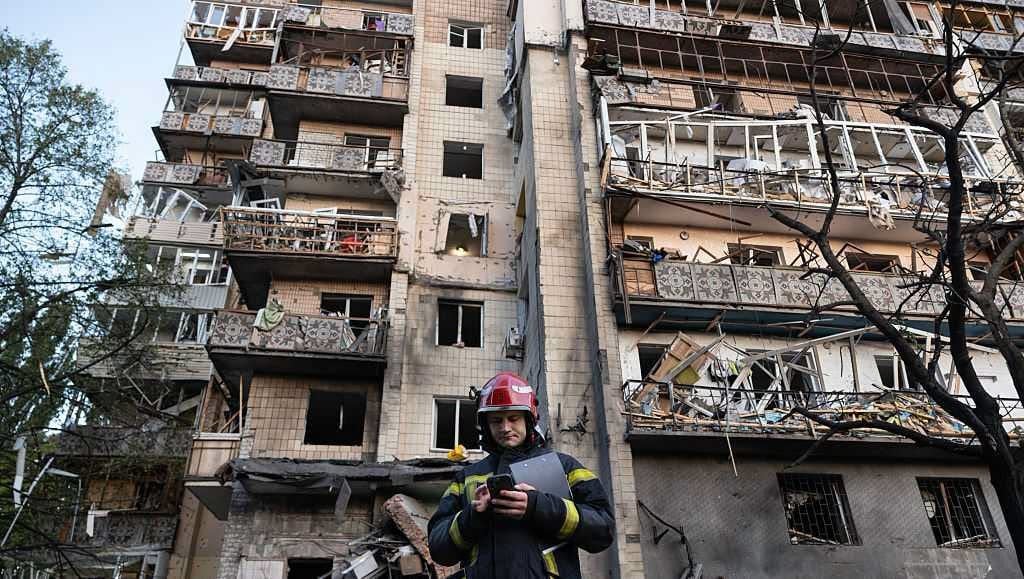
Thirty-nine people were killed in a new wave of Israeli strikes across Lebanon on Saturday, according to the country’s health ministry, as hostilities between Israel and the armed group Hezbollah continued despite a ceasefire announced last month.

Get today's headlines by email

The ministry said one Israeli strike on the southern town of Saksakiyeh killed at least seven people, including a child, and injured 15 others. Three of the wounded were children.
Israel’s military said it had been targeting Hezbollah positions and acknowledged reports that civilians had been harmed.
Strike in southern Lebanon
Lebanon’s state-run National News Agency reported multiple Israeli strikes across southern parts of the country, including the attack in Saksakiyeh.
The Lebanese health ministry described the incident as a raid that produced an “initial toll of seven martyrs, including a girl,” along with several injuries.
The Israeli military said the strike targeted “Hezbollah terrorists operating from within a structure used for military purposes”.
In a statement, the Israel Defense Forces said steps had been taken to reduce the risk to civilians, including the use of precise munitions and aerial surveillance before the attack. The military added that it was reviewing the details of the incident.
Drone attack in Nabatieh
The health ministry also reported a separate strike involving a motorbike in the city of Nabatieh.
It said the attack initially targeted a Syrian national and his 12-year-old daughter. After they moved away from the first strike site, a drone carried out a second attack that killed the father, according to the ministry.
Officials said the drone then struck a third time, targeting the girl directly. She was undergoing emergency surgery in hospital, the ministry added.
Continued cross-border attacks
Hezbollah said it carried out a drone strike against northern Israel on Saturday, which it described as retaliation for ongoing Israeli attacks.
The Israeli military said an explosive drone launched by Hezbollah near the northern border injured three army reservists. One of the soldiers was reported to be seriously wounded.
Israel has continued to conduct air strikes largely in southern Lebanon, saying it is targeting infrastructure and personnel linked to Hezbollah, the Iranian-backed militia and political party.
Rising toll since March escalation
According to Lebanon’s health ministry, Israeli attacks have killed more than 120 people across the country over the past week, including women and children. The ministry does not distinguish between civilians and combatants in its figures.
The Israeli military is also occupying a strip of territory along the Lebanon border. Israeli officials say the objective is to establish a security zone free of Hezbollah fighters to protect northern Israeli communities.
Lebanese villages in the area have been heavily damaged or destroyed during the fighting. Some rights organisations say certain actions by Israeli forces could amount to war crimes.
Hezbollah has also launched rockets and drones at Israeli positions in Lebanon and northern Israel during the clashes.
The latest violence follows a ceasefire agreement announced on 16 April by US President Donald Trump between the governments of Israel and Lebanon.
Israel and Hezbollah had previously agreed to a truce in November 2024 that ended an earlier conflict, though Israeli strikes on suspected Hezbollah targets continued afterward.
The conflict escalated again after the United States and Israel attacked Iran on 28 February, killing Iran’s supreme leader. Hezbollah responded on 2 March by launching rockets and drones into Israel.
Israel then intensified air strikes on Lebanon and redeployed troops into southern areas in early March. Israeli forces currently remain in a zone extending about 10km inside Lebanese territory.
Since the renewed escalation began on 2 March, Lebanon’s health ministry says 2,795 people have been killed in the country.
Israeli authorities say 17 soldiers and one civilian have been killed in southern Lebanon during the fighting, along with two civilians in northern Israel.


Join the discussion?

Already a member?


Adapted by ASEAN Now. Source 10 May 2026
webfact
webfact
Labour MP Catherine West has warned that she will try to trigger a leadership contest against Prime Minister Keir Starmer if a cabinet minister does not step forward to challenge him by Monday, following heavy election losses for the governing party.

Get today's headlines by email

In an interview with the BBC, West said her preferred outcome would be for senior ministers to reorganise leadership internally and replace Starmer with a stronger communicator, avoiding a full leadership election.
However, the MP for Hornsey and Friern Barnet said she would seek backing from colleagues if no cabinet figure emerges. Under Labour Party rules, at least 20% of Labour MPs — 81 members — would need to support her move for a leadership contest to begin.
West said she had already secured the support of around 10 MPs willing to back such a bid and expressed confidence that more would come forward.
Pressure after election losses
West’s intervention follows severe setbacks for Labour in recent elections across the UK.
The party lost more than 1,460 seats in English council elections, while the right-wing party Reform UK made significant gains in several former Labour strongholds across northern England and the Midlands.
In London, the Greens took control of councils in Waltham Forest, Lewisham and Hackney — areas that had previously been dominated by Labour — and also won their first elected mayors in Hackney and Lewisham.
Labour also suffered a historic defeat in the Welsh Parliament election, finishing third behind Plaid Cymru and Reform UK.
In Scotland, the party endured further losses as the Scottish National Party secured a fifth consecutive term in government.
Despite the results, Starmer has insisted he will not resign, saying he would not “walk away and plunge the country into chaos”.
Cabinet and MPs divided
Some members of Starmer’s government have urged colleagues to avoid further instability.
Cabinet Office minister Nick Thomas-Symonds warned that repeatedly replacing party leaders while in government would undermine the administration’s ability to focus on delivering policy.
Immigration minister Mike Tapp also criticised West’s move, arguing that public disputes within the party only benefit its political opponents.
Others within Labour reacted with surprise. One government minister described West’s move as misguided, while a prominent backbench critic of Starmer called it an “irresponsible solo mission”.
Yet some MPs suggested that dissatisfaction with the prime minister runs deeper than public comments indicate. One Labour MP told the BBC they expected West could reach the required number of supporters by Monday.
Potential successors discussed
West has not named a preferred successor and said part of the problem was that no candidate had yet stepped forward.
She said Starmer had made significant progress rebuilding the party and had handled foreign policy well, but argued he had less control over the domestic agenda and needed to challenge Reform UK more directly.
Several potential leadership contenders have been discussed among Labour figures.
Health Secretary Wes Streeting is viewed by some as a possible candidate, although allies deny he is preparing a bid. Streeting has publicly backed Starmer but said the government must take responsibility for mistakes.
Other figures mentioned include former deputy prime minister Angela Rayner, who resigned last year amid a tax investigation, and Greater Manchester mayor Andy Burnham. Burnham, however, is not currently a member of parliament, a requirement for Labour leadership candidates.
Attempt to stabilise leadership
In an effort to reinforce his position, Starmer has appointed former Labour prime minister Gordon Brown and former deputy leader Harriet Harman as advisers on global finance and violence against women.
The appointments were met with scepticism from some MPs, who questioned their practical impact.
Starmer is expected to deliver a major speech next week outlining a renewed legislative programme. In a newspaper interview, he also pledged to speak more strongly about closer ties with the European Union while addressing the economic consequences of the conflict involving Iran.


Join the discussion?

Already a member?


Adapted by ASEAN Now. Source 10 May 2026

webfact
webfact
Australia is grappling with renewed debate over security, justice and humanitarian responsibility after several women connected to the Islamic State group returned from detention camps in Syria.

Get today's headlines by email

Four women arrived in Australia this week after years held in camps housing relatives of fighters from the militant group. Their arrival was swiftly followed by arrests, reigniting controversy in a country still shaken by a deadly attack linked to extremist ideology late last year.
Three of the women were detained soon after landing, while a fourth faced intense media attention with her young children as authorities continued investigations into her case.
Government officials and the public have long been divided over whether Australians who travelled to territory once controlled by the Islamic State should be allowed to return.
Background to the returns
The women had been living for years in camps in northern Syria that held thousands of relatives of Islamic State fighters after the militant group lost its territorial control following a campaign led by the United States and local allies.
For several governments, including Australia and the United Kingdom, the camps have presented a complex dilemma involving national security concerns, legal obligations to citizens and humanitarian considerations.
Australia has resisted calls for the repatriation of many of its nationals held in these camps. However, citizens retain the legal right to return to their home country.
The debate has become more intense following Australia’s deadliest terrorist attack in recent years. In December, a mass shooting at a Jewish event in Bondi Beach, allegedly inspired by Islamic State ideology, killed 15 people.
Prime Minister Anthony Albanese has repeatedly expressed strong condemnation of the militant group. “If you make your bed, you have to lie in it,” he has said in reference to those who travelled to join it.
Lives in Syrian camps
Many of the Australians who travelled to Syria were young when they left, and some say they were influenced or coerced by extremist partners.
One of the women who returned, Janai Safar, 32, arrived in Sydney with her nine-year-old son and has since been charged with terrorism offences.
Another returnee, Zahra Ahmed, 33, came back to Melbourne alongside her sister Zeinab, 31, and their mother Kawsar Abbas, 54. The family has said they became trapped in Syria after travelling there for a wedding without knowing the groom had pledged allegiance to Islamic State.
Authorities have charged Abbas and Zeinab Ahmed with crimes against humanity linked to slavery. Zahra Ahmed remains under investigation.
The nine children who returned with the group will undergo community integration programmes and initiatives designed to counter violent extremism, according to the Australian Federal Police.
Twenty-one Australian citizens — seven women and fourteen children — remain in the Al-Roj camp in northeastern Syria.
National divisions
The return of individuals linked to the militant group has triggered strong reactions across Australia.
Some members of the public argue those who travelled to join Islamic State should remain in Syria.
Others, including survivors of the group’s violence who now live in Australia, have expressed concern about encountering former supporters of the organisation.
At the same time, advocates argue the children in the camps deserve protection and opportunities for rehabilitation.
Sydney doctor Jamal Rifi, who has helped provide telehealth services to families in the camps and assisted with documentation for travel, has urged authorities to allow them to return and face Australian courts if necessary.
“If those women have done anything wrong by our legal system… let the law deal with them,” he said earlier this year.
Legal limits on preventing returns
Australia’s government says it did not facilitate the latest returns and does not intend to organise further repatriations.
Home Affairs Minister Tony Burke said authorities face “very serious limits” on preventing citizens from returning.
In one case, an unnamed woman was barred from coming back earlier this year following national security advice, but officials say the legal threshold for such measures is high.
Opposition politicians have called for stronger laws to prevent further returns, reflecting heightened public concern after the December attack.
Analysts say the issue has become increasingly politically sensitive.
For campaigners seeking the return of the remaining Australians in Syrian camps, the latest arrivals represent only a partial step. Many of the women and children still detained there face uncertain futures as authorities weigh security risks against legal and humanitarian obligations.

Join the discussion?

Already a member?


Adapted by ASEAN Now. Source 9 May 2026
webfact
webfact
Health authorities worldwide are attempting to trace dozens of passengers who left a cruise ship before a hantavirus outbreak was confirmed, amid concerns that the illness could spread through close contact.

Get today's headlines by email

Five infections linked to the Dutch expedition vessel MV Hondius have been confirmed so far, including three deaths, according to the World Health Organization.
Officials are now working to locate passengers who disembarked during the voyage, as well as anyone who may have had close contact with them after leaving the ship.
Hantavirus Cases Linked to Cruise Voyage
The outbreak occurred during a journey operated by Oceanwide Expeditions. The company said 114 guests and 61 crew members from 22 countries boarded the vessel for the trip.
During the voyage, 32 passengers disembarked at Saint Helena on 24 April, before the hantavirus outbreak was identified. Health officials are attempting to locate those travellers as part of an international contact tracing effort.
Reports indicate around 150 passengers and crew from 28 countries were initially on board the ship before some guests left during the cruise.
The vessel departed from Ushuaia in Argentina on 1 April and is scheduled to arrive in the Canary Islands in Spain on 10 May.
On Friday, Oceanwide Expeditions published a detailed timeline outlining when passengers and crew disembarked at various stops during the journey.
WHO: Hantavirus Not Like Covid Pandemic
The World Health Organization said the outbreak is not considered the start of a pandemic similar to COVID-19.
According to the agency, the hantavirus strain involved spreads mainly through “close, intimate contact”, making widespread transmission less likely than viruses that spread easily through the air.
Nevertheless, health officials warned that the incubation period for Hantavirus infection can be lengthy. Symptoms may take up to six weeks to appear after exposure.
Because of this delay, the WHO said additional cases linked to the cruise could still be reported in the coming weeks.
International Contact Tracing Effort
Passengers and crew aboard the MV Hondius came from multiple countries, meaning health agencies around the world are now involved in tracking potential exposures.
Authorities are focusing particularly on those who disembarked in Saint Helena, as well as anyone who may have interacted with them after they left the vessel.
Oceanwide Expeditions said it has shared detailed passenger and crew movement records with health authorities to assist with the ongoing investigation.
Officials say monitoring will continue while the ship completes its journey and authorities assess whether further hantavirus cases linked to the cruise emerge.


Join the discussion?

Already a member?


Adapted by ASEAN Now. Source 9 May 2026
webfact
webfact
The United States government will begin revoking passports from Americans who owe significant amounts of unpaid child support, the US State Department has announced, as authorities seek to strengthen enforcement of existing federal laws.

Get today's headlines by email

Officials said parents with more than $2,500 (€1,844) in outstanding child support obligations could face the loss of their passports, though the policy will primarily target individuals with what the department described as “significant outstanding” debt.
The move expands the use of powers granted under a federal law passed in 1996, which allows the government to deny or revoke passports for individuals who fail to meet their child support responsibilities.
Stronger enforcement of existing law
In a statement, the State Department said the measure is intended to reinforce both the legal and moral responsibility of parents to support their children.
The department said it is deploying “commonsense tools to support American families and strengthen compliance” with US laws governing child support payments.
“This action supports the welfare of American children by exacting real consequences for child support delinquency under existing federal law,” the statement added.
Under the policy, individuals whose passports are revoked will no longer be able to use them for international travel. They will also be ineligible to receive a new passport until their outstanding child support debt has been fully settled.
Authorities urged parents who owe money to arrange payment with the relevant state child support agencies to avoid losing their travel documents.
Change from previous practice
The authority to restrict passports over unpaid child support has existed since the mid-1990s but has rarely been enforced through direct revocation.
Until now, the rule was typically applied when individuals attempted to renew their passports. In such cases, those with qualifying debt could be denied renewal until their payments were brought up to date.
Under the new approach, the State Department will proactively identify individuals who owe substantial amounts and move to revoke their passports even if they are still valid.
Officials said the department will work alongside the US Department of Health and Human Services to locate people with unpaid obligations and enforce the policy.
Impact on travellers abroad
The department did not specify exactly when enforcement would begin. However, the Associated Press reported the new policy could take effect as early as Friday.
Those whose passports are revoked while they are outside the United States may face additional complications. According to the report, affected travellers would need to contact a US embassy or consulate to obtain an emergency travel document that would allow them to return to the country.
Such documents would permit entry back into the US but would not restore full passport privileges until the outstanding debt is cleared.
Officials said the aim of the policy is to ensure stronger compliance with child support obligations and to reinforce existing laws designed to protect the financial wellbeing of children.

Join the discussion?

Already a member?


Adapted by ASEAN Now. Source 9 May 2026
webfact
webfact
King Charles III and Queen Camilla have joined a wave of tributes marking the 100th birthday of British broadcaster and naturalist David Attenborough.

Get today's headlines by email

The royal couple shared a birthday message celebrating the veteran presenter, alongside historic photographs including one from 1958 showing Attenborough introducing a young Charles III and Princess Anne to a cockatoo named Cocky during filming of the television series Zoo Quest. In their message, the King and Queen wished him a happy birthday and encouraged him to enjoy the celebrations planned for the evening.
Attenborough said he had been “completely overwhelmed” by the number of messages sent ahead of the milestone. While he could not reply individually, he thanked supporters and those organising local celebrations in his honour.
The centenary is being marked with a week of special programming and events, culminating in a concert at the Royal Albert Hall in London on Friday evening.
Messages from public figures
Tributes have come from across public life, including members of the royal family, entertainers and environmental advocates.
Prince William, speaking in a video for the Earthshot Prize initiative, wished Attenborough a happy birthday and thanked him for his longstanding support, saying his work continues to inspire him.
Meanwhile, Prince Harry described the broadcaster as a “secular saint” in an article for Time. He said Attenborough’s work had helped challenge the belief that environmental problems occur only elsewhere, adding that younger audiences still turn to him for perspective in an uncertain world.
Former England football captain David Beckham referred to Attenborough as a national treasure, while actress and campaigner Joanna Lumley shared a video message featuring residents from Stroud in Gloucestershire offering birthday wishes.
Television presenter Chris Packham wrote that Attenborough had made an unmatched contribution to inspiring public interest in the natural world.
A tribute video from the World Wide Fund for Nature featured a spoken-word version of the song What a Wonderful World, originally recorded by Louis Armstrong. The recording was voiced by actors including Judi Dench, Morgan Freeman, Miranda Richardson, Asa Butterfield, Sam Heughan and Iwan Rheon, alongside singer Geri Halliwell and wildlife presenter Liz Bonnin.
Composer Hans Zimmer said that despite his extensive film work, collaborating with Attenborough had been the most meaningful project of his career because of its connection to the future of the planet.
Actor Ian McKellen also praised Attenborough’s role in popularising natural history broadcasting, saying his programmes brought both enthusiasm and joy to audiences.
Celebrations at Royal Albert Hall
Friday evening’s concert at the Royal Albert Hall will serve as the centrepiece of the centenary celebrations.
The 90-minute programme, hosted by presenter Kirsty Young, will be broadcast on BBC channels. Guests including Michael Palin, Steve Backshall, Liz Bonnin and Chris Packham are expected to reflect on Attenborough’s career and influence.
The event will revisit notable wildlife sequences from programmes such as Planet Earth II, Frozen Planet II and Planet Earth III. Live performances from the BBC Concert Orchestra will accompany highlights from these series.
Musical guests include Dan Smith of the band Bastille performing the song Pompeii, which featured in Planet Earth III. Icelandic band Sigur Rós will perform Hoppípolla, previously used to promote earlier Planet Earth programmes, while singer Sienna Spiro and harpist Francisco Yglesia are also scheduled to appear.
A century of broadcasting
Born in London in 1926, Attenborough joined the BBC in 1952 and went on to become one of the most recognised figures in wildlife broadcasting. His work includes landmark series such as Life on Earth, The Trials of Life and The Blue Planet.
To mark the centenary, the BBC has aired special programmes revisiting his career, including a documentary reflecting on the making of Life on Earth and the recent series Secret Garden, which explores wildlife in British gardens.
In another tribute, the Natural History Museum announced that a species of parasitic wasp discovered in its collection had been named after Attenborough. The insect, Attenboroughnculus tau, is native to lakes in Chilean Patagonia.
Over the years, numerous species — from plants and insects to a dinosaur — have been named in honour of the broadcaster.

Join the discussion?

Already a member?


Adapted by ASEAN Now. Source 9 May 2026
webfact
webfact
A man has been charged after allegedly threatening Andrew Mountbatten-Windsor during an incident close to his residence on the Sandringham Estate in Norfolk.

Get today's headlines by email

Norfolk Police said officers arrested a man shortly after 19:30 BST on Wednesday following reports of someone acting in an intimidating way in the village of Wolferton.
According to reports from the Daily Telegraph, Andrew Mountbatten-Windsor was confronted by a man wearing a balaclava while he was walking his dogs near the estate. The newspaper said he and his security team quickly returned to a nearby vehicle after the alleged threat.
Arrest and charges
Police confirmed that Alex Jenkinson, 39, from Stowmarket in Suffolk, has been charged following the incident.
He faces two counts of using threatening, abusive or insulting words or behaviour intended to harass someone or cause alarm or distress. He has also been charged with failing to provide a specimen of blood while in custody.
Jenkinson has been remanded in custody and is scheduled to appear at Westminster Magistrates’ Court on Friday.
Norfolk Police said the charges followed an investigation into the reported confrontation in Wolferton, a village located close to the royal estate.
Incident near Sandringham residence
The alleged incident occurred near Marsh Farm, a property within the Sandringham Estate where Mountbatten-Windsor now lives.
He moved to the property after leaving Royal Lodge in Windsor. The relocation came amid continued scrutiny over his past association with the late convicted sex offender Jeffrey Epstein.
Police did not provide further details about the alleged encounter but confirmed that officers responded quickly after receiving the report of threatening behaviour.
Background controversy
Andrew Mountbatten-Windsor’s public role has been significantly reduced in recent years following criticism over his links to Epstein.
Late last year, the King removed his remaining royal titles, including his right to be known as a prince and his dukedom.
Despite the controversy, Mountbatten-Windsor has repeatedly denied any wrongdoing connected to Epstein.
The investigation into Wednesday’s incident remains ongoing, with the accused due to face court proceedings in London.

Join the discussion?

Already a member?


Adapted by ASEAN Now. Source 9 May 2026


webfact
webfact
The US Department of Defense has released a first batch of declassified documents on unidentified flying objects, publishing what it described as “never-before-seen files” following an order earlier this year from President Donald Trump.

Get today's headlines by email

The material outlines decades of investigations into sightings of Unidentified Aerial Phenomena (UAP) — the term now used by the US government to describe UFOs. Officials said the records include videos, photographs and original documents gathered across multiple federal agencies.
In a statement posted on X, the Pentagon said the public could now access the files without restrictions. “The American people can now access the federal government’s declassified UAP files instantly,” the department wrote, adding that the materials bring together evidence from across the US government in a single location.
The Pentagon also said more documents would be released over time. New material will be posted periodically as additional records are discovered and cleared for public release.
Files span decades of reports
Some of the documents had been previously disclosed in part by the FBI, but officials said the newly released versions contain fewer redactions.
One large FBI file, running to hundreds of pages, compiles eyewitness accounts and public reports of UFO sightings recorded between 1947 and 1968. The reports describe a range of unexplained aerial observations documented during the early decades of the Cold War.
Other documents include much more recent military reports. Among them are internal memos describing an encounter with “one possible small UAP” observed in Iraq in 2022.
Another report details “multiple glares or light from an unknown origin” seen in Syria in 2024. US forces were deployed in both Iraq and Syria at the time as part of operations against the militant group Islamic State.
Additional reports come from US personnel stationed in the United Arab Emirates and Greece.


This image, identified as "FBI photo B2" on the Department of Defense website, shows an “infrared still image (black hot) captured of unidentified object over western United States in December of 2025,” per the Defense Department.
Department of Defense
Pentagon urges caution over interpretations
Officials warned that the language used in many of the reports reflects the observations of the individuals who wrote them and should not be treated as definitive explanations.
A disclaimer on the Pentagon website notes that the “descriptive and estimative language” contained in the files represents the “subjective interpretation” of the reporting personnel. It adds that the wording should not be seen as conclusive evidence of what the events actually involved.
Historical sightings included
The documents also contain historical accounts from space missions.
During the Apollo 12 mission in 1969 — the second crewed landing on the Moon — astronaut Alan L. Bean reported seeing flashes of light moving through space. In communications with mission control, Bean described lights appearing to move rapidly away from the Moon.
Three years later, during the Apollo 17 mission in 1972, astronauts again reported observing bright particles of light outside their spacecraft. Lunar Module Pilot Harrison “Jack” Schmitt likened the display to fireworks.
The astronauts later suggested the lights may have been caused by small particles of ice.
Renewed debate over extraterrestrial life
Interest in extraterrestrial life has grown in recent months after former US president Barack Obama said during a podcast that aliens are “real but I haven’t seen them.” Obama later clarified that he had not seen evidence during his presidency that extraterrestrials had made contact with Earth.
Shortly afterwards, Trump instructed the Pentagon and other agencies to begin identifying and releasing government records related to alien life, UFOs and UAP.
NASA Administrator Jared Isaacman welcomed the initiative, saying greater transparency could help expand public understanding of unexplained phenomena.
“We will remain candid about what we know to be true, what we have yet to understand, and all that remains to be discovered,” Isaacman wrote on X.
Trump said the newly released files would allow people to draw their own conclusions.
“Decide for yourselves what the hell is going on,” he wrote on Truth Social.


Join the discussion?

Already a member?


Adapted by ASEAN Now. Source 9 May 2026


webfact
webfact
Sir Keir Starmer has said he will not step down as UK prime minister despite mounting pressure following heavy election losses for Labour across England, Scotland and Wales.

Get today's headlines by email

The results have prompted renewed criticism of the Labour leader from within his own party, although senior cabinet ministers have so far rallied behind him.
Labour has lost power in Wales after more than a quarter century in government, while early results suggest the Scottish National Party (SNP) will remain the largest party in Scotland. In England, Reform UK has made sweeping gains, winning hundreds of council seats and taking control of several authorities traditionally dominated by Labour and the Conservatives.
Reform Surges in England
A projected national share (PNS) compiled by the BBC from results in more than 1,000 wards suggests Reform UK would win the largest share of the vote if the pattern were replicated in a general election.
The projection puts Reform on 26%, followed by the Green Party on 18%. Labour and the Conservatives are tied in third place on 17%.
Labour has already lost hundreds of council seats in England, including in parts of northern England and the Midlands that have historically been strongholds for the party. Further results are still expected as counting continues.
Nigel Farage, leader of Reform UK, described the outcome as a “historic shift in British politics”. Speaking after his party gained control of councils including Havering, he said the traditional dominance of Labour and the Conservatives was coming to an end.
Leadership Questions Grow
The scale of Labour’s losses has intensified questions over Starmer’s leadership.
Several Labour MPs have called on him to step down or set a timetable for his departure. Left-wing MPs Jon Trickett and Jonathan Brash renewed their calls for the prime minister to resign, while Ian Lavery said Starmer should “fall on his sword”.
Other MPs have suggested he should outline a timeline for leaving office. Privately, criticism of the prime minister is said to extend beyond Labour’s left wing.
However, some figures within the party have warned against triggering a leadership battle immediately. Former transport secretary Louise Haigh said that although Starmer’s unpopularity had been raised repeatedly during campaigning, an internal contest now would be irresponsible.
She said the prime minister was performing strongly on the international stage but warned that without changes he could not lead Labour into another election.
Mixed Fortunes Across the UK
In Wales, Plaid Cymru emerged as the largest party in the Senedd but fell short of an outright majority. Reform UK finished second.
The result ended Labour’s 27-year hold on power in Wales and marked the first time in more than a century that the party has lost a national vote there. Labour was reduced to nine seats in the expanded parliament.
Welsh First Minister Eluned Morgan lost her own seat and announced she would step down as leader of the Welsh Labour party.
In Scotland, the SNP is expected to remain the largest party but without an overall majority. In one notable upset, SNP minister Angus Robertson lost his Edinburgh seat to the Scottish Greens.
Cabinet Rallies Around Starmer
Despite the criticism, senior members of Starmer’s cabinet publicly backed him after the results.
Chancellor Rachel Reeves said the prime minister had won a mandate to reform the country and must now focus on delivering it. Defence Secretary John Healey said he believed Starmer could still reverse Labour’s fortunes, while Foreign Secretary Yvette Cooper cautioned against a “knee-jerk reaction”.
Starmer acknowledged the results had been “tough” but said he would not resign.
“I’m not going to walk away and plunge the country into chaos,” he said.
The prime minister is expected to attempt a reset of his government in the coming week once the election results are fully confirmed.


Join the discussion?

Already a member?


Adapted by ASEAN Now. Source 9 May 2026
webfact
webfact
Iran’s foreign minister has accused the United States of pursuing a “reckless military adventure” as tensions escalate in the Gulf, even as both sides say a ceasefire intended to enable peace talks remains in place.

Get today's headlines by email

Abbas Araghchi, Iran’s foreign minister, said Washington repeatedly resorts to force whenever diplomatic options emerge. Writing on the social media platform X, he said Iranians would “never bow to pressure”.
Araghchi’s remarks came a day after the United States and Iran blamed each other for new clashes in the Strait of Hormuz. The exchange followed further U.S. military action against Iranian vessels and continued friction despite the ceasefire announced earlier in the conflict.
“Is it a crude pressure tactic?” Araghchi wrote. “Or the result of a spoiler once again duping POTUS into another quagmire?”
Ceasefire Amid Continuing Tensions
Despite the latest confrontations, Donald Trump said the ceasefire remained intact. The truce is intended to create space for negotiations aimed at ending the war launched in February by the United States and Israel.
Washington says it is waiting for Tehran’s response to a set of proposals designed to resolve the conflict.
Marco Rubio, the U.S. secretary of state, said Iran was expected to respond on Friday.
“I hope it’s a serious offer, I really do,” Rubio said while visiting Italy.
Iran has taken control of the Strait of Hormuz and launched attacks on U.S. allies in the Gulf in retaliation for American and Israeli military strikes earlier in the war.
The narrow waterway is one of the world’s most critical shipping routes. Around 20% of global oil and liquefied natural gas shipments pass through the strait, and disruptions there have pushed energy prices sharply higher.
Naval Blockade and Ship Incidents
Earlier this week, Trump authorised a U.S. military operation aimed at freeing roughly 2,000 vessels that have been stranded in the area since February. The operation was later paused.
At the same time, the United States has maintained a naval blockade of Iranian ports in an effort to pressure Tehran to accept U.S. negotiating terms. Iranian officials have condemned the blockade, describing it as an act of aggression.
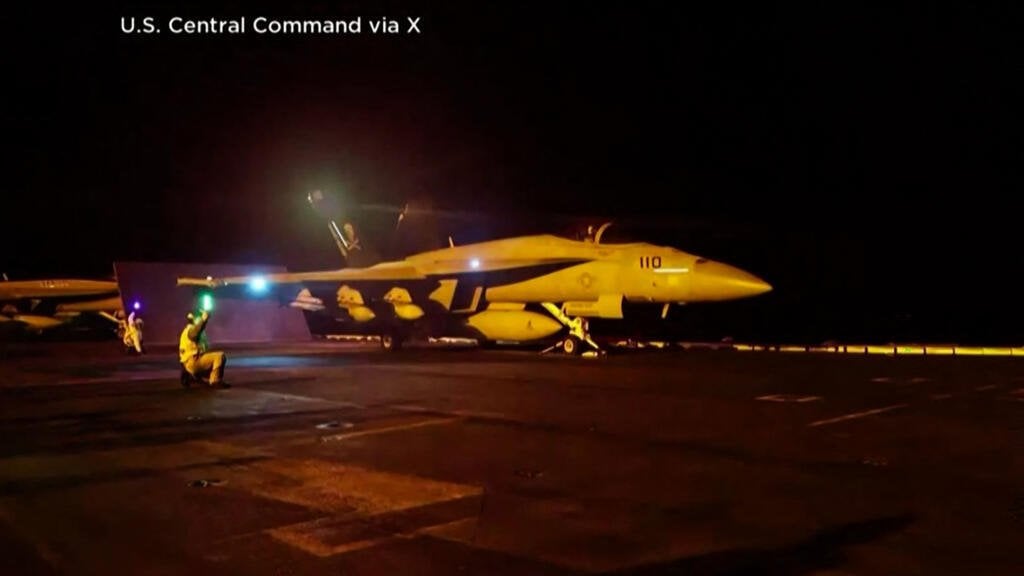
On Friday, U.S. Central Command said American forces had disabled two Iranian-flagged oil tankers attempting to enter an Iranian port in the Gulf of Oman in violation of the blockade.
According to the command, the vessels were not carrying cargo. U.S. forces fired precision munitions into their smokestacks, preventing them from docking.
The military said it was also stopping more than 70 tankers from entering or leaving Iranian ports as part of the blockade effort.
Clashes in the Strait of Hormuz
The latest incidents followed Thursday’s confrontations in the Strait of Hormuz, with each side accusing the other of initiating the attacks.
U.S. Central Command said Iran launched missiles, drones and small boats at three American warships in what it described as an “unprovoked attack”.
Iran’s senior military leadership gave a different account, claiming U.S. forces targeted an Iranian oil tanker and another vessel approaching the strait and carried out aerial strikes against several coastal areas.
One cargo vessel attacked near the waters off Minab caught fire, according to Mohammad Radmehr, an official in Iran’s southern Hormozgan province.
Radmehr said ten injured sailors had been taken to hospital while local rescue teams searched for others who were aboard the vessel.
Late on Thursday, Trump said on the social media platform Truth Social that U.S. forces had destroyed several Iranian small boats, missiles and drones.
He warned that further strikes could follow if Iran failed to quickly agree to the proposed deal to end the conflict.


Join the discussion?

Already a member?


Adapted by ASEAN Now. Source 9 May 2026
webfact
webfact
The United States carried out strikes against at least two locations in Iran on Thursday, according to a U.S. official, in what Washington described as a defensive response to an earlier Iranian attack on American naval vessels.

Get today's headlines by email

The strikes targeted sites in Bandar Abbas and on Qeshm Island, both situated near the strategically important Strait of Hormuz. A U.S. official said the action was defensive and should not be seen as a return to broader combat operations against Iran.
Naval vessels targeted in Strait of Hormuz
United States Central Command said two U.S. Navy guided-missile destroyers were attacked while passing through the Strait of Hormuz toward the Gulf of Oman.
In a statement posted on X, the command said Iranian forces launched several missiles and drones and deployed small boats toward the ships as they moved through the international shipping corridor.
The vessels involved were the USS Truxtun (DDG‑103), the USS Rafael Peralta (DDG‑115) and the USS Mason (DDG‑87).
According to the command, none of the American ships were hit during the incident.
US response described as defensive
CENTCOM said its forces intercepted and destroyed the incoming threats before carrying out strikes on Iranian facilities believed to be responsible for launching the attack.
The targets included missile and drone launch sites as well as locations used for command and control operations and intelligence, surveillance and reconnaissance activities.
Military officials said the response was aimed at neutralising the sources of the attack while protecting U.S. personnel and assets operating in the region.
“No U.S. assets were struck,” the command said, adding that the incoming missiles and drones had been eliminated before they could reach the American ships.
Washington says it does not seek escalation
In its statement, CENTCOM stressed that the United States was not seeking to escalate tensions with Iran despite the retaliatory strikes.
The command said U.S. forces remain positioned to defend themselves and safeguard American personnel in the region.
The Strait of Hormuz, located between Iran and the Arabian Peninsula, is one of the world’s most important maritime routes for oil shipments and has long been a focal point of tensions between Tehran and Washington.
Thursday’s exchange marks the latest confrontation in the waterway, where U.S. and Iranian forces have frequently encountered one another.

Join the discussion?

Already a member?


Adapted by ASEAN Now. Source 8 May 2026

webfact
webfact
US President Donald Trump has warned the European Union (EU) it faces sharply higher tariffs unless the bloc fully implements a trade agreement by 4 July.

Get today's headlines by email

Trump issued the ultimatum after speaking by phone with Ursula von der Leyen, saying he had agreed to give the EU until the United States’ 250th Independence Day anniversary to remove its tariffs on American goods.
Posting on social media, Trump said the EU had already signed a “historic trade deal” with Washington and committed to cutting its tariffs.
“I agreed to give her until our Country’s 250th Birthday or, unfortunately, their tariffs would immediately jump to much higher levels,” Trump wrote.
The warning raises pressure on Brussels as negotiations continue over how to implement the agreement reached last year.
Dispute over implementation
The trade deal was initially struck in July last year between Trump and von der Leyen, aiming to ease tensions in transatlantic trade.
Under the agreement, exports from the EU to the United States would face a 15% tariff. Trump had previously threatened tariffs of up to 30% on European goods if talks failed.
Despite the announcement of the deal, efforts to formally enact it have stalled.
On Wednesday, negotiations between EU lawmakers and member state governments ended without a final agreement on the legislation required to implement the arrangement.
Von der Leyen said discussions were continuing and described the process as moving in a positive direction.
“We are making good progress towards tariff reduction,” she wrote on social media platform X, adding that both sides remained “fully committed” to carrying out the agreement.
European Parliament conditions
The European Parliament gave conditional approval to the trade deal in March.
A majority of lawmakers supported legislation needed to implement the agreement but added safeguards designed to ensure the United States would uphold its commitments.
Members of parliament said they would only accept zero tariffs on American goods if certain European exports were protected.
Specifically, they demanded that European products made with steel and aluminium be excluded from the United States’ global 50% tariffs on those metals.
The deal must also be approved by all 27 EU member states before it can take effect.
Negotiations continue
Talks between EU institutions and national governments are ongoing.
Bernd Lange, the European Parliament’s chief negotiator on the issue, said discussions were progressing but acknowledged more work remained.
“There is still some way to go,” Lange said earlier on Thursday.
Negotiators are scheduled to meet again on 19 May in Strasbourg for another round of talks aimed at resolving the remaining disputes.
Lange said parliament would continue pushing to secure guarantees for both European citizens and businesses.
“We remain more committed than ever to advance and defend Parliament’s mandate so as to provide additional guarantees that will benefit citizens and companies in both the EU and the US,” he said in a statement.
Rising tensions over tariffs
The latest warning follows earlier criticism from Trump that the EU was failing to meet its commitments under the agreement.
Last week, the US president accused the bloc of “not complying with our fully agreed to trade deal” in a post on his Truth Social platform.
He also threatened to raise tariffs on trucks and cars to 25% if the dispute continued.
The original trade framework was reached last July after Trump met von der Leyen following a round of golf at his resort in Turnberry, Scotland.

Join the discussion?

Already a member?


Adapted by ASEAN Now. Source 8 May 2026
webfact
webfact
Counting is under way across the United Kingdom after voters cast ballots in elections in England, Scotland and Wales, with the first results expected in the early hours of Friday.

Get today's headlines by email

Initial declarations from English councils are anticipated between midnight and 2am BST. Results from the Scottish and Welsh parliamentary contests are expected later in the day, beginning around midday.
Only a limited number of results will emerge overnight, but early declarations could shape the narrative of the elections and offer clues about broader political shifts.
Early Tests in English Councils
One of the earliest indicators of the night’s political direction may come from Hartlepool, where attention is focused on whether Reform UK can convert strong polling numbers into tangible gains at council level.
Election observers say the town could provide an early measure of the party’s ability to translate support into seats. A strong showing for Reform UK would raise concerns among Labour strategists that the party could become a sustained anti-establishment challenger in areas that once formed part of Labour’s traditional support base.
Oxford is also being watched closely. Analysts say the city may highlight growing fragmentation among voters opposed to the Conservatives, with Labour, the Green Party and the Liberal Democrats competing for similar constituencies of support.
Meanwhile, the result in Dudley is seen as a key test in the politically competitive Midlands. The area has experienced shifting voting patterns in recent years, and Labour faces pressure from Reform UK amid voter concerns about immigration, living standards and trust in Westminster politics.
Major Changes to Welsh Parliament
The elections also coincide with a major reform of the Welsh parliament, the Senedd. The chamber is expanding from 60 to 96 members under a new electoral system designed to produce more proportional outcomes.
Opinion polls suggest the change could reshape the political landscape in Wales. Labour, which has governed the Senedd since devolution began in 1999, is widely expected to lose its majority.
Plaid Cymru leader Rhun ap Iorwerth is predicted by some forecasts to emerge as the next first minister. Such an outcome would bring renewed attention to the party’s commitment to advancing the case for Welsh independence.
Coalition Scenarios and Close Margins
Even if Reform UK performs strongly in Wales, coalition mathematics make it unlikely the party would be able to form a government. Analysts say Plaid Cymru could instead attempt to govern as a minority administration if the numbers allow, avoiding formal coalition agreements with Labour or the Green Party.
Polls suggest Labour may face substantial losses in the Senedd election. Some projections place the party as low as fourth place, behind the Greens.
There is also speculation that Eluned Morgan, Labour’s current first minister in Wales, could lose her own seat.
The new electoral system introduces additional uncertainty. The revised list method means very small shifts in vote share could determine the final seat allocation in each constituency.
According to the polling group More in Common, margins as small as 0.06% of the vote could decide the final seat — the sixth — in a constituency list, making precise predictions difficult before counting is complete.
Results Expected Through Friday
With counting continuing across multiple elections, officials expect results to emerge gradually through Friday.
While only a small number of English council results will appear overnight, the outcomes from Scotland and Wales later in the day are expected to provide a clearer picture of the political balance across the three nations.

Join the discussion?

Already a member?


Adapted by ASEAN Now. Source 8 May 2026
webfact
webfact
A UK Border Force officer has been convicted of spying for Chinese intelligence after using government databases to track Hong Kong dissidents living in Britain.

Get today's headlines by email

Chi Leung “Peter” Wai, 40, was found guilty under the UK’s National Security Act of assisting a foreign intelligence service. He was convicted alongside Chung Biu “Bill” Yuen, 65, who prosecutors said acted as his contact with Hong Kong authorities. Wai was also found guilty of misconduct in public office.
Following the verdict, the UK government said China’s ambassador to Britain would be summoned by the Foreign Office. Security Minister Dan Jarvis described the activities as a breach of British sovereignty that would not be tolerated.
The two men were remanded in custody and will be sentenced at a later date, to be set on 15 May.
Use of immigration database
Wai began working as a Border Force officer at Heathrow Airport in December 2020, giving him access to the Home Office’s main immigration database containing information on foreign nationals in the UK.
Prosecutors said he accessed the system outside working hours, including on days off and while on sick leave, to search for Hong Kong activists who had fled political crackdowns. The information was then passed to Chinese contacts.
Investigators said Wai had already been gathering information on dissidents before joining Border Force. In messages presented in court, he referred to activists as “cockroaches”.
Yuen, a former Hong Kong police officer, became Wai’s intermediary with Chinese authorities. The two men first met in London in 2017 and, by mid-2021, Yuen had become Wai’s handler, receiving reports about Hong Kong pro-democracy activists and protests in Britain.
Yuen had moved to London shortly after retiring from the Hong Kong Police Force in 2015. He later took a role as office manager at the Hong Kong Economic and Trade Office in London, which promotes business ties between Hong Kong and the UK.
The court heard the surveillance operation also paid “special attention” to certain British politicians, including Conservative MP Sir Iain Duncan Smith.
Surveillance of activists
Evidence showed Wai recruited a fellow Border Force officer, former Royal Marine Matthew Trickett, to assist in monitoring dissidents.
Among those targeted were prominent activists Nathan Law and Finn Lau. Both men had been involved in Hong Kong’s pro-democracy movement and were later subject to HK$1 million bounties issued by Hong Kong authorities in 2023.
Law was followed during a visit to the Oxford Union, while Lau told the BBC he had become increasingly cautious about personal safety due to fears of surveillance.
“To be frank, I don’t feel safe in the UK regarding the spying risk,” Lau said, adding that he had taken measures to avoid being followed.
Operation uncovered
The investigation widened after the group attempted to locate a Hong Kong woman living in West Yorkshire who was accused of financial wrongdoing in Hong Kong, which she denies.
Using his access to the immigration database, Wai identified her address in Pontefract and confirmed her presence by arranging the delivery of a parcel. Surveillance of the property followed.
In April 2024, a group linked to the case travelled to the address, attempting to make contact with the woman. When she did not answer the door, they used a small camera under the door and tried to lure her out by leaving a note and pouring water through the letterbox.
The operation was secretly recorded by a device placed by the security service MI5.
When police intervened, Wai threw a fake warrant card suggesting he was a superintendent with the City of London Police out of a window, the court heard.
Death of co-defendant
Trickett was later charged alongside Wai and Yuen but was found dead in Grenfell Park in Maidenhead shortly after appearing in court. His death is being treated as a suspected suicide, with an inquest scheduled for November.
Jurors were unable to reach a verdict on a separate charge alleging the men had committed foreign interference during the Pontefract incident. Prosecutors said they would not pursue a retrial.
Counter-terrorism police described the case as a serious example of overseas intelligence activity targeting people in Britain.

Join the discussion?

Already a member?


Adapted by ASEAN Now. Source 8 May 2026
webfact
webfact
The war between the United States and Iran, initially expected to last little more than six weeks, has now entered its 10th week, leaving President Donald Trump struggling to find a path toward ending the conflict.

Get today's headlines by email

Despite repeated claims from the White House that negotiations are making progress, the administration faces growing geopolitical and domestic constraints that complicate any clear exit strategy.
Iran’s continued resistance and its control over the strategic Strait of Hormuz have prevented Washington from securing a decisive outcome. At the same time, rising political pressure at home is narrowing the president’s room to manoeuvre.
Opinion polls show Trump’s approval rating in the 30s, while US gasoline prices have climbed above $4.50 a gallon. Public opposition to the conflict has also grown, increasing the pressure on the administration to end the war quickly.
Diplomatic push for a deal
Officials are now pursuing a potential agreement aimed at halting the fighting. According to reports, US and Iranian representatives are discussing a one-page memorandum through Pakistani mediators that would formally end hostilities and establish a 30-day period to resolve remaining disputes.
Iran is expected to deliver its response to the proposal to the mediators on Thursday. Some officials involved in the talks say negotiations have come closer to ending the conflict than at any previous point.
However, analysts caution that such a brief document would struggle to resolve the longstanding tensions between Washington and Tehran. These include disputes over Iran’s nuclear programme, its ballistic missile capabilities and its support for armed proxy groups across the region.
Tehran is also seeking extensive sanctions relief to revive its economy and wants to benefit financially from the passage of oil and gas shipments through the Strait of Hormuz.
Trump has repeatedly suggested in recent weeks that an agreement was imminent, only for talks to stall as negotiations continued.
Short-lived military initiatives
The conflict has also been marked by rapidly changing military strategies.
On Tuesday, Secretary of State Marco Rubio indicated that “Operation Epic Fury” — the main US military campaign — had effectively ended. He then promoted another initiative announced hours earlier by Trump known as “Project Freedom”.
The plan aimed to reopen the Strait of Hormuz by escorting vessels through the waterway. But the effort was halted within hours after only a small number of ships were guided to safety.
Trump said the decision to pause the operation was intended to support ongoing peace negotiations. However, the swift launch and suspension of the initiative added to perceptions of uncertainty surrounding US strategy.
Several earlier measures had also failed to produce the decisive result the administration sought. These included a joint US-Israeli bombing campaign targeting Iranian leadership and military facilities, as well as naval blockades of Iranian ports and shipping.
Despite heavy losses among its leadership, Iran’s governing structure — including the powerful Islamic Revolutionary Guard Corps — has remained intact.
Challenges of securing a decisive outcome
Military analysts say the conflict illustrates the difficulties powerful nations can face when confronting smaller states using asymmetric tactics.
US officials argue that Iranian naval and air capabilities have been severely damaged and that military infrastructure has been significantly weakened. However, the administration has avoided deploying large numbers of ground troops — a decision seen as limiting the prospects for a clear battlefield victory.
Meanwhile, Iran’s use of the Strait of Hormuz as leverage has affected global energy markets and added economic pressure on the United States and its allies.
Experts say the gap between American military capabilities and the ability to achieve a lasting strategic result remains significant.
There has been no widespread uprising inside Iran, and Tehran has not agreed to abandon its nuclear ambitions or dismantle its regional networks of allied groups.
With the strait still closed and oil prices elevated, diplomats and analysts say the conflict remains unresolved despite ongoing negotiations.


Join the discussion?

Already a member?


Adapted by ASEAN Now. Source 8 May 2026
webfact
webfact
Mexico City is sinking at a pace so rapid that the movement of the ground beneath the sprawling capital can now be detected from space, according to new satellite data.

Get today's headlines by email

Images captured by the NISAR satellite mission — a joint project between NASA and the Indian Space Research Organisation — reveal that some parts of Mexico City are subsiding by more than half an inch each month. In certain locations, the ground is sinking at a rate approaching 0.8 inches monthly, equivalent to more than 9.5 inches per year.
Researchers say the phenomenon is largely driven by the heavy extraction of groundwater from an ancient aquifer beneath the city.
Aquifer depletion driving subsidence
The Mexican capital, one of the world’s largest urban areas with roughly 22 million residents, was built on the bed of a high-altitude lake. Beneath the city lies a major aquifer that provides about 60% of the drinking water used by its population.
Over decades, intense pumping of this underground water supply has caused the soil above it to compress and sink. The problem has also worsened the city’s long-running water shortage, raising fears that it could one day face a “day zero” scenario in which water supplies run dry.
Urban growth has compounded the issue. Continuous construction and expanding infrastructure have added weight to the city’s soft, clay-rich ground, accelerating the downward movement.
Satellite reveals scale of the problem
The NISAR satellite was designed to observe complex processes on Earth by using advanced radar capable of measuring small movements in the planet’s surface.
Between October 2025 and January 2026 — during the region’s dry season — the satellite mapped changes in ground levels across Mexico City. The data revealed that several districts are sinking steadily, with some areas experiencing particularly fast subsidence.

Among the locations most affected is Benito Juárez International Airport, the city’s main air transport hub.
The satellite’s ability to detect gradual land movement allows scientists to monitor how the city is changing over time and to identify areas at risk.
Visible impacts across the capital
Subsidence in Mexico City has been documented since the 1920s. Over the decades, the effects have become increasingly visible across the capital.
Residents have reported cracked roads, uneven pavements and tilting buildings. Transport infrastructure has also been affected, including parts of the rail system.
One of the city’s most recognisable monuments demonstrates the impact of the sinking ground. The Angel of Independence monument, a 114-foot-tall column built in 1910 to mark the centenary of Mexico’s independence, has required the addition of 14 steps at its base as the surrounding ground level has dropped.
Scientists say satellite monitoring will provide new insight into how subsidence is affecting cities worldwide.
“Mexico City is a well-known hot spot when it comes to subsidence, and images like this are just the beginning for NISAR,” said David Bekaert of the Flemish Institute for Technological Research and a member of the NISAR science team.
Tracking changes across the planet
Beyond urban subsidence, the satellite’s radar technology can also measure a wide range of environmental changes. These include glaciers shifting, crop growth patterns and natural hazards such as volcanic eruptions.
Researchers say the mission is expected to produce a growing body of data that will help scientists better understand how Earth’s surface is evolving.


Join the discussion?

Already a member?


Adapted by ASEAN Now. Source 8 May 2026
webfact
webfact
Russia will mark its annual Victory Day with a reduced military parade this year, with tanks and other heavy equipment absent from Moscow’s Red Square as the war in Ukraine enters its fifth year.

Get today's headlines by email

The parade on 9 May commemorates the Soviet Union’s defeat of Nazi Germany in World War Two and has become Russia’s most important national holiday. But unlike previous years, the event will feature soldiers marching without the usual display of military hardware.
Officials say the decision reflects both security concerns and the continued demands of the war in Ukraine.
Parade without tanks
Across Red Square, banners and digital displays proclaim the word “Pobeda” – meaning “Victory” – as soldiers rehearse for the annual ceremony. The term dominates the square, appearing on large red signs and public installations where visitors pose for photographs.

Victory Day is central to Russia’s national narrative, particularly under President Vladimir Putin, whose government has long emphasised the Soviet Union’s role in defeating Nazi Germany in what Russians call the Great Patriotic War.
Yet this year’s parade will differ significantly from previous ones. For the first time in nearly two decades, there will be no tanks, missile launchers or other heavy weapons on display.
Russian lawmaker Yevgeny Popov said the absence of military hardware was linked to the ongoing war.
“Our tanks are busy right now,” he said. “They are fighting. We need them more on the battlefield than on Red Square.”
War reaches closer to Russia
The scaled-back parade comes as the conflict with Ukraine continues with no clear end in sight more than four years after Russia launched its full-scale invasion in February 2022.
In recent days the war has also affected areas inside Russia. Authorities reported that two people were killed and more than 30 injured after a long-range Ukrainian missile and drone strike on the city of Cheboksary.
The night before, a drone breached Moscow’s air defences and struck a luxury apartment building about 6km from the Kremlin. No one was injured, though the upper floors of the building were damaged.
Russian officials say the risk of drone attacks has influenced security planning for the Victory Day events.
Kremlin spokesman Dmitry Peskov referred to what he described as a “terrorist threat” from Ukraine. Russia’s defence ministry has warned it could carry out a “massive retaliatory missile strike” against central Kyiv if Moscow comes under attack on 9 May.
Mixed reactions among residents
Among people in Moscow, the reduced parade has drawn mixed responses.
Some residents say safety concerns justify the changes. Others believe the absence of military equipment weakens the symbolic power of the event.
“There is a safety issue,” said Sergei, a passer-by near Red Square. “But parading our military hardware shows our strength on the world stage.”
Yulia, another resident, said the decision was understandable but could also signal vulnerability.
“It would be foolish to showcase equipment if something could happen during the parade,” she said. “But it also means we are afraid of something.”
Another resident, Vladimir, said the parade remained an important national symbol but accepted that circumstances had changed.
“If conditions do not allow the full parade this year, we will have to wait until next year,” he said.
War fatigue and domestic pressures
The conflict has now lasted longer than the Soviet Union’s fight against Nazi Germany between 1941 and 1945, a milestone reached earlier this year.
Recent polling, including surveys conducted by state-run agencies, suggests President Putin’s domestic approval ratings have declined.
Observers in Moscow also report growing public fatigue over the war, along with concerns about rising living costs and frustration over new internet restrictions imposed by the authorities.
Officials say temporary shutdowns of mobile internet services, expected again during Victory Day celebrations, are intended to reduce the risk of drone attacks and sabotage.
The restrictions have proven unpopular in several Russian cities where similar measures have been implemented in recent months.
But Popov defended the policy, saying security must take priority.
“It’s not your business what we are doing with our internet,” he said. “It would be better to have no internet than to be killed by a Ukrainian missile or drone.”


Join the discussion?

Already a member?


Adapted by ASEAN Now. Source 8 May 2026
webfact
webfact
An outbreak of hantavirus linked to a cruise ship does not represent the start of a pandemic, the World Health Organization (WHO) has said, as health authorities work to track passengers who recently left the vessel.

Get today's headlines by email

Maria van Kerkhove, an infectious disease epidemiologist at the WHO, told reporters that the situation differs significantly from the early stages of the Covid-19 pandemic because hantavirus spreads in a very different way.
“This is not Covid, this is not influenza,” she said, explaining that the virus requires close and intimate contact for transmission.
Cases linked to Antarctic cruise
The outbreak has been associated with the Dutch cruise ship MV Hondius, operated by Oceanwide Expeditions. The ship departed Ushuaia in Argentina on 1 April and is scheduled to arrive in Spain’s Canary Islands on 10 May.
Around 150 passengers and crew from 28 countries were initially on board. Dozens of passengers disembarked on the island of St Helena on 24 April.
The WHO said five of eight suspected cases of hantavirus have been confirmed. Three people have died: a 69-year-old Dutch woman who had the virus, her Dutch husband, and a German woman. The cases of the husband and the German passenger are still under investigation to determine whether hantavirus was responsible.
Health officials say the Dutch woman died in South Africa two days after leaving the ship. Her husband died earlier on board the vessel on 11 April, while the German passenger died aboard the ship on 2 May.
Tracing passengers across countries
Authorities in several countries are monitoring people who may have been exposed.
Oceanwide Expeditions said 29 passengers from at least 12 nationalities left the vessel in St Helena, a British Overseas Territory. Seven of them were British nationals.
The UK Health Security Agency said two of the British passengers are now self-isolating in the United Kingdom, while four remain in St Helena. Officials are attempting to locate the seventh individual.
Spain’s civil protection agency said there are currently 19 British passengers and four British crew members still aboard the vessel as it heads toward the Canary Islands. Officials in Madrid said talks with the UK government were well advanced regarding a repatriation flight to Tenerife once the ship arrives.
Four American passengers remain on board, and Spanish authorities said the United States has indicated it is prepared to send an aircraft to collect its citizens.
Elsewhere, Singapore’s Communicable Diseases Agency said it is isolating and testing two men who had travelled on the cruise and later flew from St Helena to Johannesburg on the same flight as the Dutch woman who died. Their test results are pending.
In the United States, officials in Georgia and Arizona said three returning passengers were being monitored but had not developed symptoms.
Monitoring and containment efforts
Hantavirus is typically spread to humans through contact with rodents. However, the WHO said the current outbreak includes the first documented instance of human-to-human transmission.
WHO Director-General Tedros Adhanom Ghebreyesus said the organisation currently assesses the public health risk as low. He noted that the first two confirmed cases had travelled through Argentina, Chile and Uruguay on a bird-watching trip that included locations where rat species known to carry the virus are present.
Given that hantavirus can have an incubation period of up to six weeks, health officials say additional cases could still emerge.
Passengers remaining on board the MV Hondius have been asked to wear masks, while those caring for suspected patients are advised to use higher-grade protective equipment.
Oceanwide Expeditions said the first confirmed case was not reported until 4 May and that all passengers who had already left the ship had been contacted. The company said it was working closely with authorities to determine quarantine, screening and arrival procedures for the vessel.
Meanwhile, Argentina’s health ministry said it would begin testing rodents in Ushuaia as part of efforts to trace the possible source of the outbreak.


Join the discussion?

Already a member?


Adapted by ASEAN Now. Source 8 May 2026
webfact
webfact
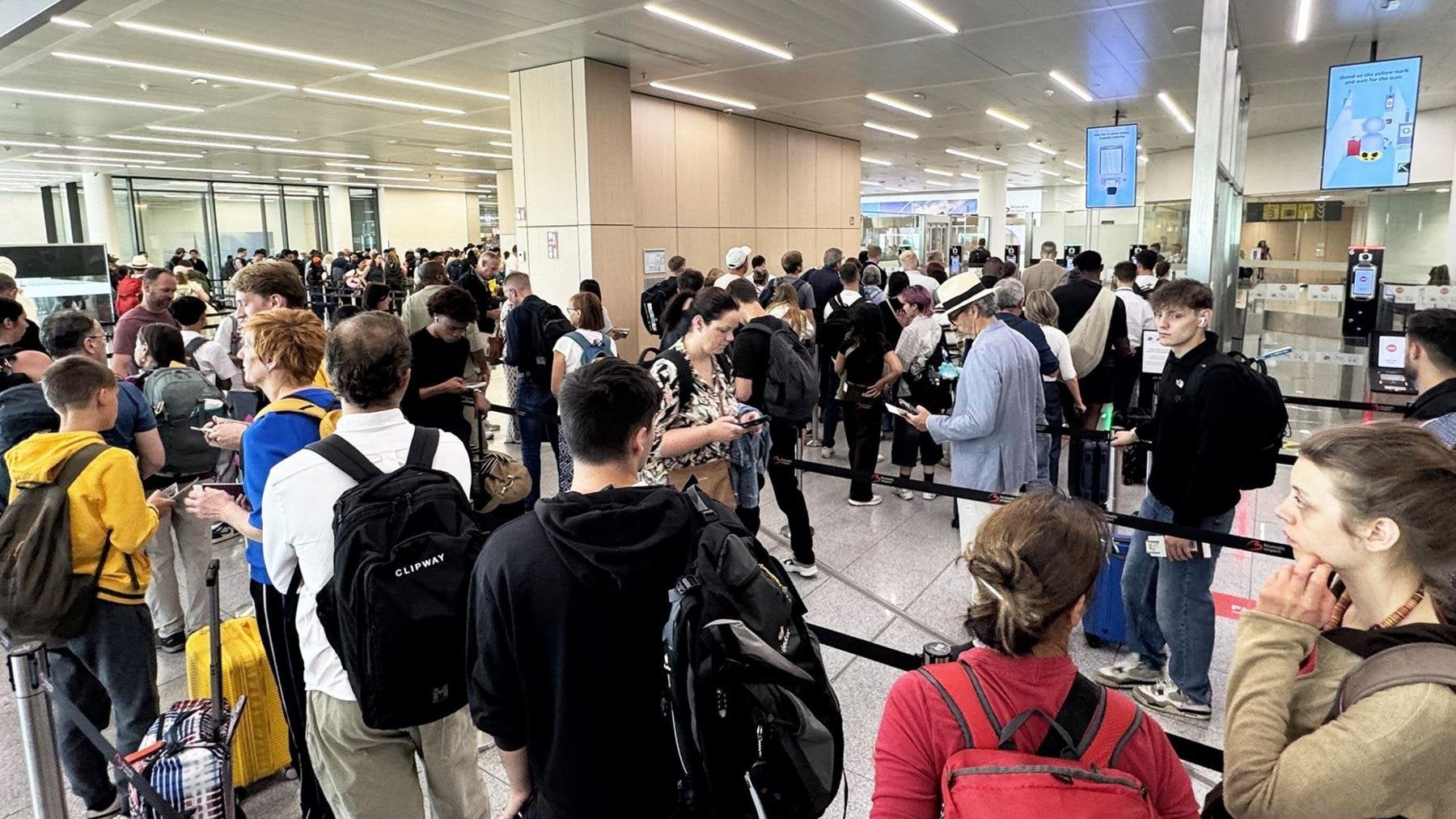
A Scottish mother has been left stranded overseas after her 11-month-old baby was denied boarding on a flight to the United Kingdom because of documentation requirements affecting dual nationals.

Get today's headlines by email

Sarah Schloegl, from Aberdeen, said airline staff prevented her baby from boarding a Ryanair flight from Alicante last week after officials determined the child lacked the documentation now required for entry to the UK.
Schloegl had travelled to Spain for a short holiday with her Austrian husband, Philipp, and their two children — a three-year-old and an 11-month-old baby.
Baby barred from flight in Spain
Under rules introduced in February, British citizens who also hold another nationality must present either a British passport or a certificate of entitlement to the right of abode when travelling to the UK by air, rail or ferry. The certificate currently costs £589.
Schloegl said she was unaware of the requirement until she reached the departure gate. Her husband, who holds settled status in the UK after Brexit, and their older child, who has both Austrian and British passports, were allowed to board. Their baby, who only carried an Austrian passport, was refused.
“I feel it’s ridiculous,” Schloegl said, noting that the child was born in Scotland and lives in the UK. “My baby was born in the UK and lives there, but she’s not allowed to enter the country even though I’m British.”
Concerns over communication of new rules
Schloegl said she had followed news about travel rules but believed authorities should have provided clearer warnings at airports and on airline websites before the change took effect.
She said the first indication of the policy came when airline staff informed the family at the departure gate.
Campaigners say Schloegl’s experience is not unique. Hundreds of dual nationals have reportedly contacted advocacy groups in recent months complaining that the requirement was not widely publicised.
Monique Hawkins, head of policy and advocacy at the campaign group the3million, said the case raised concerns about how the rules were being applied.
“The Home Office said they would take a compassionate and pragmatic approach to travellers who experience genuine difficulty,” she said. “We cannot see the compassion in refusing boarding to an 11-month baby.”
The Home Office has previously rejected criticism that the change was poorly communicated, saying details were published on the government’s website.
Family seeks temporary solution abroad
At Alicante airport, Schloegl said airline ground staff attempted to help the family find a solution. Airport officials contacted UK authorities while Schloegl obtained a scanned copy of the baby’s birth certificate from the registry office in Scotland.
She said the document confirmed the child was born in the UK and that the Austrian passport had been issued by the Austrian embassy in Britain. However, officials reportedly told airline staff the evidence did not meet the entry requirements.
Schloegl was also unable to obtain emergency travel documents for the child. According to the Home Office, such documents are generally issued only to travellers who have previously held a passport, though some exceptions exist for urgent circumstances such as medical emergencies or attending a close relative’s funeral.
Facing the possibility of a delay lasting several months, the family decided to stay temporarily in Austria with relatives while they attempt to resolve the issue.
Advocacy group the3million has written to the UK’s European affairs minister, Nick Thomas-Symonds, and to European Commission official Maroš Šefčovič, urging action to address the situation of dual-national children whose parents hold British citizenship or settled status.
The group has called for provisions of the Brexit withdrawal agreement to cover children who automatically acquire dual nationality at birth.
An Austrian embassy spokesperson said officials were aware of the case and that the embassy in London was in contact with the family and UK authorities to explore ways to speed up a resolution.
The UK Home Office declined to comment on the individual case but said information advising dual nationals about the documentation requirement had been available on its website since October 2024. It added that a wider communications campaign about the new Electronic Travel Authorisation system had been running since 2023.

Join the discussion?

Already a member?


Adapted by ASEAN Now. Source 7 May 2026
webfact
webfact
President Donald Trump has defended the sharply increased cost of a planned ballroom at the White House, saying the expanded design and higher construction standards explain why the project’s estimated price has risen from $200 million to nearly $400 million.

Get today's headlines by email

The president addressed the issue in a post on his social media platform on Wednesday, arguing that the larger and upgraded design would better serve official functions and future events.
Trump said the cost increase followed further study of the project’s scope.
“The only reason the cost has changed is because, after deep rooted studies, it is approximately twice the size, and a far higher quality, than the original proposal,” he wrote. The earlier plan, he said, would not have been sufficient to host major events, meetings or future presidential inaugurations.
Trump added that while the original estimate was $200 million, the revised plan would deliver “a double sized, highest quality” project for less than $400 million. He described the planned ballroom as “magnificent, safe, and secure.”
Funding Questions Emerge
The president has repeatedly said the ballroom would be financed through private donations rather than taxpayer money. In February, Trump said the project would come at “no charge to the taxpayer whatsoever,” adding that donations had come from friends and supporters.
However, a proposal from Senate Republicans could add public funding to the broader redevelopment of the White House’s East Wing, where the ballroom project is planned.

Republican lawmakers said this week they aim to secure $1 billion in funding for the Secret Service to cover security-related upgrades tied to the renovation. The funding would be part of a wider package focused on immigration enforcement.
Trump’s social media statement defending the project’s cost did not mention the proposed congressional funding.
Security Upgrades Planned
Details about how the Secret Service would use the proposed funding remain unclear. Much of the agency’s spending on White House security is classified and may not be made public.
However, documents filed in federal court and statements by the administration have outlined some of the security features being considered for the East Wing redevelopment.
In a court filing last month related to litigation over the ballroom project, the Justice Department said the plans include a range of protective upgrades designed to strengthen security around the White House complex.

According to the filing, proposed features include missile-resistant steel columns, military-grade ventilation systems, drone-resistant ceilings and glass designed to withstand bullets, blasts and ballistic impacts. Officials described the design as forming a “fortified structural buffer” on the eastern side of the White House grounds.
The reinforcements would protect not only the planned ballroom but also the main presidential residence and offices in the West Wing.
The filing also referenced additional security elements such as bomb shelters, advanced medical facilities, and secure installations for military equipment.
A White House spokesman welcomed the funding proposal from Republican lawmakers earlier this week, saying they had “rightly recognized the need for these funds.”
Political Criticism
Democrats have strongly criticised the proposal to allocate federal funds toward security elements tied to the ballroom project.
House Minority Whip Katherine Clark said Trump had pledged that taxpayer money would not be used for the ballroom.
“Donald Trump promised that ZERO taxpayer dollars will be used for his ballroom. He lied,” Clark wrote on social media.
Senator Dick Durbin, the senior Democrat on the Senate Judiciary Committee, also condemned the proposal, calling the ballroom a “vanity project.”
Durbin argued that while many Americans were facing financial difficulties, Republican lawmakers were prioritising funding for the project alongside stricter immigration enforcement measures.
Republicans have defended the funding request as necessary to ensure adequate security for the White House complex.
The debate over the ballroom’s cost and funding comes as Congress considers broader spending proposals ahead of the November elections.

Join the discussion?

Already a member?


Adapted by ASEAN Now. Source 7 May 2026
webfact
webfact
US President Donald Trump has indicated a possible end to military operations against Iran after announcing a halt to a campaign aimed at breaking Tehran’s control over the Strait of Hormuz. The decision came as reports suggested the two sides are nearing a preliminary framework for talks to end the conflict.

Get today's headlines by email

The move points to a potential diplomatic opening following weeks of tension over the strategic waterway, a key route for global oil shipments. While signalling willingness to pursue negotiations, Trump warned that military strikes could resume if talks fail.
Framework for negotiations
According to officials familiar with discussions, the United States and Iran are considering a one-page memorandum of understanding that would establish a 30-day window to negotiate a broader agreement.
During that period, both sides would ease restrictions on shipping through the Strait of Hormuz while diplomats work toward reopening the route fully. The talks would also address limits on Iran’s nuclear activities and the possible lifting of US sanctions.
In a social media message, Trump said the campaign known as “Epic Fury” could end if Iran agrees to the proposed terms.
“Assuming Iran agrees to give what has been agreed to… the already legendary Epic Fury will be at an end,” he wrote, adding that the blockade would then allow the strait to reopen to all vessels, including those from Iran.
He also warned that if negotiations collapse, the United States would resume bombing operations at “a much higher level and intensity”.
Doubts over lasting agreement
Some analysts remain sceptical about whether the two sides can reach a durable settlement. Hein Goemans, a political scientist at the University of Rochester who studies how wars end, questioned whether either side is willing to make the concessions required for a long-term deal.
He argued that even if Tehran agrees to reopen the Strait of Hormuz, the confrontation has demonstrated its ability to disrupt shipping in the future, which could continue to threaten global energy markets.
Goemans also noted deep mistrust between the two governments. Iranian leaders, he said, may doubt the reliability of any deal with Washington, given the possibility that US policy could shift quickly.
Nuclear issues and political pressure
Officials say the proposed nuclear provisions resemble the framework negotiated during the administration of Barack Obama, which included a 10 to 15-year limit on uranium enrichment. Trump withdrew the United States from that agreement during his first term.
If Trump agrees to reduce sanctions or unfreeze Iranian assets as part of a new deal, he may face opposition from Israel as well as critics within his own party who favour a tougher stance on Tehran’s nuclear programme.
Talks between Washington and Tehran have repeatedly stalled in recent months. Negotiators met for more than 20 hours in Islamabad, Pakistan last month but failed to reach an agreement.
The US delegation was led by Vice President J. D. Vance, who said significant differences remained, particularly over Washington’s demand that Iran abandon its nuclear programme entirely. A follow-up meeting was later postponed after Tehran declined to participate.
Economic pressure and international role
Both countries face growing economic pressure to find a resolution. In the United States, rising fuel costs have pushed the national average gasoline price to $4.53 per gallon, according to the American Automobile Association.
Iran, meanwhile, is grappling with high inflation and worsening poverty, conditions worsened by restrictions on its energy exports.
China has also urged a diplomatic solution. During talks in Beijing, Chinese Foreign Minister Wang Yi told his Iranian counterpart Abbas Araghchi that a full cessation of hostilities should not be delayed.
Trump is expected to meet Chinese leader Xi Jinping later this month, adding further pressure to show progress toward ending the confrontation.

Join the discussion?

Already a member?


Adapted by ASEAN Now. Source 7 May 2026
webfact
webfact
Political parties across the United Kingdom have delivered their final campaign messages ahead of elections taking place in England, Scotland and Wales, with voting set to begin on Thursday.

Get today's headlines by email

The elections will decide control of the Scottish and Welsh devolved governments, as well as dozens of councils and mayoral positions across England. Polling stations will open from 0700 BST to 2200 BST on 7 May, with results expected from Friday and continuing through the weekend.
The contests represent the first major nationwide electoral test since Labour won the 2024 general election.
Voting Across the UK
Voters in Scotland and Wales will choose representatives for their respective national legislatures, determining which parties will form the devolved administrations.
In England, voters will decide seats on numerous local councils and select several regional mayors. These bodies oversee local services including education, social care, waste collection and public transport.
Opinion polls suggest the elections may highlight a further fragmentation of the political landscape across the UK, with support spread among several parties rather than concentrated in a few.
Key Battles in Scotland and Wales
In Scotland, the Scottish National Party is seeking to remain in power by securing a fifth consecutive victory in devolved elections. The party faces competition from Labour and Reform UK.
In Wales, Labour’s long-standing dominance could be challenged. The party has governed the Welsh administration since devolution began in 1999, but current polling suggests a close contest.
Reform UK and Plaid Cymru are competing to become the largest party in the Welsh Senedd, raising the prospect of significant changes to the political balance there.
Stakes for Labour in England
Labour also faces potential setbacks in England, where it currently leads or controls many of the councils being contested. Analysts say the party could lose ground to both Reform UK and the Green Party in some areas.
Beyond local governance, the results may also serve as an indicator of public opinion toward the national government led by Prime Minister Sir Keir Starmer.
Starmer’s leadership has faced pressure in recent months, and some observers have speculated that poor results for Labour could fuel calls for a challenge within the party.
Party Leaders Deliver Final Messages
Party leaders spent Wednesday making their final appeals to voters.
Writing in the Daily Mirror, Starmer said the elections offered a clear choice for voters between “unity or division” and what he described as progress versus “the politics of anger”.
Conservative leader Kemi Badenoch said her party was the “only serious party”, pointing to Conservative plans aimed at boosting economic activity, including proposals related to North Sea energy production and tax reductions.
Liberal Democrat leader Sir Ed Davey said his party could counter the rise of Reform UK in communities across England. Speaking in Surrey, he emphasised local issues such as healthcare access, sewage pollution and the cost of living.
Green Party co-leader Zack Polanski said his party was offering “hope and a plan”, highlighting policies including wealth taxes and measures aimed at reducing household bills.
Reform UK leader Nigel Farage repeated the party’s campaign slogan calling for voters to “get Starmer out”, presenting Reform as an alternative to both major parties.
In Scotland, First Minister John Swinney urged voters to support the Scottish National Party, saying it would continue to focus on improving public services and addressing cost-of-living pressures while pursuing another referendum on Scottish independence.
Meanwhile, Plaid Cymru leader Rhun ap Iorwerth said the Welsh election was closely contested. In a video message to supporters, he described his party as focused solely on the interests of Wales.
Results Expected From Friday
With campaigning now concluding, attention will turn to voter turnout and the distribution of support across the UK’s increasingly diverse political field.
The results, due to emerge from Friday onwards, are expected to provide an early measure of public sentiment toward the government and opposition parties ahead of future national elections.

Join the discussion?

Already a member?


Adapted by ASEAN Now. Source 7 May 2026

webfact
webfact
German police have carried out coordinated raids at around 50 properties as part of an investigation into emerging far-right youth groups suspected of organising violent attacks.

Get today's headlines by email

More than 600 officers took part in the operation on Wednesday, targeting individuals believed to be linked to two extremist groups: Jung & Stark and Deutsche Jugend Voran. Authorities say the groups have been recruiting young members and encouraging violent action against perceived opponents.
The searches took place across 12 German states, with most of the activity focused in eastern and southern regions including Bavaria, Berlin, Brandenburg and Saxony.
No arrests were made during the raids, prosecutors said.
Nationwide investigation
Germany’s federal prosecutors said the investigation centres on suspected organisers who used social media platforms to coordinate violence and build networks across the country.
According to investigators, members of the groups have carried out assaults on individuals linked to left-wing politics and on people they accused of being paedophiles.
“In several cases, victims were attacked by multiple perpetrators and suffered significant injuries,” prosecutors said in a statement.
Authorities also said participants in group meetings had openly called for violence against political opponents and alleged offenders.
Previous convictions
The investigation follows earlier prosecutions connected to the groups.
In 2024, a leading figure in Deutsche Jugend Voran was sentenced to more than three years in prison after a series of violent attacks in Berlin.
The man, identified by German authorities as 24-year-old Julian M, was convicted alongside several accomplices aged between 16 and 23. The group had targeted individuals wearing symbols associated with left-wing political movements, beating several victims severely.
Growing concern over youth radicalisation
Security officials and researchers say there is increasing concern in Germany about young people becoming involved in far-right extremism and violence.
Both Jung & Stark and Deutsche Jugend Voran operate openly online, maintaining a presence on platforms including Telegram and Instagram.
According to Jakob Guhl of the Institute for Strategic Dialogue, many of the groups’ members are teenagers or people in their early twenties.
He said the organisations are “explicitly militant” and unusually open about their activities.
Recruitment through social media
While far-right movements in Germany have historically operated publicly, analysts say newer groups are increasingly using social media to attract supporters.
Jung & Stark has gathered hundreds of followers online, and similar smaller groups have appeared locally, particularly in eastern Germany, since 2024.
Researchers say these organisations differ from broader far-right movements such as Alternative for Germany or the Identitarian movement, which aim to reach wider audiences.
Instead, the youth groups focus on physical training, attending demonstrations and carrying out attacks against people they identify as enemies.

Join the discussion?

Already a member?


Adapted by ASEAN Now. Source 7 May 2026
webfact
webfact
A group of women and children linked to the militant group Islamic State has booked commercial flights to return to Australia, according to the government, which says some members of the group could face arrest upon arrival.

Get today's headlines by email

Home Affairs Minister Tony Burke said the government had not assisted the four women and nine children who spent years in a detention camp in northern Syria. The group is part of a larger cohort of 34 people believed to include the wives, widows and children of former IS fighters.
Authorities confirmed that when the group arrives in Australia, some individuals may be detained and charged. Krissy Barrett, commissioner of the Australian Federal Police, said investigators had been preparing for such a return and that law enforcement agencies were ready to act if evidence supported criminal charges.
Government Says No Assistance Provided
Burke told reporters the government had neither arranged nor funded the group’s return.
“These are people who have made the horrific choice to join a dangerous terrorist organisation and to place their children in an unspeakable situation,” he said. He added that anyone in the group found to have committed crimes could expect to face prosecution.
Authorities only learned of the group’s planned return shortly after airline bookings were made.
“The alert is received the moment the booking takes place, so that was provided to us this morning,” Burke said.
The minister also noted that Australian law places strict limits on the government’s ability to prevent its citizens from returning home.
Officials said contingency planning for the possible return of such individuals has been in place for years, with arrangements to monitor and manage them once back in Australia.
Possible Arrests and Investigations
Barrett said investigators had spent more than a decade gathering evidence on potential crimes committed by members of the group. These investigations include suspected terrorism offences and alleged crimes against humanity, such as involvement in slave trading.
She did not specify how many of the 13 people expected to return would be arrested but confirmed that those not detained would still remain under investigation.
Children arriving in Australia will receive support through community integration programmes, therapeutic services and initiatives aimed at countering violent extremism.
Security Agencies Monitoring Situation
Mike Burgess, director-general of the Australian Security Intelligence Organisation, said security agencies were prepared to monitor the group but were not immediately alarmed by their return.
“They will get our attention as you’d expect,” Burgess said, adding that authorities would intervene if individuals displayed behaviour that raised security concerns.
Background: Camp in Northern Syria
The broader group of 34 individuals — including 23 children — had been living in the al-Roj camp since 2019, when IS lost its last territorial stronghold in Syria.
Earlier this year, Australia prevented one member of the cohort from returning for up to two years using a temporary exclusion order.
Several other countries have also been reluctant to bring back citizens held in camps in Syria following the collapse of IS territory. Governments including France, the Netherlands, and the United Kingdom have declined to repatriate most of their nationals detained there.

Join the discussion?

Already a member?


Adapted by ASEAN Now. Source 7 May 2026
webfact
webfact
Ted Turner, the media entrepreneur who transformed television journalism by creating the first 24-hour news channel, has died at the age of 87, CNN has announced.

Get today's headlines by email

Turner launched Cable News Network (CNN) in 1980, introducing a continuous news format that reshaped how global audiences received information. The channel, once dismissed by critics, became a central force in international broadcasting and inspired a generation of competing networks.
US President Donald Trump described Turner as “one of the greats of broadcast history” and called him a friend. Current CNN chairman and chief executive Mark Thompson said Turner was “the giant on whose shoulders we stand” and credited him with shaping the organisation and its impact on the world.
In a statement, Thompson said Turner was an engaged and determined leader who trusted his instincts and was willing to take risks. “He was and always will be the presiding spirit of CNN,” he added.
A bold vision for round-the-clock news
When CNN launched, the idea of a dedicated rolling news channel was widely viewed as unrealistic. Early critics mocked the network as the “Chicken Noodle Network,” doubting that viewers would watch news continuously.
However, CNN soon proved its value by delivering live, ongoing coverage of major events. Among its early tests were the 1981 assassination attempt on US President Ronald Reagan and the 1986 Challenger space shuttle disaster.
The network’s reputation was firmly established during the 1990–1991 Gulf War, when CNN provided extensive live coverage from Iraq. The reporting was watched around the world and demonstrated the power of round-the-clock television news.
Former US President George Bush once remarked that he learned more from CNN than from the CIA, highlighting the network’s growing influence.
CNN’s success also encouraged the creation of rival channels, including Fox News, launched in 1996 by media mogul Rupert Murdoch.
Building a media empire
Turner’s business career began after he took control of his family’s billboard company following his father’s death. He later purchased a radio station in Atlanta, which became the foundation of the Turner Broadcasting System (TBS).
Within a decade, Turner had built one of the largest media enterprises in the United States. His television holdings eventually included channels such as TBS, TNT, Turner Classic Movies and Cartoon Network.
Turner also made a brief but costly acquisition of the MGM film studio in 1985 for $1.5bn. In the 1990s he expanded further by acquiring film and television companies including Castle Rock Entertainment and New Line Cinema before his business merged with Time Warner.
Known for his outspoken personality, Turner earned nicknames such as “the Mouth of the South” and “Captain Outrageous”. For several years he even lived inside CNN’s headquarters, reportedly walking through the newsroom in a bathrobe while debating the day’s stories.
Sportsman and philanthropist
Beyond broadcasting, Turner had wide-ranging interests. A skilled yachtsman, he won the America’s Cup in 1977. He also owned several professional sports teams, including the Atlanta Braves baseball team, the Atlanta Hawks basketball team and the Atlanta Thrashers ice hockey team.
Turner later became a prominent philanthropist. He donated $1bn to the United Nations and contributed millions to environmental initiatives while investing in clean energy projects.
He was married to actress Jane Fonda from 1991 until their divorce in 2001.
In 2018, Turner revealed he had been diagnosed with Lewy body dementia, a degenerative neurological condition.
Tributes from colleagues
Journalists and former colleagues paid tribute to Turner’s influence on the industry.
Veteran CNN correspondent Christiane Amanpour wrote on social media that Turner had “created an unstoppable media revolution”.
Broadcaster Piers Morgan, who hosted a programme on CNN from 2011 to 2014, described him as an “extraordinarily bold” figure whose achievements ranged from building CNN to winning major sporting titles and supporting charitable causes.
Media analysts said Turner’s legacy extends well beyond the network he founded. By establishing the model of continuous television news, he permanently altered the global media landscape.


Join the discussion?

Already a member?


Adapted by ASEAN Now. Source 7 May 2026

webfact
webfact

Account

Navigation

Search

Search

Configure browser push notifications

Chrome (Android)
  1. Tap the lock icon next to the address bar.
  2. Tap Permissions → Notifications.
  3. Adjust your preference.
Chrome (Desktop)
  1. Click the padlock icon in the address bar.
  2. Select Site settings.
  3. Find Notifications and adjust your preference.