Skip to content
View in the app

A better way to browse. Learn more.

Thailand News and Discussion Forum | ASEANNOW

A full-screen app on your home screen with push notifications, badges and more.

To install this app on iOS and iPadOS
  1. Tap the Share icon in Safari
  2. Scroll the menu and tap Add to Home Screen.
  3. Tap Add in the top-right corner.
To install this app on Android
  1. Tap the 3-dot menu (⋮) in the top-right corner of the browser.
  2. Tap Add to Home screen or Install app.
  3. Confirm by tapping Install.

Electric Vehicles in Thailand

Featured Replies

6 minutes ago, KhunLA said:

I've never owned a vehicle for more than the standard MG / 8 yr battery warranty, and don't know anyone that has owned a vehicle more than 7 yrs, let alone more than 10-15-20 yrs.

The problem is not the years, it's the mileage.

Majority of people buy EV to drive a lot for the savings.

I personally will run out of warranty in 3 years with my 50k-60K yearly usage. 


I still have a 12 year old car running great. was my first car when that I used in Bangkok, a 2014 Honda HRV with 120,000 km, only had to change fuel injectors at 100,000 and upgraded suspension at 100,000 km. 

we use it to carry my naughty dogs around or my 2 stroke grass cutter 😄

  • Replies 11.4k
  • Views 1.6m
  • Created
  • Last Reply

Top Posters In This Topic

Most Popular Posts

  • JBChiangRai
    JBChiangRai

    There's no point arguing with these anti-EV people, even when you educate them over their mistakes, they just repeat their baseless opinions somewhere else.  Frankly, it's tiresome.   I can'

  • i have been looking at a new suv, was thinking of hybrid, or ev, as the price of some brands have been reduced,   but ev's mg zs ev, havel, etc. are ok for short running about trips, but hav

  • JBChiangRai
    JBChiangRai

    Your assumption Thailand will follow, is I believe, false.   Two completely separate markets with separate circumstances.   What kickstarted the EV revolution here was BYD & GW

Posted Images

11 hours ago, vinny41 said:

different battery brands and technology

66.8 kWh NMC CALB

68.8 kWh LFP CATL

CALB vs CATL: Can Two Battery Pigs Both Fly?

https://interconnected.blog/calb-vs-catl-can-two-battery-pigs-both-fly/

Very insightful! and that competition having CALB means good news.

So, the new Deepal with LFP are from CALB?


Here is a more up to date article: https://cnevpost.com/2025/10/15/china-sept-2025-ev-battery-installations/ 


1 hour ago, brfsa2 said:

The problem is not the years, it's the mileage.

Majority of people buy EV to drive a lot for the savings.

I personally will run out of warranty in 3 years with my 50k-60K yearly usage. 


I still have a 12 year old car running great. was my first car when that I used in Bangkok, a 2014 Honda HRV with 120,000 km, only had to change fuel injectors at 100,000 and upgraded suspension at 100,000 km. 

we use it to carry my naughty dogs around or my 2 stroke grass cutter 😄

Obviously 50-60k kms a year is way more than most folks drive.  Even with our 70k a day school commute years ago, we only average about 20k a year, as sold all 3 ICEV back then around the 7 yr mark, and 125-140k kms on them.   That's with plenty of O&A, during 3 month school breaks.


Most recent ICEV only had 2 years, and just hit 40k kms with that when sold.  Notice last 3 yrs with BEV, we're driving less the 2nd & 3rd year.


TBH, if we had to pay for petrol, we'd drive even less, especially exploring locally.

2 hours ago, KhunLA said:

I've never owned a vehicle for more than the standard MG / 8 yr battery warranty, and don't know anyone that has owned a vehicle more than 7 yrs, let alone more than 10-15-20 yrs.   So yea, it gives people the confidence that they'll have no battery worries if buying those MG models.


Of course there will be the exception, if I live 7 more years, may own our ZS for 10+ years, as I have no intentions of selling, ever, as at that point it would be better value added to the solar system :cheesy:


Also by that time, hopefully much sooner, they'll offer an affordable truck 😁


My longest vehicle ownership has been here in TH, 7 years, 3 ICEV, and glad to get rid of them at that point.


You need to come visit me and I'll take you for a ride in my 17 year old Toyota Fortuner I bought new....then we'll go visit one of my Thai in-laws that drives  a 2004 Camry....then visit the next in-law on the same soi that drives a Mazda II around a dozen years old....and finally one more in-law on the same soi that drives some compact Toyota that's around 15 years old.     I got plenty more Thai in-laws and friends that drive vehicles a lot older than 7 years....lots of exceptions.

😀

33 minutes ago, KhunLA said:

Obviously 50-60k kms a year is way more than most folks drive.  Even with our 70k a day school commute years ago, we only average about 20k a year, as sold all 3 ICEV back then around the 7 yr mark, and 125-140k kms on them.   That's with plenty of O&A, during 3 month school breaks.


Most recent ICEV only had 2 years, and just hit 40k kms with that when sold.  Notice last 3 yrs with BEV, we're driving less the 2nd & 3rd year.


TBH, if we had to pay for petrol, we'd drive even less, especially exploring locally.

Here in the south most folks drive a lot, most people here in the in-laws all do between 30,000 and 60,000km a year.

there is very little traffic congestion, highways are great and people tend to drive at fast pace here.

we do 60km trips in the morning, 60km in the afternoon and another 90km in the evening to my gym, weekend only 120-300km. so easily 1000km+ a week. not including the trips to bangkok, 1800km round trip.

for those trips only takes 20-25 minutes each leg. so you can imagine it's easy to put a lot of mileage without getting stuck in Traffic like Bangkok or other major cities. 

I didn't realize how much I was driving until we missed the BYD maintenance by a month, it didnt void warranty.


2 hours ago, brfsa2 said:

same here, the IM6 with that 100kWh battery on lifetime warranty is a beast, even it's NMC.

however I also read that the EV cars that DC charge at higher rates also carry better copper wires and electronics, for example, atto3 max is 88kw, charging at 80kW all could have copper losses as it's very close to the maximum, but a car that supports 250kw, have a much more robust electrical architecture overall, less copper losses...  so charging at 80-120kw a modern 800V car capable of 250KW will be a breeze and not overheat/overload it.


for me doesnt matter, just pointing that out. I'm on 2-7kw for a long time, maybe I will get a 22kW charger if 3Phase is available for me.


800V EV copper bus bars/wires will probably be no more heavier gauge than a 400V EV because it's not "voltage" that determines how big the wire needs to be to carry current (amps) and not overheat, but it's the amount of "current" to be carried.   But on a 800V EV the wire "insulation" for the high current carrying wires would probably be better, thicker, able to handle a higher voltage to prevent voltage arching, insulation break down.


It boils down to the formula of "Power = Current times Voltage."   Ex:  An 800V EV with a 60KW battery would be carrying 75 amps....and a 400V EV with a 60KW battery would be carrying 150 amps....which means the  400V  EV will need heavier gauge bus bars/wires than the 800V car to prevent overheating/heat loss (i.e., the I2R formula where doubling the current results in a quadrupling of the heat loss).


This also means when going from a 400V to 800V architecture the bus bar/wire gauge could actually probably stay the same but maybe have better insulation "if" it even needed better insulation as the 400V wire insulation is probably rated around a 1000V (or more) already.


t's kinda like power lines on high voltage cross country lines....those power line on the really high towers.  Those power lines are carrying hundreds of thousands volts versus hundreds of thousands of amps, because if those power lines had to use super high current to carry the required power level the lines would have to be so big & heavy it would be impossible to use them to carry such high power...the lines would be way, way too expensive....be way, way too heavy for towers, etc.


But yea, 800V EV system are the future.....will slowly replace many 400V EV batteries/system since an 800V system uses "voltage" to increase its power capability versus current.   


3 hours ago, brfsa2 said:

Very insightful! and that competition having CALB means good news.

So, the new Deepal with LFP are from CALB?


Here is a more up to date article: https://cnevpost.com/2025/10/15/china-sept-2025-ev-battery-installations/ 


I read it as the new one is 68.8 kWh LFP CATL

https://autolifethailand.tv/official-price-deepal-s07-my2025/

  • Popular Post
6 hours ago, brfsa2 said:

The problem is not the years, it's the mileage.

Majority of people buy EV to drive a lot for the savings.

I personally will run out of warranty in 3 years with my 50k-60K yearly usage. 


I still have a 12 year old car running great. was my first car when that I used in Bangkok, a 2014 Honda HRV with 120,000 km, only had to change fuel injectors at 100,000 and upgraded suspension at 100,000 km. 

we use it to carry my naughty dogs around or my 2 stroke grass cutter 😄

If we divide EV Customers into 2 groups

Group 1 drive 20,000 km or less per year

Group 2 drive more than 20,000 km per year

For Group 1 a battery warranty of 8 years with 160,000 / 180,000 meets their requirements

For Group 2 that drive more than 20,000 km per year you  would expect that if the

MG lifetime battery warranty with  unlimited  km was the holy grail in battery warranties that would reflect in volume of sales and market share and the only brand to be considered if you fall into Group 2

EV sales figures to date show MG sales 12,064 are 55% less than Byd 26,818

https://autolifethailand.tv/ev-bev-register-brands-jan-sep-2025/

There are approx 12 Brands in China that offer Lifetime Warranty Conditions for Three Electric Systems but customers complain about the harsh requirements such as restrictions on km per year between not more than 35,000 km or 30,000 km and restrictions of must use brand parts ever for something simple as wiper blades

Both in China and Thailand only SAIC MG (China) and MG ( Thailand ) offer lifetime battery warranty with  unlimited  km

None of the other Brands seem to be worried or concerned about offering a similar lifetime battery warranty with  unlimited  km

It will be interesting to see in Thailand ICE SUV front if GWM tank  latest warranty is a game changer and will they take the lion's share from other brands

Superior to Market Diesel Engines, GWM Dares to Offer Thailand's Longest Diesel Engine Warranty

The GWM TANK 300 DIESEL and NEW GWM TANK 500 DIESEL offer Thailand's longest engine warranty, daring to guarantee the diesel engine for up to 1 million kilometers or 8 years (whichever comes first), covering the 5 main engine components which are:

Engine valve cover and its internal components

Cylinder head and its internal components

Upper cylinder block and its internal components

Lower cylinder block and its internal components

Oil pan and its internal components

https://www.thailand4.com/en/1446153

2 hours ago, vinny41 said:

EV sales figures to date show MG sales 12,064 are 55% less than Byd 26,818

I would not say it's bad, I think MG is doing really good, just consider how BYD came too fast and aggressively yet MG a brand with much smaller muscle and mixed past history, 


NMC is not that terrible if you know how to manage it and can limit the charge to 80-90%, also, the style must allow to keep often plugged, rather than allowing deep cycles.


I would buy again NMC if it's quite big in size and has good technology and good cooling, and of course 800v-900v

The latest CATL Qilin NMC batteries seems to be extraordinary with 1000km range on the 140kWh models. https://www.batterydesign.net/zeekr-140kwh-catl-qilin/ 


1 hour ago, brfsa2 said:

I would not say it's bad, I think MG is doing really good, just consider how BYD came too fast and aggressively yet MG a brand with much smaller muscle and mixed past history, 


NMC is not that terrible if you know how to manage it and can limit the charge to 80-90%, also, the style must allow to keep often plugged, rather than allowing deep cycles.


I would buy again NMC if it's quite big in size and has good technology and good cooling, and of course 800v-900v

The latest CATL Qilin NMC batteries seems to be extraordinary with 1000km range on the 140kWh models. https://www.batterydesign.net/zeekr-140kwh-catl-qilin/ 


have to wait and see if this battery comes to Thailand and at what price

Shenxing Pro Super Long Life & Long Range Battery: The world's first LFP battery to deliver a 758 km WLTP range and a record-breaking 12-year / 1,000,000 km lifespan, driving breakthroughs in battery lifespan and range performance. With 9% degradation after the first 200,000 km, it is perfectly tailored to support Europe's leasing markets. 

https://www.catl.com/en/news/6527.html

7 hours ago, Pib said:


You need to come visit me and I'll take you for a ride in my 17 year old Toyota Fortuner I bought new....then we'll go visit one of my Thai in-laws that drives  a 2004 Camry....then visit the next in-law on the same soi that drives a Mazda II around a dozen years old....and finally one more in-law on the same soi that drives some compact Toyota that's around 15 years old.     I got plenty more Thai in-laws and friends that drive vehicles a lot older than 7 years....lots of exceptions.

😀

And I take it all those cars are still under the OEM warranty, or they would not dare to drive their cars anymore? These fantastic Toyota's have 100 million nautical miles warranty, so the owners are cool.....


On a more serious note: It seems to me as usual, posters get their wires crossed between vehicle mileage and warranty: Just because the warranty expires at 160,000 km does not mean the battery is broken! BYD estimates up to 5,000 charge cycles for their LFP blade batteries, or if I take my Seal's 82.5 kWh battery and a very low, conservative range for said energy of 425 km, that computes into 2.125 million stinking-free kilometers! 

To extend that compute - @60k km per year, that is 35 years of driving, But wait, there is more as George would say: after 35 years, you can use the battery as a back for your house; sure it will lose some capacity on the way, but it will be plenty to cool the house for a night, climate change and all notwithstanding. 


Take that for a spin Mr. Toyota Fortuner, and please hook your nose up to your exhaust while you are at it.


Will every battery make it to 5000 cycles? Will every Diesel stink without failure for 35 years? thought so.........

30 minutes ago, mistral53 said:

And I take it all those cars are still under the OEM warranty, or they would not dare to drive their cars anymore? These fantastic Toyota's have 100 million nautical miles warranty, so the owners are cool.....


On a more serious note: It seems to me as usual, posters get their wires crossed between vehicle mileage and warranty: Just because the warranty expires at 160,000 km does not mean the battery is broken! BYD estimates up to 5,000 charge cycles for their LFP blade batteries, or if I take my Seal's 82.5 kWh battery and a very low, conservative range for said energy of 425 km, that computes into 2.125 million stinking-free kilometers! 

To extend that compute - @60k km per year, that is 35 years of driving, But wait, there is more as George would say: after 35 years, you can use the battery as a back for your house; sure it will lose some capacity on the way, but it will be plenty to cool the house for a night, climate change and all notwithstanding. 


Take that for a spin Mr. Toyota Fortuner, and please hook your nose up to your exhaust while you are at it.


Will every battery make it to 5000 cycles? Will every Diesel stink without failure for 35 years? thought so.........

BYD Atto 3 Year 2023 Mileage 153742 km. I have running symptoms. I am driving down. I can run for less than 60 kilometers per hour. The screen shows "limited EV function"

Later, the employee called to inform that BYD headquartered center has approved the replacement of the new battery. It may take about 2 weeks to process. The incident. This is my luck that my car is still in the insurance period

https://www.facebook.com/groups/344652060974915/search/?q=153742

Example of battery replacement under warranty due to fault limited EV function

There was another example of someone with the same symptoms same error message only difference their

mileage was 190,000 which had exceeded the warranty and was advise that it would cost B400,000 to remove and replace with a new battery

13 hours ago, KhunLA said:

Also by that time, hopefully much sooner, they'll offer an affordable truck 😁

Welcome to my world.

I know that you are also looking at the Riddara6, but something feels not right. I think it's the price. In their Riddara facebook group, they are celebrating every sale they make, but the people do not look very happy in the pictures.


Now I have found the ideal car, but unfortunately this seems to be vaporware.

Has anyone ever seen one or heard about it?

from their website:  ... enters the Thai market in its REEV PLUS AWD variant, priced at 1,099,000 baht. The DEEPAL HUNTER K50 is now available for booking, with deliveries scheduled to commence from 30 April 2025, blablabla,

That feels like 1 year ago.

Do they really exist in TH?

image.png.1d68f7a4f68137f984cb1584d3dc40b7.png

  • Popular Post
7 hours ago, mistral53 said:

And I take it all those cars are still under the OEM warranty, or they would not dare to drive their cars anymore? These fantastic Toyota's have 100 million nautical miles warranty, so the owners are cool.....


On a more serious note: It seems to me as usual, posters get their wires crossed between vehicle mileage and warranty: Just because the warranty expires at 160,000 km does not mean the battery is broken! BYD estimates up to 5,000 charge cycles for their LFP blade batteries, or if I take my Seal's 82.5 kWh battery and a very low, conservative range for said energy of 425 km, that computes into 2.125 million stinking-free kilometers! 

To extend that compute - @60k km per year, that is 35 years of driving, But wait, there is more as George would say: after 35 years, you can use the battery as a back for your house; sure it will lose some capacity on the way, but it will be plenty to cool the house for a night, climate change and all notwithstanding. 


Take that for a spin Mr. Toyota Fortuner, and please hook your nose up to your exhaust while you are at it.


Will every battery make it to 5000 cycles? Will every Diesel stink without failure for 35 years? thought so.........

Lovely pin to another of Vinny’s balloons, lots of detail, lots of obfuscation Vinny…

How is your ev purchase going Vinny ?

I recall 3yrs ago you were going to purchase now because the “…time would be right…” ?

5 hours ago, TronxII said:

Welcome to my world.

I know that you are also looking at the Riddara6, but something feels not right. I think it's the price. In their Riddara facebook group, they are celebrating every sale they make, but the people do not look very happy in the pictures.


Now I have found the ideal car, but unfortunately this seems to be vaporware.

Has anyone ever seen one or heard about it?

from their website:  ... enters the Thai market in its REEV PLUS AWD variant, priced at 1,099,000 baht. The DEEPAL HUNTER K50 is now available for booking, with deliveries scheduled to commence from 30 April 2025, blablabla,

That feels like 1 year ago.

Do they really exist in TH?

image.png.1d68f7a4f68137f984cb1584d3dc40b7.png


Never seen one on the road. Not one.

And considering Deepal make some of the best looking EVs on the market - that is pig ugly.

2 hours ago, HighPriority said:

Lovely pin to another of Vinny’s balloons, lots of detail, lots of obfuscation Vinny…

How is your ev purchase going Vinny ?

I recall 3yrs ago you were going to purchase now because the “…time would be right…” ?

Maybe you should ask @mistral53 as you have quoted their post

6 hours ago, TronxII said:

Welcome to my world.

I know that you are also looking at the Riddara6, but something feels not right. I think it's the price. In their Riddara facebook group, they are celebrating every sale they make, but the people do not look very happy in the pictures.


Now I have found the ideal car, but unfortunately this seems to be vaporware.

Has anyone ever seen one or heard about it?

from their website:  ... enters the Thai market in its REEV PLUS AWD variant, priced at 1,099,000 baht. The DEEPAL HUNTER K50 is now available for booking, with deliveries scheduled to commence from 30 April 2025, blablabla,

That feels like 1 year ago.

Do they really exist in TH?

image.png.1d68f7a4f68137f984cb1584d3dc40b7.png


I definitely wouldn't own a PHEV, as why complicate things, aside from being Anti-Petrol :cheesy:


Looks nice and nice battery range.   But another SUV with small, <1.6m cargo bed.  Need a wee bit if sleeping back there, as I'm 175cm.


The ICE part may have a few issues ... needs a bit more maintenance that I prefer to avoid.


11 hours ago, mistral53 said:

And I take it all those cars are still under the OEM warranty, or they would not dare to drive their cars anymore? These fantastic Toyota's have 100 million nautical miles warranty, so the owners are cool.....


On a more serious note: It seems to me as usual, posters get their wires crossed between vehicle mileage and warranty: Just because the warranty expires at 160,000 km does not mean the battery is broken! BYD estimates up to 5,000 charge cycles for their LFP blade batteries, or if I take my Seal's 82.5 kWh battery and a very low, conservative range for said energy of 425 km, that computes into 2.125 million stinking-free kilometers! 

To extend that compute - @60k km per year, that is 35 years of driving, But wait, there is more as George would say: after 35 years, you can use the battery as a back for your house; sure it will lose some capacity on the way, but it will be plenty to cool the house for a night, climate change and all notwithstanding. 


Take that for a spin Mr. Toyota Fortuner, and please hook your nose up to your exhaust while you are at it.


Will every battery make it to 5000 cycles? Will every Diesel stink without failure for 35 years? thought so.........


11 hours ago, vinny41 said:

BYD Atto 3 Year 2023 Mileage 153742 km. I have running symptoms. I am driving down. I can run for less than 60 kilometers per hour. The screen shows "limited EV function"

Later, the employee called to inform that BYD headquartered center has approved the replacement of the new battery. It may take about 2 weeks to process. The incident. This is my luck that my car is still in the insurance period

https://www.facebook.com/groups/344652060974915/search/?q=153742

Example of battery replacement under warranty due to fault limited EV function

There was another example of someone with the same symptoms same error message only difference their

mileage was 190,000 which had exceeded the warranty and was advise that it would cost B400,000 to remove and replace with a new battery


While BYD blade LFP batteries are rated to last 3000 to 5000 charge cycles, with one charge cycle being a 0 to 100% charge, two 50 to 100% charges, four 25% charges, etc., and a person would probably never reach that many charge cycles unless maybe they drove a million or more kilometers, a person needs to know that an EV battery pack also contains a bunch of "electronics....electronic circuit boards."   


Electronics such as BMS daughter boards composed of  integrated circuits, resistors, capacitors, diodes, inductors, etc., connected across groups of batteries (around a dozen such daughter boards in an Atto/Dolphin battery pack)...and those daughter boards are connected to a BMS motherboard in the front of the battery where the power cables connect.  Take a look at the video at the bottom showing disassembly of an Atto battery pack.   Summary: lots of electronics within that battery pack to manage/monitor the individual batteries; not only just batteries in the battery pack.....and electronics do fail.  I'm sure we have all experienced electronic device failures such when your TV or other electronic device (one with or without any batteries) just dying one day....maybe with a slight burnt smell being emitted or maybe not...regardless, the electronic device simply stopped working.


And these battery pack electronic circuit boards are generally not replaceable at shop/dealership level; only repaired at the factory/depot level.    Now could a battery pack be disassembled enough to replace say a failed BMS daughter board managing a dozen or so blade batteries in the overall pack?   Well, yes, I guess so if a shop or dealership had the parts and specialized equipment.  A few shops out there in the world at getting more into repairing EV battery packs....but they are very few and far in-between.  Heck, replacing one failed daughter board would probably only cost a couple hundred U.S. dollars in parts and labor.   


However, most EV manufacturer's do not have such a "maintenance concept" for battery  pack problems.  Now some EV manufacturers have some battery packs that are more modular in design and "certain" components can be replaced fairly easily; however, most battery pack designs are not made to be repaired at field/dealership/shop level.     Basically there is no repair authorized at field level (i.e., dealership, local shop level) and the whole battery pack must be replaced instead.


What happens to the old battery pack I don't have a clue....maybe it goes back to the factory/special repair shop where the battery pack is repaired and then used as a replacement for the next failed battery pack.  Or maybe the battery pack is sold "as is" to whoever wants to buy it for whatever purpose.


In closing, battery packs are composed of a bunch of battery cells "and electronics"....a failure of one battery cell or some 1 baht resistor on a circuity board could take down the entire battery pack.  But I'm sure (hope) the electronics and electrical circuit design is such that electronic component failure is as unlikely as a battery cell going back.....failure of either can occur but the chances are very low; otherwise it would put the battery pack manufacturer out of business pretty fast.


Disassembly of an Atto battery pack


10 hours ago, Pib said:

Disassembly of an Atto battery pack

I do remember watching them long ago, after wife already had bought the BYD Atto3. that made me very scared of any accidents and I told her too.

Today I watched the whole series where he converts the whole pack to to a massive 48V Solar battery. 


I have been wondering what will happen 5 years from now with so many batteries.

That BYD car owner with the 190,000 km dead battery out of warranty, I wonder what was the final outcome of the car...


13 hours ago, vinny41 said:

Maybe you should ask @mistral53 as you have quoted their post

I quoted his post because it beautifully pilloried yours, I then asked you a question that as I expected you’ve avoided.


On 4/22/2022 at 11:53 AM, buddy2010 said:

I had been seriously interested in an e-vehicle!

The problem is, for me anyway, that I am not allowed to install a wallbox in my condominium!
Neither in the underground parking nor outside!!!

Argument: Common Area, may not be used privately!


That's pretty much a world wide problem init.


17 hours ago, HighPriority said:

Lovely pin to another of Vinny’s balloons, lots of detail, lots of obfuscation Vinny…

How is your ev purchase going Vinny ?

I recall 3yrs ago you were going to purchase now because the “…time would be right…” ?


14 minutes ago, HighPriority said:

I quoted his post because it beautifully pilloried yours, I then asked you a question that as I expected you’ve avoided.


Your recall is incorrect it wasn't 3 years ago it was April 2024 and I stated I would looking to change vehicle in 2028 as per this thread


  • Popular Post
23 hours ago, vinny41 said:

BYD Atto 3 Year 2023 Mileage 153742 km. I have running symptoms. I am driving down. I can run for less than 60 kilometers per hour. The screen shows "limited EV function"

Later, the employee called to inform that BYD headquartered center has approved the replacement of the new battery. It may take about 2 weeks to process. The incident. This is my luck that my car is still in the insurance period

https://www.facebook.com/groups/344652060974915/search/?q=153742

Example of battery replacement under warranty due to fault limited EV function

There was another example of someone with the same symptoms same error message only difference their

mileage was 190,000 which had exceeded the warranty and was advise that it would cost B400,000 to remove and replace with a new battery


I was intrigued by these 2 cases.


Both of them had a degraded battery due to higher Internal Resistance [IR], which resulted in a battery not giving enough power.
Unfortunately during yearly checks IR is not measured and reported to owners, because it is not easy to measure. 

I have been wondering what may have caused this, so I asked both perplexity.ai and gemini for help:

1) I looked first at the design


BYD blade v1 cells are longer [96 cm] than prismatic cells like CATL Shenxing v1 [17cm], thus have a higher nominal IR, 2 times more than CATL, according to perplexity.ai.


Cooling, heat and IR degradation are related.
For cooling there is a layer of cooling channels on top of all cells, not in between the cells. CATL has cooling channels in between.
Therefore blade v1 is restricted to 1-2C fast charging, while CATL Shenxing v1 from 2023 can do 4C charging.
If you follow youtuber Bjorn Nyland, you also know about the rapidgate issue.

When rapid charging BYDs, sudden drops in power during charging, because BMS detects too much heat in the cells that it lowers the power to charge.


2) wrong practices owner
I asked Gemini what the byd owner could have done wrong 

- frequent dc fast charging generates heat accelerating IR degradation
- fast charging when battery already hot 
- charging immediately after fast driving
- parking and charging in hot sun
- driving aggressively
- constantly charging to 100%  and storing at high SoC

Thus heat in cells not properly managed => increased IR => causes bigger voltage drop [ less power ] and more heat generation [ due to higer IR ]


3) causes outside fault of owner

I asked if issues in the cooling system could also cause this issue


Yes, confirmed by Gemini:
- dirty AC condenser [ Thai EV mechanics advice to clean  every 40k km ]
- low AC refrigerant [ well this would be noticed by the owner ]
- coolant leak outside the HV battery

- coolant leak in the cooling pad inside the battery


4) other scenario's in rainy season
- water ingress thru battery valves

- water ingress thru holes of case bitten by rodent and not noticed by owner [ known issue with atto3 and dolphin ]

According to gemini not very likely scenario's and it would trigger other BMS faults causing a vehicle shutdown
 

6 hours ago, vinny41 said:


Your recall is incorrect it wasn't 3 years ago it was April 2024 and I stated I would looking to change vehicle in 2028 as per this thread


I guess we can have different recollections Vinny.

Ive never read that thread.

But you can rest easy, I don’t have the time to search out your postings.

What color ev were you thinking of anyway…?

  • Popular Post
6 hours ago, 4myr said:


2) wrong practices owner
I asked Gemini what the byd owner could have done wrong 

- frequent dc fast charging generates heat accelerating IR degradation
- fast charging when battery already hot 
- charging immediately after fast driving
- parking and charging in hot sun
- driving aggressively
- constantly charging to 100%  and storing at high SoC

Thus heat in cells not properly managed => increased IR => causes bigger voltage drop [ less power ] and more heat generation [ due to higer IR ]


As a BYD Seal owner for nigh on two years i was interested in this section to see if i could improve any of my practices.


- Frequent DC fast charging depends on circumstances ( access to a home charger ) and the trend is to increase the charging speed, vehicle permitting.


- the next bullet points are all slightly related:

Fast charging when battery hot.

Charging immediately after fast driving.

Charging in hot sun.

Aggressive driving.


Don’t see many alternatives for the above:

Many EV drivers want to make use of the usually large HP available.

When travelling longer distances and DC charging is required charging in hot sun is obligatory ( with a couple of exceptions, usually only the charger itself is shaded sadly ) and facing a lengthy charging session I don’t see many prepared to let their car cool down before plugging in.


- In FB groups or EV forums it is often stated that LFP batteries can be charged to 100% daily without any detrimental effects, the BYD manual also recommends to charge to 100% weekly ( as well as the battery calibration process of charging, on AC, <10% to 100% every 3 to 6 months ).

But even so i have changed my charging regime to keeping the charge between 40 - 80% unless i am due a longer trip when i will charge to 100% just before departing. It is often said on some in-depth battery reviews that keeping the battery fully charged for any length of time can cause degradation ( more in NMC than LFP but still recommended even for LFP ) and repeat charging to very high percentages or letting the battery percentage get too low is not advisable for any battery chemistry.


While picking up a second hand EV will become more common the SOH should be readily available to enable future owners to see whether their purchase has been abused or cared for.

I see, on mainly FB EV groups , a lot of owners ignoring any advice to prolong the longevity of their battery and frequently see phrases like “ i drive it like i stole it “ , “ i just want to charge as fast as possible and get back on the road “.


While the advice to care for your battery can be confusing it is usually simplified by marketing strategy statements about how fast you can charge your car or how charging to 100% is not detrimental and in some cases recommended.


As someone looking at holding on to my BYD for a few more years and likely passing it down to a family member when the time for something new comes I am aware that some care is required to prolong the life of the battery.


1 hour ago, Andrew Dwyer said:

As a BYD Seal owner for nigh on two years i was interested in this section to see if i could improve any of my practices.


- Frequent DC fast charging depends on circumstances ( access to a home charger ) and the trend is to increase the charging speed, vehicle permitting.


- the next bullet points are all slightly related:

Fast charging when battery hot.

Charging immediately after fast driving.

Charging in hot sun.

Aggressive driving.


Don’t see many alternatives for the above:

Many EV drivers want to make use of the usually large HP available.

When travelling longer distances and DC charging is required charging in hot sun is obligatory ( with a couple of exceptions, usually only the charger itself is shaded sadly ) and facing a lengthy charging session I don’t see many prepared to let their car cool down before plugging in.


- In FB groups or EV forums it is often stated that LFP batteries can be charged to 100% daily without any detrimental effects, the BYD manual also recommends to charge to 100% weekly ( as well as the battery calibration process of charging, on AC, <10% to 100% every 3 to 6 months ).

But even so i have changed my charging regime to keeping the charge between 40 - 80% unless i am due a longer trip when i will charge to 100% just before departing. It is often said on some in-depth battery reviews that keeping the battery fully charged for any length of time can cause degradation ( more in NMC than LFP but still recommended even for LFP ) and repeat charging to very high percentages or letting the battery percentage get too low is not advisable for any battery chemistry.


While picking up a second hand EV will become more common the SOH should be readily available to enable future owners to see whether their purchase has been abused or cared for.

I see, on mainly FB EV groups , a lot of owners ignoring any advice to prolong the longevity of their battery and frequently see phrases like “ i drive it like i stole it “ , “ i just want to charge as fast as possible and get back on the road “.


While the advice to care for your battery can be confusing it is usually simplified by marketing strategy statements about how fast you can charge your car or how charging to 100% is not detrimental and in some cases recommended.


As someone looking at holding on to my BYD for a few more years and likely passing it down to a family member when the time for something new comes I am aware that some care is required to prolong the life of the battery.


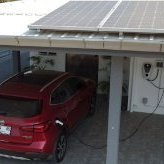
At home, we charge (MG ZS (LFP) when in the low 80%, back to 100%, since using Solar, and usually the granny / slow charging cable 2.3kWh.


O&A, and rarely less < 25%, as that means 3+ hrs driving, and we'll stop before it get that low anyway, just to stretch, eat & P, and charge back to 95% while doing.


Always 100% before going O&A, and try to return home at 20%. so about 500 kms is charging by solar of any O&A.    Might use the wall charging cable (7.4 kWh) to get it back to 50%, in case of med emergency, as closest real hospital is 100+ kms away.


So far, average degradation is about 1% a year, over past 3 years, most during 1st year, so less going forward.   Equates to about 15 kms less per charge, from original 360 kms of local driving to 345 kms on full charge.   Expect <8% at the 8 yr battery warranty mark, and quite acceptable, and better than any negative expectations or predictions, real life vs BS.


Well within the 70-80% remaining that most warranties state during that period.   Along with expectations and conservative estimates of LFP battery life @ the 2500 cycle mark.


That estimate, kms per year is now just over 17k kms, our average over 3 yrs owning, and will probably be less per year.  20k kms the first year, and just over 51k kms now, coming up on 3 yrs, Oct 30.


End of life for our ZS, if & when, will be repurposed to the solar system, as best value, since parts, battery pack & motors worth more than the whole at that point.   So if 50-70% capacity remaining, then nice 23-28kWh of ESS addition to the Solar system, and probably needed by then.


LFP Battery cycle.png

i’ve been charging my byd lfp 82.5 kw/h battery only at home for the past 6 months. whenever it drops below 20%, i charge it with 11 kw up to around 70%. for our monthly round trip of about 450 km, i charge it to 100% and get back home with roughly 10% remaining!


with the 8-year battery warranty (i drive about 15k per year), i feel well protected. i assume the battery won’t suffer a total failure after 8 years, the chances are higher that i’ll kick the bucket first ... :smile:

37 minutes ago, motdaeng said:

i’ve been charging my byd lfp 82.5 kw/h battery only at home for the past 6 months. whenever it drops below 20%, i charge it with 11 kw up to around 70%. for our monthly round trip of about 450 km, i charge it to 100% and get back home with roughly 10% remaining!


with the 8-year battery warranty (i drive about 15k per year), i feel well protected. i assume the battery won’t suffer a total failure after 8 years, the chances are higher that i’ll kick the bucket first ... :smile:


Similar to what i do only i tend to charge when it gets to around 40% ( never know when the little lady is to spring a surprise  “ hey, let’s go see my mum “ journey ☹️ ) and charge up to 80/90 %. 
Only charge up to 100% if a trip is due.


Regularly drive around 420/450 km round trip and can often make it back with around 8 to 10%.
I can put it to do the battery calibration thingy late Sunday and overnight but only do it around every 4 or 5 months as might not use the car the next day, plus from 8 to 100% takes around 12 hours.

Otherwise can put it to charge at around 10 pm ( TOU meter and 7 kw charger ) be up in time to stop it at around 80/90 %.
 

3 hours ago, HighPriority said:

I guess we can have different recollections Vinny.

Ive never read that thread.

But you can rest easy, I don’t have the time to search out your postings.

What color ev were you thinking of anyway…?

Not really fussed about color with the exception of a few color's

Last time I specified a color was given 30 days delivery lead time, on day 28 dealership extended delivery lead time by another 30 days on day 52 dealership said they were unable to provide a delivery time for the foreseeable future I either picked the most popular color and there was a huge order log or I picked the least popular color and the production line was waiting to get sufficient numbers to justify a production run

Next time I will select 3 color's and ask expect lead time before placing an order

11 hours ago, 4myr said:


I was intrigued by these 2 cases.


Both of them had a degraded battery due to higher Internal Resistance [IR], which resulted in a battery not giving enough power.
Unfortunately during yearly checks IR is not measured and reported to owners, because it is not easy to measure. 

I have been wondering what may have caused this, so I asked both perplexity.ai and gemini for help:

1) I looked first at the design


BYD blade v1 cells are longer [96 cm] than prismatic cells like CATL Shenxing v1 [17cm], thus have a higher nominal IR, 2 times more than CATL, according to perplexity.ai.


Cooling, heat and IR degradation are related.
For cooling there is a layer of cooling channels on top of all cells, not in between the cells. CATL has cooling channels in between.
Therefore blade v1 is restricted to 1-2C fast charging, while CATL Shenxing v1 from 2023 can do 4C charging.
If you follow youtuber Bjorn Nyland, you also know about the rapidgate issue.

When rapid charging BYDs, sudden drops in power during charging, because BMS detects too much heat in the cells that it lowers the power to charge.


2) wrong practices owner
I asked Gemini what the byd owner could have done wrong 

- frequent dc fast charging generates heat accelerating IR degradation
- fast charging when battery already hot 
- charging immediately after fast driving
- parking and charging in hot sun
- driving aggressively
- constantly charging to 100%  and storing at high SoC

Thus heat in cells not properly managed => increased IR => causes bigger voltage drop [ less power ] and more heat generation [ due to higer IR ]


3) causes outside fault of owner

I asked if issues in the cooling system could also cause this issue


Yes, confirmed by Gemini:
- dirty AC condenser [ Thai EV mechanics advice to clean  every 40k km ]
- low AC refrigerant [ well this would be noticed by the owner ]
- coolant leak outside the HV battery

- coolant leak in the cooling pad inside the battery


4) other scenario's in rainy season
- water ingress thru battery valves

- water ingress thru holes of case bitten by rodent and not noticed by owner [ known issue with atto3 and dolphin ]

According to gemini not very likely scenario's and it would trigger other BMS faults causing a vehicle shutdown
 

Those BYD blade v1 batteries seem a bit outdated now...it's about time they launched v2 in Thailand.


Personally if buying a new car, I would choose a different brand that has a newer CATL battery capable of at least 3C charging.

Create an account or sign in to comment

Recently Browsing 0

  • No registered users viewing this page.

Account

Navigation

Search

Search

Configure browser push notifications

Chrome (Android)
  1. Tap the lock icon next to the address bar.
  2. Tap Permissions → Notifications.
  3. Adjust your preference.
Chrome (Desktop)
  1. Click the padlock icon in the address bar.
  2. Select Site settings.
  3. Find Notifications and adjust your preference.