Skip to content
View in the app

A better way to browse. Learn more.

Thailand News and Discussion Forum | ASEANNOW

A full-screen app on your home screen with push notifications, badges and more.

To install this app on iOS and iPadOS
  1. Tap the Share icon in Safari
  2. Scroll the menu and tap Add to Home Screen.
  3. Tap Add in the top-right corner.
To install this app on Android
  1. Tap the 3-dot menu (⋮) in the top-right corner of the browser.
  2. Tap Add to Home screen or Install app.
  3. Confirm by tapping Install.

Solar Power is cheap and it’s going to get even cheaper very soon.

Featured Replies

13 minutes ago, Startmeup said:

How can solar get cheaper when wages are rising everywhere and the input costs (inflation) to build solar panels are alot higher now than last year?

Robots don't get a wage rise.

  • Replies 162
  • Views 59.8k
  • Created
  • Last Reply

Top Posters In This Topic

Most Popular Posts

  • We could run our whole house on that, 10kWh ESS ... IF being more conservatives and not as wasteful as we are now, with the ACs.   We only added a 2nd ESS to prolong the longevity of our system's ESS/

  • Bandersnatch
    Bandersnatch

    The first problem with Batteries is Depth of Discharge (DOD) and Li-ion batteries have a 80% DOD so you are only getting 8kWh out of a 10kWh battery. There are also some efficiency losses converting D

  • In my opinion, prices for inverters are not so much going down but rather more returning to what they once were some eight to ten years ago. Solar panels are getting remarkably cheap now but not

Posted Images

44 minutes ago, Startmeup said:

How can solar get cheaper when wages are rising everywhere and the input costs (inflation) to build solar panels are alot higher now than last year? Solar/inverters and commodity prices will be going up if anything imo.


When a company that manufactures solar equipment first starts up, development and tooling costs are seriously scary high. It will take that company many months if not years to get their products to market. So, to recover their costs, these companies have to sell at grossly elevated prices. This if fine and normal especially if competition is thin on the ground.

After a time development and tooling costs are recovered and production becomes streamlined. Profit margins are huge (1000% is not unusual at this stage) but then in comes the competition and down go market prices. Market forces prevail and the likes of you and I get happier and happier.


Natural events like covid tend to chuck a spanner in the works which causes prices to rise later which enables companies to recover their pandemic losses. But that is normally temporary in the world of technology and prices can get back to normal fairly quickly. Once again, market forces take care of that.

5 hours ago, Denim said:


Which is about the only thing I would want it for. Already have cheap solar lights ( garden type ) in every room so interior lighting sorted. Cook with gas, mains water ( no pump ), watch movies on tablet , so the only thing we would miss without grid power is our 13,000 btu air con , which recently has been going about 20 hours a day.

I know this is an odd question or 3, but the solar lamps that I have at the moment run out of charge  after about 6 hours. The power cables from the charging panels are only about 2 metres long around 6 or 7 mm thick, expending to perhaps 10 or 12 mm thick where they plug into the light itself. Do you have a special cable or connector of extra length and thinness to get them into the house some how or do you drill a big enough hole in the wall and then put sealant in the hole as well?


If the panels are on charge all day how do you run the lights as well?


Can you run fans from them as well during the day or do you have an external solar array?


So far this year except for April I am using an average of 21.5 units of electricity per day.


Because April was so hot and the main a/c downstairs has been on 6 hours a day, during April I was using 31.5 units on average per day.


I am 79, and the heat downstairs has been getting to me during April. Even my wife who is Thai and 58 is coming in when the a/c is on.

6 hours ago, billd766 said:

So far this year except for April I am using an average of 21.5 units of electricity per day.


Because April was so hot and the main a/c downstairs has been on 6 hours a day, during April I was using 31.5 units on average per day.m 79, and the heat downstairs has been getting to me during April. Even my wife who is Thai and 58 is coming in when the a/c is on.

21.5 & 31.5 kWh  a month is quite a lot, for being very conservative with your use.   When we first got solar, new house, we were conservative, sort of, on AC use, at least.   The rest normal; electric components in kitchen (2 frigs). gas hob (my preference unless baking), and fans if no AC running.  


We averaged 33kWh a day last month (April 2024),and I'd consider our use extremely abusive with AC use & EV.  So just a tad more than your usage.


House new & well built, insulated, extended roof shading, and minimal wall exposure to sun.  But after first couple months, stopped being conservation, as simply wanted to know how little we could get by with, and still be comfortable.   


Here's our usage for following year, 2023, and except for March, April, May & August, we used the same as you are, but very abusive with the AC's (two; 13&24k BTU inverters), and 65" TV/monitor for laptop on most of the day/16+hrs.


Only 4 months did we use much more than 20kWh a day, AND, we have an EV.

image.png.6fb03fe2b3e025848e50684d00d2f697.png

Is your house & AC units older ?  Some ceiling insulation, )R+37/38) if not having already, would go a long way to help cooling your AC'd room.


Here's our use being conservative, 2022, and we got the EV, on 30th of Oct 2022:  August we were exporting for 2 weeks, so that's artificially high (production).   Sept & Oct normal conservative use without the EV.image.png.5d995f9e45085947d3fbc5741d01536d.png


  • Popular Post
8 hours ago, billd766 said:

I know this is an odd question or 3, but the solar lamps that I have at the moment run out of charge  after about 6 hours. The power cables from the charging panels are only about 2 metres long around 6 or 7 mm thick, expending to perhaps 10 or 12 mm thick where they plug into the light itself. Do you have a special cable or connector of extra length and thinness to get them into the house some how or do you drill a big enough hole in the wall and then put sealant in the hole as well?


If the panels are on charge all day how do you run the lights as well?


Can you run fans from them as well during the day or do you have an external solar array?


So far this year except for April I am using an average of 21.5 units of electricity per day.


Because April was so hot and the main a/c downstairs has been on 6 hours a day, during April I was using 31.5 units on average per day.


I am 79, and the heat downstairs has been getting to me during April. Even my wife who is Thai and 58 is coming in when the a/c is on.


The panels are mounted on the roof near the eves. I then ran the supplied cable around and under the roof tile into the attic. From there made a small hole in the ceiling to connect to the light mounted high on the wall in the corner. The panels get enough charge during the day to run right through the night if necessary but start to gradually dim about 4.00 am. Usually  turn them off at bedtime except ones in bathroom and kitchen which automatically turn off at sunrise. No extra cable needed.


Really these were fitted so we have light during power cuts but Murphys law has kicked in and have hardly had an outage since I spent the money.


You can buy solar powered fans on Lazada. The cheap as chips solutions to solar power.


20240502_065357.jpg


20240502_065226.jpg

5 hours ago, Denim said:


The panels are mounted on the roof near the eves. I then ran the supplied cable around and under the roof tile into the attic. From there made a small hole in the ceiling to connect to the light mounted high on the wall in the corner. The panels get enough charge during the day to run right through the night if necessary but start to gradually dim about 4.00 am. Usually  turn them off at bedtime except ones in bathroom and kitchen which automatically turn off at sunrise. No extra cable needed.


Really these were fitted so we have light during power cuts but Murphys law has kicked in and have hardly had an outage since I spent the money.


You can buy solar powered fans on Lazada. The cheap as chips solutions to solar power.


20240502_065357.jpg


20240502_065226.jpg

Thank you for the information. One of the problems that I have found since we built the house 20 years ago is that we have no access in the house to get into the roof space. I at 79 am too old to make one and TBH the number of times that I have needed to go into the roof space, I can count on one hand with fingers left to spare.

27 minutes ago, billd766 said:

Thank you for the information. One of the problems that I have found since we built the house 20 years ago is that we have no access in the house to get into the roof space. I at 79 am too old to make one and TBH the number of times that I have needed to go into the roof space, I can count on one hand with fingers left to spare.


Second option would be to drill a big enough hole through the wall as near to the light as possible.


When building our house apart from having a service hatch to the attic I also got the builder to weld a steel walkway 1 foot wide the length of the house in case I needed to get easy access up there for any repairs that might occur.

Came in handy as last year a mouse got up there and chewed through the internet cable. Repair man was pleased with the easy access.


I've calculated my daily usage for April at 14kW, factoring in one air conditioner, two fridges, and LED lighting. My plan involves installing 7 Era panels, each with a capacity of 450 watts, along with a Sofar inverter, giving a total output of 3.3kW.


I won't initially include a battery and will depend on the grid for nighttime power.

The combined cost for the panels and inverter is 30,000 baht (purchased from Lazada), with additional expenses for cables and fixtures totaling 40,000 baht. Since my neighbor constructed my roof, I believe they can assist with panel installation.


I also intend to hire an electrician for mounting fuses and breakers, with an estimated cost of 6,000 baht inclusive of equipment. This brings the total anticipated expense to 50,000 baht, a significant saving compared to the initial estimate of 140,000 baht.


Considering potential future upgrades, I may integrate a 5kW battery into the system. Do you think this addition would be feasible given my current setup?

What are your thoughts on this plan?


  • Author
11 minutes ago, renegade2000 said:

Considering potential future upgrades, I may integrate a 5kW battery into the system. Do you think this addition would be feasible given my current setup?

What are your thoughts on this plan?


worth checking out your upgrade route ahead of times.


What batteries is your current inverter compatible with etc


  • Popular Post
On 4/23/2024 at 10:13 AM, Ludzilla said:

Here in Phuket i've been quoted 850k for 22kw of 1st tier panels(40x550w) + 1 growatt inverter 5kw + 1 alphaess smile-T10-HV with one LFP module of 8.2kwh. Installation is 3 phase on a flat concrete roof. I can add up to 6 modules of 8.2kwh at the price of 150k for each module.

After reading this thread i have the feeling that i can get something similar (other brands or technology) for much less. I'd like to have around 40kwh of batteries, it would bring the total to 1.450.000 thb(850k+4x150k)

Can you share with me in DM the name of the companies?
Another question to others, what would be the price range according to you for my requirements? DIY is not an option.
Thanks.

Answering to myself here and maybe give useful price range to other forum users.
I got 2 new quotations between 600k and 650k for the following installed system.
25kwh of N-type mono bifacial panels. 1st tier
2x10 khw deye hybrid inverters
30 kw lifepo4 batteries (80%dod)
Cheaper than i thought. it's about half price of my initial quotation 2 years ago by one of the major player in Phuket.

1 hour ago, Ludzilla said:

Answering to myself here and maybe give useful price range to other forum users.
I got 2 new quotations between 600k and 650k for the following installed system.
25kwh of N-type mono bifacial panels. 1st tier
2x10 khw deye hybrid inverters
30 kw lifepo4 batteries (80%dod)
Cheaper than i thought. it's about half price of my initial quotation 2 years ago by one of the major player in Phuket.

Thank you for that information. I, for one find it very useful.

  • 2 months later...

The most expensive bill here was for 772 units of power for one month, which was 5800THB. That was an extreme month in terms of heat, and also usage as family were staying here which bumbed up the air conditioners usage during the daytime. 


It's usually much less than that. But going with 770 units of power as the max ever needed.


24 units per day. How many Kwh is that? 


Some used in the daytime, most used in the evening and night.


What sort of solar power rig would be required to produce 770 units of power per month, 24 units per day, and what would the approximate cost be?


One story house in Bangkok with no overhead obstructions. 


TIA. 

  • Author
  • Popular Post
33 minutes ago, JeffersLos said:

The most expensive bill here was for 772 units of power for one month, which was 5800THB. That was an extreme month in terms of heat, and also usage as family were staying here which bumbed up the air conditioners usage during the daytime. 


It's usually much less than that. But going with 770 units of power as the max ever needed.


24 units per day. How many Kwh is that? 


Some used in the daytime, most used in the evening and night.


What sort of solar power rig would be required to produce 770 units of power per month, 24 units per day, and what would the approximate cost be?


One story house in Bangkok with no overhead obstructions. 


TIA. 


1 PEA unit is 1kWh unfortunately the only way for a solar system to match your household load 24 hours a day is to have batteries which are expensive.


Here is a graph of one of my 5kW inverters and you will see that solar ramps up during the day, producing too much power in the middle of the day and requires batteries for 12 hours of night time use.


SolarProduction2.jpg.008d3091a3f03a97be587c4cc26e8e6d.jpg


Your PEA Bill tells you how many kWh you use in the month but not when they are used. Many people install solar for daytime use and rely on the grid for night time.


Another option is an energy monitoring system that tells you when you are using most power. Here is a video I made about my system:


After monitoring you will probably find that with 24 units per day you are probably not using more that 2kW during the day and closer to 500W at night. So a 5kW inverter and 5kW of panels will probably cover most of your daytime load. Sizing a battery system is more difficult if you want to cover 100% of your night time use.


Here is a video I made about sizing batteries for solar systems


As for costs, I published component costs above, but most people usually go for supply and fit which can be quite a bit more expensive.


On 4/29/2024 at 12:58 PM, steve187 said:

i have a 9 x 570w deye 5kwh system with a 240ah battery which charges to about 9.5kwh,

pv system supplies house power all day from 7.15am also charges the battery, with extra electric to run a/c from midday until 3.30/4pm,

at tyhe moment the battery lasts (with a/c from 8pm til 4am,) until the early hours, when we use about 4units from grid until solar starts producing again at about 7.15am,

so a total of 22 units used per day and out of that paying for about 4 units to pea

cost of install 160.000thb

22 units per day would be around our max usuage. 


The install price of 160,000THB included all components (panels, batteries and all other materials, setup and installation? 


When or if the batteries run out of juice, for example at 4am with air conditioners runnings, it just automatically switches over to the PEA government electricity? 


Does it automatically switch back to solar once the sun is hitting the panels again?


25 minutes ago, Bandersnatch said:

Another option is an energy monitoring system that tells you when you are using most power. Here is a video I made about my system:


Thank you very much for your informative post. 

  • Author
  • Popular Post
6 minutes ago, JeffersLos said:

When or if the batteries run out of juice, for example at 4am with air conditioners runnings, it just automatically switches over to the PEA government electricity? 


Does it automatically switch back to solar once the sun is hitting the panels again?


You can set the priorities for your inverter Solar, Batteries, Utility


SBU uses solar first to meet the load of the house then tops with some power from the battery, then finally adds from the grid.

SUB uses solar first then tops up from the grid and only uses batteries in a power cut.


I use USB as I am off-grid and plug my EV into the Utility connection on the inverter. So when I draw from the EV at night there is no solar and I prefer to use my 86kWh EV battery which is much more efficient than my 36kWh home batteries

Thank you very much for the great information.


6 minutes ago, Bandersnatch said:

SBU uses solar first to meet the load of the house then tops with some power from the battery, then finally adds from the grid.


If going to the expense of having batteries, this would probably be the better situation for me. 


So, it would be an SBU system producing around 20 units/kWh per day.


Can any posters give an estimated cost of such a system? Thanks. 

9 minutes ago, JeffersLos said:

Thank you very much for the great information.


If going to the expense of having batteries, this would probably be the better situation for me. 


So, it would be an SBU system producing around 20 units/kWh per day.


Can any posters give an estimated cost of such a system? Thanks. 

For 20 units/day Inc 15 units battery

DIY install 200kbht.

Pro install 300kbht.

46 minutes ago, BritManToo said:

For 20 units/day Inc 15 units battery


Pro install 300kbht.


Thanks. Around an 8 year ROI.


And out of interest.


A ballpark figure for 10kwh per day (daytime use only), no batteries, and it automatically switches to the PEA grid (SUB system) when the sun goes down or it isn't producing enough juice?


  • Popular Post

Please be aware that calculating everything in KWh is just a tad misleading.

The maximum current at 220vac determines the size of the inverter required.

For example;

Toaster 800W

Fridge   400W

Fan          50W

Air con 1500

Total    2750W  

Current required from the inverter would be 12.5A

This tells you what the size the inverter needs to be to power all those items simultaneously.

To have enough power for this example you would probably need only one inverter.

Before you can even think about how much the installation would cost, you really need to check your equipment

rating plates and work out which ones may be taking power at the same time. Then you will know what equipment you need.

  • Popular Post

Solar power is indeed becoming more affordable, and this trend is expected to continue. If you're considering transitioning to solar energy for your home, now is a fantastic time to do so. Not only will you save on energy bills in the long run, but you'll also be contributing to a more sustainable environment.

Last year, I installed solar panels at my home, and it has been one of the best decisions I've made. What really helped me was finding a reliable source for reviews on solar generators. I discovered the world's #1 solar generator review site, which provided me with all the information I needed to make an informed decision. They have comprehensive reviews and comparisons that can help you choose the best system for your needs. You can check it out here: https://solargenerators.to/.

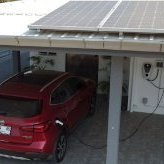
Not sure where to stick this (no, it won't fit) ... but at Future Park, Rangsit area the other day, and coming down for higher parking level, and nothing but roofs coverer with solar panels.


Don't wait for your govt or power company to help ... just do yourself a favor, install solar.   Stop being a putts.

image.png.6c53a8c327618534cb44328470aca26c.png

  • Popular Post
2 hours ago, KhunLA said:

Not sure where to stick this (no, it won't fit) ... but at Future Park, Rangsit area the other day, and coming down for higher parking level, and nothing but roofs coverer with solar panels.


Don't wait for your govt or power company to help ... just do yourself a favor, install solar.   Stop being a putts.

image.png.6c53a8c327618534cb44328470aca26c.png

Yeah, best thing we did swapping our car for an EV and installing solar panels.

Previous home electric and car fuel bill were just over 12k bht per month.

Present home electric and car charging when we can't use solar is about 1700 bht per month....over 10k bht in savings per month.


  • Popular Post
On 2/13/2024 at 2:30 PM, Bandersnatch said:


Supply and fit can get expensive as the company makes a profit on the components and the installation. The good ones will warranty their work and offer after sales support.


However, there are some companies who think consumers have no idea of the price of solar components and they feel free to charge whatever they want.


hopefully with falling prices the savings will eventually start to get passed on to consumers. 


I received a price for a 12 kw hybrid system with batteries from China that was 280,000 baht delivered to the door all taxes paid.

I had two qoutes from Thai companies for a 10 kw hybrid system with batteries and the installation with a total cost of 0ver 800,000 baht . 

I agree with your comment that the Thai companies are overcharging.

54 minutes ago, edwinchester said:

Yeah, best thing we did swapping our car for an EV and installing solar panels.

Previous home electric and car fuel bill were just over 12k bht per month.

Present home electric and car charging when we can't use solar is about 1700 bht per month....over 10k bht in savings per month.


Can I ask how big your solar installation is and how much it cost when it was fully installed?


Which province do you live in. and did you do all the installation yourself?


My average electricity bill for 2023 was 4,900 thb and the peak usage was in April at 41.65 kwh per day.

1 hour ago, billd766 said:

Can I ask how big your solar installation is and how much it cost when it was fully installed?


Which province do you live in. and did you do all the installation yourself?


My average electricity bill for 2023 was 4,900 thb and the peak usage was in April at 41.65 kwh per day.

We have a simple 5kw grid-tie system. 90k bht installed. We have ten 610w panels but disconnected two as it's kicking out too much power on sunny days.

Those 2 panels will go toward making another 5kw array when we install a battery sometime next year.

We live in Kanchanaburi. Installation was carried out by a small team recommended by a friend. Zero regrets so far and very happy with their work.

4 minutes ago, edwinchester said:

We have a simple 5kw grid-tie system. 90k bht installed. We have ten 610w panels but disconnected two as it's kicking out too much power on sunny days.

Those 2 panels will go toward making another 5kw array when we install a battery sometime next year.

We live in Kanchanaburi. Installation was carried out by a small team recommended by a friend. Zero regrets so far and very happy with their work.

Thanks for your info. Very good price. Would most definitely go for same myself if I could convince my Mrs! We are out most days from 7am until 9pm hence, without batteries, the array would only run two fridge/freezers, water coolers and CCTV. Nevertheless, good to have.

1 hour ago, The Fugitive said:

Thanks for your info. Very good price. Would most definitely go for same myself if I could convince my Mrs! We are out most days from 7am until 9pm hence, without batteries, the array would only run two fridge/freezers, water coolers and CCTV. Nevertheless, good to have.

If you have a non-smart electric meter it will run backwards during the day banking units for when you run the ac at night.

  • Popular Post
24 minutes ago, edwinchester said:

If you have a non-smart electric meter it will run backwards during the day banking units for when you run the ac at night.


which is against the PEA regulations and imho not the best advice ...

Create an account or sign in to comment

Recently Browsing 0

  • No registered users viewing this page.

Account

Navigation

Search

Search

Configure browser push notifications

Chrome (Android)
  1. Tap the lock icon next to the address bar.
  2. Tap Permissions → Notifications.
  3. Adjust your preference.
Chrome (Desktop)
  1. Click the padlock icon in the address bar.
  2. Select Site settings.
  3. Find Notifications and adjust your preference.